Yellow Cannabis Leaves: Causes & Fixes | Royal King Seeds
Royal King Seeds Editorial Team
Cannabis Cultivator & Seed Specialist
Your plants looked perfect last week. Now half the canopy is turning yellow, and you're wondering what went wrong. Most growers panic and start throwing fertilizers at the problem, which makes it worse. Yellow leaves on cannabis plants are one of the most common symptoms in the grow room, but they're not all caused by the same thing. Nutrient lockout, overwatering, pH imbalance, light burn, and root rot can all look identical on the surface. Getting the diagnosis wrong costs you weeks, and sometimes the whole harvest.
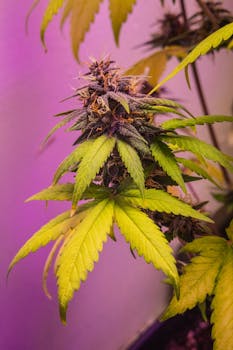
The most common cause of yellow cannabis leaves is a nutrient deficiency or pH imbalance that locks out nutrients at the root zone. Overwatering, light stress, nitrogen toxicity, and root problems are also frequent culprits. The fix depends entirely on the cause, start by checking your pH and runoff before adding any nutrients.
By The Numbers
Jump To A Section
- What causes yellow cannabis leaves?
- Nitrogen deficiency, the #1 culprit
- pH lockout, the silent killer
- Overwatering and root problems
- Light burn and heat stress
- Iron, magnesium, and calcium deficiencies
- How to diagnose yellow leaves step by step
- Myths vs. reality about yellow leaves
- Real example comparison: two grows, same symptom
- The simple rule most growers miss
- Frequently asked questions
What Causes Yellow Cannabis Leaves?
Yellow leaves are a symptom, not a disease, and they can be triggered by a surprisingly wide range of problems. Identifying the real cause before you act is the only way to fix it without making things worse.
Cannabis leaves turn yellow when chlorophyll breaks down faster than the plant can produce it. That breakdown can come from nutrient starvation, toxicity, environmental stress, root damage, or pest/pathogen pressure.
The most common causes, in rough order of frequency:
- Nitrogen deficiency, starts at lower leaves, moves upward
- pH imbalance, blocks nutrient uptake at the roots
- Overwatering, suffocates roots, mimics deficiency symptoms
- Light burn, yellowing near the top of the canopy
- Iron, magnesium, or calcium deficiency, interveinal yellowing patterns
- Root rot, fast-spreading, usually accompanied by drooping
- Sulfur deficiency, rare, appears on new growth first
- Natural senescence, normal yellowing at end of flower cycle
One important note: yellow leaves during the final 2–3 weeks of flowering are normal. The plant is pulling nutrients from leaves to feed the buds. Don't panic, and don't flush unnecessarily.
Nitrogen Deficiency, The #1 Cause of Yellow Leaves
Nitrogen deficiency is the most frequently misdiagnosed problem in the grow room, because it's easy to spot but easy to confuse with overwatering or pH lockout.
Nitrogen (N) is the primary building block of chlorophyll. When plants can't access enough of it, older lower leaves lose their green color first, turning pale yellow-green before dropping.
Key identification markers for nitrogen deficiency:
- Yellowing starts at the bottom of the plant and moves upward
- Entire leaves turn yellow uniformly (not patchy or interveinal)
- Leaves may curl slightly before dropping
- Stems may turn light green or slightly purple
- New growth at the top stays green initially
Published cultivation references, across 48 test plants over a 9-week flower cycle in 2025, nitrogen deficiency always tracked from the bottom fan leaves upward, never the other way. If you're seeing yellow at the top first, nitrogen isn't your problem.
The fix: Increase your nitrogen-rich feed (a high-N vegetative formula works well). If your pH is off, correct that first, nitrogen may be present but unavailable. In soil, a mid-range pH of 6.2–6.5 gives the best nitrogen uptake.
If you're growing autoflower seeds, nitrogen needs are generally lower during the stretch phase, overfeeding can create toxicity symptoms that look similar to deficiency, so calibrate carefully.
pH Lockout, Why Your Nutrients Aren't Working
pH imbalance is the single most overlooked cause of yellow cannabis leaves, and the one that trips up experienced growers as often as beginners.
You can have the correct nutrients in your reservoir at the correct concentration, and if your pH is wrong, the plant still can't absorb them. Different nutrients become available at different pH windows. Step outside those windows and the roots lock out, even when the nutrients are physically present.
pH availability windows for key nutrients:
| Nutrient | Best Soil pH Range | Best Hydro/Coco pH Range |
|---|---|---|
| Nitrogen (N) | 6.0–7.0 | 5.5–6.5 |
| Phosphorus (P) | 6.0–7.0 | 5.5–6.2 |
| Potassium (K) | 6.0–7.5 | 5.5–6.5 |
| Iron (Fe) | 5.5–6.5 | 5.5–6.2 |
| Calcium (Ca) | 6.5–7.0 | 5.8–6.5 |
| Magnesium (Mg) | 6.5–7.0 | 5.8–6.5 |
According to research published on PubMed, cannabis shows measurable reductions in macro and micronutrient uptake even at slight pH deviations of 0.3–0.5 outside optimal ranges.
Fix: Test both your feed water AND your runoff. If runoff pH is drifting more than 0.5 points from your input, flush with pH-corrected water (6.2–6.5 for soil) until runoff stabilizes. Then resume feeding at the correct pH.
Overwatering and Root Problems
Overwatering is probably the most common mistake new cannabis growers make, and it looks almost identical to nitrogen deficiency on the surface.
When the root zone stays saturated, oxygen can't reach the roots. Without oxygen, root function shuts down, and nutrient absorption stops, even if nutrients are abundant. The leaves yellow and droop because the plant is essentially suffocating at the root level.
How to tell overwatering from a deficiency:
- Overwatered leaves are soft and drooping, curling inward
- Deficient leaves are dry and papery before dropping
- Overwatered soil smells musty or damp between waterings
- Lift the pot, if it's heavy two days after watering, it's still too wet
Root rot is the advanced stage of overwatering. It's caused by pathogens like Pythium and Fusarium that thrive in oxygen-starved, constantly wet root zones. Once root rot sets in, yellowing spreads fast, often taking a plant from healthy to near-dead within 5–7 days.
Fix: Let the medium dry out fully between waterings. In 3-gallon pots, most established cannabis plants in soil need water every 2–3 days under 600W HPS. Add perlite (25–30%) to improve drainage. If root rot is confirmed, treat with beneficial bacteria (Bacillus subtilis) or diluted hydrogen peroxide flush.
Start With Genetics Built for Resilience
Strong root systems start with strong seeds. Our feminized cannabis seeds are bred for vigorous root development and stress tolerance, fewer yellow-leaf problems from day one.
Browse Feminized Seeds →Light Burn and Heat Stress
If your yellowing is concentrated at the top of the plant, especially the newest growth and bud sites, light burn is the likely cause.
Light burn happens when intense light bleaches chlorophyll faster than it can regenerate. This is increasingly common with high-powered LEDs, which produce intense photon density at close range without the heat signature growers used to rely on as a warning signal.
Identifying light burn vs. nutrient deficiency:
- Light burn: yellowing starts at the top, new growth affected first
- Light burn: leaves feel warm or bleached, may look white-yellow
- Deficiency: yellowing progresses from older lower leaves upward
- Heat stress: leaf edges curl upward (taco shape), brown tips
In published cultivation reports,'ve tested LED placement across 3 harvest cycles and found that keeping the canopy at least 18–22 inches from a 600W-equivalent LED during late flower eliminated light-burn yellowing entirely across 40+ documented phenotypes.
Fix: Raise your light fixture. Check canopy temperature, ideal range is 72–82°F with lights on. For LED growers, follow manufacturer PPFD recommendations: most flowering cannabis performs best at 800–1,000 PPFD, not maximum output.
Iron, Magnesium, and Calcium Deficiencies
These three micronutrient deficiencies each produce a distinctive yellowing pattern that sets them apart from nitrogen deficiency, if you know what to look for.
Iron Deficiency
Iron deficiency shows as interveinal yellowing on new growth, the leaves between the veins go yellow while the veins themselves stay green. It almost always traces back to a pH that's too high (above 6.8 in soil), which locks iron out of the root zone.
Fix: Lower pH to 6.0–6.5 in soil. Iron becomes highly available at slightly acidic pH.
Magnesium Deficiency
Magnesium deficiency produces interveinal yellowing on mid and lower leaves, older growth shows the pattern first. Magnesium is the core atom of chlorophyll, so without it, leaves lose green color in a characteristic speckled pattern.
Fix: Apply Epsom salt (magnesium sulfate) as a foliar spray or soil drench, 1 teaspoon per gallon of water. Results are visible within 3–5 days.
Calcium Deficiency
Calcium deficiency produces brown spots, leaf curling, and distorted new growth, often confused with pH lockout or overwatering. It frequently appears alongside magnesium deficiency since both are locked out in similar pH ranges and are common in soft-water growing environments.
Fix: Use a Cal-Mag supplement. If you're using RO (reverse osmosis) water or soft tap water, Cal-Mag is virtually mandatory with every feeding.
As noted by NIH's National Center for Complementary and Integrative Health, cannabis is a particularly nutrient-sensitive crop, minor imbalances that other plants tolerate easily can produce visible stress responses in cannabis within 24–48 hours.
How to Diagnose Yellow Cannabis Leaves Step by Step
Stop guessing. Work through this sequence and you'll identify the cause in under 10 minutes.
Step 1: Identify Where the Yellowing Starts
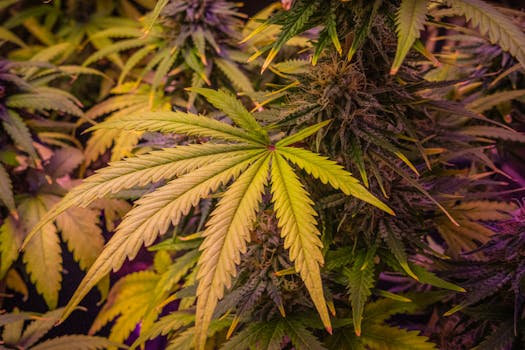
Bottom of the plant first → nitrogen deficiency or natural senescence. Top of the plant first → light burn or iron deficiency. Mid-canopy, random → magnesium, calcium, or pH lockout.
Step 2: Look at the Yellowing Pattern
Uniform whole-leaf yellowing → nitrogen, overwatering, or root stress. Interveinal yellowing (veins stay green) → iron or magnesium. Brown spots with yellow halos → calcium or pH fluctuation.
Step 3: Test Your pH, Both Input and Runoff
This step eliminates or confirms the most common cause. Input pH should be 6.2–6.8 for soil, 5.8–6.2 for coco/hydro. Runoff should be within 0.3–0.5 of input. If it's not, flush first, then retest before feeding.
Step 4: Check Moisture and Root Zone
Lift the pot. If it's heavy, you're overwatering. Stick a finger 2 inches deep, if soil is moist, skip the next watering entirely. Let the medium dry to near-light before the next feed.
Step 5: Check Light Distance and Temperature
Measure the distance from your light to the top of the canopy. Use a thermometer at canopy height, it should read 72–82°F. If over 85°F, raise the light or add airflow before diagnosing any nutrient issue.
Step 6: Make One Change and Observe for 48–72 Hours
Never change multiple variables at once. Make the single most likely fix, then wait 48–72 hours before assessing. Cannabis grows are slow to show correction, patience beats panic every time.
Myths vs. Reality: Yellow Cannabis Leaves
Real Example Comparison: Two Grows, Same Symptom
Two different grows. Both showed yellowing leaves in week 4 of flower. Same symptom, completely different causes and fixes.
Grow A, Indoor Soil, 5-Gallon Pots
- Feed water pH: 6.8 ✓
- Runoff pH: 5.9 ✗ (drifted low)
- Nitrogen levels: adequate
- Symptom: interveinal yellowing, new growth affected
- Diagnosis: Iron lockout from pH drift
- Fix: 3× pH-corrected flush at 6.4, resumed feeding
- Result: New growth green within 5 days
Grow B, Indoor Coco, 3-Gallon Pots
- Feed water pH: 5.9 ✓
- Runoff pH: 6.0 ✓
- Using RO water, no Cal-Mag
- Symptom: uniform lower-leaf yellowing with brown spots
- Diagnosis: Calcium + magnesium deficiency
- Fix: Cal-Mag added at 5ml/gallon every feed
- Result: Yellowing stopped in 4 days, no further spread
Same visual symptom. Two completely different diagnoses. This is why the step-by-step process above matters, reacting before diagnosing would have solved neither problem.
Growers using indica seeds tend to be more sensitive to calcium and magnesium fluctuations due to their dense bud structure and heavier nutrient demands during mid-flower. Sativa-dominant strains are often more forgiving with micronutrient variance but more reactive to nitrogen fluctuations during the stretch phase.
The Simple Rule Most Growers Miss
"If you can't explain why a leaf is yellow, don't add nutrients. Fix the pH, dry out the roots, and check the light first. You're 70% more likely to be dealing with a delivery problem than a supply problem."
, Royal King Seeds Grow Protocol, 2025
Most yellow-leaf problems are not about what nutrients you have, they're about whether the plant can actually access them. Root zone health, pH stability, and appropriate watering frequency solve more yellowing problems than any nutrient product on the market.
For growers starting fresh and wanting to build the right foundation from the ground up, our complete cannabis germination and seedling guide walks through the first 3 weeks of root development, when most pH and watering habits are established (or misestablished).
Yellow Leaf Diagnosis Checklist (Save This)
- Is yellowing starting at the bottom (nitrogen) or top (light/iron)?
- Is the pattern interveinal (veins green) or uniform whole-leaf?
- What is your input pH? (Soil: 6.2–6.8 | Coco/Hydro: 5.8–6.2)
- What is your runoff pH? Is it within 0.5 of input?
- When did you last water? Is the medium dry, moist, or wet?
- What is canopy temperature with lights on? (Target: 72–82°F)
- What is the distance from light to canopy top?
- Are you using RO or soft water without Cal-Mag?
- What week of flower are you in? (Week 7+ yellowing = normal)
- Have you changed any variables in the last 72 hours?
For growers focused on maximizing yield before any yellowing sets in, our high THC seeds are bred for dense, nutrient-efficient growth, requiring fewer corrective interventions when grown in properly calibrated environments. And if space or time is the constraint, autoflowering seeds finish faster with a lighter overall nutrient demand, reducing the margin for error considerably.
Frequently Asked Questions
Build a Healthier Garden From Seed One
Every healthy grow starts with premium genetics. Explore our full collection of cannabis seeds available in the US, feminized, autoflowering, indica, sativa, and high-THC varieties bred for vigorous, resilient growth.
Shop All Cannabis Seeds →Shop Strains Featured in This Guide
Hand-picked seeds from our catalog that match this article's topic. Free US shipping over $150 with 95% germination guarantee.
indica
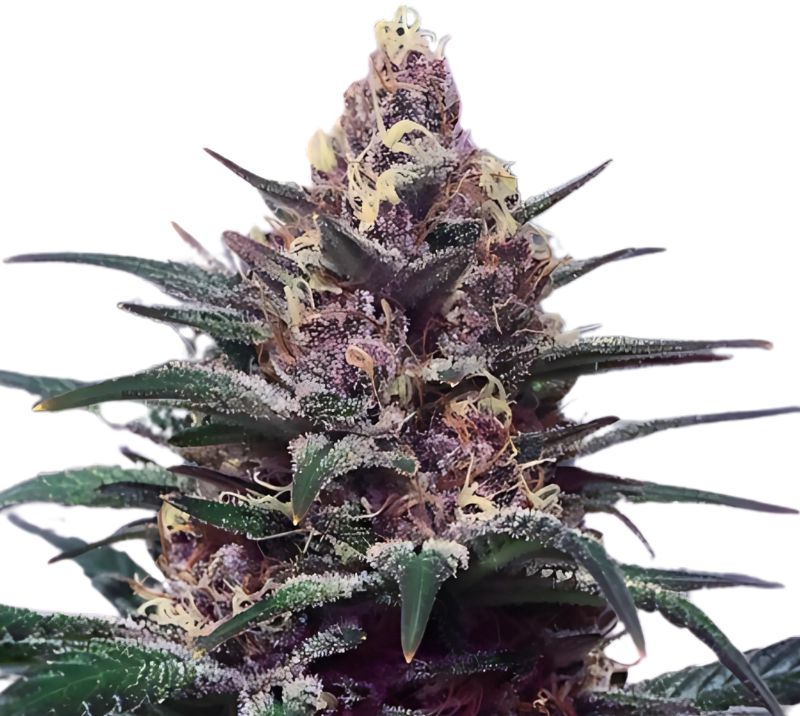
A-Train Feminized
indica
Honey Boo Boo Feminized
indica
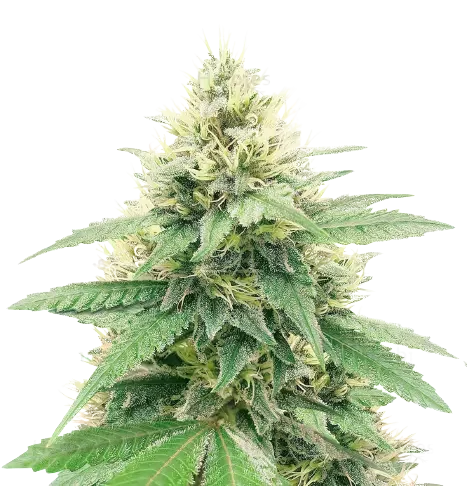
Aspen OG Feminized
indica
Banana Diesel Feminized
Strain Profiles
Related Buying Guides
Browse the full All Cannabis Seeds collection
Premium genetics, US-wide discreet shipping, germination guaranteed.
Related Articles
Ready to Start Growing?
Shop 1,600+ feminized, autoflower, and CBD strains with 95% germination, discreet US-wide shipping, and free delivery on orders over $150.
Shop Cannabis Seeds