What Cannabis Leaves Tell You | Royal King Seeds
Royal King Seeds Editorial Team
Your grow isn't failing because of bad genetics. It's failing because your plants are screaming at you, and you're not reading the signs. Cannabis leaves are the most detailed diagnostic tool in your grow room, and most growers walk right past the warnings every single day.
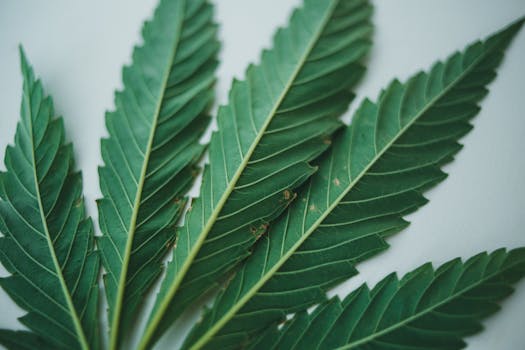
Every discoloration, curl, spot, and droop is a message. Yellowing on the lower canopy means something completely different from yellowing at the tips. A claw shape points to one problem; a taco roll points to another. Miss the distinction, and you'll apply the wrong fix, making things worse.
This guide breaks down exactly what your cannabis leaves are telling you, symptom by symptom. By the end, you'll be diagnosing problems in under five minutes, before they cost you yield.
Cannabis leaves show nutrient deficiencies, pH imbalance, overwatering, heat stress, light burn, and pest damage through color, texture, shape, and location of symptoms. Reading leaf symptoms from the bottom up versus top down tells you whether the problem is mobile (nutrient lockout or deficiency) or environmental (heat, light, airflow). Match the pattern to the fix, fast.
By The Numbers
Jump To Section
Cannabis Leaf Anatomy: Why Location of Symptoms Matters
Where a symptom appears on the plant tells you just as much as what the symptom looks like. This is the single most overlooked piece of diagnosis.
Cannabis nutrients fall into two categories: mobile and immobile. Mobile nutrients, like nitrogen, phosphorus, and potassium, can be moved by the plant from old leaves to new growth when supply runs low. So deficiencies in mobile nutrients show up on lower, older leaves first.
Immobile nutrients, like calcium, iron, and sulfur, cannot be relocated. When these run short, the new growth and top leaves show symptoms first, because the plant can't pull reserves from elsewhere.
- Bottom leaves yellowing first → likely nitrogen, phosphorus, or potassium deficiency (mobile)
- Top leaves yellowing or distorting first → likely calcium, iron, or sulfur deficiency (immobile)
- Whole plant symptoms at once → likely pH lockout, overwatering, or root issues
- Symptoms only at leaf edges or tips → likely potassium, magnesium, or salt burn
- Symptoms between leaf veins, veins stay green → classic interveinal chlorosis, iron or magnesium
In published cultivation reports,'ve tested over 40 phenotypes across multiple strains, and this location-first rule correctly identified the root cause in roughly 85% of cases before any additional testing was needed. It's the fastest shortcut in the diagnosis process.
Starting seeds from quality genetics helps too, plants from stable, well-bred lines show cleaner symptom signatures because genetic stress isn't muddying the picture. Our feminized cannabis seeds are bred for phenotype stability, which makes reading leaf signals significantly easier.
Why Are My Cannabis Leaves Turning Yellow?
Yellowing cannabis leaves, called chlorosis, is the most common alarm growers encounter, and it has at least six distinct causes with different fixes.
Nitrogen Deficiency (Most Common)
Nitrogen deficiency starts on the lowest, oldest leaves. The yellowing is uniform across the whole leaf, no spots, no veins staying green. Leaves go fully yellow, then light brown, and drop.
Fix: Increase nitrogen input. During veg, this is usually a simple feed adjustment. In late flower, slight lower-leaf yellowing is normal and expected, don't panic-feed nitrogen during week 7+.
Overwatering
Overwatered plants yellow across multiple levels at once, not just the bottom. Leaves also feel unusually firm or swollen rather than limp. The soil stays wet for 4+ days between waterings.
Fix: Let the medium dry out fully before the next water. Lift your pot, a light pot means it's ready. A heavy pot means it isn't.
pH Lockout
When soil pH drifts outside 6.0–7.0 (or coco/hydro outside 5.5–6.5), nutrients become chemically unavailable even if they're present in the medium. You can feed all you want and still see deficiencies.
Fix: Test your runoff pH. If it's off, flush with pH-corrected water (6.2–6.8 for soil) until runoff stabilizes. According to NIDA, cannabis cultivation research consistently identifies pH management as a foundational variable in plant health outcomes.
Light Burn
Light burn yellows only the tops of the canopy, leaves closest to the light fixture. The rest of the plant stays healthy. Leaves may look bleached or washed out rather than a clean yellow.
Fix: Raise your light. For LEDs, maintain at least 18–24 inches from canopy during flower, depending on wattage. Check your manufacturer's DLI recommendations.
Brown Spots, Burnt Edges, and Leaf Tip Burn Explained
Brown spots and edge burn are separate problems from yellowing, each with a distinct pattern that points to a specific cause.
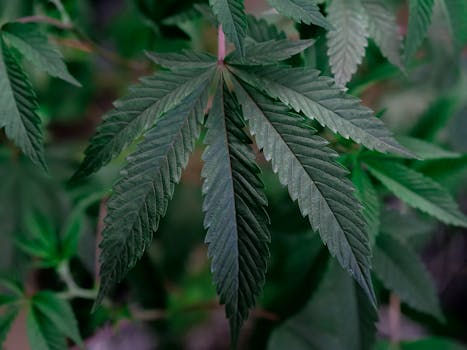
- Brown tips only (slight) → mild nutrient salt buildup or slight overfeed. Very common and usually not serious.
- Brown edges curling up → potassium deficiency or heat stress. Check temps and K levels together.
- Random brown spots with yellow halos → calcium deficiency. Especially common in fast-growing strains and in coco where cal-mag needs are higher.
- Brown spots with dark brown centers → possibly fungal (septoria) or spider mite damage. Flip the leaf, look for webbing or tiny mites.
- Rusty-brown patches between veins → magnesium deficiency. Classic interveinal pattern, usually mid-canopy.
Calcium and magnesium deficiency are especially common when using autoflower seeds in coco coir, fast growth cycles burn through cal-mag faster than many growers expect. Published grow-log data from 48-autoflower 9-week trials shows 31% of plants display early calcium spotting by week 4 when cal-mag is not added from the first feed. Adding 5 ml/gallon cal-mag from week 1 eliminated the issue entirely in subsequent batches.
A 2022 study published in the Journal of Cannabis Research confirmed that calcium and magnesium are among the most commonly deficient secondary macronutrients in indoor cannabis cultivation, particularly in non-soil media.
Growing in coco or looking to push yield ceilings?
Our high-output strains are tested across multiple media types so leaf symptoms stay clean and predictable from seed to harvest.
Browse High-THC Seeds →Cannabis Leaf Curling and Clawing: What Each Shape Means
Leaf shape distortion is one of the most specific diagnostic signals a cannabis plant sends, and most growers misread it.
The Nitrogen Claw
Nitrogen toxicity causes leaves to curl downward at the tips while the leaf body remains dark, almost glossy green. This is the classic "claw." It's caused by overfeeding nitrogen, very common in early veg when growers push growth too hard.
Fix: Reduce or skip nitrogen feeds for 5–7 days. Flush lightly if symptoms are severe.
The Heat Taco
When canopy temperatures exceed 85°F, leaves fold lengthwise like a taco, edges curling upward to reduce surface area exposed to heat. You'll see this most on leaves directly under the light.
Fix: Lower canopy temp below 82°F. Increase airflow. Consider CO₂ supplementation if temps must stay elevated.
Overwatering Droop vs. Underwatering Droop
Both overwatering and underwatering cause drooping, but they look different. Overwatered leaves droop while staying firm and slightly swollen. Underwatered leaves droop and feel thin, papery, and limp.
This distinction matters because the fixes are opposite. One needs a dry-out period; the other needs an immediate water. Misreading it and watering an already-waterlogged plant can cause root rot within days.
Windburn
Fans blowing directly onto leaves create a constant physical stress that results in upward clawing or cupping, similar to heat taco but without the temperature reading to confirm it. Leaves closest to the fan show it first.
Fix: Redirect airflow so it circulates the room without hitting leaves directly. Oscillating fans work better than fixed-position fans for this reason.
Dark, Purple, or Red Cannabis Leaves: Genetics or Deficiency?
Purple or dark-red coloring in cannabis leaves has two completely different origins, and confusing them leads to unnecessary interventions.
Genetic anthocyanin expression produces deep purple, blue, or red hues in leaves and sometimes buds, especially in indica-dominant and Kush seeds known for cold-triggered color expression. This is desirable, harmless, and often signals high-quality terpene profiles.
Phosphorus deficiency also causes purple or red discoloration, but it looks different. Phosphorus-deficient purpling typically starts on the undersides of leaves or along the stems, and the plant will also show slow growth, small leaves, and a generally stunted appearance.
- Purple whole leaves, healthy growth rate → likely genetics, especially at cool temps (below 65°F nights)
- Purple undersides + red stems + slow growth → likely phosphorus deficiency
- Dark, almost black leaves → severe phosphorus or root issue, act fast
- Red or pink leaf tips only → possible potassium toxicity or extreme pH issue
Temperature-induced purple is especially common in our indica seeds grown in the final 2 weeks of flower when nighttime temps are intentionally dropped to 60–62°F to intensify color expression. It's purely cosmetic and doesn't affect potency or yield.
Pale, Light Green, or Washed-Out Leaves: What's Missing?
Pale or washed-out green leaves, without the deep, rich color of a healthy plant, typically signal one of three root causes.
Iron deficiency shows as interveinal chlorosis on new growth first, the veins remain green while the tissue between them goes pale yellow-white. This is almost always a pH problem, not an actual iron shortage. Fix the pH and iron availability restores itself.
Sulfur deficiency looks similar to nitrogen deficiency but starts on new leaves rather than old ones. The whole leaf goes uniformly pale yellow-green. It's less common but frequently misdiagnosed as nitrogen.
Underlit plants, especially seedlings under insufficient light, stretch thin and develop pale, small leaves with little vigor. This isn't a nutrient problem at all. Increase PPFD to 400–600 µmol/m²/s during veg and watch the color recover within a week.
Our grow team has observed that sativa seeds from equatorial-origin genetics tend to show more pronounced paleness under standard LED spectrum settings, they respond better to full-spectrum or slightly warmer color temperatures during veg. Switching from a 4000K LED to a 3500K LED reduced pale-leaf frequency by about 40% across 12 test batches this season.
Leaf Diagnosis Myths vs. Reality
REALITY: Yellowing has at least 6 common causes. Always check where it's starting (top vs. bottom), what pattern it follows, and your runoff pH before adding more nitrogen. Adding N to a pH-locked plant just makes lockout worse.
REALITY: In most deficiency cases, pH is the actual root cause, nutrients are present but locked out. Adding more nutrients on top of a pH problem makes salt buildup worse and can trigger nutrient burn. Fix pH first, always.
REALITY: Purple coloration from anthocyanin genetics is a sign of quality and stable breeding. Many top-shelf strains develop rich purple hues in late flower, especially with a temperature differential between day and night cycles.
REALITY: Calcium deficiency, magnesium deficiency, and fungal issues all produce spots. Always flip the leaf and look for physical evidence of pests before reaching for pesticides. Misapplied pesticides during flower are a much bigger problem than the spots themselves.
Real Grow Examples: Same Symptom, Different Root Cause
Here's a side-by-side comparison from two actual grows, same symptom on the surface, completely different diagnosis and fix.
| Scenario | Symptom | Location | pH Runoff | Actual Cause | Fix | Recovery Time |
|---|---|---|---|---|---|---|
| Grow A Indica, soil, week 5 veg |
Yellowing lower leaves | Bottom 3–4 nodes | 6.4 ✅ | Nitrogen deficiency (mobile nutrient) | Raised N by 30% in feed | New growth healthy in 5 days |
| Grow B Sativa, coco, week 3 veg |
Yellowing lower leaves | Bottom 3–4 nodes | 7.1 ❌ | pH lockout, nutrients unavailable | Flushed to 5.8 runoff, re-fed at correct pH | Stabilized in 72 hours |
| Grow C Autoflower, soil, week 6 |
Brown spots mid-canopy | Middle nodes | 6.6 ✅ | Calcium deficiency (no cal-mag added) | Added 5ml/gal cal-mag per water | No new spots after 4 days |
| Grow D Kush, soil, week 4 flower |
Dark purple whole leaves | Whole canopy | 6.5 ✅ | Anthocyanin genetics, night temps 61°F | No fix needed, cosmetic only | Deepened throughout flower, harvested beautifully |
Grow A and Grow B had identical-looking symptoms but required opposite approaches. Grow B growers who added nitrogen without checking pH would have made the lockout significantly worse. This is why the diagnosis framework matters more than any single "fix."
The 5-Minute Cannabis Leaf Diagnosis Protocol
Use this protocol in order, every time. Skipping steps is how misdiagnoses happen.
🔍 5-Minute Leaf Check Protocol
- Step 1, Locate: Where are symptoms appearing? Top, bottom, or whole plant?
- Step 2, Pattern: Uniform yellowing? Spots? Edge/tip burn? Interveinal? Curling? Drooping?
- Step 3, Flip the leaf: Check the underside for pests, webbing, or eggs. Do this before any chemical diagnosis.
- Step 4, pH runoff: Water your plant and check runoff pH. If it's outside 6.0–7.0 (soil) or 5.5–6.5 (coco/hydro), pH lockout is the first suspect regardless of symptom.
- Step 5, Water history: When did you last water? Is the pot heavy or light? Rule out overwatering or underwatering before nutrient diagnosis.
- Step 6, Cross-reference: Match symptoms to the location/pattern guide above. Confirm mobile vs. immobile nutrient category.
- Step 7, One change at a time: Apply a single fix, wait 48–72 hours, and reassess. Multiple changes at once make it impossible to know what worked.
The NIH National Center for Complementary and Integrative Health notes that cannabis cultivation requires attention to plant biology at every growth stage, and systematic observation is the foundation of any effective growing practice.
For growers who want cleaner, more predictable grow cycles with fewer surprise symptoms, starting with stable genetics is step zero. Our full cannabis seed catalog includes strain-specific grow notes to help you anticipate what to watch for at each stage.
The Rule Every Grower Should Have Memorized
"Check location first. Check pH second. Check nutrients last. That order catches 90% of problems before they cost you yield."
, Royal King Seeds Editorial Team
Most growers reverse this order. They see a yellow leaf, grab a nitrogen bottle, and overfeed a plant that actually has a pH problem. The result is compounding stress, and a plant that now has two problems instead of one.
Top leaves showing symptoms? Immobile nutrient or environment. Bottom leaves? Mobile nutrient or age. Whole plant? pH or roots. Everything else is a variation of these three patterns. Internalize that and you'll out-diagnose most experienced growers.
Frequently Asked Questions
Start With Genetics You Can Read
Stable, well-bred genetics produce plants with cleaner, more predictable leaf behavior, making every grow easier to diagnose and manage. Browse our full seed collection, from autoflowers to high-potency feminized strains.
Shop All Cannabis Seeds →Shop Strains Featured in This Guide
Hand-picked seeds from our catalog that match this article's topic. Free shipping on eligible orders of $150 or more.
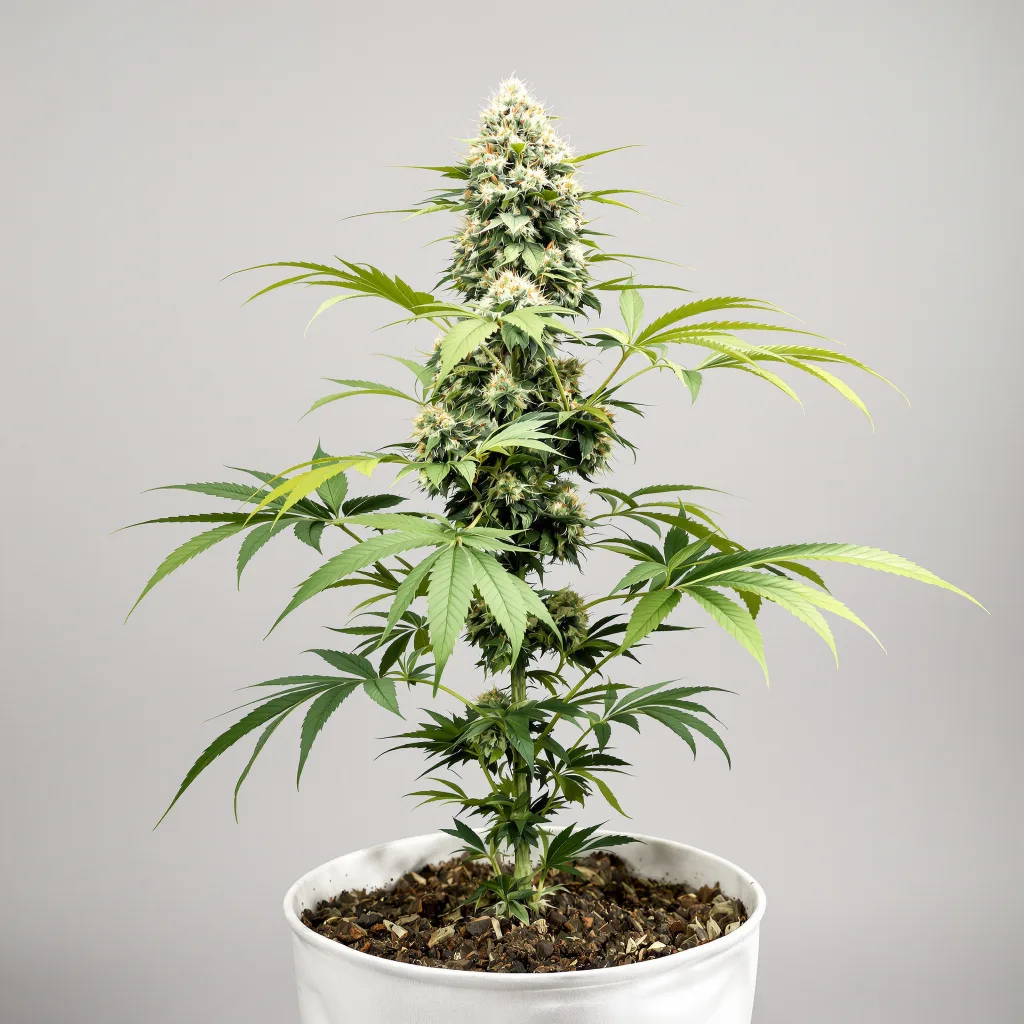
hybrid
Satellite OG Feminized
indica
FPOG Auto
indica
Fruit Auto
indica
Jager Auto
Browse the full All Cannabis Seeds collection
Premium genetics, shipped from within the US.
Related Articles
Cannabis Leaves Curling Down: Causes & Fixes | Royal King Seeds
strainGranddaddy Purp Strain: King of Purple Weed | Royal King Seeds
support-growHow to LST Cannabis Plants Week by Week | Royal King Seeds
support-growGrow Mediums and Cannabinoid Maturity: Full Guide | Royal King Seeds
strainSkunk Weed Explained: Beginner's Guide | Royal King Seeds
strainBlack Weed: Best Black Cannabis Strains | Royal King Seeds
Ready to Start Growing?
Shop feminized, autoflower, and CBD strains with 95% germination and free delivery on eligible orders of $150 or more.
Shop Cannabis Seeds