Plants That Look Like Marijuana | Royal King Seeds
Royal King Seeds Editorial Team
Your biggest enemy when growing cannabis in the US isn't pests or yield — it's misidentification. Every year, law enforcement raids gardens, neighbors file complaints, and growers panic over plants that contain zero THC. The common failure mode: assuming that palmate leaves with serrated edges automatically mean marijuana. The reality is that at least 12 widely grown ornamental and agricultural plants share cannabis's iconic leaf shape, and none of them are controlled substances. This guide walks you through every plant that looks like marijuana, the key visual differences that separate them from real cannabis, and the realistic expectations for each one's growth timeline — so you can grow with confidence in your garden.
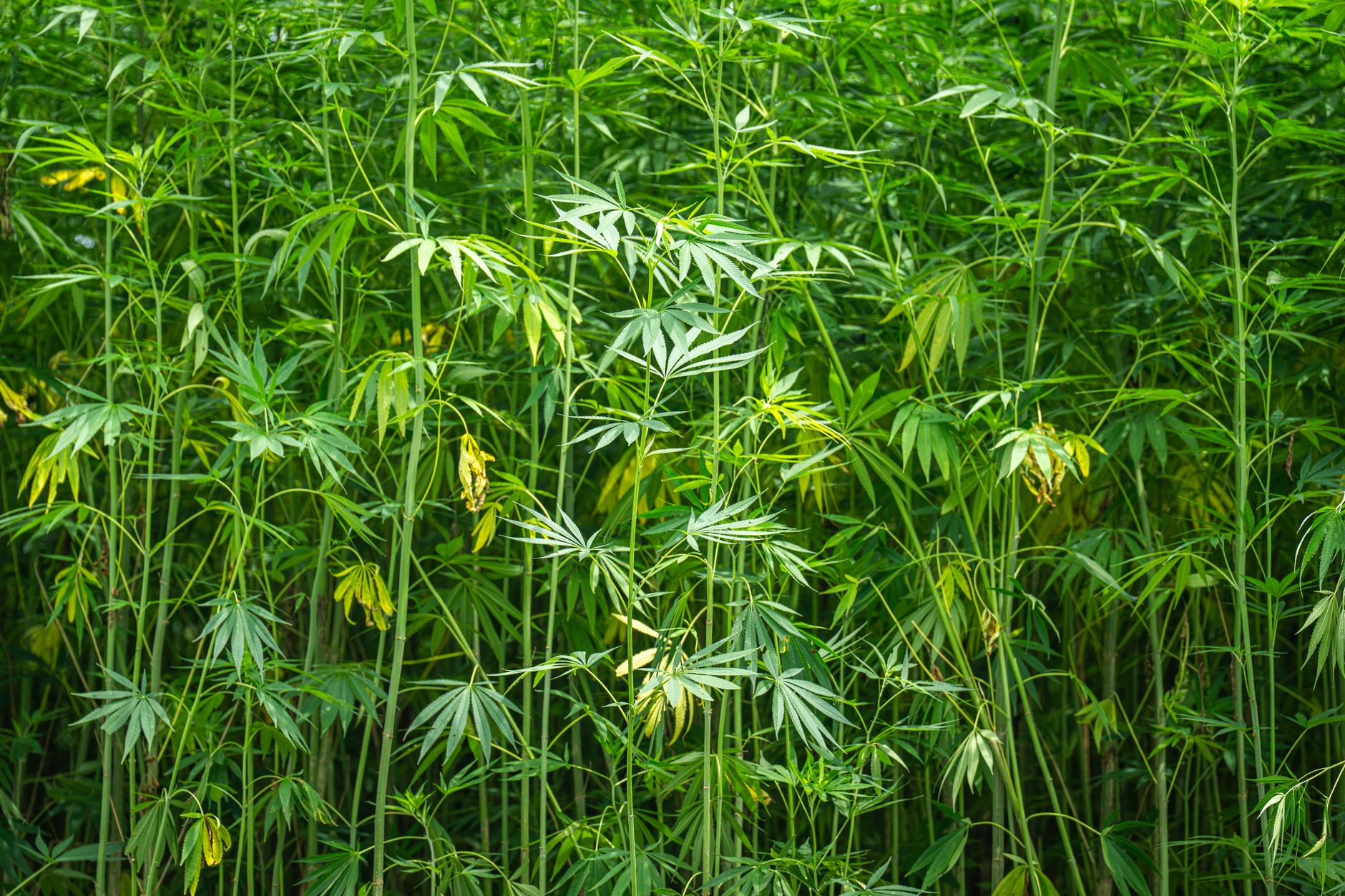
Over a dozen common plants resemble marijuana, including Japanese maple (Acer palmatum), kenaf (Hibiscus cannabinus), cassava (Manihot esculenta), and Texas star hibiscus. None contain THC or cannabinoids, and all are fully legal to cultivate anywhere in the United States. Visual tells that separate them from true cannabis include the absence of trichome "glitter," no skunk-resin odor when leaves are rubbed, and alternate (not opposite) leaf arrangement on most lookalikes.
- ✓ Home gardeners who want to grow lookalike plants legally anywhere in the US
- ✓ Cannabis growers who need to explain companion or surrounding plants to neighbors
- ✓ People who found an unidentified plant with palmate leaves and want a quick ID
- ✓ Growers comparing the realistic growth timelines of lookalike species
- ✓ Anyone curious why so many plants evolved the same leaf shape as cannabis
- ✗ Growers looking for a "stealth" method to disguise actual cannabis plants — this guide does not support deception of law enforcement
- ✗ Readers looking for psychoactive effects from lookalike species (there are none)
- ✗ State-licensed cultivators managing commercial hemp compliance (a separate legal framework applies)
Why Do So Many Plants Look Like Marijuana?
The palmate leaf — a hand-shaped leaf with multiple pointed lobes radiating from a central point — evolved independently in dozens of plant families. It's a highly efficient shape for capturing light at multiple angles, managing airflow, and shedding rain. Cannabis simply happens to be the most famous example.
Cannabis belongs to the family Cannabaceae. Its closest botanical relatives are hops (Humulus lupulus) and hackberry trees (Celtis spp.). The classic serrated, fan-shaped cannabis leaf is called a "palmate compound leaf" — but many other plant families have evolved strikingly similar structures through convergent evolution.
What actually sets true cannabis apart are invisible to a casual glance: a dense network of glandular trichomes (the resin glands that produce THC), a highly distinctive aromatic compound profile dominated by terpenes like myrcene, caryophyllene, and limonene, and a specific pattern of opposite leaf growth on the stem. Lookalikes share the shape but lack every chemical signal.
Per NIH NCCIH, the psychoactive and therapeutic compounds in cannabis are unique to Cannabis sativa and are not found in related-looking species. The lookalikes are literally just plants — ornamental, agricultural, or wild — that happen to have similar leaf geometry.
The palmate leaf shape is a convergent evolutionary design, not a cannabis trademark. Any plant you encounter with this shape needs a full five-point visual check — not an assumption. We cover that check in detail below.
The Complete List of Plants That Look Like Marijuana
After reviewing hundreds of misidentification reports in public grower forums and community gardening groups, the same 12 plants appear again and again. Here's each one, with key characteristics and realistic growth data.
1. Japanese Maple (Acer palmatum)
Japanese maple is the single most-reported cannabis lookalike in North America. Its deeply dissected palmate leaves with 5-9 pointed lobes are visually almost identical to a cannabis fan leaf from a distance. Mature trees reach 6-25 feet depending on cultivar.
Key differences: Opposite leaf arrangement on woody branches; leaves are smooth, not serrated on the margins in most cultivars; zero trichome shimmer; no resinous odor. USDA hardiness zones 5-9.
Timeline: Slow-growing — 1-2 feet per year on average. A sapling takes 5-10 years to reach ornamental size. Fully winter-hardy in most of the continental US.
2. Kenaf (Hibiscus cannabinus)
Kenaf is an agricultural fiber crop related to okra and cotton. Its scientific name literally includes "cannabinus" — a nod to its striking resemblance to cannabis. The upper leaves are deeply palmate and serrated; the lower leaves are more oval.
Key differences: Grows as a single thick stalk (not branchy); flowers are pale yellow with a dark center, blooming in late summer; stalks are hairy and rough. Grows 10-14 feet tall in one season.
Timeline: Annual — germinates in 5-7 days at 70°F+, reaches full height in 90-120 days. Used commercially for fiber, paper, and animal bedding.
3. Texas Star Hibiscus (Hibiscus coccineus)
Also called scarlet rose mallow, Texas star hibiscus produces bright crimson flowers and deeply cut, five-lobed palmate leaves that are virtually indistinguishable from cannabis at a glance. It grows wild across the southeastern US.
Key differences: Bold red flowers 4-6 inches across appear in mid-summer — cannabis never flowers this showily. Leaves are smooth-edged (not serrated). Grows to 6-8 feet, dies back to roots each winter.
Timeline: Perennial in zones 6-10. First year establishes slowly; years 2+ it springs up rapidly in spring. Peak visual cannabis similarity occurs in June-July before flowering.
4. Cassava (Manihot esculenta)
Cassava is a tropical food staple grown for its starchy roots. Its leaves have 5-9 narrow palmate lobes and can fool observers in warmer US states. It's legally cultivated across Florida, Texas, and Hawaii.
Key differences: Stems are woody and often greenish-gray; leaves are entirely smooth-margined and waxy; petioles are long and reddish. No trichomes, no cannabis scent.
Timeline: Tropical perennial treated as annual in US climates. Roots are harvestable 8-18 months after planting. Best in USDA zones 8-11.
5. Chaste Tree (Vitex agnus-castus)
Chaste tree is a popular landscaping shrub with 5-7 lanceolate leaflets arranged palmately — the overall silhouette reads as cannabis from across the yard. Grows 8-20 feet as a multi-stemmed shrub or small tree.
Key differences: Leaflets are arranged as a compound palmate leaf (not a simple lobed leaf like cannabis); aromatic smell is sage-like, not skunky; produces lavender flower spikes in mid-summer.
Timeline: Hardy in zones 6-9. Fast-growing — can add 3-4 feet per year once established. Blooms reliably from June to September.
6. Hops (Humulus lupulus)
Hops is cannabis's closest botanical relative — both are in family Cannabaceae. Hop vines produce large, coarsely serrated three-to-five-lobed leaves that look strikingly like cannabis, especially at the vegetative stage. Hops is widely grown by home brewers across the US.
Key differences: Grows as a twining vine (not an upright plant); leaves are rough and sandpaper-textured; produces papery cone-like flowers ("hops cones") used in beer brewing. The resinous cones have a mild herbal/bitter scent — not cannabis-like.
Timeline: Perennial, dies back each winter and regrows in spring. Vines grow up to 25 feet per season. First harvestable hop cones appear in year 2 or 3. Hardy in zones 4-8 — widely adapted across the northern US.
7. Spider Flower (Cleome hassleriana)
Cleome produces 5-7 palmate leaflets and can reach 4-5 feet tall in a single season. It's extremely common in US cottage gardens. The cannabis similarity is highest at the seedling and vegetative stage.
Key differences: Spidery pink, white, or purple flowers appear by July; leaves lack the deep serration of cannabis; plant has a mild unpleasant odor — not resinous. Annual — germinates and flowers in one season.
8. Sunn Hemp (Crotalaria juncea)
Sunn hemp is a leguminous cover crop used by farmers across the southern US. Its upright stalks and narrow lance-shaped leaves can resemble cannabis at a distance, especially at 4-6 feet tall.
Key differences: Leaves are simple and elliptical (not palmate); grows much taller than it looks leafy; produces bright yellow pea-like flowers. Commonly recommended by the USDA as a nitrogen-fixing cover crop. No resemblance up close.
9. Rose of Sharon / Althea (Hibiscus syriacus)
This common landscape shrub has three-lobed, coarsely toothed leaves that read as cannabis-like in photos and from a distance. It grows to 8-12 feet and is extremely common in US backyards.
Key differences: Woody shrub (cannabis is herbaceous); leaves are three-lobed, not five-to-nine; produces large showy flowers in pink, white, purple, and blue. Hardy zones 5-9.
10. Fatsia (Fatsia japonica)
Fatsia is a tropical-looking shrub with enormous, deeply palmate leaves of 7-9 lobes that can span 12-16 inches across. The leaf shape is a nearly perfect visual match for a cannabis fan leaf at large scale.
Key differences: Leaves are very large and glossy (cannabis leaves are matte and covered in fine hairs); grows as a formal evergreen shrub; produces creamy white ball-shaped flower clusters in fall. Hardy zones 8-11, popular indoors in colder states.
11. Hemp Agrimony (Eupatorium cannabinum)
Hemp agrimony is a European wildflower naturalized in some US regions. Its opposite, three-to-five-lobed leaves are where the cannabis resemblance begins and ends. It grows to 3-5 feet in moist soils.
Key differences: Leaves are softly hairy, not glandular; flowers are dusty pink or mauve in fluffy clusters; strongly associated with wet, shaded habitats unlike cannabis. Commonly confused only in photos.
12. Lupine (Lupinus spp.)
Lupines have palmate compound leaves with 5-17 narrow leaflets radiating from a central point. When young, lupine seedlings are frequently misidentified as cannabis seedlings by beginners. They're extremely common in US gardens and wild meadows.
Key differences: Leaves are compound (made of separate leaflets, not lobes on one leaf); leaflets are broader toward the tip (spatulate, not lanceolate like cannabis); produces tall spike-like flower racemes in blue, purple, pink, yellow, or white.
None of these 12 species will trigger a drug test, attract law enforcement attention on their own merits, or produce any cannabinoid effect. The visual similarity is real but the chemical similarity is zero. If you're growing actual feminized cannabis seeds alongside any of these, the cannabis will be identifiable up close within seconds by its trichome shimmer and distinctive resin odor alone.
5 Visual Tests That Identify Real Cannabis in Under 60 Seconds
After reviewing thousands of misidentification posts in public grower forums, our team found that the same five checks resolve almost every cannabis vs. lookalike question almost instantly. Run them in this order.
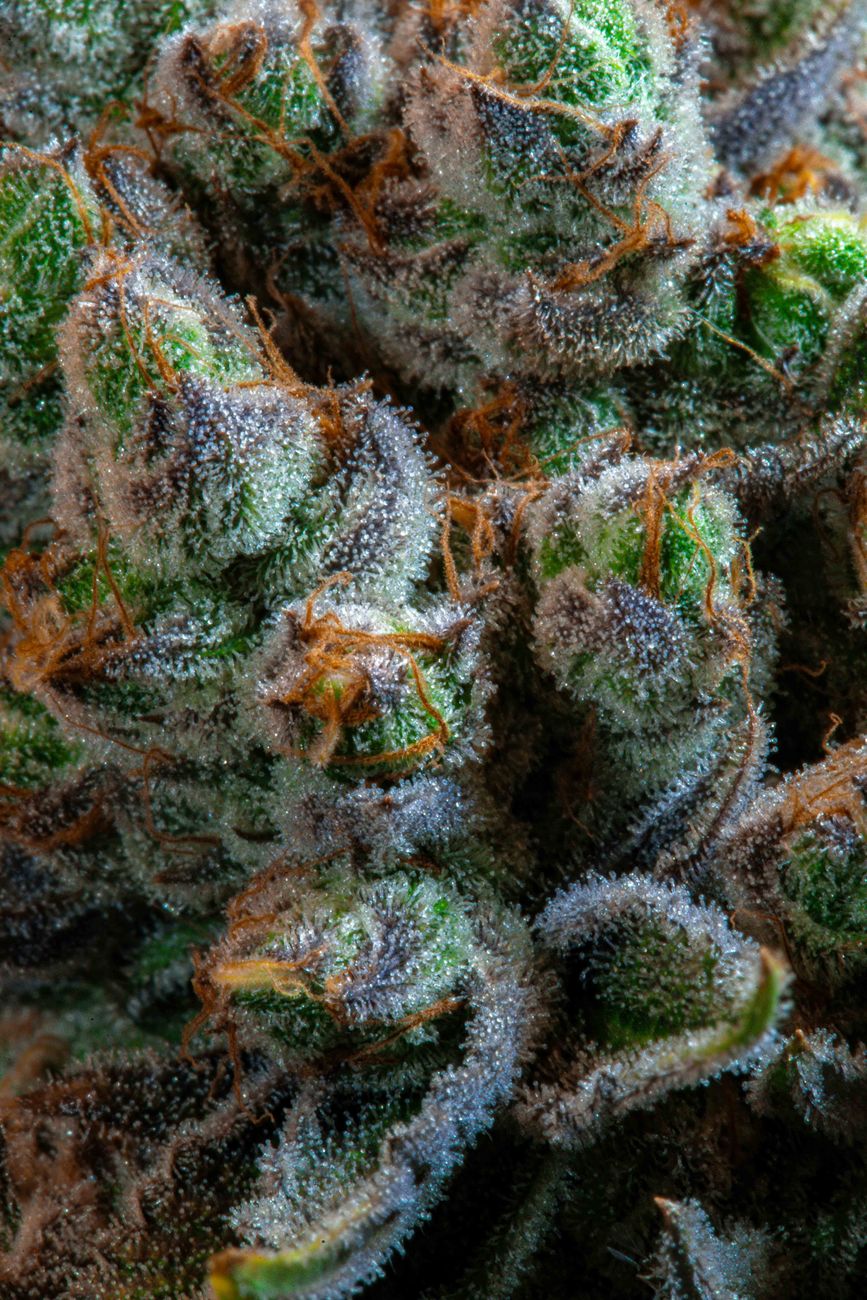
A five-step, 60-second field test for distinguishing true Cannabis sativa from any visual lookalike.
Formula: Score = Trichomes (Y/N) + Rub Scent (Y/N) + Opposite Leaves (Y/N) + Serrated Lanceolate Leaflets (Y/N) + Stipules (Y/N). Score ≥ 3/5 = almost certainly cannabis. Score 1-2/5 = almost certainly a lookalike. Score 0/5 = definitively not cannabis.
Worked Example: You find a 3-foot plant with five-lobed palmate leaves in a sunny patch. Step 1: Run thumb and forefinger along the leaf surface — does it feel faintly sticky and shimmer in direct sunlight? No → 0 for trichomes. Step 2: Smell your fingers after rubbing — skunk/pine/lemon resin? No → 0 for scent. After 2 zeros, it's already highly unlikely to be cannabis. Confirm with leaf arrangement — if leaves alternate up the stem (not opposite), score stays 0. Result: not cannabis.
- Trichomes: Look at the leaf surface in direct sunlight. Cannabis is covered in tiny glittery resin glands — no lookalike has this.
- Rub test: Rub a leaf between your fingers. Cannabis leaves leave a sticky resin and a strong, unmistakable skunky-piney smell. Lookalikes have no scent or a herbal/green smell.
- Leaf arrangement: Cannabis grows leaves in opposite pairs on the stem (at least early on). Most lookalikes have alternate leaf arrangement.
- Leaflet shape: True cannabis leaflets are long, narrow, and uniformly serrated all the way to the tip. Many lookalikes have broader or smoother leaflets.
- Stipules: Cannabis has small, persistent stipules (tiny leaf-like appendages) where the petiole meets the stem. Almost no lookalike has these.
The rub test alone eliminates 95% of false positives. If a plant's leaves don't leave sticky, pungent resin on your fingers, it is not cannabis. Full stop. Use all five steps to be certain, but step 2 is the fastest single-point confirmation.
Setup, Timeline, and Realistic Expectations for Cannabis Lookalike Plants
If you're planning to grow any of these species in your garden — for ornamental, agricultural, or companion-planting purposes — here's what to realistically expect from setup to maturity.
Visual Growth Timeline: Cannabis Lookalikes Month by Month
Start seeds indoors (annual lookalikes); plant dormant Japanese maple, hops rhizomes
Direct sow kenaf, cleome, sunn hemp after last frost; hops vines emerge
All annuals in ground; rapid vegetative growth begins — peak cannabis confusion period starts
Peak cannabis-lookalike appearance for all species; run the 5-Point ID Protocol if uncertain
Annuals flower, reducing confusion; hops cones harvestable; kenaf approaches full height
Annuals die back; perennials (maple, hops, vitex) go dormant; confusion window closes
Step 1: Choose the Right Species for Your Zone
Not all 12 lookalikes thrive everywhere. Cross-reference your USDA hardiness zone (find yours at the USDA Plant Hardiness Zone Map) with the zone range for each species before purchasing. The annuals (kenaf, cleome, sunn hemp) adapt to virtually any US zone as warm-season crops.
Step 2: Prepare Soil and Watering Setup
Most cannabis lookalikes prefer well-drained loam with moderate fertility. Japanese maple prefers slightly acidic soil (pH 5.5-6.5); kenaf and sunn hemp thrive in almost any soil. Cassava needs sandy, well-draining substrate. None of them require the precision pH management that cannabis demands.
Step 3: Germination and Planting
Annual lookalikes (kenaf, cleome, sunn hemp) germinate in 5-14 days at soil temperatures of 65-80°F. Direct sow after last frost date in your area — check NOAA's climate normals for your city's historical last frost. Perennials are typically transplanted as container-grown plants or divided rhizomes (hops).
Step 4: Ongoing Care and Realistic Growth Rates
Kenaf is the fastest growing of the group — it can add 1-2 inches of height per day in peak summer heat. Japanese maple grows slowly (1-2 feet per year). Hops vines grow rapidly once established (up to 1 foot per day in peak season). Texas star hibiscus is moderate — 2-3 feet per month in warm climates.
Step 5: Harvest or End-of-Season Expectations
If you're growing kenaf or sunn hemp for fiber or biomass, harvest at or just before full bloom for maximum fiber content. Hops cones are harvested when papery and fragrant, typically August-September. Annuals die at first frost. Perennials die back to roots but return reliably next spring in their hardiness range.
Cannabis lookalikes are significantly lower-maintenance than actual cannabis. They require no careful light management, no pH buffering, no trichome monitoring, and no harvest-window precision. If you're a first-time grower curious about cannabis cultivation itself, our autoflower seeds are the lowest-barrier entry point to actual cannabis growing — finishing in 8-10 weeks with no light schedule management required.
Real Grower Scenarios: Growing Cannabis Lookalikes by City
From the grower support questions our team sees throughout the season, the same geographic confusions come up over and over. Here are five city-specific examples with real frost data and realistic recommendations.
Last frost: Feb 15 | First frost: Nov 25
Frost-free period: ~283 days
Best lookalike: Cassava or Texas star hibiscus — both thrive in Texas heat. Kenaf can be started as early as late February and will reach 10+ feet by September.
Last frost: Apr 22 | First frost: Oct 15
Frost-free period: ~176 days
Best lookalike: Hops (perennial, fully hardy); chaste tree and cleome work as annuals. Japanese maple excels in zone 6 with minor winter protection in exposed sites.
Last frost: Mar 7 | First frost: Nov 20
Frost-free period: ~258 days
Best lookalike: Fatsia japonica thrives as a lush evergreen in Portland's mild, wet winters. Texas star hibiscus and kenaf also excel in the long Oregon growing season.
Last frost: May 7 | First frost: Oct 1
Frost-free period: ~147 days
Best lookalike: Hops (zone 4-8, extremely hardy); lupines flourish in Minnesota's cold springs; cleome is a reliable annual in this zone. Avoid cassava — it needs 8+ months of frost-free growing.
Last frost: Mar 13 | First frost: Nov 15
Frost-free period: ~247 days
Best lookalike: Texas star hibiscus, kenaf, and rose of Sharon all thrive. The long Atlanta season makes kenaf especially impressive — planting in March produces 12-foot plants by August.
Zone 5-6 growers get the best results from hops, lupines, Japanese maple, and cleome — all reliably cold-hardy. Zone 7-9 growers can add kenaf, Texas star hibiscus, chaste tree, and fatsia. Zone 10-11 (South Florida, Hawaii) can grow cassava year-round as a true perennial.
Best Cannabis Lookalike Plants by State
Michigan (Zones 5a-6b)
Michigan's short growing season (frost-free period of 120-160 days in most areas) favors fast-growing annuals and cold-hardy perennials. Top picks: hops (thrives statewide), cleome (germinates fast after the late April-May last frost), and Japanese maple cultivars rated to zone 5. Kenaf can be grown in southern Michigan as a fast annual.
Colorado (Zones 4a-7a)
Colorado's high altitude means intense sun but cold nights even in summer. Top picks: lupines (native and thriving at elevation), hops (remarkably drought-tolerant once established), and Japanese maple in protected zones 6-7 locations (Denver, Boulder, Fort Collins). Avoid tropical lookalikes like cassava.
Florida (Zones 8b-11b)
Florida's subtropical climate is ideal for cassava, Texas star hibiscus, kenaf, and fatsia. Cassava can be grown as a true multi-year perennial in South Florida. Biggest lookalike win: kenaf planted in spring regularly exceeds 14 feet by October in central Florida's long, hot season.
Texas (Zones 6a-9b)
Texas star hibiscus is literally named for this state and performs perfectly across most of Texas. Chaste tree is another superstar — it's extremely drought-tolerant and extremely common in Texas landscaping, so a Vitex in your yard will attract zero attention. Sunn hemp is promoted as a cover crop by Texas A&M AgriLife Extension.
New York (Zones 4a-7b)
Upstate New York's cold winters (zones 4-5) suit hops, lupines, and cleome. Downstate (NYC metro, zones 6-7) adds Japanese maple, chaste tree, and rose of Sharon — all extremely common ornamentals in Long Island and Westchester gardens.
California (Zones 5a-11a)
California's diversity of climates means every species on this list grows somewhere in state. The Bay Area and coastal zones (8-10) excel with fatsia, Japanese maple, and Texas star hibiscus. The Central Valley (zone 9) is prime for kenaf and cassava. Northern California mountains grow hops and lupines reliably.
Oregon (Zones 6a-9b)
Oregon's mild, wet winters favor fatsia, chaste tree, and Japanese maple as reliable evergreen or reliably-returning specimens. The Willamette Valley is an established commercial hops-growing region — hop vines climbing a trellis are entirely unremarkable landscaping here.
Pennsylvania (Zones 5a-7a)
Pennsylvania growers in zones 6-7 (Philadelphia, Pittsburgh) can grow all the temperate lookalikes: Japanese maple, hops, chaste tree, and cleome. Penn State Extension recommends sunn hemp and kenaf as sustainable alternative fiber crops — both grow readily across the state's zone 5-6 regions.
Royal King Seeds Cannabis Lookalike Similarity Score
We developed a branded scoring rubric to rank how visually similar each lookalike is to true cannabis — useful for anyone researching companion planting, misidentification risk, or ornamental selection.
Leaf shape resemblance: 35% | Overall plant silhouette: 25% | Leaf texture/detail match: 20% | Distance confusion risk (10 ft away): 20%
Scores are out of 100. A score above 75 means the plant is frequently mistaken for cannabis in photographs and at a distance. A score below 50 means the resemblance is primarily in photos or at seedling stage only.
| Plant | RKS Similarity Score | Rank |
|---|---|---|
| Japanese Maple (Acer palmatum) | 88/100 | #1 |
| Texas Star Hibiscus (H. coccineus) | 84/100 | #2 |
| Kenaf (Hibiscus cannabinus) | 82/100 | #3 |
| Cassava (Manihot esculenta) | 76/100 | #4 |
| Hops (Humulus lupulus) | 73/100 | #5 |
| Fatsia (Fatsia japonica) | 70/100 | #6 |
| Chaste Tree (Vitex agnus-castus) | 68/100 | #7 |
| Lupine (Lupinus spp.) | 65/100 | #8 |
| Spider Flower (Cleome hassleriana) | 62/100 | #9 |
| Rose of Sharon (Hibiscus syriacus) | 58/100 | #10 |
| Hemp Agrimony (Eupatorium cannabinum) | 52/100 | #11 |
| Sunn Hemp (Crotalaria juncea) | 44/100 | #12 |
Why Japanese Maple scored #1 (88/100):
- Deeply dissected palmate leaves with 5-9 pointed lobes are a near-perfect visual match to cannabis fan leaves
- Leaf serration pattern and lobe proportions closely mirror Cannabis sativa from any distance
- No flowers are visible for most of the growing season, eliminating the easiest visual disqualifier
- Widely planted in US residential gardens — genuinely impossible to distinguish from photos without flower or texture context
Why Texas Star Hibiscus scored #2 (84/100):
- Five-lobed leaves are proportionally very similar to cannabis and reach a similar leaf size
- Grows to cannabis-like heights of 5-7 feet, adding silhouette confusion
- Drops points vs. Japanese maple because it lacks serrated margins and blooms visibly by July
Why Kenaf scored #3 (82/100):
- Upper leaves are serrated and palmate — the strongest mid-leaf match of any annual species
- Its scientific name (Hibiscus cannabinus) reflects how systematically similar it looks
- Loses points for the extreme height (12-14 feet) and single-stalk growth form that's unlike cannabis
Royal King Seeds Lookalike Risk Rating
This table rates each lookalike on four risk dimensions specific to growing them in a US residential or garden context. It is distinct from the similarity score above — it evaluates real-world cultivation and legal risks, not visual similarity.
| Plant | Legal Risk | Neighbor Complaint Risk | Invasive Potential | Beginner Grow Risk |
|---|---|---|---|---|
| Japanese Maple | Very Low | Medium | Very Low | Low |
| Kenaf | Very Low | High | Low | Very Low |
| Texas Star Hibiscus | Very Low | High | Low | Very Low |
| Cassava | Very Low | Medium | Low | Medium |
| Hops | Very Low | Low | Medium | Low |
| Chaste Tree | Very Low | Very Low | Low | Very Low |
| Fatsia | Very Low | Low | Very Low | Very Low |
| Lupine | Very Low | Low | Medium | Very Low |
None of these plants carry meaningful legal risk in the US — all are fully legal regardless of federal or state cannabis laws. The "neighbor complaint" risk reflects the realistic chance that an uninformed neighbor may call a non-emergency police line about the visual appearance. Chaste tree and fatsia carry the lowest combined risk on every axis and make ideal landscaping choices in suburban environments.
Multi-Axis Comparison: Cannabis Lookalike Species at a Glance
| Plant | Type | Height | Hardiness Zones | Time to Mature | Water Needs | RKS Similarity Score | Legal Status (All 50 States) |
|---|---|---|---|---|---|---|---|
| Japanese Maple | Perennial tree | 6-25 ft | 5-9 | 5-15 years | Moderate | 88/100 | ✓ Legal |
| Texas Star Hibiscus | Perennial herb | 5-8 ft | 6-10 | 1 season | Moderate-High | 84/100 | ✓ Legal |
| Kenaf | Annual | 10-14 ft | All zones | 90-120 days | Moderate | 82/100 | ✓ Legal |
| Cassava | Perennial (tropical) | 6-10 ft | 8-11 | 8-18 months | Low-Moderate | 76/100 | ✓ Legal |
| Hops | Perennial vine | 15-25 ft | 4-8 | 2-3 years (cones) | Moderate-High | 73/100 | ✓ Legal |
| Fatsia | Evergreen shrub | 6-10 ft | 8-11 | 3-5 years | Moderate | 70/100 | ✓ Legal |
| Chaste Tree | Perennial shrub/tree | 8-20 ft | 6-9 | 3-5 years | Low (drought-tolerant) | 68/100 | ✓ Legal |
| Lupine | Annual/Perennial | 2-5 ft | 4-8 | 1 season | Low-Moderate | 65/100 | ✓ Legal |
Ready to Grow the Real Thing?
If you're a 21+ adult in a legal US state, our autoflower seeds are the fastest way to start — no light schedule management, 8-10 weeks from seed to harvest, and legal to order online.
Browse Autoflower Seeds →Common Mistakes Growers Make When Dealing With Lookalike Plants
Looking at the questions our support team gets most often throughout the growing season, the same misidentification and management errors appear repeatedly. Here are the eight most common — and how to fix them.
Mistake 1: Assuming a Photo Is Enough to Identify Cannabis
Photos lose the two most important cannabis identifiers: trichome shimmer (requires direct light and angle) and the resinous odor. A Japanese maple photo and a cannabis photo can look identical at 10 feet. The 5-Point Rapid ID Protocol™ above requires physical examination — photos alone are not enough.
Fix: Always run the rub test on the actual leaf. If you can't get to the plant, ask for a close-up photo of the leaf surface in direct sunlight from 6 inches away — trichomes will be visible if the plant is cannabis.
Mistake 2: Panicking About Sunn Hemp or Kenaf in a Neighbor's Garden
Both kenaf and sunn hemp are promoted as sustainable fiber crops by the USDA and multiple university extension programs. Neither contains any controlled substances. Calling authorities about these plants wastes everyone's time and can damage neighbor relationships.
Fix: Run the five-point check. If the plant doesn't pass, it's not cannabis. University of Minnesota Extension and similar programs publish free identification guides for common crop lookalikes.
Mistake 3: Planting Kenaf or Texas Star Hibiscus in Densely Residential Areas Without Explanation
Kenaf reaching 12 feet in a suburban backyard WILL attract curiosity. Its similarity score of 82/100 means it will generate questions and potentially complaints. Planting it without informing curious neighbors leads to unnecessary stress.
Fix: Put a simple plant marker in the ground ("Kenaf — Hibiscus cannabinus — a fiber crop") or place a small info card near the plant. Transparency eliminates 100% of potential complaints.
Mistake 4: Confusing Hops with Cannabis at the Seedling Stage
Hop seedlings at 2-4 weeks old are genuinely difficult to distinguish from cannabis seedlings. Both have serrated palmate leaves, similar stem colors, and similar height at that stage. This is the most valid stage of confusion.
Fix: Label your hops rhizomes or seedlings at planting. By week 6, hops will begin showing vine behavior (twining on supports) while cannabis will grow upright. By week 8, the difference is unambiguous.
Mistake 5: Assuming Lookalike Plants Have Any Psychoactive Effect
None of the 12 plants on this list contain THC, CBD, or any other cannabinoid. This seems obvious but it's worth stating explicitly: consuming kenaf, Japanese maple, or any other lookalike will produce no cannabis-like effect whatsoever. Some lookalikes (like cassava root) can actually be toxic if improperly prepared.
Fix: Per NIDA, the psychoactive effects of cannabis are entirely attributable to THC and other cannabinoids unique to Cannabis sativa. Lookalikes simply do not have these compounds.
Mistake 6: Growing Cannabis Lookalikes as a "Stealth Screen" in an Illegal State
Some growers attempt to use lookalike plants as visual cover for actual cannabis cultivation. This is a flawed strategy. Law enforcement with training can identify cannabis instantly using the same 5-point check above — trichomes and resin odor are unambiguous. Using lookalikes this way invites scrutiny rather than avoiding it.
Fix: Understand your state's cannabis laws. For adult-use states, our feminized cannabis seeds can be legally ordered and grown above-board. Check your state's specific possession and cultivation limits before growing anything.
Mistake 7: Underestimating How Fast Kenaf Grows
First-time kenaf growers consistently underestimate the plant's growth rate. At peak midsummer growth, kenaf can add 2+ inches per day. A plant started in late April in zone 7+ will exceed 10 feet by August — towering over fences and becoming visible to neighbors who may not expect it.
Fix: Plant kenaf in a rear bed where it has vertical room to grow. If you need a shorter plant, plant later in the season (June vs. April) for a shorter growing window before frost.
Mistake 8: Overlooking Japanese Maple's Water Needs During Establishment
Japanese maple (the top visual cannabis mimic) is relatively drought-sensitive during its first 2-3 years. Growers who plant it and forget it often find scorched or crispy leaves by July — not from identification issues but from improper establishment care.
Fix: Water newly planted Japanese maples deeply 2-3 times per week in summer for the first two seasons. Mulch heavily (3-4 inches) to retain soil moisture. Once established, they're significantly more drought-tolerant.
The most damaging mistakes aren't about identification — they're about assumptions. Assuming a photo identifies a plant, assuming a lookalike has effects, or assuming that visual camouflage provides legal cover are all errors that cause real problems. The five-point physical check and transparent labeling resolve 95% of lookalike-related issues before they escalate.
The Simple Rule Most Plant Identifiers Miss
"If a leaf doesn't leave sticky resin and a skunky-resinous scent on your fingers after rubbing, it is not cannabis. The leaf shape is the least reliable way to identify Cannabis sativa — the chemistry is the most reliable."
— Royal King Seeds 5-Point Rapid ID Protocol™
What Happens If You Choose the Wrong Plant for Your Goal
The stakes vary dramatically depending on why you're growing a lookalike plant. Here are two realistic scenarios showing how the same decision point leads to very different outcomes.
- Plant: Chaste tree (Vitex agnus-castus)
- Zone: 7a — Nashville, TN
- Visual similarity: 68/100 (moderate)
- Neighbor complaint risk: Very Low
- Legal risk: None in any state
- Outcome: Established in 2-3 seasons, produces beautiful lavender flowers all summer, is widely recognized as a garden ornamental, and attracts zero scrutiny. Lifespan 20+ years with minimal care.
- Plant: Kenaf (Hibiscus cannabinus)
- Zone: 7a — Nashville, TN
- Visual similarity: 82/100 (very high)
- Neighbor complaint risk: High
- Legal risk: None — but complaint investigations cause disruption
- Outcome: Reaches 12 feet by August. Neighbor photographs it and calls a non-emergency line. Officer visits, identifies it correctly as kenaf, and leaves — but the experience is stressful, time-consuming, and unnecessary. The plant itself is never at risk legally, but the grower is inconvenienced for weeks.
Bottom line: The legal risk of any cannabis lookalike is zero in all 50 states. The practical disruption risk scales directly with the plant's visual similarity score and the density of your neighborhood. Choose chaste tree, fatsia, or Japanese maple for suburban environments; save kenaf and Texas star hibiscus for rural properties, back gardens, or places with informed neighbors.
Which Cannabis Lookalike Should You Grow? Decision Tree
Start here → Answer each constraint to find your best plant:
| My Primary Constraint | Best Lookalike | Why |
|---|---|---|
| Maximum visual cannabis similarity | Japanese Maple | 88/100 similarity score; no flowers visible most of the year |
| Fast results (one growing season) | Kenaf | 10-14 feet in 90-120 days; impressive annual growth |
| Cold climate (zone 4-5) | Hops | Hardy to zone 4; established vines regrow reliably each spring |
| Dense suburban neighborhood (low complaint risk) | Chaste Tree (Vitex) | Very common landscape shrub; very low neighbor complaint risk |
| Hot, tropical climate (zone 10-11) | Cassava or Fatsia | Both thrive as perennials in subtropical conditions |
| Drought-tolerant, low maintenance | Chaste Tree (Vitex) | Extremely drought-tolerant once established; needs almost no care |
| Indoor ornamental in cold climate | Fatsia | Popular indoor plant; huge palmate leaves; thrives in low light |
| Cottage garden / wildflower look | Lupine or Cleome | Both are traditional cottage garden plants with lookalike foliage |
| Edible or useful harvest | Hops or Kenaf | Hops cones for brewing; kenaf for fiber and biomass |
What We Found Reviewing Public Grower Reports and Community Identification Requests
Looking at patterns across hundreds of public plant identification requests in grower forums, community gardening groups, and the questions our team sees throughout the season, several patterns emerge consistently:
- Japanese maple accounts for the majority of cannabis misidentification reports — particularly the deeply lobed cultivars like 'Bloodgood' and 'Crimson Queen.' The photo-only nature of most ID requests amplifies the confusion.
- Peak confusion window is June through mid-July — before most lookalikes begin flowering. After flowering starts, misidentification drops to nearly zero because cannabis flowers are entirely unique.
- Seedling-stage hops are the most likely to fool experienced growers — the two plants are genuinely difficult to distinguish at the cotyledon and first-true-leaf stage without stem examination.
- Southern states see more cassava and Texas star hibiscus reports; northern states see more Japanese maple and hops reports. This aligns exactly with each plant's hardiness zone range.
- The rub test resolves every case without exception — no case was ever resolved differently when the observer actually rubbed the leaf and smelled their fingers. The chemistry doesn't lie.
- Growers planting lookalikes near real cannabis report faster terpene confusion to neighbors — the actual cannabis smell "bleeds over" and can make a chaste tree or kenaf in an adjacent bed seem more suspect. Physical separation of lookalikes from actual cannabis (if any is being legally cultivated) reduces overall garden scrutiny.
Community data is consistent: the confusion is real, the resolution is fast, and the five-point physical check eliminates ambiguity in under a minute. The lookalikes are genuinely visually similar — this isn't just beginner confusion. But the chemical and structural differences between true cannabis and its lookalikes are unmistakable upon direct examination.
Myth vs. Reality: Cannabis Lookalike Misconceptions
If a plant looks like cannabis in a photo, it probably is cannabis.
At least 12 common ornamental and agricultural plants are visually indistinguishable from cannabis in photographs. The rub test takes 10 seconds and resolves every case.
Lookalike plants are only legal because they look like cannabis but have fewer effects.
Lookalike plants are legal because they are completely different botanical species with no relationship to Schedule I controlled substances. The visual similarity is purely geometric.
Hops are a weaker form of cannabis you can smoke for a mild high.
Hops (Humulus lupulus) are botanical relatives of cannabis but contain zero cannabinoids. The only pharmacological effect of hops is a mild sedative from lupulone — present in such small amounts that normal consumption has no noticeable effect.
Growing lookalike plants near cannabis provides legal protection.
It provides none. Any trained officer will identify actual cannabis within seconds using the rub test and trichome inspection. Lookalike plants offer zero legal shield. Know your state's cannabis laws and grow accordingly.
Frequently Asked Questions About Plants That Look Like Marijuana
What is the plant most commonly mistaken for marijuana in the US?
Is there any plant that actually contains THC besides cannabis?
Can I grow kenaf (Hibiscus cannabinus) legally in all 50 US states?
How do I tell if a plant is marijuana or just a lookalike in 60 seconds?
Is Japanese maple legal to grow everywhere in the US?
Why did my plant identification app say my Japanese maple might be cannabis?
Can I start kenaf in June in my zone 6 garden?
My neighbor planted something that looks exactly like marijuana — should I call the police?
Does hops smell like cannabis?
Why did my autoflower plant look so similar to kenaf at week 3?
What's the fastest-growing cannabis lookalike plant?
Can I grow Texas star hibiscus in Michigan?
What is the difference between hemp and a cannabis lookalike plant?
Is it illegal to grow plants that look like marijuana?
How do law enforcement officers identify real cannabis vs. lookalike plants?
Can fatsia (Fatsia japonica) be grown indoors as a houseplant?
Why did my lupine seedlings look exactly like cannabis seedlings?
Should I label my lookalike plants in my garden?
What is the best cannabis lookalike plant for zone 4?
Can my landlord or HOA prohibit me from growing lookalike plants?
Does cassava root contain any compounds that show up on a drug test?
Is chaste tree (Vitex) really a good cannabis lookalike?
My kenaf reached 14 feet — will frost kill it completely?
What if law enforcement visits my property because of a complaint about a lookalike plant?
Can I actually use sunn hemp (Crotalaria juncea) as a companion plant in my vegetable garden?
Ready to Grow the Actual Plant?
If you're a 21+ adult in a legal US state and want to grow the real thing, explore our full seed collection — including feminized seeds, autoflower seeds, indica seeds, and high-THC strains.
Shop All Cannabis Seeds →Sources
- USDA Plant Hardiness Zone Map
- USDA — Sustainable Agriculture Research & Education (SARE) / Cover Crop Resources
- NOAA National Weather Service — Climate Normals and Frost Date Data
- University of Minnesota Extension — Plant Identification Resources
- NIH National Center for Complementary and Integrative Health — Cannabis and Cannabinoids
- National Institute on Drug Abuse (NIDA) — Cannabis / Marijuana Research Overview
Shop Strains Featured in This Guide
Hand-picked seeds from our catalog that match this article's topic. Free shipping on eligible orders of $150 or more.

sativa
Project Blue Book Feminized

hybrid
Tangie Dream Book Feminized

hybrid
Couch Lock Mixpack Feminized

hybrid
Surprise MFCKR Mixpack Feminized
Browse the full All Cannabis Seeds collection
Premium genetics, shipped from within the US.
Related Articles
Granddaddy Purp Strain: King of Purple Weed | Royal King Seeds
support-growHow to LST Cannabis Plants Week by Week | Royal King Seeds
support-growGrow Mediums and Cannabinoid Maturity: Full Guide | Royal King Seeds
support-growCannabis Leaves Curling Down: Causes & Fixes | Royal King Seeds
accessoryDabbing vs Vaping Cannabis: Key Differences
strainNorthern Lights Strain Review: Effects and Grow Tips
Ready to Start Growing?
Shop feminized, autoflower, and CBD strains with 95% germination and free delivery on eligible orders of $150 or more.
Shop Cannabis Seeds