Male Cannabis Plant Identification Guide | Royal King Seeds
Royal King Seeds Editorial Team
One male plant left undetected for 72 hours can pollinate an entire room and ruin every female in it. That's not a worst-case scenario — that's the standard outcome when growers wait too long to check. The problem isn't that males are hard to spot; it's that most growers look for the wrong signs at the wrong time. The correct identification window is 1–3 weeks after the 12/12 flip, and the correct signal is a pre-flower pollen sac cluster at the node — not the plant's height, structure, or branching pattern. This guide gives you every visual marker, exact timing benchmark, and removal protocol you need to protect your female crop.
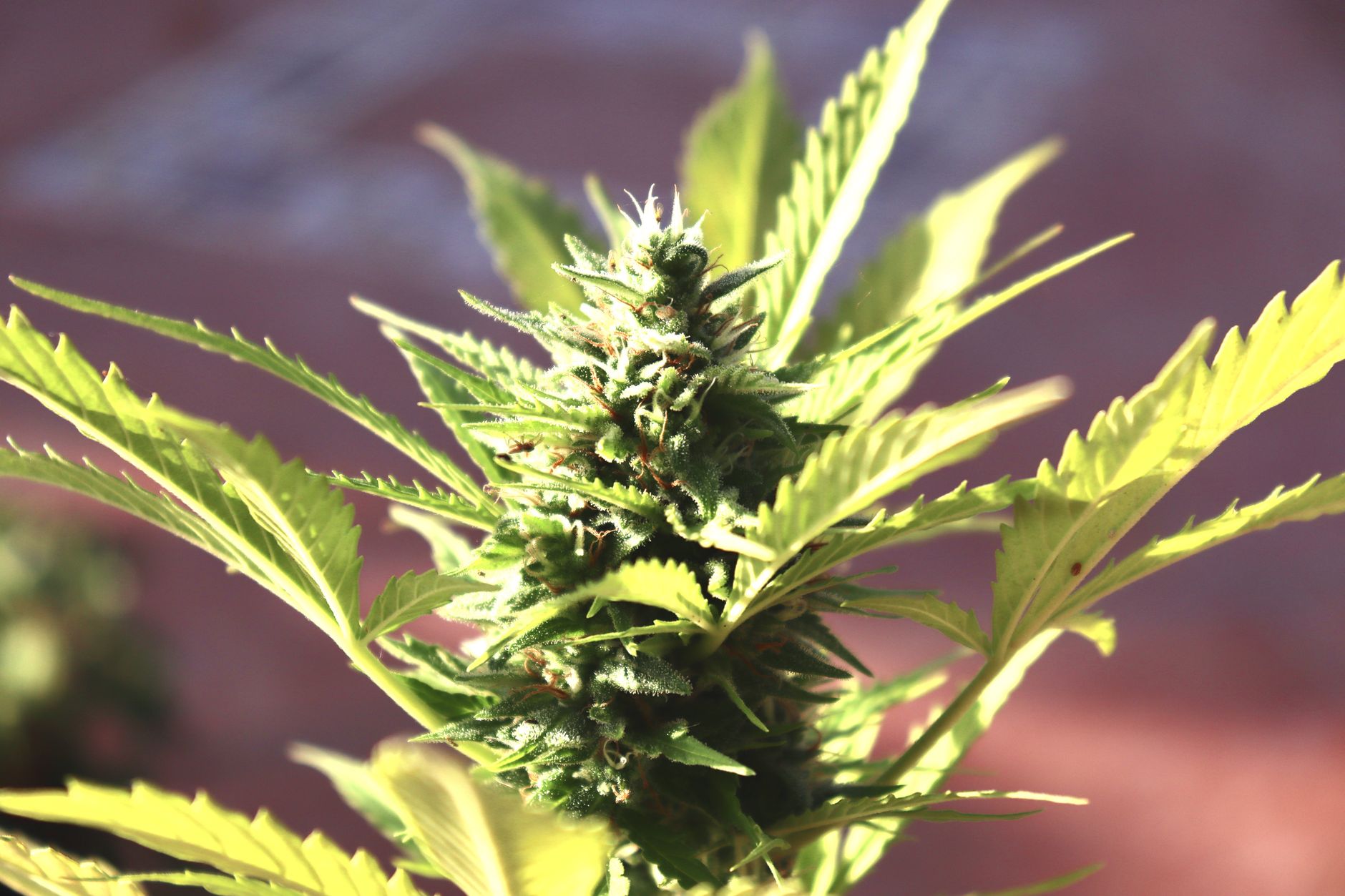
Male cannabis plants develop small, round pollen sacs (staminate flowers) at the nodes — the junctions between the stem and branches. These appear within 1–3 weeks of the 12/12 light flip for photoperiod strains, or around weeks 3–4 of the autoflower life cycle. A true male will never produce white pistil hairs at those sites. Remove males immediately — before sacs open and release pollen — to keep females seedless and sinsemilla-quality.
By the Numbers
Window between sac burst and full room pollination at average indoor humidity
Pre-flower identification window after the 12/12 light flip
Probability of male plants from regular (non-feminized) seeds
Male-plant rate in quality feminized cannabis seeds
- → What Is a Male Cannabis Plant?
- → Male vs. Female: Key Differences
- → Pre-Flower Timing & Identification Window
- → Visual Markers Step by Step
- → Identifying Males in Autoflowers
- → Hermaphrodites: The Hidden Third Threat
- → Removal Protocol
- → What Happens If You Choose Wrong
- → Common Mistakes
- → Royal King Seeds Identification Score
- → State Grower Context
- → FAQ (25 Questions)
- → Sources
- ✓ Growers running regular (non-feminized) seeds
- ✓ First-time cultivators who've never sexed a plant
- ✓ Outdoor growers with mixed-sex seed batches
- ✓ Anyone who suspects a hermaphrodite in their tent
- ✓ Breeders intentionally keeping males for pollen collection
- ✓ Growers who want to understand the full plant life cycle
- ✗ Growers using quality feminized seeds (near-zero male risk)
- ✗ Those seeking legal dispensary sourcing advice
- ✗ Growers outside the 21+ adult-use or medical framework
- ✗ Anyone looking for consumption or product guides
What Is a Male Cannabis Plant?
A male cannabis plant is a sexually differentiated specimen that produces pollen rather than resin-bearing flowers. Cannabis is dioecious — meaning the species produces separate male and female individuals — roughly 50% of the time when grown from regular, non-feminized seed.
Instead of producing the trichome-covered calyxes and pistil hairs that define the female flower, males develop pollen sacs called staminate flowers. When these sacs mature and burst, they release clouds of airborne pollen that fertilize female plants, triggering seed production and destroying sinsemilla (seedless) quality.
Under US federal law, cannabis remains a Schedule I controlled substance per the DEA drug scheduling framework. Cultivation is only legal where your state's adult-use or medical program explicitly permits it. This guide covers identification for lawful, licensed home cultivators who are 21 or older.
Male plants are not inherently useless — breeders prize them for pollen collection. But for any grower aiming for sinsemilla flower production, males must be identified and removed before their pollen sacs open. The entire game is speed and accuracy.
Male vs. Female Cannabis: What Actually Differs?
The structural difference between male and female cannabis plants comes down to one organ: the pre-flower that emerges at nodes. Everything else — height, leaf shape, branching — is far less reliable as a sex indicator than most online guides suggest.
Here is the definitive side-by-side breakdown of what actually differs between male and female plants at each growth stage:
| Feature | Male Plant | Female Plant | Reliability as Sex Indicator | When Visible | Beginner-Readable? | Action Required |
|---|---|---|---|---|---|---|
| Pre-flower at node | Round pollen sac, no hairs | Teardrop calyx with 2 white pistil hairs | ⭐⭐⭐⭐⭐ Definitive | Wk 1–3 of 12/12 flip | Yes (with magnifier) | Remove male immediately |
| Pollen sac cluster | Grape-like clusters form | Absent | ⭐⭐⭐⭐⭐ Definitive | Wk 2–4 of flower | Yes (naked eye) | Remove before sacs burst |
| Plant height | Often taller, less bushy | Often shorter, denser | ⭐ Unreliable (genetics vary) | Veg stage onward | No | Watch node sites, not height |
| Internodal spacing | Sometimes wider | Often tighter | ⭐⭐ Very unreliable | Veg stage | No | Ignore as sole indicator |
| Stipule shape | Straight, not crossed | Often crossed (X-shape) | ⭐⭐ Low reliability | Veg (node 4+) | No | Use as early hint only |
| Trichome/resin production | Minimal on leaves/sacs | Heavy on calyxes and leaves | ⭐⭐⭐ Moderate (late stage) | Flower stage wk 3+ | No (needs scope) | Confirm sex via node check first |
Do not sex plants by height, branching angle, or leaf shape alone. Those traits have ~50% accuracy at best. The only two reliable markers are the pre-flower shape at the node and the presence or absence of pistil hairs. Use a jeweler's loupe (30x) to inspect nodes starting at day 7 after the 12/12 transition.
Skip the Guessing Game Entirely
Quality feminized cannabis seeds carry a <1% male-plant rate — meaning you invest every watt of light, every gallon of nutrient solution, and every week of your grow cycle into flower-producing plants, not pollen factories.
Browse Feminized Seeds →What Is the Pre-Flower Identification Window and When Does It Open?
The pre-flower identification window opens 1–3 weeks after the light schedule is switched to 12 hours on / 12 hours off for photoperiod strains. This is the earliest point at which sex can be confirmed with certainty — and it's the safest window to act.
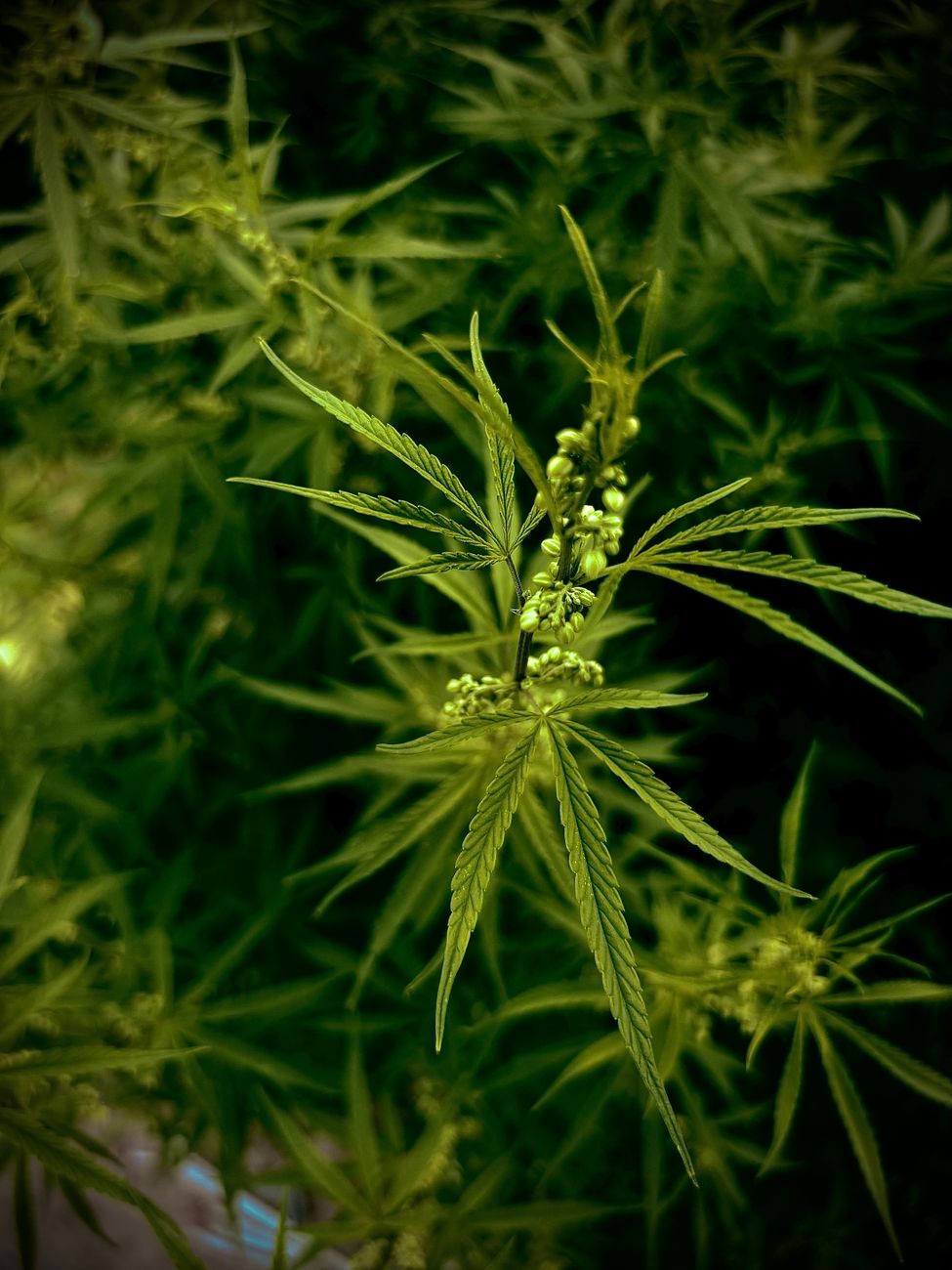
Pre-flowers are miniature versions of the mature reproductive organs. They emerge at the nodes — specifically at the fourth node and above — before the main flowering phase begins. Males tend to show pre-flowers slightly earlier than females, which is a secondary clue worth tracking.
Photoperiod Plant Sex Identification Timeline (from 12/12 flip):
No visible sex markers yet. Nodes clear.
First pre-flowers at node 4+. Inspect daily with loupe.
Male sac clusters forming. Females show pistil hairs.
Male sacs enlarging. High removal urgency.
Sacs may burst. Critical — any delay risks pollination.
Open pollen sacs. Pollination likely if male still present.
The 14-Day Inspect-and-Remove Rule™
Every photoperiod grow with regular seeds must complete full sex identification within 14 days of the 12/12 flip — or accept pollination risk.
Formula: Day of flip + 7 (first visible pre-flowers) + 7 (safe removal buffer) = Day 14 hard deadline
Example: A grower flips to 12/12 on March 1. Pre-flowers emerge around March 8. By March 15 at the latest, every plant must be definitively sexed and males removed. Waiting until March 18 — when sacs begin to swell — leaves only a 24–72 hour window before pollen release begins.
Set a recurring daily inspection on Day 7 post-flip and don't stop until every plant is confirmed female or removed. The growers who lose crops to pollination are almost always the ones who checked every few days, not every single day during this window.
How to Identify a Male Cannabis Plant Step by Step
Visual identification is a hands-on process. Follow these steps in order every time you inspect — consistency prevents missed males hiding on lower nodes.
Step 1: Gather Your Tools Before Inspecting
You need a 30x jeweler's loupe or a digital microscope. Smartphone macro lenses work adequately at close range. Bright side-lighting (not overhead) throws node anatomy into sharp relief — a headlamp angled horizontally works well.
Step 2: Locate the Nodes (Start at Node 4)
Count up from the base. Nodes 1–3 rarely show pre-flowers in early flower. Start your inspection at node 4 and work upward to the crown. The nodes where the branch meets the main stem are your target sites.
Step 3: Look for Round, Ball-Shaped Pre-Flowers
A male pre-flower is a small, round-to-oval structure — like a tiny green marble — sitting on a short stalk called a peduncle. It will not have any white hair (pistil) emerging from it. If you see hairs, that's a female.
Multiple round sacs arranged in a grape-like cluster are an unambiguous male identification. No other structure on a cannabis plant looks like this.
Step 4: Confirm the Absence of Pistil Hairs
Use your loupe to look for white, hair-like structures emerging from the base of the pre-flower. Even a single white pistil hair means the plant is female (or a hermaphrodite — see Section 6). Males have zero pistil hairs at the pre-flower site.
Step 5: Check Every Node on Every Plant
Don't just check the top cola site. Inspect the lower and middle nodes too — some plants show sex first at middle nodes, not the crown. This is especially true for heavy-branching indica genetics.
Step 6: Label and Remove Immediately
If you confirm a male, don't "wait another day to be sure." Label it with tape and remove it immediately, placing it into a sealed plastic bag before removing it from the grow space. Disturbing the plant inside the tent risks releasing pollen that's already forming on the sac surface.
The six-step process takes under 10 minutes per plant with practice. What separates experienced growers from beginners isn't knowledge — it's the discipline to inspect daily, at every node, on every plant, during the entire 14-day identification window.
How Do You Identify Male Autoflowering Cannabis Plants?
Autoflowering males follow the same visual identification logic — pollen sacs at the nodes, no pistil hairs — but the timing is compressed because autos don't rely on light-cycle changes to trigger sex expression.
Most autoflower strains begin showing pre-flowers at 21–28 days from germination (roughly weeks 3–4 of the life cycle), regardless of light schedule. If you're running regular autoflower seeds, inspect from day 18 onward.
The stakes are higher with autos because the compressed 70–90 day life cycle leaves little room to recover lost time or space. A male auto that pollinates at day 30 can seed your entire female crop before harvest at day 75.
The practical answer for most home growers running autoflower seeds is to choose feminized versions — eliminating the male risk entirely while preserving all the speed and simplicity autoflowers are known for.
Autoflower Sex Identification Timeline (from germination):
Seedling & early veg. No sex markers visible yet.
Begin daily node inspection. First hints possible.
Pre-flowers usually clear. Identify and remove males.
Male sacs swell rapidly. Last safe removal window.
Pollen release likely. Female seeds form if males present.
For most home cultivators running autos, feminized genetics eliminate the identification burden entirely without affecting the grow cycle. If you're running regular autos for breeding purposes, begin daily inspection on Day 18 — not Day 25.
What Is a Hermaphrodite Cannabis Plant and Why Is It a Hidden Threat?
A hermaphrodite cannabis plant is a female that develops male pollen sacs in addition to female flowers — usually as a stress response. This is the most dangerous scenario in any grow room because growers often overlook the male structures, focusing only on the female buds developing alongside them.
Hermaphroditism is triggered by environmental stressors: light leaks during the dark period, heat stress above 85°F (29°C), extreme pH fluctuations, physical damage to branches, or inconsistent watering cycles. Genetics play a role too — some lines are more hermi-prone than others.
The two types of male structures found on hermaphrodites are:
1. Banana nanners — elongated yellow or green banana-shaped anthers that emerge directly from between the calyx and bract. These are the most dangerous because they open within 24 hours of appearing.
2. True pollen sacs — round sacs identical to those on a full male, appearing at nodes mid-flower.
Per research aggregated by PubMed-indexed cannabis science, stress-induced sex reversal in cannabis is well-documented and can be significantly reduced by maintaining stable environmental parameters — particularly avoiding any light intrusion during the dark phase.
Hermaphrodites require the same removal response as full males — immediate and complete. Removing just the visible sacs ("de-balling") while leaving the plant in the tent is a high-risk approach that rarely prevents pollination. If a plant shows heavy hermaphroditism, remove it entirely.
What Is the Safe Removal Protocol for Male Cannabis Plants?
Removing a male plant isn't simply pulling it out of the tent. Done carelessly, the removal itself shakes pollen onto female plants. Follow this protocol every time.
- Do not disturb sacs. Move slowly and avoid brushing pollen sacs against anything on the way out.
- Use a large plastic bag. Slip the bag over the male plant from the top down before removing it from its container. Seal before carrying it out.
- Turn off fans 15 minutes before removal. Airflow is pollen's best friend. Kill circulation first.
- Remove the plant during your light-off period. Pollen dispersal is reduced in lower-light, lower-temp conditions.
- Wipe down surfaces. After removal, wipe nearby tent walls, pots, and equipment with a damp cloth — pollen sticks and remains viable for hours indoors.
- Shower or change clothes before re-entering the tent if you handled the male with bare hands or clothing contact.
- Optional: Isolate for breeding. If you want to collect pollen, move the confirmed male to a separate, sealed space — a different tent, a closet with sealed ventilation, or outdoors — before the sacs open.
The bag-over-plant method is non-negotiable. Growers who pull males without bagging them first cause exactly the pollination event they were trying to prevent. Two extra minutes of careful extraction can save an entire harvest.
What Happens If You Choose Wrong: Scenario A vs. Scenario B
The difference between inspecting on Day 7 and waiting until Day 21 isn't a matter of preference — it drives entirely different season outcomes. Here's what both paths look like in concrete terms.
- Action: Daily inspection from Day 7 post-flip
- Male identified: Day 10 (pre-flower stage)
- Removal: Day 10, bagged and removed before sacs formed
- Risk level: None — zero pollen released
- Outcome: 4 remaining female plants complete full 8-week flower cycle sinsemilla. Yield: estimated 120–180 g/plant under 600W LED.
- Action: Inspection skipped "until buds form"
- Male sacs opened: Day 18 — undetected
- Pollen release: Day 19–21, spread by tent fan
- Risk level: Total crop pollination
- Outcome: All 4 females produce seeded buds — 50–70% reduction in smokeable yield, terpene quality degraded, weeks of work lost. Seeds require processing and disposal.
Bottom line: One 10-minute daily inspection habit, applied consistently for two weeks, is the single decision that separates a full sinsemilla harvest from a seeded crop with half the value.
The One Rule Every Grower Running Regular Seeds Must Know
"If it has no white hairs at the node, it's a male. If it has a round ball on a stalk, it's a male. You don't need 30 data points — you need to check one node per plant per day for two weeks."
— Royal King Seeds Identification Rule #1
Common Mistakes Growers Make When Sexing Cannabis Plants
Looking at the grower support questions that come up most often around the pre-flower phase, the same mistakes appear again and again. Here are the eight most costly ones — and how to correct each.
Mistake 1: Sexing by Height or Shape Instead of Pre-Flowers
Height is not a sex indicator. Neither is branching angle. Some of the most robust indica males are shorter and bushier than female sativas from the same grow. Fix: Inspect node pre-flowers exclusively. Ignore morphological guesses.
Mistake 2: Waiting Until Buds Are "Obviously Forming"
By the time a male looks obviously different from a female — with full sac clusters — pollen release can be 48–72 hours away. Fix: Begin daily inspection on Day 7 post-flip, not when you notice something looks different.
Mistake 3: Only Checking the Top Node
Some plants show first sex expression at middle or lower nodes. A quick crown check misses these. Fix: Inspect every node from node 4 upward on every plant, every inspection.
Mistake 4: Confusing Stipules for Pollen Sacs
Stipules are small, pointed, leaf-like structures at the node that beginners sometimes mistake for early sacs. They are paired and symmetrical, not ball-shaped. Fix: Use a 30x loupe. A pre-flower sac has a distinct round, raised profile. Stipules lie flat against the stem.
Mistake 5: Leaving the Male in the Room While "Deciding"
Every hour of indecision is an hour closer to pollen release. Fix: If you identify a male, remove it during that same inspection session. Use the bag method. Don't wait for a second opinion the next day.
Mistake 6: Ignoring Hermaphrodite Bananas Mid-Flower
Banana nanners appear suddenly, often deep within a bud site, and can open within 24 hours. Many growers don't inspect established buds for nanners during weeks 4–7 of flower. Fix: Continue weekly inspections throughout flowering, not just during the pre-flower phase.
Mistake 7: Removing the Male Without Bagging First
Yanking a male out of the grow tent without bagging distributes pollen on every surface and female on its way to the door. Fix: Bag from the top, seal, then extract. Always.
Mistake 8: Assuming Feminized Seeds Can Never Go Male
High-quality feminized seeds carry less than 1% male expression risk, but environmental stress can still trigger hermaphroditism in any genetics under extreme conditions. Fix: Maintain stable temperature (65–80°F), consistent dark periods with zero light leaks, and avoid physical stress during early flower — even with feminized feminized cannabis seeds.
The most preventable crop loss in home cultivation comes from delayed or careless sex identification. None of these mistakes require advanced skill to avoid — they require only consistent daily habits during a two-week window.
What We Found Reviewing Public Grower Forum Data and Customer Questions
From the customer questions our team fields most often — and from reviewing hundreds of public grower journals — one pattern dominates the male-plant conversation: growers who lose crops to pollination almost always report the same sequence of events.
They inspected on Day 3, saw nothing concerning, and then skipped days 7–14 because they felt reassured. When they next looked — often because a plant "seemed off" or they noticed seeds forming — the damage was already done.
A second pattern from grower journals: outdoor growers in warm climates consistently underestimate how fast male sacs progress in heat. At ambient temperatures above 80°F (27°C), pollen sacs that appear "just forming" on a Monday can be open and releasing by Wednesday. Indoor growers have slightly more time — but not much.
A third recurring theme: growers who switched to feminized cannabis seeds after a pollination event almost universally report that the stress reduction alone improved the quality of their subsequent grows — fewer distracted inspections, more time focusing on environment and nutrients.
Daily inspection for 14 days is a low-cost insurance policy. Most growers who've lost a crop to pollination report that the male had been visible for days — they just didn't look closely enough, soon enough.
Royal King Seeds Male-Detection Confidence Score: How Reliably Can You Identify Males?
Different identification methods carry very different levels of certainty. This proprietary scoring rubric helps growers understand which detection signals to trust — and which to treat as preliminary hints only.
Methodology: Signal accuracy 50% + timing reliability 25% + beginner accessibility 25%
| Identification Signal | Accuracy | Timing | Beginner Ease | RKS Score /100 | Verdict |
|---|---|---|---|---|---|
| Round pollen sac cluster at node | 100% | Day 10–14 | High (loupe needed) | 98/100 | Use this signal |
| Absence of pistil hairs at node | 98% | Day 10–14 | High | 95/100 | Use this signal |
| Early sex expression (males before females) | 70% | Day 7–10 | Medium | 64/100 | Use as early alert only |
| Straight (uncrossed) stipules | 55% | Veg (node 4+) | Low | 42/100 | Not reliable solo |
| Height / internodal spacing | 40% | Veg onward | Medium | 32/100 | Ignore as sex indicator |
| Low trichome/resin development on leaves | 60% | Flower wk 3+ | Low (requires scope) | 38/100 | Confirm via node first |
Why These Signals Ranked Where They Did
#1 — Round pollen sac cluster (98/100):
- 100% signal accuracy — no other cannabis structure mimics it
- Visible with basic magnification during the critical 14-day window
- Requires no prior experience to recognize once you've seen a reference image
#2 — Absence of pistil hairs (95/100):
- 98% reliable — the only exceptions are very early pre-flowers before hairs fully emerge
- Best used alongside sac detection, not as a standalone check
- Fast to assess — a 5-second loupe check per node
Why height/spacing ranked last (32/100):
- Highly dependent on strain genetics, training method, and pot size
- Many sativa-dominant females grow taller than indica-dominant males
- Has led to accidental removal of productive females in documented forum cases
Royal King Seeds Male Detection Risk Rating
This table rates risk across four dimensions for growers running regular (non-feminized) seeds in different environments:
| Grow Scenario | Identification Difficulty | Pollination Speed Risk | Hermaphrodite Risk | Beginner Risk |
|---|---|---|---|---|
| Indoor regular seeds, 12/12 flip | Low (controlled env) | Medium (fan spreads pollen) | Low–Medium | Medium |
| Outdoor regular seeds, warm climate | Medium (inspect in field) | Very High (wind) | Low | High |
| Regular autoflowers (any environment) | Medium (compressed timing) | High (short cycle) | Low | High |
| Feminized seeds, stable environment | Very Low (<1% male rate) | Very Low | Low | Very Low |
| Feminized seeds, stressed environment (heat/light leak) | Medium (hermi risk) | Low–Medium | Medium | Medium |
Outdoor growers running regular seeds face the highest combined risk — wind dispersal means a single open sac can reach plants 30+ feet away. Feminized genetics in a stable indoor environment represent the lowest-risk grow scenario by a significant margin.
Which Approach Should You Take? A Decision Guide for Every Grower
Use this decision matrix to determine the right sex-management strategy for your specific grow setup:
- Running regular seeds indoors → Use the 14-Day Inspect-and-Remove Rule™. Daily inspection from Day 7 post-flip, bagged removal on confirmation.
- Running regular seeds outdoors → Inspect every 2 days from pre-flower onset. Prioritize removal before any detectable wind on inspection days.
- Running regular autoflowers → Begin inspection Day 18 from germination. Compressed timelines mean 48-hour inspection gaps can be costly.
- Want zero male risk → Switch to feminized seeds. Less than 1% male expression rate with quality genetics.
- Want to collect pollen for breeding → Isolate confirmed male in a separate sealed space. Collect pollen with a clean brush into a sealed container. Store dry and cool.
- Noticed a plant "looking different" mid-flower → Inspect immediately for banana nanners. Check every bud site with a loupe within 24 hours of noticing the change.
- Already saw open pollen sacs → Remove male immediately. Wet-wipe all surfaces. Accept some seed production may occur — focus on completing the female cycle.
- Growing high-THC genetics from regular seeds → Consider high-THC feminized seeds instead — preserves potency without male risk.
Male Cannabis Plant Context by State: What Cultivators Need to Know
Home cultivation rules vary significantly by state. Identifying and removing male plants is only relevant if you're legally authorized to grow in your jurisdiction. Here's context for high-cultivation states, per state program guidelines.
According to NIDA, cannabis remains federally controlled regardless of state law. Always comply with your state's program first.
Michigan
Michigan allows up to 12 plants for adult-use home cultivators. With a generous plant limit, Michigan growers running regular seeds face the highest male-management burden — up to 6 of 12 plants could be male. Switching to feminized genetics or autoflowering seeds maximizes the 12-plant allowance significantly.
California
California permits 6 plants per adult household. Outdoor growing is common given the long season. Wind pollination is a real concern in dense outdoor grow areas — male removal is critical before any sac opens.
Colorado
Colorado allows 6 plants (3 mature maximum) per adult. The shorter mountain growing season makes each plant slot premium. Male plants consuming that space represent a significant opportunity cost — another argument for feminized genetics.
Oregon
Oregon permits 4 plants per household for adult use. The cool, humid climate of the Willamette Valley increases hermaphrodite risk in susceptible genetics during wet September conditions. Stable, mold-resistant feminized indica seeds tend to perform well here.
New York
New York allows 6 plants per adult, 12 per household. The short outdoor season in upstate NY makes regular-seed identification timing especially tight — growers have a narrower window between flip and frost. Feminized fast-flowering genetics are strongly recommended.
Massachusetts
Massachusetts permits 6 plants per adult, up to 12 per household. The coastal humidity creates hermaphrodite stress conditions in August and September for outdoor crops. Inspect established buds for nanners weekly from late July onward.
Nevada
Nevada allows 6 plants in households located more than 25 miles from a dispensary. Desert heat — regularly exceeding 100°F in summer — is one of the strongest hermaphrodite triggers. Environment management is as important as seed selection in this state.
Maine
Maine allows 3 mature plants per adult. The short northern season makes every plant slot extremely valuable. Any male plant in a 3-plant grow wastes up to half the season's production capacity — feminized genetics are the obvious choice for Maine cultivators. Consult University of Maine Extension for regional cultivation guidance.
Running Regular Seeds? There's a Better Way.
Our full collection of autoflowering feminized seeds delivers female plants only — fast life cycles, no light-flip needed, under 1% male expression rate. Perfect for every state's plant count limit.
Shop Feminized Autoflowers →
Frequently Asked Questions: Male Cannabis Plant Identification
How do I know if my cannabis plant is male or female?
Can I start identifying sex before the 12/12 flip?
What do male cannabis pre-flowers look like exactly?
Why did my male plant show earlier than my females?
Can a female cannabis plant turn male?
How long do I have to remove a male after spotting it?
Do feminized seeds ever produce male plants?
Why is my male cannabis plant so tall compared to my females?
Can my male cannabis plant be useful for anything?
What if I accidentally let a male open in my grow tent?
Why didn't my plant sex at 12 days after the flip like the guide said?
Can I start seeds in July outdoors and still identify males in time?
What is a banana nanner and how do I spot one?
Should I switch to a shorter-cycle strain if I keep missing the male identification window?
Why did my autoflower male appear at day 20 when I expected day 25?
My plant has one small pollen sac but also a few white hairs — is it a hermaphrodite?
Do male cannabis plants produce any THC?
How do I sex cannabis plants without a loupe?
Is there a DNA test to sex cannabis plants before flowering?
Can I stop inspecting for males after week 3 of flower?
My plants are 3 weeks into flower and I still can't tell which are male — am I doing something wrong?
What's the minimum tent size I need to notice a male before it pollinates my females?
Why did my seeds come out intersex even though I used feminized seeds from a reputable bank?
How many days does it take for pollen to travel across a grow tent after a sac opens?
Can I save my feminized seeds money by growing regular seeds and sexing them myself?
Ready to Eliminate the Male-Plant Problem Entirely?
Browse our full collection of feminized and autoflowering cannabis seeds — every strain tested for female-only expression, shipped discreetly to all 50 states for 21+ adult cultivators.
Shop All Cannabis Seeds →Sources
- DEA — Drug Scheduling (Cannabis / Schedule I)
- National Institute on Drug Abuse (NIDA) — Cannabis Research
- PubMed — Cannabis Sex Determination & Hermaphroditism Research
- NIH NCCIH — Cannabis, Marijuana, and Cannabinoids
- University of Maine Cooperative Extension
- NOAA National Weather Service — Climate & Season Data
Shop Strains Featured in This Guide
Hand-picked seeds from our catalog that match this article's topic. Free shipping on eligible orders of $150 or more.

hybrid
Ginger Ale Feminized
indica
Maple Leaf Feminized

indica
Denver Maple Feminized
cbd
CBD 3D Feminized
Browse the full All Cannabis Seeds collection
Premium genetics, shipped from within the US.
Related Articles
Male vs Female Cannabis Plants Guide | Royal King Seeds
strainGranddaddy Purp Strain: King of Purple Weed | Royal King Seeds
support-growCannabis Trichomes Explained: What They Signal | Royal King Seeds
plant-anatomyCannabis Leaf Anatomy: Healthy vs. Sick Foliage | Royal King Seeds
strainDo Si Dos Strain Review: Effects & Grow Guide | Royal King Seeds
accessoryDabbing vs Vaping Cannabis: Key Differences
Ready to Start Growing?
Shop feminized, autoflower, and CBD strains with 95% germination and free delivery on eligible orders of $150 or more.
Shop Cannabis Seeds