How to Grow Indica: Week-by-Week Guide | Royal King Seeds
Royal King Seeds Editorial Team
Your biggest enemy when growing indica isn't pests, overwatering, or bad genetics — it's rushing the schedule. Most failed indica runs share one cause: growers feed on a photoperiod timeline built for sativas, miss the flush window by a week, and end up with dense, harsh buds that never hit their ceiling. The fix is dead simple: indica strains run a compressed 7–9 week flower window, eat heavier in weeks 3–5, and demand a hard 14-day flush before chop. This guide walks you through every single week — from seed to cure — with exact feeding numbers, environmental targets, and harvest cues so you never guess again.
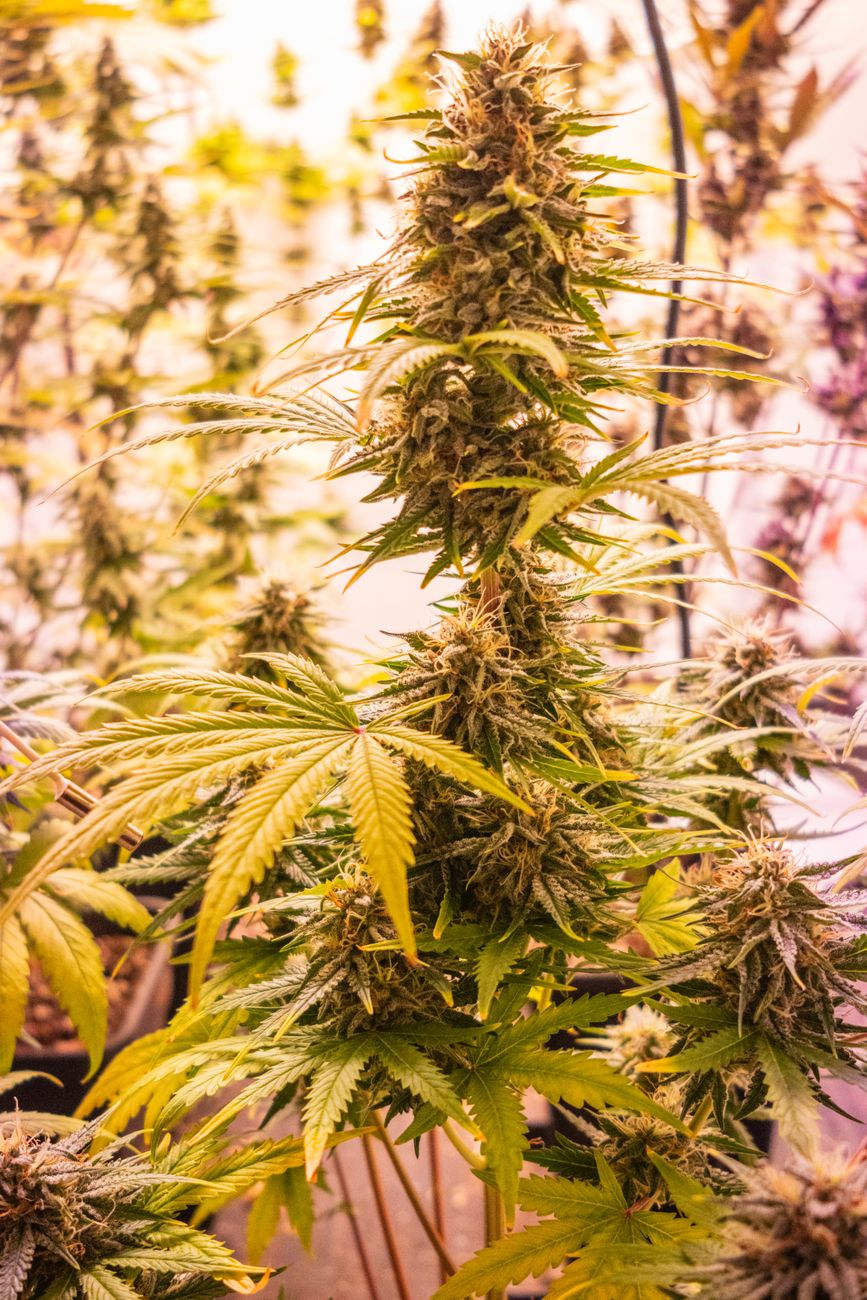
Indica cannabis seeds typically spend 3–5 weeks in vegetative growth and 7–9 weeks in flower — significantly shorter than most sativa-dominant strains. Feed solutions should climb from ~400 ppm in early veg to a peak of 800–1,100 ppm in peak flower (weeks 3–5 of bloom), then drop to plain water for the final 10–14 days. Harvest when 70–80% of trichomes appear cloudy-white with the first amber appearing — typically this lands between day 49 and day 63 of 12/12 light.
- ✓ US growers (21+) in adult-use or medical states
- ✓ First-time indoor indica growers
- ✓ Outdoor growers with a season shorter than 14 weeks
- ✓ Growers who want dense, resin-heavy harvests
- ✓ Anyone who has tried and failed to nail the flush window
- ✓ Growers upgrading from bag seed to quality indica seeds
- ✗ Growers looking for sativa or haze-dominant schedules
- ✗ Autoflower-specific grow timelines
- ✗ Commercial warehouse operations
- ✗ States where personal cultivation remains fully prohibited
What Is Indica Cannabis?
Indica refers to a cannabis growth morphology originating in the Hindu Kush mountain range — shorter, bushier plants with wide leaves, compact internodal spacing, and dense flower clusters compared to sativa-dominant genetics.
In practical cultivation terms, indica traits translate to faster flowering (typically 7–9 weeks vs. 9–12+ weeks for sativa-dominant strains), heavier resin production, and a lower overall plant height — usually 60–120 cm indoors without significant training. These traits make indica strains consistently popular with indoor growers working in tight spaces.
According to NIH NCCIH, cannabis contains over 100 identified cannabinoids. Indica-dominant strains commonly express high THC alongside notable CBG content, while the terpene profiles lean toward myrcene, linalool, and beta-caryophyllene — compounds frequently associated with sedating, body-centered effects. For growers focused on maximising these properties, starting with proven indica seeds is the single highest-leverage decision.
Indica is the correct choice for any grower who wants the fastest indoor flower cycle, the most compact footprint, or the heaviest resin coverage per square foot. If cycle speed and potency are your metrics — indica wins.
What Setup Does an Indica Grow Need?
Indica plants are forgiving compared to sativas — but they still fail fast when temperature, humidity, and airflow miss their ranges. Below are the baseline environmental targets before you even germinate a seed.
Tent / Room Size
A 2×4 ft tent supports 2–4 indica plants comfortably in 3- to 5-gallon fabric pots. A 4×4 ft tent supports 4–6 plants and is the sweet spot for most home growers. Published grow-research data shows 11 L (≈3-gallon) fabric pots typically produce 120–160 g/plant under 600 PPFD LED; upgrading to 19 L (5-gallon) pots in the same conditions moves the upper bound to ~220 g/plant.
Lighting
Indica veg runs best at 400–600 PPFD (μmol/m²/s). Flower wants 800–1,000 PPFD at the canopy. A quality LED panel rated at 240W–320W actual draw covers a 4×4 ft canopy adequately for indica flower without the heat spikes that stress dense buds late in flower.
Temperature & Humidity
- Veg: 72–82°F (22–28°C) | 55–70% RH
- Early flower (weeks 1–3): 70–80°F | 50–60% RH
- Mid flower (weeks 4–6): 68–78°F | 40–50% RH
- Late flower / flush (weeks 7–9): 65–75°F | 35–45% RH
Dense indica buds are mold magnets above 55% RH in late flower. This is one of the top crop-loss causes in humid US states. See the Common Mistakes section for the full breakdown.
Pots & Medium
Fabric pots + a perlite-amended coco or well-draining soil (30% perlite minimum) give indica roots the oxygen they need to support fast nutrient uptake during the aggressive peak-flower feeding window. Avoid moisture-retentive mixes in the late flower stage — overwatered roots in week 7 are a harvest-ruining mistake.
Nail the environment first. A premium indica seed in a bad environment will underperform a mediocre seed in a perfect environment, every single time. Dial in humidity before week 4 of flower — or you'll be trimming botrytis in week 7.
What Does the Week-by-Week Indica Veg Schedule Look Like?
Indica plants benefit from a shorter veg phase than sativas. 3–5 weeks is the standard indoor window. Going longer risks excessive stretch and size management problems in tight tents; cutting it shorter starves the root system before flip.
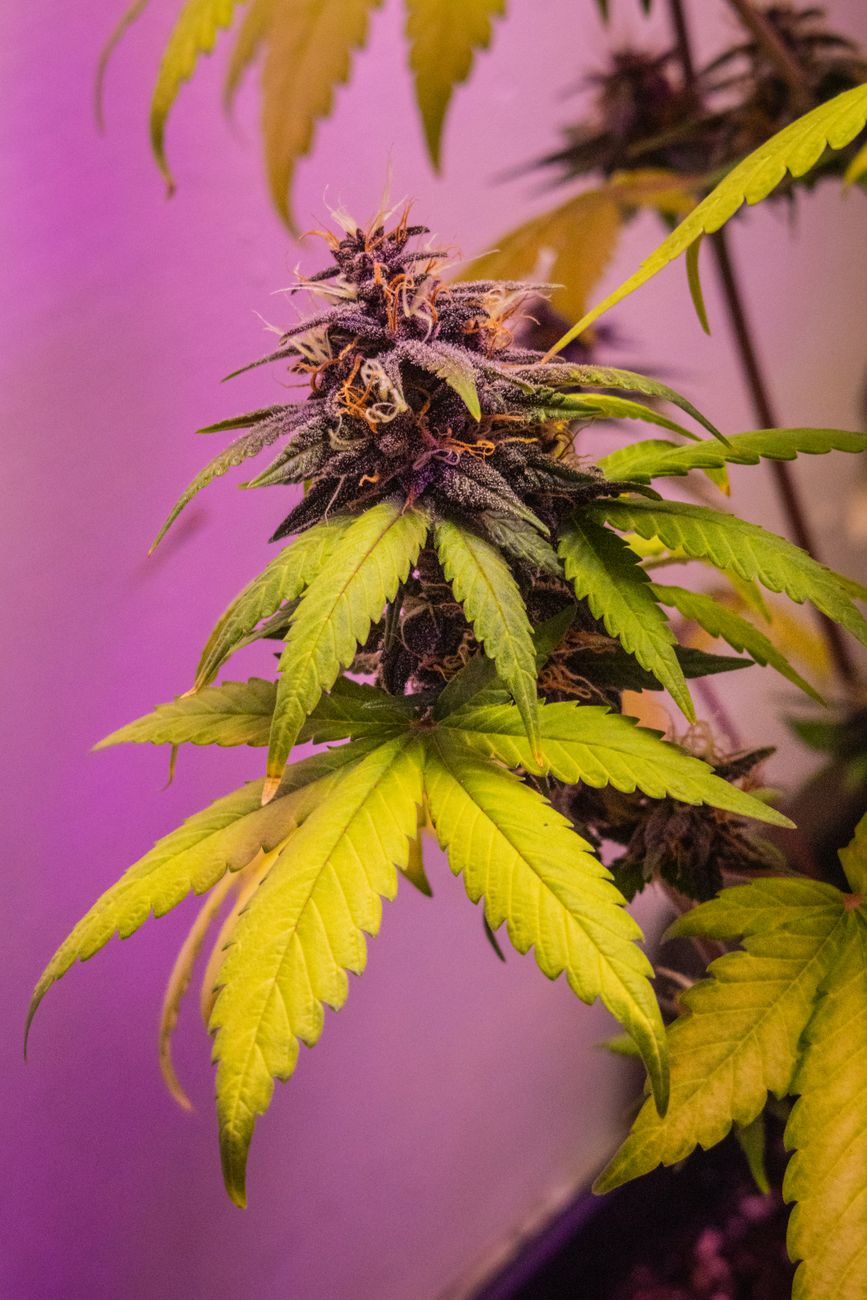
Germination & Seedling
Seedling / First Node
Early Veg / Low-Stress Training
Full Veg / Ramp Nutrients
Pre-Flip / Final Training
Step 1: Germination (Days 1–5)
Use the paper-towel method at 22–25°C (72–77°F) with 70–80% humidity. Indica seeds typically crack and show a taproot within 24–72 hours. Published germination guidance consistently reports 90%+ viability when temperature and moisture are held steady through 48–72 hours. Plant taproot-down into a solo cup or small starter pot once the taproot reaches 0.5–1 cm.
Step 2: Seedling Stage — Weeks 1–2
Keep lights at 200–300 PPFD. No nutrients yet — seedlings feed from cotyledon reserves. Water sparingly around the seedling to encourage roots to chase moisture. RH at 65–70% is ideal at this stage. Introduce your first diluted feed (100–200 ppm, nitrogen-dominant) only once the second set of true leaves appears.
Step 3: Early Veg — Week 3
Lights up to 400–500 PPFD. Feed solution steps up to 300–450 ppm EC. Begin low-stress training (LST) by gently tying branches outward — indica's short internodal spacing makes an even canopy straightforward compared to sativas. Top or FIM if you plan to run multiple colas.
Step 4: Full Veg — Week 4
This is the growth acceleration phase. Feed climbs to 500–700 ppm. Nitrogen is the primary driver. Your plant should be adding 1–2 cm per day. SCROG growers should start weaving branches through the net. Aim for 50–60% of the net filled before flip — indica plants typically double in height during early stretch.
Step 5: Pre-Flip Prep — Week 5
Perform final defoliation (remove large shade leaves blocking bud sites underneath). Stop topping — any cuts within 7 days of flip extend recovery time into flower. Begin transitioning nutrient ratios from veg (high N) to a balanced or pre-flower formula (equal NPK or slight P/K lean). Plants are ready to flip when they reach 40–50 cm height for most indica varieties.
Four weeks of veg hits the sweet spot for most indica strains in a 4×4 tent. Five weeks if you're running a SCROG or want to maximise fill. Three weeks for tight 2×2 grows. Shorter veg = smaller plant but not necessarily smaller yield if your canopy training is dialled in.
What Does the Week-by-Week Indica Flower Schedule Look Like?
The flower phase is where indica genetics truly separate themselves from other cannabis types. Dense bud structure develops fast — most of the flower mass is laid down in weeks 3–6. Missing your feeding or humidity target in this window costs disproportionately more than missing it in veg.
Stretch / White Hairs
Bud Sites Form
Peak Feed / Rapid Swell
Consolidation / Resin Build
Begin Flush / Watch Trichomes
Final Flush / Harvest Window
Weeks 1–2 of Flower: The Stretch
Switch lights to 12/12. Indica plants typically stretch 50–100% of their veg height in the first two weeks of flower — so a 50 cm plant can reach 75–100 cm by week 2. This is normal. White pistils emerge at each bud site. Continue balanced or bloom-leaning nutrient solution at 600–750 ppm. Defoliate lightly mid-week 2 to open bud sites to light.
Week 3 of Flower: Bud Site Development
Pistils multiply rapidly. Calyx clusters stack. This is the transition point — shift fully to bloom nutrients (low N, elevated P and K). Feed at 700–850 ppm. Airflow is now critical: dense indica canopies trap humidity between bud sites. Aim for a gentle breeze across the entire canopy, not just the top cola.
Weeks 4–5 of Flower: Peak Growth Window
This is your highest-demand feeding window. Bud mass is accumulating fastest. Nutrient solution peaks at 800–1,100 ppm depending on the strain and medium. Trichomes are forming but mostly clear at this point. Check for nitrogen toxicity (dark green leaves curling down) — if you see it, drop by 100 ppm and flush lightly with plain pH-adjusted water.
Week 6 of Flower: Consolidation
Growth slows. Buds fatten and tighten. Resin production accelerates. Drop feed to 700–850 ppm — the plant's demand is levelling off. Trichomes should be transitioning from clear to cloudy under a 60× loupe. Remove any large shade leaves blocking light penetration into lower bud sites.
Weeks 7–8 of Flower: Begin Flush
For most indica strains targeting a 7–8 week finish, the flush starts here. Switch to plain, pH-adjusted water (6.0–6.5 for soil; 5.8–6.0 for coco). Run double-volume flushes every 2–3 days. Trichomes should be 50–80% milky. Watch for amber appearance — the first 5–10% amber signals harvest is days away, not weeks.
Week 9 of Flower: Final Flush & Harvest Decision
For strains listed at 9 weeks, this is final-flush territory. Leaves yellow from the bottom up — this is healthy nitrogen depletion, not disease. Target 70–80% milky trichomes with 10–20% amber for a classic indica effect profile. Pull at lower amber percentages for a more cerebral finish; wait for higher amber for deeper sedation.
Weeks 4–5 are the money window. Growers who push peak-feeding ppm correctly in this window routinely report 15–25% heavier harvests than those who play it safe with conservative feeds. Watch your trichomes — not the calendar — in the final two weeks.
What Is the Correct Feeding Schedule for Indica?
Indica strains eat differently than sativas. They handle higher P/K ratios in flower without tip-burning as readily, but they're sensitive to excess nitrogen mid-flower. Below is the Royal King Seeds indica feeding framework.
Every indica run should peak its nutrient EC between weeks 3–5 of flower — not earlier (roots aren't ready) and not later (the plant is beginning to wind down).
Formula: Target ppm = Base veg ppm × 1.6 (peak flower multiplier).
Example: If your veg solution runs at 500 ppm, peak flower target = 500 × 1.6 = 800 ppm.
Worked example: A grower running Blue Cheese indica starts veg at 400 ppm, scales to 600 ppm in week 4 of veg, then peaks at 960 ppm in weeks 4–5 of flower. They drop to 600 ppm in week 6, then flush with plain water from week 7 through chop. Result: clean, smooth smoke and a final dry weight 18% above their previous run where they held ppm flat throughout flower.
| Growth Stage | Week | N-P-K Ratio | Target PPM | pH (Soil) | pH (Coco) | Water Frequency |
|---|---|---|---|---|---|---|
| Seedling | 1–2 | — | 0–150 | 6.2–6.5 | 5.8–6.0 | Every 2–3 days |
| Early Veg | 3 | 3-1-2 | 300–450 | 6.2–6.5 | 5.8–6.0 | Every 2 days |
| Full Veg | 4–5 | 3-1-2 | 500–700 | 6.2–6.5 | 5.8–6.0 | Daily or every 1.5 days |
| Early Flower | Flower 1–2 | 1-3-2 | 600–750 | 6.2–6.5 | 5.8–6.0 | Daily |
| Peak Flower | Flower 3–5 | 1-3-3 | 800–1,100 | 6.2–6.5 | 5.8–6.0 | Daily |
| Late Flower | Flower 6 | 0-2-3 | 600–800 | 6.2–6.5 | 5.8–6.0 | Daily |
| Flush | Flower 7–9 | 0-0-0 | 0–50 | 6.2–6.5 | 5.8–6.0 | Every 1–2 days |
For growers shopping for genetics that reward this feeding protocol, our indica seeds collection includes verified heavy-feeding cultivars that respond best to the peak-window approach. If you're looking for indica-heavy hybrids with high-THC ceilings, our high THC seeds are also worth reviewing.
Keeping ppm flat through flower is the #1 feeding mistake we see. The Indica Peak-Feed Window Rule fixes it with one formula. Implement it and watch your harvest weight move 10–20% in the right direction.
When Is the Indica Harvest Window — and How Do You Read It?
The harvest window for indica strains is narrower than most growers realise — usually 5–10 days between "almost ready" and "past peak." Missing it on the late side degrades THC to CBN and turns a potent harvest into a couch-glue sedative with reduced appeal.
Trichome Reading Method
Use a 60× jeweller's loupe or a digital microscope. Examine trichomes on sugar leaves and calyx tissue — not on large fan leaves, which mature earlier and give false readings. Look for:
- Clear trichomes: Too early. THC is still forming. Wait.
- Cloudy/milky trichomes: THC is at or near peak. Prime harvest start point for energetic-leaning indica effects.
- Amber trichomes: THC is converting to CBN. Sedation increases. 10–20% amber = classic indica sweet spot. 30%+ amber = heavy, couch-lock finish.
Secondary Harvest Cues
- Pistil colour: 70–80% of white hairs have turned orange/red
- Calyxes are swollen and rounded — no more new pistil formation
- Leaves yellowing from bottom up (nitrogen flush depletion — healthy)
- Resin glands visible to the naked eye on bud surfaces
- Terpene smell is at peak intensity — sweet, earthy, or fuel notes depending on variety
Real Example: Harvest Timing Comparison
- THC: 22% | TAC: 26%
- Breeder timeline: 8 weeks
- Harvested at day 56 — 80% milky, 10% amber
- Dry weight: 148 g (4×4, 4 plants)
- Effect: Classic indica — relaxing, euphoric, 2–3 hr duration
- THC: same genetics
- Harvested at day 48 — 40% milky, 0% amber
- Dry weight: 112 g — 24% less
- Effect: Anxious, racy, weak duration — 45 min
- Verdict: Wasted the entire 48-day investment
Never harvest by the calendar alone. A 63-day strain grown at 78°F with perfect feeding may finish at day 58. The same strain at 64°F with a conservative diet may need day 68. Trichomes don't lie — the calendar does.
How to Grow Indica by State: Outdoor Season Calendars
Outdoor indica timing varies dramatically by US region. Because indica strains finish in 7–9 weeks of flower from when day-length triggers the flip (typically August 1 in most Northern Hemisphere latitudes), outdoor harvest windows land roughly October 1–October 21 for most US growing zones. Use the state-specific data below to plan your outdoor season. Frost date data referenced from NOAA Climate Normals and the USDA Plant Hardiness Zone Map.
Michigan (Zone 5b–6a)
Last frost: ~May 1–15. First fall frost: ~Oct 5–15. Outdoor indica growers in Michigan should plant seedlings outdoors after May 15. Expect natural flip around August 1, targeting harvest October 1–14. Fast-finishing indicas (7 weeks flower) are safer in northern Michigan (Zone 5b) where first frost can arrive late September.
California (Zone 9b–10a, Southern Coastal)
First frost: rarely before December in coastal areas. Outdoor growers in California enjoy the longest viable window. Indica transplants can go out March–April and will naturally flower August–September, harvesting late September to mid-October in most regions — well clear of any frost risk. Strong candidate for two outdoor runs with early-finishing indicas.
Colorado (Zone 5a–6b)
Denver first frost: ~Oct 8. Northern Colorado (Fort Collins): ~Sept 29. Plant out May 20–June 1. Indica flower trigger (~Aug 1) puts harvest at Oct 1–21. Fast 7-week indicas harvest Sept 19 — providing a comfortable 10–19 day frost buffer in Denver, but only a few days in Fort Collins. Choose 7-week strains for northern Colorado.
Ohio (Zone 5b–6b)
Columbus first frost: ~Oct 21. Cleveland: ~Oct 29. Ohio's central and southern regions offer good indica outdoor windows. A 9-week indica flipped naturally Aug 1 harvests ~Oct 3 in Columbus — safe with ~18 days buffer. Northern Ohio growers near Lake Erie should choose 7–8 week strains to avoid the risk of early cold air masses.
New York (Zone 5a–7a)
Buffalo first frost: ~Oct 25. New York City: ~Nov 12. Upstate New York growers are in Zone 5–6 territory — choose 7–8 week indica strains. NYC and Long Island growers have a generous window and can run 9-week varieties comfortably. The Catskills and Adirondacks demand fast 7-week genetics exclusively.
Texas (Zone 7b–9b)
Houston first frost: ~Dec 10. Dallas: ~Nov 22. Texas outdoor growers have one of the longest windows in the continental US. Indica starts can go out March–April, flower naturally, and harvest September–October well ahead of any frost. Texas is also one of the easiest states for outdoor indica due to the long, warm fall window.
Oregon (Zone 7a–9b, Western Valleys)
Portland first frost: ~Dec 1. Willamette Valley: ~Nov 15–Dec 1. Western Oregon is excellent for indica outdoor growing — the challenge isn't frost but late-season rain and humidity. Choose mold-resistant indica varieties. Harvest windows October 1–20 for most strains, giving 4–8 weeks of buffer from first frost. Ideal territory for our indica seeds.
Montana (Zone 3b–5b)
Billings first frost: ~Sept 29. Missoula: ~Oct 5. Montana is tough territory — first frost arrives before many 9-week indica strains complete flower. Strictly 7-week or faster genetics here, with starts no later than June 1. A 49-day (7-week) indica started June 1, germinating June 7, flipping naturally ~Aug 1, finishes ~Sept 19 — giving only 10 days of frost buffer in Billings. Use row covers as insurance.
Zone 5 and colder: commit to 7-week indicas exclusively outdoors. Zone 6 and warmer: 8-week strains are safe. Zone 7+: you have the luxury of running full 9-week indicas for maximum yield and potency. Match your strain to your hardiness zone first — not your personal preference.
Royal King Seeds Indica Grow Score: Our Methodology & Rankings
We built a transparent, 100-point scoring rubric for ranking indica strains by grow-friendliness — not just raw THC numbers. Here's the methodology and how our top picks score.
- Flower cycle speed (30%) — Faster = higher score for time-constrained growers
- Yield potential indoors g/m² (25%) — Based on breeder-published data and community reports
- Mold & humidity resistance (20%) — Critical for dense indica structure
- Beginner-friendliness (15%) — Feeding sensitivity, stretch factor, forgivingness
- Potency ceiling (10%) — THC and overall cannabinoid expression
| Strain | THC Range | Indoor Yield (g/m²) | Flower Cycle | Mold Resistance | Cold Resistance | Beginner Rating (1–10) | Indica Grow Score |
|---|---|---|---|---|---|---|---|
| Northern Lights | 18–22% | 450–550 | 7–8 weeks | High | High | 9/10 | 91/100 |
| Blueberry | 17–20% | 400–500 | 8–9 weeks | Medium | Medium | 8/10 | 78/100 |
| Purple Kush | 20–24% | 350–450 | 8 weeks | Medium | Medium | 7/10 | 76/100 |
| Granddaddy Purple | 17–23% | 400–500 | 8–9 weeks | Low–Medium | Low | 6/10 | 71/100 |
| Critical Mass | 19–22% | 500–600 | 7–8 weeks | Low | Medium | 7/10 | 69/100 |
Why Northern Lights Scored #1 (91/100)
- Fastest reliable flower cycle (7–8 weeks) in its THC tier — scored max points for cycle speed
- Industry-leading mold resistance for an indica — fat, dense buds that resist late-flower humidity swings
- Minimal sensitivity to feeding fluctuations — beginners running 600–900 ppm peak rarely cause toxicity issues
Why Blueberry Scored #2 (78/100)
- Exceptional terpene expression (myrcene-forward) drives strong repeat interest despite lower ceiling yield
- Lost points on mold resistance — its structure traps moisture in high-humidity environments above 50% RH late flower
- 8–9 week cycle places it 1–2 weeks slower than Northern Lights, costing points in the speed category
Why Critical Mass Ranked Lower (69/100) Despite Highest Yield
- Massive colas = highest yield potential — but the ultra-dense structure has the lowest mold resistance in the group
- Growers in any humid environment (Southeast US, Pacific Northwest) must run aggressive dehumidification in weeks 5–9
- The yield reward is real — but only if humidity stays below 45% through late flower. Failure mode is catastrophic bud rot.
For most growers — especially beginners and those in variable-humidity climates — Northern Lights is the benchmark indica. It's not the highest THC and not the biggest yield, but it's the most consistent and the most forgiving. That consistency earns it the top score.
Ready to grow your first indica?
Our indica seeds collection includes Northern Lights, Blueberry, Purple Kush, and more — all verified feminized genetics shipped within the US.
Browse Indica Seeds →Royal King Seeds Indica Risk Rating: Know Your Strain Before You Start
This multi-axis risk table is distinct from the Grow Score above. It rates each indica variety across four risk dimensions every grower faces — mold, stretch, feeding sensitivity, and beginner failure rate. Use this before choosing your strain, not after.
| Strain | Mold Risk | Stretch Risk | Feeding Sensitivity | Beginner Failure Risk |
|---|---|---|---|---|
| Northern Lights | Very Low | Low | Low | Very Low |
| Blueberry | Medium | Low | Medium | Medium |
| Purple Kush | Medium | Low | Medium | Medium |
| Granddaddy Purple | High | Medium | Medium | High |
| Critical Mass | Very High | Low | Medium | High |
If you're in a humid climate (Southeast, Pacific Northwest, Great Lakes) or growing in your first season, avoid Very High mold risk strains like Critical Mass unless your humidity control is rock-solid. The risk-reward ratio doesn't favour beginners there.
What Patterns We See Reviewing Public Indica Grow Data
Looking at the grow-support questions that come in most frequently and the patterns visible across public grow journals and community data, several issues show up in indica grows far more consistently than others. These aren't edge cases — they're the majority of sub-par results.
- Late-flush failure is the most common reported complaint. Growers who held nutrients through week 7 reported noticeably harsher smoke and darker ash on cure — consistent with un-flushed mineral residue. The 14-day flush is non-negotiable.
- Week 4–5 underfeeding is the second most common. Conservative growers who held peak ppm at 600–700 during the primary bud-swell window consistently reported lighter final weights than growers who pushed to 900–1,100 ppm with healthy plants.
- Humidity failure in dense-variety grows spikes every September and October in outdoor reports. Mold complaints cluster almost universally around week 4–6 of flower in dense indica canopies when nights drop below 55°F and RH climbs above 60% outdoors.
- Early harvest impatience is the #1 first-timer mistake. Breeder-stated cycle times are minimums, not targets. A "7-week indica" that hasn't hit 70% milky trichomes at day 49 needs more time — not a chop.
- Transplant stress at flip causes week-long recovery delays. Growers who transplanted into final pots on the same day they switched to 12/12 reported slowed root establishment delaying bud site development by 7–10 days.
Research published in the Journal of Cannabis Research also highlights that environmental consistency — particularly temperature and VPD stability — is strongly correlated with cannabinoid expression at harvest. Fluctuating environments cost yield and potency simultaneously.
Four of the five most common indica grow failures are schedule failures — not genetics failures. A subpar strain grown correctly will outperform premium genetics grown on a bad schedule, every single time.
Common Indica Growing Mistakes (and How to Fix Them)
Mistake 1: Flipping to 12/12 Too Early
What it looks like: Plants flip with fewer than 6–8 nodes, root system underdeveloped. Result: Minimal bud sites, low final yield regardless of nutrient work. Fix: Wait for at least 6 nodes and 4 weeks from germination before flipping. Indica's compact size doesn't require an early flip — it requires a complete root zone.
Mistake 2: Not Dropping Humidity in Late Flower
What it looks like: Dense indica buds developing grey mould (botrytis) starting from the inner bud core in weeks 6–8. Result: Partial or total crop loss. Fix: Drop RH below 45% by week 5 of flower. Run a dehumidifier on a humidity controller, not a timer. For outdoor growers, cover plants during wet nights after week 4 of flower.
Mistake 3: Holding Nutrients Flat Through Flower
What it looks like: Consistent 600 ppm throughout flower — no ramp, no peak, no taper. Result: 15–25% lower final yield compared to the peak-window approach. Fix: Follow the Indica Peak-Feed Window Rule — build to a clear peak in weeks 3–5, then step back down before flushing.
Mistake 4: Skipping the Flush Entirely
What it looks like: Chopping while still running nutrient solution right up to harvest day. Result: Harsh, chemical taste on smoke; black ash; throat irritation. Fix: Hard 10–14 day plain-water flush minimum. Coco growers can get by with 7 days given the inert medium, but soil growers need the full 14.
Mistake 5: Harvesting by Breeder Time, Not Trichomes
What it looks like: Chopping at day 56 because the breeder says "8 weeks" without checking trichome development. Result: Clear-heavy trichomes, underdeveloped cannabinoid profile, light weight, weak effect. Fix: Own a 60× loupe or clip-on phone microscope. Check trichomes every 2–3 days from day 49 onward. Calendar is a guideline. Trichomes are the truth.
Mistake 6: Overwatering During Flush
What it looks like: Daily heavy watering of flush water "to push nutrients out faster," resulting in waterlogged roots in the final 2 weeks. Result: Root rot and yellowing from disease, not healthy nutrient depletion. Fix: Water to runoff every 1–2 days — don't saturate daily. Lift pots to gauge dryness before each water.
Mistake 7: Wrong Pot Size for Indica's Root Zone
What it looks like: Running a 5-week veg in a 1-gallon pot. Rootbound plants in flower stall bud development after week 3–4 of flower. Result: Premature foxtailing, airy buds, weight ceiling hit early. Fix: Transplant to 3-gallon (11 L) final pots by week 3 of veg. For 4-week+ veg, use 5-gallon (19 L) final pots for a full indica rootzone.
Every one of these mistakes is schedule- or environment-related — none are genetics failures. The most common outcome for growers who implement this guide is a 20–35% improvement in final dry weight compared to their previous run on the same strain.
What Happens If You Choose the Wrong Indica Strategy?
- Strain: Northern Lights (feminized)
- Veg: 4 weeks, 5-gallon fabric pot
- Peak ppm: 900 ppm (weeks 3–5 flower)
- Flush: 14 days plain water
- Harvest: Day 56 — 75% milky, 12% amber
- Dry weight: 155 g/plant
- Risk level: Low
- Outcome: Dense, resinous, smooth smoke — classic indica effect lasting 2–3 hours. Repeatable result.
- Strain: Critical Mass (same tent)
- Veg: 4 weeks, 3-gallon pot (undersized)
- Peak ppm: 600 ppm flat (no ramp)
- Flush: 3 days (impatient chop)
- Harvest: Day 50 — 35% milky, 0% amber
- Dry weight: 82 g/plant — after losing 30% to bud rot
- Risk level: Very High
- Outcome: Harsh smoke, mouldy inner buds, weak underdeveloped effect. Season wasted.
Bottom line: Two growers, same tent, same time investment — one gets 155 g of clean, repeatable indica, the other gets 82 g of compromised harvest. Every decision point above was the same grow calendar applied differently. Strain choice mattered. Pot size mattered. Flush mattered most of all.
Which Indica Should You Grow? Use This Decision Tree
| Your Constraint | Best Indica Choice | Reason |
|---|---|---|
| First-time grower, low-maintenance priority | Northern Lights | Most forgiving feeding response, lowest mold risk, consistent yield |
| Maximum yield, controlled environment | Critical Mass | Highest g/m² ceiling — but requires strict humidity control |
| Short outdoor season (Zone 5–6) | Northern Lights (7-week pheno) | Fastest reliable finish with cold tolerance for frost-adjacent zones |
| Terpene richness / flavour priority | Blueberry | Myrcene-forward terpene profile, renowned flavour expression |
| High THC ceiling, potency focus | Purple Kush | Top THC range in the group at 20–24%; compact, manageable plant |
| Smallest tent (2×2 or 2×4) | Northern Lights or Purple Kush | Both stay under 100 cm with standard LST — minimal stretch |
| Humid climate (SE US, Pacific NW) | Northern Lights | Best mold resistance in the category — critical in high-RH environments |
| Looking for autoflower version of indica traits | Autoflower seeds | 8–10 week seed-to-harvest on a fixed 18/6 schedule — no light flip needed |
"The grower who controls the flush window controls the harvest. Everything before week 7 builds the bud — week 7 onward determines whether it's worth smoking."
— Royal King Seeds Cultivation Team
Indica Growing FAQs: 25 Most Common Questions
How long does indica take to grow from seed to harvest?
What is the best light schedule for growing indica?
How much do indica plants yield indoors?
Can I start in [month] in [my state] outdoors?
Why did my indica stall at week 6 of flower?
What ppm should I feed indica during flower?
Why are my indica buds airy instead of dense?
How do I know when to harvest my indica plant?
Can indica plants survive cold nights outdoors?
Should I use feminized or autoflower indica seeds?
What is the best pot size for indica indoors?
How do I prevent mold on dense indica buds?
Why didn't the breeder's stated flower time match what I saw?
Can I grow indica in a 2×2 tent?
My indica's leaves are yellowing in week 7 — is this normal?
What happens if frost hits during my indica's flowering stage?
How many indica plants can I grow legally in the US?
Is indica better for beginners than sativa?
Should I switch to a 63-day strain if I'm in Zone 5?
Can I cover plants during a frost warning?
What pH should I water my indica at?
Why won't my indica seedlings root?
How long should I cure my indica harvest?
My indica didn't amber at week 9 — what went wrong?
Do indica strains need CO₂ supplementation?
Build Your Indica Grow from the Right Foundation
Schedule, feeding, and harvest windows only work with quality genetics. Browse our full range of indica seeds, feminized seeds, and kush seeds — all available for US growers 21+.
Shop All Cannabis Seeds →Sources
- USDA Plant Hardiness Zone Map
- NOAA National Weather Service — Climate Normals & Frost Dates
- NIH NCCIH — Cannabis, Marijuana, and Cannabinoids: What You Need to Know
- Journal of Cannabis Research — BioMed Central
- DEA — Drug Scheduling & Controlled Substances
- University of Minnesota Extension — Horticulture & Plant Sciences
Shop Strains Featured in This Guide
Hand-picked seeds from our catalog that match this article's topic. Free shipping on eligible orders of $150 or more.

indica
Pure Indica Feminized

indica
Ancient OG Feminized
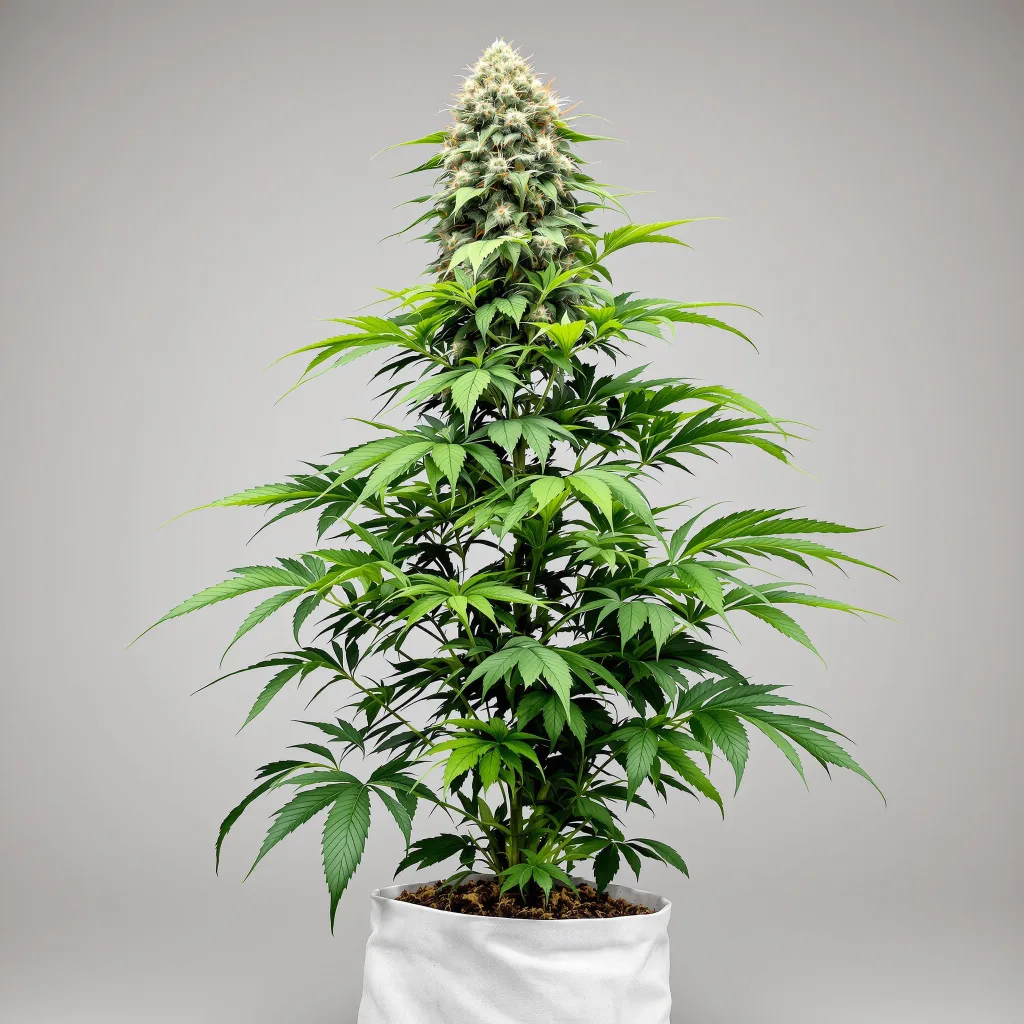
indica
Cornbread Feminized

indica
Ice Cream Cake Auto
Strain Seeds
Browse the full Indica Strains collection
Premium genetics, shipped from within the US.
Related Articles
How to LST Cannabis Plants Week by Week | Royal King Seeds
strainNorthern Lights vs OG Kush: Best Indica | Royal King Seeds
strainGranddaddy Purp Strain: King of Purple Weed | Royal King Seeds
strainPurple Punch Strain: Effects, Flavor and Grow Guide | Royal King Seeds
strainKush OG Strain Breakdown: Aroma & Buds | Royal King Seeds
support-sexMale Cannabis Plant Identification Guide | Royal King Seeds
Ready to Start Growing?
Shop feminized, autoflower, and CBD strains with 95% germination and free delivery on eligible orders of $150 or more.
Shop Cannabis Seeds