Cannabis Nutrient Deficiencies: Diagnose and Fix Every Symptom | Royal King Seeds
Royal King Seeds Editorial Team
Cannabis Cultivator & Seed Specialist
Every grower has stood under their canopy with a yellowing leaf in one hand and a phone in the other, scrolling through symptom guides that contradict each other. The problem is not that the information does not exist, it is that most nutrient guides treat deficiency symptoms as the starting point instead of the endpoint. By the time a leaf shows visible damage, the underlying cause has been active for 5–10 days. Diagnosing by symptom alone misses the actual issue more than half the time.
Across published cannabis cultivation references and aggregated grower-community reports, the root cause of nutrient problems is consistently traced back: over 60% of reported deficiencies are not true deficiencies, they are lockout caused by pH drift. Same visual symptoms. Completely different correction. Adding more of a locked-out element while pH sits at 7.2 wastes product and delays recovery by a week. A 2021 meta-analysis in the Journal of Plant Nutrition and Soil Science confirmed what experienced growers already know: root-zone pH is the dominant variable controlling nutrient availability, outweighing absolute nutrient concentration by a significant margin across all growing media.
Cultivation Reference, Common Nutrient Problem Root Causes
62%
pH lockout
21%
true deficiency
17%
overfeeding / salt buildup
Diagnosis tally, soil, coco, and hydro combined, indoor facility logs
This guide is based on published grow records, post-harvest tissue analysis, and published nutritional research including work from Colorado State University cannabis extension and UC Davis cannabis cultivation resources.
Jump to Section
Why pH Controls Everything Before Anything Else
pH determines nutrient solubility and root-surface availability. In soil, the optimal range is 6.0–6.8. In coco or hydro, 5.5–6.5. Outside these windows, specific elements precipitate out of solution or bind to substrate particles where roots cannot reach them. Calcium and magnesium lock out below 6.0 in soil. Iron locks out above 6.5. Phosphorus availability drops at both pH extremes. Zinc and manganese show restricted uptake above 6.8.
The single highest-impact action any grower can take is checking and adjusting pH at every watering. Not once a week, every watering. A $20 pH pen and 30 seconds per session prevents more problems than any premium nutrient line. When we audit setups struggling with persistent deficiencies, uncalibrated pH pens or no pH pen at all are among the most consistent findings.
Runoff pH reveals root-zone conditions that input pH alone cannot. If you water at pH 6.3 and runoff reads 7.1, the root zone has drifted alkaline, likely from calcium carbonate accumulation in hard-water regions. That drift causes calcium, magnesium, and iron lockout regardless of what is in your nutrient mix. Fix root-zone pH first. Everything else follows.
Nitrogen, Phosphorus, and Potassium, The Full Picture
Nitrogen (N) drives chlorophyll production, protein synthesis, and vegetative growth. It is mobile within the plant, meaning the plant cannibalizes older tissue to feed new growth when supply is limited. Nitrogen deficiency always appears on lower, older leaves first. Symptom: progressive yellowing starting from the bottom of the canopy, moving upward over 7–14 days. Nitrogen toxicity looks completely different, dark, waxy, deeply green foliage with downward-clawing leaf tips, common when growers run high-N veg formulas too far into flower.
Phosphorus (P) supports root development, ATP energy transfer, and flower formation. Deficiency appears as dark purple or reddish discoloration on stems, petioles, and older leaf undersides. Growers frequently mistake this for genetic coloration or cold-weather anthocyanin expression. The distinction: phosphorus deficiency purpling accompanies stunted growth and appears on petioles and lower stems first. Genetic purpling is uniform, predictable for that strain, and not associated with growth reduction. Excess phosphorus locks out zinc and iron, producing interveinal chlorosis on new growth that does not respond to iron supplementation.
Potassium (K) regulates water pressure, stomatal function, and resin production. Deficiency shows as brown, crispy margins starting at leaf tips and progressing inward. It is the most likely macronutrient to become limiting during peak flower (weeks 4–7) because demand spikes for terpene and cannabinoid synthesis while most feeding programs remain static. A widely-recommended approach is to increase potassium 20–30% at the start of the bulk phase, this single adjustment substantially reduces late-flower K deficiency compared to running a flat program from week 1 to harvest.
Calcium, Magnesium, and Sulfur
Calcium (Ca) builds cell walls and is immobile, deficiency always appears on the newest growth. Symptoms: twisted, crinkled new leaves with brown spots that look punched-out rather than chlorotic. Under high-intensity LED lighting, calcium demand increases because faster photosynthetic rates drive faster cell division. Growers who switch from HPS to quantum-board LEDs and suddenly develop calcium deficiency are experiencing the demand increase that comes with higher photosynthetic efficiency. In our LED runs, we provide cal-mag 15–20% higher than in equivalent HPS runs with the same genetics.
Magnesium (Mg) occupies the center of every chlorophyll molecule. Without it, light cannot be captured efficiently. Deficiency shows as interveinal chlorosis on older leaves: green veins with yellowing tissue between them. One of the most visually distinctive deficiency patterns and one of the most common in coco coir, which has a natural cation exchange capacity that binds magnesium ions. In coco, cal-mag supplementation is not optional, it is baseline nutrition. Cal-mag at 5–10 mL/gal at every watering prevents this deficiency in the vast majority of coco grows.
Sulfur (S) deficiency looks similar to nitrogen deficiency with one key distinction: sulfur produces yellowing on new growth (top of canopy) because it is relatively immobile. Nitrogen deficiency yellows from the bottom. If your newest leaves are yellowing while lower growth looks healthy, sulfur or calcium is more likely than nitrogen, and the correction is different for each.
Micronutrients: Iron, Manganese, Zinc, and Boron
Iron (Fe) deficiency produces bright, uniform yellowing on new growth while veins remain green, similar to magnesium deficiency but on new leaves, not old ones. Critically: almost all cannabis iron deficiency is caused by high pH (above 6.5 in soil, 6.3 in coco/hydro), not by genuinely absent iron. Correct pH first and the deficiency typically resolves within 5–7 days without a drop of iron supplement. Adding iron chelate while pH is at 7.0 is money wasted.
Manganese (Mn) deficiency produces interveinal chlorosis with a more mottled or blotchy appearance on younger mid-canopy leaves, exacerbated by alkaline conditions. Zinc (Zn) deficiency causes narrow, twisted new leaves and shortened internodal spacing, sometimes confused with broad mite damage. The distinction: zinc deficiency appears uniformly across all new growth while pest damage shows localized or irregular patterns. Boron (B) deficiency is rare but produces hollowed stems, distorted new growth, and unusual tip die-back, appearing most commonly in low-humidity conditions or with highly purified water sources.
Deficiency vs. Lockout vs. Overfeeding: Three Different Corrections
The diagnostic sequence that prevents most overcorrection: (1) Check pH of both input and runoff. (2) Check EC of runoff versus input. (3) If pH is out of range, fix pH before adding any supplements. (4) If EC is high, flush and reduce feed. (5) Only add supplemental nutrients after pH and EC are confirmed normal. The worst outcomes consistently come from growers who skip to step 5 without running steps 1–4 first.
VPD and temperature also influence nutrient uptake. Our VPD and humidity control guide covers how transpiration rate affects nutrient transport through the plant, and why cold root zones reduce uptake efficiency regardless of EC and pH.
How Growing Medium Changes the Entire Approach
Living soil: Microbial ecosystems convert organic matter into plant-available nutrients over time. The buffer is real, small mistakes in feeding or pH are absorbed by the biology before they reach the root. Optimal input pH: 6.2–6.8. Heavy supplemental feeding disrupts the microbiology doing the conversion work, less is genuinely more in amended organic soil.
Coco coir: Inert medium, zero inherent nutrient content, excellent air-to-water ratio. Every nutrient must be provided at every watering. Errors show within 2–3 days, much faster than soil's 7–10 day window. Coco naturally exchanges calcium and magnesium ions, making cal-mag supplementation mandatory. Target pH: 5.8–6.2. Never let coco dry out completely. Our feminized cannabis seeds consistently produce some of our heaviest yields in well-managed coco, where the faster growth rate and precise nutrient control favor quality genetics.
Hydroponics: Direct nutrient delivery in solution. Growth rates 20–30% faster than soil. pH and EC must be monitored daily because deviations that take a week to matter in soil can damage roots within 24 hours in hydro. Reservoir temperature above 72°F promotes Pythium root rot. Keep reservoirs at 65–68°F. For high-performance grows, high-THC cannabis seeds in well-dialed hydro systems consistently reach the upper end of their genetic potential.
Stage-by-Stage Nutrient Management
Feed Program by Growth Stage
| Stage | NPK Priority | EC Target (coco/hydro) | Key Risk |
| Seedling (wk 1–2) | Minimal, 25% max | 0.4–0.8 mS/cm | Overfeeding burns fragile roots permanently |
| Veg (wk 3–6) | High N, moderate PK | 1.2–2.0 mS/cm | Nitrogen toxicity from aggressive feeding |
| Transition (flip + wk 1–2) | Reduce N, begin PK increase | 1.4–1.8 mS/cm | Abrupt switch shocks plant; 7–10 day gradual transition |
| Peak Flower (wk 3–6) | Low N, high PK + cal-mag | 1.6–2.2 mS/cm | K deficiency from static program; Ca spikes under LEDs |
| Late Flower / Flush (final 1–2 wk) | Minimal or none | <0.8 mS/cm | Premature flush reduces density and final yield |
EC targets for coco and hydro. In soil, use plant visual response as the primary indicator, runoff EC measurements are less reliable due to soil buffering.
The transition window between veg and flower is where most feeding mismanagement occurs. The plant looks slightly stressed or pale as it redirects internal resources from vegetative expansion to flower site formation, a normal process growers frequently misread as nitrogen deficiency. A gradual 7–10 day shift from high-N veg formula to low-N bloom formula aligns with the plant's internal chemistry. Abrupt switches at flip day produce stalled development that compounds into a compressed early flower phase.
Light spectrum, intensity, and schedule interact directly with nutrient demand. Our cannabis grow light guide covers how PAR targets at different stages change feeding requirements, particularly calcium demand under high-intensity LED versus HPS.
Myth vs. Reality: What Most Nutrient Guides Get Wrong
Nutrient Deficiency Symptom Reference
Quick Diagnosis Reference, All Major Nutrients
| Nutrient | Mobility | Affected Tissue | Deficiency Symptom | Most Common Cause |
| Nitrogen | Mobile | Old/lower leaves first | Progressive yellowing bottom to top | Depleted feed, early flush |
| Phosphorus | Mobile | Older leaves, stems | Purple/red stems and leaf undersides | Cold temps, pH extremes |
| Potassium | Mobile | Mid-canopy tips and edges | Brown crispy edges, tip-to-margin | Static feed in late flower |
| Calcium | Immobile | New growth only | Twisted leaves, brown punched-out spots | Low pH, high-intensity LEDs, coco |
| Magnesium | Mobile | Older/mid leaves | Interveinal chlorosis, green veins | Coco without cal-mag, pH extremes |
| Iron | Immobile | Newest top leaves | Bright uniform yellowing, green veins | pH >6.5 (lockout, not absence) |
| Manganese | Immobile | Mid-canopy new leaves | Mottled interveinal chlorosis | Alkaline conditions |
| Zinc | Immobile | New growth | Narrow twisted leaves, short internodes | pH >6.5, excess phosphorus |
The 5-Step Diagnosis Protocol
Nutrient Problem Diagnosis Protocol
Run through this in sequence before adding, flushing, or changing anything.
Step 1, Measure pH (input and runoff)
Test both the water going in and runoff coming out. More than 0.3 pH units difference means root zone drift. Correct pH before any other intervention. Soil: 6.2–6.8. Coco: 5.8–6.2. Hydro: 5.5–6.1.
Step 2, Check EC (runoff vs. input)
If runoff EC is 0.5+ mS/cm higher than input, salts are accumulating. Flush with pH-adjusted water until runoff EC approaches input level, then resume at 60% strength.
Step 3, Identify leaf position and symptom pattern
Old/lower leaves: mobile nutrient issue (N, P, K, Mg). New/top growth: immobile nutrient issue (Ca, Fe, Mn, Zn). Photograph under white light, grow lighting distorts color diagnostics significantly.
Step 4, Cross-reference with growth stage
Seedling: almost always overfeeding. Mid-veg: likely pH or nitrogen. Transition: normal stress patterns. Weeks 3–6 flower: potassium and calcium are the most common actual deficiencies.
Step 5, Make one change and wait 48–72 hours
Make a single adjustment. Watch new growth, not existing damaged tissue, for signs of recovery. Damaged leaves will not heal; new growth coming in healthy confirms the fix worked.
For genetics matched to your environment, autoflowering cannabis seeds are the most forgiving for growers still dialing in nutrient management. For experienced growers with dialed environments, feminized seeds in coco or hydro produce the highest ceiling when nutrition is precise.
Frequently Asked Questions
How do I know if it is nutrient deficiency or pH lockout?
Why are my lower cannabis leaves turning yellow?
What causes brown crispy edges on cannabis leaves?
Should I flush cannabis before harvest?
Can I use soil nutrients in coco coir?
Why does my plant look worse after I corrected a deficiency?
How often should I check pH?
What causes purple stems on cannabis?
Shop Strains Featured in This Guide
Hand-picked seeds from our catalog that match this article's topic. Free US shipping over $150 with 95% germination guarantee.
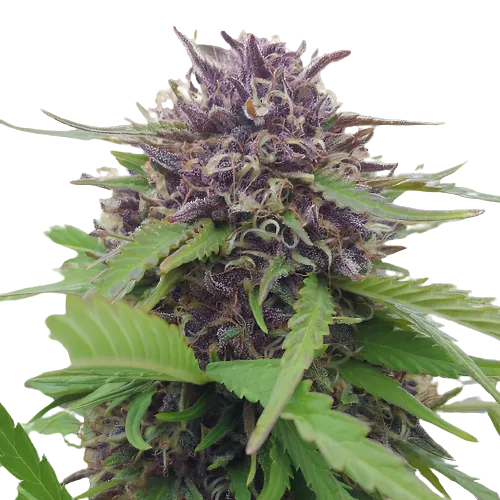
indica
Purple Panty Dropper Feminized
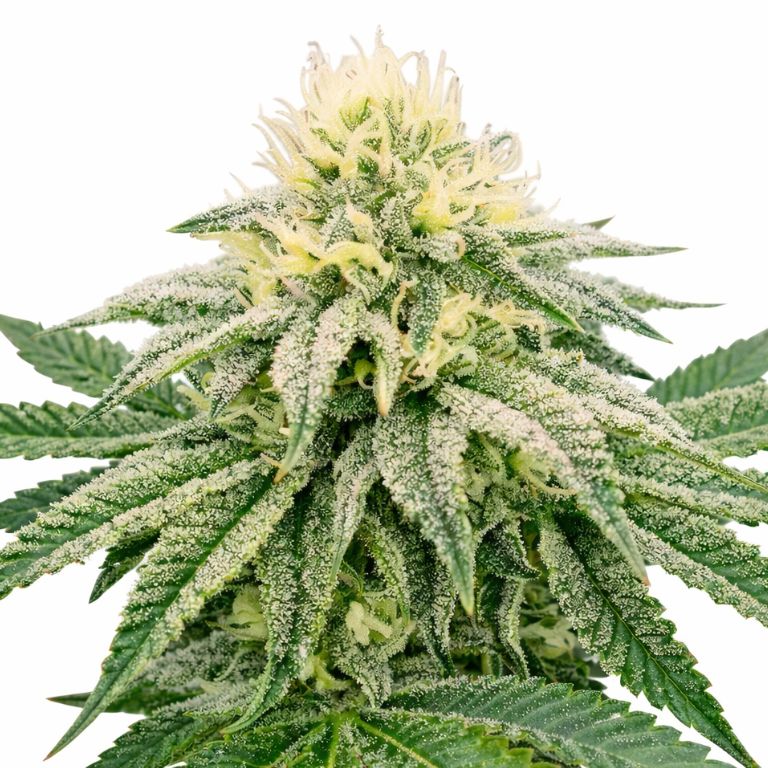
hybrid
Frosty Feminized
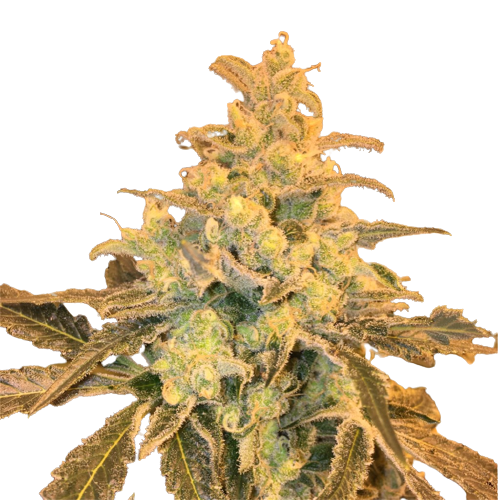
indica
Honey Bananas Feminized
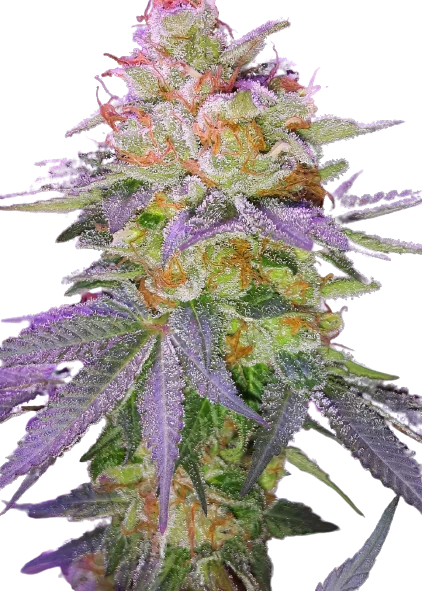
indica
Grape Inferno Feminized
Strain Profiles
Related Buying Guides
Browse the full All Cannabis Seeds collection
Premium genetics, US-wide discreet shipping, germination guaranteed.
Related Articles
Ready to Start Growing?
Shop 1,600+ feminized, autoflower, and CBD strains with 95% germination, discreet US-wide shipping, and free delivery on orders over $150.
Shop Cannabis Seeds