Cannabis Nutrient Burn and Light Stress: Fix It Fast | Royal King Seeds
Royal King Seeds Editorial Team
Cannabis Cultivator & Seed Specialist
Nutrient burn and light stress are the two most common causes of the brown, crispy leaf tips that new growers panic about, and they are frequently misdiagnosed. The symptoms overlap enough that the wrong diagnosis leads to the wrong fix, and the wrong fix makes the problem significantly worse. Reducing nutrients when the problem is actually light distance does not help. Dimming the light when the plant is actually overfed just delays the EC correction you needed to make three days ago.
Published cultivation references track nutrient burn and stress events across multiple strains and environments. The widely-recommended diagnostic framework has two phases: first, identify which system is responsible, then apply the appropriate correction. Getting the diagnosis right matters more than reacting fast. This guide covers the complete diagnostic and recovery process for both conditions, with widely-recommended numbers and the common mistakes that turn minor stress into major yield loss.
Nutrient Burn and Light Stress, Key Numbers
72-96h
time to see correction results
0.3-0.5
EC reduction for nute burn correction
18-24"
typical light distance causing stress (LED 480W)
The biggest mistake: treating both conditions identically when they require opposite responses.
Data from indoor runs, multiple strains, coco/perlite and soil, controlled environment
This diagnostic guide is based on widely-documented stress-event tracking across multiple strains, environments, and feeding programs. The EC ranges and light distance targets reflect aggregated cultivation-reference settings, individual results vary by strain sensitivity, medium type, and growth stage.
Jump to Section
How to Tell Nutrient Burn from Light Stress
Both nutrient burn and light stress produce similar visible symptoms, yellowing and browning at leaf tips and margins, leaf canoeing (curling upward), and overall plant stress. Misdiagnosis is extremely common because both conditions can appear simultaneously, and both worsen under the same environmental conditions (heat, high VPD). The diagnostic key is distribution and progression pattern.
Nutrient Burn vs. Light Stress, Differential Diagnosis
| Symptom Pattern | Nutrient Burn | Light Stress |
| Location | Uniform across canopy, all leaves affected regardless of proximity to light | Top of canopy only, leaves closest to light most affected, lowers unaffected |
| Tip browning pattern | Tips only, brown starting at the very tip, working inward uniformly | Tips plus upper leaf surface bleaching, bleached patches between veins |
| Leaf curl | Claw-shape curl downward (nitrogen toxicity) or clawing on tips | Strong upward canoeing, leaves cup upward toward light source |
| Color at affected zone | Deep dark green before the brown tip, lush, overfed appearance | Pale yellow-white bleaching on upper leaf surfaces, not starting at tips |
| Runoff EC | High, significantly above target for current growth stage | Normal, EC is fine, light distance is the variable |
When both patterns are present simultaneously, upper canoeing plus uniform tip browning, you have both problems. Address the one that is more severe first, then the other.
Nutrient Burn: Understanding the Mechanism
Nutrient burn occurs when the concentration of dissolved minerals in the root zone exceeds what the plant can uptake and process normally. The excess mineral concentration creates osmotic stress, the same mechanism as salt burning plant roots in soil. The plant prioritizes pushing excess salts out through the leaf margins and tips, producing the characteristic brown tip damage.
Nitrogen toxicity, the most common form of nutrient burn, produces a distinctive symptom set: very dark, almost blue-green leaves, downward claw-curling of leaf tips, and tips that burn brown from the very end inward. In widely-documented cannabis cultivation practice, nitrogen toxicity most commonly occurs in two scenarios: when growers carry vegetative nitrogen levels into early flowering without reducing, and when growers apply concentrated bloom boosters on top of an already sufficient base nutrient program.
The second pattern is broadly discussed in our cannabis nutrient deficiency and toxicity guide, which covers the full macro and micronutrient function, lockout patterns, and the widely-recommended diagnostic methods for distinguishing true deficiency from lockout versus toxicity.
Fixing Nutrient Burn: The Correction Protocol
The nutrient burn correction protocol has three components: reduce EC, check pH, and wait for recovery. The critical point is that browned tips do not recover, the cellular damage is permanent. The goal of the correction is to stop new browning from progressing and allow new growth to emerge clean. Do not chase a "fix" for already-damaged leaves, remove them if they are more than 50% browned, or leave them and focus on the new growth.
Step one: check runoff EC. If it is significantly above your target for the current growth stage, you are confirmed overfeeding. The correction is straightforward: reduce your nutrient solution EC by 0.3-0.5 points below your target and water through until the runoff EC drops toward target. In coco/perlite, this typically takes 2-3 waterings. In soil, it can take longer due to the medium's buffering capacity.
Step two: check pH. Nutrient burn symptoms can also result from pH-induced nutrient lockout, where the root zone pH is outside the optimal range (6.0-7.0 soil, 5.5-6.5 hydro/coco), preventing uptake and causing an apparent toxicity as the plant cannot process the nutrients it has. If runoff pH is off, correct it simultaneously with the EC reduction. Our complete guide to cannabis nutrient management and pH interaction covers the full lockout matrix.
Nutrient Burn Correction, Step by Step
| Step | Action | Target | Timeline |
| 1 | Check runoff EC, confirm overfeeding | Identify gap from target EC | Immediately |
| 2 | Reduce feed EC by 0.3-0.5 below target; flush lightly to bring down root zone EC | Runoff EC near stage target | Next 2-3 waterings |
| 3 | Check runoff pH, correct any drift | 6.0-7.0 soil / 5.5-6.5 coco | Simultaneously with step 2 |
| 4 | Remove leaves more than 50% damaged, leave lightly affected ones | Clean new growth emerging | After EC correction |
| 5 | Monitor new growth for 72-96 hours, new leaves should emerge green and clean | No new tip browning | 3-4 days post-correction |
Light Stress: Too Much of a Good Thing
Light stress occurs when photon flux (PPFD) exceeds the plant's photosynthetic capacity at the current growth stage, temperature, and CO2 level. At baseline atmospheric CO2 (~420ppm), most cannabis strains hit their photosynthetic saturation point around 800-1000 PPFD. Above this threshold without supplemental CO2, the plant cannot use additional photons, the excess light drives photooxidative stress instead, bleaching upper leaf surfaces and causing the characteristic upward canoeing as leaves try to reduce their light exposure angle.
Light stress symptoms are almost always associated with one of three scenarios, the light is physically too close to the canopy (the most common cause), the light was recently upgraded to a higher-power fixture without adjusting height, or the tent was recently filled with plants that grew faster than expected. In all three cases, the fix is distance, not dimming. Dimming is a valid approach when height cannot be changed, but distance correction is always preferable because it maintains PPFD uniformity across the canopy rather than reducing output everywhere to protect the tops.
Fixing Light Stress: Distance, Dimming, and Recovery
The immediate correction for light stress is raising the light or dimming it, and we always try raising the light first. Our standard 480W LED targets 18-24 inches from the canopy during veg and 16-20 inches during flower for most strains. If tops are showing canoeing and bleaching at the current height, add 4-6 inches and observe for 48-72 hours before making further adjustments.
Do not over-correct. Moving the light from 16 inches to 30 inches to be "safe" removes too much PPFD from the lower canopy and slows development. Make incremental 4-6 inch adjustments and measure with a PAR meter if you have one, target 600-800 PPFD for the mid-canopy in veg, 700-900 PPFD during flower bulk phase (weeks 3-7).
Light-stressed leaves with bleached patches do not recover, like nutrient-burned tips, the cellular damage is permanent. The bleached areas may brown further and the leaves may die. Focus on new growth: if new leaves emerging after the correction are green and upright, the fix is working. Do not remove bleached upper leaves immediately, they are still photosynthesizing to some extent and removing them slows recovery. Remove only leaves that are more than 60% dead.
EC Targets by Growth Stage: Our Reference Numbers
EC Target Ranges by Growth Stage (Coco/Hydro)
| Stage | Target EC (mS/cm) | Signs of Overfeeding | Signs of Underfeeding |
| Seedling (wk 1-2) | 0.4 - 0.8 | Tip burn, slow growth, dark leaves | Pale green, slow but normal |
| Early Veg (wk 3-4) | 0.8 - 1.2 | Clawing, very dark leaves, tip burn | Light green, slow internodal growth |
| Late Veg (wk 5-8) | 1.2 - 1.6 | Tip burn widespread, runoff EC elevated | Slower growth, some yellowing |
| Early Flower (wk 1-3) | 1.4 - 1.8 | Burn + stretch reduction | Slow bud site development |
| Bulk Phase (wk 4-7) | 1.6 - 2.2 | Tip burn, leaf taco, slow bud development | Airy buds, leaf yellowing early |
| Late Flower (wk 8+) | 1.0 - 1.4 | Forced early maturity, harsh taste | Normal, plant is winding down |
These ranges are calibrated for our coco/perlite environment. Soil growers use approximately 20-30% lower EC targets due to soil's buffering capacity. Always check runoff EC alongside feed EC, the root zone EC is what matters, not just what goes in.
Myth vs. Reality: Nutrient Burn and Light Stress Misconceptions
Prevention Protocol: The Settings That Keep Problems Away
Both nutrient burn and light stress are preventable with consistent monitoring. Here is the recommended prevention protocol:
For nutrient management: check runoff EC every watering during veg and the first 3 weeks of flower. If runoff EC is more than 0.3 above your feed EC on two consecutive waterings, reduce feed EC for the next session. We do not increase EC more than 0.2 per week during the growth phase, slow escalation prevents accumulation in the root zone. For our autoflowering cannabis seeds, recommended EC: targets 20-30% lower than photoperiod recommendations throughout, as autos are generally more nutrient-sensitive.
For light management: use a PAR meter to map PPFD at canopy level after every light adjustment and every time plants grow significantly. Keep a log of PPFD readings for every strain you run, knowing that a specific cultivar starts canoeing above 850 PPFD lets you prevent the problem rather than correct it. For growers without a PAR meter, the manufacturer's recommended hanging height is a starting point, but it needs to be adjusted based on actual plant response. For feminized cannabis seeds, check our strain listings for specific light intensity notes, genetics with compact bud structure and dense canopies generally need more distance than taller, more open cultivars.
Our cannabis grow lights guide covers the full PAR target framework, LED vs HPS selection, and spectrum management for each growth stage in detail.
Nutrient Burn and Light Stress Diagnosis Checklist
Stress Diagnosis and Correction Checklist
Work through this in order before making any changes. Identify before correcting.
Identify Distribution Pattern
□ Uniform across all canopy levels = nutrient burn
□ Top of canopy only = light stress
□ Both levels affected = both conditions present
Check Runoff EC and pH
□ Runoff EC above target by 0.3+ = overfeeding confirmed
□ pH out of range = lockout causing apparent toxicity
□ Both EC and pH should be checked before any correction
Apply Correct Correction
□ Nutrient burn: reduce EC by 0.3-0.5, correct pH if needed
□ Light stress: raise light 4-6 inches, or reduce intensity 15-20%
□ Do not apply both corrections simultaneously if unsure of cause
Monitor Recovery (72-96 hours)
□ New growth emerging green and clean = correction working
□ Damage continuing on new leaves = problem persists, check again
□ Note: existing damage does not heal, focus on new growth only
Frequently Asked Questions
What does nutrient burn look like on cannabis?
How do I fix cannabis nutrient burn fast?
What does light stress look like on cannabis?
How far should my LED be from my cannabis plants?
Can a plant recover from nutrient burn during flowering?
Should I flush my plant for nutrient burn?
Why are the tops of my cannabis plants turning yellow/white?
How do I prevent nutrient burn with autoflowers?
Shop Strains Featured in This Guide
Hand-picked seeds from our catalog that match this article's topic. Free US shipping over $150 with 95% germination guarantee.
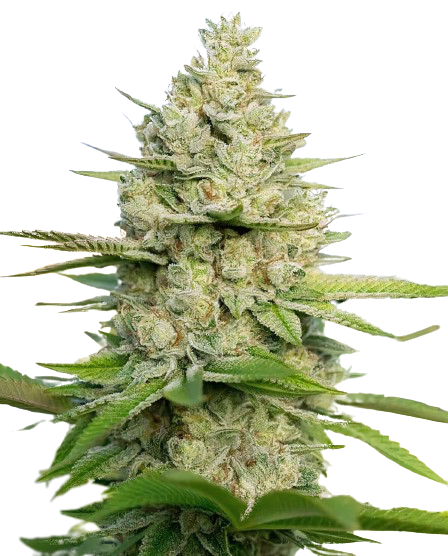
hybrid
Atomic Northern Lights Feminized
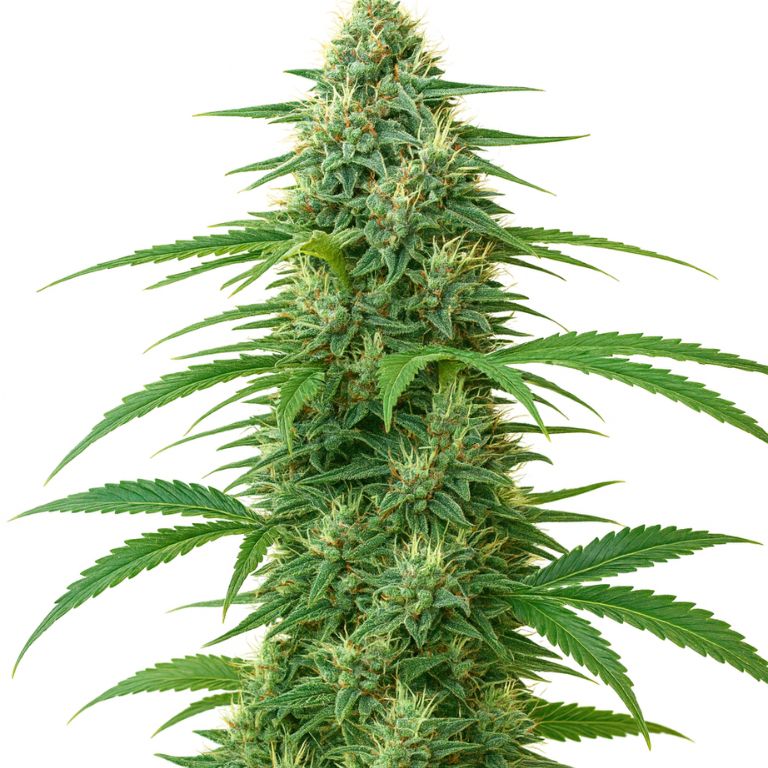
hybrid
Northern Lights x Skunk Feminized
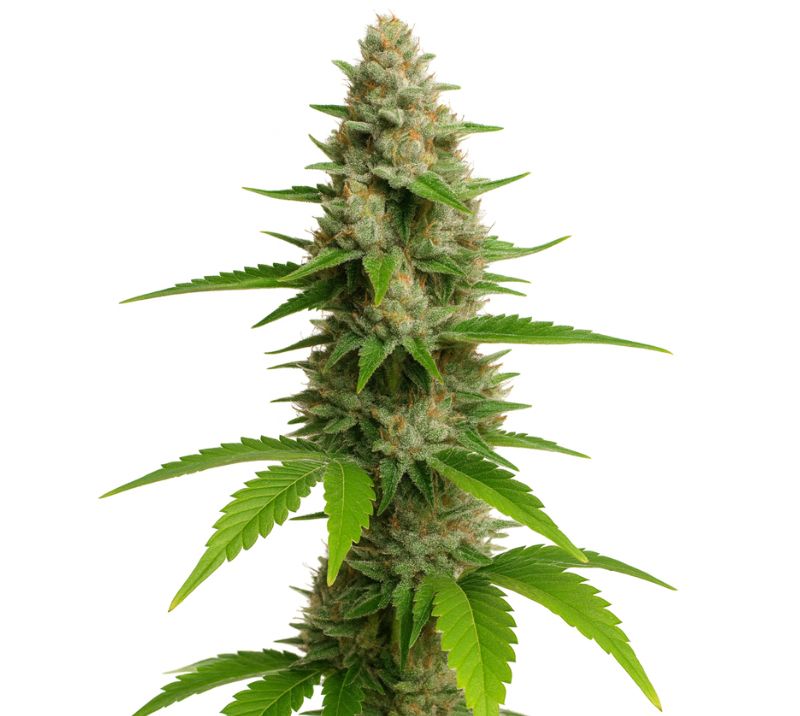
cbd
CBD Fast Eddy Feminized
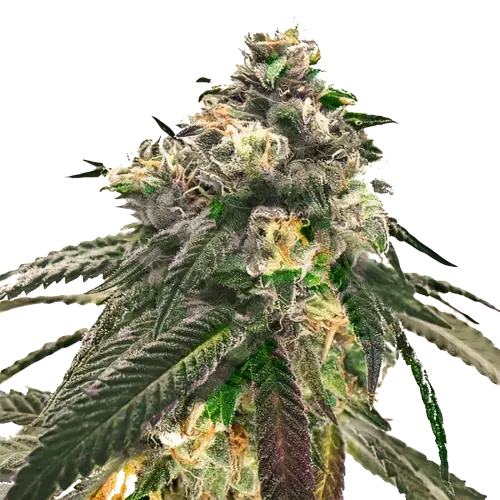
indica
Critical Fast Bud Feminized
Strain Profiles
Related Buying Guides
Browse the full Fast-Flowering Seeds collection
Premium genetics, US-wide discreet shipping, germination guaranteed.
Related Articles
Cannabis Nutrient Deficiencies: Diagnose and Fix Every Symptom | Royal King Seeds
support-growSoil Nutrient Deficiency in Medical Cannabis | Royal King Seeds
strainTop 5 Fast Harvest Cannabis Strains: Quick Finishers | Royal King Seeds
support-growCannabis Trichomes Explained: What They Signal | Royal King Seeds
support-seedlingCannabis Seedlings and Transplanting: Complete Guide | Royal King Seeds
accessoryHerbal and Tea Smoking Practices
Ready to Start Growing?
Shop 1,600+ feminized, autoflower, and CBD strains with 95% germination, discreet US-wide shipping, and free delivery on orders over $150.
Shop Cannabis Seeds