Using CO2 to Improve Cannabis Yield
Royal King Seeds Editorial Team
Carbon dioxide turns up near the top of most lists of ways to increase yield, which is a reasonable place for it in a sealed commercial room and a misleading one almost everywhere else. Before any of the horticulture is worth discussing, the gas has to be dealt with as what it is: an atmospheric hazard in an enclosed space.
Safety Before Yield
Carbon dioxide is a simple asphyxiant. Raising its concentration in a room lowers the oxygen fraction of the air, and at higher concentrations it also acts on breathing and consciousness directly. There is no reliable warning. It is colorless and effectively odorless at the concentrations that matter, and the first effects a person notices, headache, dizziness, breathlessness, confusion, work against the decision to leave. Exposure limits and health effects are set out in the OSHA Occupational Chemical Database entry for carbon dioxide.
It is heavier than air, so it accumulates in enclosed spaces and pools in low ones: floor level in a sealed tent or room, basements, cellars, sunken garages and any pit or crawl space. Those are the areas where a concentration builds first and clears last, and they are often exactly where a home grow is set up.
Anything that raises CO2 in a grow area needs all of the following, in place beforehand:
- Adequate ventilation that can clear the space, functioning independently of whatever is releasing the gas.
- A carbon dioxide monitor with an alarm. Do not substitute an oxygen monitor for it; oxygen can read normal while CO2 has already reached a concentration that affects people, so an oxygen sensor alone is not adequate protection. Carbon monoxide alarms respond to a different gas altogether.
- No one inside an enclosed grow area while elevated CO2 is being introduced. Ventilate afterward and confirm the space has cleared on the monitor before entering.
- Equipment installed, operated and maintained per the manufacturer's instructions and the occupational safety, building and fire requirements that apply where you are. Cylinders and fuel-burning generators are governed differently, and a burner adds combustion products to a room you have sealed.
Dizziness, confusion, heavy breathing or unresponsiveness in or near the space means fresh air and emergency medical help. Do not enter a space you suspect is affected in order to reach someone.
What Actually Sets Yield
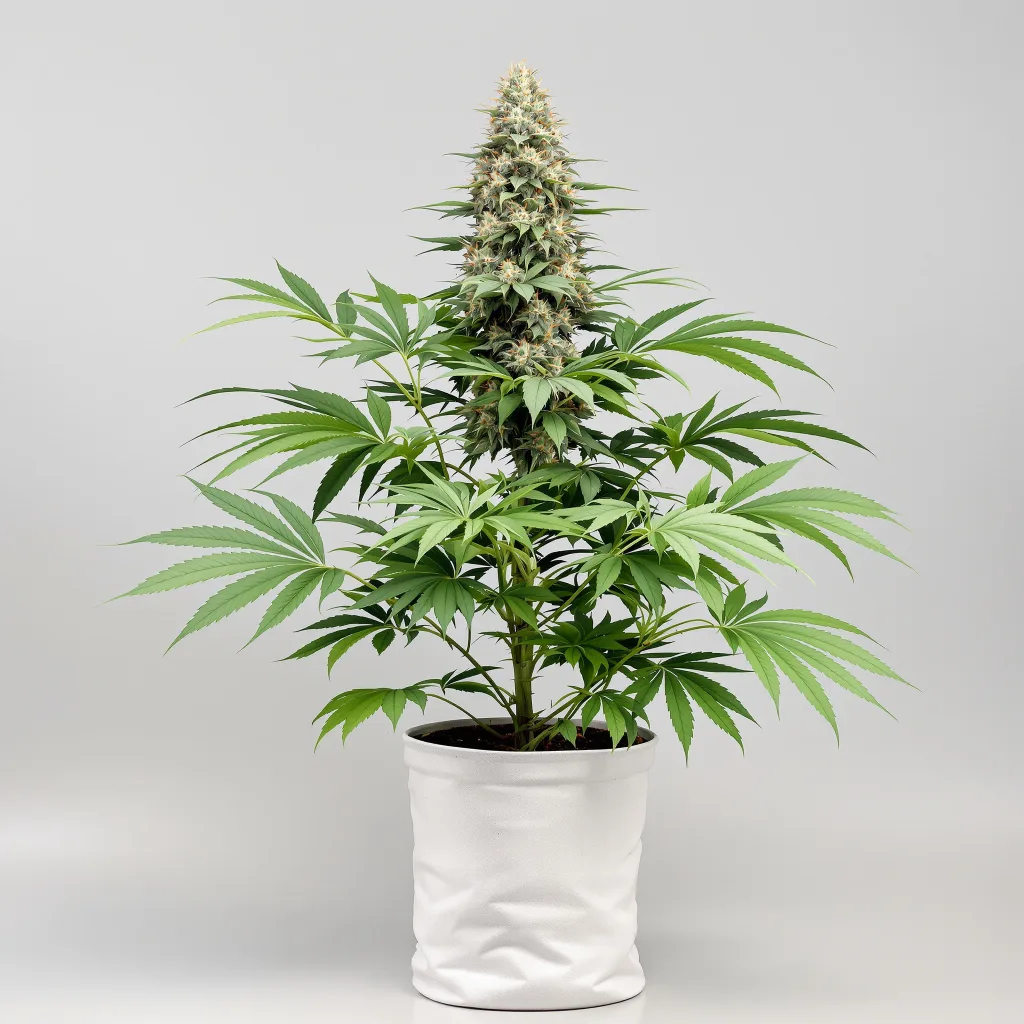
Yield is the product of four interacting factors, and carbon dioxide is not among them for most growers. Genetics set the ceiling. Light energy is the primary input. Root health is the delivery system. Canopy management determines how much of the light in the room is converted into flower rather than shade.
Genetics. A cultivar bred for bulk in a long photoperiod run has a different ceiling from a compact autoflower, and no environmental input closes that gap. Cultivar entries in the seed catalog list flowering time and growing difficulty, so the choice can be matched to the space rather than to an ambition.
Light. Photosynthesis scales with the light reaching the leaf, up to the point where the plant saturates. Below that point light is almost always the constraint in a home room, and it is the one that responds most directly to being fixed. Distribution matters alongside total output: a single bright source over a wide canopy produces dense flower under the center and airy growth at the edges. Our grow light guide covers fixture selection and coverage.
Root zone. A plant whose roots have run out of container cannot take up water and nutrients at the rate its canopy is demanding, and no amount of feeding or atmosphere compensates. Circling roots at the bottom of a pot mean the container or the transplant timing was wrong.
Canopy. Left alone, a plant builds one dominant cola and shades everything beneath it. Topping, low-stress training and screens redistribute growth so more bud sites sit in usable light. Our pruning and training guide covers when each technique applies.
Where Carbon Dioxide Sits in That List
Last, and conditionally. Enrichment can only return anything if carbon dioxide is the input that runs short first, and it runs short only when light, temperature, humidity, water and nutrition are all already supporting a higher rate of photosynthesis. In a room where light is the ceiling, adding CO2 produces no benefit at all.
Holding an elevated concentration also requires a sealed or near-sealed room, since an exhausting room vents the gas as it arrives. Sealing removes the heat and humidity removal the exhaust was doing, so cooling and dehumidification have to replace it, and it removes the air exchange that protects the people using the space. The horticultural requirement and the safety requirement work directly against each other here, which is the reason this belongs at the end of a yield list rather than the top of one.
Treat any improvement as conditional, not guaranteed. The percentage figures attached to enrichment come from controlled research and from commercial facilities with sealed envelopes and full environmental control, and those conditions are what produced the numbers. They are not a forecast for a tent.
What Costs You Yield
The avoidable losses are worth more attention than the optimizations. Underpowered or badly distributed light produces airy flower regardless of everything else. Rootbound plants cap uptake in the middle of the run. Stress during flower, nutrient lockout, temperature swings, pests, light leaks, pulls energy away from bud development at the point where it matters most. Harvesting early gives up the density that the final stretch of flower was about to add. Every one of those is cheaper to fix than an enrichment build, and none of them puts a hazardous atmosphere in the room.
Frequently Asked Questions
Will adding CO2 increase my yield?
What are the safety requirements for running CO2 in a grow space?
What is the single biggest yield limiter in an indoor grow?
Do autoflowers respond to enrichment differently?
Shop Strains Featured in This Guide
Hand-picked seeds from our catalog that match this article's topic. Free shipping on eligible orders of $150 or more.
Strain Seeds
Browse the full High-Yield Best Sellers collection
Premium genetics, shipped from within the US.
Related Articles
5 Ways to Increase Cannabis Yield.
generalHow to Improve Cannabis Bud Quality.
strainAmnesia Strain Review, Effects, THC, Yield & Where to Buy Seeds
support-trainBest Cannabis Strains for Fall 2026: High-Yield
support-trainStrain Analysis: Critical Purple.
support-trainStrain Analysis: Acapulco Gold.
Ready to Start Growing?
Shop feminized, autoflower, and CBD strains with 95% germination and free delivery on eligible orders of $150 or more.
Shop Cannabis Seeds