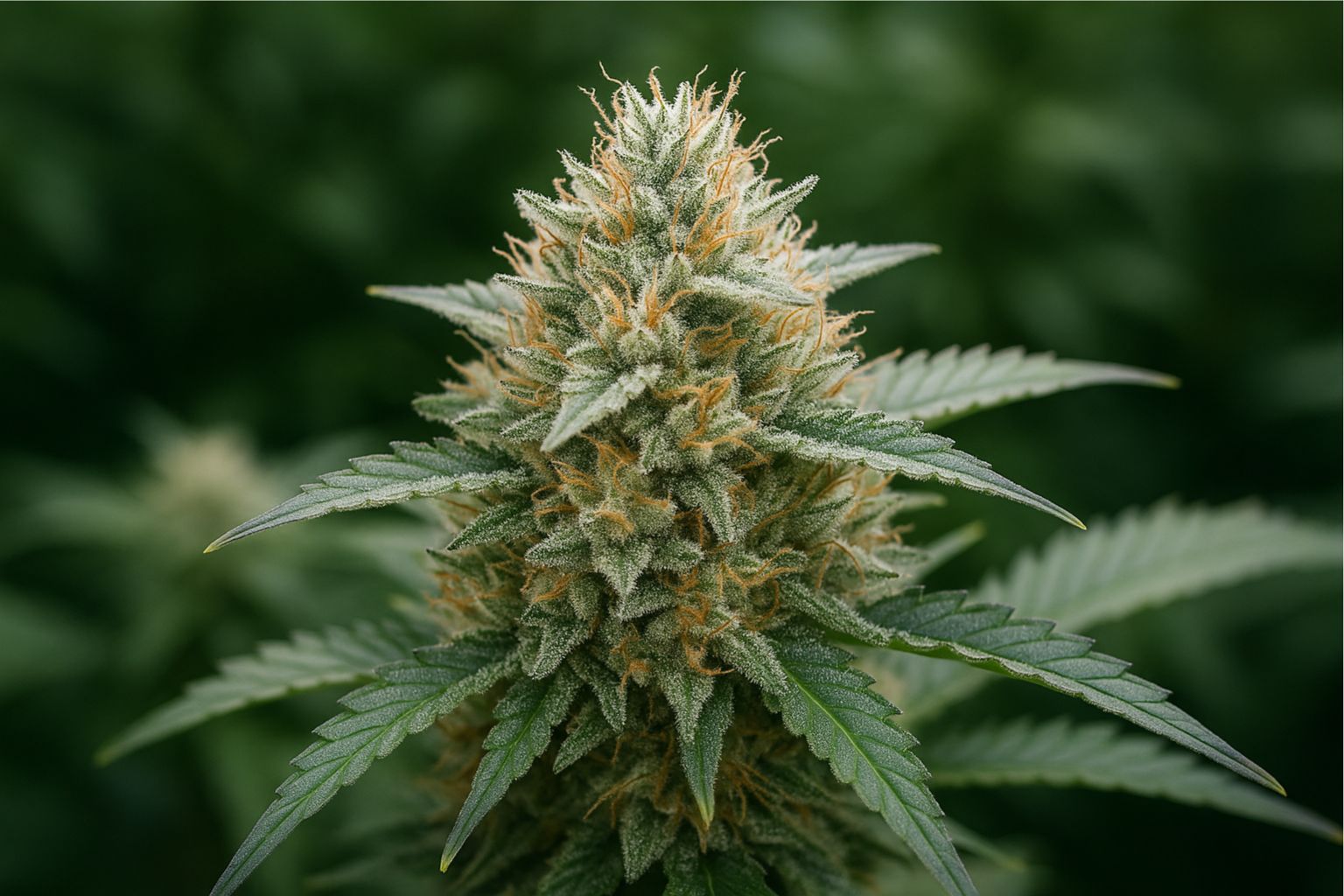
I grow indoors because it forces honesty. A tent doesn’t care what a seed description promised, and it doesn’t reward wishful thinking. It rewards steady inputs, clean habits, and patience. This article is written from my own notebook after a legal indoor run with White Widow Cannabis. I’m not offering legal advice, and I’m not making medical claims or promises about effects. Laws and regulations differ by region, so if you’re thinking about marijuana or weed cultivation, confirm what’s allowed where you live.
I’ll keep this experience-driven and practical: what I watched, what I adjusted, and what I learned. You’ll see references to lighting, environment, mediums, and post-harvest handling, but I’m intentionally focusing on decision-making and repeatable habits rather than one-size-fits-all recipes.
Why I still run this cultivar
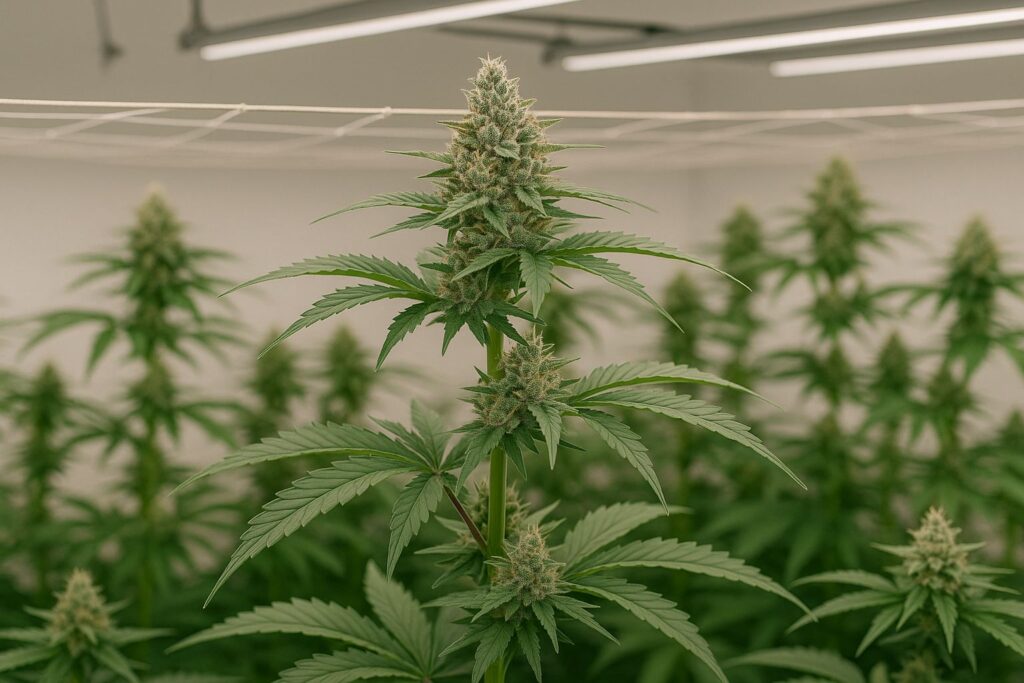
White Widow Cannabis has a way of revealing fundamentals. When my environment is stable and my watering is consistent, the plants tend to build a sturdy frame and finish clean. When I get sloppy with airflow or canopy shape, the run becomes harder than it needs to be.
That’s why I recommend this cultivar to growers who like structured routines and note-taking. If you’re the type who changes three variables at once, you’ll struggle to learn what actually caused an improvement or a setback.
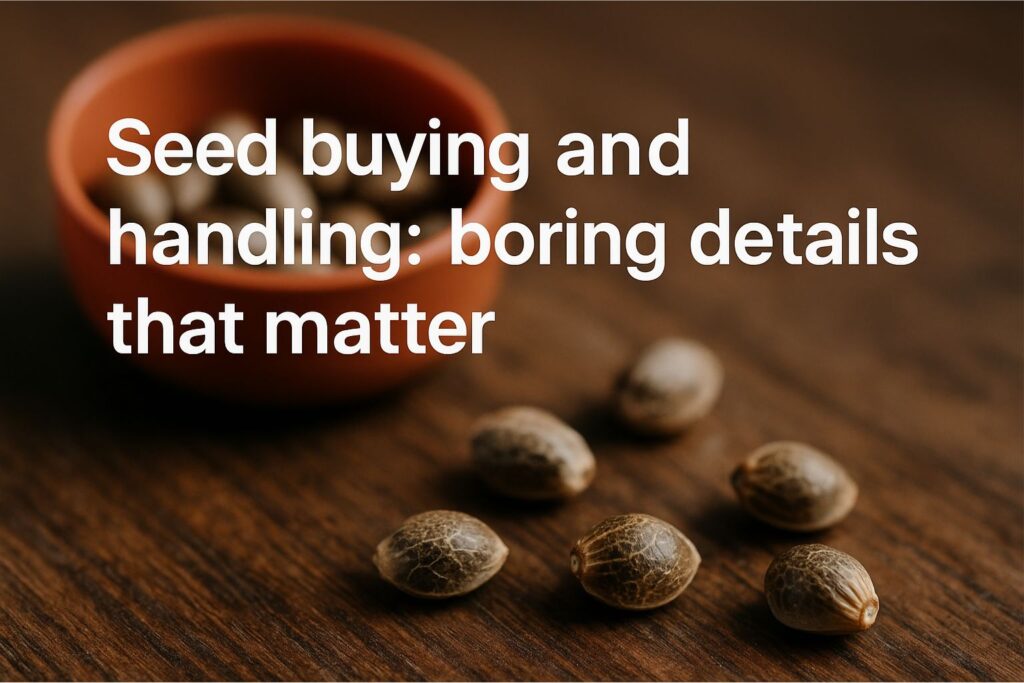
Seed buying and handling: boring details that matter
Growers often ask:
- Which seed bank is trustworthy?
- Are feminized seeds worth it?
- What should I expect from shipping?
Those are smart questions. The seed itself is only part of success; how it’s stored and handled before it reaches you matters too.
Feminized, regular, and autoflowering seeds
I chose feminized seeds for this run because I wanted fewer variables. Regular seeds can be better if you want to hunt a keeper, build a long-term project, or learn selection skills. Autoflowers are useful for quick cycles and limited plant counts, but they typically leave less room for early mistakes.
If you’re deciding between indica, sativa, or hybrid labels, treat them as broad hints about morphology, not guarantees. For indoor planning, the most useful information is how the plant stretches, how it branches, and how it finishes in your environment.
Shipping and storage, realistically
I keep a simple shipping reality check because shipping is where many orders become stressful. The point is practical planning: avoid extreme weather windows when possible, expect holiday delays, and store seeds properly as soon as they arrive.
What I include in my seed shipping reality check for cannabis seeds:
- Choose tracking when it’s available
- Plan delivery timing so you’re there to receive it
- Label seeds immediately and store them in a cool, dry, stable place
Getting started: a calm, repeatable approach
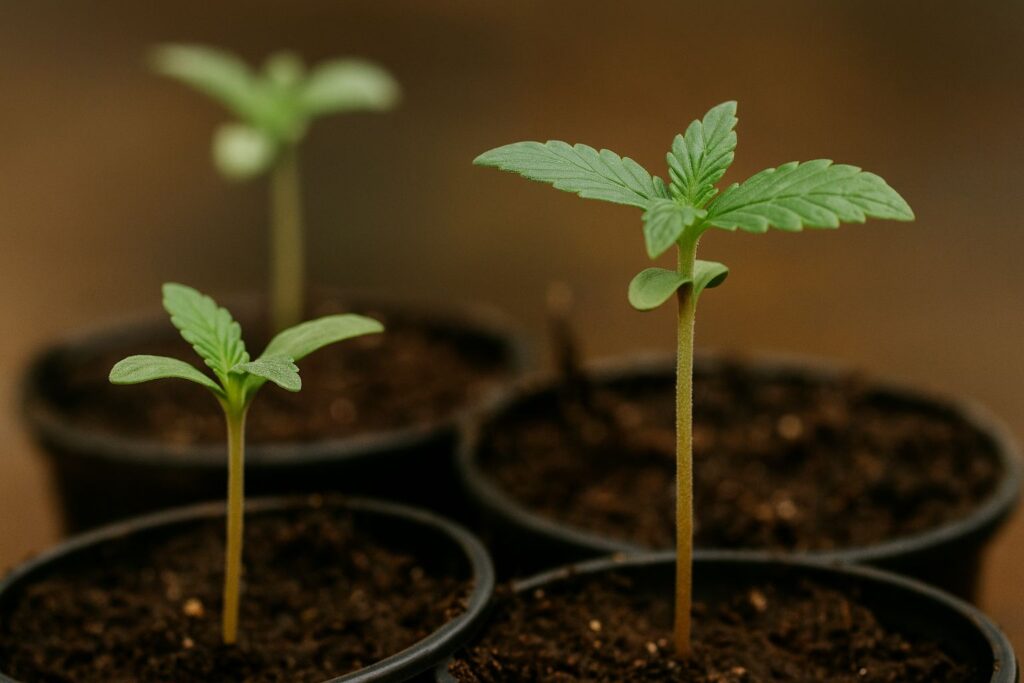
The first two weeks set the tone for the rest of the cycle. Most “mystery problems” later on trace back to rushed starts, inconsistent moisture, or a seedling that never fully recovered from early stress.
That’s why I use a germination decision tree for beginners. It’s a way to choose a method that matches your constraints rather than copying a random routine.
Here are the questions I ask:
- Can I keep the starting area clean and stable?
- Do I need to verify viability before committing to a pot?
- Can I minimize handling once the seed opens?
I revisit the germination decision tree for beginners when I’m tempted to poke at seedlings or “help” them. Most of the time, the right move is to keep conditions steady and let the plant do its job.
Environment first: the room that makes everything easier
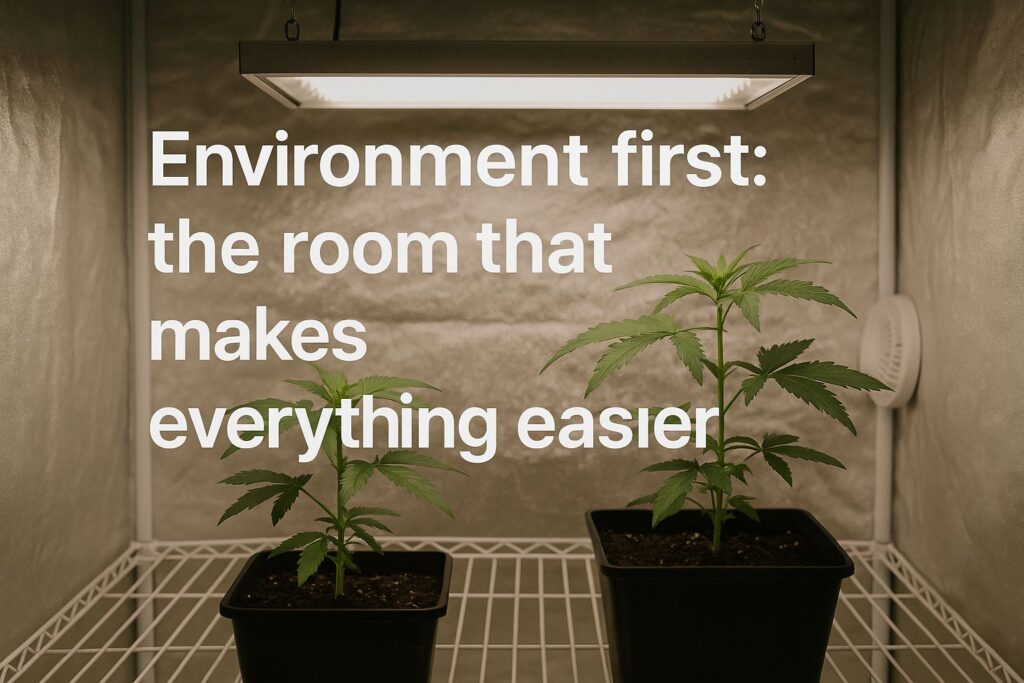
The biggest leap in my indoor results came when I stopped treating environment as background and started treating it as the main system. Light, temperature, humidity, and airflow dictate how the plant drinks and feeds. If those swing hard, everything becomes harder to interpret.
Before I touch nutrients or training, I run an indoor Widow grow room checklist.
Checklist:
- Confirm sensors are reading correctly and placed at canopy level
- Confirm air exchange is steady, not pulsing or weak
- Check for dead zones inside the canopy where air feels still
- Verify the space stays stable through lights-on and lights-off transitions
I repeat it after major training sessions because canopy shape changes airflow and microclimates.
Light management as a process, not a guess
I’m careful with lighting changes. Sudden intensity jumps can stress plants and confuse your read of feeding and watering. I prefer gradual adjustments and even distribution across the canopy.
One habit that helped: if the top sites are uneven, fix the canopy before you “fix” the nutrients. An uneven canopy wastes light and creates uneven transpiration, which shows up as uneven growth.
Medium choices: soil and coco through a practical lens
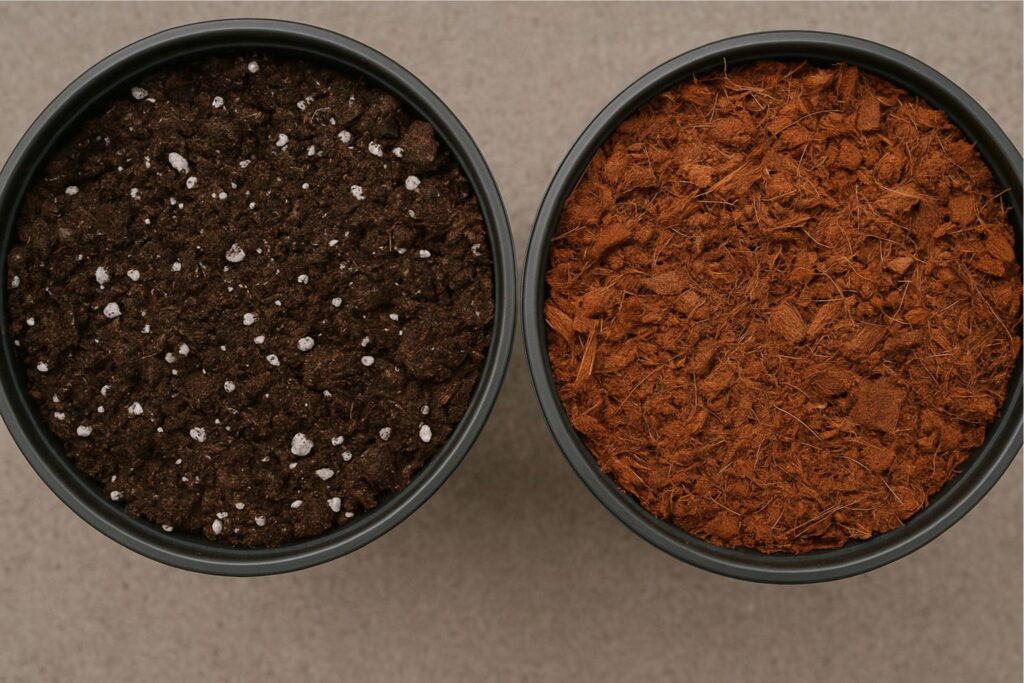
People love arguing soil vs hydro, but most of the time the winning factor is consistency. For me, it comes down to routine and feedback speed.
In a soil versus coco comparison for indoor weed:
- Soil tends to be more forgiving when your schedule is inconsistent, but it responds slower to corrections.
- Coco tends to be more responsive and controllable when you’re consistent, but it punishes missed watering windows more quickly.
If you’re new, choose the medium you can run predictably, then learn how the plant signals water needs and stress.
Feeding: the mindset that kept the run clean
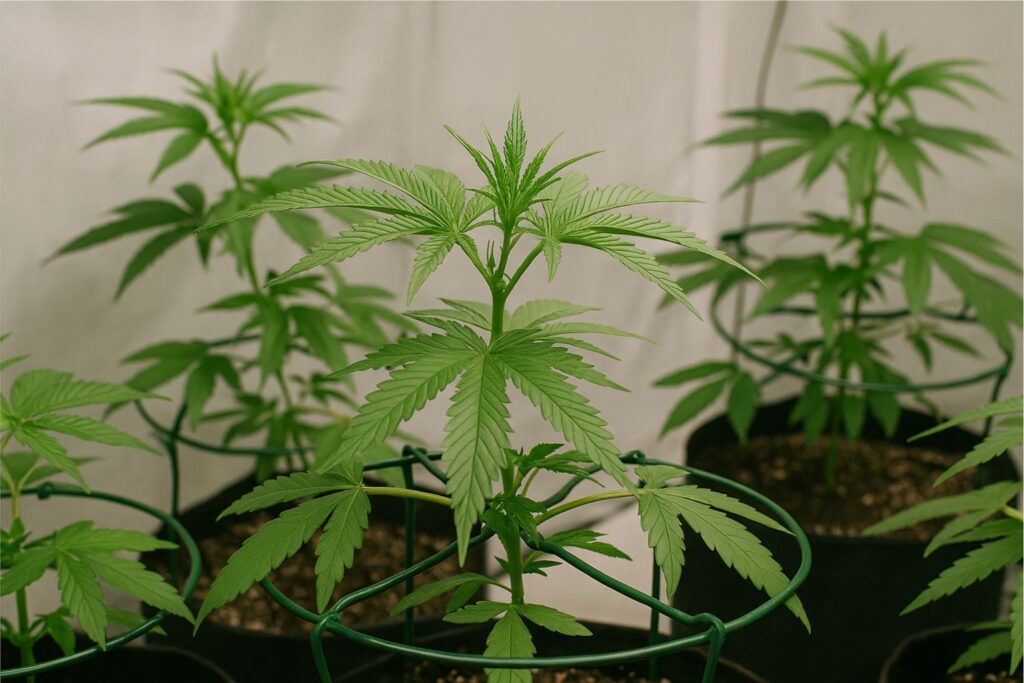
I’m intentionally avoiding “do this at week X” feeding schedules because they don’t respect your water quality, your climate, or your medium. What helped me most was a nutrient consistency mindset for coco or soil.
A nutrient consistency mindset for coco or soil looks like this:
- Make one change at a time
- Give the plant time to respond before changing again
- Treat watering timing and environment as part of nutrition
If you grow marijuana long enough, you’ll notice a pattern: many “nutrient problems” are actually inconsistencies in watering rhythm, airflow, or light distribution. That’s why I treat consistency as a whole-system approach, not just bottles and numbers.
Training: turning light into usable canopy
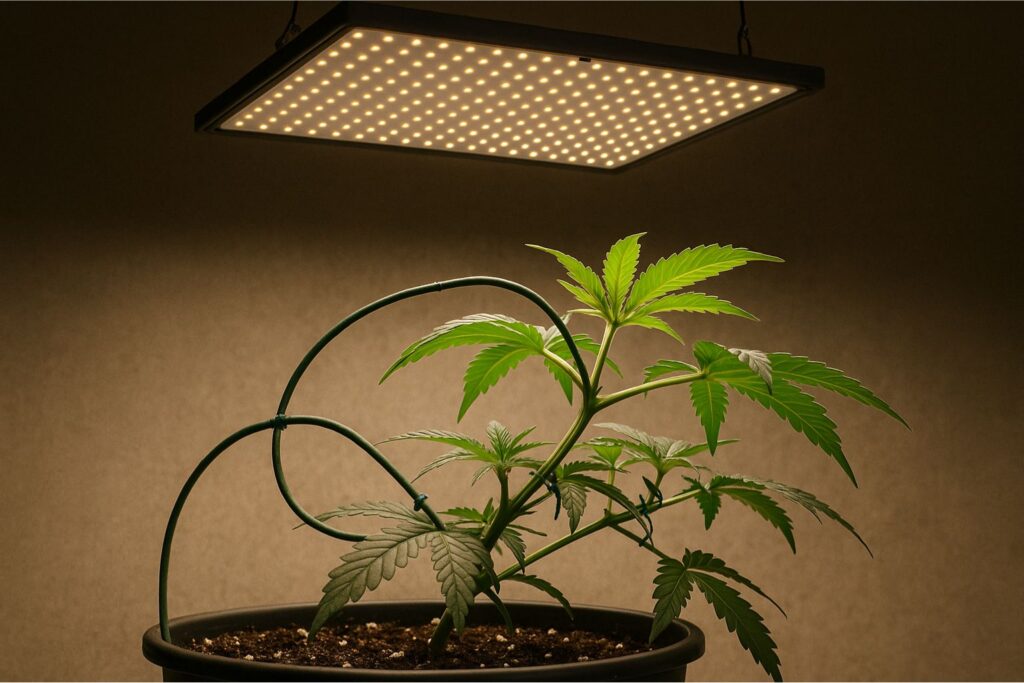
Indoor growers don’t just grow plants; they manage a light footprint. If your canopy is uneven, you’ll always have a few tops doing great and a few lagging.
That’s why I follow a canopy leveling routine in a small tent. The core idea is gentle, early guidance rather than late, stressful corrections. I aim to keep the top sites within a similar height band so the light is used efficiently.
I revisit that routine right after major growth spurts, because that’s when small differences become big.
Phenotypes: how I track what’s worth repeating
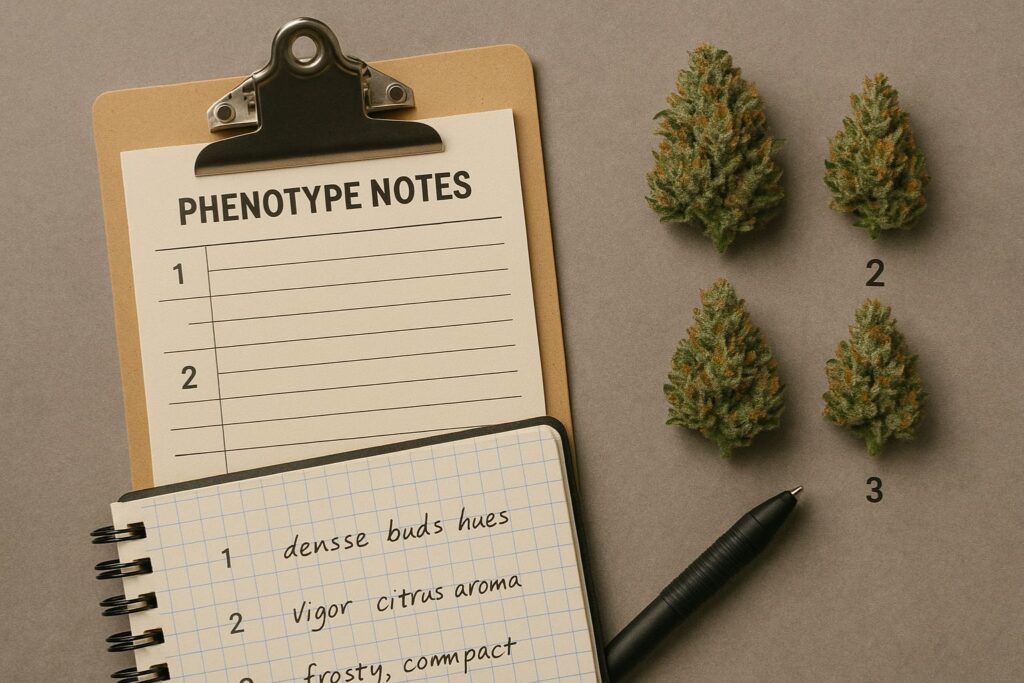
Even within a single cultivar name, you can see variation in structure, aroma development, and resin expression. I don’t trust my harvest-day memory, so I score what I see as the cycle progresses.
For this run, I used resin trait scoring during flower to keep myself honest. My notes focus on how aroma evolves, whether structure stays stable, and how resin expression shows up as the plant matures. The main benefit of resin trait scoring during flower is that it forces consistency: you compare plants using the same lens instead of whatever looks best that day.
Pest prevention and cleanliness: the non-negotiables
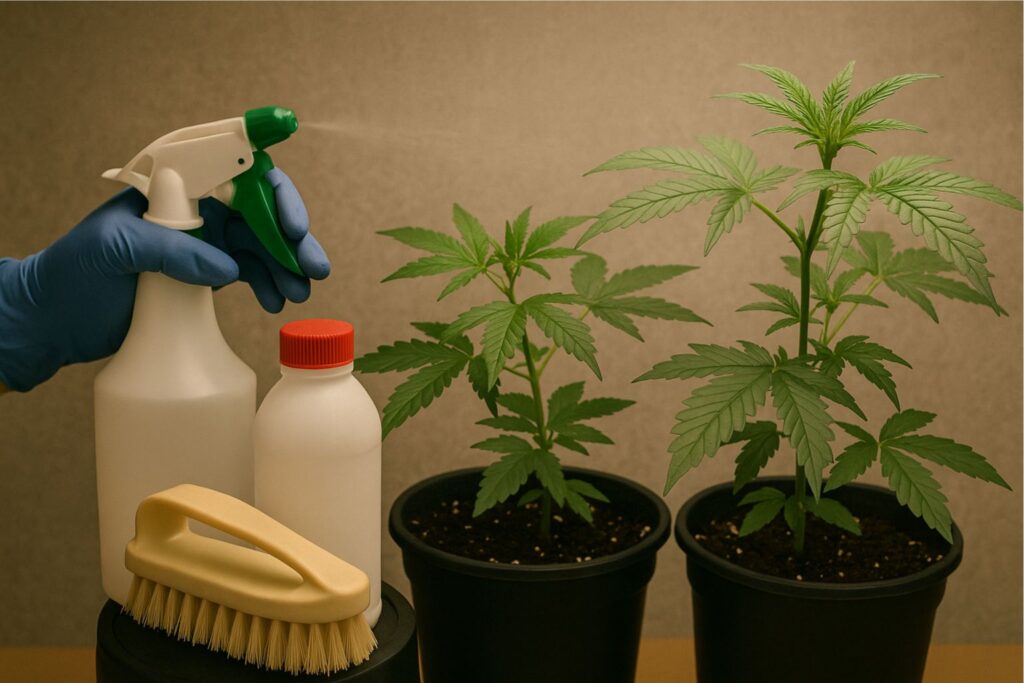
I assume pests are possible in any indoor garden, especially when the tent shares air with the rest of a home. I also assume mold risk increases as flowers get denser. My answer is not panic; it’s routine.
I keep airflow and humidity habits for dense flowers written down because microclimates are where trouble starts. Airflow and humidity habits for dense flowers include regular underside-leaf checks, quick cleanup of spills, and making sure air moves through the canopy rather than only over the top.
Near the end of flower, I lean harder on airflow and humidity habits for dense flowers because a small moisture pocket can cause the biggest disappointment.
Harvest: timing without chasing a single indicator
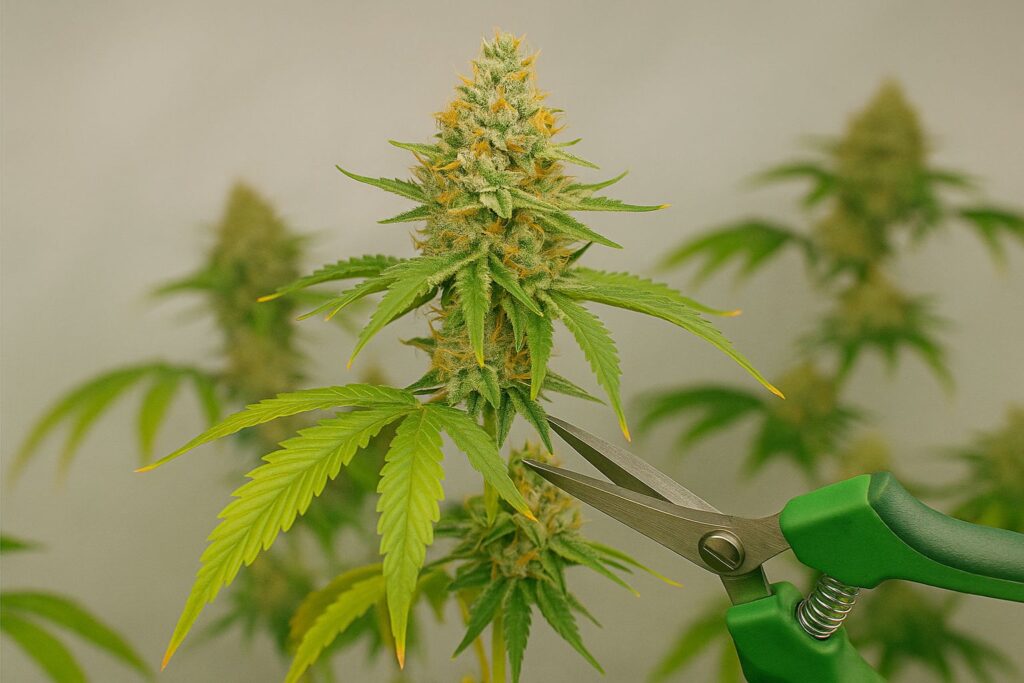
Online, people ask “When do I harvest weed?” and expect a simple answer. In real grows, harvest is a decision based on the plant in front of you and the conditions you can provide for drying.
I track harvest readiness cues beyond trichomes, because a single indicator can be misleading. My cues include overall posture shifting from active push to steady finish, flower structure settling into its final pattern, and aroma becoming more defined.
Drying and curing: where quality is won or lost
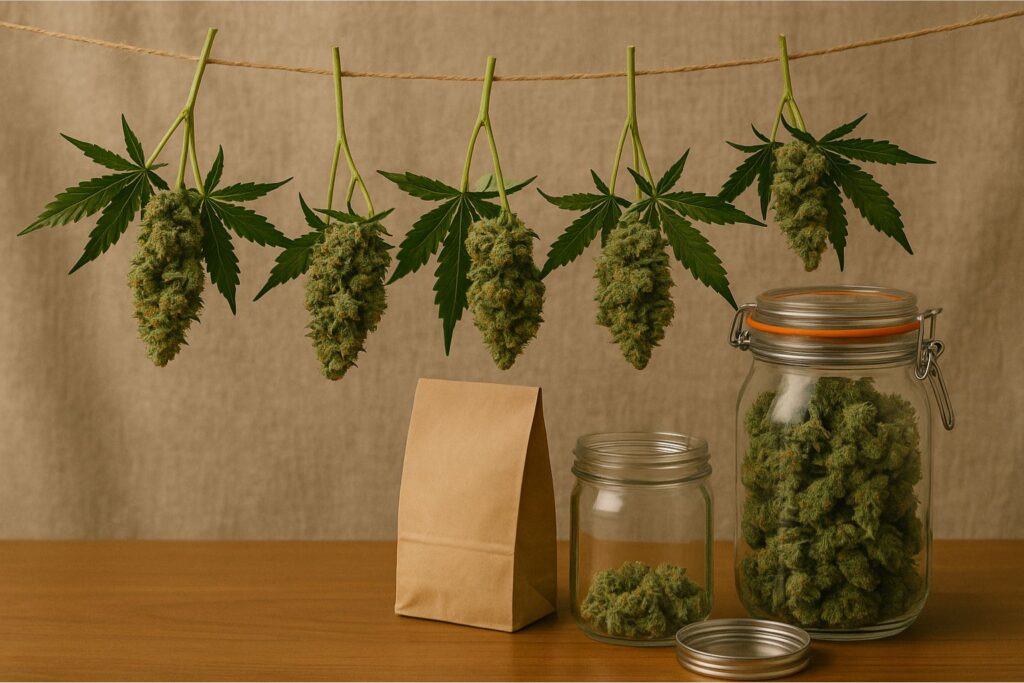
I’ve grown decent flower that ended up tasting flat because the dry was rushed. I’ve also seen good harvests ruined by damp, stagnant conditions. My solution is consistency and patience.
I call my approach a slow cure routine for better aroma. It’s built on avoiding extremes and keeping things clean. The idea is simple: protect what the plant built instead of rushing to the finish line.
Quick notes I carried into the next cycle
These are the lines I actually copied into my notebook so the next run starts cleaner than the last one. In my next White Widow Cannabis cycle, I want the basics locked in before I chase any extra yield or intensity.
- indoor Widow grow room checklist: verify sensors, airflow, and stability before changing anything else.
- seed shipping reality check for cannabis seeds: plan delivery timing, track the parcel, and store seeds properly on arrival.
- germination decision tree for beginners: choose a start method you can keep clean and consistent, then stop “helping.”
- soil versus coco comparison for indoor weed: pick the medium that matches your daily routine, not a trend.
- canopy leveling routine in a small tent: keep the tops even early so the light has a fair target.
- resin trait scoring during flower: write down structure, aroma, and resin notes weekly so you’re not guessing at harvest.
- airflow and humidity habits for dense flowers: keep microclimates from forming inside the canopy, especially late.
- nutrient consistency mindset for coco or soil: change one variable at a time and let the plant respond.
- harvest readiness cues beyond trichomes: combine multiple signals and plan harvest around your drying setup.
- slow cure routine for better aroma: keep post-harvest handling steady and patient instead of rushing to the finish.
FAQ: natural-language questions growers search
What should I check before ordering marijuana seeds online?
First, check your local rules. Then choose sellers with clear policies and reliable communication. A seed shipping reality check for cannabis seeds helps you plan for tracking, weather, and delays instead of hoping everything is perfect.
Soil or coco for a first indoor weed run?
Make a soil versus coco comparison for indoor weed that’s honest about your schedule. Soil can be more forgiving if your routine is inconsistent. Coco can be excellent if you can stay steady with moisture and monitoring.
How do I avoid overcorrecting nutrients?
Adopt a nutrient consistency mindset for coco or soil: change one thing at a time and give the plant time to respond. Many issues blamed on nutrients are actually watering rhythm or environment instability.
How do I keep the canopy even in a small tent?
Start early and keep it gentle. A canopy leveling routine in a small tent works best when you guide growth before stems get stiff and before the canopy shades itself.
How do I decide when to harvest without relying only on trichomes?
Track harvest readiness cues beyond trichomes and compare notes week to week. Harvest is a decision, not a calendar date.
How do I improve aroma after harvest?
Don’t rush. A slow cure routine for better aroma, done consistently, is the most reliable upgrade I’ve found.
What’s a simple pre-check before I make changes in the tent?
Run an indoor Widow grow room checklist so you confirm the environment is stable before you blame the feed.
If you’re learning, keep it simple and keep records. That’s how a White Widow Cannabis run becomes repeatable instead of lucky.
-
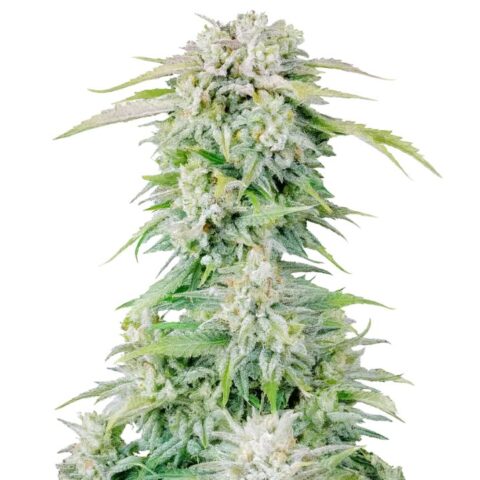
White Widow Cannabis Seeds
White Widow cannabis seeds are celebrated for yielding plants rich …From: $24.99 BUY NOW This product has multiple variants. The options may be chosen on the product page
For a complete directory of cultivars, visit our Cannabis Strain Reviews.
