Table of Contents
White Fire 43, also known as WiFi 43, is an indica-dominant phenotype of the famous White Fire OG strain. Known for its potent effects and distinct profile, this strain has gained popularity among both recreational and medical cannabis users. It offers a unique balance of relaxing and euphoric effects, making it versatile for various purposes. White Fire 43 is highly regarded for its powerful THC content, robust terpene profile, and therapeutic potential.
Genetic Lineage
White Fire 43 is a specific phenotype of White Fire OG, itself a hybrid of Fire OG and The White. Fire OG contributes to its powerful sedative effects and high THC levels, while The White brings its characteristic frosty appearance and subtle flavor profile. Phenotype 43 was selectively bred for its standout traits, including higher potency, distinct flavors, and robust growth characteristics.
- Parent Strains: Fire OG x The White
- Phenotype: Indica-dominant hybrid
Appearance
White Fire 43 is visually striking, with dense, medium-sized buds that showcase an impressive layer of trichomes. The flowers are bright green, often accented by deep orange pistils. The strain’s heavy resin production gives it a frosty appearance, contributing to its reputation as a high-potency variety.
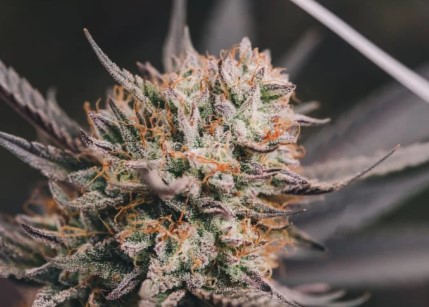
- Trichome Coverage: High
- Color: Bright green with orange accents
- Bud Structure: Dense and conical
Aroma and Flavor Profile
The aroma of White Fire 43 is complex and appealing. It combines earthy, pine-like notes with a pungent diesel undertone. The flavor profile is equally sophisticated, offering a mix of citrus, herbal, and earthy flavors that exhale with a touch of sweetness.

- Primary Aromas: Earthy, pine, diesel
- Flavor Notes: Citrus, herbal, sweet
- Terpene Profile:
- Myrcene: Provides relaxing and sedative effects.
- Limonene: Contributes to the uplifting effects and citrusy scent.
- Caryophyllene: Adds peppery and spicy flavors that may have anti-inflammatory properties.
- Pinene: Offers a fresh pine aroma and promotes mental clarity.
THC and CBD Content
White Fire 43 is known for its high THC levels, often ranging from 20% to 30%, depending on cultivation practices and phenotype expression. CBD levels are typically low, usually less than 1%, which contributes to its strong psychoactive effects.
- THC: 20% – 30%
- CBD: <1%
Effects and Benefits
Recreational Effects
White Fire 43’s effects are predominantly relaxing, making it an excellent choice for evening or nighttime use. Despite its indica dominance, it offers a subtle cerebral uplift that enhances mood and creativity before settling into a deep state of relaxation. Common recreational effects include:
- Euphoria: A blissful mental state that helps alleviate stress and anxiety.
- Relaxation: Full-body relaxation, ideal for unwinding after a long day.
- Creativity: A mild boost in creative thinking, making it suitable for artistic activities.
- Sociability: Enhances conversation and social interactions in smaller doses.
Medical Uses
White Fire 43 is highly regarded in the medical cannabis community for its therapeutic potential. Its high THC content and diverse terpene profile make it effective for a range of conditions:

- Chronic Pain:
- The high THC levels provide significant analgesic effects, making it useful for managing chronic pain and ailments like migraines, fibromyalgia, and arthritis.
- Anxiety and Stress:
- The calming properties of myrcene and limonene contribute to reduced anxiety and stress levels.
- Insomnia:
- Its sedative effects help induce sleep, particularly in patients with sleep disorders.
- Appetite Stimulation:
- Caryophyllene and other terpenes stimulate appetite, which can benefit those undergoing treatments like chemotherapy.
- Inflammation:
- The anti-inflammatory properties of caryophyllene make it suitable for conditions like Crohn’s disease and other inflammatory disorders.
- Depression:
- The uplifting cerebral effects can provide temporary relief from depressive symptoms.
Scientific Insights
Cannabinoids
White Fire 43’s primary cannabinoid is THC, responsible for its potent psychoactive effects. The low CBD content means it’s less suited for conditions that require non-psychoactive cannabinoids but excels in THC-driven therapeutic applications. Other minor cannabinoids like CBG and CBC may also contribute to its medicinal properties.
Terpenes
The terpene profile of White Fire 43 not only defines its flavor and aroma but also synergizes with cannabinoids to enhance its effects through the entourage effect. Key terpenes include:
- Myrcene: Known for its sedative and muscle-relaxing effects, it works well in pain management.
- Limonene: This terpene’s mood-boosting properties make it helpful for anxiety and depression.
- Caryophyllene: A rare terpene that interacts with CB2 receptors, providing anti-inflammatory benefits.
- Pinene: Promotes alertness and counteracts short-term memory impairment sometimes caused by THC.
Cultivating White Fire 43
Cultivating White Fire 43 requires an understanding of both the biological and environmental factors that optimize its growth. Below is an in-depth exploration of cultivation methods, focusing on advanced techniques and scientific principles to maximize cannabinoid and terpene production.
1. Genetic Optimization
- Phenotype Selection: White Fire 43 is a specific phenotype of White Fire OG, selected for its high THC potency, robust terpene profile, and adaptability. Growers should start with genetically stable seeds or clones from a reputable source.
- Tissue Culture Propagation: Advanced growers can use tissue culture to create pathogen-free clones, ensuring uniformity and higher resilience to stress and disease.
2. Light Spectrums and Photoperiod Management

Light Spectrums
- Blue Light (400–500 nm): Promotes vegetative growth, leading to stronger stems and lush foliage.
- Red Light (600–700 nm): Enhances flowering, increasing bud size and density.
- UV-B Light (280–315 nm): Triggers trichome production, boosting THC and terpene levels. Supplementing UV-B during the final weeks of flowering is scientifically proven to enhance potency.
Photoperiod Control
- Vegetative Stage: 18–24 hours of light daily to promote continuous growth.
- Flowering Stage: 12 hours of light and 12 hours of darkness to induce flowering. Absolute darkness during the dark period is critical to prevent stress and hermaphroditism.
Light Intensity (PPFD)
- Measure photosynthetic photon flux density (PPFD) to ensure plants receive adequate light:
- Vegetative Stage: 400–600 \u03bcmol/m\u00b2/s
- Flowering Stage: 600–1,000 \u03bcmol/m\u00b2/s
3. Nutrient Delivery and Management
Macronutrients
- Nitrogen (N): Vital for chlorophyll synthesis during vegetative growth.
- Phosphorus (P): Crucial during flowering for energy transfer and bud formation.
- Potassium (K): Enhances water regulation, nutrient uptake, and overall plant health.
Micronutrients
- Calcium (Ca): Strengthens cell walls, preventing structural deformities.
- Magnesium (Mg): Central to chlorophyll function, improving photosynthesis.
- Iron (Fe): Essential for enzyme function and chloroplast development.
pH and EC Management
- Optimal pH Levels:
- Soil: 6.0–7.0
- Hydroponics/Coco Coir: 5.5–6.5
- Electrical Conductivity (EC): Maintain EC levels between 1.5–2.5 mS/cm for proper nutrient absorption.
Advanced Nutrient Techniques
- Foliar Feeding: Applying nutrients directly to leaves during the vegetative stage can correct deficiencies quickly.
- Beneficial Microorganisms: Incorporate mycorrhizal fungi and rhizobacteria to enhance nutrient uptake and protect against root diseases.
4. Environmental Control and Automation
Temperature and Humidity
- Temperature: Maintain consistent temperatures to optimize enzymatic activities and metabolic rates:
- Vegetative: 70–85°F (21–29°C)
- Flowering: 65–80°F (18–27°C)
- Humidity:
- Seedling Stage: 65–70%
- Vegetative Stage: 50–70%
- Flowering Stage: 40–50%
CO₂ Enrichment
- Benefits: Increasing CO₂ levels (1,200–1,500 ppm) accelerates photosynthesis, resulting in faster growth and higher yields.
- Implementation: Use CO₂ generators or tanks in sealed grow rooms with consistent monitoring.
Automation
- Sensors: Integrate sensors for real-time monitoring of temperature, humidity, and light intensity.
- Automated Irrigation Systems: Ensure consistent watering schedules, reducing human error.
- Environmental Controllers: Automate fans, dehumidifiers, and lighting to maintain optimal conditions.
5. Soil and Hydroponic Systems
Soil Cultivation
- Organic Additives: Compost, worm castings, and bat guano enhance microbial activity and provide slow-release nutrients.
- Aeration: Add perlite or vermiculite to improve root oxygenation and drainage.
Hydroponics
- Deep Water Culture (DWC): Suspends roots in nutrient-rich oxygenated water, promoting rapid growth.
- Drip Systems: Precisely deliver nutrients and water to the root zone.
- Aeroponics: Roots are suspended in air and misted with nutrients, maximizing oxygen availability.
Soilless Mediums
- Coco Coir: Excellent for water retention and aeration but requires calcium and magnesium supplementation.
- Rockwool: Provides a sterile, inert medium with excellent water retention for hydroponic systems.
6. Training Techniques
Stress Training
- Low-Stress Training (LST): Bending stems to create an even canopy for uniform light exposure.
- High-Stress Training (HST): Topping or super-cropping to promote secondary growth and increase yields.
- Defoliation: Removing excess foliage during flowering improves air circulation and light penetration.
Vertical Growing
- Sea of Green (SOG): Maximizes yield by growing multiple small plants in a confined space.
- Screen of Green (ScrOG): Uses a screen to train plants horizontally, optimizing light exposure.
7. Pest and Disease Management
Integrated Pest Management (IPM)
- Biological Controls: Introduce predatory insects like ladybugs or parasitic wasps.
- Natural Sprays: Neem oil or insecticidal soaps for pest prevention.
- Crop Rotation and Companion Plants: Marigolds or basil can deter pests naturally.
Pathogen Prevention
- Root Rot: Make sure drainage is adequate and refrain from overwatering.
- Powdery Mildew: Use sulfur burners and maintain low humidity during flowering.
8. Enhancing Cannabinoid and Terpene Production
Flushing
- Flush plants with pH-balanced water 1–2 weeks before harvest to remove nutrient residues, improving flavor and aroma.
Stress Techniques
- Light Deprivation: Simulate shorter daylight hours during late flowering to boost resin production.
- Water Stress: Controlled water deprivation can increase terpene and trichome development.
Post-Harvest Handling
- Proper curing in controlled environments enhances terpene retention and cannabinoid profiles.
9. Data-Driven Cultivation
Monitoring Systems
- Use IoT devices to collect real-time data on environmental conditions, enabling precise adjustments for optimal growth.
AI and Machine Learning
- AI tools can predict plant needs based on growth patterns, improving yield consistency and efficiency.
Methods of Ingestion for White Fire 43
Inhalation (Smoking and Vaping)
- Smoking:
- Description: Combusting White Fire 43 in a joint, pipe, or bong is a popular method of ingestion. This method delivers the cannabinoids directly to the bloodstream through the lungs, resulting in rapid onset.
- Onset: 1-3 minutes
- Duration: 2-4 hours
- Effects: Intense and immediate; often characterized by a powerful cerebral uplift followed by full-body relaxation.
- Vaping:
- Description: Heating White Fire 43 to a specific temperature to vaporize cannabinoids without combustion.
- Onset: 1-3 minutes
- Duration: 2-3 hours
- Effects: Cleaner and more pronounced effects than smoking, with a focus on flavor and reduced lung irritation.
Edibles
- Description: Incorporating White Fire 43 into foods or beverages provides a discreet and longer-lasting method of ingestion.
- Onset: 30 minutes to 2 hours (depending on metabolism and stomach contents)
- Duration: 6-8 hours
- Effects: Gradual onset with stronger body-focused effects, making it suitable for chronic pain or sleep disorders.
Tinctures and Oils
- Description: Sublingual application involves placing cannabis oil or tincture under the tongue for absorption through mucosal membranes.
- Onset: 15-30 minutes
- Duration: 4-6 hours
- Effects: Balanced effects with faster onset compared to edibles but longer duration than smoking or vaping.
Topicals
- Description: Cannabis-infused creams, balms, or patches are applied to the skin for localized relief.
- Onset: 10-15 minutes
- Duration: 2-4 hours
- Effects: Non-psychoactive; ideal for localized pain, inflammation, or skin conditions.
Dabbing
- Description: Involves inhaling vaporized White Fire 43 concentrate (e.g., wax, shatter, or resin) using a dab rig.
- Onset: Almost immediate
- Duration: 1-3 hours
- Effects: Extremely potent and quick-acting; primarily for experienced users.
Onset, Duration, and Effects
Factors Influencing Onset and Duration
- Method of ingestion: Inhalation is faster, while edibles and topicals take longer.
- Dosage: Higher doses can extend effects but also increase risk of adverse reactions.
- Individual Factors: Tolerance, metabolism, and body weight impact onset and duration.
Typical Effects Timeline
- Onset: Rapid for inhalation methods, slower for edibles and sublingual applications.
- Peak Effects: Inhalation: 30 minutes to 1 hour. Edibles: 2-3 hours after ingestion
- Overall Duration: Inhalation: Shorter-lasting effects (2-4 hours). Edibles: Prolonged effects (6-8 hours)
Scientific Understanding of Effects
Psychoactive Effects
- Cerebral Euphoria: THC interacts with CB1 receptors in the brain, inducing mood elevation and mild euphoria.
- Relaxation: High levels of myrcene and THC synergize to produce deep muscle relaxation.
- Creativity Boost: Pinene and limonene contribute to mental clarity and an uplifting state.
Physical Effects
- Pain Relief: THC and caryophyllene work together to reduce chronic pain.
- Sedation: High doses activate sedative pathways, aiding in sleep induction.
Consumer Experience
White Fire 43 is popular among experienced cannabis users due to its high potency. To prevent overpowering effects, beginners are advised to begin with lower doses. The strain’s versatility makes it suitable for both recreational enjoyment and targeted therapeutic use.
Common Pairings:
- Activities: Relaxing at home, creative endeavors, social gatherings
- Foods: Citrus fruits, herbal teas, spicy dishes
- Music: Calm and ambient playlists
Potential Side Effects
Like any high-THC strain, White Fire 43 may cause side effects, especially in inexperienced users or those sensitive to THC.
- Dry Mouth: Common; can be mitigated with hydration.
- Dry Eyes: Lubricating eye drops can be beneficial.
- Dizziness: May occur with higher doses.
- Paranoia: Uncommon but possible at high doses or in sensitive individuals.
Conclusion
White Fire 43 stands out as a powerful and versatile cannabis strain, offering a blend of euphoric, relaxing, and therapeutic effects. Its robust cannabinoid and terpene profiles make it a favorite among recreational users seeking a potent experience and medical patients looking for relief from a variety of conditions. While it’s best suited for experienced users, novices can still enjoy its benefits with mindful dosing. Whether you’re seeking relaxation, pain relief, or a mood boost, White Fire 43 delivers a comprehensive cannabis experience.
For a complete directory of cultivars, visit our Cannabis Strain Reviews.
