Table of Contents
When will marijuana be federally legal
The federal legalization of marijuana in the United States is a complex and evolving issue, driven by shifting public attitudes, political dynamics, and legal precedents. As of mid-2025, marijuana remains illegal at the federal level under the Controlled Substances Act (CSA), where it is classified as a Schedule I drug alongside heroin and LSD ddefined as having a significant potential for misuse and no recognized medical use. However, various developments in recent years suggest that federal legalization could occur within the next few years, although the exact timing remains uncertain.
Current Legal Landscape
Federal Status
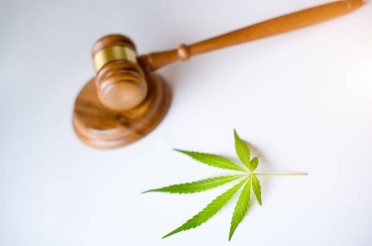
Cannabis is federally prohibited due to its Schedule I status under the CSA, passed in 1970. This designation creates significant restrictions:
- It criminalizes possession, sale, and cultivation at the federal level.
- It bars cannabis businesses from accessing banking services and federal tax deductions.
- It prevents interstate cannabis commerce.
- It limits scientific research due to regulatory barriers.
Despite these restrictions, 38 U.S. states and Washington D.C. have legalized cannabis in some form (medical or recreational), creating a legal contradiction between state and federal law. In these jurisdictions, state-level legalization has been achieved through ballot initiatives or legislative action.
Biden Administration’s Position
President Joe Biden has signaled a more progressive stance on marijuana compared to past administrations but has stopped short of full legalization. Key actions under his administration include:
- October 2022 and December 2023 pardons of federal marijuana possession convictions.
- A directive to the Department of Health and Human Services (HHS) and the Drug Enforcement Administration (DEA) to reconsider marijuana’s scheduling.
The most significant shift occurred in August 2023, when HHS recommended rescheduling marijuana from Schedule I to Schedule III. This would not legalize marijuana but would acknowledge its medical value and reduce penalties and barriers to research and business operations. As of June 2025, the DEA is still reviewing this recommendation.
Factors Influencing Legalization
Public Opinion
Support for legalizing marijuana has increased to all-time highs. According to Gallup’s 2024 poll:
- Over 70% of Americans support full legalization.
- Support spans across political affiliations, with majority support from Democrats, Independents, and younger Republicans.
This strong and consistent public backing puts pressure on lawmakers and presidential candidates to adopt pro-cannabis platforms.
State Momentum
With over 70% of U.S. residents living in states with legal medical or recreational marijuana, pressure on federal lawmakers has increased to align national policy with the prevailing state-level consensus. Legal cannabis industries in states like California, Colorado, New York, and Illinois are generating billions in tax revenue and creating jobs, showing economic benefits that federal policymakers cannot ignore indefinitely.
Additionally, more conservative states, such as Missouri and Arkansas, have recently adopted medical or recreational cannabis laws through voter-led initiatives, further indicating broadening national acceptance.
Congressional Legislation
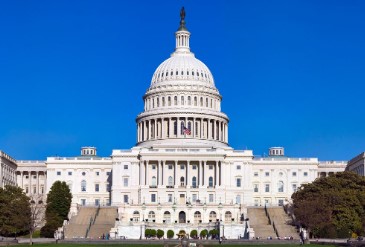
Several bills aiming to reform federal cannabis policy have been introduced over the years, including:
- MORE Act (Marijuana Opportunity Reinvestment and Expungement Act):
- Seeks to deschedule cannabis completely.
- Includes criminal justice reform provisions like expungement of past records.
- Passed the House twice (in 2020 and 2022), but failed in the Senate.
- SAFE Banking Act (Secure and Fair Enforcement):
- Seeks to allow cannabis businesses to access banking and financial services.
- Repeatedly passed the House but is still stuck in the Senate.
- Cannabis Administration and Opportunity Act (CAOA):
- Comprehensive legislation introduced by Senate Democrats to federally legalize marijuana, establish federal taxes, and expunge criminal records.
Despite repeated attempts, gridlock in the Senate—particularly among older or more conservative lawmakers—has been the primary barrier to passage.
Timeline Predictions and Challenges
Near-Term Possibility: Rescheduling to Schedule III
The DEA’s pending decision to move marijuana to Schedule III is the most likely near-term development. If this occurs in 2025 or 2026:
- It would not constitute full legalization.
- It would decriminalize marijuana for some research and medical purposes.
- It would allow cannabis companies to claim federal tax deductions under IRS code 280E.
- It could lay the foundation for future legalization efforts.
However, cannabis would remain tightly controlled and could not be sold over the counter or freely used recreationally without further legislation.
Mid-Term Outlook (2025–2028): Possible Federal Legalization
Given the current pace of reform, full federal legalization might realistically occur between 2025 and 2028, driven by:
- Upcoming elections in 2026 and 2028 potentially bringing in a more reform-friendly Congress or administration.
- Democratic Party support, particularly among younger lawmakers and presidential candidates, increasing in influence.
- Corporate lobbying pressure, as multistate operators, pharmaceutical firms, and retail companies push for a unified national cannabis market.
Full legalization would likely require:
- Descheduling (removing from CSA entirely) or legalization via new legislation.
- Establishing a regulatory body, likely under the FDA, for product quality, labeling, and advertising.
- Taxation mechanisms and interstate commerce frameworks.
- Provisions for social equity, such as criminal record expungement, community reinvestment, and minority business access.
Long-Term Hurdles
Despite momentum, several key obstacles could delay or complicate federal legalization:
- Senate resistance, especially among Republicans and moderate Democrats, remains substantial.
- Federalism concerns, as some states may resist national mandates or commercialization.
- International treaty obligations, such as the U.N. Single Convention on Narcotic Drugs, may require renegotiation or withdrawal.
- Pharmaceutical vs. recreational conflict, with powerful interests seeking exclusive rights or stricter regulatory models that could marginalize small cannabis businesses.
Global Context and Influence
The U.S. is lagging behind other countries such as Canada, Uruguay, Germany, and Malta, which have already federally legalized or decriminalized cannabis. As more nations adopt reform, international pressure on the U.S. to modernize its policies increases.
Furthermore, American businesses may lose competitive advantage in emerging global cannabis markets unless federal barriers are lifted.
Potential Scenarios
Scenario 1: Gradual Reform (Most Likely)
- DEA reschedules cannabis to Schedule III in 2025.
- SAFE Banking Act passes by 2026, improving business conditions.
- Incremental legislative reforms follow, leading to full federal legalization around 2028.
- State-level diversity in regulation continues.
Scenario 2: Sudden Breakthrough (Less Likely)
- A major electoral shift in 2026 or 2028 (Democratic sweep or libertarian-leaning Republican realignment).
- Congress passes CAOA or similar bill in 2026–2027.
- Federal legalization arrives by 2027 with full descheduling and market oversight.
Scenario 3: Continued Federal Prohibition (Unlikely but Possible)
- DEA delays or rejects rescheduling.
- Congressional gridlock continues due to political polarization or conservative backlash.
- Legalization remains a state-by-state patchwork through the early 2030s.
Conclusion
While marijuana remains illegal federally in 2025, significant progress suggests that legalization is increasingly inevitable rather than speculative. Public support, state-level legalization, economic incentives, and international trends all point toward reform. The DEA’s pending rescheduling decision could set the stage for broader changes, and with sustained political will, federal legalization could realistically occur between 2026 and 2028. However, without clear bipartisan support in the Senate or a major electoral shift, full legalization may remain delayed though no longer indefinitely.
If you’re looking to follow or influence the outcome, key dates to watch include the DEA’s rescheduling announcement (likely in late 2025), congressional elections in 2026, and presidential platforms for 2028.
