When to Start Cannabis Seeds and When to Harvest
Introduction
Cultivating cannabis can be a rewarding endeavor for both personal and commercial growers. The timing of starting cannabis seeds and harvesting the plants is critical for optimizing yield, potency, and overall plant health. This guide will provide an in-depth look into the best practices for starting cannabis seeds and determining the ideal time for harvest.
Starting Cannabis Seeds
Choosing the Right Time to Start
The timing for starting cannabis seeds depends on several factors including the growing environment (indoor or outdoor), climate, and the specific strain being cultivated.
- Indoor Growing: For indoor growers, the start time can be more flexible since the environment is controlled. Seeds can be started any time of the year, as long as the grower can maintain the appropriate conditions for growth. However, many indoor growers prefer to align their growing cycles with the natural seasons to take advantage of the reduced heating and cooling costs.
- Outdoor Growing: For outdoor growers, the timing is more dependent on the local climate. Generally, seeds should be started after the last frost date in the spring. In the Northern Hemisphere, this typically means starting seeds in late March to early April. In warmer climates, seeds can be started earlier, while in colder regions, it might be necessary to wait until late April or early May.
Let’s dive deeper into the various stages of cannabis growth, providing detailed information on each phase.
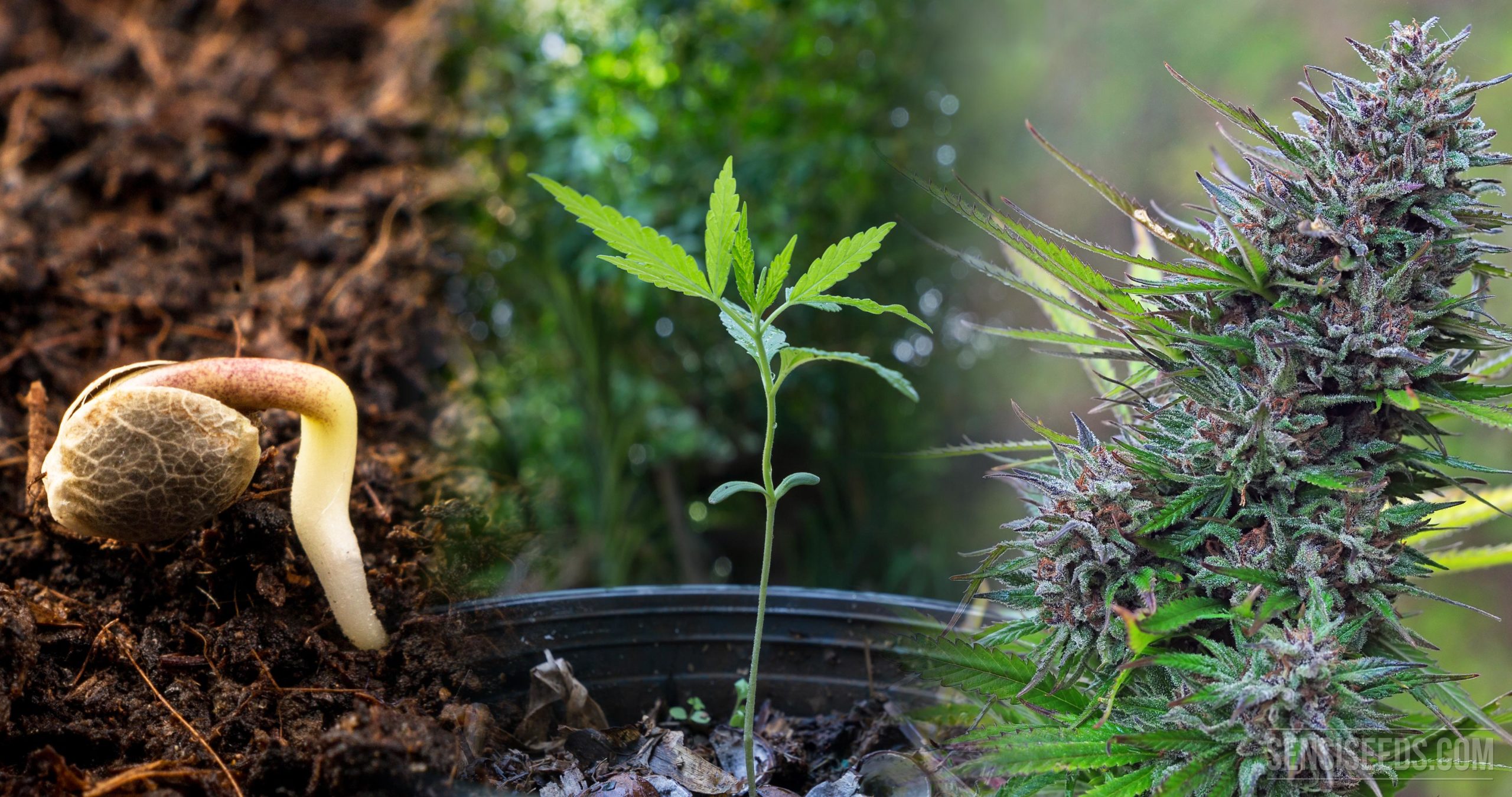
1. Germination
Process
Germination is the first stage of the cannabis life cycle, where the seed cracks open, and the taproot emerges.
Steps:
- Soaking: Soak the seeds in water for 12-24 hours to help soften the seed coat and initiate the germination process.
- Planting: Place the seeds in a damp paper towel or directly into a growing medium like soil, rock wool, or coco coir. Ensure they are kept moist but not waterlogged.
- Conditions: Maintain a temperature of 70-85°F (21-29°C) and keep the seeds in a dark place until they sprout.
- Light: Once the seedling emerges, it needs light to begin photosynthesis. Use a gentle light source like a CFL or LED placed close to the seedling to avoid stretching.
2. Seedling Stage
Characteristics
The seedling stage is when the young plant establishes its root system and starts developing its first true leaves.
Duration: 2-3 weeks
Conditions:
- Lighting: 18-24 hours of light daily. Seedlings require less intense light; fluorescent or low-intensity LED lights are ideal.
- Temperature: 70-80°F (21-27°C)
- Humidity: 65-70% relative humidity
Care Tips:
- Watering: Keep the growing medium moist but not soaked. Overwatering can lead to damping-off, a fungal disease that can kill seedlings.
- Nutrients: Start with a mild nutrient solution if growing in an inert medium. Soil usually has enough nutrients for the first few weeks.
3. Vegetative Stage
Characteristics
In the vegetative stage, the plant concentrates on developing leaves, stems, and roots. This stage sets the foundation for a healthy flowering phase.
Duration: 3-16 weeks (depending on the strain and growing conditions)
Conditions:
- Lighting: 18-24 hours of light daily. High-intensity lights like HIDs or LEDs are recommended.
- Temperature: 70-85°F (21-29°C)
- Humidity: 40-70% relative humidity
Care Tips:
- Training: Techniques like topping, fimming, LST (Low-Stress Training), and ScrOG (Screen of Green) can be used to manage plant shape and increase yield.
- Nutrients: Use a nutrient solution high in nitrogen, which supports foliage growth. Monitor the pH level of the growing medium to ensure nutrient uptake (5.5-6.5 for hydroponics, 6.0-7.0 for soil).
4. Pre-Flowering (Stretch)
Characteristics
Pre-flowering is the transition stage between vegetative growth and flowering, where the plant undergoes rapid vertical growth.
Duration: 1-2 weeks
Signs:
- Sexing: Male and female plants can be identified. Females develop small white pistils at the nodes, while males produce pollen sacs.
- Stretching: The plant can double in size during this period.
Care Tips:
- Light Cycle: For indoor grows, switch to a 12/12 light cycle to induce flowering. Outdoor plants will naturally transition as the days shorten.
- Training: Continue any training techniques to manage height and prepare for flowering.
5. Flowering Stage
Characteristics
The flowering stage is when the plant develops buds, which are harvested for their cannabinoids and terpenes.
Duration: 6-12 weeks (depending on the strain)
Conditions:
- Lighting: 12 hours of light and 12 hours of uninterrupted darkness daily. Any light during the dark period can stress the plant and cause hermaphroditism.
- Temperature: 65-80°F (18-26°C)
- Humidity: 40-50% relative humidity
Care Tips:
- Nutrients: Switch to a bloom nutrient solution high in phosphorus and potassium to support bud development.
- Support: As buds grow heavier, support branches with stakes or nets to prevent breakage.
- Pest Control: Maintain vigilance for pests and diseases, which can be more prevalent during this stage.
Sub-Stages
- Early Flowering (Weeks 1-3): Bud sites form, and the plant continues to stretch.
- Mid Flowering (Weeks 4-5): Buds thicken, trichomes develop, and pistils darken.
- Late Flowering (Weeks 6+): Trichomes reach peak maturity, and pistils fully darken.
6. Harvesting
Signs of Readiness
Harvesting at the right time is crucial for optimizing potency, flavor, and yield.
Indicators:
- Trichomes: Use a magnifying glass or microscope to examine trichomes. Harvest when most are milky white with some turning amber for peak THC levels.
- Pistils: When 70-90% of the pistils have turned from white to orange/brown, it’s a sign the plant is ready for harvest.
Process
- Flushing: Two weeks before harvest, flush the plants with plain water to remove any remaining nutrients, improving flavor and smoothness.
- Cutting: Use clean, sharp scissors or pruning shears to cut the branches.
- Trimming: Trim away larger fan leaves and any smaller leaves without trichomes. This can be done before or after drying.
7. Drying and Curing
Drying
Conditions:
- Temperature: 60-70°F (15-21°C)
- Humidity: 50-60%
Process:
- Hanging: Hang the trimmed branches upside down in a dark, well-ventilated area for 7-14 days.
- Checking: Buds are ready for curing when the small stems snap rather than bend.
Curing
Process:
- Jar Storage: Place the dried buds in airtight glass jars.
- Burping: Open the jars daily for the first week to release moisture and allow fresh air in.
- Duration: Cure for at least two weeks, though longer curing (up to several months) can improve the flavor and potency.
Conclusion
Mastering Cannabis Cultivation: From Seed to Harvest
Understanding and mastering the various stages of cannabis cultivation is essential for any grower aiming to produce high-quality cannabis. Each stage of the plant’s life cycle, from germination to harvest and curing, requires specific conditions and care to ensure the plant reaches its full potential.
The Journey Begins: Germination
The journey of cannabis cultivation starts with the germination of seeds. This critical stage involves soaking seeds to initiate the process, followed by planting in a suitable growing medium. Proper moisture, temperature, and lighting conditions during germination set the stage for healthy seedlings. The use of a humidity dome can help maintain the right moisture levels, ensuring the seeds sprout successfully.
Building a Strong Foundation: Seedling Stage
The seedling stage is where the young plant establishes its root system and begins to grow its first true leaves. This phase requires careful attention to lighting, temperature, and humidity. Providing 18-24 hours of light daily and maintaining a temperature of 70-80°F with high humidity levels (65-70%) ensures robust growth. Overwatering and nutrient burn are common pitfalls that growers should avoid during this delicate stage.
Rapid Growth: Vegetative Stage
During the vegetative stage, the plant focuses on growing leaves, stems, and roots. This phase is crucial for building a strong foundation for the flowering stage. Growers should provide high-intensity light for 18-24 hours daily and maintain temperatures between 70-85°F with a humidity level of 40-70%. Nutrient solutions high in nitrogen are essential to support the rapid growth. Training techniques like topping, fimming, and LST can be employed to manage plant shape and increase yield.
Transition and Preparation: Pre-Flowering (Stretch)
The pre-flowering stage, also known as the stretch, is a transition phase where the plant undergoes rapid vertical growth. This stage typically lasts 1-2 weeks and is characterized by the appearance of sex organs, allowing growers to identify and remove male plants. Switching to a 12/12 light cycle for indoor plants and continuing training techniques help manage height and prepare the plant for flowering.
Reaping the Rewards: Flowering Stage
The flowering stage is the most exciting portion of cannabis growing, as the plant produces cannabinoids and terpene-rich buds. This stage lasts from 6 to 12 weeks, depending on the strain. Indoor growers should maintain a 12/12 light cycle, while outdoor plants will naturally flower as days shorten. Optimal temperatures range from 65-80°F with humidity levels between 40-50%. Transitioning to a nutrient mix high in phosphorus and potassium supports bud development. It is essential to regularly check for pests and illnesses in order to save the priceless buds.
Perfect Timing: Harvesting
Knowing when to harvest is crucial for maximizing the potency, flavor, and yield of the cannabis crop. Key indicators include the color of trichomes and pistils. Harvest when trichomes are mostly milky white with some amber, and 70-90% of pistils have turned orange/brown. Flushing the plants with plain water two weeks before harvest removes residual nutrients, enhancing the final product’s flavor and smoothness. Using clean, sharp tools to cut the branches and careful handling ensures the buds remain undamaged.
Final Touch: Drying and Curing
Drying and curing are the final stages that significantly impact the quality of the cannabis. Drying should be done in a dark, well-ventilated area with temperatures between 60-70°F and humidity around 50-60%. This process typically takes 7-14 days. Once dried, the buds should be placed in airtight containers for curing. Burping the jars daily for the first week allows moisture to escape and prevents mold. The curing process can take several weeks to months, with longer curing times enhancing the flavor and potency.
Continuous Learning and Improvement
Cannabis cultivation is a blend of science and art, requiring continuous learning and adaptation. Each grow cycle offers new insights and opportunities for improvement. By meticulously monitoring and adjusting growing conditions, experimenting with different strains, and employing best practices at each stage, growers can continually enhance their skills and achieve better results.
The Reward of Patience and Care
The journey from seed to harvest is fraught with problems and opportunities. Patience, attention to detail, and a dedication to giving the plants the finest possible care are required for success. The satisfaction of producing high-quality cannabis, whether for personal use or commercial purposes, is a testament to the grower’s dedication and skill.
Looking Ahead
As the cannabis industry continues to evolve, new technologies, techniques, and strains will emerge, offering growers even more tools to optimize their cultivation processes. Keeping up with the newest innovations and being willing to experiment can help growers stay ahead in this dynamic area.
By understanding and mastering each stage of cannabis cultivation, from germination to harvest and beyond, growers can ensure they produce cannabis that meets their desired standards for potency, flavor, and overall quality. With practice and experience, the journey of cannabis cultivation can be a highly rewarding endeavor.
