Table of Contents
Why the cannabis harvest is where quality is won or lost
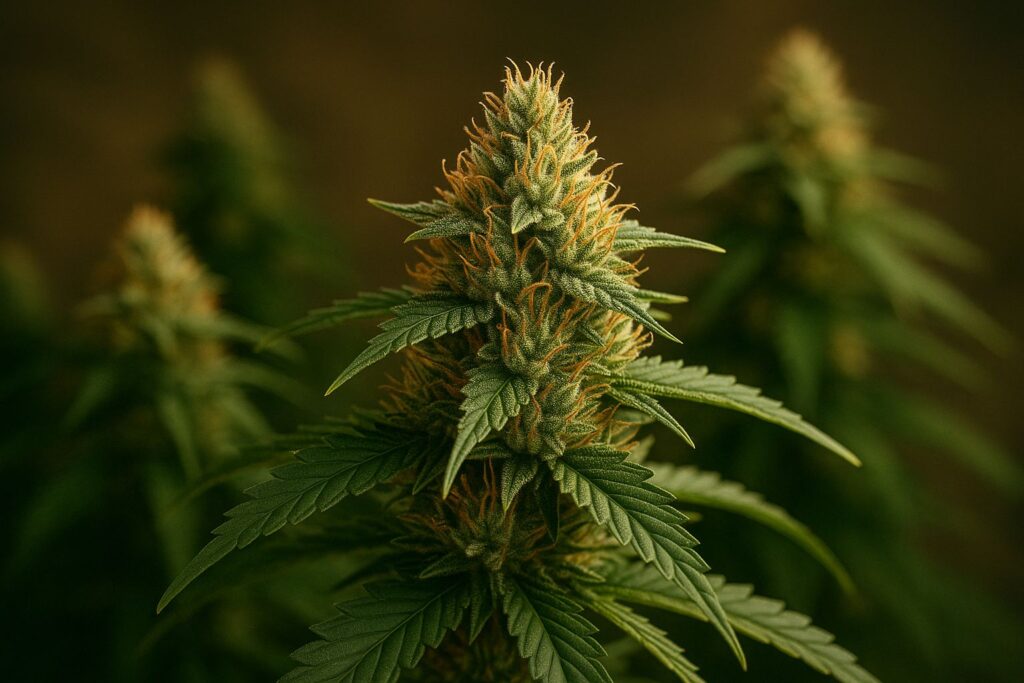
I’ve grown cannabis long enough to respect the last two weeks more than any other stretch of the run. When people ask me why one jar burns clean and another tastes sharp, it’s rarely one single “secret.” It’s usually a chain of small decisions around the cannabis harvest: how I steered nutrition, how I read ripeness, how gently I handled branches, and how consistent my drying and curing environment stayed.
This guide is written from my own grow rooms and greenhouses—soil, coco, and simple recirculating setups. I’m not selling miracle methods. I’m laying out what I do, what I measure, what I watch for, and what I changed after seeing the results in the jar, informed by a broader understanding of the cannabis seed-to-harvest process.
If you’re new, you’ll leave with a safe, repeatable checklist. If you’ve been at it a while, you’ll probably recognize the patterns and maybe tighten your own seed-to-shelf harvest plan.
The framework I use: harvest window mapping, then a final call
I don’t harvest by the breeder’s “8–9 weeks” line alone. I use harvest window mapping: I predict a window, then I confirm it with plant cues and a microscope. Harvest window mapping keeps me from chopping too early in excitement or too late out of fear.
Here’s the flow I follow for harvest window mapping:
- Estimate the window based on genetics and my environment.
- Watch whole-plant signs that the window is approaching.
- Confirm the exact day with trichome maturity signals on the flower itself.
I repeat harvest window mapping every run and write it down. The notes are what make the next run better.
Baseline ranges that keep my plants stable late flower
These are not guarantees. They’re ranges that have kept my plants productive without pushing them into stress right before the cannabis harvest.
Light: PPFD, DLI, and the “don’t chase intensity” rule
- Late flower PPFD (photoperiod): 700–1,000 µmol/m²/s at the canopy if temperature and airflow are dialed.
- Late flower PPFD (autoflower): often 600–900 µmol/m²/s, depending on cultivar and leaf posture.
- DLI: commonly 35–45 mol/m²/day indoors when everything is stable.
If I see bleaching tops, taco leaves, or rapid terpene drop, I back off. I’d rather protect aroma than brag about numbers.
Temperature, RH, and VPD bands I actually aim for
- Day: 23–26°C
- Night: 18–21°C
- Late flower RH: 45–55% (lower if flowers are thick or outdoor dew is heavy)
- VPD: roughly 1.2–1.5 kPa
I don’t force extreme cold nights for “color.” Sometimes it happens naturally. I care more about stability and mold prevention.
Ripeness cues: pistils, trichomes, and why I trust one more than the other

Pistils: useful, but pistil color reliability has limits
Pistils are the easiest visual cue: the “hairs” shift from upright and pale to darker and pulled in. Pistil color reliability is good for telling me I’m entering the window, not for selecting the exact day.
I start daily checks when:
- Around half the pistils have darkened and curled in.
- Calyxes look swollen, and the plant’s drinking rate slows.
But pistil color reliability breaks down because:
- Some cultivars keep throwing new white pistils late.
- Rain, wind, and handling can darken pistils early outdoors.
- Light stress can change pistil behavior without true ripeness.
I still watch pistils, but I never let pistil color reliability override what I see in resin heads.
Trichomes: my final decision tool, using trichome maturity signals
For the final call, I look for trichome maturity signals on the flower (not just sugar leaves). I use a 10–20x loupe for fast checks and a 60x handheld scope for the “yes/no” decision.
The trichome maturity signals I track:
- Clear: immature
- Cloudy/milky: peak intensity for many cultivars
- Amber: the profile often shifts heavier, depending on genetics and personal preference
I sample multiple sites: top cola, mid-canopy, and a lower bud. That avoids the trap of judging a whole plant by one hot spot.
My target harvest profiles (and how I avoid overthinking percentages)
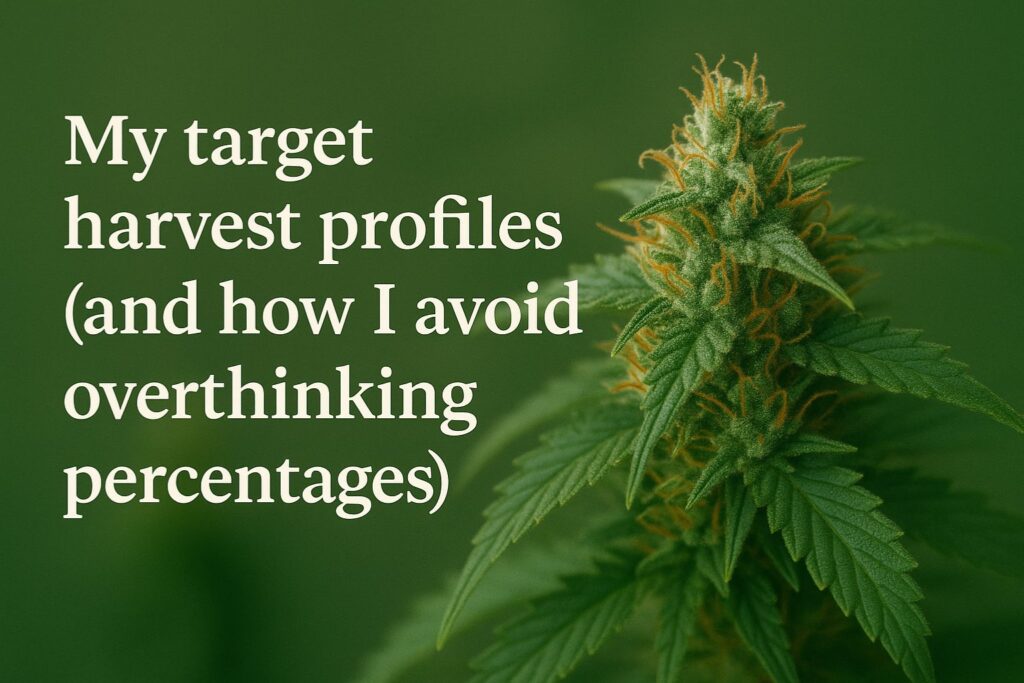
Different people want different outcomes. Here’s how I think about it:
- Brighter jar: mostly cloudy heads, minimal amber
- Balanced jar: mostly cloudy with a noticeable amount of amber
- Heavier jar: more amber overall, but not dried-out, collapsed heads
I don’t chase a single “magic percent.” I confirm that trichome maturity signals match the effect profile I want, then I cut. If you’re unsure, do staggered cuts: take the tops, then let lowers run 5–10 more days. Staggered cuts are a practical way to refine harvest window mapping.
Nutrition in the final stretch: flush vs taper, and why I prefer a pre-harvest nutrient taper
The question I hear most is: “Should I flush?” I’ve flushed hard. I’ve flushed gently. I’ve also run living soil where “flush” doesn’t mean much. The approach that has been most repeatable for me is a pre-harvest nutrient taper rather than an abrupt stop.
A pre-harvest nutrient taper means:
- Lowering EC (or reducing nutrient strength) over 7–14 days
- Keeping irrigation consistent so the roots stay happy
- Letting the plant fade naturally rather than forcing a crash
I’ve found a pre-harvest nutrient taper gives me more predictable finish quality than extremes. In my rooms, a pre-harvest nutrient taper also helps avoid late foxtails caused by stress.
Coco/hydro: how I set my late-flower irrigation strategy
In coco or hydro, a sensible late-flower irrigation strategy is about the root zone first. Salt buildup can blunt aroma and stall uptake.
My late-flower irrigation strategy typically looks like this:
- Mid flower EC: often 1.6–2.2 (cultivar dependent)
- Finish EC: often 0.8–1.2, adjusted by leaf color and vigor
- Stable pH range appropriate for the medium
- Consistent daily runoff in coco to prevent EC creep
If runoff EC climbs and tips are burning, I’ll do a controlled rinse, then return to the finish feed. I’m not trying to starve the plant. I’m trying to keep the medium from becoming the problem.
Soil: what I do instead of “rinsing the pot”
In organic soil, I don’t usually do a dramatic flush. I focus on:
- Not pushing high nitrogen too late
- Watering consistently (no extreme wet/dry swings)
- Maintaining airflow and humidity to prevent mold
For soil, my late-flower irrigation strategy is “steady and boring.” If the plant is fading naturally, I let it.
Pre-harvest risk management: mold, pests, and cleanliness
Late flower is when dense flowers can hide problems. Before the cannabis harvest, I do a slow, methodical inspection:
- Check inside colas for botrytis signs (soft spots, odd browning, dead sugar leaves)
- Look under leaves for mite stippling or eggs
- Inspect lower canopy for powdery mildew
If I see any mold, I isolate that plant and adjust my plan. Sometimes that means harvesting earlier than ideal to save the rest of the crop. Optimal timing is useless if you lose the flower.
The last watering and the “gentle dryback” approach
I sometimes let pots dry a bit in the final 24–48 hours, but I don’t chase dramatic wilting. A mild dryback can make trimming easier and reduce surface moisture in thick buds.
This is part of my late-flower irrigation strategy, not a magic trick:
- I stop irrigation earlier than usual.
- I keep the room stable and avoid big swings.
- If the plant wilts hard, I went too far.
Harvest day workflow: my cannabis harvest checklist
On harvest day, I work clean and slow. The cannabis harvest is physical work, and rushing is how trichomes get knocked off and buds get bruised.
My checklist:
- Clean, sharp shears and a backup pair
- Gloves and rubbing alcohol
- Bins for fan leaves and trim
- Tags for plant ID and cut time (phenotype notes matter)
I prefer to cut right before the lights would come on. The plant is a little less “pumped,” and handling feels cleaner. Outdoors, I choose the coolest, driest part of the day when possible.
Whole plant vs branch harvest: what I choose and why
- Whole plant hang: slows drying, often improves aroma, good when drying room humidity control is stable.
- Branch harvest: easier handling, good for big plants or tight spaces, lets me separate top vs bottom.
If my environment is dry, I lean toward whole plant hang to slow the process. If my environment is humid, I break into branches for safety and airflow.
Trimming choices: wet trimming technique vs dry trimming technique
I use both methods, depending on density and my drying space.
When I use a wet trimming technique
I use a wet trimming technique when:
- Buds are very leafy and need airflow to dry safely
- Humidity is high and I can’t risk trapped moisture
- I’m processing smaller plants and want clean hang lines
A wet trimming technique speeds drying, so I watch conditions carefully. When I do a wet trimming technique, I reduce fan speed and rely on gentle air exchange, not direct wind.
When I use a dry trimming technique
I use a dry trimming technique when:
- Buds are dense and resinous and I want a slower dry
- I’m chasing maximum aroma and smoother texture
- My drying room humidity control is stable and predictable
A dry trimming technique is slower, but it protects the bud surface while moisture equalizes. If I can, I prefer a dry trimming technique for premium flower.
Drying: where drying room humidity control matters more than any “harvest trick”
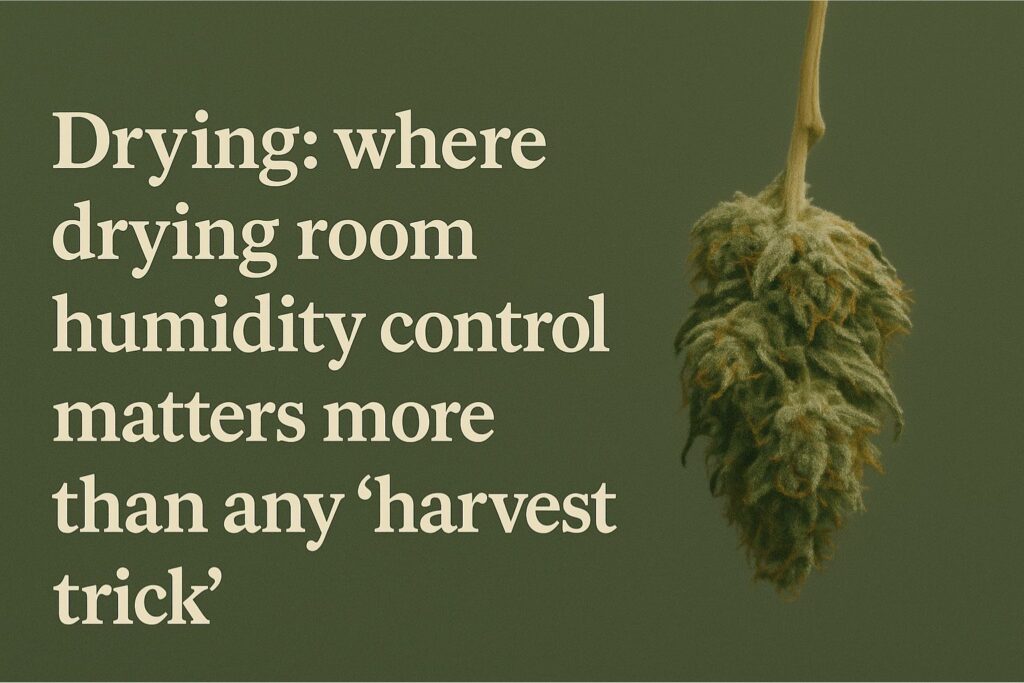
If people only fix one thing, I tell them to fix drying room humidity control. Bad drying can ruin the best cannabis harvest.
My drying targets and why
- Temperature: 18–21°C
- RH: 55–62%
- Air: gentle exchange, no fans blasting buds
- Light: dark or very dim
Drying room humidity control keeps the dry slow enough to preserve terpenes and avoid hay smell. Drying room humidity control also helps prevent mold if airflow is designed correctly (exchange, not wind).
How I decide the dry is done
I don’t dry by days. I dry by feel and jar behavior:
- Small stems bend and almost snap
- Buds feel dry outside but not crispy
- Jar test: after 60 minutes sealed, RH stabilizes in the low 60s
If the jar RH spikes high, the center is still wet. If it stays too low, you overdried.
Curing: my slow cure for terpene retention routine
A slow cure for terpene retention is where a “good” crop becomes a “great” crop. I treat curing as controlled storage, not an afterthought.
My slow cure for terpene retention routine:
- Jar at 58–62% internal RH.
- Burp briefly 1–2 times per day for the first week.
- Burp less often in week two as moisture equalizes.
- Store cool and dark for at least 2–4 weeks.
A slow cure for terpene retention reduces harshness and lets aroma layers separate. I notice the biggest improvement after day 14, and my best jars often peak after a month.
Storage: keeping cured flower stable
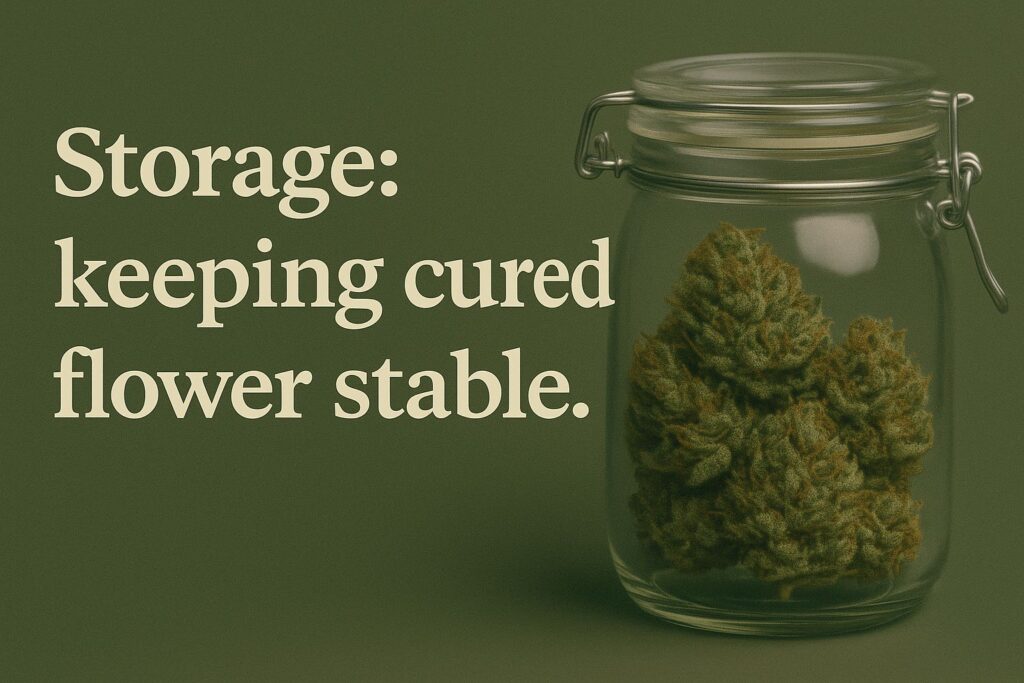
Once the cure is where I want it:
- I avoid heat and light.
- I keep containers airtight.
- I don’t open jars repeatedly for no reason.
The cannabis harvest doesn’t end at chop day; it ends when the jar stays consistent.
Seed shopping and planning: build a seed-to-shelf harvest plan before you sprout
Good harvests start with realistic planning. If you’re comparing feminized seeds vs autoflowers, think about your space, humidity, and timeline.
A practical seed-to-shelf harvest plan includes:
- Expected plant size and training method
- Flowering duration range (with phenotype spread)
- Drying space capacity and drying room humidity control approach
- A curing schedule you can actually follow
I keep a seed-to-shelf harvest plan for each cultivar I run. The seed-to-shelf harvest plan tells me when to start microscope checks and when to prep my drying room.
Outdoor and greenhouse finishing: what changes for the cannabis harvest
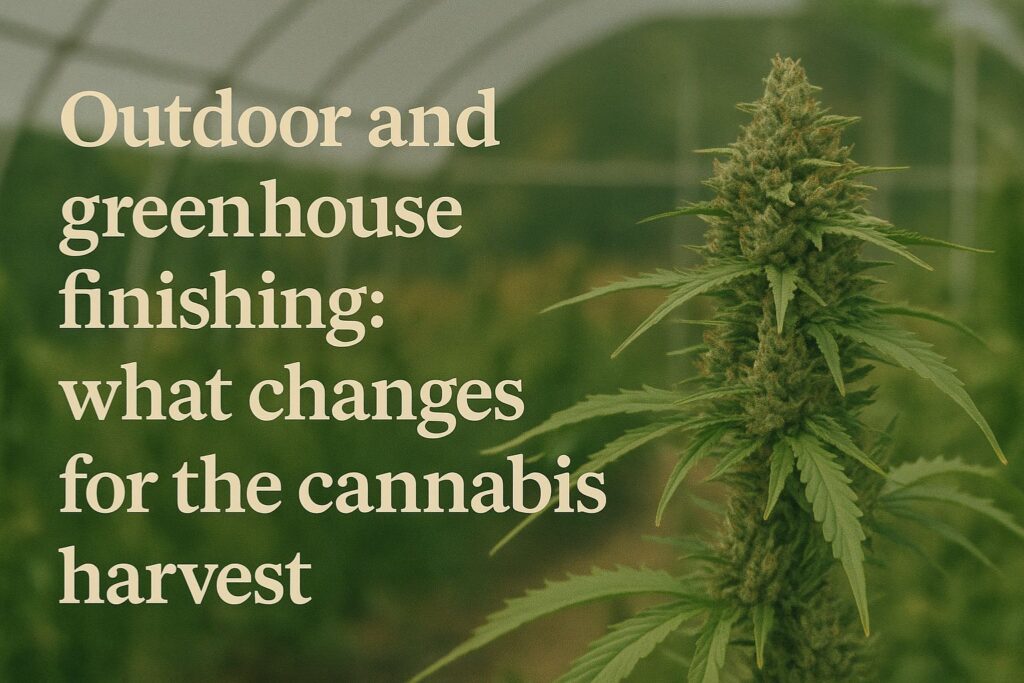
Outdoors, you don’t control everything, so you prioritize risk management.
My outdoor notes:
- Inspect daily for rot when nights get cold and wet.
- Thin interior growth to improve airflow before flowers get too dense.
- Be willing to harvest slightly earlier if mold pressure is rising.
Outdoor harvest window mapping matters even more because weather can force your hand. I still rely on trichome maturity signals, but I weigh them against forecasted humidity and rain.
Common mistakes I see (including ones I made)
- Harvesting by date alone instead of harvest window mapping
- Trusting pistil color reliability when the cultivar doesn’t “read” that way
- Abrupt nutrient shutdown instead of a pre-harvest nutrient taper
- Overwatering late flower and delaying ripening
- Letting drying room humidity control swing wildly
- Treating curing like storage instead of a slow cure for terpene retention
FAQ: quick answers to common cannabis harvest questions
How do I tell if it’s time to cut without expensive tools?
A basic loupe is enough. Look for trichome maturity signals on the flower itself and confirm across multiple bud sites.
Can I harvest in stages?
Yes. Staged cuts help you learn harvest window mapping for that cultivar and can improve lower bud quality.
Is flushing required for smooth smoke?
I’ve had smooth flower with and without flushing. For me, consistent drying room humidity control and a slow cure for terpene retention have a bigger impact than extreme flushing routines.
What’s better: wet trimming or dry trimming?
If you can manage humidity, a dry trimming technique usually preserves aroma better. If mold risk is high, a wet trimming technique can be safer.
Can I legally grow where I live?
Rules vary widely. Check your local regulations before you grow or order seeds. This isn’t legal advice—just a reminder to confirm your local rules.
Closing: make your next cannabis harvest more repeatable
The goal isn’t to guess right once. The goal is to make every cannabis harvest more predictable. Use harvest window mapping to define your window, trust trichome maturity signals for the final call, and steer the finish with a pre-harvest nutrient taper and a steady late-flower irrigation strategy. Then protect your work with drying room humidity control and a slow cure for terpene retention.
Do that, and the cannabis harvest becomes the most satisfying part of the run—because you can actually taste the months of good decisions.
