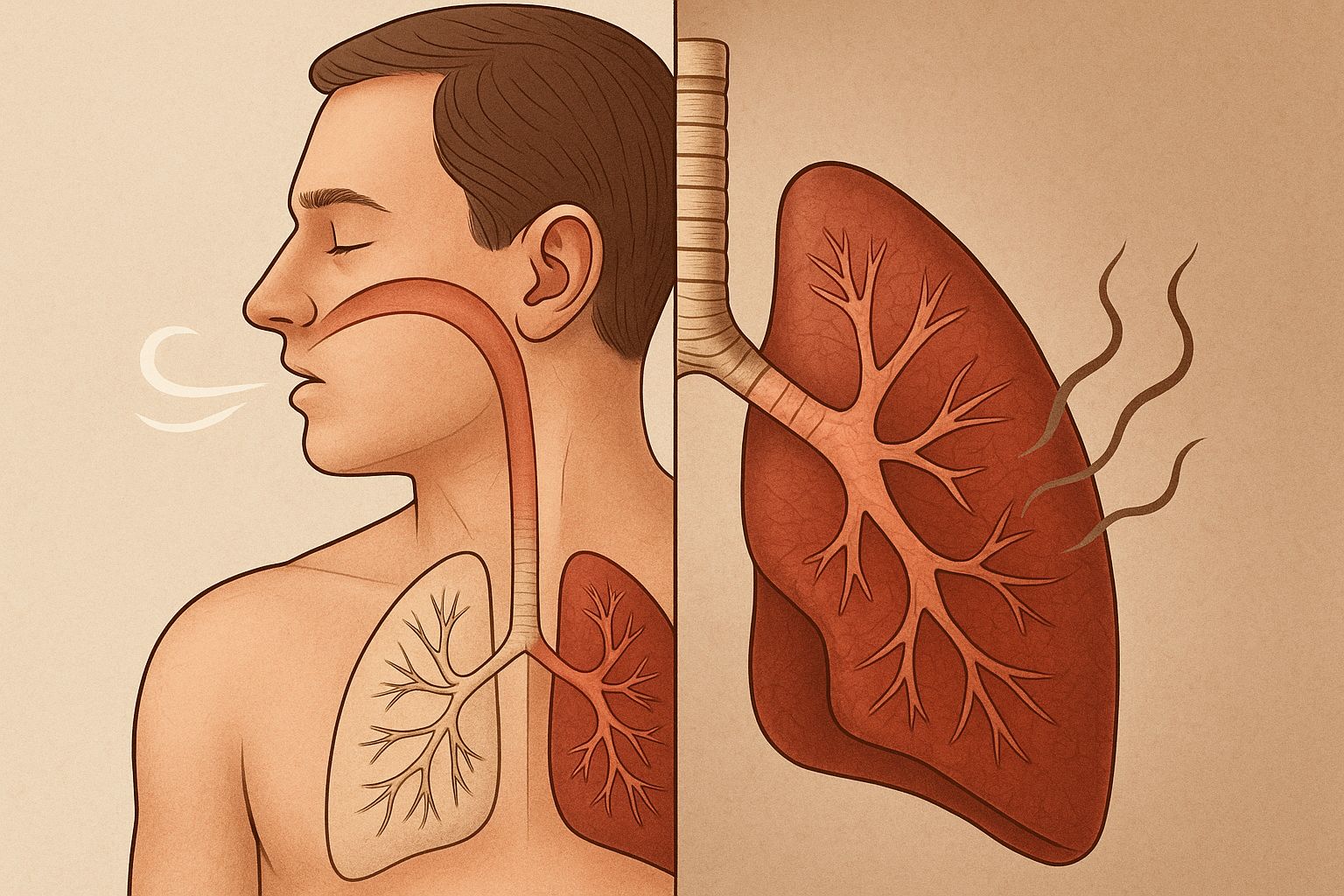
As a long-time home grower and seed collector, I have heard the same concern from friends and customers again and again: “Why does my favorite strain suddenly leave me wheezing?” When you care about cannabis and lung health, it can be alarming to feel tightness in your chest or hear a whistle in your breathing after a smoke session.
I am not a doctor, and this article is not medical advice. It is written from the perspective of a cultivator who has spent years dialing in genetics, environments, and post-harvest handling to reduce harshness and irritation. My goal is to help growers understand how their decisions from seed to jar can influence wheezing and respiratory issues for the adults who eventually consume those buds.
Modern research shows that inhaling combusted plant material, including cannabis, can contribute to cough, sputum, bronchitis-like symptoms, and wheeze in some people. For anyone already managing asthma or other breathing problems, this matters. In legal regions, being intentional about strain selection, drying and curing cannabis correctly, and avoiding contamination is one way growers can support safer, more comfortable sessions.
In this guide, I will walk through what wheezing and respiratory issues may signal, how smoking or vaping may play a role, and what we as cultivators can do to promote safe cannabis consumption and a clean cannabis harvest from seed to storage.
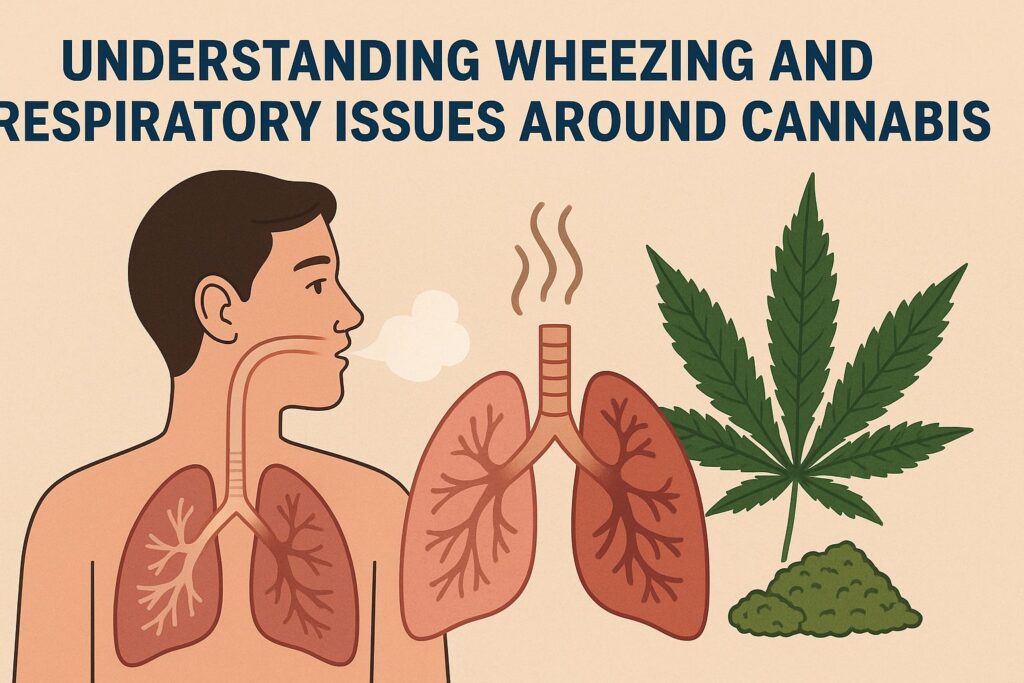
Understanding Wheezing and Respiratory Issues Around Cannabis
What wheezing feels like for cannabis consumers
Most people know wheezing as that high-pitched whistling sound when you breathe. It is usually most noticeable on the exhale. Along with wheezing and respiratory issues, many cannabis users report chest tightness, shortness of breath, or a feeling that air just cannot move the way it should.
When I hear this feedback about a crop I grew, I do not brush it off as “just strong weed.” Instead, I treat it as a signal. Is this about cannabis and lung health in general? Is there a sensitivity to smoke? Or did something in the way I dried, stored, or handled the buds contribute to irritation?
While only a health professional can evaluate a person’s lungs, growers can still take responsibility for anything within our control that may worsen marijuana smoke and coughing or make wheeze more likely.
How combustion affects the lungs
From a cultivation standpoint, it is easy to focus on cannabinoids, terpenes, and yield, and forget that fire fundamentally changes the plant material we worked so hard on. Combustion produces hot gases and tiny particles that travel deep into the airways. Studies have found that people who smoke marijuana heavily are more likely to report chronic cough, phlegm, and wheeze, reflecting irritation of the bronchial tree.
Those findings are part of the broader conversation about cannabis and lung health. Marijuana smoke and coughing are not just about “harsh weed” or poor technique; they are physiological responses to what the lungs are dealing with. Temperature, frequency of use, and how deeply someone inhales all play a role.
From the grower’s side, we cannot change what combustion is, but we can influence how cleanly the flower burns. Seed selection, nutrient regimes, flush timing, and especially drying and curing cannabis all affect how smooth the final smoke feels.
Beyond smoke: contaminants and mold
Another piece of the puzzle is contamination. Dust, pesticide residues, and especially mold spores can turn a pleasant joint into a respiratory trigger. Mold and other microorganisms have been detected on cannabis in cultivation, processing, and storage, and experts have warned that inhaling these spores may contribute to breathing problems in sensitive individuals.
When someone with sensitivity hits moldy cannabis buds, wheezing and respiratory issues can appear quickly. Even relatively healthy people might experience intense coughing, throat burn, or chest tightness. That is one reason I obsess about a clean cannabis harvest and treat mold prevention as a core part of my grow room design.
Can Weed Cause Wheezing? What The Research And My Grow Room Say
The big question: can weed cause wheezing?
People ask me constantly, “Can weed cause wheezing on its own, even if I never touch tobacco?” The short answer is yes, cannabis can be part of the picture. Reviews of inhaled marijuana use show associations between chronic smoking and symptoms like cough, sputum, shortness of breath, and wheeze, independent of tobacco use.
That does not mean every puff will cause problems, or that cannabis has no potential benefits in other contexts, but from a risk perspective, it is clear that plant smoke plus vulnerable airways can equal wheezing and respiratory issues for some consumers.
In conversations with patients, clinicians increasingly talk about cannabis and lung health in the same breath as tobacco, just with different patterns of use. When someone asks me, “can weed cause wheezing if I only smoke weekends?” I always tell them to bring that question to their doctor. My role as a grower is to reduce obvious irritants, not to weigh in on their personal medical risk.
Smoking vs vaping vs non-inhaled options
A lot of people pivot from joints to vapes or dabs because they hope to experience less marijuana smoke and coughing. There are nuances here. Vaporizing flower at lower temperatures avoids some combustion by-products, and some users report less irritation. But no inhaled method is entirely free of risk. Research has linked vaping (including THC products) with airway inflammation and, in rare cases, serious lung conditions.
From a cultivation standpoint, my main takeaway is that anything destined for inhalation should be as clean and well-handled as possible. If someone is already managing wheezing and respiratory issues, they may want to discuss non-inhaled routes with their clinician, such as tinctures or edibles. Those options fall outside my grow room, but they are part of the broader picture of safe cannabis consumption.
Framing risk honestly
I have seen people push the idea that marijuana smoke is “natural” and therefore harmless. That does not line up with what we know about cannabis and lung health, especially at heavy use levels.
As cultivators we can:
- Avoid minimizing someone’s symptoms when they say, “This strain gives me wheezing and respiratory issues.”
- Acknowledge that can weed cause wheezing is a valid question with a nuanced answer.
- Emphasize that cleaner growing practices and proper curing support safe cannabis consumption but cannot guarantee zero risk.
Strain Choice, Seeds, And The Way Smoke Feels
Genetics, terpenes, and perceived harshness
Over time I have noticed patterns between specific genetics and how they feel on the lungs. Some cultivars with heavy, diesel-like terpene profiles seem more likely to trigger marijuana smoke and coughing for certain users, even when grown and cured perfectly.
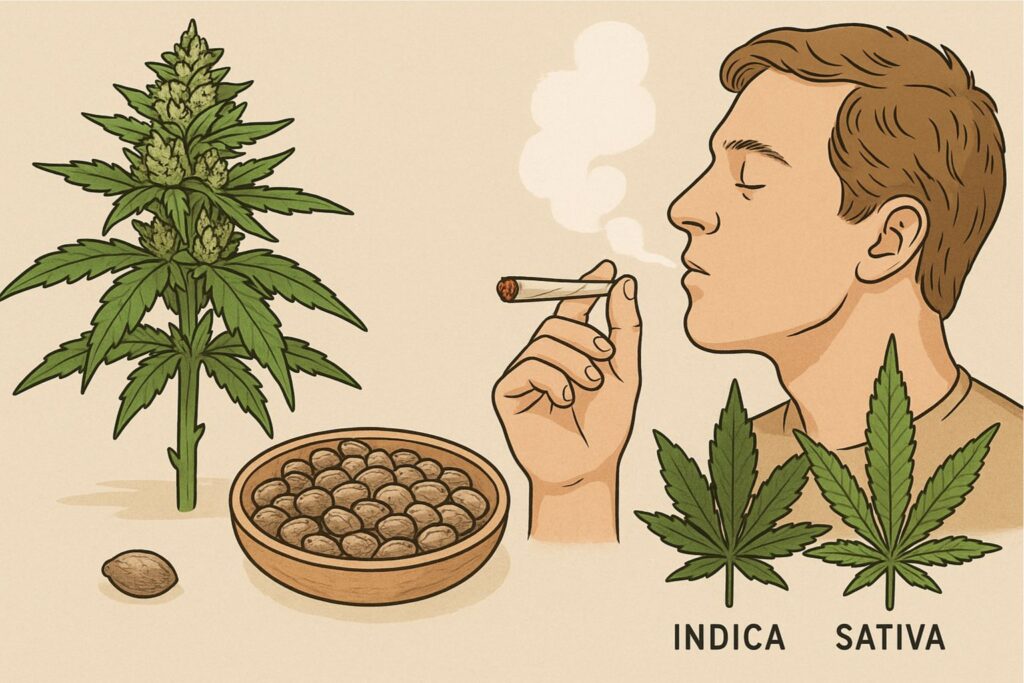
When I plan a new run, I think not only about potency and yield but also about who will be using the flower. High-energy sativas, sedating indicas, and modern hybrids all have different terpene blends, and those differences contribute to indica vs sativa effects such as perceived heaviness, head buzz, or body relaxation.
The same indica vs sativa effects can influence how people perceive respiratory comfort. A spicy, peppery sativa may feel more expansive in the chest, while a smooth, fruity indica might be easier on sensitive lungs. Because of that, I like to run several phenotypes from feminized cannabis seeds at once, take notes on feedback, and keep the phenos that smoke the smoothest.
For growers juggling busy schedules, autoflower weed seeds are a practical way to test multiple cultivars per year without complex light schedules. Autoflower weed seeds transition to bloom on their own, which makes it easier to evaluate different terpene and smoke profiles from the same space. Between feminized cannabis seeds and autoflower weed seeds, you can hunt for genetics that give your community the desired indica vs sativa effects while still feeling relatively gentle on the chest.
Seed banks and quality control
Where you buy feminized cannabis seeds matters. Reputable seed banks screen parent plants for stability and consistency. Over time I noticed that lines sourced from established breeders produced fewer outlier plants that were harsh, leafy, or prone to mold. That stability makes it easier to aim for a clean cannabis harvest every single run.
When customers tell me they want to explore strains but worry that can weed cause wheezing, I encourage them to:
- Start with quality feminized cannabis seeds from trusted sources.
- Try a small variety of indica vs sativa effects instead of committing to a large run of a single unknown cross.
- Use autoflower weed seeds strategically to test new terpene profiles in shorter cycles, then scale up the ones that feel gentler.
Drying And Curing Cannabis To Reduce Harshness
Why drying and curing cannabis are non-negotiable
If I had to pick one phase that most strongly influences marijuana smoke and coughing, it would be drying and curing cannabis. Freshly harvested buds are full of chlorophyll, moisture, and plant sugars. If they are dried too quickly or not cured long enough, the smoke tends to be hot and irritating even if the genetics are excellent.
My target for a standard indoor dry is:
- Temperature around 18–21°C (64–70°F)
- Relative humidity 55–60 percent
- Gentle air movement but no fan blowing directly on buds
- Darkness to protect cannabinoids and terpenes
At those settings, drying and curing cannabis become a slow, controlled process rather than a race. I aim for 10–14 days of hanging until small stems snap rather than bend. That slow dry removes moisture gradually, which reduces harshness and supports a clean cannabis harvest.
Curing for smoother smoke
Once the outer dryness feels right, I trim and move buds into glass jars or food-grade bins equipped with humidity control packs. For the first week, I burp the containers daily to release built-up moisture and gas. After that, they sit at 58–62 percent relative humidity for at least three to four weeks.
During this curing window, chlorophyll breaks down, harsh green flavors fade, and terpenes stabilize. Again and again I have watched jars transform from “cough city” to smooth and flavorful. This is the quiet, patient phase of drying and curing cannabis that directly influences whether someone experiences wheezing and respiratory issues when they light up.
How poor post-harvest handling contributes to problems
Rushed drying, hot rooms, and skipping the cure are a recipe for harsh smoke. Buds that feel crunchy outside but still wet inside often burn unevenly and produce more marijuana smoke and coughing. On top of that, overdried flower can crumble into powder and create more airborne particles, which is not ideal for cannabis and lung health.
As growers we cannot promise that proper drying and curing cannabis will eliminate wheeze, but we can certainly say that sloppy post-harvest work increases the odds that a sensitive person will struggle.
Mold, Storage, And Keeping A Clean Cannabis Harvest
Why mold matters for wheezing and respiratory issues
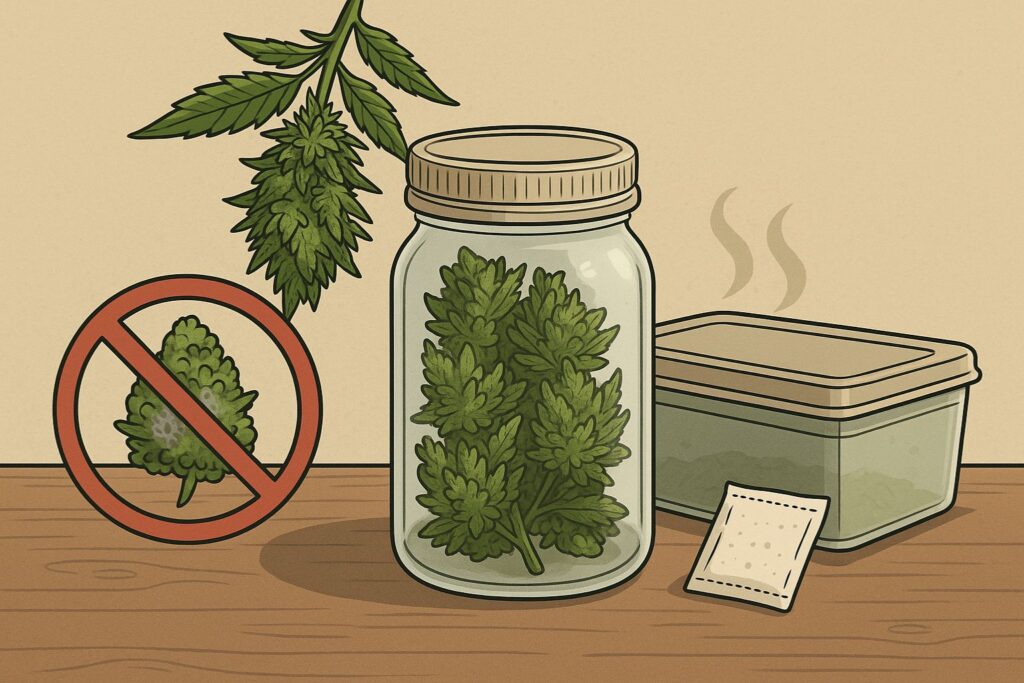
Mold is a hidden enemy. Even if moldy cannabis buds do not look dramatically different at first glance, the spores they carry can be inhaled deep into the lungs. For some people, especially those with weakened immune systems or chronic lung disease, mold exposure can lead to serious infections or allergic reactions.
From my grower perspective, even mild sensitivity counts. When a friend with allergies tries a joint and immediately experiences wheezing and respiratory issues, I want to know whether moldy cannabis buds or poor storage played a role.
Practical steps to avoid moldy cannabis buds
To maintain a clean cannabis harvest, I follow a strict routine:
- Keep flowering humidity controlled, ideally 45–55 percent, to discourage mold in late bloom.
- Improve air circulation around colas with proper defoliation and gentle fans.
- Inspect buds carefully at harvest for any gray, webby, or powdery areas and discard suspicious material.
- Dry in a clean room with filtered air; avoid humid basements full of other organic material.
- Store long-term in sealed containers at stable temperatures, away from sunlight and excess humidity.
If I ever suspect moldy cannabis buds in a jar, I err on the side of throwing them away rather than risking someone’s health. Safe cannabis consumption is more important than salvaging a few grams.
My Personal Checklist For Smoother, Cleaner Sessions
Over the years I have built a mental checklist that connects cultivation practice to wheezing and respiratory issues. Here is the version I now share with newer growers:
- Start with quality genetics
- Choose feminized cannabis seeds from reputable breeders.
- Use autoflower weed seeds to experiment with new terpene profiles quickly.
- Pay attention to indica vs sativa effects and how they feel in the chest, not just in the head.
- Aim for a clean cannabis harvest
- Control humidity, airflow, and sanitation in your flower room.
- Avoid foliar sprays late in bloom.
- Remove any moldy cannabis buds immediately to protect the rest of the crop.
- Respect drying and curing cannabis
- Dry slow and cool to prevent harsh chlorophyll-heavy smoke.
- Cure at stable humidity for several weeks before heavy use.
- Monitor jars periodically to ensure no new mold growth.
- Educate consumers about cannabis and lung health
- Be honest that can weed cause wheezing for some people, especially with heavy use.
- Encourage adults to try small amounts first, especially with new strains.
- Emphasize safe cannabis consumption practices like clean glassware and moderation.
- Store flower with care
- Keep jars in a dark, cool space to protect terpenes.
- Avoid fluctuating humidity that could encourage moldy cannabis buds.
- Label jars with harvest date so old stock does not linger unnoticed.
FAQ: Common Questions About Cannabis, Wheezing And Respiratory Issues
Why does my weed make me wheeze?
Wheezing can be triggered by hot smoke, particle irritation, underlying asthma, or contamination such as moldy cannabis buds. Sometimes the strain’s terpene profile or potency contributes to marijuana smoke and coughing as well. Because many factors affect cannabis and lung health, only a medical professional can sort out the exact cause in your case, but growers can still aim for a clean cannabis harvest and properly cured flower to reduce obvious irritants.
Can weed cause wheezing even if I only smoke occasionally?
Yes, can weed cause wheezing even in occasional users, especially if a person already has sensitive airways, allergies, or a history of asthma. Painful coughing fits or wheezing and respiratory issues after a small amount of smoke are a sign to take it seriously and talk with a clinician. From the grow side, gentle strains, slow burning flower, and careful drying and curing cannabis can help, but they cannot replace professional medical advice.
Is vaping marijuana better for my lungs than smoking?
Some people experience less marijuana smoke and coughing when they vaporize at lower temperatures instead of using joints or blunts. However, research on vaping THC and nicotine products has found evidence of airway inflammation and, in rare cases, severe lung conditions. No inhaled method is completely risk-free. If you already deal with wheezing and respiratory issues, it is worth asking a healthcare provider whether non-inhaled forms fit better into safe cannabis consumption for you.
How can I tell if I have moldy cannabis buds?
Obvious clues include fuzzy growth, off smells (musty, basement-like, or sour), and unusual discoloration inside dense colas. Sometimes moldy cannabis buds only reveal themselves when broken open, so I always inspect larger flowers before grinding. If you are not sure, do not take the chance. Throwing out questionable material is a key part of maintaining a clean cannabis harvest and protecting cannabis and lung health for everyone sharing the jar.
Do certain strains or seed types feel smoother on the lungs?
Different cultivars absolutely feel different. Some growers and consumers find that strains with fruity or sweet terpene profiles feel gentler compared with sharp, fuel-heavy varieties. Running multiple phenos from feminized cannabis seeds and autoflower weed seeds gives you a wide range of indica vs sativa effects to test. Over time you can favor the lines that give less marijuana smoke and coughing and better subjective comfort.
When To Seek Medical Advice
As growers we love to talk technique, but there is a clear line where our expertise ends. Persistent wheezing and respiratory issues, chest pain, coughing up blood, or severe shortness of breath are not normal responses to any plant material. If anyone experiences these symptoms, especially after using cannabis, they should seek medical evaluation promptly.
Some research suggests that stopping marijuana smoking can reduce chronic bronchitis-like symptoms over time. For some people, that may be part of their plan under medical guidance. My role is to support those decisions with cleaner crops and honest information, not to suggest treatments.
Final Thoughts From The Grow Room
Cultivating cannabis is about more than stacked colas and loud terpenes. It is also about responsibility. Every jar we share has real-world effects on cannabis and lung health, especially for people who may already be vulnerable.
By choosing stable feminized cannabis seeds and carefully selected autoflower weed seeds, dialing in environments, avoiding moldy cannabis buds, and respecting the art of drying and curing cannabis, we move closer to a truly clean cannabis harvest. That does not erase the possibility that can weed cause wheezing in some individuals, but it does show care for the people behind every puff.
For home growers and small producers who care about safe cannabis consumption, this is the path forward: honest conversations about wheezing and respiratory issues, attention to detail from seed to storage, and a willingness to put health and transparency first.
