What is THCA?
- Chemical Structure: THCA (tetrahydrocannabinolic acid) is a cannabinoid, which means it’s one of the chemical compounds found in cannabis plants. Its molecular structure includes a pentyl side chain attached to a resorcinol moiety.
- Natural State: In the natural, raw state of the cannabis plant, THCA is found abundantly, along with other cannabinoids like cannabidiolic acid (CBDA), which is the precursor to CBD.
- Non-Psychoactive: Unlike THC (tetrahydrocannabinol), which is well-known for its psychoactive effects, THCA itself doesn’t produce a “high” when consumed. This is because THCA lacks the psychoactive properties of THC.
- Potential Health Benefits: Studies indicate that THCA may offer a number of possible health advantages, such as anti-inflammatory, neuroprotective, and antiemetic qualities. Still, a lot of this research is in its early phases, and additional investigation is required to completely grasp THCA’s therapeutic potential.
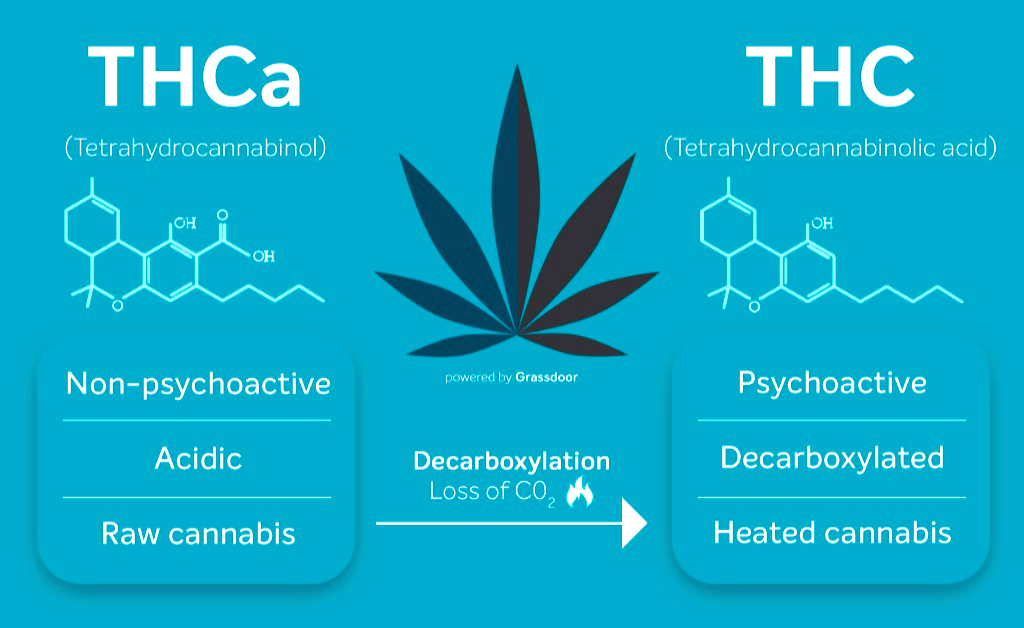
- Decarboxylation: THCA is transformed into THC via a process known as decarboxylation, which often involves the use of heat. This is why, when cannabis is smoked, vaporized, or cooked (for example, in edibles), the THCA changes to THC, producing the euphoric effects generally associated with cannabis usage.
- Consumption: Some people consume raw cannabis or cannabis juice to access the potential health benefits of THCA without experiencing the psychoactive effects of THC. However, it’s essential to note that raw cannabis may contain much higher levels of THCA compared to THC.
- Legal Status: Legal Status: The legal status of THCA differs according to regional regulations. In countries where cannabis is allowed for medical or recreational purposes, THCA products may be available for purchase. However, it is critical to examine local laws and regulations to ensure the legality of THCA products in your area.
In summary, THCA is a cannabinoid found in raw cannabis that offers potential health benefits without causing psychoactive effects. Further research is needed to fully understand its therapeutic properties and how it can be effectively utilized for various health conditions.
Comparing THC and THCA in detail
Chemical Structure:
Let’s delve into the differences in chemical structure between THC (tetrahydrocannabinol) and THCA (tetrahydrocannabinolic acid):
- THC (Tetrahydrocannabinol):
- THC is a psychoactive cannabinoid found in cannabis.
- Chemical Formula: C21H30O2
- Chemical Structure: THC has a cyclic ring structure, specifically a dibenzopyran ring, with a pentyl side chain (five-carbon alkyl group) attached to it.
- THC is derived from THCA through a process called decarboxylation, where the carboxyl group (COOH) is removed, converting THCA into THC.
- THC is responsible for the euphoric “high” associated with cannabis use.
- THCA (Tetrahydrocannabinolic Acid):
- THCA is the precursor to THC and is non-psychoactive.
- Chemical Formula: C22H30O4
- Chemical Structure: THCA has a similar cyclic ring structure to THC, but it includes an additional carboxylic acid group (COOH) attached to the molecule.
- THCA is abundant in raw or live cannabis plants and needs to undergo decarboxylation to convert into THC and become psychoactive.
- THCA lacks the psychoactive effects of THC and is found in higher concentrations in fresh, raw cannabis.
In summary, while THC and THCA share similarities in their chemical structures, with both containing cyclic ring structures and pentyl side chains, the key difference lies in the presence of the carboxylic acid group (COOH) in THCA. This difference renders THCA non-psychoactive until it undergoes decarboxylation to form THC, the compound responsible for the intoxicating effects of cannabis.
Psychoactive Properties:
The psychoactive properties of THC (tetrahydrocannabinol) and THCA (tetrahydrocannabinolic acid) differ significantly due to their distinct chemical compositions and interactions with the endocannabinoid system. Here’s a breakdown of their psychoactive properties:
- THC (Tetrahydrocannabinol):
- Psychoactivity: THC is highly psychoactive and is primarily responsible for the euphoric “high” associated with cannabis consumption.
- Mode of Action: THC interacts with the endocannabinoid receptors in the brain, particularly the CB1 receptors, altering neurotransmitter release and neural activity. This leads to various psychoactive effects, including euphoria, relaxation, altered perception of time, changes in sensory perception, and impaired memory and coordination.
- Intoxication: THC intoxication can vary depending on factors such as dosage, individual tolerance, method of consumption, and the presence of other cannabinoids or compounds in the cannabis plant.
- Legal Considerations: Due to its psychoactive effects, THC is subject to strict regulations in many jurisdictions, and its use may be restricted to medical or recreational purposes under certain conditions.
- THCA (Tetrahydrocannabinolic Acid):
- Non-Psychoactivity: THCA is non-psychoactive in its natural state, meaning it does not induce intoxicating effects like THC.
- Decarboxylation: THCA must undergo decarboxylation to convert into THC and become psychoactive. This process typically involves heating, such as smoking, vaporization, or cooking.
- Biological Activity: While THCA does not produce a “high” on its own, it may still have potential therapeutic effects. Research suggests that THCA may exhibit anti-inflammatory, neuroprotective, and antiemetic properties, although more studies are needed to fully understand its mechanisms of action and therapeutic potential.
- Consumption: Some individuals consume raw cannabis or cannabis products containing THCA to access its potential health benefits without experiencing the psychoactive effects of THC. However, the availability and legality of THCA-containing products may vary depending on regional regulations.
In summary, THC is highly psychoactive and produces the characteristic “high” associated with cannabis use, whereas THCA is non-psychoactive in its natural state and requires decarboxylation to become psychoactive. Understanding the differences in their psychoactive properties is essential for informed cannabis consumption and medical use.
Decarboxylation:
Decarboxylation is a crucial process that distinguishes the psychoactive properties of THC (tetrahydrocannabinol) and THCA (tetrahydrocannabinolic acid). Here’s how decarboxylation differs between THC and THCA:
- THC (Tetrahydrocannabinol):
- Decarboxylation: THC does not require decarboxylation because it is already in its active form. However, during the process of heating, smoking, vaporizing, or cooking cannabis, additional decarboxylation may occur. This can lead to the conversion of other cannabinoids, such as THCA, into THC, thereby increasing the overall concentration of psychoactive THC in the cannabis product.
- Resulting Effect: THC’s psychoactive effects are immediate upon consumption, as it readily binds to cannabinoid receptors in the brain, particularly the CB1 receptors, resulting in the characteristic “high” associated with cannabis use.
- THCA (Tetrahydrocannabinolic Acid):
- Decarboxylation: THCA undergoes decarboxylation to convert into THC, the psychoactive form of the cannabinoid. This process typically requires heat, such as smoking, vaporization, or cooking. When cannabis is heated, the carboxylic acid group (COOH) attached to THCA is removed, leading to the formation of THC.
- Activation: Without decarboxylation, THCA remains non-psychoactive and does not produce intoxicating effects. It is abundant in raw or live cannabis plants and must be heated to convert into THC and become psychoactive.
- Resulting Effect: Once decarboxylated into THC, THCA can induce psychoactive effects similar to those of THC, including euphoria, relaxation, altered perception, and changes in sensory perception.
In summary, THC does not require decarboxylation as it is already psychoactive, while THCA must undergo decarboxylation to convert into THC and become psychoactive. Understanding this difference is crucial for individuals who wish to control the psychoactive effects of cannabis products and tailor their consumption accordingly.
Health Benefits:
THC (tetrahydrocannabinol) and THCA (tetrahydrocannabinolic acid) offer distinct health benefits, albeit through different mechanisms due to their unique chemical properties. Here’s a comparison of their potential health benefits:
- THC (Tetrahydrocannabinol):
- Pain Relief: THC has analgesic qualities and is commonly used to treat chronic pain problems such neuropathic pain, arthritis, and migraines.
- Muscle Relaxation: THC can help reduce muscle spasms and stiffness, making it beneficial for conditions such as multiple sclerosis (MS) and Parkinson’s disease.
- Appetite Stimulation: THC has been shown to boost appetite, making it useful for people who are losing their appetite as a result of medical illnesses or treatments like as chemotherapy.
- Nausea and Vomiting Relief: THC has antiemetic effects, which can help alleviate nausea and vomiting associated with cancer treatment, HIV/AIDS, and other medical conditions.
- Anxiety and Mood Disorders: While THC can exacerbate anxiety in some individuals, it may also have anxiolytic and mood-elevating effects in others, making it potentially beneficial for conditions like PTSD and depression.
- Sleep Aid: THC’s sedative properties may help improve sleep quality and duration, although long-term use may lead to dependence or tolerance.
- THCA (Tetrahydrocannabinolic Acid):
- Anti-Inflammatory: THCA has shown promise as an anti-inflammatory agent in preclinical studies, potentially offering relief for conditions such as arthritis and inflammatory bowel diseases (IBD).
- Neuroprotective: Research suggests that THCA may have neuroprotective properties, which could be beneficial for neurodegenerative diseases like Alzheimer’s and Parkinson’s.
- Antiemetic: Similar to THC, THCA may possess antiemetic properties, making it potentially useful for managing nausea and vomiting associated with chemotherapy and other medical treatments.
- Antioxidant: THCA exhibits antioxidant properties, which may help protect cells from oxidative stress and damage caused by free radicals.
- Appetite Stimulation: Some anecdotal reports suggest that THCA may also stimulate appetite, although more research is needed to confirm this effect.
- Non-Psychoactive: THCA does not produce psychoactive effects on its own, which may be preferable for individuals who want to avoid the intoxicating effects of THC.
It is crucial to highlight that research into the health advantages of THC and THCA is still ongoing, and more clinical trials are required to fully understand their therapeutic potential and appropriate application in medical therapies. Furthermore, individual responses to cannabis might vary, so patients must consult with healthcare specialists to identify the best treatment plan for their specific medical conditions.
Legal Status:
The legal status of THC (tetrahydrocannabinol) and THCA (tetrahydrocannabinolic acid) can vary significantly depending on regional regulations and the form in which they are found. Here’s a comparison of their legal status:
- THC (Tetrahydrocannabinol):
- Psychoactive Substance: THC is the primary psychoactive compound in cannabis and is classified as a controlled substance in many countries and jurisdictions.
- Regulatory Framework: The legal status of THC varies widely depending on regional laws and regulations. In some places, THC is legal for medical and/or recreational use with certain restrictions and regulations, such as age limits, possession limits, and licensing requirements. In other areas, THC remains illegal under all circumstances.
- Medical Use: In jurisdictions where medical cannabis is legal, THC-containing products may be available with a doctor’s prescription or recommendation. These products are often regulated and may require approval from regulatory authorities.
- Recreational Use: In regions where cannabis is legal for recreational use, THC-containing products may be available for purchase by adults over a certain age from licensed dispensaries or retailers. However, regulations regarding THC potency, product labeling, packaging, and advertising may apply.
- THCA (Tetrahydrocannabinolic Acid):
- Non-Psychoactive: THCA is the precursor to THC and is non-psychoactive in its natural state. It does not produce intoxicating effects until it undergoes decarboxylation to convert into THC.
- Legal Considerations: Because THCA does not have psychoactive effects on its own, its legal status may differ from THC. In some jurisdictions, THCA-containing products, particularly those derived from raw or live cannabis, may be legal or subject to less stringent regulations compared to THC-containing products.
- Regulatory Framework: However, regulations regarding THCA-containing products can vary significantly depending on regional laws and policies. It’s essential for individuals to familiarize themselves with local regulations regarding the cultivation, distribution, sale, and use of THCA-containing products.
- Medical Use: While research on the therapeutic potential of THCA is ongoing, medical use of THCA-containing products may be permitted in some jurisdictions under specific circumstances. These products may be available through medical cannabis programs or under other regulatory frameworks for alternative therapies.
In summary, THC and THCA have different legal statuses, with THC being subject to more stringent regulations due to its psychoactive properties. THCA, as a non-psychoactive compound, may have a different legal status in some jurisdictions, but regulations regarding its cultivation, distribution, and use can still apply. It’s crucial for individuals to understand and comply with local laws and regulations regarding cannabis and cannabinoid-containing products.
Conclusion
In conclusion, THC (Tetrahydrocannabinol) and THCA (Tetrahydrocannabinolic Acid) are two distinct cannabinoids found in cannabis, each with its own unique properties, effects, and potential health benefits.
THC is the primary psychoactive compound in cannabis, responsible for the euphoric “high” experienced by users. It has a cyclic ring structure with a pentyl side chain and becomes psychoactive after decarboxylation, which removes the carboxyl group (COOH) from THCA. THC has well-documented therapeutic effects, including pain relief, muscle relaxation, appetite stimulation, nausea reduction, and mood elevation. However, its psychoactive nature means it can also induce intoxicating effects and may have adverse effects for some individuals. The legal status of THC varies widely depending on regional regulations, with many places heavily regulating its use and availability.
On the other hand, THCA is the precursor to THC and is non-psychoactive in its natural state. It contains an additional carboxylic acid group (COOH) attached to its structure, which makes it non-intoxicating. THCA is abundant in raw or live cannabis plants and must undergo decarboxylation, usually through heating, to convert into THC and become psychoactive. While research on THCA is still in its early stages, preliminary studies suggest it may have potential health benefits, including anti-inflammatory, neuroprotective, and antiemetic properties. Some individuals consume raw cannabis or cannabis juice to access the potential therapeutic effects of THCA without experiencing the psychoactive effects of THC. The legal status of THCA-containing products may differ from THC, but it’s essential to check local laws and regulations regarding their legality.
In summary, THC and THCA represent two important cannabinoids found in cannabis, each with its own role and potential benefits. While THC is known for its psychoactive effects and therapeutic properties, THCA offers a non-psychoactive alternative with potential health benefits that warrant further research and exploration.
