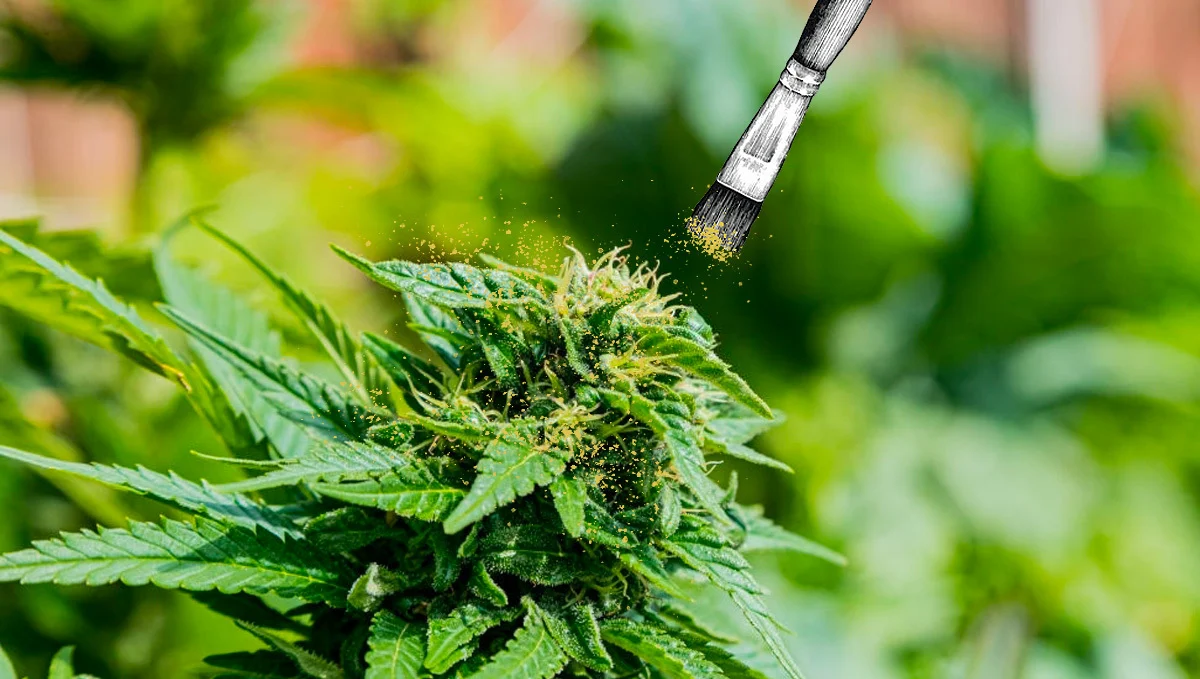
Cannabis pollen is the male reproductive material from cannabis plants, used to fertilize female plants for seed production. Here are some key points about cannabis pollen:
- Source: Cannabis pollen is produced by male cannabis plants. These plants develop pollen sacs, which release pollen into the air when they mature.
- Purpose: The primary purpose of cannabis pollen is to fertilize female cannabis plants. When pollen comes into contact with the pistils (the reproductive parts) of female plants, it leads to the production of seeds.
- Collection: Cannabis pollen can be collected for breeding purposes. Growers often collect pollen by gently shaking the male plants over a surface to gather the pollen or by carefully cutting and drying the pollen sacs.
- Storage: Cannabis pollen must be stored properly to remain viable. It is typically kept in a cool, dry place, often frozen, to maintain its potency for future use.
- Breeding: Pollen is used in cannabis breeding to create new strains. By crossing different male and female plants, breeders can combine desirable traits from each parent to develop new varieties with specific characteristics.
- Avoiding Pollination: In cultivation where seedless cannabis (sinsemilla) is desired, growers take care to prevent male plants from pollinating female plants. This is done by identifying and removing male plants early in the flowering stage.
Cannabis pollen is a critical component in the propagation and genetic diversification of cannabis plants, playing a vital role in the development of new strains and the continuation of the species.
Cannabis pollen is sourced from male cannabis plants. Here are the details:
- Production by Male Plants: Male cannabis plants develop pollen sacs, which are structures that contain and release pollen. These sacs appear as small, round clusters on the nodes (where branches meet the stem) of the male plant.
- Maturation: As the male plant matures, the pollen sacs open, releasing the pollen into the air. This typically happens during the flowering stage of the plant’s life cycle.
- Pollination: In the natural environment, this pollen is carried by the wind to female cannabis plants, where it fertilizes the pistils and leads to the production of seeds.
- Identification and Collection: In cultivation, growers can identify male plants by their pollen sacs, which distinguish them from female plants that develop pistils. To collect pollen, growers may shake the male plant over a collection surface or cut and dry the pollen sacs to gather the pollen.
By understanding the source and handling of cannabis pollen, breeders and growers can effectively use it for creating new cannabis strains and ensuring the continuation of the plant’s lifecycle.
The primary purpose of cannabis pollen is to fertilize female cannabis plants to produce seeds. Here are the key points regarding its purpose:
- Fertilization: Cannabis pollen carries the male genetic material necessary for fertilizing the female cannabis plant’s ovules. When the pollen lands on the pistils of a female plant, it triggers the process of seed production.
- Breeding: Pollen is crucial in cannabis breeding programs. By selectively pollinating female plants with pollen from chosen male plants, breeders can create new strains with specific desired traits, such as particular cannabinoid profiles, flavors, aromas, or growth characteristics.
- Genetic Diversity: The use of pollen in fertilization helps maintain and enhance genetic diversity within the cannabis species. This diversity is important for the resilience and adaptability of the plant, allowing it to thrive in various environments and resist diseases and pests.
- Seed Production: For growers looking to produce their own seeds, cannabis pollen is essential. Seeds produced through pollination carry genetic information from both parent plants, allowing growers to propagate specific strains or experiment with creating new hybrids.
- Natural Reproduction: In nature, cannabis pollen ensures the continuation of the species by enabling sexual reproduction. The seeds produced through this process can grow into new cannabis plants, perpetuating the plant’s lifecycle.
Cannabis pollen plays a fundamental role in the reproduction, genetic enhancement, and breeding of cannabis plants, making it a vital component in both natural and controlled cultivation environments.
Collecting cannabis pollen is an essential process for breeders who aim to create new cannabis strains or propagate specific genetics. Here is a step-by-step guide on how cannabis pollen is collected:
- Identify Male Plants: First, growers must identify male cannabis plants. This is done by looking for pollen sacs, which are small, round structures that form at the nodes (where branches meet the main stem) of the plant. These sacs differentiate male plants from female plants, which develop pistils instead.
- Timing: Pollen should be collected when the pollen sacs are mature but before they open and release pollen naturally. This is typically during the flowering stage of the plant’s lifecycle.
- Preparation: To prevent cross-contamination and ensure clean pollen collection, growers often isolate male plants from female plants. This can be carried out in a restricted space or a different room.
- Collection Methods:
- Shaking Method: One common method is to gently shake the male plant over a clean surface, such as a piece of paper, a glass dish, or a plastic bag, to collect the falling pollen.
- Cutting Method: Another method involves cutting off the branches or clusters of pollen sacs and placing them in a dry, clean environment. The sacs will open as they dry, releasing the pollen, which can be collected from the surface below.
- Direct Collection: For small-scale operations, pollen can be collected directly from the opened sacs using a small brush or by tapping the sacs gently over a container.
- Drying: If the pollen is not already dry, it needs to be dried to prevent mold and to ensure longevity. This can be done by spreading the pollen out in a thin layer on a non-stick surface and leaving it in a dry, dark place for a few days.
- Storage: Once collected and dried, cannabis pollen should be stored in airtight containers to keep it dry and viable. Many growers use small glass jars or plastic vials. To extend its shelf life, pollen can be stored in a refrigerator for short-term use or in a freezer for long-term storage.
- Labeling: Proper labeling is important, especially when collecting pollen from multiple plants. Labels should include information about the strain, date of collection, and any other relevant details.
By following these steps, growers can effectively collect and store cannabis pollen for breeding and seed production purposes.
Storing cannabis pollen properly is crucial to maintain its viability for future use in breeding and seed production. Here are the steps and tips for effective storage:
- Dry the Pollen: Ensure the pollen is completely dry before storage. Spread it in a thin layer on a non-stick surface and leave it in a cool, dry, dark place for a few days. This step prevents mold growth and maintains pollen viability.
- Use Airtight Containers: Store the dried pollen in airtight containers to protect it from moisture. Small glass jars, plastic vials, or resealable plastic bags are commonly used. Before using the containers, ensure that they are clean and dry.
- Add Desiccants: To further protect against moisture, you can add desiccant packets (like silica gel) to the container. These packets absorb any residual moisture, helping keep the pollen dry.
- Label the Containers: Properly label each container with relevant information, such as the strain, date of collection, and any other important details. This helps in identifying and tracking the pollen during storage.
- Refrigeration: For short-term storage (up to a few weeks), keep the airtight containers in a refrigerator. Ensure the temperature is consistent and avoid frequent opening of the refrigerator to prevent temperature fluctuations.
- Freezing: For long-term storage (several months to years), place the airtight containers in a freezer. Freezing preserves pollen viability for extended periods. When retrieving pollen from the freezer, allow it to come to room temperature while still sealed to prevent condensation from forming on the pollen.
- Avoid Light and Heat Exposure: Store the containers in a dark place and avoid exposing them to direct sunlight or heat sources, as these can degrade the pollen’s viability.
By following these steps, you can effectively store cannabis pollen, preserving its quality and viability for future use in breeding and seed production.
Breeding cannabis using pollen involves carefully controlled pollination to create new strains with desired traits. Here is a detailed guide on how to use cannabis pollen for breeding:
Steps for Cannabis Pollen Breeding:
- Select Parent Plants:
- Male Plant: Choose a male cannabis plant with desirable traits, such as strong growth, resistance to pests, and specific cannabinoid profiles.
- Female Plant: Select a female plant with characteristics you want to pass on to the offspring, like high yield, potency, aroma, or specific cannabinoid content.
- Isolate Male Plants:
- Grow the male plant separately from the female plants to prevent accidental pollination.
- Allow the male plant to mature and produce pollen sacs. Once the sacs mature, collect the pollen using one of the methods described earlier (shaking, cutting, or direct collection).
- Collect and Store Pollen:
- Collect the pollen carefully and store it in a cool, dry place if not using it immediately. Follow the proper storage techniques to maintain its viability.
- Prepare Female Plants:
- Grow the female plants until they reach the flowering stage.
- Identify the ideal time for pollination, usually when the female plant has numerous white pistils, indicating it is ready to receive pollen.
- Pollination Process:
- Isolate the female plant you intend to pollinate to avoid cross-contamination with other plants.
- Using a small brush or Q-tip, apply the pollen to the pistils of the female plant. Target specific buds or branches if you only want partial pollination or apply pollen to the entire plant for full pollination.
- Alternatively, you can gently shake the pollen over the female plant, ensuring even distribution.
- Post-Pollination Care:
- Once pollinated, return the female plant to its normal growing environment.
- Maintain regular care, providing adequate light, water, and nutrients. The fertilized pistils will start to produce seeds within a few weeks.
- Harvesting Seeds:
- Seeds will mature within 4-6 weeks after pollination. The female plant’s buds will begin to develop mature seeds, visible as they swell and harden.
- When the seeds are mature, harvest the buds and carefully separate the seeds from the plant material.
- Dry and Store Seeds:
- Dry the seeds thoroughly to prevent mold and ensure long-term viability.
- The seeds should be kept dry, cold, and dark—ideally in airtight jars.
Avoiding pollination in cannabis cultivation is essential when the goal is to produce seedless (sinsemilla) cannabis, which is typically preferred for its higher potency and better flower quality. Here are several strategies to avoid pollination:
Strategies to Avoid Pollination:
- Identify and Remove Male Plants:
- Early Identification: Learn to identify male plants early in their growth cycle. Male plants develop pollen sacs, which look like small, round clusters, whereas female plants develop pistils, which are hair-like structures.
- Regular Inspection: Regularly inspect your plants during the vegetative and early flowering stages. As soon as a male plant is discovered, remove it to stop it from releasing pollen.
- Grow Only Female Plants:
- Feminized Seeds: Use feminized seeds, which are genetically modified to produce only female plants. This reduces the risk of male plants appearing in your garden.
- Cloning: Clone female plants from a mother plant you know to be female. This ensures all your plants will be female and eliminates the risk of accidental pollination.
- Controlled Environment:
- Indoor Growing: Grow cannabis in a controlled indoor environment where you can regulate exposure to external pollen sources.
- Ventilation and Filtration: Use HEPA filters on intake vents and ensure your grow room is sealed to prevent outside pollen from entering.
- Separate Rooms: If you are growing both male and female plants for breeding purposes, keep them in separate, sealed rooms to prevent accidental pollination.
- Timing:
- Staggered Planting: Stagger the planting times of male and female plants if you are growing both for breeding. This allows you to harvest male plants before they release pollen or to keep them in a vegetative state until needed.
- Manual Removal:
- Pre-Flowers: Be vigilant in removing any pre-flowers (early signs of sex) that show up on plants. This can be particularly useful in outdoor grows where identifying and removing males early is crucial.
- Isolation Techniques:
- Physical Barriers: Use physical barriers such as pollen bags or isolation chambers to prevent pollen from reaching female plants.
- Distance: Maintain a significant distance between male and female plants if growing outdoors. Pollen can travel long distances on the wind, so ensure adequate separation.
Best Practices for Inspection and Identification:
- Frequent Monitoring: Check your plants daily, especially during the early flowering stage, to catch and remove any male plants or hermaphrodites (plants that show both male and female characteristics) before they can release pollen.
- Training and Pruning: Train and prune your plants to maintain an open structure, making it easier to inspect and identify any developing pollen sacs.
- Education: Educate yourself and your growing team on the distinct characteristics of male and female cannabis plants to ensure accurate identification.
By implementing these strategies, you can effectively avoid pollination and ensure the production of high-quality, seedless cannabis.
Cannabis pollen, the fine powder produced by male cannabis plants, plays a pivotal role in the reproductive cycle and genetic diversity of cannabis species. This powder contains the male genetic material necessary for the fertilization of female cannabis plants. Understanding its function and applications is crucial for both breeders and cultivators aiming to produce specific cannabis strains.
Key Aspects of Cannabis Pollen
- Production and Collection:
- Source: Male cannabis plants produce pollen in structures known as pollen sacs. As these sacs mature, they open and release pollen into the environment.
- Collection: To gather pollen, growers typically shake the male plants over a collection surface or cut and dry the pollen sacs. This process requires careful handling to prevent contamination and ensure purity.
- Fertilization Process:
- Pollination: When cannabis pollen reaches the female plant’s pistils, it triggers fertilization, leading to seed development. The natural propagation of cannabis plants depends on this process.
- Controlled Breeding: Breeders often use collected pollen to fertilize selected female plants, aiming to produce seeds with specific genetic traits. This controlled pollination allows for the creation of new cannabis strains with desired characteristics, such as higher potency, specific flavors, or enhanced medicinal properties.
- Storage and Viability:
- Proper Storage: To maintain the viability of cannabis pollen, it must be stored in a cool, dry environment. Freezing is a common method to preserve its potency for extended periods. Proper storage conditions prevent moisture and heat from degrading the pollen, ensuring it remains effective for future use.
- Breeding and Genetic Diversity:
- Strain Development: Cannabis pollen is instrumental in the development of new cannabis strains. By cross-pollinating different male and female plants, breeders can combine desirable traits from both parents. This genetic mixing enhances the diversity and resilience of cannabis plants, leading to innovative strains tailored for specific medicinal or recreational purposes.
- Genetic Preservation: Beyond creating new strains, cannabis pollen is used to preserve the genetic lineage of rare or valuable cannabis varieties. By storing and using pollen from these plants, breeders can ensure the continued availability of unique genetic profiles.
- Cultivation Practices:
- Seedless Cannabis (Sinsemilla): In commercial cultivation, where seedless cannabis buds are often preferred, growers take measures to prevent pollination. This involves identifying and removing male plants early in the flowering stage to ensure female plants produce high-quality, seedless flowers.
- Pollination Control: In controlled environments, growers can use pollen to selectively pollinate specific female plants, ensuring that only desired genetic traits are passed on to the next generation.
Conclusion
Cannabis pollen is an essential element in the lifecycle and breeding of cannabis plants. Its role in fertilization, genetic diversity, and strain development cannot be overstated. Proper handling, storage, and application of cannabis pollen allow breeders and cultivators to innovate and preserve the genetic integrity of cannabis species. By leveraging the potential of cannabis pollen, the cannabis industry continues to evolve, offering new and improved strains for both medicinal and recreational use. Understanding the intricacies of cannabis pollen and its applications is fundamental for anyone involved in the cultivation and breeding of cannabis.
