Table of Contents
What Is an F1 Hybrid Cannabis Seed?
F1 hybrid cannabis seeds represent a revolutionary advancement in cannabis breeding. Often praised for their genetic stability, vigor, and uniformity, these seeds are the result of highly controlled and deliberate crossbreeding techniques. Unlike regular or even feminized seeds, F1 hybrids are designed to deliver consistent traits across generations, which can be a game-changer for both commercial cultivators and serious home growers. This guide explores what F1 hybrid cannabis seeds are, how they’re made, and why they matter.

1. Understanding the Basics: What Does “F1” Mean?
The term “F1” stands for “First Filial Generation.” In plant genetics, this denotes the first generation of offspring resulting from a cross between two genetically distinct, but stable inbred parent lines. In simpler terms, F1 hybrids are the direct children of two true-breeding (homozygous) parents.
- True-breeding parent lines are developed over many generations through self-pollination or careful selection to stabilize desired traits.
- When two of these stable parent lines are crossed, their offspring F1 hybrids exhibit a a blend of both parents’ greatest qualities.
This cross results in hybrid vigor or heterosis, which means the F1 offspring often outperform either parent in terms of growth rate, yield, resistance, and overall robustness.
2. The Science of Creating F1 Hybrids in Cannabis
Creating an F1 hybrid involves several crucial steps that require advanced breeding knowledge and rigorous control:
Step 1: Inbreeding of Parent Lines
Before an F1 hybrid can be created, breeders must first stabilize two parent strains. This is achieved by:
- Selecting cannabis plants with desirable traits (e.g., high THC, mold resistance).
- Repeatedly inbreeding them (often self-pollination or sibling crosses) for multiple generations (usually 6–10 generations) to make them genetically uniform.
- At this stage, the parent plants are highly homozygous, meaning they consistently express the same traits in each generation.
Step 2: Crossing Parent Lines
Once both parental lines are stabilized, they are crossbred in a controlled environment. The resulting seeds from this cross are the F1 hybrids.
Step 3: Testing and Stabilization
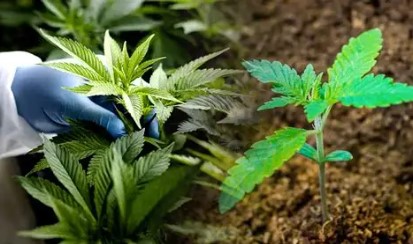
Breeders will test the F1 hybrids across various grow conditions to confirm they produce uniform plants. If successful, the seed batch is released as a commercial F1 hybrid product.
3. Characteristics of F1 Hybrid Cannabis Seeds
F1 hybrids are distinct from other seed types in several important ways:
a. Genetic Uniformity
All F1 seeds produce plants with nearly identical traits, including:
- Growth rate
- Plant structure
- Cannabinoid profile
- Flowering time
- Yield
This makes them ideal for large-scale commercial cultivation where consistency is essential.
b. Hybrid Vigor (Heterosis)
F1 hybrid cannabis plants tend to be:
- Faster growing
- More robust
- More pest and disease resistant
- Higher yielding
These advantages are a direct result of combining two genetically distant parent lines.
c. Sterility in Next Generations
If you try to breed or self-pollinate F1 plants, the offspring (F2 generation) will not be uniform. They will express a wide range of phenotypes due to genetic segregation. This means F1 hybrids are not ideal for seed saving or ongoing breeding without further stabilization.
4. Benefits of F1 Hybrid Cannabis Seeds
F1 hybrids offer several powerful advantages, especially for cultivators seeking efficiency, consistency, and high-quality harvests.
1. Predictable Performance
Each plant will have almost identical traits. For commercial cultivators, this is critical for product consistency, especially in regulated markets.
2. Increased Yield and Quality
Thanks to hybrid vigor, many F1 hybrids produce larger, denser buds, and higher concentrations of THC, CBD, or other desired cannabinoids and terpenes.
3. Resilience
F1 plants are typically more resilient to stressors such as:
- Environmental fluctuations
- Nutrient imbalances
- Pests and pathogens
This makes them easier to grow and reduces the risk of crop failure.
4. Reduced Need for Phenotype Hunting
Growers don’t have to sift through dozens of phenotypes to find a desirable one. With F1 hybrids, all seeds should yield nearly identical plants.
5. Limitations of F1 Hybrid Seeds
While F1 hybrids offer many benefits, there are also some important limitations:
a. Higher Cost
F1 seeds are more expensive due to the labor-intensive process of creating stable parent lines. Producing true F1 hybrids requires years of breeding work and high precision.
b. No Seed Saving
Unlike open-pollinated or landrace seeds, F1 hybrids do not produce stable offspring. Saving seeds from F1 plants results in genetically unstable F2 plants with a wide range of traits.
c. Limited Availability
Because of the complexity involved in breeding them, true F1 hybrid cannabis seeds are relatively new and still not widely available in the market.
6. F1 Hybrid Seeds vs Other Types
Here’s how F1 hybrid seeds compare to other commonly available cannabis seed types:
| Seed Type | Genetic Stability | Phenotypic Uniformity | Seed Saving | Cost | Best For |
|---|---|---|---|---|---|
| F1 Hybrid | Very High | Very High | No | High | Commercial growers |
| Regular | Low to Medium | Variable | Yes | Low | Breeders, pheno hunters |
| Feminized | Medium to High | Moderate | Sometimes | Medium | Hobbyist growers |
| Autoflowering | Medium | Moderate | No | Medium | Beginners, fast grows |
7. The Role of F1 Hybrids in Modern Cannabis Cultivation
The demand for standardization in medical and recreational cannabis has made F1 hybrids highly valuable. In large cultivation facilities, growers need crops that:
- Finish at the same time
- Require similar feeding and care
- Deliver predictable cannabinoid and terpene levels
- Satisfy regulatory quality control requirements
F1 hybrids help meet these needs by minimizing variability across crops. As cannabis becomes increasingly industrialized, F1 seeds will likely become the backbone of commercial production.
8. Future Trends: What’s Next for F1 Hybrids?
The future of F1 hybrid cannabis seeds is promising. Some emerging trends include:
a. Precision Breeding with Genomics
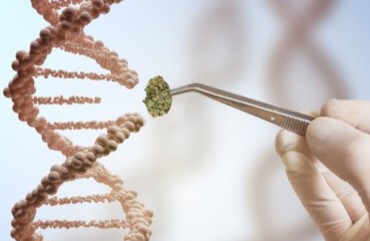
With modern tools like marker-assisted selection (MAS) and genomic sequencing, breeders can identify genes responsible for desirable traits and speed up the development of F1 hybrids.
b. Specialized F1 Hybrids
We’ll likely see F1 hybrids tailored for:
- High CBD production
- Specific terpene profiles (e.g., limonene for mood enhancement)
- Resistance to mold in humid climates
- Low height for indoor setups
c. Clonal Quality from Seed
Clones have traditionally been favored for consistency. F1 hybrids now offer similar reliability, but from seed making them easier and safer to distribute.
Conclusion
F1 hybrid cannabis seeds mark a significant evolution in the world of cannabis cultivation. These seeds are the product of advanced breeding techniques, designed to provide uniformity, vigor, and high-quality yields. For commercial operations, they offer a level of consistency that is invaluable in a regulated market. Even for skilled hobbyists, F1 hybrids can reduce the guesswork and streamline the growing process.
However, the benefits come at a cost both financially and genetically. Growers cannot save and reuse seeds, and the initial seed cost is higher. Nonetheless, for those who value precision and predictability in cannabis production, F1 hybrid seeds represent the cutting edge of cultivation.
As breeding science advances, expect to see more F1 hybrid options become available potentially transforming the industry by delivering clonal-level consistency with the flexibility of seed propagation.
