Table of Contents
What do marijuana seeds look like
Marijuana (Cannabis sativa L., Cannabis indica Lam., and hybrids thereof) has been cultivated for centuries for its medicinal, recreational, industrial, and nutritional properties. While much attention is focused on the plant’s flowers due to their cannabinoid content, its reproductive unit—the seed—plays an equally critical role in cannabis propagation, breeding, and agriculture. This paper provides a comprehensive, scientific overview of marijuana seeds, covering their morphology, anatomy, genetic factors, development, and identification characteristics.
Growers looking for a complete foundation—from germination through harvest—can explore our cannabis seed growing guides before focusing on seed identification and quality.
Botanical Basics of Cannabis Seeds
A. Definition of a Seed
In botanical terms, a seed is a fertilized ovule that contains an embryo and the capacity to develop into a new plant. Cannabis seeds are angiosperm dicotyledonous seeds, which means they come from a flowering plant and contain two embryonic leaves or cotyledons.
B. Structure and Composition
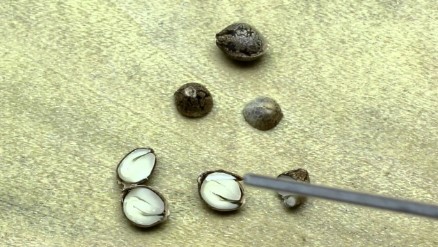
Cannabis seeds are structurally composed of the following layers:
- Seed Coat (Testa):
A protective outer shell derived from the integuments of the ovule. In marijuana seeds, the testa is typically hard and smooth, with a slightly waxy coating that helps prevent desiccation. - Endosperm (Nutrient Tissue):
Surrounds the embryo and provides essential nutrients during germination. It stores proteins, oils (rich in omega-3 and -6 fatty acids), and carbohydrates. - Embryo:
The actual nascent plant, which includes the radicle (future root), hypocotyl, cotyledons (first leaves), and plumule (shoot apical meristem). - Micropyle:
A small opening near the hilum through which water enters to trigger germination.
Visual Characteristics of Marijuana Seeds
A. Shape
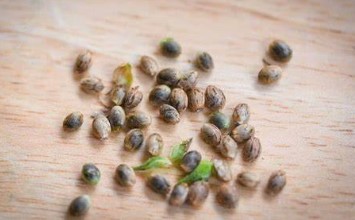
Marijuana seeds are typically ovoid to teardrop-shaped, with a slightly pointed end (micropylar end) and a rounded base. The symmetry is not always perfect, as natural variability exists.
B. Size
Cannabis seeds vary in size depending on genetic lineage and environmental conditions during development. Common dimensions include:
- Length: 2 to 5 mm
- Width: 1.5 to 4 mm
- Thickness: ~1 mm
Heirloom landrace strains (e.g., Afghani, Thai, Hindu Kush) may have slightly larger seeds compared to some hybrid or autoflowering types.
C. Color
Seed coloration ranges from light tan to dark brown or grey, often with a mottled pattern. This coloration is due to lignin deposition and pigmentation during seed coat development.
- Immature seeds are pale green to off-white and lack the protective pigmentation.
- Mature seeds exhibit darker hues with tiger-stripe or marble-like patterns formed by anthocyanins and flavonoids.
D. Surface Texture
Healthy seeds often have a smooth, waxy surface known as the cuticle, which helps protect against pathogens and moisture loss. The presence of this sheen can be a quick field test for viability.
Some seeds also exhibit rugose or ridged surfaces, depending on genotype and seed coat development.
Differences Among Cannabis Seed Types
A. Regular Seeds
- Contain a 50/50 chance of producing male or female plants.
- Appear indistinguishable in shape or size from feminized seeds.
- Typically viable for breeders and experienced cultivators.
B. Feminized Seeds
- Genetically engineered (via stress or chemical reversal) to produce only female plants.
- Indistinguishable in appearance from regular seeds but genetically uniform.
C. Autoflowering Seeds
- Crossbred with Cannabis ruderalis to flower independently of light cycle.
- Often smaller in size and lighter in color, though not reliably so.
- Shorter lifecycle affects seed morphology due to developmental compression.
Viability Indicators in Cannabis Seeds
A. Visual Viability Tests
- Coloration:
Darker seeds with visible patterns are typically mature and viable. - Hardness:
Healthy seeds should resist light pressure. Soft seeds may be immature or damaged. - Float Test:
A quick test involving water submersion:- Sinkers are often viable.
- Floaters are likely hollow or desiccated.
B. Microscopic Examination
Advanced assessments involve:
- X-ray scanning to view internal embryo integrity.
- Microscopic dissection to examine embryo morphology and nutrient content.
Genetic and Epigenetic Variation
A. Genotypic Influences
Seed morphology is influenced by:
- Cannabis sativa: Often produces larger, more elongated seeds.
- Cannabis indica: Smaller, rounder seeds.
- Hybrids: Intermediate characteristics, depending on dominance.
B. Epigenetic Effects
Environmental conditions during seed development—such as light intensity, soil nutrients, and water availability—affect:
- Seed size and shape
- Pigment production
- Germination rate and vigor
Comparative Seed Morphology
A. Cannabis vs. Hemp Seeds
While both come from Cannabis sativa, hemp seeds (typically industrial strains) are:
- Often larger and more uniformly tan-colored.
- Cultivated for oil and protein content.
- Lacking psychoactive properties due to <0.3% THC content.
B. Cannabis vs. Other Plant Seeds
Cannabis seeds are:
- Smaller than many fruit tree seeds.
- Similar in size to mustard or chia seeds but darker and tougher.
- More complex in terms of phytochemical content.
Identifying Healthy vs. Unhealthy Seeds
A. Indicators of Healthy Seeds
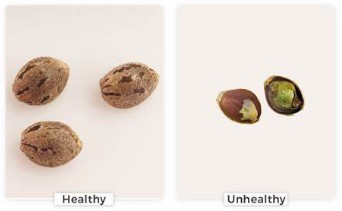
- Dark brown to grey-black with mottling
- Glossy finish
- Firm and intact coat
- No visible mold or cracks
B. Indicators of Poor Quality Seeds
- Green, white, or pale coloration
- Wrinkled or shrunken appearance
- Cracked or broken testa
- Presence of fungal spots or soft patches
Conclusion
Marijuana seeds, while small and often overlooked compared to the iconic cannabis flower, are marvels of botanical engineering. Their structure is perfectly suited for survival, dispersal, and regeneration. Understanding their detailed morphology and anatomy enables cultivators, breeders, and researchers to better assess seed quality, optimize germination, and advance genetic development. As the cannabis industry continues to grow, scientific literacy regarding these tiny but mighty units of reproduction will remain a cornerstone of innovation and sustainability.
