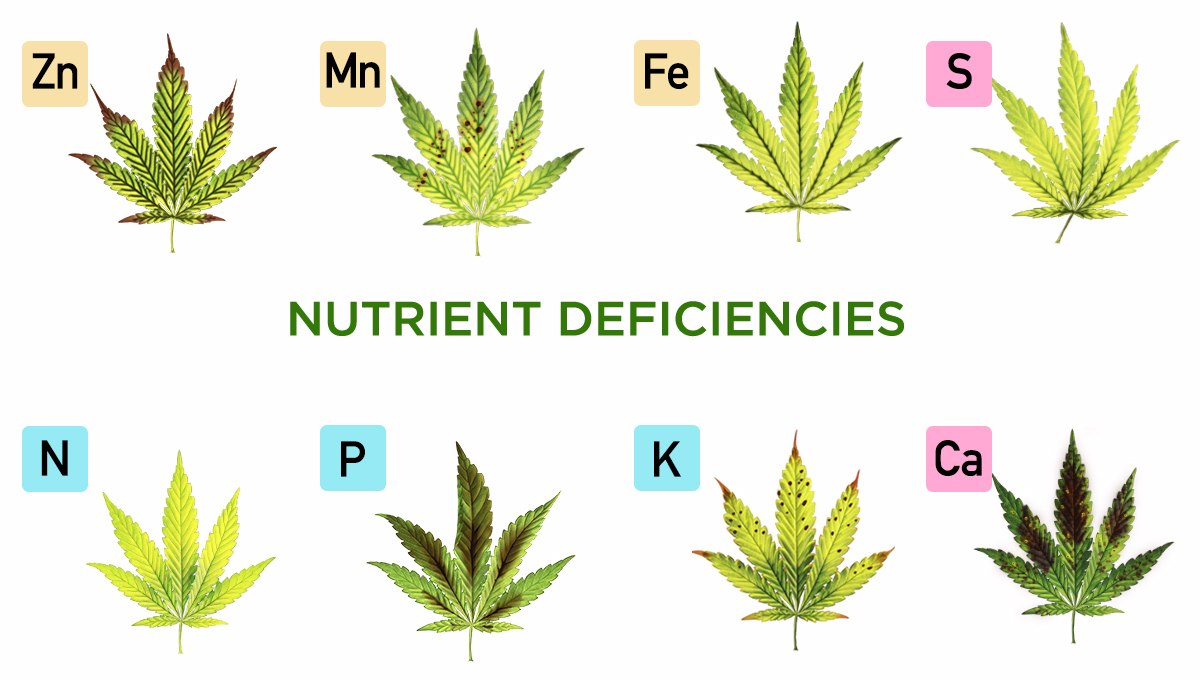
Growing healthy cannabis plants requires attention to various nutrients that play critical roles in plant development. Here is a detailed overview of the primary and secondary nutrients essential for healthy cannabis growth:
Primary Nutrients (Macronutrients) in Detail
1. Nitrogen (N)
- Role:
- Chlorophyll Production: Nitrogen is a fundamental component of chlorophyll, the molecule that plants use to convert sunlight into energy through photosynthesis.
- Protein Synthesis: Nitrogen is a key element in amino acids, the building blocks of proteins, which are essential for plant structure and function.
- Growth and Development: It promotes vigorous vegetative growth, resulting in lush, green foliage and the development of stems and leaves.
- Deficiency Symptoms:
- Yellowing of Older Leaves: This is because nitrogen is a mobile nutrient and moves from older leaves to newer growth when deficient.
- Stunted Growth: Plants may exhibit overall slow or stunted growth.
- Pale Green Foliage: General yellowing and pale color due to insufficient chlorophyll.
- Sources: Common sources include urea, ammonium nitrate, blood meal, fish meal, and compost.
2. Phosphorus (P)
- Role:
- Energy Transfer: Phosphorus is a critical part of ATP (adenosine triphosphate) and ADP (adenosine diphosphate), molecules that store and transfer energy within the plant.
- Root Development: Promotes strong root growth and improves the plant’s ability to absorb water and nutrients.
- Flowering and Fruiting: Essential for the formation of flowers, seeds, and fruits, and overall plant reproductive health.
- Deficiency Symptoms:
- Dark Green or Purplish Foliage: Leaves may turn dark green or develop a purple tint due to anthocyanin accumulation.
- Stunted Growth: Similar to nitrogen deficiency, growth can be slow or stunted.
- Weak Root System: Poor root development can lead to reduced plant stability and nutrient uptake.
- Delayed Flowering: Plants may exhibit delayed or reduced flowering and fruiting.
- Sources: Common sources include bone meal, rock phosphate, bat guano, and commercial fertilizers labeled as high in phosphorus (e.g., 10-20-10).
3. Potassium (K)
- Role:
- Stomatal Regulation: Potassium helps regulate the opening and closing of stomata, controlling water uptake and loss, which is crucial for maintaining plant hydration and temperature.
- Protein Synthesis: It activates enzymes involved in protein synthesis and starch formation.
- Disease Resistance: Enhances the plant’s resistance to diseases and pests, contributing to overall plant health and stress tolerance.
- Deficiency Symptoms:
- Yellowing and Browning of Leaf Edges: Known as “leaf scorch,” it usually starts at the edges of older leaves and progresses inward.
- Weak Stems: Plants may have weak or thin stems that are prone to bending or breaking.
- Poor Resistance to Stress: Increased susceptibility to diseases, pests, and environmental stress factors like drought and frost.
- Sources: Common sources include potassium sulfate, potassium chloride, wood ash, and kelp meal.
Balanced Nutrient Management
- Soil Testing: Test the soil frequently to keep an eye on pH and nutrient levels.
- Fertilizer Application: Use fertilizers that provide balanced macronutrients, such as N-P-K blends, especially formulated for different stages of plant growth.
- Vegetative Stage: Higher nitrogen levels (e.g., 10-5-5) to support leaf and stem growth.
- Flowering Stage: Higher phosphorus and potassium levels (e.g., 5-10-10) to support flowering and fruiting.
- Organic Amendments: Incorporate organic matter like compost and manure to improve soil structure and nutrient availability.
- Foliar Feeding: Consider foliar feeding with nutrient solutions for quick nutrient uptake, especially if soil absorption is problematic.
By understanding and managing these primary macronutrients effectively, you can ensure robust growth, strong roots, healthy foliage, and bountiful yields from your cannabis plants.
Secondary Nutrients in Detail
1. Calcium (Ca)
- Role:
- Cell Wall Structure: Calcium is crucial for maintaining the structural integrity of cell walls. It helps stabilize cell membranes and forms calcium pectate, which binds cells together.
- Root and Leaf Development: Promotes the growth of root hairs and the development of leaves. It is also involved in root elongation and new root formation.
- Signal Transduction: Acts as a secondary messenger in cellular signaling processes, playing a role in various plant responses to environmental stimuli.
- Deficiency Symptoms:
- Leaf Curling: New leaves may exhibit tip burn or curling, often referred to as “calcium burn.”
- Stunted Growth: Overall growth may be stunted, with poor root and shoot development.
- Blossom End Rot: In fruiting plants, calcium deficiency can lead to blossom end rot, where the bottom of the fruit develops a sunken, rotten area.
- Sources: Common sources include lime (calcium carbonate), gypsum (calcium sulfate), bone meal, and dolomite lime.
2. Magnesium (Mg)
- Role:
- Chlorophyll Component: Magnesium is the central atom in the chlorophyll molecule, making it essential for photosynthesis.
- Enzyme Activation: Activates many enzymes required for energy metabolism and the synthesis of nucleic acids.
- Protein Synthesis: Plays a crucial role in protein synthesis and the stabilization of ribosome structures.
- Deficiency Symptoms:
- Interveinal Chlorosis: Yellowing of the leaf tissue between the veins, typically starting with older leaves.
- Leaf Curling: Leaves may curl upward along the margins.
- Premature Leaf Drop: Severely deficient plants may drop their older leaves prematurely.
- Sources: Common sources include Epsom salts (magnesium sulfate), dolomite lime, and magnesium oxide.
3. Sulfur (S)
- Role:
- Amino Acids and Proteins: Sulfur is a component of certain amino acids (cysteine and methionine) and proteins, essential for protein synthesis.
- Chlorophyll Production: Involved in the formation of chlorophyll and thus critical for photosynthesis.
- Enzyme Function: Vital for various enzyme functions and overall plant metabolism.
- Deficiency Symptoms:
- Yellowing of New Leaves: Unlike nitrogen deficiency, sulfur deficiency starts with the yellowing of new leaves.
- Stunted Growth: Reduced growth and delayed maturity.
- Thin Stems: Stems may become thin and woody.
- Sources: Common sources include gypsum (calcium sulfate), elemental sulfur, Epsom salts (magnesium sulfate), and organic matter like composted manure.
Micronutrients (Trace Elements) in Detail
1. Iron (Fe)
- Role:
- Chlorophyll Synthesis: Iron is crucial for the synthesis of chlorophyll, which is essential for photosynthesis.
- Enzyme Function: It acts as a cofactor for various enzymes involved in energy transfer, nitrogen reduction and fixation, and lignin formation.
- Deficiency Symptoms:
- Interveinal Chlorosis: Yellowing between the veins of young leaves while veins remain green.
- Stunted Growth: Reduced growth rate and pale foliage.
- Sources: Chelated iron, iron sulfate, iron chelate solutions, and organic matter.
2. Manganese (Mn)
- Role:
- Photosynthesis: Manganese is involved in the photolysis of water in photosystem II during photosynthesis.
- Nitrogen Assimilation: Plays a role in the synthesis of amino acids and proteins.
- Enzyme Activation: Activates enzymes responsible for respiration and nitrogen metabolism.
- Deficiency Symptoms:
- Interveinal Chlorosis: Yellowing between the veins of younger leaves, similar to iron deficiency.
- Brown Spots: Formation of brown or black specks on leaves.
- Sources: Manganese sulfate, manganese chelate, and manganese oxide.
3. Zinc (Zn)
- Role:
- Protein Synthesis: Essential for the synthesis of proteins and nucleic acids.
- Growth Regulation: Involved in the production of growth hormones like auxins.
- Enzyme Function: Functions as a cofactor for numerous enzymes.
- Deficiency Symptoms:
- Stunted Growth: Reduced leaf size and internode length.
- Leaf Deformation: Distorted leaves with wavy margins and chlorosis.
- Reduced Flowering: Poor flower and fruit development.
- Sources: Zinc sulfate, zinc oxide, zinc chelates, and zinc-containing fertilizers.
4. Copper (Cu)
- Role:
- Photosynthesis: Important for chlorophyll production and functioning of photosynthetic enzymes.
- Lignin Formation: Helps in lignin synthesis, strengthening cell walls.
- Protein Metabolism: Involved in the synthesis of proteins and enzyme systems.
- Deficiency Symptoms:
- Dark Green Leaves: Leaves may turn dark green and develop necrotic tips.
- Twisted Leaf Tips: New growth can appear twisted or misshapen.
- Stunted Growth: Reduced plant vigor and slow growth.
- Sources: Copper sulfate, copper oxide, copper chelates, and organic matter.
5. Boron (B)
- Role:
- Cell Wall Formation: Essential for the integrity and functioning of cell walls.
- Membrane Function: Involved in membrane stability and function.
- Reproductive Development: Critical for flower and fruit development and pollen tube growth.
- Deficiency Symptoms:
- Poor Root and Shoot Growth: Stunted root systems and shoots.
- Leaf Deformities: Thick, brittle, or misshapen leaves.
- Poor Flower and Fruit Set: Reduced fruit and seed formation.
- Sources: Boric acid, borax, and boron-containing fertilizers.
6. Molybdenum (Mo)
- Role:
- Nitrogen Fixation: Essential for nitrogen-fixing bacteria in legumes.
- Nitrate Reduction: Involved in the conversion of nitrate to ammonium within the plant.
- Deficiency Symptoms:
- Yellowing of Older Leaves: Similar to nitrogen deficiency but often starting at the leaf edges.
- Poor Growth: Overall stunted growth and poor leaf expansion.
- Sources: Ammonium molybdate, sodium molybdate, and molybdenum-containing fertilizers.
7. Chlorine (Cl)
- Role:
- Osmosis and Ionic Balance: Maintains osmotic pressure and ionic balance in plant cells.
- Photosynthesis: Involved in the oxygen-evolving complex of photosystem II.
- Deficiency Symptoms:
- Wilting: Leaves may wilt and become chlorotic.
- Bronzing: Bronze or scorched appearance on leaf margins.
- Root Growth: Poor root development and increased susceptibility to root diseases.
- Sources: Chloride salts (such as potassium chloride) and irrigation water.
Detailed Nutrient Management Tips for Growing Healthy Cannabis Plants
1. Soil Testing
- Purpose: Soil testing helps determine the existing nutrient levels, pH, and soil composition, enabling you to tailor your fertilization practices to meet the specific needs of your plants.
- Procedure:
- Sampling: Collect soil samples from different parts of your growing area. Mix these samples to get a representative sample.
- Testing: Use a soil testing kit or send the samples to a professional lab to analyze nutrient levels and pH.
- Interpretation: Review the test results to identify deficiencies or excesses in nutrients and pH imbalances.
2. Balanced Fertilizers
- Types of Fertilizers:
- Granular Fertilizers: Slow-release fertilizers that provide a steady supply of nutrients over time.
- Liquid Fertilizers: Fast-acting, easy to apply, and can be used for foliar feeding.
- Organic Fertilizers: Derived from natural sources and improve soil health (e.g., compost, manure, bone meal, blood meal).
- Application Guidelines:
- Vegetative Stage: Use fertilizers high in nitrogen (e.g., N-P-K ratio of 10-5-5) to promote leaf and stem growth.
- Flowering Stage: Switch to fertilizers higher in phosphorus and potassium (e.g., N-P-K ratio of 5-10-10) to support flowering and fruiting.
- Micronutrients: Ensure fertilizers contain essential micronutrients like iron, manganese, zinc, copper, boron, molybdenum, and chlorine.
3. Organic Amendments
- Compost: Compost is high in organic matter and nutrients, which enhances soil structure, water retention, and microbial activity.
- Application: Mix compost into the soil before planting or use as a top dressing throughout the growing season.
- Manure: Provides a balanced source of nutrients and organic matter.
- Application: Well-composted manure can be mixed into the soil or used as a top dressing.
- Cover Crops: Growing cover crops (e.g., clover, alfalfa) improves soil fertility and structure.
- Application: Plant cover crops during the off-season and incorporate them into the soil before planting cannabis.
4. Foliar Feeding
- Purpose: Foliar feeding provides a quick nutrient boost by applying nutrient solutions directly to the leaves, allowing for rapid absorption.
- Procedure:
- Preparation: Dilute liquid fertilizers or micronutrient solutions according to the manufacturer’s instructions.
- Application: Use a fine mist sprayer to apply the solution to the leaves, preferably in the early morning or late evening to avoid evaporation and sunburn.
- Frequency: Foliar feed once a week or as needed to correct deficiencies.
5. Water Quality and Management
- Water Quality: Ensure the water used for irrigation is free from contaminants and has an appropriate pH (6.0-7.0).
- Testing: Regularly test water for pH and dissolved salts.
- Adjustments: Use pH adjusters (e.g., pH up/down solutions) to maintain optimal pH levels.
- Irrigation Practices:
- Consistent Watering: Water plants consistently to avoid stress from over or under-watering.
- Drip Irrigation: Drip irrigation systems supply water directly to the root zone, minimizing water waste and fostering healthy root development.
6. pH Management
- Importance: Soil pH affects nutrient availability and uptake. Maintaining the correct pH range (6.0-7.0) ensures optimal nutrient absorption.
- Adjusting pH:
- Lowering pH: Use acidic amendments like sulfur or peat moss to lower soil pH.
- Raising pH: Use alkaline amendments like lime (calcium carbonate) or wood ash to raise soil pH.
- Monitoring: Regularly test soil pH and adjust as needed to maintain the optimal range.
7. Monitoring and Adjusting Nutrient Levels
- Visual Inspection: Regularly inspect plants for signs of nutrient deficiencies or toxicities, such as yellowing leaves, stunted growth, or leaf burn.
- Leaf Tissue Analysis: Conduct leaf tissue analysis to get a detailed understanding of nutrient uptake and deficiencies.
- Adjustments: Based on observations and test results, adjust fertilization practices to address specific nutrient needs.
8. Integrated Pest Management (IPM)
- Purpose: A holistic approach to pest control that reduces the reliance on chemical pesticides and promotes plant health.
- Strategies:
- Cultural Practices: Use crop rotation, proper spacing, and sanitation to prevent pest problems.
- Biological Controls: Introduce beneficial insects (e.g., ladybugs, predatory mites) to control pests naturally.
- Chemical Controls: Use organic or chemical pesticides as a last resort, following recommended guidelines to minimize environmental impact.
Conclusion
In conclusion, cultivating healthy cannabis plants necessitates a well-rounded understanding and application of essential nutrients. The primary nutrients—nitrogen, phosphorus, and potassium—are crucial for vegetative growth, root development, and overall plant health. Secondary nutrients like calcium, magnesium, and sulfur support structural integrity, photosynthesis, and metabolic functions. Additionally, micronutrients such as iron, manganese, zinc, and others, though required in smaller quantities, play vital roles in enzymatic processes and overall plant vitality.
Effective nutrient management involves regular soil testing, using balanced fertilizers tailored to different growth stages, maintaining proper soil pH, ensuring good water quality, and incorporating organic matter to enhance soil health. By carefully managing these nutrients and growing conditions, growers can optimize their cannabis plants’ health, yield, and quality.
