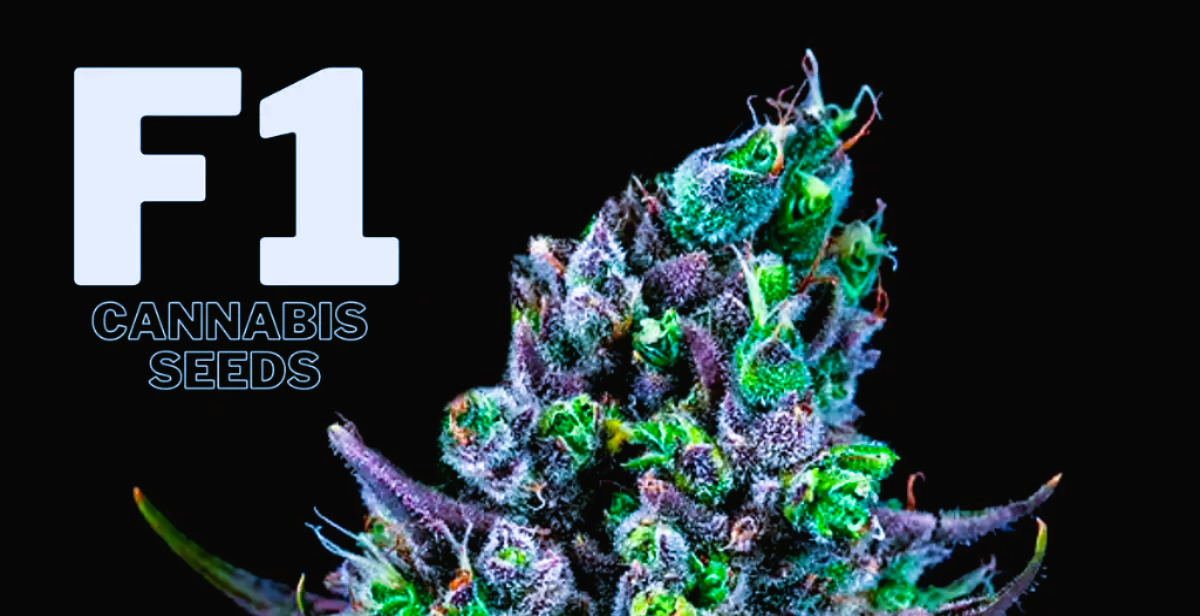
What are F1 Cannabis Seeds?
The world of cannabis cultivation is vast and complex, with various seed types available to growers. Among these, F1 cannabis seeds stand out as a remarkable achievement in plant breeding. These first-generation hybrid seeds have gained popularity due to their exceptional qualities and the advantages they offer over traditional seed types.
Understanding what F1 cannabis seeds are, how they are produced, and why they are beneficial can significantly enhance a grower’s ability to cultivate high-quality cannabis. This comprehensive guide delves into the intricacies of F1 cannabis seeds, exploring their origins, breeding processes, genetic stability, and the unique advantages they bring to the table.
Whether you are a novice cultivator or a seasoned grower, gaining insight into F1 cannabis seeds can help you make more informed decisions, optimize your growing practices, and achieve consistent, high-quality results in your cannabis cultivation endeavors.
Definition and Origin
F1 cannabis seeds are the result of crossing two genetically distinct parent plants. These parent plants, often referred to as the P1 generation, are typically pure strains, either pure indicas, sativas, or landraces, which possess unique and desirable traits. The F1 designation stands for “first filial generation,” indicating that these seeds are the first generation offspring of these distinct parents.
The concept of F1 hybrids is not unique to cannabis; it is a common practice in agriculture to produce plants with superior qualities. In the context of cannabis, breeders select parent plants with desirable traits such as high potency, specific cannabinoid profiles, robust growth patterns, and resistance to diseases or pests.
The Breeding Process
Creating F1 cannabis seeds involves a meticulous breeding process. Here’s an overview of the steps:
- Selection of Parent Plants: Breeders choose two genetically pure and stable strains that exhibit complementary characteristics. For instance, one parent might have high THC content while the other has high CBD levels, or one might be highly resistant to mold while the other produces large yields.
- Cross-Pollination: The selected parent plants are cross-pollinated. This can be done through controlled pollination, where male pollen is manually applied to female flowers, ensuring no contamination from other strains.
- Harvesting Seeds: After pollination, the female plants produce seeds. These seeds are harvested and represent the F1 generation.
- Stabilization and Testing: The F1 seeds are then grown to maturity, and the resulting plants are evaluated for consistency in traits. This step ensures that the desired characteristics are reliably passed on to the next generation.
Genetic Stability and Uniformity
One of the key advantages of F1 cannabis seeds is their genetic stability and uniformity. Because they come from two stable parent strains, F1 hybrids tend to display uniform traits. This means that when you plant a batch of F1 seeds, the resulting plants will be quite similar in terms of growth patterns, cannabinoid profiles, and overall performance.
This uniformity is particularly beneficial for commercial growers who require consistency in their crops. It allows for predictable outcomes in terms of yield, potency, and resistance to environmental stressors. Additionally, the vigor often seen in F1 hybrids, known as “hybrid vigor” or “heterosis,” results in robust and resilient plants that can outperform either parent strain.
Benefits of F1 Cannabis Seeds
The cultivation of F1 cannabis seeds offers several benefits, making them a popular choice among both commercial and hobbyist growers. Here are some of the primary advantages:
- Improved Vigor: F1 hybrids often exhibit hybrid vigor, leading to faster growth, increased resilience, and higher yields compared to their parent strains.
- Uniformity: The genetic consistency of F1 seeds ensures uniform growth and development, making it easier to manage crops and predict harvest outcomes.
- Enhanced Traits: By carefully selecting parent strains, breeders can combine the best traits of both, resulting in plants with superior qualities such as higher cannabinoid content, unique terpene profiles, and improved resistance to pests and diseases.
- Predictability: F1 seeds provide growers with predictable results, which is essential for planning and optimizing cultivation processes, especially in commercial operations.
- Ease of Cultivation: Due to their stability and vigor, F1 hybrids are often easier to grow, making them suitable for both novice and experienced cultivators.
F1 Seeds vs. Other Seed Types
To fully appreciate the value of F1 cannabis seeds, it is helpful to compare them to other common types of cannabis seeds: regular, feminized, and autoflowering seeds.
- Regular Seeds: Regular cannabis seeds can produce both male and female plants. They are typically used by breeders who want to create new hybrids. While regular seeds offer genetic diversity, they lack the uniformity and predictability of F1 seeds.
- Feminized Seeds: Feminized seeds are bred to produce only female plants, which are the ones that produce buds. While they simplify the growing process by eliminating the need to identify and remove male plants, feminized seeds can sometimes lack the genetic diversity and vigor seen in F1 hybrids.
- Autoflowering Seeds: Autoflowering seeds are bred to flower based on age rather than light cycles, making them convenient for growers with limited space or those looking for faster harvests. However, they often produce smaller plants with lower yields compared to F1 hybrids.
F1 seeds stand out due to their combination of uniformity, vigor, and enhanced traits. They provide a reliable option for growers seeking high-quality and consistent results.
Challenges and Considerations
While F1 cannabis seeds offer numerous benefits, there are also some challenges and considerations to keep in mind:
- Cost: F1 seeds can be more expensive than regular or feminized seeds due to the intensive breeding process involved in creating them.
- Availability: Not all strains are available as F1 hybrids, and finding specific F1 seeds can sometimes be a challenge.
- Breeding Complexity: For breeders, creating stable F1 hybrids requires a deep understanding of genetics and a rigorous selection process to ensure desired traits are consistently passed on.
- Environmental Factors: While F1 seeds are generally more resilient, environmental factors such as climate, soil quality, and growing techniques can still impact their performance. Proper cultivation practices are essential to maximize their potential.
Conclusion
F1 cannabis seeds represent a significant advancement in the field of cannabis cultivation, offering a range of benefits that make them highly attractive to growers of all levels. The meticulous process of creating F1 hybrids, which involves selecting and cross-pollinating two genetically distinct parent plants, results in seeds that combine the best traits of both parents. This process leads to plants that exhibit improved vigor, uniformity, and enhanced qualities, making them a reliable and valuable choice for cultivation.
One of the most notable advantages of F1 cannabis seeds is their genetic stability. The uniformity in growth patterns, cannabinoid profiles, and overall performance ensures predictable outcomes, which is crucial for both hobbyist and commercial growers. The hybrid vigor observed in F1 plants often results in faster growth, increased resilience, and higher yields, allowing growers to maximize their cultivation efforts.
The benefits of F1 cannabis seeds extend beyond their robustness and uniformity. By carefully selecting parent strains, breeders can create hybrids with superior characteristics such as higher potency, unique terpene profiles, and improved resistance to pests and diseases. These enhanced traits make F1 seeds a powerful tool for growers seeking to produce high-quality cannabis with specific desired attributes.
When comparing F1 seeds to other types of cannabis seeds, their advantages become even more apparent. Regular seeds, while offering genetic diversity, lack the predictability and consistency of F1 hybrids. Feminized seeds simplify the growing process by ensuring all-female plants but may not always exhibit the same vigor and enhanced traits as F1 seeds. Autoflowering seeds provide convenience and faster harvests but typically yield smaller plants with lower overall productivity.
Despite their many benefits, there are challenges and considerations associated with F1 cannabis seeds. The cost of these seeds can be higher due to the intensive breeding process required to produce them. Availability may also be limited for certain strains, making it essential for growers to source their seeds from reputable breeders. Additionally, while F1 seeds are generally more resilient, environmental factors such as climate, soil quality, and growing techniques still play a crucial role in their performance. Growers must adopt proper cultivation practices to fully realize the potential of F1 hybrids.
As the cannabis industry continues to evolve, the demand for high-quality, consistent, and potent cannabis products is likely to grow. F1 cannabis seeds, with their unique combination of stability, vigor, and enhanced traits, are well-positioned to meet these demands. By understanding the breeding process, genetic advantages, and practical considerations of F1 seeds, growers can make informed decisions that lead to successful and rewarding cultivation experiences.
In conclusion, F1 cannabis seeds represent a pinnacle of cannabis breeding, offering a reliable and potent option for growers seeking the best possible results. Their genetic stability, hybrid vigor, and enhanced traits make them a preferred choice for achieving consistent, high-quality cannabis crops. As knowledge and breeding techniques continue to advance, the role of F1 hybrids in cannabis cultivation will likely become even more prominent, driving the industry forward and setting new standards for excellence.
