Table of Contents
Weed Measurements
Introduction to Weed Measurements: Understanding the Basics

Understanding the standard units of measurement for cannabis is essential for both buyers and sellers within the industry. This document provides an essential overview of the metrics commonly used for marijuana transactions and consumption. A clear understanding of these measurements is vital for precise dispensing, fair economic transactions, and educated usage.
1. Standard Units of Measurement
Cannabis is generally sold by weight, with grams, ounces, and pounds being the predominant units, aligned with both the metric and imperial systems.
- Grams: The most fundamental unit for measuring cannabis, grams are typically used for smaller purchases. A single gram can suffice for multiple uses, depending on consumption method and strain potency.
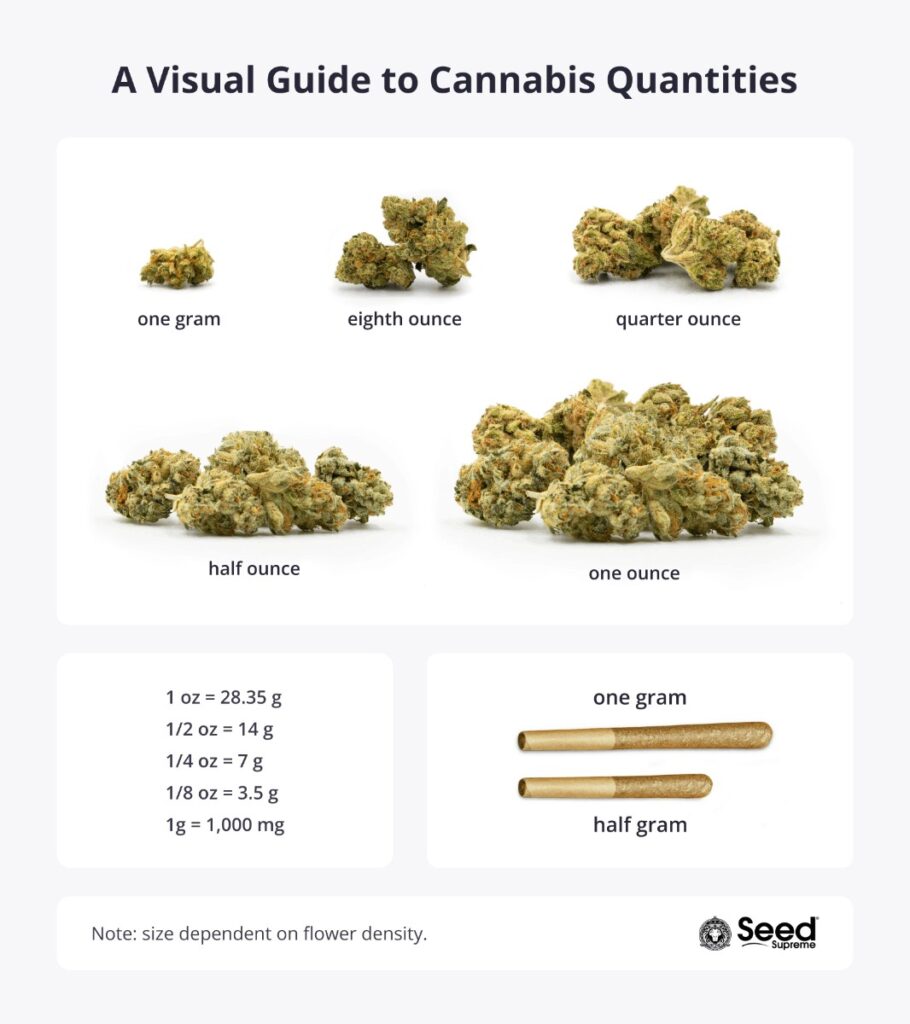
- Eighths: This unit represents one-eighth of an ounce, or roughly 3.5 grams.
It’s a favored option among regular users because it suits personal use over several days. - Ounces: Cannabis sold in ounces, equivalent to about 28 grams, is common among users looking to save on cost through bulk buying or who need a consistent supply for medical reasons.
- Pounds: Used predominantly in wholesale transactions, one pound of cannabis equals 16 ounces or approximately 448 grams. This measure is relevant mainly for those involved in large-scale distribution and retail.
2. Tools for Measurement
Accurate measurement is critical in ensuring fair transactions and compliance with industry standards. Essential tools include:
- Digital Scales: Necessary for both vendors and individual consumers, these scales ensure precise measurement and should be capable of detecting small increments.
- Calibration Weights: Regular calibration of scales with standard weights is essential to maintain accuracy, particularly with frequent use.
3. Legal and Regulatory Compliance
Adhering to measurement standards in the cannabis industry also involves compliance with legal regulations that vary by jurisdiction:
- Packaging and Labeling: Laws may dictate that cannabis products be accurately labeled with their weight, which must be verified against the product’s actual contents to avoid legal issues.
- Purchase Limits: Many areas have regulations on the maximum amount of cannabis that can be purchased or sold at one time, often stipulated in weight. Compliance with these limits is crucial.
4. Considerations for Consumers
It’s important for consumers to understand cannabis measurements for several reasons:
- Cost Effectiveness: Knowing the price per gram can help consumers assess whether larger purchases offer financial benefits.
- Dosage Control: Accurate measurement is particularly critical for medical users who need to ensure consistent dosages for their health needs.
Conclusion
Grasping the basics of cannabis measurements is indispensable for all parties involved in the market, from growers and sellers to end-users. Proficiency in these measurements ensures transactional accuracy, adherence to legal frameworks, and overall consumer satisfaction. As the cannabis market expands and matures, these standardized measurements will continue to play an integral role in upholding the industry’s integrity and reliability.
Common Units of Measurement: Grams, Ounces, and Pounds
Accurate measurement is fundamental in the cannabis industry, playing a crucial role in ensuring proper transactions and adhering to regulatory standards. This document provides a detailed overview of the primary units of measurement used in cannabis: grams, ounces, and pounds, which are instrumental for both consumer purchases and commercial operations.
1. Grams
Grams are the basic unit of measurement in the cannabis sector and are part of the metric system. This unit allows for detailed precision, making it ideal for small purchases and ensuring exact dosing. Cannabis sold by the gram allows consumers to buy precisely the amount they need, typically sufficient for multiple uses depending on consumption habits and potency.
2. Ounces
An ounce, which is an imperial unit, is commonly used for purchasing cannabis in larger quantities. One ounce translates to roughly 28 grams. Buying cannabis in ounces can be more economical due to lower prices for buying in bulk. This measurement is popular among frequent users or medical patients who need a steady supply for continuous use.
3. Pounds
Pounds are primarily used in the wholesale and distribution sectors of the cannabis industry. One pound comprises 16 ounces or about 448 grams. This measurement is pivotal for transactions between growers, distributors, and retailers, where large quantities of cannabis are standard. Compliance with regulatory standards often necessitates reporting and documentation in pounds for effective inventory and control management.
4. Measurement Tools
Precision in measuring cannabis is achieved through the use of digital scales, which are essential for ensuring transactional accuracy. These scales, particularly in commercial settings, often require regular calibration and may need to be certified to confirm their precision, thus maintaining trust and integrity between sellers and buyers.
5. Regulatory Compliance
Adhering to measurement standards is vital for compliance within the cannabis industry. Different regions may have specific laws that outline not just the units of measurement but also the required precision for commercial activities. Accurate and consistent measurement helps businesses comply with regulations concerning sales limits, taxation, and reporting, which are frequently based on the weight of cannabis.
6. Conclusion
The understanding and application of grams, ounces, and pounds are integral to the functioning of the cannabis industry. These units enable accurate and standardized transactions from individual sales to large-scale commercial distributions. Precise measurement supports compliance with legal requirements, fosters transparency, and builds trust in the marketplace. As the cannabis industry evolves, maintaining these measurement standards will continue to be a foundational aspect of the business, essential for both operational success and regulatory alignment.
From Grams to Pounds: Breaking Down the Quantities
In the realm of cannabis commerce, mastery of measurement units from grams to pounds is pivotal for ensuring precise transactions, savvy purchasing, and adherence to regulatory guidelines. This document outlines the primary units of measurement employed in cannabis sales, including grams, ounces, and pounds, each serving specific roles in consumption and commerce.
1. Grams: The Fundamental Unit
The gram stands as the essential unit for measuring cannabis, particularly suited for retail transactions involving small quantities. It is ideal for consumers who wish to purchase cannabis in minimal amounts for occasional use, providing a basis for accurate dosage and cost-efficiency. Typically, a gram of cannabis could suffice for several uses, which could vary based on the method of consumption and the strain’s potency.
2. Ounces: Common for Regular Users
Beyond grams, ounces are a prevalent measure in cannabis sales, with one ounce equating to about 28 grams. This quantity is popular among regular users due to the cost benefits of buying in larger quantities compared to per gram purchases. Ounces offer a practical quantity for users who consume cannabis regularly, balancing convenience and affordability.
3. Pounds: Bulk and Wholesale Measurements
For wholesale transactions and larger-scale operations, cannabis is often measured in pounds. A single pound represents 16 ounces or approximately 448 grams. This measurement is crucial for growers, wholesalers, and retailers who deal in bulk quantities, facilitating large-scale buying, selling, and inventory management. Pounds are essential for the economic and logistical aspects of the cannabis industry at the commercial level.
4. Tools and Methods for Measurement
Ensuring precision in these measurements requires the use of accurate digital scales, which must be calibrated regularly to maintain their accuracy. Such tools are fundamental in maintaining transactional integrity and ensuring that all parties in a transaction are satisfied and legally compliant.
5. Legal Requirements for Measurement
Jurisdictions with legal cannabis markets impose strict regulations on how cannabis is measured and sold to ensure consumer safety and fair market practices. These regulations necessitate meticulous measurement and reporting by businesses to comply with legal standards, which helps prevent fraud and ensures uniformity in trade practices.
6. Conclusion
An in-depth understanding of cannabis measurement units from grams to pounds is indispensable across all sectors of the industry. These units frame discussions and transactions within the market, enhancing transparency and consistency in cannabis trade. As the industry matures, the accuracy and shared understanding of these measurements will continue to underpin trust and regulatory compliance, reinforcing the market’s structure and reliability.

Measuring Tools and Techniques for Accuracy
Precision in measurement is a cornerstone of quantitative analysis across various scientific and industrial fields. Ensuring accuracy in measurements not only enhances the reliability of data but also bolsters the validity of conclusions drawn from research and production processes. This document outlines the essential tools and techniques employed to achieve high levels of accuracy in measurements, detailing their applications and the standards necessary for maintaining consistent precision.
1. Selection of Appropriate Measuring Tools
The selection of measuring tools is determined by the specific needs of the task, including the required precision level, the type of material or quantity being measured, and the environmental conditions during measurement.
- Digital and Analog Tools: For volume and weight, digital scales and volumetric instruments offer high precision, often necessary in chemical formulations and material sciences. Analog tools, while traditional, are used where digital instruments might not be available or practical.
- Calipers and Micrometers: In engineering and manufacturing, calipers and micrometers are essential for providing accurate dimensional measurements, ensuring that parts assemble properly and operate as designed.
2. Calibration and Maintenance
Regular calibration is essential to ensure that measuring tools continue to provide accurate readings. Calibration involves comparing a device against a standard known value and making adjustments as necessary.
- Scheduled Calibration: Tools should be calibrated according to a schedule that considers the tool’s frequency of use and the precision demands of its applications.
- Professional Calibration Services: Utilizing professional calibration services can help ensure that calibration is performed to international or industry-specific standards.
3. Measurement Techniques
Proper measurement techniques are as crucial as the tools used. Personnel conducting measurements must be trained in both the use of the tools and the specific techniques that maximize accuracy.
- Repeatability and Reproducibility: Measurements should be repeatable under the same conditions and reproducible under varying conditions. This practice helps identify any inconsistencies caused by external variables.
- Error Identification and Correction: Understanding potential sources of error, such as environmental factors, instrument drift, or user error, is vital. Implementing procedures to correct or compensate for these errors is necessary for maintaining accuracy.
4. Documentation and Data Management
Accurate record-keeping enhances the traceability of measurements and the accountability of the measurement process.
- Measurement Logs: Detailed logs should be maintained for each measurement activity, noting conditions, results, and any anomalies.
- Data Review and Analysis: Regular reviews of collected data can identify trends that indicate potential issues with measurement tools or techniques.
5. Adherence to Standards
Adhering to national and international standards is crucial for ensuring that measurements are consistent and comparable across different contexts and locations.
- ISO Standards: International Organization for Standardization (ISO) provides guidelines for various measurement practices, ensuring uniformity and precision across global industries.
- Industry-Specific Standards: Different sectors may have unique standards that address specific measurement challenges inherent to those fields.
Conclusion
Accurate measurement is a fundamental aspect of scientific and industrial work, underpinning the integrity and reliability of processes and products. By carefully selecting appropriate tools, regularly calibrating equipment, employing precise measurement techniques, meticulously documenting procedures, and adhering to established standards, organizations can ensure that their measurement practices meet the highest accuracy requirements. This comprehensive approach to measurement is essential for maintaining quality and enhancing the credibility of outcomes in any quantitative analysis.
Price Variations by Weight: Economic Considerations
In commodity markets, the relationship between price and weight is a critical economic factor that significantly influences market dynamics and trading decisions. Understanding how price adjusts with variations in the weight of goods is essential for all market participants, from producers to consumers. This document delves into the intricacies of price variations by weight and their broader economic impacts within different trading environments.
1. Bulk Discounting
Bulk discounting is a widely used pricing strategy that reduces the unit price as the quantity purchased increases. This approach is rooted in several economic principles:
- Economies of Scale: Sellers can afford to offer lower prices for larger quantities due to the reduced costs associated with large-scale operations and bulk transactions.
- Inventory Turnover: Offering discounts on bulk purchases helps sellers expedite inventory turnover and minimize storage expenses.
- Market Share Enhancement: By attracting large-volume buyers through competitive pricing, sellers can expand or solidify their market presence.
2. Tiered Pricing Models
Different buyer segments often encounter tiered pricing models that reflect the varying costs and strategies of serving those segments:
- Retail versus Wholesale Pricing: Retail consumers typically pay higher per-unit prices compared to wholesale buyers, reflecting the higher operational costs of retail selling.
- Contractual Pricing: Large-scale purchasers, like manufacturers or major retailers, often negotiate prices under long-term contracts that stabilize their expenses in exchange for guaranteed large volume purchases.
3. Differentiation Based on Quality or Grade
The quality or grade of a product also affects how weight influences its price:
- Premium Pricing: High-quality or luxury commodities may maintain higher prices at increased quantities to uphold a brand’s premium status.
- Grading Systems: For commodities like agricultural products or minerals, different quality grades may not only fetch varying prices but also experience different levels of bulk discounting depending on supply and market demand.
4. Influence of Market Conditions
The extent of price variation by weight can also be shaped by current market conditions:
- Supply and Demand Fluctuations: Sellers may offer more substantial discounts during periods of oversupply to deplete surplus stock. In contrast, in tight markets, discounts might be limited due to robust demand.
- Price Elasticity: Products that are highly responsive to price changes might see aggressive pricing strategies, where slight discounts could significantly boost sales volumes.
5. Strategic Purchasing and Market Forecasting
Buyers need to strategically navigate these price variations:
- Optimizing Purchase Sizes: Buyers must weigh the benefits of bulk purchasing against potential drawbacks such as increased storage costs and capital tie-up.
- Trend Analysis: Analyzing historical data on price fluctuations as related to weight can help buyers predict and exploit favorable market conditions.
Conclusion
Understanding the dynamics of price variations by weight is essential for effective economic decision-making in commodity markets. Both sellers and buyers can leverage this knowledge to optimize pricing strategies, purchase decisions, and overall market performance. Mastery of these considerations enables market participants to make informed choices that enhance profitability and competitive advantage in fluctuating commodity environments.
Legal Limits: How Much Can You Possess?
Navigating the regulatory framework of cannabis possession is essential for ensuring legal compliance and avoiding penalties. Jurisdictions where cannabis is decriminalized or legalized, whether for medical or recreational purposes, impose specific limits on the amount an individual can legally possess. This document examines these legal thresholds, delineating how possession limits vary across different regions and their implications.
1. Regulatory Framework
Cannabis legislation varies worldwide, influencing the set limits on possession:
- Medical vs. Recreational Usage: Jurisdictions typically allow greater possession limits for medical users who have a prescription and a valid medical card, compared to recreational users.
- Decriminalization vs. Legalization: Decriminalization reduces or eliminates legal penalties for possession of small amounts, though it may remain illegal. Legalization, however, permits possession within prescribed limits without criminal penalties.
2. Defined Possession Limits
Possession limits are precisely stipulated by local laws and exhibit substantial variation:
- Weight-Based Limits: Legal thresholds are often expressed in weight, commonly allowing individuals to possess one to several ounces of cannabis.
- Plant-Based Limits: Some regulations also specify the number of cannabis plants an individual can cultivate for personal use.
- Household Caps: Certain areas impose caps on the total amount of cannabis that can be held within a single household, irrespective of the number of occupants.
3. Consequences of Exceeding Limits
Surpassing the legal limits on cannabis possession can lead to various penalties:
- Civil Penalties: Minor breaches may attract fines or compulsory participation in drug education programs.
- Criminal Prosecution: Severe violations, especially those involving possession well above the set limits, can result in criminal charges, ranging from misdemeanors to felonies depending on the quantity and local laws.
4. Enforcement and Policy Considerations
The application of possession limits can vary based on local enforcement policies and public health objectives:
- Enforcement Discretion: Enforcement agencies in certain areas may exercise discretion regarding minor infringements of possession limits.
- Public Health Oriented Policies: Some regions are shifting towards a public health-oriented approach to cannabis, emphasizing education and harm reduction over punitive actions.
5. Conclusion
Individuals in areas where cannabis is legally recognized must thoroughly understand local possession regulations to ensure compliance. As legislative frameworks evolve in response to shifts in public opinion and the outcomes of cannabis legalization, staying updated on legal stipulations is crucial for anyone using, growing, or distributing cannabis. This knowledge is fundamental to navigating the legal landscape successfully and avoiding unnecessary legal issues.
Conversion Guide: Metric to Imperial Measurements
In the cannabis industry, precise measurements are crucial for ensuring regulatory compliance, proper dosage, and international trade. As the industry operates within countries that use both metric and imperial systems, understanding how to convert these measurements accurately is vital. This guide provides an essential overview of converting metric measurements to imperial units, specifically tailored for cannabis professionals and consumers.
1. Weight Conversions
Weight is a fundamental measurement in the cannabis industry, affecting everything from cultivation to sales. The metric system’s grams are commonly used for smaller quantities, while pounds from the imperial system are used for larger, commercial quantities.
- 1 gram (g) = 0.0353 ounces (oz)
- 28 grams (1 ounce) = 1 ounce (oz)
- 1 kilogram (kg) = 2.20462 pounds (lb)
- 1 pound (lb) = 453.592 grams (g)
These conversions are crucial for dispensaries and cultivators who need to switch between systems for packaging, selling, or purchasing bulk cannabis.
2. Plant Area Measurements
For cultivation space planning and international reporting, converting area measurements is essential:
- 1 square meter (m²) = 10.7639 square feet (ft²)
- 1 hectare (ha) = 2.47105 acres
Understanding these conversions helps in precisely planning grow areas and complying with regulations that specify limits on cultivation space in certain jurisdictions.

3. Volume Conversions
While less common, volume measurements can be important for the production of cannabis oils and edibles:
- 1 liter (L) = 0.264172 gallons (gal)
- 1 milliliter (mL) = 0.033814 ounces (fl oz)
These conversions assist in recipe formulation and product labeling, ensuring consistency and legal compliance in product development.
4. Concentration Conversions
Cannabis potency is often expressed in terms of concentration by volume or weight, requiring conversion between systems:
- 1 milligram per liter (mg/L) = 0.000133526 ounces per gallon (oz/gal)
- 1 part per million (ppm) = 1 milligram per liter (mg/L) = 0.000133526 ounces per gallon (oz/gal)
This is particularly important for lab technicians and product developers who must ensure that cannabinoid concentrations meet legal thresholds and consumer expectations.
5. Conclusion
For professionals in the cannabis industry, understanding how to convert between metric and imperial measurements is indispensable. It enhances accuracy in product formulation, regulatory compliance, and international trade. Mastery of these conversions fosters professionalism and operational efficiency, ensuring that businesses can operate seamlessly across different regions with varying measurement standards.
Buying Tips: Ensuring You Get What You Pay For
In the marketplace, whether shopping for goods or services, consumers must be vigilant to ensure that they receive fair value for their expenditures. This document offers comprehensive advice designed to empower consumers with strategies to make informed purchasing decisions, thereby ensuring that they get what they pay for. Adhering to these guidelines can help prevent disappointment and financial loss, enhancing consumer satisfaction and confidence.
1. Research the Product or Service
Prior to making any purchase, thorough research is crucial:
- Understand Specifications and Features: Familiarize yourself with the product’s or service’s specifications, features, and capabilities to ensure it meets your needs.
- Read Reviews and Ratings: Consult reviews and ratings from other consumers to gauge the product’s performance and reliability or the quality of the service provided.
2. Compare Prices and Suppliers
Smart shopping involves comparing multiple options:
- Shop Around: Check different retailers or service providers to find the best price. Use comparison websites if available.
- Check for Promotions and Discounts: Take advantage of promotions, seasonal discounts, or loyalty programs that may offer significant savings.
3. Verify Authenticity and Quality
For products, especially high-value items, authenticity and quality are paramount:
- Seek Authenticity Proofs: For branded goods, verify authenticity through serial numbers, brand-specific markings, or by purchasing directly from authorized retailers.
- Assess Quality: Inspect the product in person if possible, or seek guarantees about the quality. For online purchases, rely on trusted sellers with verified quality standards.
4. Understand the Return Policy and Warranty
Before completing a purchase, knowing the return policy and warranty details is essential:
- Return Policy: Ensure the seller offers a reasonable return policy that provides sufficient time to return a product if it does not meet your expectations.
- Warranty Coverage: Understand the warranty period and what it covers. Check if additional coverage is cost-effective based on the product’s value and repair costs.
5. Secure Transactions
When purchasing, especially online, ensuring transaction security is vital:
- Use Secure Payment Methods: Opt for payment methods that offer fraud protection, such as credit cards or secure online payment services.
- Check the Security of Online Stores: Look for indicators of a secure website, such as URLs starting with ‘https’ and the presence of a padlock symbol.
6. Keep Records of Purchases
Maintaining a record of your transactions can aid in future disputes or claims:
- Save Receipts and Invoices: Keep all purchase documentation, including receipts, invoices, and emails related to the transaction.
- Document Product Condition Upon Arrival: For online purchases, take photographs or videos of the product as you unpack it to capture the condition in which it arrived.
Conclusion
By implementing these buying tips, consumers can enhance their shopping experience and protect themselves against common pitfalls in the marketplace. Conducting thorough research, comparing options, verifying quality, understanding transaction terms, ensuring secure payments, and keeping detailed records are all practices that contribute to making well-informed and satisfying purchases.
Storage Solutions Based on Quantity
Effective storage solutions are critical for maintaining the quality and longevity of goods, managing space efficiently, and ensuring easy access when needed. Different quantities and types of items require tailored storage approaches to minimize waste, prevent damage, and maximize utility. This document outlines best practices and strategies for storage solutions based on the quantity of items, catering to both personal and commercial needs.
1. Small Quantity Storage
For individuals or businesses managing small quantities of items, storage solutions should focus on accessibility and minimizing space usage:
- Modular Shelving: Utilize adjustable shelving systems that can be reconfigured as needs change and quantities grow.
- Stackable Containers: Employ stackable containers with clear labeling systems to make the most of vertical space while ensuring that items are easy to locate and retrieve.
- Climate Control: For items sensitive to environmental conditions, such as electronics or perishable goods, climate-controlled storage solutions are essential to preserve quality.
2. Medium Quantity Storage
When storing medium quantities, the focus shifts to optimizing space while maintaining organizational efficiency:
- Pallet Racking: Implement pallet racking systems in warehouse environments to organize goods efficiently and provide easy access with material handling equipment.
- Inventory Management Systems: Use inventory management software to track stock levels and locations within the storage facility, ensuring that items are easy to find and stock levels are maintained appropriately.
- Security Measures: Secure storage areas with controlled access systems to protect valuable goods and prevent unauthorized access.
3. Large Quantity Storage
For large quantities, particularly in a commercial setting, the complexity of storage needs increases:
- Warehouse Management: Design or utilize sophisticated warehouse layouts that facilitate efficient movement and storage of goods. Consider factors like the frequency of access needed and the size and weight of items.
- Automated Storage and Retrieval Systems (ASRS): Deploy automated systems that can store and retrieve items quickly with minimal human intervention, reducing labor costs and improving retrieval times.
- Bulk Storage Areas: Establish designated areas for bulk storage of less sensitive or lower-turnover items to optimize space in more accessible areas for high-demand goods.
4. Specialized Storage Solutions
Certain items require specialized storage solutions due to their unique characteristics:
- Hazardous Materials: Store hazardous materials in compliance with government regulations in specially designed facilities that mitigate risks such as fire, explosion, or chemical release.
- Temperature-Sensitive Goods: Use refrigerated or heated storage units to maintain optimal temperatures for goods such as pharmaceuticals, food items, or chemicals.
- High-Value Items: Secure high-value items in enhanced-security storage areas equipped with advanced surveillance and alarm systems.
5. Scalability and Flexibility
Storage solutions should be scalable and flexible to accommodate fluctuations in quantity and changes in storage needs:
- Expandable Storage Units: Invest in storage systems that can be easily expanded or reconfigured as the quantity of stored items increases or decreases.
- Multi-Functional Furniture: For smaller spaces or retail environments, consider furniture that doubles as storage to maximize floor space while providing aesthetic value.

Conclusion
Effective storage solutions based on the quantity of items are essential for optimizing space usage, maintaining item quality, and enhancing operational efficiency. By selecting the appropriate storage methods and technologies for small, medium, and large quantities of items, both individuals and businesses can ensure that their goods are stored safely, accessibly, and cost-effectively.
