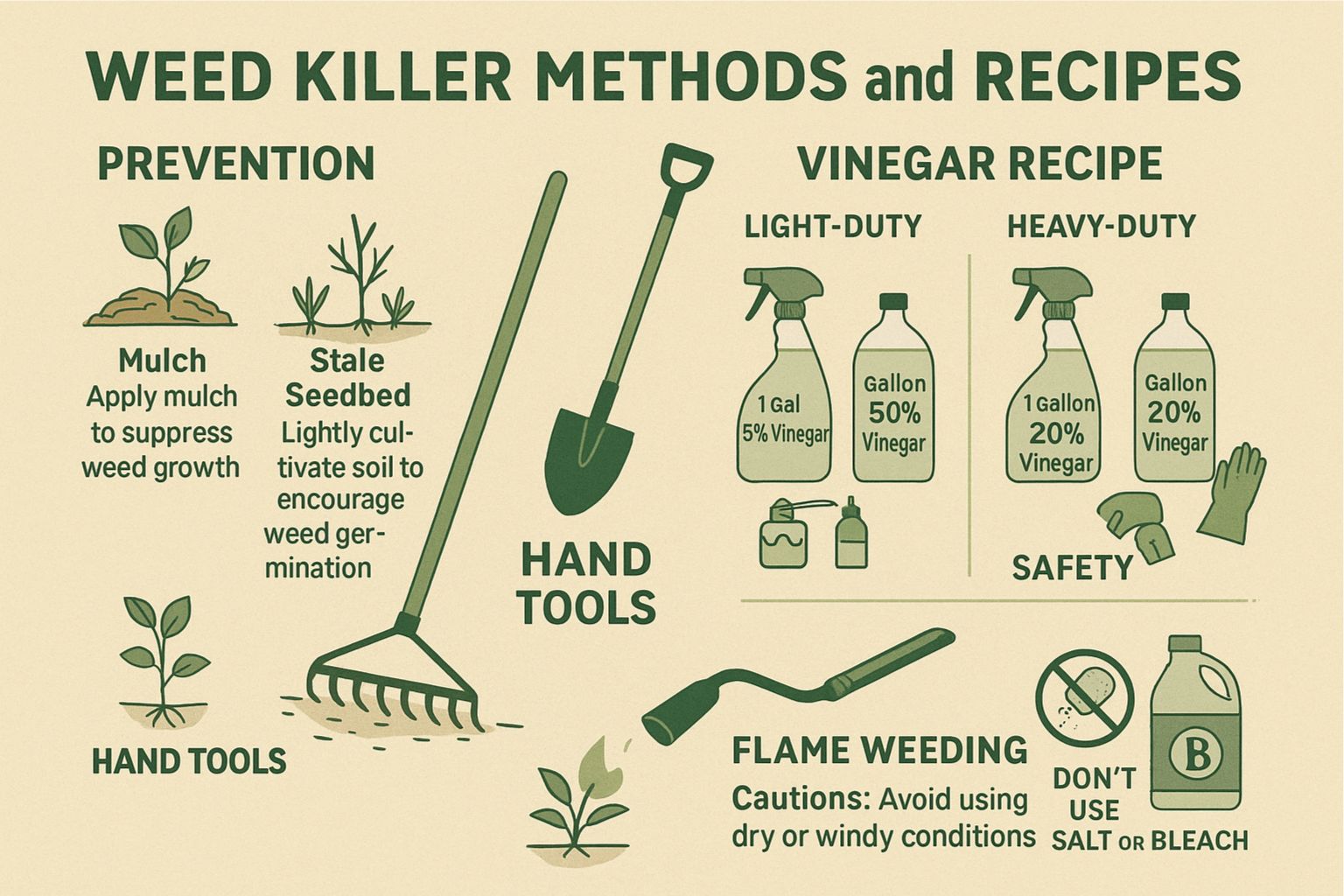
Why I Wrote This Weed Killer Playbook
Weeds steal light, water, and nutrients from our plants and they never take a day off. Over the last decade I’ve tested dozens of approaches in indoor tents, greenhouses, and outdoor cannabis beds. This article shares the Weed Killer Methods and Recipes that actually worked without compromising soil life or the crop. It leans heavily on organic weed control, prevention-first thinking, and simple tools anyone can deploy.
I’m a grower, not a lawyer or doctor. I avoid legal or medical claims and stick to practical guidance that respects local rules and product labels. Where I mention a mix, I include safety notes and trade-offs. Consider this a field manual for clean, resilient cannabis gardens.
The Mindset: Prevention Beats Reaction
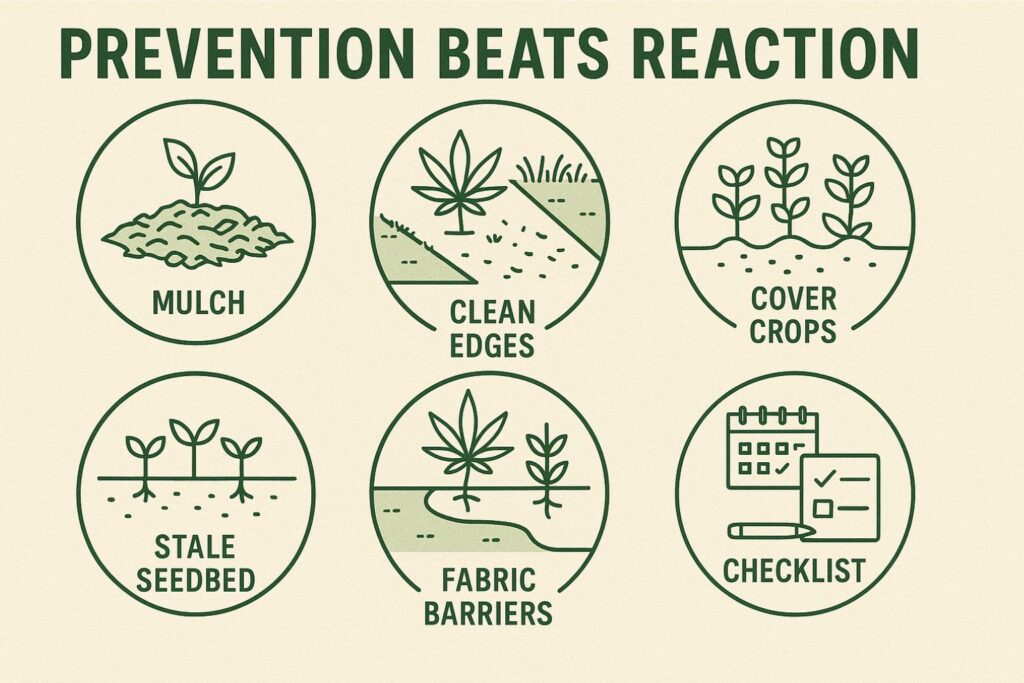
I wasted years spot-spraying before I learned that the best Weed Killer Methods and Recipes are the ones you barely use because your system prevents weed pressure in the first place.
- Mulching for cannabis keeps light from hitting bare soil.
- Pre-emergent strategies (timing and surface disruption) stop germination waves.
- Weed identification tells me which life cycles I’m fighting so I hit them at the right moment.
- Integrated pest management isn’t just for insects; it’s a framework for weed control too.
When I plan a new run—whether feminized seeds in coco or autoflowers in living soil—I define the weed control approach alongside lighting, nutrients, and irrigation. If you’re building beds or up-potting seedlings after germination, choose the mulch and barrier now, not after weeds pop.
Quick Reference: Where Each Method Shines
- Indoor tents on trays: hand weeding tools, landscape fabric pieces under pots, sterile coco, and zero soil spills.
- Greenhouse rows: deep organic mulch, stale seedbed prep, and targeted vinegar weed killer on pathways.
- Outdoor beds: cover crops for off-season, cardboard plus wood-chip mulch, and occasional flame weeding for edges.
- Container patios: pre-emergent strategies like timed cultivation between cycles and a thin top-dress mulch.
Step 1: Weed Identification and Timing
Knowing the enemy saves time and herbicide. I carry a small notebook and record the species I see at each site. Two examples that matter for cannabis beds:
- Cool-season annuals (chickweed, henbit): Germinate in fall/winter. I time cultivation passes before I transplant spring photoperiods and lay mulch immediately.
- Warm-season annuals (pigweed, purslane): Hit with shallow stirrup hoeing at the cotyledon stage and protect soil with mulch before the cannabis canopy closes.
Ask yourself the same natural-language questions I hear from new growers: “What is this weed?” “Is it annual or perennial?” “When does it seed?” That’s the backbone of integrated pest management for weeds.
Step 2: Mulching for Cannabis Beds and Pots
I’ve trialed straw, leaf mold, shredded wood, and living mulch. Mulching for cannabis does more than block light; it stabilizes moisture, buffers root temps, and builds soil health.
- Wood chips (outdoor aisles, perimeters): 5–10 cm deep to block sunlight. Add nitrogen top-dress near plant bases if using lots of fresh chips.
- Straw or shredded leaves (bed surface): 3–6 cm is enough. I leave a 5 cm collar around stems to discourage stem rot.
- Fabric discs (containers): Keep coco or soil surface shaded; great for autoflowers in small pots.
- Cover crops as living mulch: Low-growing clover between widely spaced photoperiods. I crimp or clip it before flower to reduce competition.
Trade-offs: Thick woody mulch slows soil warming in spring and can host pillbugs; leaf mulch mats if applied too thick. Keep it breathable.
Step 3: Pre-Emergent Strategies that Don’t Require Chemicals
Pre-emergent strategies in my cannabis plots are about timing and disturbance, not synthetic herbicides.
- Stale seedbed: I irrigate empty beds to trigger weeds, then lightly flame or scuffle hoe at the white-thread stage. Repeat once, then transplant cannabis the next day and mulch immediately.
- Solarization (off-season): In hot climates, I stretch clear plastic over moist soil for 4–6 weeks. It knocks back the weed seed bank and some pathogens. I re-inoculate with compost after.
- Occultation (cooler climates): Opaque tarps for 3–6 weeks smother seedlings; I like this for fall prep.
- Clean edges: I keep a 30–45 cm weed-free boundary around beds; most in-bed weeds arrive from edges.
These are boring but effective. They cut my reactive weed killer use by half.
Step 4: Hand Weeding Tools That Make It Faster
Hand work can be efficient with the right tools. I cycle through these:
- Stirrup hoe: Skims 1–2 cm below the surface. Ideal for annual flushes in pathways.
- Collinear hoe: Slices right against stems without throwing soil.
- Weed knife: Removes tap-rooted perennials (dandelion) with minimal soil disturbance.
- Narrow fork: Loosens crowns of spreading perennials like Bermuda grass.
I weed soon after irrigation when roots release easily, then re-mulch bare spots. Ten focused minutes every other morning beats an exhausting weekend slog.
Contact-Only Options: Vinegar Weed Killer and Soap Helpers
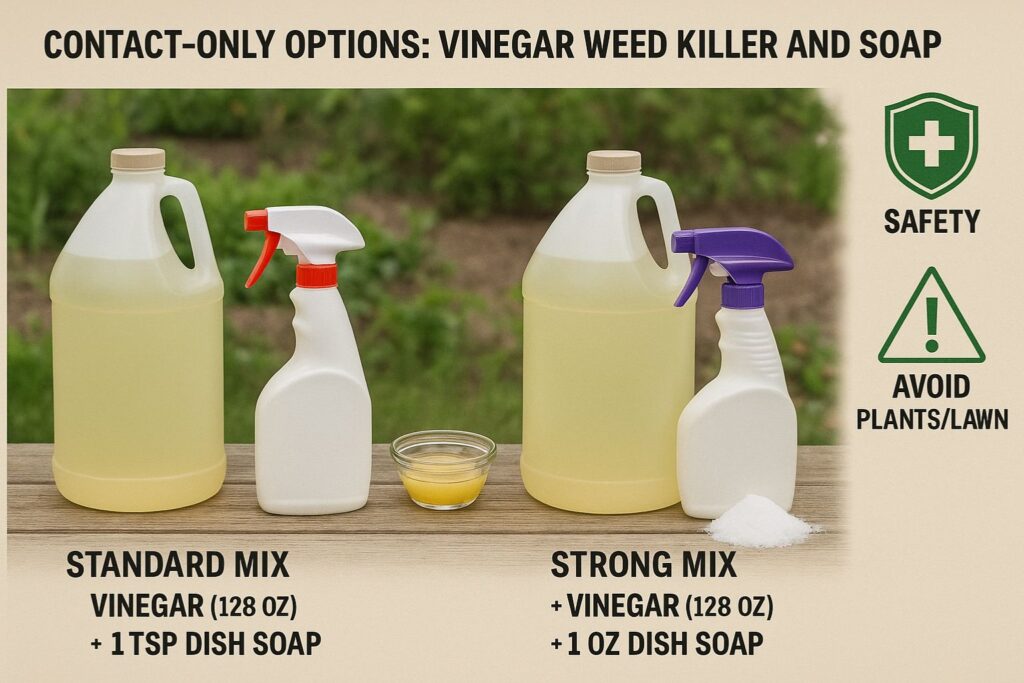
When I need a spot treatment, I prefer simple, contact-only sprays that break down quickly. These are part of my Weed Killer Methods and Recipes because they fit organic weed control and integrated pest management.
Recipe A: Light-Duty Vinegar Weed Killer (young annuals on paths)
- 1 liter household white vinegar at 5% acetic acid
- 1–2 ml plain liquid dish soap as a surfactant
- Optional: 5 ml citrus oil for waxy leaves
Notes and safety:
- Wear gloves and eye protection; avoid windy days.
- This mix is non-selective and burns foliage it touches. Shield cannabis stems and leaves with a board when spraying edges.
- Works best on warm, sunny days and on seedlings or small weeds. Expect minimal effect on established perennials.
- Repeat in 3–5 days if needed.
Recipe B: Heavy-Duty Horticultural Vinegar (driveways and hardscape only)
- 1 liter horticultural vinegar at 20% acetic acid
- 3–4 ml non-ionic surfactant or plain soap
Critical safety:
- 20% acetic acid is caustic. Use goggles, gloves, long sleeves; keep away from skin and eyes.
- I never use this in beds or near roots. It can acidify soil surfaces and harm beneficial organisms.
- Reserve for cracks, pavers, and fence lines outside the cultivated zone.
Why soap? It helps the vinegar solution wet glossy leaves. I keep rates low to avoid residue.
Natural Oils and Fatty Acids
Some store-bought organic options rely on contact fatty acids or plant oils. They’re useful backups when mixes aren’t appropriate.
- Pelargonic acid: Fast foliar burndown on small annuals. Non-selective; good for paths.
- Clove or cinnamon oil blends: Effective on seedlings; strong odor; avoid on breezy days.
- Iron HEDTA (selective on broadleaf weeds in lawns): Not for beds with mixed crops but useful in grassy border paths.
I follow labels, test in a 1 m² corner, and log results. For me, these are better as pathway tools than in-bed cures.
Flame Weeding: Where Fire Makes Sense
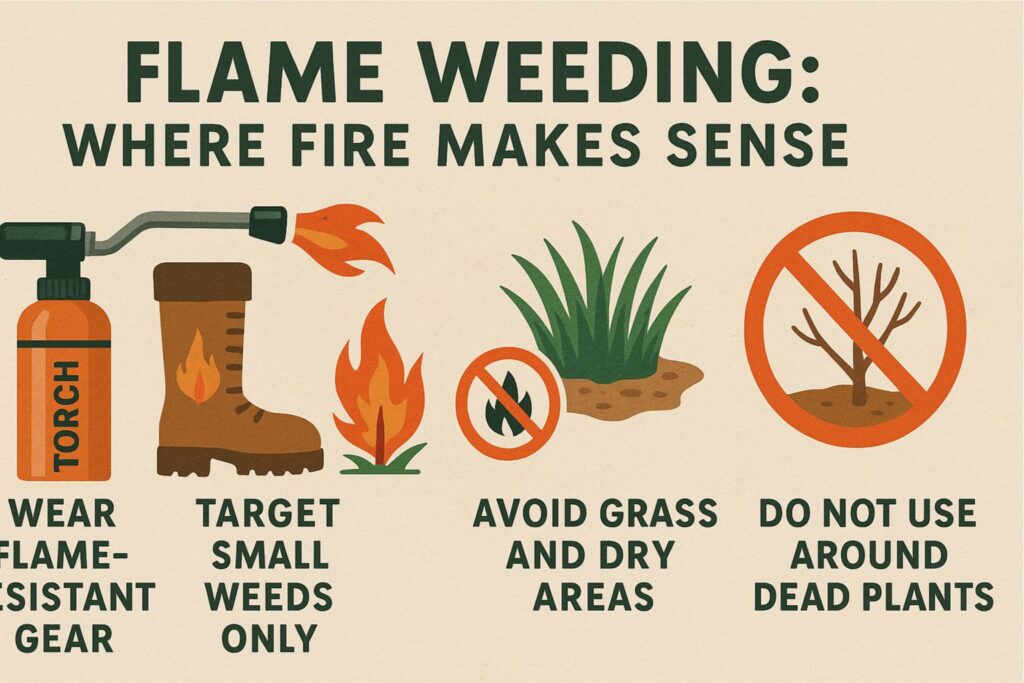
Flame weeding is one of my favorite Weed Killer Methods and Recipes for aisles and pre-emergent passes.
- I use a wand connected to a small propane tank and walk at 3–4 km/h.
- The goal is to wilt cells, not incinerate. Leaves should darken and lose sheen within seconds.
- I never flame around dry mulch, plastic irrigation, or on windy days.
- In stale seedbeds, a single pass right before transplanting gives me a near-clean canvas under mulch.
If your region restricts flame tools, respect local rules and consider electric weed-zappers as a safer alternative.
Recipes I Avoid or Use Sparingly
People often ask about salt, bleach, or diesel in “homebrew” weed killer recipes. I avoid them.
- Salt: Persistent in soil; damages structure and microbiology; hard to reclaim.
- Bleach or solvents: Hazardous, off-label, and not appropriate for gardens.
- Boiling water: Works on tiny cracks; in beds it can cook roots and microbes.
Weed Killer Methods and Recipes should solve problems without creating new ones. If a mix ruins soil health, you pay for it in cannabis yield, terpenes, and post-harvest quality.
Indoor/Tent Strategies: Keeping Coco and Soil Clean
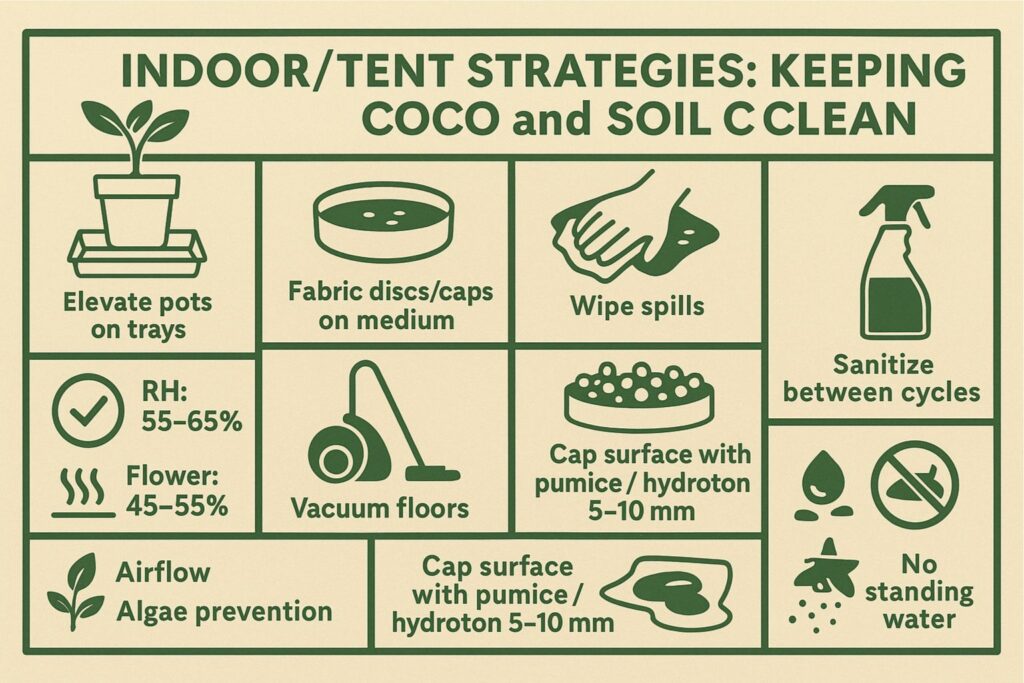
Indoors I focus on hygiene instead of sprays.
- Elevate pots on trays and wipe spills immediately.
- Cap coco/soil with fabric discs or 5–10 mm of inert media (pumice or hydroton).
- Keep RH within 55–65% in veg and 45–55% in flower; standing water invites algae and gnats.
- Vacuum floors, remove dead leaves, and sanitize between cycles.
Weeds aren’t as aggressive indoors, but algae and moss can crust the surface; shading and airflow fix most of it.
Soil Health: The Long Game in Organic Weed Control
Healthy soil communities fill ecological niches that weeds would otherwise occupy. I top-dress with compost, keep living roots in the soil between cannabis runs (cover crops), and avoid aggressive tillage. Over time, weed pressure falls as structure and biology improve.
Soil health also stabilizes irrigation and nutrient uptake. In my logs, beds with robust soil biology produced stronger canopies and out-competed small weed seedlings naturally.
Putting It Together: My Seasonal Plan
Spring outdoor photoperiods
- Two stale seedbed cycles, then transplant.
- Mulching for cannabis with shredded leaves, 4 cm deep.
- Edge flame pass after week two; spot treat paths with light-duty vinegar weed killer on sunny mornings.
Summer greenhouse autos
- Fabric pot discs, strict sanitation, zero sprays inside the house.
- Hand weeding tools on gravel paths every 10 days.
Fall cleanup
- Occultation for six weeks or a quick solarization if heat allows.
- Sow a winter cover crop to keep soil covered and living.
This pattern keeps my reactive spraying minimal. Most of the work is preparation and mulch.
Safety, PPE, and Environmental Notes
- Always wear gloves and eye protection when mixing or spraying.
- Mix small batches; label bottles; keep away from kids and pets.
- Never spray contact mixes on cannabis foliage or stems.
- Avoid salt-based recipes near roots; long-term damage isn’t worth the short-term kill.
- Respect regional grow laws and product labels.
FAQ: Straight Answers I Give New Growers
Which vinegar weed killer strength should I start with?
Start with the light-duty 5% mix on pathways and seedling weeds. It is safer to apply twice than to damage soil with a heavy mix. Horticultural vinegar at 20% is only for hardscape, with full PPE.
How do I stop weeds in containers?
Use fabric discs or a thin mulch layer, water precisely, and keep the rim area clean. Most container weeds arrive as wind-blown seeds that need light; take that away.
Can I flame weed around mulch?
You can pre-emergent flame bare soil before mulching. Do not flame over dry straw or wood chips. I flame edges only, with a water hose ready, and never on windy days.
Are cover crops worth the effort?
Yes. Low clover between big plants or full off-season mixes improve soil health and reduce early spring weed flushes. Mow or crimp before cannabis flowers.
Do I need herbicides at all?
Many gardens run on prevention plus hand tools and mulch. I still keep small amounts of organic contact options for paths and stubborn corners, but most beds stay clean without sprays.
Checklist: Clean Beds in 20 Minutes a Day
- Walk beds after irrigation; pull or slice weeds when roots release.
- Top up mulch to maintain a light-proof 3–6 cm layer.
- Keep edges defined and weed-free; that’s where most invaders start.
- Spot treat paths on warm, dry days with a light-duty vinegar weed killer.
- Log what appears and when; refine timing each cycle.
- Between runs, choose pre-emergent strategies: stale seedbeds, occultation, or solarization.
- Prioritize soil health with compost, cover crops, and minimal disturbance.
Final Thoughts from the Grow Row
I built this guide because I got tired of chasing weeds with a sprayer. The best Weed Killer Methods and Recipes are simple, safe, and part of a system that favors your cannabis, not the invaders. Focus on mulching for cannabis, smart pre-emergent strategies, and fast passes with the right hand weeding tools. Keep contact mixes as small, precise helpers for paths, not crutches inside the beds.
With prevention dialed, you’ll spend more time training branches under even PPFD, managing nutrients, and scouting for pests—and less time battling hitchhikers. That balance shows up at harvest in cleaner flowers, easier trims, and jars that smell like the genetics you selected, not the herbicides you sprayed.
