I learned the hard way that the easiest way to ruin a promising cannabis season is to reach for a harsh herbicide. Years ago, before I committed to organic weed control, I sprayed a “safe for lawns” product along the outside of my greenhouse. Within a week, the nearby vegetable bed stalled, and my young marijuana plants on the edge started showing twisted new growth. I did not lose the crop, but the message was clear: if I wanted clean medicine and clean food, I needed DIY natural weed killers instead of mystery mixes in plastic jugs.
Now, whether I am preparing a new outdoor patch or fine-tuning an existing plot, weed control in cannabis gardens starts with my own simple, repeatable methods. In this article I will walk through the techniques I rely on, why they work, and how you can adapt them to your space, whether you are growing three plants on a patio or managing a serious backyard grow from quality feminized cannabis seeds.
Why I Switched To DIY Natural Weed Killers
I grow both cannabis and vegetables in the same soil, and I smoke, eat, and share what comes out of that garden. That alone motivates me to keep my inputs as clean and transparent as possible.
Chemical herbicides promise convenience, but they come with trade-offs:
- Many are not approved for use near crops like marijuana.
- Drift and runoff can hit beds you never meant to treat.
- Labels are written for lawns and field crops, not for high-value buds.
Once I realized I could get the same or better results using DIY natural weed killers and smart design, it became hard to justify spraying. Today, every technique I use counts as a natural weed killer for gardens, dogs, kids, and beneficial insects included.
Understanding Weeds In A Cannabis Garden
Before you reach for any non toxic weed killer, it helps to understand why weeds are thriving in a particular spot. I think of weeds as feedback:
- Bare, compacted soil invites opportunistic species.
- Over-watering and high nitrogen reward fast, shallow-rooted weeds.
- Thin mulches or gaps in fabric leave “doorways” for seeds.
In my own cannabis plots, the worst weed issues happen on the edges of walkways and in spots where irrigation overshoots. That observation alone gave me better outdoor marijuana grow tips than any bottle ever did.
Environment, Light, And Weed Pressure
In full sun beds where cannabis canopies close quickly, weeds naturally slow down. Under weak lighting or in shaded corners, the soil surface gets just enough light and moisture for unwanted plants to dominate.
Outdoors, I aim for:
- At least 8 hours of direct sun for photoperiod plants.
- Good airflow to dry the soil surface between waterings.
- Plant spacing that allows the marijuana canopy to meet by mid-flower.
In greenhouses, PPFD in the 600–900 µmol/m²/s range over the canopy tends to keep my cannabis thriving while shading the soil. Healthy plants are a form of organic weed control all by themselves.
Core Principles Of Organic Weed Control
Whatever method you choose, the best DIY natural weed killers follow a few simple rules.
- Disturb the root, not just the top.
- Block light from reaching the soil.
- Avoid damaging your cannabis, microbes, or soil structure.
- Keep inputs compatible with organic cannabis cultivation.
When I evaluate a new idea for a natural weed killer for gardens, I run it through that checklist. If it fails one of those tests, it usually goes in the “maybe for the driveway, not for the grow” category.
My Go-To DIY Natural Weed Killers
Over the years I have experimented with many options. The methods below have earned permanent spots in my routine for weed control in cannabis gardens.
Method 1 – Hand Weeding And Stirrup Hoes
As old-fashioned as it sounds, hand pulling and hoeing are still my most reliable DIY natural weed killers.
Here is how I make the work efficient:
- I weed when the soil is lightly moist so roots slide out more easily.
- For seedlings, I use a stirrup hoe to shave the top 1–2 centimeters of soil.
- I focus on a quick pass every 7–10 days, rather than marathon sessions once a month.
It is tempting to look for a non toxic weed killer in a bottle, but ten minutes with a hoe around each bed keeps weed pressure surprisingly low.
Method 2 – Deep Mulch And Living Mulch For Weed Suppression
Mulch is the backbone of organic weed control in my garden. I alternate between dead mulches and cover crops, both of which function as living mulch for weed suppression.
For dead mulches, I use:
- Shredded leaves
- Straw without seed heads
- Partially finished compost
A 7–10 centimeter layer blocks light and buffers soil moisture. When I plant cannabis starts from feminized cannabis seeds, I pull the mulch back, dig the hole, tuck the plant in, and then push the mulch back up to the stem without burying it.
Living mulch for weed suppression is just as valuable. Between rows I sow low-growing clover or other cover crops. They compete with unwanted weeds but fix nitrogen and feed soil biology. These green carpets fit perfectly with organic cannabis cultivation because they add fertility rather than stealing it.
Method 3 – Boiling Water Spot Treatment
For cracks in paths and edges far from beds, boiling water is my favorite non toxic weed killer. I boil a kettle and carefully pour just enough onto the crown of the plant.
Pros:
- Instant impact with no residue.
- Completely safe for soil structure once it cools.
- Cheap and easy.
Cons:
- It will damage any plant it touches, cannabis included.
- Best for small, isolated patches, not broad areas.
I never use boiling water inside my main cannabis beds, but along paths and between paving stones it is an effective natural weed killer for gardens that I can apply without worrying about label restrictions.
Method 4 – Vinegar And Soap Sprays (With Limits)
The internet is full of recipes for vinegar-based DIY natural weed killers. In my experience, a simple mix of household vinegar with a small amount of biodegradable soap works as a contact herbicide on very young weeds.
However, there are important caveats:
- It burns foliage but often leaves roots intact.
- It can injure nearby cannabis leaves if spray drifts.
- Stronger industrial vinegars can irritate skin and lungs.
I reserve vinegar as a spot-treatment non toxic weed killer on gravel areas and fence lines, never directly in my cannabis beds. If I need three passes to kill a stubborn patch, that is still better than contaminating soil I use for organic cannabis cultivation.
Method 5 – Solarization And Occultation
When I start a new plot for weed control in cannabis gardens, I like to “reset” the weed seed bank.
Two methods I use are:
- Solarization: In hot climates, I stretch clear plastic tightly over moist soil for 4–6 weeks during peak sun. The soil can reach temperatures high enough to kill many seeds and pathogens.
- Occultation: In cooler areas, I use opaque tarps to block light for several weeks, which encourages weed seeds to germinate and then die without light.
Both approaches are slow but powerful. I especially recommend them if you are planning a big outdoor marijuana grow and want a head start before transplanting your autoflower cannabis seeds or photoperiods.
Designing Beds For Low-Weed Growing
Good design reduces how often you even need DIY natural weed killers.
Raised Beds And Path Layout
In my main cannabis garden, I use fixed raised beds with permanent paths. That means:
- Weeds in paths can be managed with boiling water or mulch without touching root zones.
- I can run drip irrigation on timers, reducing wet soil between rows.
- I avoid compacting beds, which keeps mycorrhizae and roots happy.
These beds started as simple 1.2 x 2.4 meter rectangles. Over time they have become the backbone of my organic weed control system.
Soil Vs Hydro Growing Considerations
People often ask whether soil vs hydro growing is better for weed management. In my experience:
- In true hydroponic systems, weeds are almost nonexistent because there is no soil surface for seeds.
- In soil vs hydro growing comparisons outdoors, soil always has more weeds but also richer flavors and more forgiving buffers.
I grow almost all my marijuana in living soil, so I accept the trade-off. Soil vs hydro growing is ultimately about your goals; if you choose soil like I did, lean into mulches, cover crops, and DIY natural weed killers instead of chasing a zero-maintenance dream.
Fabric, Cardboard, And Other Barriers
Landscape fabric, cardboard, and paper mulch can all support organic cannabis cultivation when used correctly.
In my garden:
- I lay breathable woven fabric in paths and pin it down with staples.
- I use thick cardboard under new beds, topped with compost and then mulch.
- I avoid plastic sheeting directly over root zones, as it interferes with gas exchange.
These barriers do not replace DIY natural weed killers, but they make every other technique more effective.
Seed Strategy And Strong Cannabis Plants
Weed pressure always feels worse when your main crop is weak. One of the most overlooked outdoor marijuana grow tips is simply to start with vigorous genetics and healthy seedlings.
Choosing The Right Seeds
When I plan a new season, I focus on:
- Feminized cannabis seeds for photo-period strains, so every plant in the bed is productive.
- Autoflower cannabis seeds for tight spaces or short seasons where a fast finish matters.
- Strains known for strong root systems and outdoor vigor.
Using feminized cannabis seeds means I do not waste bed space on males, which lets my mulch and DIY natural weed killers focus on protecting bud-producing plants. Autoflower cannabis seeds are great in small sun pockets or containers where weeds can be more easily managed.
Transplanting And Early Care
The first month after transplanting is crucial:
- I harden seedlings off carefully so they are not shocked by sun or wind.
- I transplant into pre-mulched beds and water in with a mild, balanced nutrient solution at around 0.6–0.8 EC.
- I target soil temperatures of 18–22°C and daytime air temps of 22–28°C.
When cannabis plants hit the ground running, they quickly outcompete nearby weeds. That synergy between strong genetics and organic weed control methods is a big part of successful organic cannabis cultivation.
Integrating Weed Control Into Your Routine
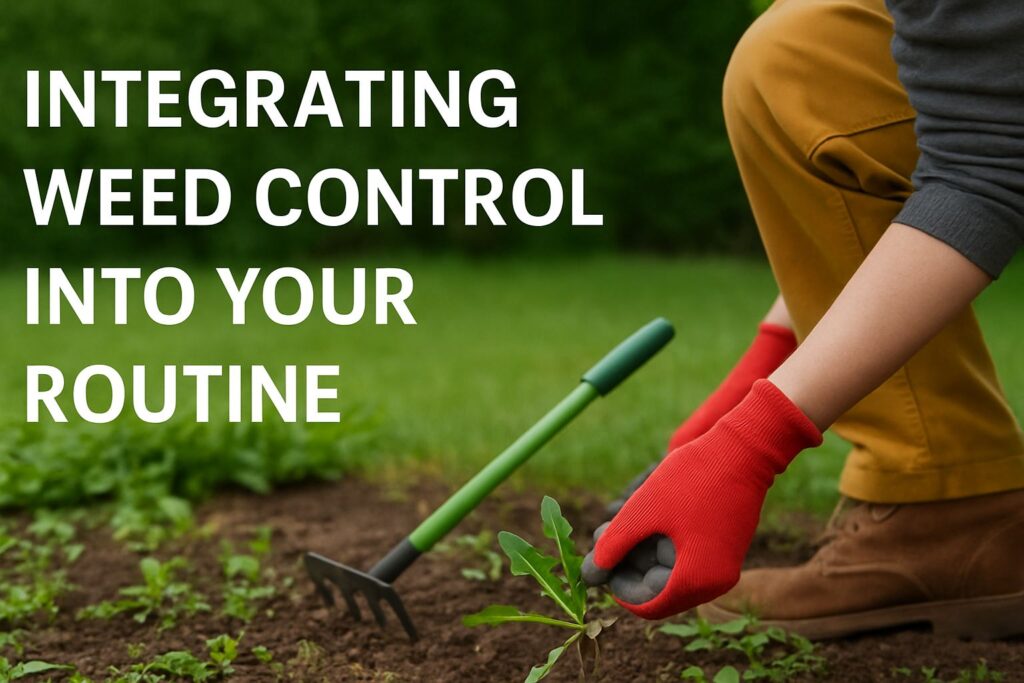
Most growers do not need more products; they need better habits. Here is how I integrate DIY natural weed killers into my weekly schedule.
Weekly Weed Walk
Once a week during veg and early flower, I walk every bed with a hoe and a bucket:
- I slice off young weeds before they set roots.
- I hand pull any larger plants, roots and all.
- I spot-treat path edges with boiling water if needed.
Ten or fifteen minutes of this turns weed control in cannabis gardens from a constant battle into routine maintenance.
Monthly Deep Mulch Check
Once a month I check mulch depth and living mulch for weed suppression:
- Top up straw or leaf mulch to keep it at least 7 centimeters deep.
- Overseed clover or cover crops in thin patches.
- Remove any aggressive weeds that have managed to poke through.
This rhythm supports my long-term organic weed control goals and keeps soil life thriving for both cannabis and companion plants.
Frequently Asked Questions About DIY Natural Weed Killers
What is the strongest natural weed killer for gardens near cannabis?
The strongest natural weed killer for gardens that I am comfortable using near cannabis combines several methods: deep mulch, regular hoeing, and occasional boiling water along path edges. Vinegar can help on gravel, but I do not rely on it in beds meant for marijuana. Layering techniques is more effective and safer than chasing a single “magic” non toxic weed killer.
Are DIY natural weed killers safe for organic cannabis cultivation?
Most DIY natural weed killers based on mechanical removal, mulch, boiling water, and cover crops fit well within organic cannabis cultivation practices. Always check any purchased inputs, like vinegar or soap, to make sure they do not contain synthetic additives that conflict with your certification or personal standards.
How do I keep weeds out of an outdoor marijuana grow without chemicals?
My best outdoor marijuana grow tips for weed management are:
- Prepare beds early with occultation or solarization.
- Establish thick mulch or living mulch for weed suppression before planting.
- Use drip irrigation to avoid over-watering pathways.
- Walk the garden weekly with simple tools instead of waiting until weeds are knee-high.
These steps reduce your dependence on any DIY natural weed killers while still giving you clean, productive beds.
Can I use salt as a natural weed killer for gardens?
I avoid salt almost entirely. While salt will kill plants, it can also damage soil structure, harm microbes, and make the area unsuitable for future planting. For long-term weed control in cannabis gardens, salt is the opposite of a non toxic weed killer. Reserve it, if at all, for places where you never intend to grow cannabis, vegetables, or ornamentals.
Do indoor grows need DIY natural weed killers?
Indoor rooms and tents rarely have classic weeds, but the same thinking applies. In soil vs hydro growing setups indoors, I manage algae, moss, and fungus gnats by:
- Allowing the soil surface to dry slightly between waterings.
- Using a light layer of mulch, such as rice hulls.
- Maintaining good airflow and appropriate VPD for the stage of growth.
These are essentially indoor versions of organic weed control, tailored to an artificial environment.
Final Thoughts
After years of experimentation, I have found that DIY natural weed killers are less about secret recipes and more about a mindset. When you see weeds as feedback, not enemies, you start to adjust watering, mulch, plant spacing, and even your choice of feminized cannabis seeds or autoflower cannabis seeds to work with nature instead of against it.
For me, the reward is a garden where I know exactly what has touched the soil that feeds my cannabis, my vegetables, and my family. With simple tools, living mulch for weed suppression, and a commitment to organic weed control, you can keep your marijuana beds clean, productive, and aligned with the principles of organic cannabis cultivation season after season.
