Table of Contents
Genetic Lineage and Overview
Tropicana Cherry (also known as Trop Cherry) is a sativa-dominant hybrid bred from Tropicana Cookies and Cherry Cookies F3. This strain was developed to capture the best of both parents—Tropicana Cookies’ vibrant citrusy flavor and uplifting effects, and Cherry Cookies’ sweet, fruity notes and relaxing undertones.
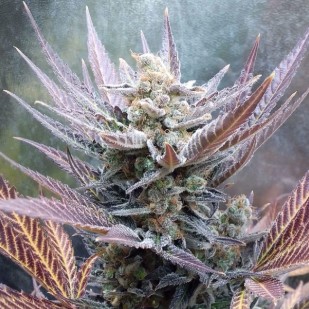
- Girl Scout Cookies and Tangie are crossed to create Tropicana Cookies.
- Cherry Cookies F3 is a stabilized phenotype of Cherry Pie x GSC, known for its cherry-forward terpene profile and body-soothing traits.
The result is a terpene-rich cultivar with an aromatic profile dominated by citrus, cherry, floral, and earthy spice, wrapped in bright purple hues and orange hairs. Its popularity is especially high among connoisseurs and terp hunters, due to its visually striking appearance and intense flavor.
Morphology and Appearance
Tropicana Cherry is often visually stunning, showing:
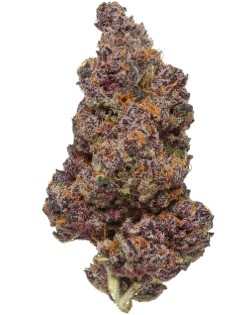
- Vivid purple and green buds with magenta undertones
- Bright orange pistils and thick white trichome coverage
- Compact, dense bud structure typical of cookie descendants
- Long internodal spacing and sativa-like leaf morphology
During flowering, Tropicana Cherry exudes strong citrus and fruit aromas that intensify after curing. The anthocyanin-rich coloration becomes more prominent under cooler nighttime temperatures.
Cannabinoid Profile
The average cannabinoid concentrations for Tropicana Cherry include:
| Cannabinoid | Typical Concentration |
|---|---|
| THC | 18% – 24% |
| CBD | <1% |
| CBG | 0.5% – 1.5% |
| CBC | Trace |
| THCV | Trace – moderate |
THC Dominance
Tropicana Cherry is predominantly THC-heavy, and its effects are largely attributed to delta-9-THC. The relatively low CBD content enhances the psychoactivity of THC, producing a strong cerebral experience.
Terpene Profile and Aromatics
Tropicana Cherry’s signature comes from its rich terpene spectrum. The dominant terpenes include:
| Terpene | Aroma/Flavor Notes | Potential Effects |
|---|---|---|
| Limonene | Citrus, orange peel, tangy | Mood elevation, stress relief |
| Myrcene | Earthy, herbal, slightly musky | Sedation, muscle relaxation |
| Caryophyllene | Spicy, peppery, woody | Anti-inflammatory, interacts with CB2 |
| Linalool | Floral, lavender | Calming, anxiolytic |
| Ocimene | Sweet, herbal, woody | Antifungal, uplifting effects |
| Humulene | Hoppy, woody, earthy | Anti-inflammatory, appetite suppressant |
This terpene bouquet gives Tropicana Cherry its sweet-tart flavor, similar to cherry punch, fruit juice, or citrus-flavored candy, with a subtle spicy or floral aftertaste. Vaporization or low-temp dabs highlight these flavor layers most effectively.
Recreational Effects
Tropicana Cherry delivers a balanced hybrid high, leaning toward a clear-headed, euphoric cerebral experience, followed by gentle body relaxation. Common recreational effects include:
- Euphoria: A rush of happiness and lightness, ideal for social interactions or creative work
- Mental clarity: Enhances focus, often without overwhelming haziness
- Sociability: Popular for group settings due to its energizing qualities
- Uplifted mood: Prominent limonene and ocimene content helps boost emotional state
- Mild physical relaxation: Later onset includes muscle relaxation without couchlock
Best For:
- Daytime use
- Social events
- Artistic projects
- Outdoor adventures
- Light physical activity (e.g., hiking, yoga)
Adverse Effects
As with other high-THC sativa-dominant strains, excessive consumption can lead to:
- Dry mouth and eyes
- Paranoia or anxiety (especially in those sensitive to THC)
- Dizziness or jitteriness if taken in large doses
Starting Tropicana Cherry low and gradually increasing dosage is advised, particularly for novice users.
Medical Applications
Mechanisms, clinical potential, and relevant biochemical interactions. While Tropicana Cherry is often used recreationally, its cannabinoid-terpene synergy also provides meaningful therapeutic benefits.
Key Cannabinoids and Their Medical Roles
1. THC (Δ⁹-Tetrahydrocannabinol) – 18–24%
- Primary psychoactive compound.
- Binds to CB1 receptors in the brain and spinal cord, modifying:
- Pain perception (via PAG and spinal nociceptive pathways)
- Appetite stimulation (via hypothalamic ghrelin upregulation)
- Mood and anxiety regulation (via serotonin/dopamine pathways)
2. CBG (Cannabigerol) – ~0.5–1.5%
- Non-psychoactive.
- Acts as a GABA reuptake inhibitor, contributing to anxiolytic and neuroprotective properties.
- Mild anti-inflammatory and antibacterial action.
3. THCV (Tetrahydrocannabivarin) – Trace to Moderate
- Can act as a CB1 antagonist at low doses → appetite suppressant.
- At higher doses, becomes CB1 agonist, offering stimulatory effects.
- Shows potential for metabolic disorders and ADHD symptom relief.
Dominant Terpenes and Clinical Mechanisms
| Terpene | Mechanism of Action | Therapeutic Role |
|---|---|---|
| Limonene | Inhibits adenosine reuptake, increases serotonin and dopamine | Antidepressant, anxiolytic, anti-inflammatory |
| Myrcene | Sedative via GABA-A modulation; increases cell permeability for cannabinoids | Analgesic, muscle relaxant, sedative |
| Caryophyllene | CB2 receptor agonist | Anti-inflammatory, potential for GI disorders |
| Linalool | GABA-A potentiator; suppresses NMDA receptors | Anxiolytic, anticonvulsant, analgesic |
| Ocimene | Mild bronchodilator and anti-inflammatory | May assist with asthma, viral inhibition |
| Humulene | Anti-inflammatory via prostaglandin inhibition | Anti-inflammatory, anorectic |
Medical Applications in Detail

1. Depression and Mood Disorders
Mechanism:
- Limonene increases serotonin via cAMP signaling in the prefrontal cortex and limbic system.
- THC stimulates dopamine release in the nucleus accumbens, enhancing reward perception.
- CB1 receptor modulation reduces overactivity in stress circuits (amygdala, HPA axis).
Clinical Relevance:
- Useful in unipolar depression, seasonal affective disorder (SAD).
- Can assist in treatment-resistant depression when combined with therapy.
- Ideal for daytime relief due to its non-sedating effects.
2. Anxiety (Low to Moderate Doses)
Mechanism:
- Linalool and myrcene in Tropicana Cherry modulate GABAergic inhibition → reduce neural excitability.
- CB1 activation dampens amygdalar hyperactivity.
- Caryophyllene’s CB2 activation reduces neuroinflammation implicated in anxiety disorders.
Cautions:
- High THC levels may increase anxiety in sensitive individuals or at high doses.
- Best suited for social anxiety, performance anxiety, or generalized anxiety (mild cases).
3. Attention-Deficit/Hyperactivity Disorder (ADHD)
Mechanism:
- THCV and limonene both enhance dopamine transmission, especially in prefrontal cortex.
- CB1 modulation helps in regulating distractibility and impulsivity.
Note:
- Not ideal for sedation; better for focus enhancement in inattentive ADHD subtypes.
- Vaporization in microdoses may optimize cognitive clarity without impairment.
4. Chronic Pain and Inflammation
Mechanism:
- THC modulates nociceptive processing via descending serotonergic and endorphin-mediated pathways.
- Caryophyllene binds CB2 receptors in peripheral tissues, reducing inflammation.
- Myrcene potentiates THC’s analgesic effects by enhancing cell membrane permeability.
Ideal for:
- Neuropathic pain
- Mild arthritis
- TMJ and muscular tension
- Tension-type headaches
Note: It may not be strong enough alone for severe, intractable pain conditions.
5. Appetite Stimulation and Gastrointestinal Support
Mechanism:
- THC activates CB1 receptors in the hypothalamus, stimulating ghrelin release.
- Caryophyllene may benefit those with inflammatory bowel conditions (CB2).
Applications:
- Cancer-associated anorexia
- Cachexia in HIV/AIDS
- IBS (with comorbid nausea or mood disturbance)
6. Migraine and Headache Disorders
Mechanism:
- THC and linalool modulate trigeminovascular pain, a key component in migraines.
- Caryophyllene reduces neurogenic inflammation in cranial vasculature.
Clinical Notes:
- Vaporizing at onset of aura can abort mild to moderate migraines.
- Low-myrcene, limonene-rich profile makes it non-sedating, suitable for day use.
7. Fatigue and Low Energy States
Mechanism:
- Limonene and ocimene in Tropicana Cherry promote dopaminergic activity, elevating alertness and motivation.
- THC in small doses in Tropicana Cherry increases cortical activation and sensory sensitivity.
Ideal Use:
- Fibromyalgia with comorbid fatigue
- Multiple sclerosis (mild fatigue stage)
- Post-viral fatigue (mental fog, mood slump)
Possible Experimental and Novel Applications
1. Neuroprotection and Anti-Oxidative Effects
- CB1 activation reduces excitotoxicity in neurons (important in Alzheimer’s, Parkinson’s).
- Limonene and linalool act as free radical scavengers in neuronal tissue.
2. Antiviral and Respiratory Support
- Ocimene in Tropicana Cherry has demonstrated antiviral properties in early in vitro studies.
- May act as a bronchodilator, making it useful in post-COVID or allergic asthma cases.
3. Anti-inflammatory Dermatology
- Topical extracts containing caryophyllene and limonene have potential in:
- Psoriasis
- Eczema
- Contact dermatitis
Contraindications and Cautions
| Issue | Concern |
|---|---|
| High Anxiety/PTSD | THC can exacerbate hypervigilance or flashbacks |
| Seizure disorders | Not CBD-rich, so not ideal for epilepsy |
| Heart arrhythmias | THC may cause transient tachycardia |
| Pregnancy/Breastfeeding | Avoid due to unknown developmental impact |
| Psychotic disorders | High-THC strains may increase risk of relapse |
Best Medical Use Scenarios and Forms
| Condition | Best Delivery Route | Recommended Form |
|---|---|---|
| Depression, ADHD | Daytime vaporization | Low-temp flower vape |
| Anxiety, mood stabilization | Microdosing edible (1–2.5mg) | Sublingual or tincture |
| Pain and muscle tension | Full-spectrum extract | Rosin or decarboxylated oil |
| Appetite stimulation | High-THC edible | 5–10 mg THC softgel |
| Headaches | Immediate onset vaporization | Flower or live resin vape cartridge |
Summary of Medical Strengths
Appetite Boost: High – especially via oral or vapor routes
Mood Elevation: High – due to limonene, THC synergy
Anxiety Relief: Moderate – works best in low doses
Analgesia: Moderate – ideal for mild/moderate chronic pain
Focus and Energy: High – excellent for mental fog or fatigue
Sleep Aid: Low – not sedating but may assist indirectly through stress relief
Mechanisms of Action
Tropicana Cherry’s effects are driven by the synergistic interaction of THC and terpenes—a phenomenon known as the entourage effect.
- THC in Tropicana Cherry binds primarily to CB1 receptors in the brain and central nervous system, causing psychoactive effects and pain modulation.
- Caryophyllene in Tropicana Cherry uniquely binds to CB2 receptors, offering anti-inflammatory benefits.
- Limonene in Tropicana Cherry interacts with adenosine A2A and dopamine D2 receptors, associated with mood elevation and anxiolysis.
- Linalool and myrcene modulate GABA-A receptors, promoting relaxation and reducing neural excitability.
The absence of significant CBD means Tropicana Cherry’s effects are less modulated and more intensely cerebral, though still manageable for experienced users.
Cultivation Information
I. Genetic and Morphological Overview
- Type: Sativa-dominant hybrid
- Lineage: Tropicana Cookies × Cherry Cookies F3
- Growth style: Hybrid morphology (medium internodal spacing, moderately dense branching)
- Preferred cultivation style: Indoors or controlled greenhouses for maximum terpene preservation
II. Environmental Requirements
1. Climate & Microclimate Control
| Parameter | Ideal Range |
|---|---|
| Temperature | 22–28°C (veg), 20–26°C (flower) |
| Relative Humidity (RH) | 60–70% (veg), 45–50% (flower) |
| VPD | 0.8–1.2 kPa (veg), 1.2–1.5 kPa (flower) |
| CO₂ enrichment | 800–1200 ppm (flowering phase) |
Note: Cooler night temperatures (16–18°C) in late flowering enhance anthocyanin (purple pigment) expression, especially in indoor settings.
2. Lighting
- Vegetative Phase: 18/6 or 20/4 light cycle, 400–600 PPFD
- Flowering Phase: 12/12 cycle, 800–1000 PPFD
- Lighting Type: Full-spectrum white LEDs preferred for trichome and terpene production
UVB supplementation during final weeks can boost resin gland size and terpene synthase activity.
III. Growth Phases and Morphology
1. Vegetative Stage (3–6 weeks)
- Vigorous but manageable growth with medium internodal length
- Requires regular topping and low-stress training (LST) to control vertical stretch
- Strong root zone development encouraged by mycorrhizal inoculants
Tip: Use silica supplements during veg to strengthen stem structure and increase resistance to pathogen penetration.
2. Flowering Stage (8–10 weeks)
- Stretch factor: ~2x post-flip (moderate sativa expression)
- Bud formation: Dense calyx-stacking, high resin output, anthocyanin-rich in cool temps
- Aroma: Intensifies sharply in weeks 6–10; strong exhaust filtration is recommended
Key concern: Humidity control is vital in weeks 7–10 due to the density of the colas.
IV. Nutrient Management
1. Macronutrient Regime
| Stage | N–P–K Ratio Target |
|---|---|
| Early Veg | 3–1–2 |
| Late Veg | 2–1–2 |
| Early Flower | 1–2–2 |
| Mid–Late Flower | 0–3–3 |
| Final Week | 0–0–0 (flush) |
- Use calcium and magnesium (Ca/Mg) supplements throughout.
- Tropicana Cherry shows slight calcium sensitivity, so avoid excess during mid flower.
2. Micronutrient Considerations
- Sulfur and magnesium are crucial for terpene biosynthesis.
- Iron and manganese help in chlorophyll and root zone health.
- Use chelated micronutrients for pH-buffered media (hydroponics or coco).
V. Substrate and Irrigation
1. Medium Options
- Coco coir + perlite (70:30): Promotes rapid root oxygenation and nutrient uptake
- Living soil: Enhances terpene profiles via microbial secondary metabolites
- Hydroponics (DWC or NFT): Not ideal unless heavily controlled (risk of overgrowth)
2. Watering Strategy
- Daily light irrigation in coco preferred over infrequent soaking
- Use drip irrigation systems with runoff collection to prevent salt buildup
- Maintain EC levels:
- Veg: 1.2–1.6 mS/cm
- Flower: 1.8–2.4 mS/cm
VI. Training and Canopy Management
| Method | Suitability | Purpose |
|---|---|---|
| Topping | Highly recommended | Promotes branching, colas per sq.ft. |
| LST | Essential | Control vertical growth, light spread |
| SCROG | Ideal | Maximize yield per m² |
| Defoliation | Moderate use | Increase airflow, reduce bud rot risk |
| Supercropping | Cautious use | Can stress phenotypes with fragile stems |
Avoid overtraining in late veg, as recovery times may extend due to its hybrid genetics.
VII. Pest and Disease Resistance
Resistance Level: Moderate
| Risk | Prevention Strategy |
|---|---|
| Powdery mildew | Maintain airflow and low humidity post week 5 |
| Botrytis (bud rot) | Avoid overwatering, prune inner foliage |
| Spider mites | Neem oil in veg, predatory mites if needed |
| Root aphids | Regular root zone inspection in coco/hydro |
VIII. Harvest Timing and Trichome Observation
Harvest Window: 56–70 days (8–10 weeks)
- Peak THC: ~5–10% amber trichomes, rest cloudy
- Max terpene retention: Harvest at cloudy-amber transition (late week 9)
Aroma shifts from sweet citrus to sharp cherry punch with floral undertones as terpenes mature.
IX. Post-Harvest Handling and Curing
1. Drying Conditions
- Temperature: 18–20°C
- RH: 55–60%
- Duration: 7–14 days (slower = better flavor preservation)
Hang whole plants or large branches in a dark room with good air circulation.
2. Curing Process
- Trim after drying, then jar cure for 4+ weeks:
- Glass jars with humidity packs
- Burp jars 1–2x daily for the first 7–10 days
- Long cure improves terpene complexity and reduces chlorophyll harshness
X. Expected Yields and Quality
| Environment | Yield (per plant) | Quality Traits |
|---|---|---|
| Indoor (LED) | 450–550 g/m² | Max resin, aroma, and coloration |
| Outdoor | 600–900 g/plant (if dry) | Needs dry autumn climate, pest control |
| Greenhouse | Variable – high ceiling | Balanced results with cost efficiency |
Target product: boutique-grade flower with high bag appeal, intense citrus-cherry terpene profile, and above-average potency.
XI. Breeding & Phenotype Selection Tips
- Tropicana Cherry exhibits two main phenotypes:
- Sativa-dominant: Taller, longer flowering, citrus-forward
- Hybrid-dominant: Compact, heavier cherry flavor, higher anthocyanin expression
When selecting mothers or clones:
- Test for terpene intensity early in veg using scratch-and-sniff stem rubs
- Prioritize trichome density on sugar leaves
- Phenotype stabilization requires backcrossing with dominant cherry-scented lines
XII. Final Cultivation Recommendations
| Category | Recommendation |
|---|---|
| Grower Skill Level | Intermediate to Advanced |
| Best Method | SCROG in controlled indoor or greenhouse |
| Focus Trait | Terpene preservation (temperature + cure) |
| Challenge Areas | Humidity control, nutrient balance |
| Strengths | Aroma, bag appeal, extract yield |
Tropicana Cherry Extracts
Due to its rich terpene content, Tropicana Cherry excels in concentrates, including:
- Live Resin: Preserves volatile terpenes like ocimene and linalool
- Rosin: Solventless extraction retains full-spectrum flavor
- Carts: High limonene content produces vibrant citrus vapor
When used in extract form, the effects tend to be more potent and cerebral, so microdosing is recommended for new users.
Summary and Final Assessment
| Attribute | Rating (1–10) |
|---|---|
| Aroma & Flavor | 10 |
| Visual Appeal | 9 |
| Potency | 8 |
| Medical Utility | 7 |
| Ease of Growing | 6 |
| Recreational Use | 9 |
| Breeding Potential | 8 |
Tropicana Cherry is a top-shelf cultivar blending aesthetic, flavor, and psychoactivity in one elite strain. While it may not be ideal for deep sedation or pain-heavy medical users, it excels in:
- Mood enhancement
- Daytime creativity
- Flavor and aroma therapy
Its unique combination of uplift and relaxation, plus market-friendly visuals and extract potential, solidifies Tropicana Cherry as one of the most dynamic modern strains available.
For a complete directory of cultivars, visit our Cannabis Strain Reviews.
