Table of Contents
I’ve grown cannabis long enough to know that two plants from the same seed pack can behave like distant relatives. One stays squat, one stretches. One drinks heavy, one stays finicky. That same variability shows up when people talk about migraines and weed. The stories are all over the map: relief for some, no change for others, and a rougher day for a small but real group.
So this is not a promise piece. It’s a process piece.
This article is written from my hands-on cultivator perspective and my own experience tracking symptoms, products, and environmental variables. It is educational information, not medical advice. Migraine is a complex neurological condition and can mimic or overlap with other serious problems. If your headaches are new, sudden, severe, or changing, or if you have neurological symptoms you’ve never had before, get medical care. If you already take prescription migraine medications, ask a clinician or pharmacist about possible interactions, safety, and whether cannabis is appropriate for you.
With that said, a lot of people keep searching for treating migraine headaches with cannabis, and I understand why. Migraine can be disabling. It can sabotage work, sleep, appetite, and mood. And when conventional options don’t fully control it, people look for additional tools.
My goal here is to show you a safer way to evaluate whether cannabis fits your situation, and if you also grow, how to improve consistency so you can actually learn from your results instead of guessing.
What migraines feel like in real life (and why that matters for testing)
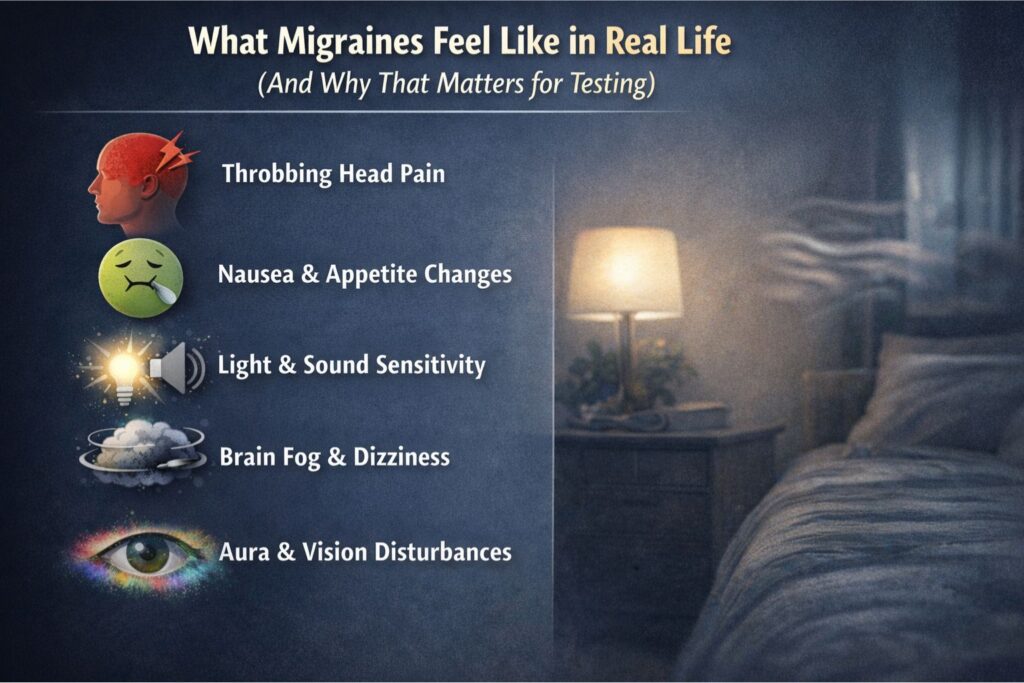
Migraine is more than a “bad headache.” For many people it includes a mix of:
- throbbing or pressure-like head pain
- nausea or appetite changes
- light, sound, or smell sensitivity
- brain fog or slowed thinking
- neck and shoulder tightness
- visual changes, sometimes an aura
Those features matter because cannabis affects perception, appetite, heart rate, balance, and sensory processing. When you’re thinking about treating migraine headaches with cannabis, you need to consider whether the method and dose you choose could worsen the exact symptoms you’re trying to calm.
For example:
- If nausea is your main issue, a slow edible might be a poor match on a day you can’t keep food down.
- If anxiety spikes during an attack, high-THC products can feel risky.
- If light sensitivity is extreme, smoking can irritate and intensify discomfort for some users.
This is why I treat migraine experiments like cultivar trials: control variables, log inputs, and accept that not every phenotype (or nervous system) responds the same.
What the evidence suggests, in plain language
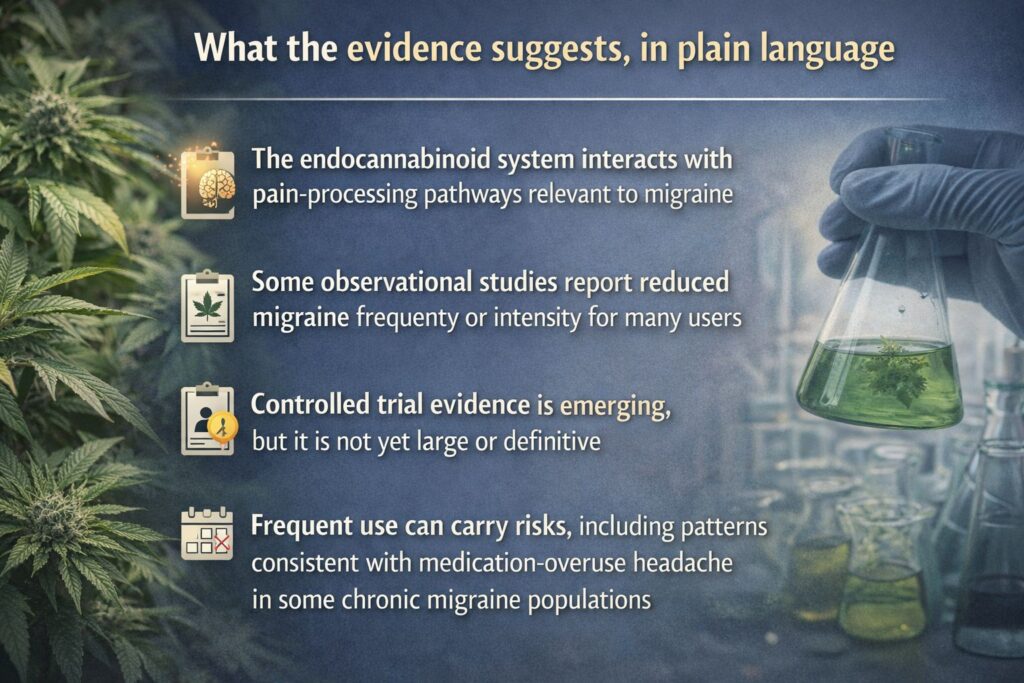
Cannabinoid research for migraine is still developing. We have a mix of mechanistic research, observational patient data, and early clinical trials. The overall picture looks like this:
- The endocannabinoid system interacts with pain processing pathways that are relevant to migraine.
- Some observational studies report reduced migraine frequency or intensity for many users.
- Controlled trial evidence is emerging, but it is not yet large or definitive.
- Frequent use can carry risks, including patterns consistent with medication-overuse headache in some chronic migraine populations.
That’s enough to justify curiosity, but not enough to justify overconfidence. If you choose treating migraine headaches with cannabis as an experiment, do it conservatively.
A cultivator’s framework: five variables that decide most outcomes
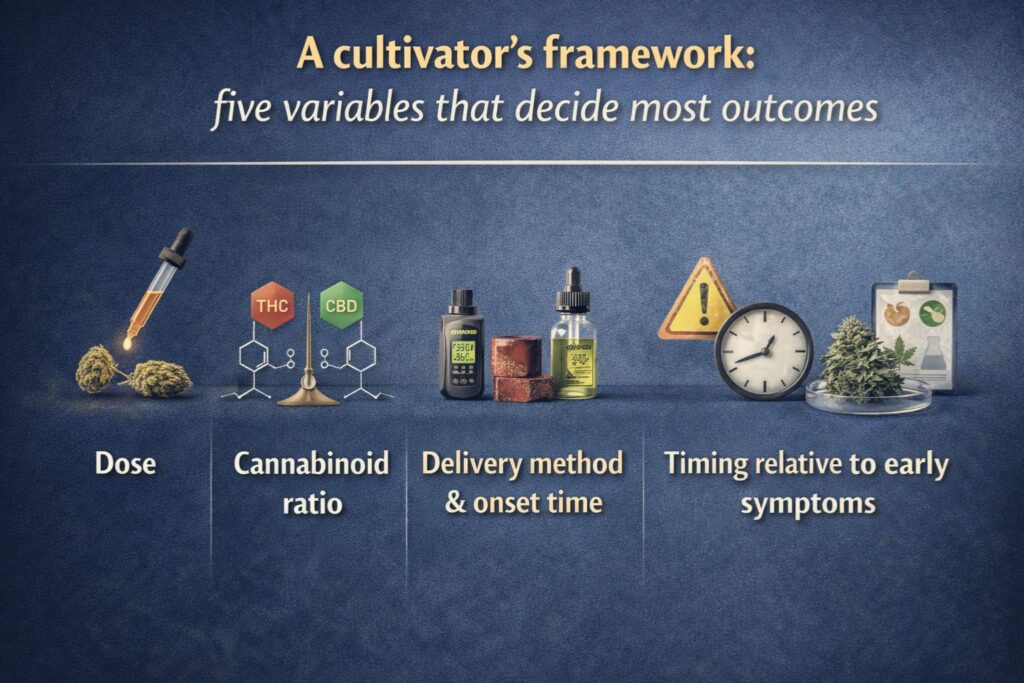
When people say “cannabis helps my migraine” or “weed made it worse,” they’re usually talking about a mix of five variables:
- Dose
- Cannabinoid ratio
- Delivery method and onset time
- Timing relative to early symptoms
- Chemotype details (including aroma compounds) and individual sensitivity
Below I’ll break those down with the most practical, repeatable approach I’ve found.
Dose: why I start with microdosing and scale slowly
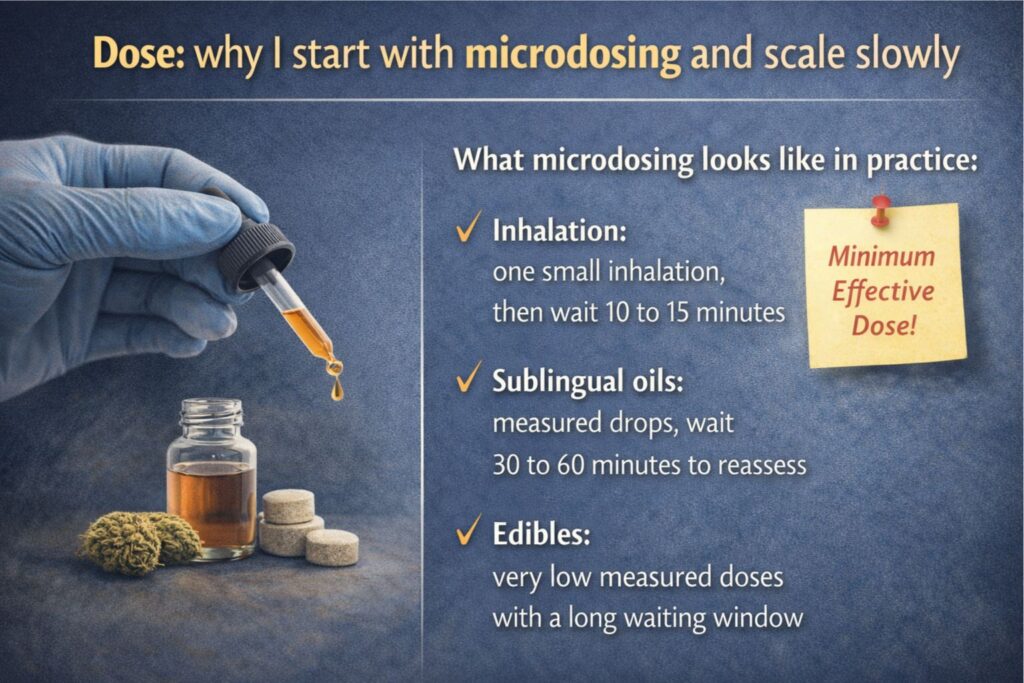
If there is one theme I see again and again, it’s this: less is often more.
Cannabis microdosing for migraine headaches is the strategy of using very small doses to look for symptom reduction without strong intoxication. Microdosing is especially relevant because migraines can already include dizziness, nausea, and sensory overload.
What microdosing looks like in practice
For inhalation, microdosing can mean:
- a single small draw from a vaporizer
- waiting 10 to 15 minutes
- deciding whether you need another small draw
For sublingual oils, microdosing can mean:
- measured drops with a known cannabinoid content
- waiting 30 to 60 minutes for a clearer read
For edibles, microdosing can mean:
- very low measured doses with a long waiting window
The exact numbers vary by person, product, and tolerance. The point is the same: cannabis microdosing for migraine headaches is about finding the minimum effective dose and avoiding “stacking” doses during a stressful attack.
I’m going to repeat it because this is the biggest safety lever: cannabis microdosing for migraine headaches is where most cautious testing should begin.
Ratio: how I think about CBD and THC without hype
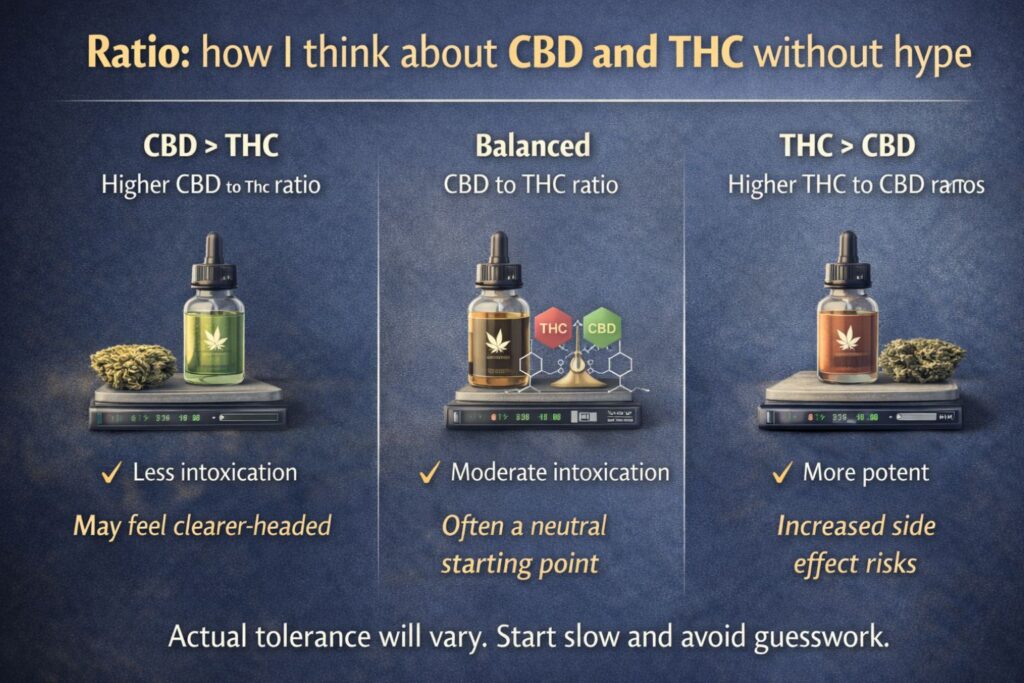
People often ask for the best CBD to THC ratio for migraines. I can’t give a universal answer, but I can share the logic I use.
THC tends to be more psychoactive and can change sensory processing quickly. CBD is not intoxicating in the same way and may feel steadier for some people, but it can also be subtle.
When you see products described by CBD to THC ratio for migraines, you’re really choosing:
- how much intoxication risk you’re comfortable with
- how much “fast effect” you want
- how sensitive you are to THC side effects like anxiety or rapid heartbeat
Practical ratio starting points (not prescriptions)
Some people start with a higher CBD to THC ratio for migraines, especially if they are THC-sensitive. Others find a more balanced CBD to THC ratio for migraines gives them a clearer effect they can actually measure.
The only honest way to find your own “best” ratio is to test one ratio at a time, hold dose steady, and log results. If you change both ratio and dose at once, you learn nothing.
So my rule: pick a CBD to THC ratio for migraines, test it across multiple attacks (not just one), then adjust.
Delivery methods: speed, predictability, and real-world trade-offs
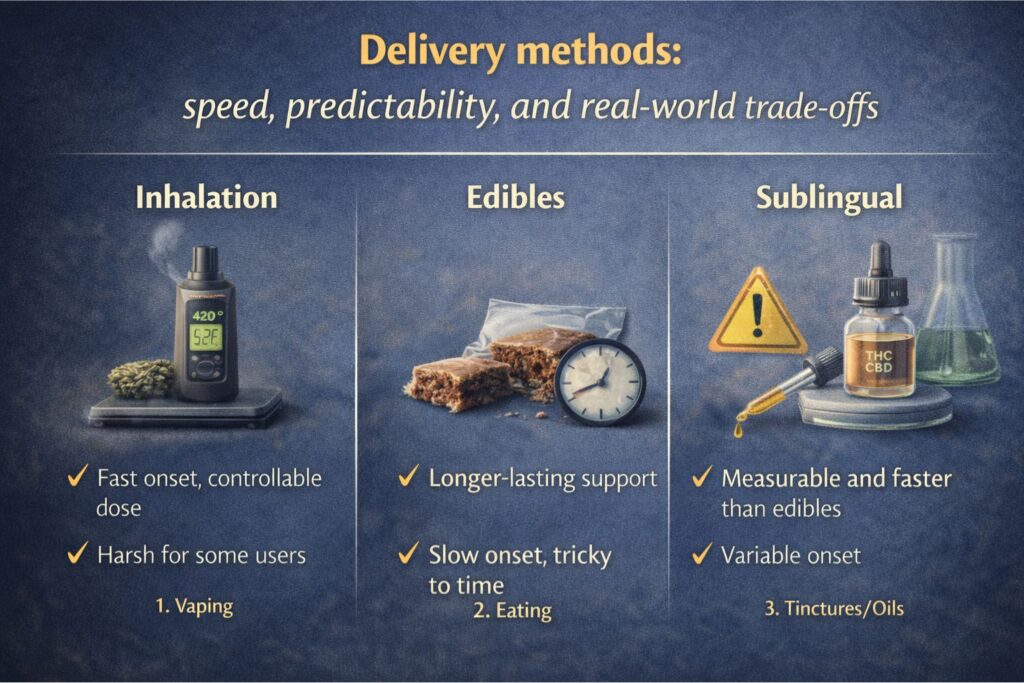
Method matters as much as strain choice. When you’re dealing with migraines, speed and predictability often matter more than potency.
Inhalation: why people choose vaporizing
When someone searches vaping cannabis for migraine relief, they usually want fast action. Inhalation can be felt within minutes, which makes it easier to control dosing. That is also why vaping cannabis for migraine relief is often used as “rescue” dosing.
From a harm-reduction perspective, I prefer vaporization over smoking because it avoids combustion. Even so, inhalation can irritate lungs and throat, and it can feel harsh during nausea.
If you test vaping cannabis for migraine relief, I recommend:
- a clean, temperature-controlled device
- one small draw, then wait
- avoiding repeated heavy sessions during the same attack
I’ll say it again plainly: vaping cannabis for migraine relief is about small, measured inhalations, not big clouds.
Edibles: the slow train that can overshoot
Cannabis edibles onset time for migraines is often too slow for people who need rapid relief. Onset can take a long time and can be inconsistent depending on food, metabolism, and the specific product.
The problem isn’t that edibles are “bad.” It’s that cannabis edibles onset time for migraines can lead to an easy mistake: redosing too soon because you feel nothing yet, then suddenly feeling too much later.
If you want to experiment with edibles, treat cannabis edibles onset time for migraines as the central risk factor:
- start low
- wait longer than you think
- avoid stacking doses
- expect longer duration than inhalation
This is one reason I encourage logbook tracking. Cannabis edibles onset time for migraines is not a guess-and-hope scenario if you want safer results.
Tinctures: the controllable middle ground
Migraine aura and cannabis tinctures comes up a lot because tinctures can be dosed precisely and can be used early. Some people experience an aura or a recognizable “prodrome” phase before full pain hits. If that’s you, migraine aura and cannabis tinctures can be a structured way to test early intervention.
The benefit here is measurement. When I’m trying to learn something, I want to know the dose. Migraine aura and cannabis tinctures also pair well with journaling because you can record timing and quantity with fewer unknowns.
I’ll mention it again because it matters for long-tail searches and practical use: migraine aura and cannabis tinctures is one of the more repeatable approaches for people who can catch early symptoms.
Chemotype details: terpenes as a tracking tool, not a guarantee
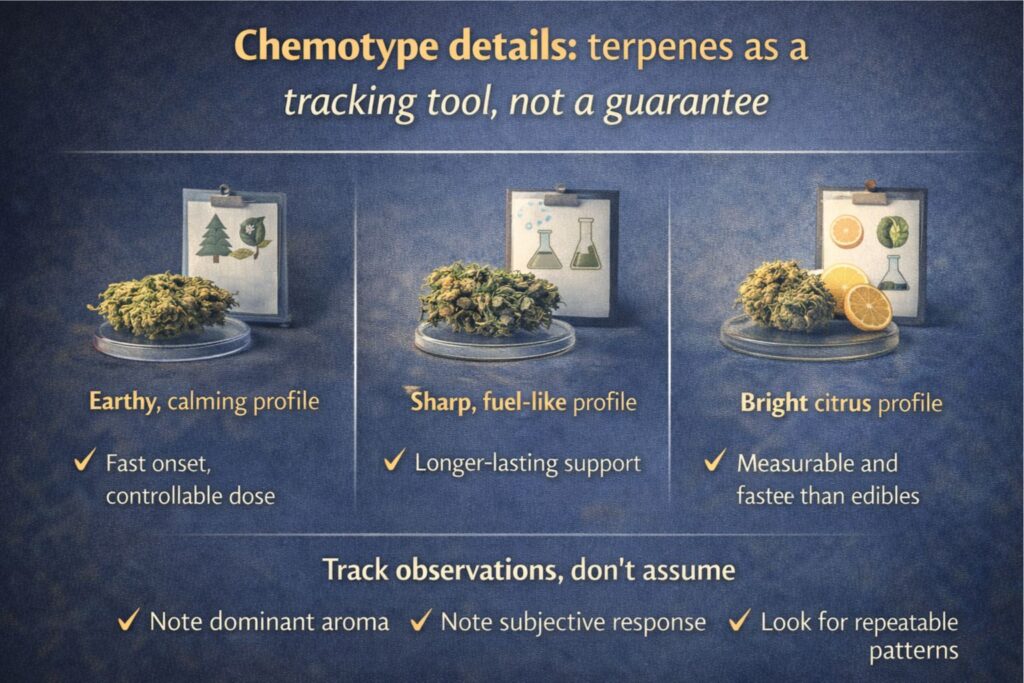
I’m careful about terpenes because marketing gets loud. Still, terpene profile for migraine-prone users can be a useful tracking tool if you treat it as correlation, not destiny.
In my own notes, some aroma profiles feel soothing and others feel overstimulating. That doesn’t prove causation, but it helps me avoid products that reliably make me feel worse.
If you want to work with terpene profile for migraine-prone users in a grounded way:
- pick products with lab testing when available
- keep your dose and method consistent
- record the main aroma impression and the listed dominant terpenes
- compare patterns over time
Terpene profile for migraine-prone users is about narrowing what you tolerate, not claiming a cure.
The migraine grow-log: track triggers and outcomes like a serious trial
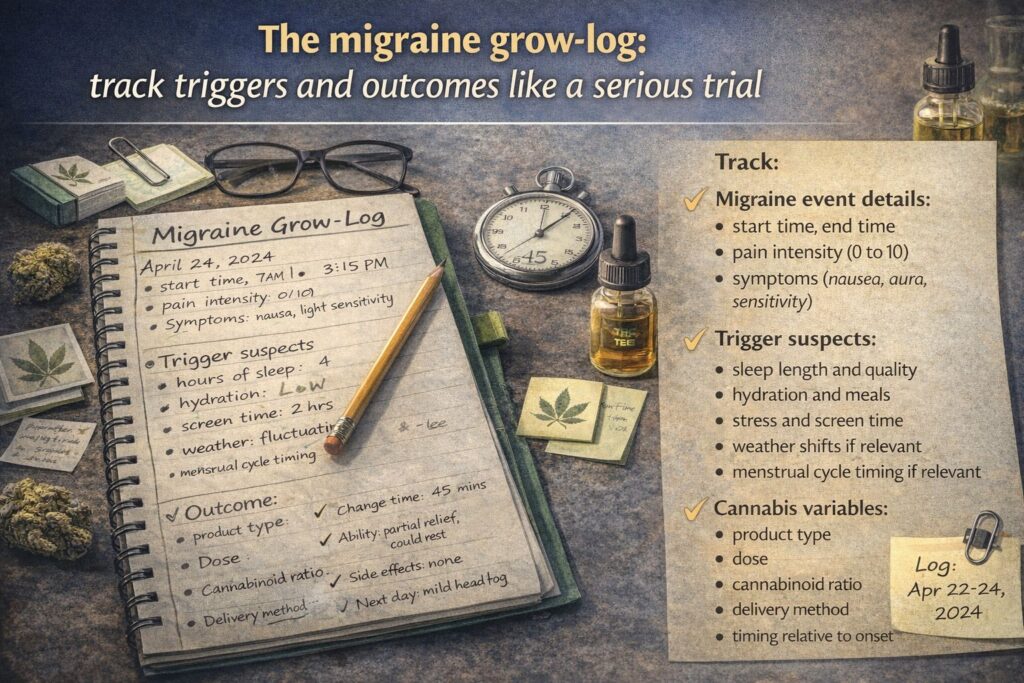
If there’s one habit that improves everything, it’s tracking migraine triggers with a cannabis journal.
I track grows because memory lies. Migraine memory lies too, especially when you’re exhausted. Tracking migraine triggers with a cannabis journal turns your experience into data you can actually use.
What I record (simple but complete)
I keep four categories:
- Migraine event details
- start time, end time
- pain intensity (0 to 10)
- symptoms (nausea, aura, light sensitivity)
- Trigger suspects
- sleep length and quality
- hydration and meals
- stress and screen time
- weather shifts if relevant
- menstrual cycle timing if relevant
- Cannabis variables
- product type
- dose
- cannabinoid ratio
- delivery method
- timing relative to onset
- Outcome
- time to noticeable change
- ability to function
- side effects
- next-day effects
Tracking migraine triggers with a cannabis journal is how you avoid blaming cannabis for a migraine that was already brewing or praising cannabis for a migraine that would have ended anyway.
I’ll repeat the phrase because it’s one of the key long-tail targets and it’s genuinely helpful: tracking migraine triggers with a cannabis journal is the fastest path to clarity.
When cannabis can make migraines worse (and what I do about it)
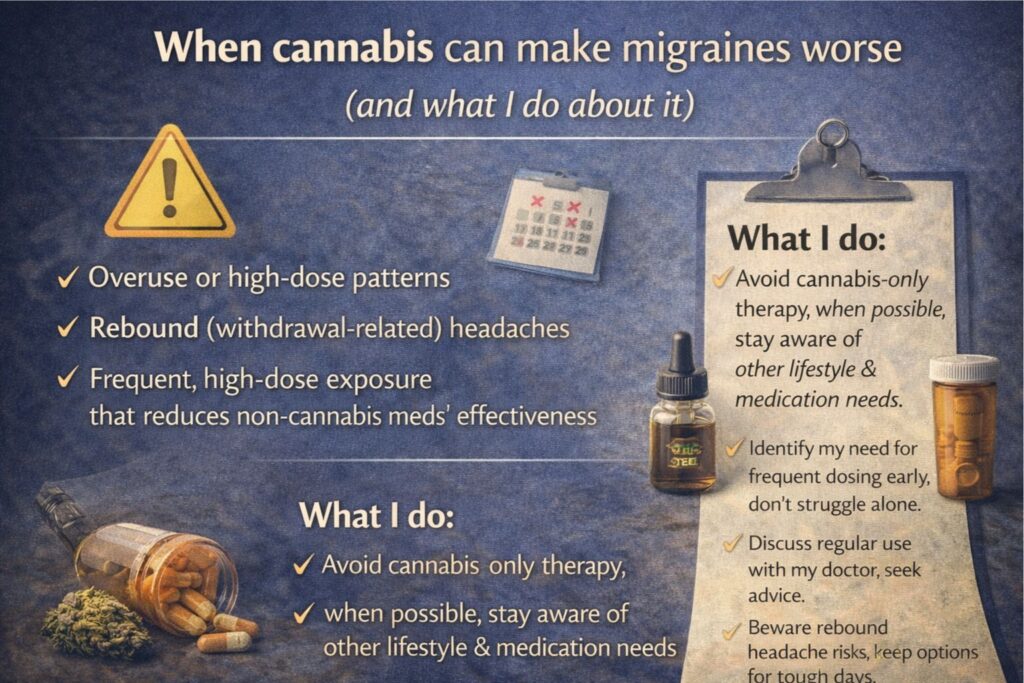
Some people experience cannabis-triggered headaches or worsened migraine symptoms. Reasons can include:
- too high a dose, especially THC-heavy dosing
- dehydration and appetite disruption
- anxiety or panic
- frequent use leading to rebound patterns
- poor sleep quality over time
If you notice worsening, treat it like a nutrient burn: stop adding inputs and let the system recover. Then evaluate whether the issue is dose, frequency, method, or product quality.
Treating migraine headaches with cannabis should never be an escalation game.
Growing for consistency: why quality control matters for sensitive users
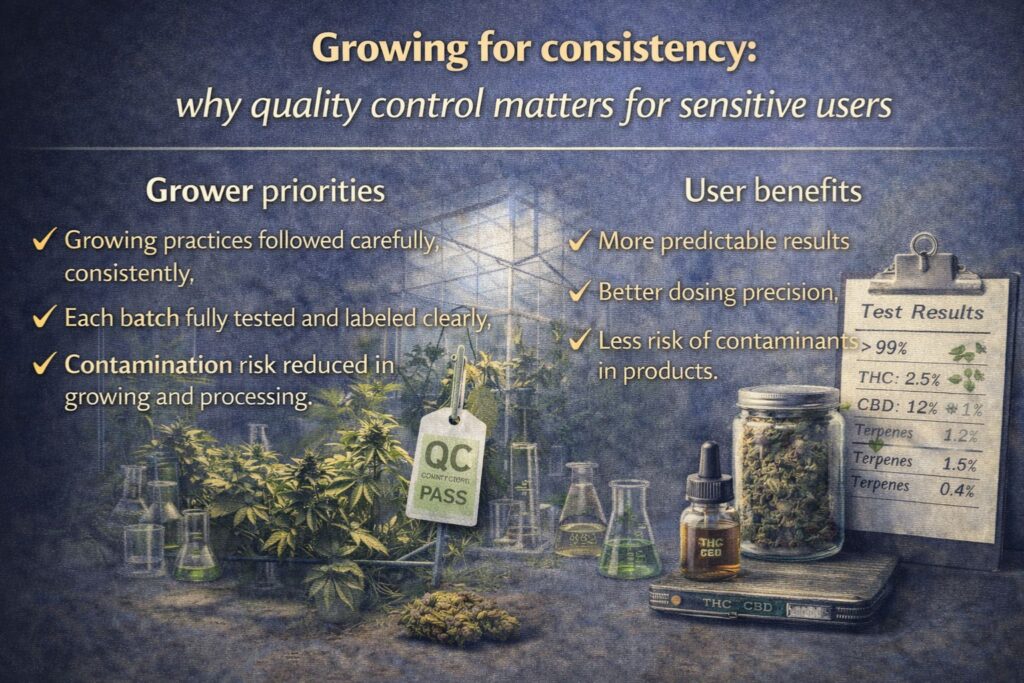
If you’re consuming cannabis to manage symptoms, consistency matters more than novelty. This is where cultivation and purchasing choices intersect.
Two long-tail phrases matter here for a reason:
- organic homegrown cannabis for sensitive users
- soil grown cannabis for clean medicinal flower
Why I favor clean inputs and predictable curing
Organic homegrown cannabis for sensitive users is not just a slogan. It’s an approach:
- avoid harsh foliar sprays late flower
- keep the room clean and reduce pest pressure early
- dry slowly to preserve aroma and reduce harshness
- cure long enough to let chlorophyll break down
I’ve found that organic homegrown cannabis for sensitive users often comes down to what you do in the last three weeks of flower and the first two weeks after harvest. A rushed dry can turn otherwise excellent flower into something that irritates the throat and makes the whole session feel rough.
Soil grown cannabis for clean medicinal flower can also be a practical choice because living soil systems can buffer nutrient swings and produce a smoother smoke or vapor for many people. But hydro and coco can be extremely clean too when managed well. The real goal is consistency, not ideology.
I’ll repeat the phrases because they matter for search and because growers actually ask them:
- organic homegrown cannabis for sensitive users should prioritize residue avoidance and careful curing.
- soil grown cannabis for clean medicinal flower is a valid approach when you want smoother, repeatable results.
Environmental targets I use for stable flower
These ranges are typical for indoor photoperiod plants. Adjust based on cultivar, room size, and equipment.
Vegetative stage:
- Photoperiod: 18/6
- Canopy PPFD: about 300 to 600 µmol/m²/s
- Temperature: about 24 to 28°C lights on
- RH: about 55 to 70%
- VPD: about 0.8 to 1.2 kPa
Flowering stage:
- Photoperiod: 12/12
- Canopy PPFD: about 600 to 900 µmol/m²/s
- Temperature: about 22 to 27°C lights on
- RH: about 40 to 55% (lower late flower)
- VPD: about 1.2 to 1.6 kPa
If you’re growing autos, your light schedule differs, but the environmental targets remain similar.
IPM without heavy residues
If you’re aiming for organic homegrown cannabis for sensitive users, integrated pest management is the foundation:
- quarantine new plants and clones
- use sticky traps and inspect weekly
- maintain airflow and avoid soggy media
- keep floors and corners clean
- use biological controls when appropriate
Late-flower sprays can leave residues that a sensitive person might notice. When the goal is consistent experience, prevention is better than reactive spraying.
Choosing genetics: how I evaluate cultivars for predictability
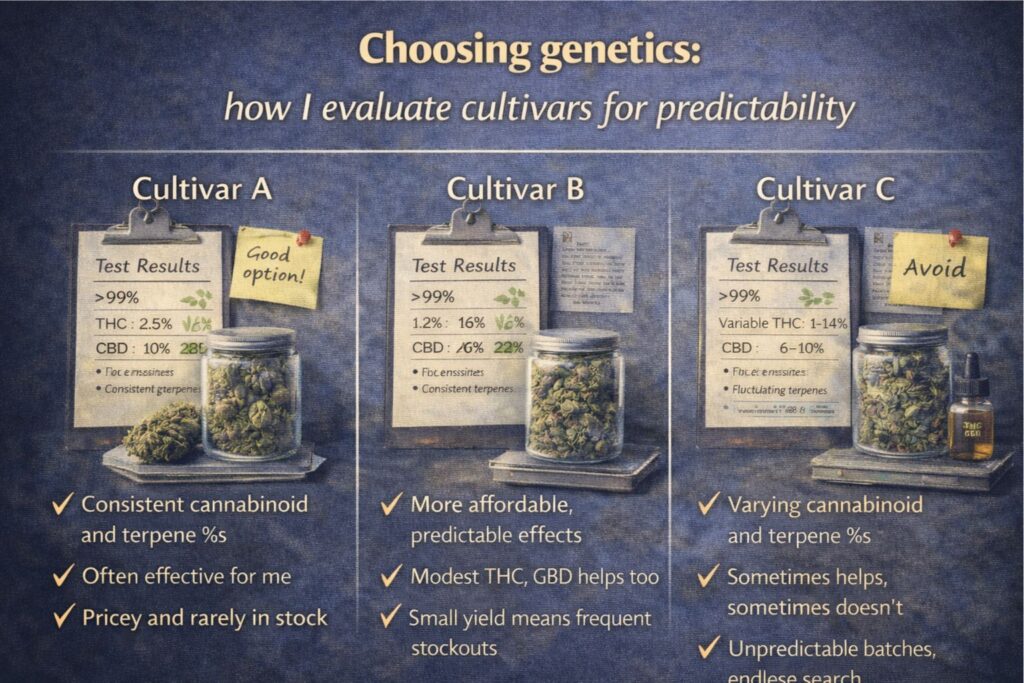
I’m not claiming any cultivar is “for migraines.” But choosing cannabis genetics for headache support can mean selecting lines that are:
- not ultra-high THC
- known for steady, repeatable effects
- consistent in structure and finish time
- available with lab data when possible
Choosing cannabis genetics for headache support is less about chasing names and more about choosing predictable chemotypes. If you grow from seed, phenotype variation is real. If you need consistency, consider running multiple plants and keeping notes on which phenotype is the most stable and tolerable.
I’ll repeat it because it’s a core concept and a keyword requirement: choosing cannabis genetics for headache support is about predictability and measured outcomes, not marketing.
Seed-shopping and cultivation questions people actually type into Google
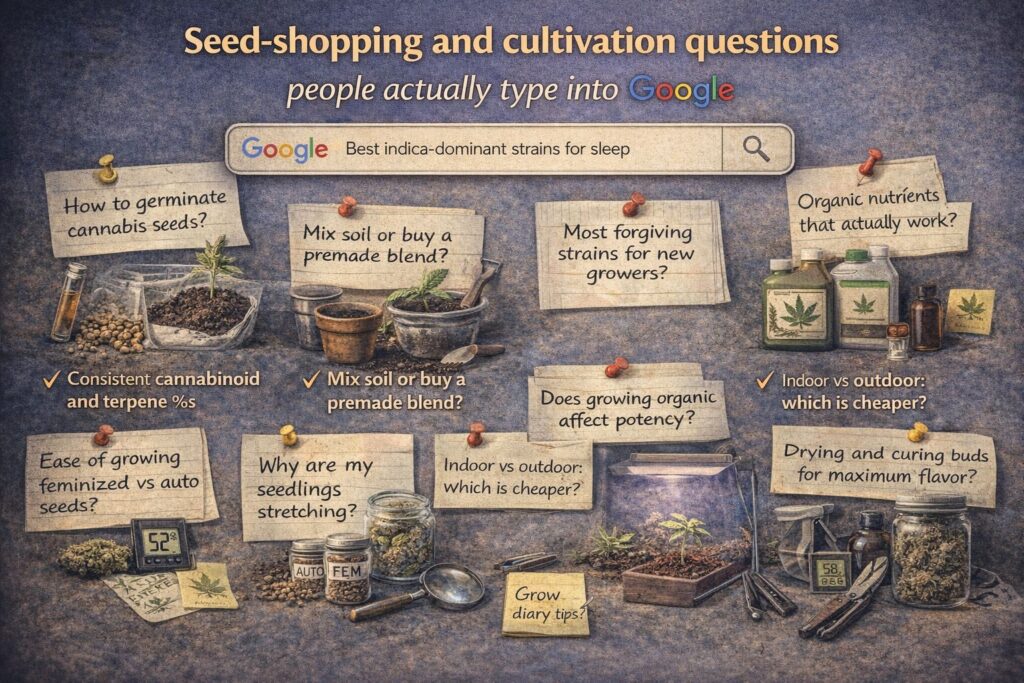
Because this article will live on a seed-focused site, I’m going to address the practical questions I see constantly. I’m keeping this educational and non-legal-advice in tone. Laws and rules vary widely by region, so always verify local requirements before you grow or buy anything.
Common queries I hear:
- What’s the difference between feminized seeds and regular seeds?
- Are autoflowering seeds easier for beginners?
- Indica vs sativa vs hybrid: what does it really mean for effects?
- Soil vs hydro: which is better for clean flavor?
- How do I avoid nutrient burn or deficiency?
- What lighting schedule should I use?
- What’s a reasonable shipping time when you buy cannabis seeds online?
I’m not going to tell you how to break rules. If your region allows cultivation, the goal is to grow clean, consistent flower and avoid shortcuts.
Practical checklist: a safer testing plan
If you want a structured plan for treating migraine headaches with cannabis, here’s the checklist I’d hand to a friend.
Before you test
- Confirm your migraine diagnosis with a clinician if possible.
- Choose one product with consistent labeling.
- Decide your delivery method (vape, tincture, edible) and stick to it for the first phase.
- Start a logbook.
During the first three tests
- Use cannabis microdosing for migraine headaches as your approach.
- Keep the same CBD to THC ratio for migraines across those tests.
- Use the same method each time (for example, vaping cannabis for migraine relief with one small draw).
- Record timing: early symptoms, dose time, and when you noticed changes.
After three to five events
- Review your journal for patterns.
- If you saw benefit with minimal side effects, adjust only one variable (dose or ratio, not both).
- If you saw worsening, stop and reassess.
This is slow, but it’s how you learn.
FAQ: straight answers to long-tail questions
Does cannabis stop a migraine once it starts?
Some people report reduced pain or reduced nausea, especially with faster methods like vaporization. Others report no change. If you test, keep doses small and record outcomes. Treating migraine headaches with cannabis is not a guaranteed rescue.
What’s the best CBD to THC ratio for migraines?
There is no universal best. Many people prefer a higher CBD to THC ratio for migraines if THC triggers anxiety. Others prefer balanced ratios. The safest approach is to pick one CBD to THC ratio for migraines and test it repeatedly with careful logging.
How fast is vaping compared to tinctures?
Vaping cannabis for migraine relief can feel fast, sometimes within minutes. Tinctures are usually slower but can be measured precisely, which is why migraine aura and cannabis tinctures is a common pairing for early intervention.
Why do edibles sometimes feel too strong?
Cannabis edibles onset time for migraines is slow and variable, and the effects can last longer. Redosing too soon is the classic mistake. Treat cannabis edibles onset time for migraines as a risk factor and start very low.
Can terpene profiles help me choose products?
Terpene profile for migraine-prone users can help you identify what you tolerate, but it’s not a guarantee. Use it as a tracking variable, not a promise.
If I grow, what matters most for consistent results?
Stable environment, careful IPM, and slow drying and curing. If your goal is organic homegrown cannabis for sensitive users, avoid late-flower residues. If you prefer soil grown cannabis for clean medicinal flower, focus on balanced nutrition and clean post-harvest handling.
Are certain genetics better for “headache support”?
Choosing cannabis genetics for headache support is about predictable chemotypes and moderate potency, not magical strain names. Run small trials and track how you respond.
Closing: the honest way to approach it
Treating migraine headaches with cannabis can be worth exploring for some people, but only if you respect the risks and keep the process measurable.
Use cannabis microdosing for migraine headaches, keep your CBD to THC ratio for migraines stable while you learn, choose methods intentionally (vaping cannabis for migraine relief, migraine aura and cannabis tinctures, or carefully planned edibles with cannabis edibles onset time for migraines in mind), and track everything by tracking migraine triggers with a cannabis journal.
If you grow, aim for organic homegrown cannabis for sensitive users and consistent post-harvest practice. If you prefer soil grown cannabis for clean medicinal flower, keep the environment stable and avoid shortcuts. And if you’re shopping, focus on honest labeling and repeatable batches rather than hype.
That’s the cultivator mindset: observe, record, and let the data guide you.
