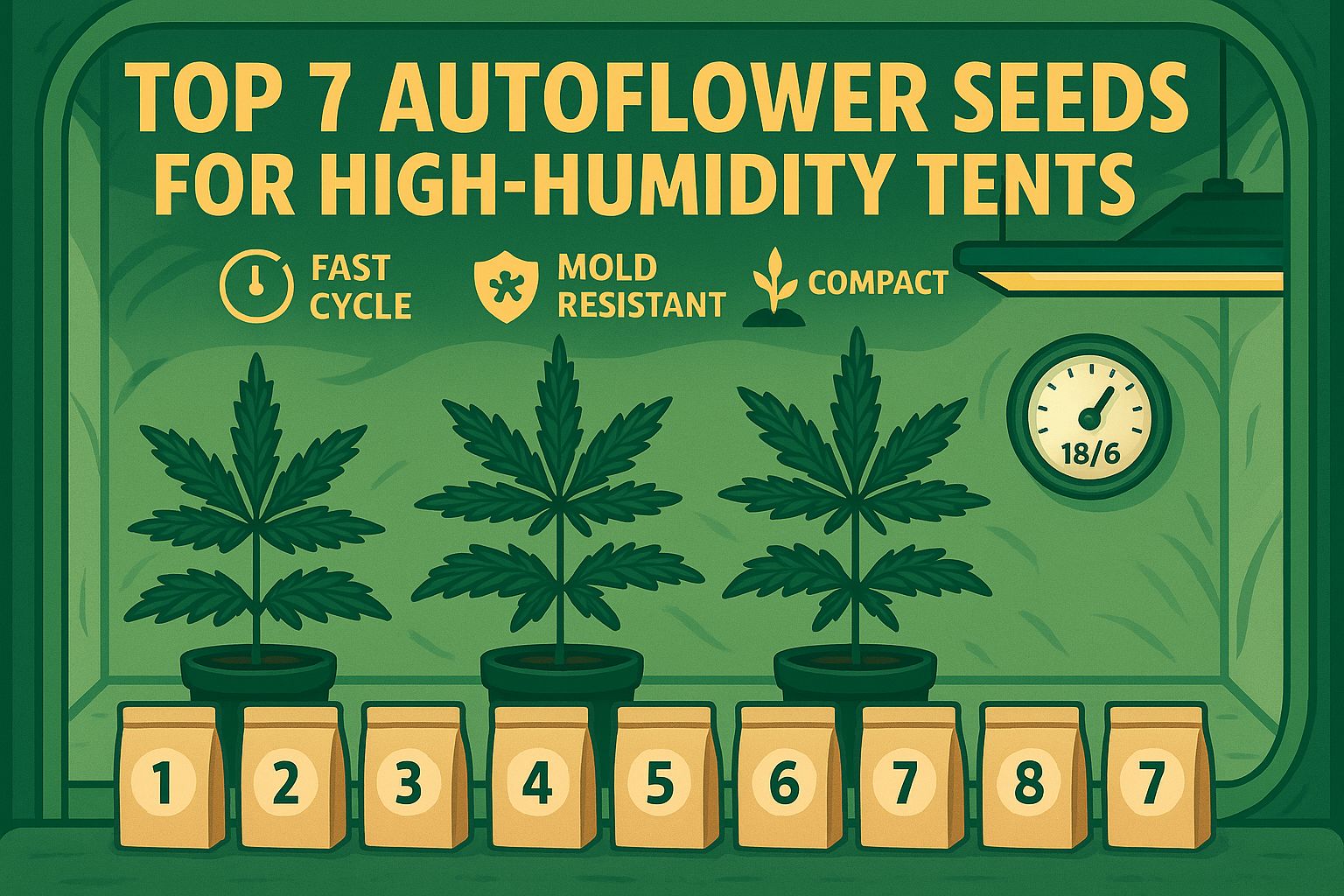
Why I Wrote This 2026 Update
I’ve run high humidity grow tents for years because my coastal region rarely dips below 60% RH. That reality means constant vigilance against botrytis and powdery mildew, especially with compact flowers. Over the past twelve months I cycled seven runs of autoflower seeds specifically chosen to cope with moisture. In this article, I share what worked, what failed, and the exact environmental, lighting, and nutrient choices that kept my marijuana harvests clean. If you’re shopping autoflower seeds for high-humidity tents, these notes come straight from my logbook.
My High-Humidity Tent Baseline
Before seed selection, here’s the tent setup that underpins my results. It matters because genetics plus environment win together.
Tent, Lights, and Airflow
I flower in 2×4 and 3×3 tents with full-spectrum LED grow lights. Target PPFD is 400–500 µmol/m²/s in early veg, 600–750 by preflower, and 800–900 during peak bloom for autos. I keep canopy-level oscillating fans on every corner, intake at floor level, and a 6-inch exhaust running through a carbon filter at the roof line. In a high humidity grow, airflow is non-negotiable; it supports humidity control far more than dehumidifiers alone. I also add a gentle under-canopy clip fan once stretch ends.
Temperature, RH, and VPD Targets
Autos don’t enjoy stress. I run 24–26°C day and 21–23°C night. Relative humidity floats 58–70% early on, then I push humidity control tighter: 52–55% by mid-flower and 48–50% late bloom. Vapor pressure deficit lands between 0.9–1.2 kPa in veg and 1.2–1.4 kPa in flower. I check VPD daily rather than chasing a static RH number because plant transpiration shifts with canopy density.
Medium, Nutrients, and EC
I tested soil vs hydro and kept notes. Coco-perlite blends gave me the steadiest dry-backs and fewer wet pockets than peat-heavy soils. For soil vs hydro comparisons, hand-watered coco felt like the sweet spot for a high humidity grow because it dries predictably and supports precise humidity control. My baseline EC is 1.2–1.4 in veg, 1.6–1.8 in mid-flower, with runoff monitored for drift. Autos dislike overfeeding; I keep nitrogen moderate and emphasize calcium/magnesium and low-dose silica for stronger cell walls. I finish most runs with a low-EC taper rather than a hard flush.
IPM and Hygiene
I prune for airflow, defoliate lightly around week 4–5 from sprout, and remove any damaged leaves immediately. Weekly IPM includes sticky traps and canopy inspections with a loupe. I avoid foliar sprays after week 3 in flower to reduce surface moisture. Mesh pot elevators keep containers off the tray floor. In a tent, two extra centimeters of air beneath pots can make humidity control easier than any gadget.
Seed Selection Criteria For Moist Environments
When I evaluate autoflower seeds for high-humidity tents, I prioritize:
- Bud architecture: fox-tailed or looser bracts resist moisture better than ultra-dense golf balls.
- Flowering speed: a 9–10 week seed-to-harvest cycle shortens window for mold.
- Leaf-to-bud ratio: fewer solar panels crowding colas mean better internal airflow.
- Consistency from feminized seeds: I use feminized seeds so every square foot counts and I can compare phenotypes without culling males.
- Terpene profile: some lines lean resin-forward with waxier surfaces that seem to repel surface moisture better.
- Proven in warm, wet regions: I scan breeder notes and grower chatter for humid-climate success, then test myself.
The Top 7 Autoflower Picks I Trust In Damp Tents
These seven choices were my most reliable autoflower seeds for high-humidity tents across 2024–2025 cycles. Every run used feminized seeds, identical LED grow lights, and the same nutrient schedule, adjusting only irrigation frequency by phenotype.
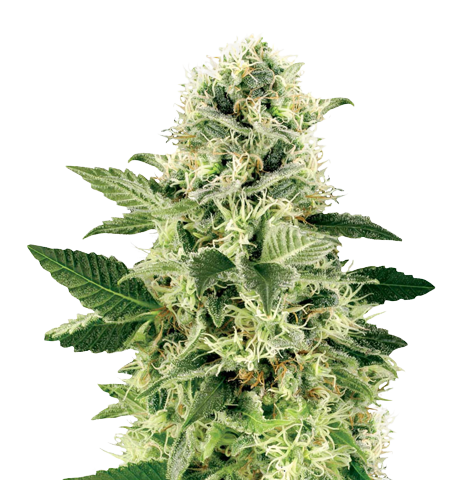
Northern Lights Auto
- Why it worked: Northern Lights Auto stayed compact, with medium-density buds and a cooperative leaf-to-bud ratio. Internodes had just enough spacing for airflow.
- Environment notes: Held steady at 24°C/54–56% RH in late flower without botrytis.
- Training: Simple low-stress training (LST) was enough; topping wasn’t needed.
- Soil vs hydro observation: In coco, dry-backs were predictable, and my germination rate was 100% for this pack.
- Takeaway: Classic for a reason; calm feeder with manageable transpiration under LED grow lights.
-
Northern Lights Cannabis Seeds
Northern Lights cannabis seeds, akin to tranquil celestial guides, harbor …From: $24.99 BUY NOW This product has multiple variants. The options may be chosen on the product page
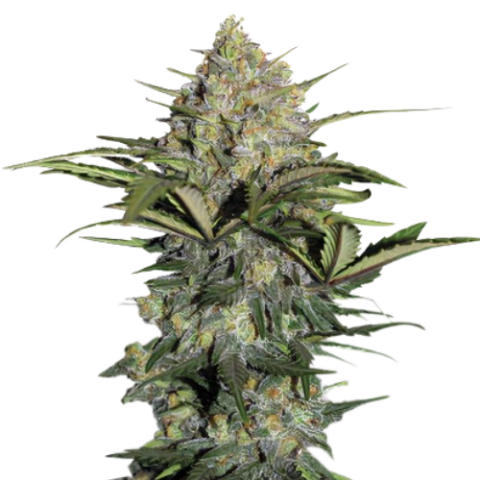
Gorilla Glue Auto
- Why it worked: Resin production was high with open calyx structure. Buds were sticky but not overly dense.
- Environment notes: Tolerated 56–58% RH longer than most during mid-bloom before I tightened humidity control.
- Training: Early LST to open the crown; a single soft tie created a ventilated main canopy.
- Feeding: Slightly heavier potassium late bloom; EC 1.7 peak.
- Takeaway: Consistent across two cycles; excellent candidate in a high humidity grow if airflow is dialed.
-
Gorilla Glue Cannabis Seeds
Much like nature’s own adhesive masterpiece, Gorilla Glue cannabis seeds …From: $24.99 BUY NOW This product has multiple variants. The options may be chosen on the product page
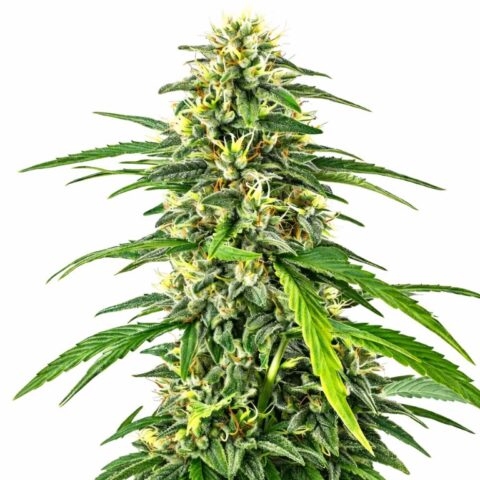
Amnesia Haze Auto
- Why it worked: Sativa dominant architecture with spired colas that breathe.
- Environment notes: Thrived at 25–26°C with 55% RH mid-flower.
- Training: Minimal defoliation to prevent crowding; LST only.
- Soil vs hydro observation: In soil, moisture lingered and slowed dry-backs; in coco, irrigation timing was simpler.
- Takeaway: For growers who like sativa dominant uplift without sacrificing mold resistance, this was a standout.
-
Amnesia Haze Cannabis Seeds
Amnesia Haze cannabis seeds offer a potent and unforgettable experience, …From: $24.99 BUY NOW This product has multiple variants. The options may be chosen on the product page
Blueberry Auto
- Why it worked: Short internodes but buds remained medium-loose, avoiding soggy “golf balls.”
- Environment notes: Preferred the low end of my RH band late flower, 48–50%.
- Feeding: Sensitive to heavy nitrogen; EC 1.6 peak.
- Training: Leaf tucking rather than aggressive defoliation kept transpiration steady.
- Takeaway: Terpene-rich and photogenic, and with mindful humidity control it stayed clean even on rainy weeks.
-
Blueberry Cannabis Seeds
Blueberry cannabis seeds promise a journey into tranquility, producing plants …From: $24.99 BUY NOW This product has multiple variants. The options may be chosen on the product page
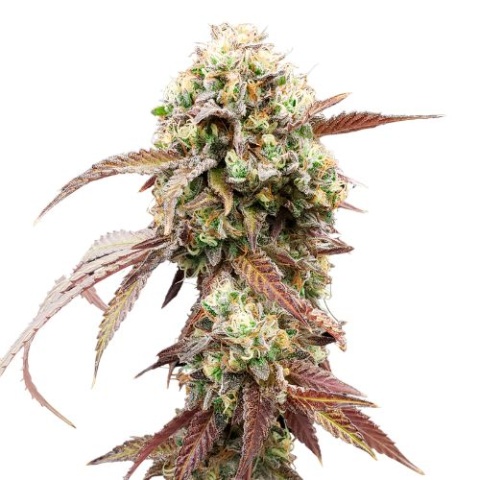
Wedding Cake Auto
- Why it worked: Hybrid strains like this one gave consistent cola shape and predictable stretch.
- Environment notes: Needed fan-on-cola airflow to keep the top buds dry as they stacked.
- Training: A single topping at day 20–22 from sprout plus LST created four equal mains that dried evenly.
- Feeding: Responded to silica and a little extra magnesium; EC 1.7 mid-bloom.
- Takeaway: Hybrid strains that balance indica dominant traits with airspace around bracts are ideal for high-humidity tents.
-
Wedding Cake Cannabis Seeds
Bursting with rich, sweet flavors and a complex terpene profile, …From: $24.99 BUY NOW This product has multiple variants. The options may be chosen on the product page
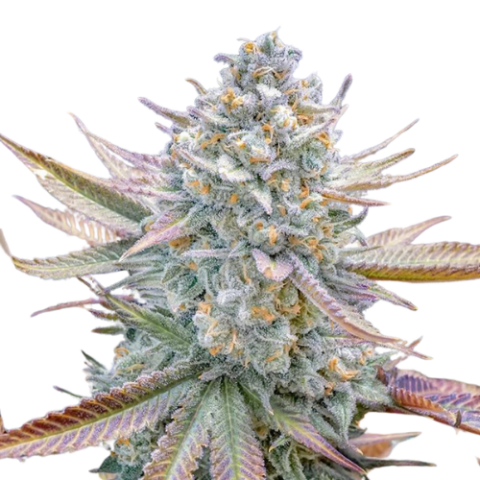
Bruce Banner Auto
- Why it worked: Vigorous growth and dispersed side branching.
- Environment notes: No PM even with a foggy week outdoors pushing ambient RH.
- Training: LST only; de-leafed lightly at week 5 to open mid-canopy.
- Lighting: Took 850–900 µmol/m²/s PPFD without stress when CO₂ was near ambient and temps were steady.
- Takeaway: Great for tents with strong LED grow lights and good exhaust.
-
Bruce Banner Cannabis Seeds
Bruce Banner cannabis seeds, named after the comic book hero’s …From: $24.99 BUY NOW This product has multiple variants. The options may be chosen on the product page
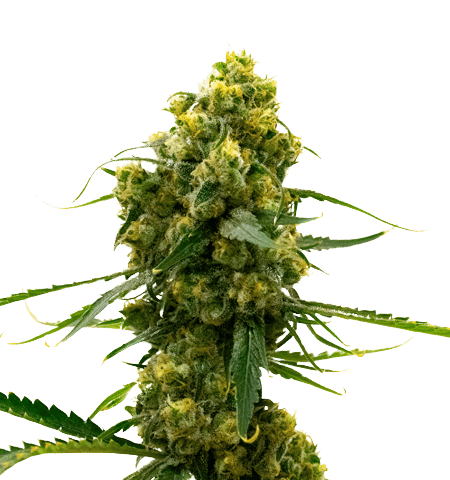
Girl Scout Cookies Auto
- Why it worked: Balanced hybrid with enough internodal space for a damp climate.
- Environment notes: Stayed happy at 52–55% RH late bloom with careful humidity control.
- Soil vs hydro observation: Coco won again; in soil, late-stage pots felt spongy on wet days.
- Feeding: Moderate feeder; EC 1.6–1.7.
- Takeaway: A reliable finisher if you manage airflow and avoid overwatering.
-
Girl Scout Cookies Cannabis Seeds
The cannabis seeds known as Girl Scout Cookies Cannabis Seeds …From: $24.99 BUY NOW This product has multiple variants. The options may be chosen on the product page
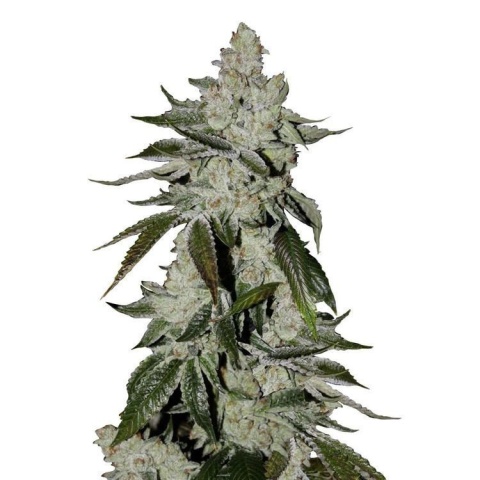
Photoperiod vs Autos in Humid Spaces
I love photoperiods, but autos let me harvest before seasonal humidity spikes become destructive. Autoflower seeds also forgive minor power outages because their schedule isn’t tied to strict photoperiods. For small apartments or garages where a high humidity grow is unavoidable, autos plus rigorous humidity control is a practical path.
Hands-On Playbook For Humidity Control
These are the exact levers I pull when RH fights back.
Airflow First
I add one fan per 2–3 square feet of canopy, pointed across, not directly at, the flowers. An under-canopy fan clears stale air pockets. This basic move helped me keep mold at zero across multiple runs of autoflower seeds and hybrid strains.
Irrigation Timing
In coco, I water close to lights-on so transpiration and LED grow lights help evaporate surface moisture. If runoff trays pool, I vacuum them. In soil vs hydro trials, soil took longer to dry on damp, cold days.
Canopy Management
Autos don’t like heavy defoliation, but removing low, crowded leaves and larf from week 4 onward prevents wet pockets. I avoid cramming multiple indica dominant bushes in a single tent corner; spread them evenly.
Environmental Tuning
If ambient RH spikes, I drop leaf surface temperature slightly by lowering dimmer 5–10% and increasing exhaust. I also use a small desiccant dehumidifier inside the lung room rather than in the tent; it stabilizes intake air.
Technical Benchmarks That Made The Difference
Here are hard numbers that consistently worked with autoflower seeds for high-humidity tents:
- PPFD: 800–900 µmol/m²/s peak under LED grow lights with stable temperatures.
- VPD: 1.2–1.4 kPa in flower; going much lower invited condensation on cooler nights.
- Temps: 24–26°C day, 21–23°C night; broader swings invited dew on leaf margins.
- EC: 1.6–1.8 peak; autos punished me when I pushed past 1.9.
- Air exchange: Full tent volume exchanged every 1–2 minutes; slower exchange worsened odor and moisture.
- Pot choice: Fabric pots on risers dried faster; plastic pots ran wetter and clumped roots.
Genetics, Phenotypes, and What To Expect
Even within feminized seeds, phenotypes vary. My most humid-tolerant plants were typically sativa dominant or balanced hybrid strains with open calyx stacks. Indica dominant phenotypes delivered excellent density but demanded sharper humidity control and more frequent leaf tucking. Keep notes on each plant’s transpiration—heavier drinkers often raise tent RH for everyone, so they belong near the exhaust.
Training Methods That Reduced Moisture Risk
Autoflowers shine with low-stress training. A single topping — used sparingly on vigorous lines like Wedding Cake Auto — can be valuable early, but topping late slows autos. I prefer early LST to spread the canopy, then cane or clip supports for even spacing. The goal is simple: light and air between every cola.
Post-Harvest In Humid Regions
Dry rooms in coastal climates need just as much planning as the tent. I dry at 18–20°C, 55% RH, with a small fan aimed at the wall for air turnover and not at the flowers. I avoid stuffed drying racks; single layers breathe better. Once jarred, I open lids daily for the first week, then gradually reduce burping as humidity stabilizes. A carefully managed cure keeps terpenes lively without inviting mold.
Buying Autoflower Seeds For Humid Tents
When shopping autoflower seeds for high-humidity tents, I look for breeder notes about mold resistance and shorter flowering times. I stick with feminized seeds for efficient space usage. If a vendor shares data on germination rate and provides support for humid climates, that’s a plus. I also prefer balanced hybrid strains for their adaptability under LED grow lights.
Practical Checklists You Can Use Today
Environment Checklist
- Two to four oscillating fans per tent
- One under-canopy clip fan
- 6-inch exhaust with carbon filter
- Intake pulling from a drier lung room
- Hygrometer at canopy level and at pot level
- VPD calculator app checked daily
Watering and Nutrients Checklist
- Water near lights-on to sync with transpiration
- Confirm runoff is not pooling in saucers
- Maintain EC 1.6–1.8 mid-flower for autos
- Use silica lightly during veg and early bloom
- Keep magnesium available under strong LED grow lights
Canopy Checklist
- Early LST to open the crown
- Light defoliation at week 4–5
- Remove larf and tuck leaves that shade colas
- Even spacing of indica dominant plants to avoid crowded corners
Frequently Asked Questions
What are the best autoflower seeds for high-humidity tents if I’m a beginner?
Start with Northern Lights Auto or Blueberry Auto. Both are forgiving autoflower seeds with manageable stretch and buds that aren’t overly dense. With basic humidity control and decent LED grow lights, they finish reliably.
Do I need feminized seeds for a small tent?
You don’t need them, but feminized seeds help maximize space since you won’t cull males. In a high humidity grow, fewer plant removals mean less disruption to airflow patterns.
Is soil vs hydro better for humid apartments?
In my runs, coco-perlite beat peat soil for predictable dry-backs. Hydro can work, but root chamber temps and condensation management raise complexity. If you’re new, coco offers a good balance.
How do I keep buds from getting too dense and trapping moisture?
Select hybrid strains or sativa dominant autos known for more open structure, apply early LST, and keep fans moving across and under the canopy. Maintain VPD around 1.2–1.4 kPa in flower.
What PPFD should I run in late bloom under LED grow lights?
Aim for 800–900 µmol/m²/s if temperatures and humidity control allow. Back off 5–10% if you notice edge curl or dew forming when lights turn off.
What’s a good germination rate target?
Quality vendors often report 85–95%. I record my own germination rate each run. If yours dips below 80%, review storage conditions, water temperature, and sowing depth.
Are indica dominant autoflowers a bad idea in humidity?
Not at all. They can yield beautifully in a high humidity grow if you maintain airflow and avoid overcrowding. Just be stricter with defoliation timing and RH.
How often should I water autos in coco during a wet week?
Irrigate when pots are light, not by the clock. In humid stretches I reduce volume slightly and increase frequency to maintain rhythmic dry-backs.
Do hybrid strains really help in damp climates?
Yes. Balanced hybrid strains often combine resilience with reasonable density, making humidity control easier without sacrificing aroma or structure.
Can I run dehumidifiers inside the tent?
I prefer the lung room to avoid heat load. If tent RH still creeps up, a small unit can help, but ensure exhaust can handle the extra warmth.
Putting It All Together
If you want reliable harvests from autoflower seeds for high-humidity tents, choose genetics with looser bud architecture, keep VPD in the optimal range, and manage airflow with fan placement as carefully as you manage nutrients. In my hands, feminized seeds from proven lines like Northern Lights Auto, Gorilla Glue Auto, Amnesia Haze Auto, Blueberry Auto, Wedding Cake Auto, Bruce Banner Auto, and Girl Scout Cookies Auto performed consistently under LED grow lights with strong humidity control.
Across 2024–2025, I learned that environment beats gadgets: more fans, cleaner dry-backs, tidy canopies. Whether you lean indica dominant, sativa dominant, or balanced hybrid strains, the fundamentals remain the same. Record your germination rate, compare soil vs hydro outcomes, and adjust irrigation around weather. Do that, and you’ll keep dense flowers clean, aromatic, and ready for a careful dry and cure — even when the forecast refuses to cooperate.
Natural-Language Queries To Guide Your Next Steps
- What are the best autoflower seeds for high-humidity tents this year?
- How do I improve humidity control without buying a big dehumidifier?
- Which feminized seeds are most reliable under LED grow lights?
- What’s the ideal VPD for autos in mid-flower?
- Soil vs hydro: which gives better dry-backs in a humid apartment?
- How do hybrid strains compare to indica dominant autos in damp climates?
- What germination rate should I expect from a reputable seed bank?
This article reflects my direct experience managing damp rooms with autoflower seeds and the exact adjustments that kept my weed clean and my marijuana flowers safe from mold. Use these settings as a starting point, then refine them for your tent, your climate, and your chosen genetics.
