The first time I heard growers talk seriously about THCV and appetite control, I thought it sounded like marketing for “diet weed.” As a cultivator, I am naturally skeptical of buzzwords. Still, I am curious by nature, so I hunted down seeds from a couple of high-THCV sativa lines, set up a small test run in my indoor room, and decided to see for myself.
This article is my practical take on THCV and appetite control from a grower’s point of view. I am not a doctor or nutritionist. I am a person who spends a lot of time in front of plants, testing different genetics, dialing in environments, and paying close attention to how people actually describe their experiences with marijuana and weed.
My goal is simple: explain how THCV fits into the modern cannabis garden, how it might influence appetite according to current research, and how you can realistically chase THCV-rich flowers at home without falling for hype.
What I Learned About THCV And Appetite Control
When I started reading up on THCV and appetite control, the first surprise was how different this cannabinoid is from classic THC. Instead of boosting hunger, THCV appears to work in almost the opposite way at certain doses, acting as a CB1 receptor antagonist while also interacting with CB2 receptors in a more complex fashion. Some recent research suggests it may reduce food intake and improve metabolic markers, although the data is still early-stage and mostly focused on controlled products rather than smoked weed.
From a grower’s perspective, that means two things.
First, THCV and appetite control is not a magic switch you turn on just by buying any random sativa. You need genetics with a genuine THCV profile and you need to grow them well enough that the plant can express that potential.
Second, you should always remember that THCV and appetite control is a research topic, not a guaranteed outcome. I treat these plants as interesting tools for experimentation, not as weight-loss products.
THCV Cannabinoid Profile In Real Plants
thcv cannabinoid profile basics
Before I ever dropped a seed, I dug into the thcv cannabinoid profile on lab reports and research summaries. THCV, or tetrahydrocannabivarin, is a propyl analogue of THC. Instead of the more common five-carbon side chain, it has a three-carbon chain, which changes how it interacts with CB1 and CB2 receptors.
A solid thcv cannabinoid profile on a lab test usually shows THCV stacking alongside THC, often in low single-digit percentages. Most of the commercial marijuana samples I have seen barely register THCV at all. When I finally pulled a test showing over 1 percent THCV by weight, I knew I was dealing with something special in terms of thcv cannabinoid profile and potential effects.
If you are shopping for seeds or flower, always ask to see the thcv cannabinoid profile on a real certificate of analysis, not just marketing copy. Without lab data, you are guessing.
What The Science Actually Says
thcv appetite study highlights
Once I saw promising lab numbers, I turned back to the research to understand the bigger picture. Many growers talk about “diet weed,” but the scientific story is more nuanced. I focused on each thcv appetite study I could access that involved humans or well-designed animal models.
Across the literature, a recurring theme appears: in some controlled settings, THCV seems to reduce food intake, influence reward pathways related to eating, and support healthier glucose regulation. However, every thcv appetite study also carries caveats about dose, formulation, and the small number of participants.
For me, the takeaway from each thcv appetite study is that there is genuine scientific interest in THCV, but it is not yet a mainstream or fully understood metabolic tool. That is why, in my own grow, I treat THCV flower as one more option on the shelf rather than a shortcut for appetite problems.
Choosing Genetics: A Practical THCV Marijuana Grow Guide
thcv marijuana grow guide for working cultivators
After learning the basics, I built my own thcv marijuana grow guide based on actual runs. High-THCV lines are often landrace-leaning sativas or specialty hybrids. They stretch, they take their time in flower, and they reward patience.
In my thcv marijuana grow guide, I pay attention to a few key traits:
- Plants with long, airy colas that can handle higher light intensity
- Strong resistance to mold, since long bloom cycles invite humidity issues
- Consistent THCV results on lab tests over multiple harvests
A written thcv marijuana grow guide is helpful, but at the end of the day you need to watch how each phenotype behaves in your space. Some look promising but test low in THCV; others surprise you with better numbers.
Best Starting Points: THCV Weed Strains For Beginners
thcv weed strains for beginners that are realistic to grow
The hardest part for many hobby growers is getting their hands on genuine THCV genetics. That is why I wrote myself a short list of thcv weed strains for beginners that actually show up in seed catalogs from reputable breeders.
When I talk about thcv weed strains for beginners, I look for:
- Straightforward growth habits
- Reasonable flowering times indoors
- Clear documentation of THCV content
After running a few thcv weed strains for beginners, I found that dense, modern hybrids rarely hit the same THCV numbers as older, more open-structured sativas. That does not mean they are bad; it just means you should align your expectations with what the genetics can really deliver.
Hunting THCV-Rich Seeds
thcv rich feminized seeds in practice
Most of my test runs use thcv rich feminized seeds. When I am working in a limited indoor footprint, the last thing I want is to sex a bunch of lanky plants only to discover that my promising THCV phenotypes were all males.
Good thcv rich feminized seeds simplify planning while still giving you enough variety to hunt through. I usually germinate more thcv rich feminized seeds than I plan to keep, then select the healthiest, most vigorous seedlings for veg. Once I have flowering plants, I send samples to a lab to confirm which phenotypes actually contain strong THCV percentages.
Of course, feminization is not a guarantee against hermaphrodites or other stress responses. You still need to treat thcv rich feminized seeds carefully, keep the environment dialed in, and avoid light leaks or wild nutrient swings.
Working With THCV Autoflower Strains
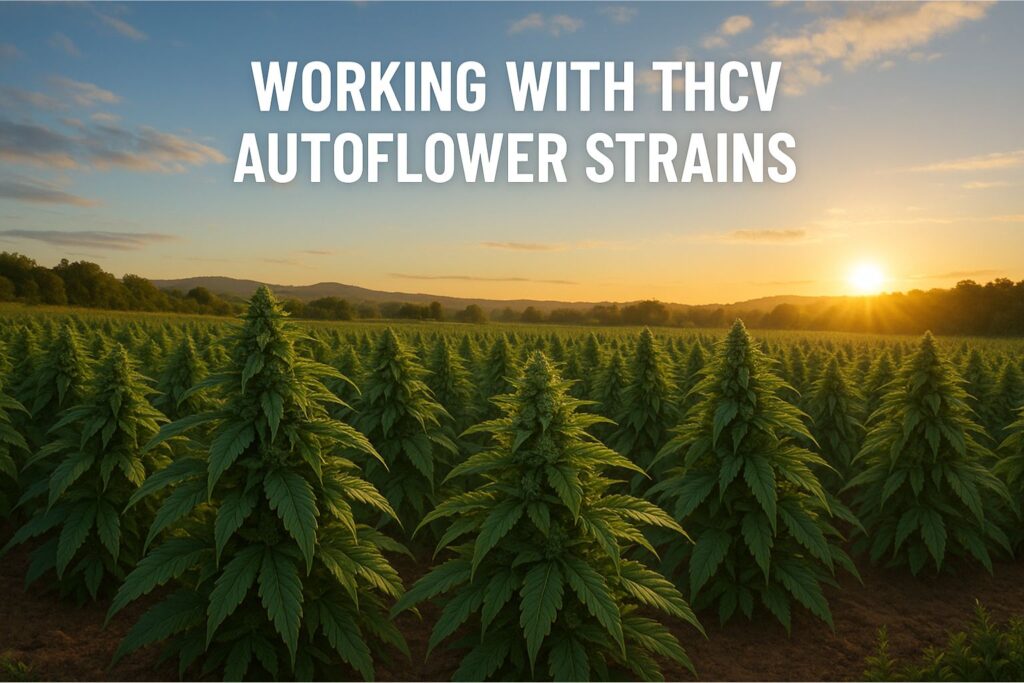
thcv autoflower strains for tight schedules
Not every grower has the time or space for long, lanky sativas. That is where thcv autoflower strains come in. Breeders are starting to cross high-THCV genetics into auto lines, and I have run a few of these thcv autoflower strains in small tents alongside other projects.
When I evaluate thcv autoflower strains, I look at:
- How quickly they move from seed to harvest
- Whether they still show measurable THCV on lab tests
- How sensitive they are to high PPFD in compact spaces
In my experience, thcv autoflower strains are best for growers who want a taste of THCV without fully committing a room to long-cycle sativas. You may sacrifice a bit of potency or yield compared to photoperiod plants, but the ease of use is hard to beat.
Comparing THCV And THC
thcv effects vs thc in everyday use
One of the most common questions I get from friends is about thcv effects vs thc. From a pharmacology standpoint, THCV can behave as a CB1 antagonist at lower doses and as a partial agonist at higher doses, while THC is a classic partial agonist at that same receptor. That difference shows up in how people describe their experiences.
In real-world use, I notice thcv effects vs thc most clearly in the headspace. THCV-rich weed tends to feel lighter, cleaner, and more alert, especially in small doses. It does not generate the same heavy, dreamy body effect many strong indica-leaning strains do. When I smoke a mix of THCV and THC, the thcv effects vs thc can balance out into a more functional daytime high that still feels like marijuana rather than a caffeine substitute.
Again, none of this is medical advice; it is simply how I and some trusted testers have experienced these plants in normal, adult-use settings.
Building A Daytime Jar: THCV Daytime Cannabis Strains
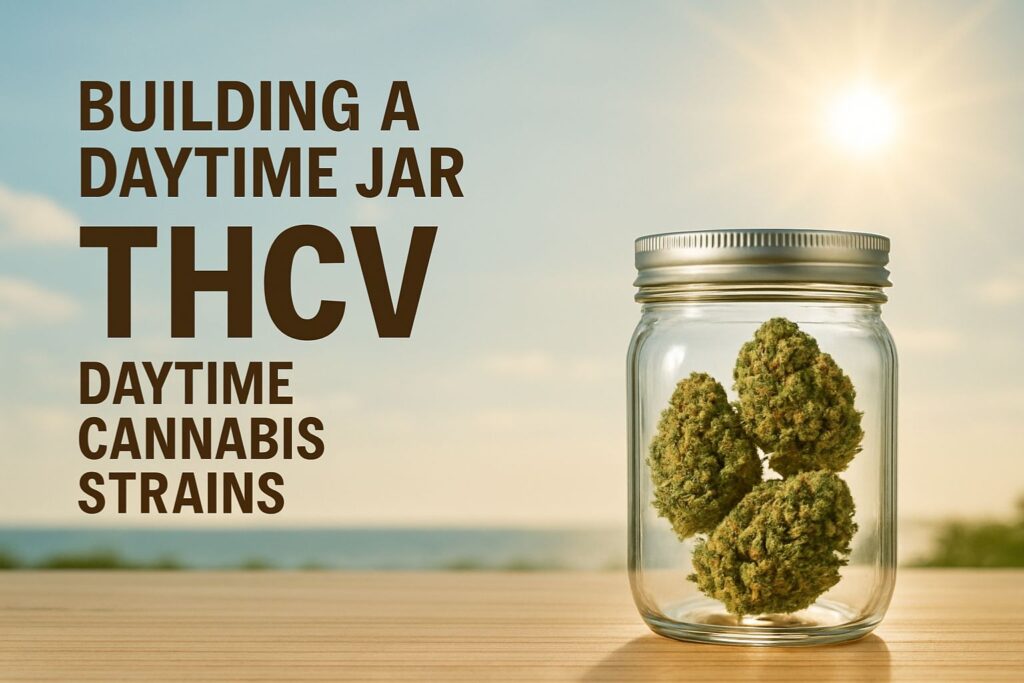
thcv daytime cannabis strains for a clear head
Because of its energizing profile, THCV shows up most often in my “workday” stash. I keep a dedicated jar filled with thcv daytime cannabis strains that I reach for when I want focus rather than couch lock.
To qualify as thcv daytime cannabis strains in my room, a cultivar needs to:
- Test positive for THCV on at least one lab result
- Produce an alert, clear-headed marijuana experience
- Finish reasonably well indoors without constant drama
Over time, I have noticed that thcv daytime cannabis strains tend to pair nicely with productive tasks like garden work, creative projects, or long walks. If someone is curious about THCV and appetite control but worried about being too intoxicated, I usually suggest starting with a very small amount of these daytime flowers and monitoring how they feel over a few weeks.
Dosage Experiments: THCV Microdosing Tips
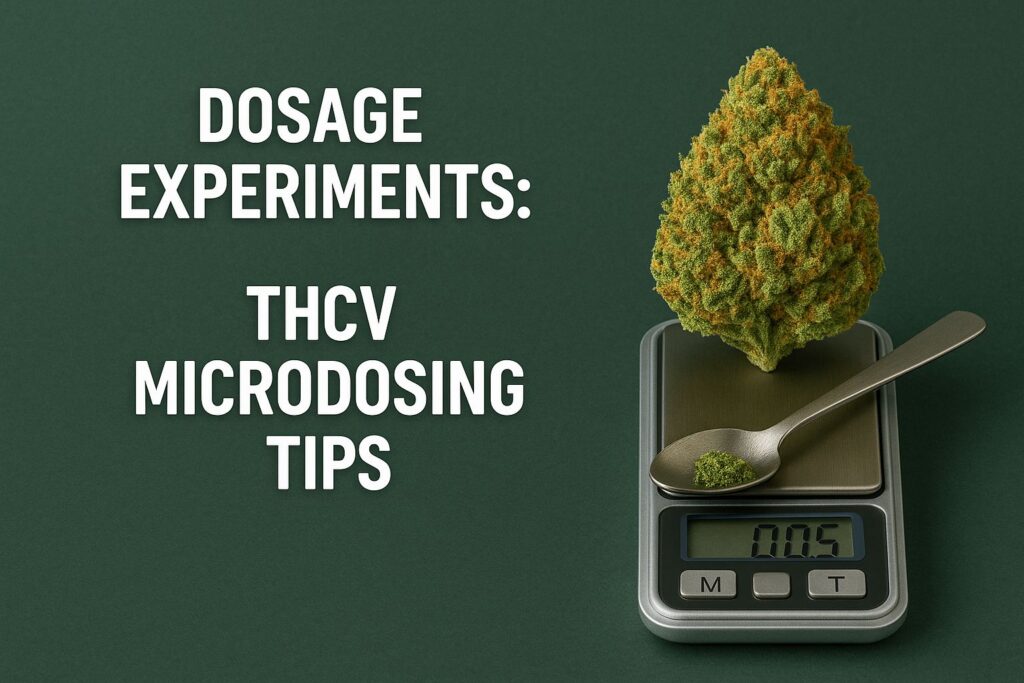
thcv microdosing tips from the grow room
No matter how good your flowers are, THCV only matters if you use it thoughtfully. That is where thcv microdosing tips come in. Compared with heavy evening sessions, microdosing makes it easier to notice subtle changes, including anything related to appetite.
My personal thcv microdosing tips look something like this:
- Start with a very small amount of THCV-rich weed in the morning
- Wait at least 60–90 minutes before consuming more marijuana
- Keep a simple log of how hungry you feel, how focused you are, and how your mood shifts
These thcv microdosing tips are not medical instructions; they are simply a structured way to pay attention. When I follow my own thcv microdosing tips, I can tell whether a particular plant is truly unique or just another sativa in disguise.
Flavor And Function: THCV And Terpene Synergy
exploring thcv and terpene synergy
The more I grow, the more convinced I am that terpenes matter as much as cannabinoids. THCV might sit in the spotlight here, but the background cast of terpenes shapes the overall effect. That is why I pay close attention to thcv and terpene synergy in every harvest.
When I talk about thcv and terpene synergy, I am usually thinking of:
- Sharp, citrus-heavy profiles that feel uplifting
- Earthy, herbal notes that seem to anchor the high
- Spicy or woody aromas that may influence how stimulating the weed feels
If you want to explore thcv and terpene synergy at home, try separating your jars by aroma families and tracking which ones feel the most balanced. Over time you will probably find that THCV content, terpene ratios, and personal tolerance all interact to shape the way THCV and appetite control show up in your daily life.
Environment And Nutrients For High-THCV Cannabis
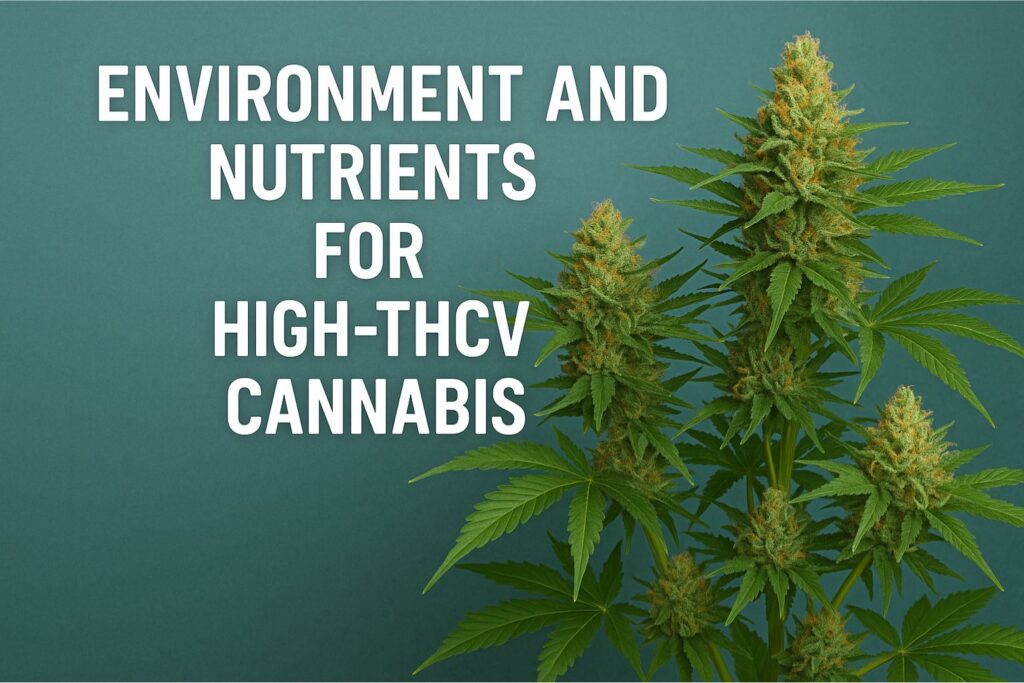
Even though this article focuses on THCV and appetite control, the basics of healthy cultivation still apply. My high-THCV plants respond best when I keep a stable environment and clean inputs.
Typical settings in my indoor room are:
- Veg: 24–27°C, 60–70% relative humidity, VPD around 0.8–1.0 kPa
- Early flower: 24–26°C, 55–65% relative humidity, VPD 1.0–1.2 kPa
- Late flower: 22–25°C, 45–55% relative humidity, VPD 1.2–1.4 kPa
Under LED fixtures, I aim for PPFD between 700 and 900 µmol/m²/s in mid-flower, easing up on touchy phenotypes. In coco and rockwool I keep EC around 1.6–2.0 during heavy feeding, backing down as I approach flush. In organic soil beds, I rely more on balanced amendments and living biology while using runoff EC and plant color as guides.
Stable conditions do not guarantee high THCV, but unstable conditions almost always guarantee problems.
Seed Buying, Shipping, And Legal Common Sense
As THCV gets more attention, more seed banks advertise specialty high-THCV lines.
When I order, I pay attention to:
- Whether the breeder or retailer shares real lab tests
- How they handle shipping, stealth, and customer support
- Whether they are transparent about which markets they ship to
It is up to every grower to understand regional grow laws before buying seeds or planting weed. I never treat seeds, THCV flower, or any other marijuana product as a substitute for real legal guidance. My role is to show what works in a garden, not to tell anyone what they are allowed to do.
FAQ: THCV And Appetite Control For Growers
Does THCV always reduce appetite?
No. THCV and appetite control is a complicated relationship. Some people report feeling less hungry when they use THCV-rich cannabis, while others notice little change. Studies suggest that dose and formulation matter, and that not every THCV product performs the same way. The only honest approach is to experiment cautiously and track your own responses.
Are THCV strains stronger or weaker than regular weed?
In terms of intoxication, THCV strains can feel lighter and more energizing than heavy THC-dominant marijuana, especially in small amounts. Whether they feel “stronger” depends on what you are looking for. If you value a clear head and focus, THCV-rich weed might feel powerful. If you want a deep, sedating high, you might prefer traditional indica hybrids.
Can I grow THCV strains outdoors?
Yes, but you need the right climate. Many high-THCV lines have strong sativa influence and long flowering times. In regions with early autumn rains, buds can be vulnerable to mold. If you plan to grow outdoors, start early, choose well-reviewed genetics, and be realistic about your weather.
Is THCV legal where I live?
Rules change constantly, and I am not a legal expert. Always check local regulations around cannabis cultivation, cannabinoid products, and seed imports before you grow or consume anything related to THCV and appetite control.
Closing Thoughts From The Grow Room
After several runs with high-THCV genetics, my verdict is straightforward: THCV and appetite control is a real area of research, but not a miracle solution. What excites me most is not the buzzword potential, but the opportunity to expand the spectrum of experiences that cannabis, marijuana, and weed can offer.
By understanding the thcv cannabinoid profile, reading each thcv appetite study with a critical eye, and applying a careful thcv marijuana grow guide in your own space, you can build a small collection of plants that stand apart from the usual jars. Whether you start with thcv weed strains for beginners, hunt down thcv rich feminized seeds, or experiment with thcv autoflower strains, the key is the same: pay attention, respect your body, and let good data guide your decisions.
If you approach THCV the way a cultivator approaches any new trait—with patience, clean technique, and an open notebook—you will learn far more than any marketing slogan could ever teach you.
