THCA vs THC: Differences and Effects From Seed to Session
After more than a decade of growing cannabis indoors and out, few topics stir up as many questions in my inbox as THCA and THC differences. New shoppers see jars labeled “high THCA flower,” online ads promise “legal weed,” and suddenly everyone is wondering what actually ends up in their lungs, edibles, and stash jars.
From a grower’s standpoint, THCA and THC differences is not just a chemistry lesson. It determines how we choose genetics, run our rooms, decide harvest timing, cure our flower, and read lab reports. It even shapes how we talk honestly with friends and customers about what they can expect from THCA effects and THC effects.
This article walks through THCA and THC differences from seed to session, grounded in real-world cultivation experience and current research, without hype or medical or legal promises. My goal is simple: give you enough clear, practical information to make better decisions about cannabis seed selection, growing environments, and the products you buy or harvest.
THCA vs THC in Plain Language
Chemical basics
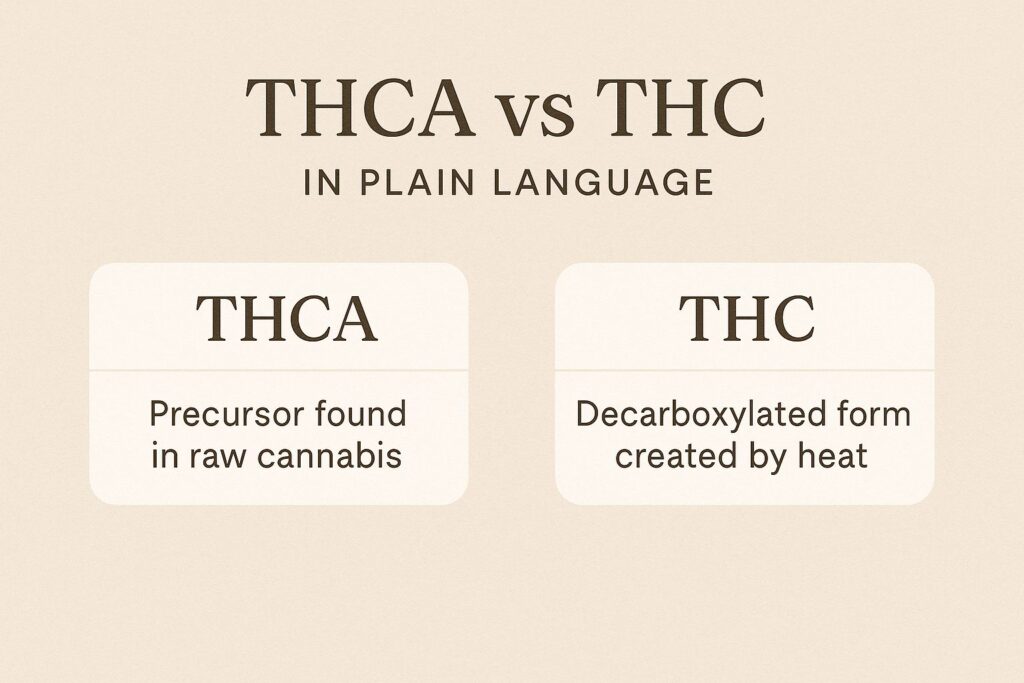
Inside a living cannabis plant, the main psychoactive cannabinoid does not exist as THC. It exists primarily as THCA (tetrahydrocannabinolic acid). THCA has an extra carboxyl group attached to the molecule. When we heat the plant material, that group breaks off in a process called decarboxylation THCA, turning it into THC, the compound associated with the classic weed “high.”
So, in practical terms:
- THCA is the precursor found in raw cannabis.
- THC is the decarboxylated form created by heat or time.
- THCA and THC differences on a label tells you whether the lab measured the acidic form, the active form, or both.
When you see a certificate of analysis listing “THCA 24% and THC 1%,” that does not mean weak weed. Most of that THCA will convert to THC during smoking, vaping, or baking thanks to decarboxylation THCA.
THCA effects vs THC effects
Raw THCA on its own is considered non-intoxicating. When people talk about THCA effects, they’re usually describing experiences from juice, raw flower in smoothies, or unheated oils. Early research suggests THCA may interact with inflammation and nausea pathways, but evidence in humans is limited and still developing.
THC effects, in contrast, are well documented. THC binds strongly to CB1 receptors in the brain and nervous system, which is why THC effects can include euphoria, altered perception, time distortion, increased appetite, and in some people anxiety or paranoia at higher doses.
From my grower’s perspective, THCA vs THC effects can be summarized like this:
- THCA effects: subtle, usually non-intoxicating when product stays raw.
- THC effects: clearly psychoactive once decarboxylation THCA has occurred.
Anytime THCA flower is smoked, dabbed, or baked into brownies, those THCA effects quickly become THC effects, because the heat converts most of the THCA into THC.
Why THCA vs THC Matters From Seed to Harvest
Genetics and cannabis seed selection
Before I even pop seeds, I’m already thinking about THCA and THC differences, because genetics set the ceiling for THC potency and overall cannabinoid profile.
When I’m doing cannabis seed selection for a new run, I look at:
- Breeder lab tests showing typical THCA flower percentages.
- Whether the line is bred for high THC potency, balanced CBD:THC, or minor cannabinoids.
- Photoperiod vs autoflower, and indica/sativa/hybrid structure for my space and climate.
If a strain reliably tests at 25–30% THCA flower under good lighting, it gives me confidence that I can hit potent numbers as long as I don’t mess up environment, feeding, or harvest timing. On the other hand, if I want smoother THC effects or more functional daytime weed, I might intentionally choose genetics that top out around 18–20% THC potency instead of chasing the highest possible numbers.
Some practical tips for cannabis seed selection with THCA and THC differences in mind:
- Read breeder descriptions critically. Look for real data, not just “extreme THC potency.”
- Favor seed lines sourced from reputable seed banks that publish third-party cannabis flower testing.
- Match genetics to your experience level. Autoflowers can be forgiving for beginners but give you less control over veg time.
- Ask yourself whether you really need ultra-high THC potency or whether flavor, stability, and effect profile matter more for your goals.
Environment, nutrition, and THC potency
Genetics loads the gun; environment pulls the trigger. In my rooms, I’ve seen the same clone swing 15–20% in THC potency between a poorly dialed run and a fully optimized one.
Where THCA vs THC is concerned, the plant mostly produces THCA while it’s alive. Environmental stress, light intensity, and feeding all influence how much total THCA the buds can pack in before harvest.
Some ranges that have worked well for me in flower:
- Light intensity: 700–900 µmol/m²/s PPFD at the canopy for photoperiod plants, slightly lower for autoflowers.
- Daytime temperature: 24–28°C (75–82°F).
- Night temperature: 18–22°C (64–72°F).
- Relative humidity: 50–60% early flower, tapering down to 45–50% late flower.
- Root-zone EC: typically 1.6–2.2 depending on medium and strain.
Maintain good airflow and a clean environment to reduce the risk of bud rot or pests. Nothing kills your THCA flower dreams faster than powdery mildew on otherwise perfect colas.
When we keep plants in this sweet spot, cannabinoid synthesis can run at full speed, which means more THCA in the resin glands and, after decarboxylation THCA, stronger THC effects for the final product.
Decarboxylation THCA: Where Chemistry Meets Technique
How decarboxylation works
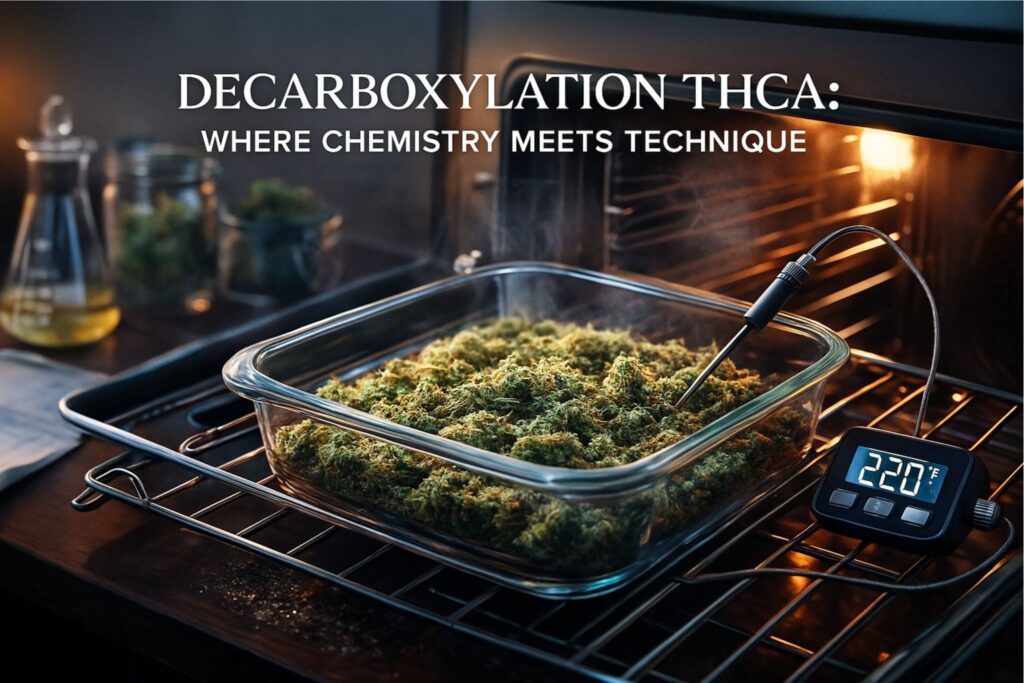
Decarboxylation THCA is the step where growers and home makers often underestimate the details. When we smoke or vape, decarb happens almost instantly with high heat. When we’re making edibles or tinctures, we decarb low and slow.
In the lab, THCA and THC differences is often expressed as “Total THC,” which estimates how much THCA will convert under decarboxylation.
Typical oven decarb ranges many home growers use:
- 105–115°C (221–239°F) for 40–60 minutes for gently decarboxylation THCA.
- Stirring halfway through to expose fresh surface area.
Each setup is different, and overshooting temperatures for too long can degrade THC into CBN, flattening THC effects. I always err on the lower end and extend time if needed.
Why decarboxylation matters for growers
As a cultivator, I plan for decarboxylation THCA from the moment I see cloudy trichomes:
- I harvest at peak resin production, when most heads are cloudy with some amber.
- I dry slowly at around 18–20°C (64–68°F) and 55–60% relative humidity for 10–14 days.
- I cure in sealed jars, burping daily the first week, then weekly.
This slow process allows a small amount of natural decarboxylation THCA over time, but the majority still happens when the consumer uses heat. Understanding the timing helps me set expectations when I share jars with friends: the weed will likely feel a little stronger after a good cure than it did right off the line.
THCA Effects vs THC Effects in Real Use
Does THCA get you high?
A common search query is “does THCA get you high?” The honest answer:
- Raw THCA in unheated form is not considered intoxicating based on current understanding.
- Once THCA is heated, the new THC effects are what people feel, not THCA effects.
So, if someone buys THCA flower marketed as “hemp,” rolls it into a joint, and smokes it, they should expect THC effects similar to regular marijuana, because most of the THCA has decarboxylated.
Raw cannabis benefits and limitations
Some people are interested in raw cannabis benefits, adding fresh leaves or unfired flower to smoothies or juice. From my grower’s viewpoint, here’s what to keep in mind:
- Raw cannabis benefits are still being studied; most claims are theoretical or based on early data.
- THCA effects in this context are usually described as clear-headed and non-intoxicating.
- Hygiene matters. Raw plant material can carry microbes, so I always wash leaves and avoid any material with visible mold or pests.
I personally enjoy raw cannabis benefits in moderation, but I never position them as medical treatment. It is simply another way to explore full spectrum cannabinoids from the same plant.
Balancing THC effects for different users
When I share flower, I pay attention to THC effects across experience levels:
- New users: I lean toward strains with moderate THC potency, rich terpenes, and smoother effects.
- Veterans: They may enjoy higher THC potency and more intense THCA flower, but I still recommend starting with small amounts of a new batch.
- Sensitive users: Some report fewer side effects when mixing THC-dominant flower with CBD-rich material.
Again, this is not medical advice, just practical etiquette from years of watching how different people respond to THC effects.
Lab Reports, Labels, and Cannabis Flower Testing
Reading THCA vs THC on a COA
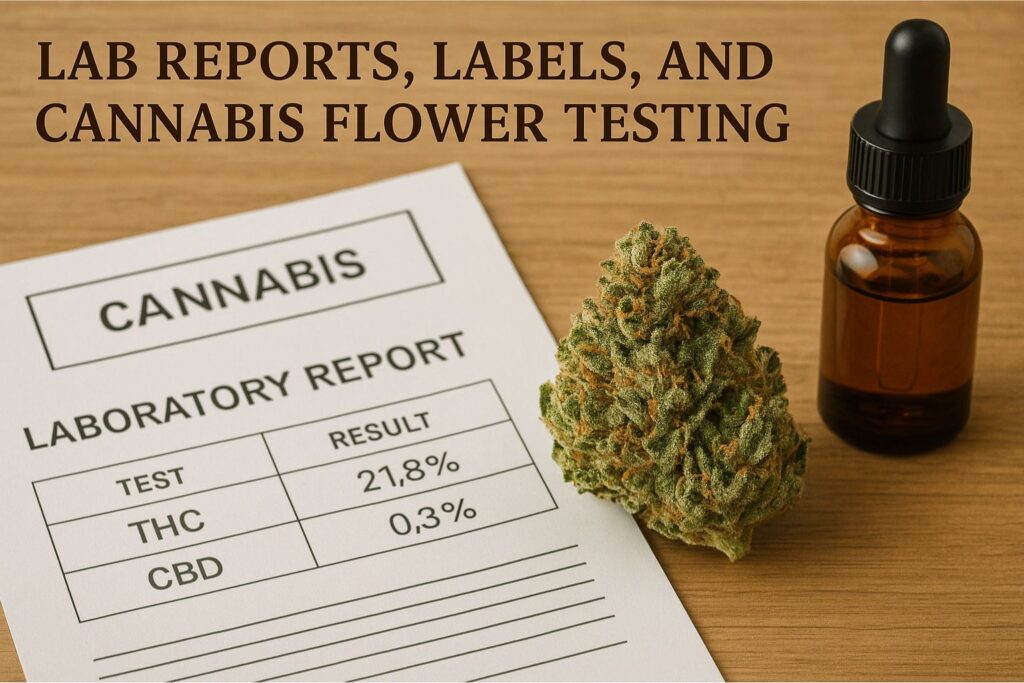
Modern cannabis flower testing typically reports:
- THCA percentage
- THC percentage
- Total THC (a calculated value)
- Other cannabinoids like CBD, CBG, CBN
- Terpene profile
Because THCA vs THC changes with heat, “Total THC” gives a better sense of the potential THC potency once decarboxylation THCA occurs. Many regulated markets now require labels based on total THC, not just delta-9 THC.
When I send flower to a lab, I use those cannabis flower testing results to:
- Compare phenotypes during selection.
- Verify breeder claims for THC potency.
- Check for contaminants like pesticides, heavy metals, and mold.
I encourage buyers to ask for cannabis flower testing where possible, especially for THCA flower purchased online. Transparency builds trust and helps ensure the product matches expectations for THCA effects and THC effects.
Full spectrum cannabinoids and effect nuance
Another phrase you’ll see on labels is “full spectrum cannabinoids.” This means the product intentionally preserves multiple cannabinoids and terpenes rather than isolating just THC.
In my grows, I chase full spectrum cannabinoids by:
- Avoiding excessive heat during drying.
- Keeping curing jars cool and dark.
- Handling buds gently to protect trichomes.
While some consumers focus only on THC potency, many of us find that full spectrum cannabinoids, combined with terpenes like myrcene, limonene, and linalool, create richer, more nuanced THC effects.
Hemp-Derived THCA, Legal Shifts, and Regional Considerations
The rise of hemp-derived THCA
Over the past few years, hemp-derived THCA flower exploded onto the market. Companies leaned on the 2018 Farm Bill definition of hemp as cannabis with less than 0.3% delta-9 THC by dry weight, arguing that high-THCA flower stayed legal as long as tested delta-9 remained under the limit, even if decarboxylation THCA would clearly create intoxicating THC.
Shoppers saw hemp-derived THCA offered online and in convenience stores, often shipped across state lines, blurring the line between legal hemp and state-legal marijuana.
Regulatory tightening
Regulators have been moving toward counting total THC, including THCA, and restricting hemp-derived THCA products that are effectively psychoactive. Recent Farm Bill drafts and federal guidance propose redefining hemp based on total THC and excluding certain synthetically altered cannabinoids.
For growers and consumers, this means:
- The status of hemp-derived THCA is in flux and varies widely between jurisdictions.
- A product that is legal one season might not be legal the next.
- Any discussion of THCA vs THC legality must be local and up to date.
I always advise friends and readers to check current regional laws themselves or consult qualified legal counsel before buying, selling, or shipping hemp-derived THCA or THC products. This article is for educational purposes only.
Regional climate and cultivation
Legal questions aside, regional climate also shapes THCA vs THC outcomes for outdoor growers:
- Hot, intense sun regions can push massive resin production but also increase risk of heat stress and foxtailing.
- Cooler, shorter seasons may limit THC potency if plants cannot fully ripen.
- High humidity regions demand extra vigilance against botrytis and mildew, which can destroy THCA flower right before harvest.
Matching genetics and cultivation style to your geography is just as important as staying aligned with local laws.
Practical Grower Tips: Finalizing Effects With Harvest, Drying, and Curing
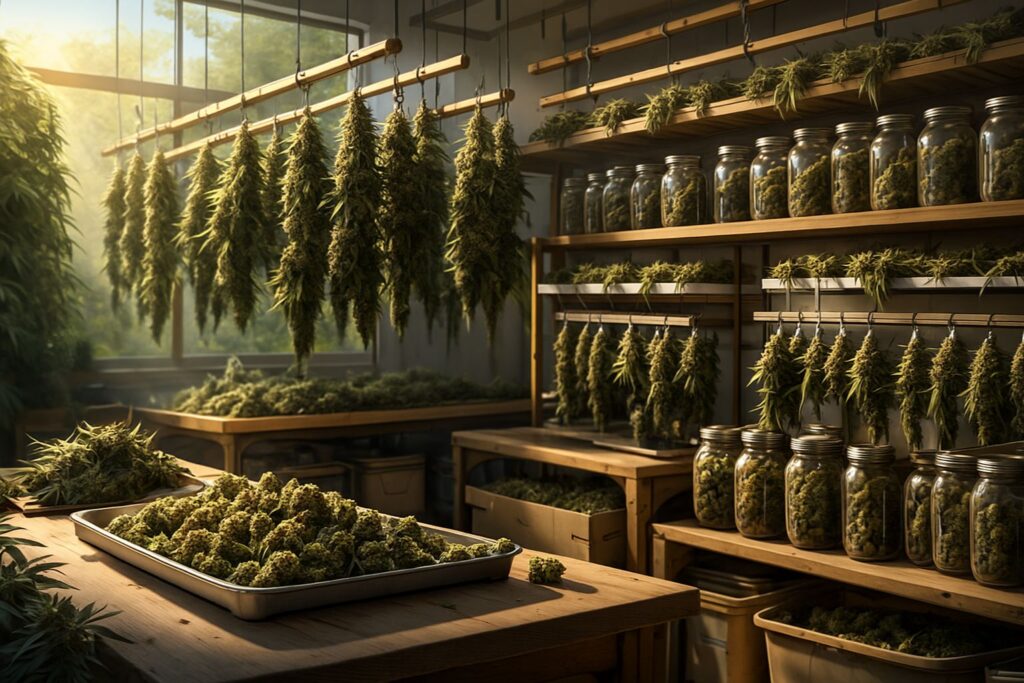
In my experience, the last 10–20 percent of perceived THC effects comes from what happens after the chop.
- Watch trichomes, not just calendar days.
I use a jeweler’s loupe or macro lens. For most balanced THC effects, I harvest when trichomes are mostly cloudy with roughly 10–20 percent amber. - Trim hygiene.
Keep scissors clean, wear gloves, and separate any moldy or damaged buds. Contaminated material can affect both flavor and cannabis flower testing results. - Slow dry, never rush.
- 18–20°C (64–68°F)
- 55–60% relative humidity
- Gentle air movement, not directly blasting buds This slow dry preserves terpenes and supports a smooth decarboxylation THCA curve over time.
- Cure for at least four weeks.
I jar buds once small stems snap, then burp jars daily for the first week, every few days for the second week, and weekly after that. Over this period, chlorophyll breaks down, moisture equalizes, and THC effects become rounder and less edgy. - Track your results.
A simple log of strain, environment, and perceived THCA effects or THC effects helps you refine future runs. When possible, pair that with lab-based cannabis flower testing for objective data on THC potency and other full spectrum cannabinoids.
Beginner’s Corner: Start Clean, Stay Curious
If you’re new to growing or just starting to explore THCA vs THC, here is a simple framework that has served my students well.
- Start clean
- Use quality feminized seeds from a trusted bank with good cannabis seed selection.
- Clean your tent, tools, and intake filters before each run.
- Keep a basic integrated pest management routine to avoid mites and mildew.
- Learn the basics before chasing exotic THCA flower
- Master watering, proper pot size, and simple dry nutrient schedules.
- Get comfortable reading leaves for deficiencies instead of overreacting to every yellow tip.
- Stay curious
- Try one new strain or method per run while keeping others consistent.
- Compare THCA vs THC numbers from cannabis flower testing on different phenotypes.
- Experiment with raw cannabis benefits, edibles, and classic flower to understand how decarboxylation THCA changes the experience.
- Respect the plant and the law
- Never assume hemp-derived THCA products are automatically legal.
- Be honest with yourself about how THC effects fit into your lifestyle and responsibilities.
Curiosity, good records, and small, thoughtful experiments will teach you more about THCA effects and THC effects than any single article ever could.
FAQ: Common Questions About THCA vs THC
Does THCA show up on a drug test?
Most standard tests look for THC metabolites, not THCA directly. However, because smoking or vaping THCA flower converts it to THC, regular use is likely to produce the same positive results as traditional marijuana. Even some raw cannabis benefits routines may carry risk if enough THCA decarboxylates in the body or during processing. When employment or legal consequences are on the line, it is safest to assume THC effects on testing outcomes.
Is THCA legal in my state or country?
The legality of hemp-derived THCA varies and is changing quickly as lawmakers reconsider total THC rather than just delta-9 THC. Some states restrict or ban intoxicating hemp products outright, while others still allow them. Federal proposals in the United States aim to narrow or close the previous loopholes. Always check current local regulations or consult a legal professional; this article cannot provide legal advice.
What is THCA flower?
THCA flower is cannabis flower marketed on its THCA content rather than THC, sometimes sold as hemp if it meets delta-9 limits at testing. Once heated, THCA flower produces regular THC effects, so from a user’s perspective it behaves much like traditional high-THC cannabis. For growers, THCA flower simply reflects high THCA levels in the resin glands right before and after harvest.
Is raw cannabis better than smoked weed?
Raw cannabis benefits and smoked weed experiences are different rather than better or worse. Raw preparations emphasize THCA effects without intoxication, while smoked or vaped cannabis relies on decarboxylation THCA to deliver THC effects. Which is preferable depends on personal goals, tolerance, and legal context. In any case, quality cultivation, careful curing, and clean inputs matter for both.
How can I choose seeds if I care about THCA vs THC?
Focus your cannabis seed selection on trusted breeders and clear lab data. Look for lines with consistent THC potency, terpene profiles you enjoy, and full spectrum cannabinoids that match your preferences. Decide whether you prefer heavy, sedating THC effects, more uplifting daytime highs, or balanced CBD options. Whenever possible, review cannabis flower testing for parent plants or previous runs before committing to a new pack.
THCA vs THC is more than a buzzword battle. It is a lens that lets growers, shoppers, and policy makers see how chemistry, cultivation, and regulation intersect. Whether you are picking your first pack of seeds or refining your tenth indoor run, understanding THCA effects, THC effects, and the role of decarboxylation THCA will help you grow and choose cannabis that fits your climate, your values, and your comfort level.
As growers, our job is not only to maximize THC potency but to cultivate plants honestly, transparently, and responsibly. When we respect both the power of the plant and the people who use it, everyone benefits from a more informed and trustworthy cannabis culture.
