Why Terpenes In Cannabis Matter So Much To Me
When I first started growing, I chased numbers: THC percentage, grams per watt, yield per square foot. The more runs I did, the more I realized that what actually stuck with people was how the weed smelled and tasted. The best jars were always the ones with loud terpenes in cannabis, not just high potency.
Over time, I stopped thinking only about “strong weed” and started thinking about cannabis terpene profiles. I wanted lemon and pine, heavy gas, or floral dessert notes that you can smell through the bag. I also wanted that flavor to survive drying, curing, and storage. That shift completely changed how I plan my grows.
Now, every decision I make—seed selection, indoor lighting, nutrients, harvest timing, and curing cannabis for terpenes—is filtered through one question: will this help or hurt the terpenes in cannabis I am trying to express?
What Terpenes Actually Are
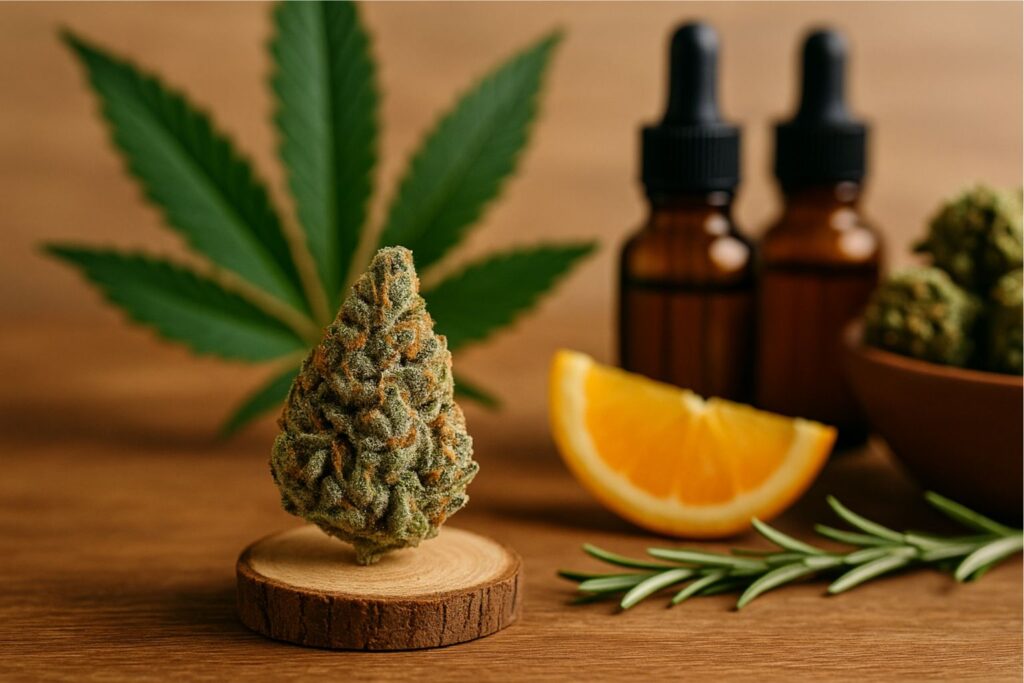
Terpenes are aromatic compounds that plants use for communication and defense. Terpenes in cannabis are produced in the same trichomes that hold cannabinoids. When you crack open a bud and the room fills with citrus, fuel, or lavender, you are experiencing cannabis terpene profiles at work.
Terpenes are volatile, which means they evaporate easily. Heat, light, and oxygen all break them down. That is why the choices we make as growers—like canopy temperature, indoor lighting distance, and how aggressively we dry—have such a huge impact on terpenes in cannabis by the time it reaches the grinder.
Researchers are still studying terpenes and THC together, but from a grower’s perspective I know this: weed that smells complex tends to smoke more pleasantly, even when potency is moderate. That is why I put terpenes in cannabis at the center of my strategy instead of treating them as a side effect.
Key Terpenes I Look For In Cannabis Terpene Profiles
Myrcene in weed
In many gardens, myrcene in weed shows up more than any other terpene. It has an earthy, musky, sometimes mango-like aroma. When I smell strong myrcene in weed, I usually think of classic indica-leaning cultivars and heavy evening sessions.
From a cultivation standpoint, myrcene in weed seems most pronounced when plants are kept healthy and stress is moderate. Long-term heat stress can flatten the profile, turning subtle fruit notes into dull earth. When I build cannabis terpene profiles around myrcene in weed, I avoid overfeeding nitrogen late in flower and keep canopy temps in a comfortable range.
Limonene cannabis strains
Lemon, orange, and bright candy notes usually point to limonene cannabis strains. These are the jars my friends reach for when they want something uplifting and flavorful. I have noticed that limonene cannabis strains do best with strong but not excessive light: enough PPFD to build dense buds without bleaching the tops.
To highlight limonene cannabis strains, I:
- Keep humidity a bit higher early in flower, then taper gradually.
- Avoid letting the medium completely dry out, which can stress roots and flatten citrus notes.
- Harvest on time—overripe limonene cannabis strains can lose that sharp, soda-pop peel smell.
Pinene rich marijuana
When a jar smells like a forest after rain, you are probably holding pinene rich marijuana. Pinene comes in alpha and beta forms, but as a grower I just recognize that piney, sometimes herbal scent that cuts through other terpenes.
Pinene rich marijuana often appears in outdoor crops with good airflow and moderate temperatures. Indoors, I keep plenty of fresh air moving across the canopy. Stale, humid environments seem to mute pinene rich marijuana over time, especially close to harvest.
I like to mix pinene rich marijuana with fuel-heavy cuts in joints to create layered cannabis terpene profiles that feel cleaner on the nose.
Linalool cannabis aroma
Linalool cannabis aroma reminds me of lavender, soft flowers, and sometimes a hint of spice. It tends to show up in hybrids with complex backgrounds, and it often hides under louder terpenes. When I really dial in a run and curing cannabis for terpenes goes perfectly, that gentle linalool cannabis aroma rises up in the jar after a week or two of cure.
Linalool cannabis aroma is delicate, so it is one of the first things lost if I dry too hot or burp jars too aggressively. When I specifically want to preserve linalool cannabis aroma, I:
- Keep dry room temps around 18–21°C with 55–60% humidity.
- Use whole-plant or large-branch hangs instead of small bud racks.
- Limit handling once buds are trimmed.
Terpenes And THC: How They Fit Together

There is a lot of talk online about terpenes and THC being responsible for different types of experiences. I stay away from medical claims, but as a grower and consumer I can say this: terpenes and THC definitely shape how we perceive cannabis.
From a cultivation angle, terpenes and THC are linked because they share the same real estate: trichomes. Dense, healthy trichomes usually mean strong terpenes and THC. When I see cloudy heads under a loupe and smell complex aromas, I know I am close to the sweet spot.
Some practical things I do to support terpenes and THC together:
- Keep VPD in a reasonable range during flower so plants transpire steadily and do not stress.
- Avoid late heavy defoliation that can shock plants during peak terpene production.
- Use full-spectrum indoor lighting that supports both cannabinoid and terpene synthesis.
When you craft your environment with terpenes and THC in mind, you end up with jars that are not just strong, but memorable.
Growing Weed For Flavor: My Core Approach
I used to grow weed mainly for potency. These days, growing weed for flavor is my main hobby. Everything else—yield, numbers—follows from getting flavor right.
For me, growing weed for flavor means:
- Choosing cultivars with interesting cannabis terpene profiles, not just high THC percentages.
- Keeping nutrients modest. Overfed plants often taste “hot” or chemically, no matter their terpene potential.
- Managing environment for comfort rather than extremes.
In veg, growing weed for flavor starts with strong roots and even growth. Plants that are constantly stressed early on rarely finish with stunning terpenes in cannabis. I keep EC in a moderate range, focus on microbial health in the rhizosphere, and use training methods (topping, LST, scrog) that create even canopies for more balanced indoor lighting.
In flower, growing weed for flavor means resisting the urge to push nutrients to the limit. A little leaf tip burn might not kill a plant, but it often muddies delicate cannabis terpene profiles.
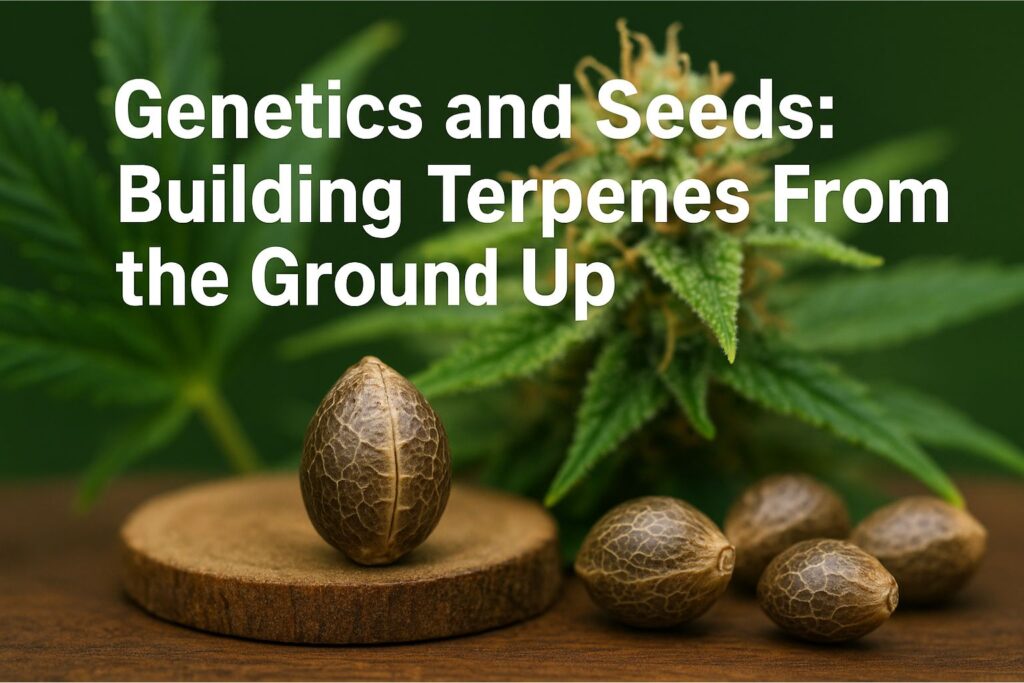
Genetics And Seeds: Building Terpenes From The Ground Up
Feminized terpene-rich seeds
You cannot have great cannabis terpene profiles without good genetics. For most of my main runs I use feminized terpene-rich seeds from reputable breeders. Feminized terpene-rich seeds let me fill a tent with females that all have a shot at expressing top-notch terpenes in cannabis without hunting through piles of males.
When I shop for feminized terpene-rich seeds, I look for:
- Detailed aroma descriptions, not generic “dank” labels.
- Grower reviews mentioning flavor after cure.
- Photos and notes showing whether plants tend toward myrcene in weed, limonene cannabis strains, or pinene rich marijuana.
Running feminized terpene-rich seeds also simplifies canopy management. I can plan my layout knowing that every pot is a candidate for jars, concentrates, or long-term storage. That makes it easier to commit fully to growing weed for flavor instead of just chasing volume.
I keep notes every time I pop new feminized terpene-rich seeds: how they smell in veg, how terpenes in cannabis develop through flower, and how the cured buds do over time.
Autoflower terpene strains
Autoflowers used to have a reputation for mediocre taste. Modern autoflower terpene strains changed my mind. I now run autoflower terpene strains outdoors in short seasons and indoors between bigger photoperiod cycles.
Autoflower terpene strains need a bit more attention early on. Because they move into flower so quickly, any early stress can rob them of their full cannabis terpene profiles. With autoflower terpene strains, I:
- Plant directly into final containers to avoid transplant stress.
- Provide gentle but consistent indoor lighting from day one.
- Keep nutrients light to moderate, focusing on root health.
Good autoflower terpene strains can compete with photoperiods when it comes to limonene cannabis strains and pinene rich marijuana. They are also a great way for new growers to learn about terpenes in cannabis without committing to long veg times.
Environment, Lighting, And Terpene Preservation
Indoor cannabis lighting
Indoor cannabis lighting is one of the biggest levers we have for terpene expression. I run full-spectrum LEDs in the 600–900 µmol/m²/s PPFD range for most of flower, adjusting intensity based on strain and plant response.
If indoor cannabis lighting is too weak, buds stay airy and cannabis terpene profiles never fully develop. If indoor cannabis lighting is too strong or hung too close, tops can bleach and terpenes in cannabis literally evaporate off before harvest.
Some rules I follow:
- Measure PPFD at canopy height rather than guessing.
- Gradually ramp intensity instead of making big jumps overnight.
- Keep canopy temps in check; powerful indoor cannabis lighting can heat leaf surfaces well above room temperature.
Outdoor conditions
Outdoors, I have less control, but I can still steer autumn cannabis colors and flavor. In my climate, late-summer and early-fall conditions are ideal for building terpenes in cannabis: bright sun, cool nights, and gentle breezes.
When planning outdoor marijuana grows around terpene expression, I:
- Place plants where they get morning sun to dry dew quickly, reducing mold risk.
- Use windbreaks to prevent damage without blocking all airflow.
- Time sowing and transplanting so that autoflower terpene strains and feminized terpene-rich seeds finish before heavy fall rains.
Outdoors, you often get outrageous pinene rich marijuana and complex mixed profiles that are hard to replicate under LEDs.
Harvesting And Curing Cannabis For Terpenes
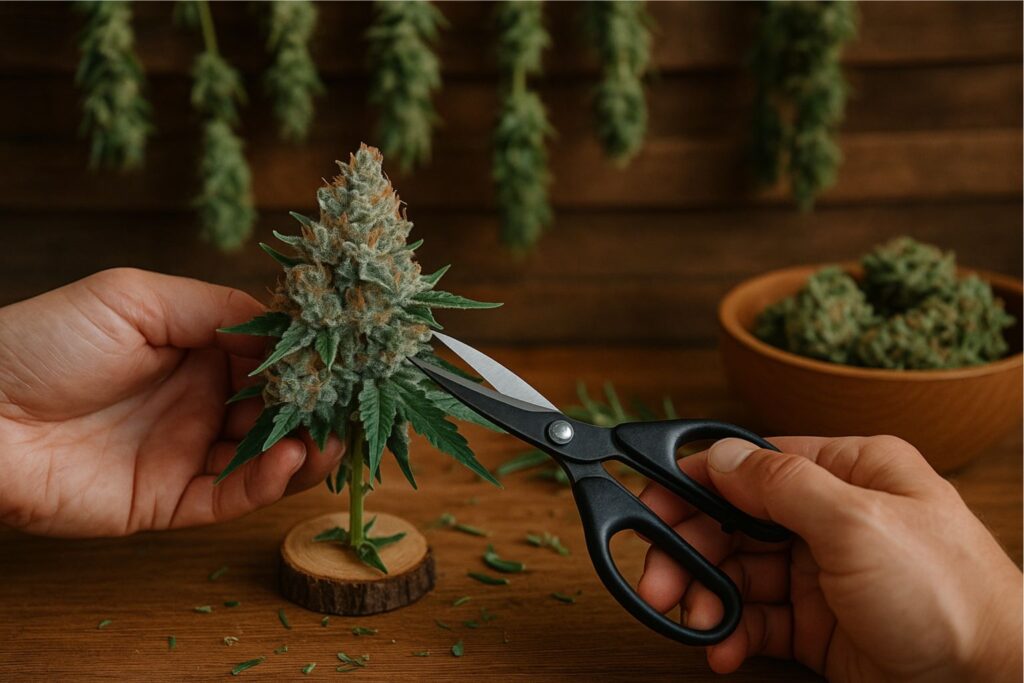
Timing the chop
No amount of curing cannabis for terpenes can fix buds harvested way too early or far too late. I start checking trichomes once pistils are mostly curled and coloration deepens. For most cultivars, I aim for mostly cloudy with a sprinkle of amber.
During this window:
- Terpenes in cannabis are near their peak.
- Cannabis terpene profiles are well formed but not yet heavily oxidized.
- The plant has usually started a gentle fade, showing natural senescence.
If I wait until everything is deep amber, some terpenes, especially limonene cannabis strains and linalool cannabis aroma, can dull noticeably.
Drying: the first step in curing cannabis for terpenes
Drying is where most growers accidentally erase half their work. Curing cannabis for terpenes starts the minute plants are cut.
My drying guidelines:
- 18–21°C temperature, 50–60% humidity, low but constant airflow.
- No direct fans blowing on buds.
- Dark room to protect terpenes and THC from light.
I prefer hanging whole branches or whole plants when I am curing cannabis for terpenes on small-batch, high-quality runs. The extra plant material slows the dry, which helps preserve linalool cannabis aroma and other delicate compounds.
Jar cure and long-term storage
Once small stems snap instead of bend, buds go into jars or my preferred storage containers. The actual curing cannabis for terpenes process happens as moisture equalizes and aromatics stabilize.
To protect terpenes in cannabis during cure, I:
- Use airtight containers that do not smell like plastic or off-gas odors.
- Burp daily for the first week, then less often, watching for humidity in the 58–62% range.
- Keep jars in a cool, dark place—heat is the enemy of complex cannabis terpene profiles.
After three to four weeks, the difference is obvious. Myrcene in weed becomes rounder, limonene cannabis strains smell like fresh peel instead of raw zest, and the subtle linalool cannabis aroma layers into the background instead of disappearing.
Consumption Habits That Respect Terpenes In Cannabis
After all that work, how you consume matters. A scorching-hot joint or red-hot banger will burn off terpenes in cannabis before you taste them.
Some simple habits I use:
- Grind gently and only what I am about to use. Over-grinding releases terpenes from trichomes too early.
- Store jars closed between sessions; do not leave them open on the table for hours.
- Use clean glass, not resin-caked pipes, to really appreciate cannabis terpene profiles.
For people who love growing weed for flavor, a small, temperature-controlled vaporizer can showcase myrcene in weed, pinene rich marijuana, and limonene cannabis strains in a way combustion sometimes hides.
FAQ: Terpenes In Cannabis And Weed
What are terpenes in cannabis, in simple terms?
Terpenes in cannabis are aromatic compounds produced in the plant’s trichomes. Together they form cannabis terpene profiles that give each strain its unique scent and flavor, from citrusy limonene cannabis strains to forest-like pinene rich marijuana or floral linalool cannabis aroma.
Do terpenes and THC change how a strain feels?
Many people believe terpenes and THC together shape how a strain is experienced, but responses vary from person to person. As a grower, I focus on making sure terpenes and THC are both well developed by using good genetics like feminized terpene-rich seeds or autoflower terpene strains, then harvesting and curing carefully.
How can I grow weed with stronger flavor at home?
Start by choosing feminized terpene-rich seeds or autoflower terpene strains known for strong cannabis terpene profiles. Keep your environment stable, avoid overfeeding, and pay special attention to drying and curing cannabis for terpenes. Growing weed for flavor means protecting terpenes in cannabis from excess heat, light, and rough handling at every stage.
When I walk into my dry room and the air smells like a mix of mango, lemon cleaner, pine forest, and wildflowers, I know the plan worked. At that point, yield is just a bonus. The real victory is opening a jar months later and finding that the terpenes in cannabis I worked so hard to grow are still right there, ready to meet me as soon as I crack the lid.
