Table of Contents
The Strawberry cannabis strain is a sativa-dominant hybrid known for its sweet berry aroma and uplifting cerebral effects. Often associated with clear-headed euphoria, creativity, and mood elevation, this strain has gained popularity for both recreational enjoyment and specific medical applications. Despite its fruity name and scent, Strawberry offers more than just flavor — its chemistry reflects a complex interplay between cannabinoids and terpenes that contribute to its effects.
Lineage and Genetics
The precise genetic lineage of Strawberry remains somewhat elusive, as it is a name used across several different cuts and phenotypes. However, one of the most recognized versions is:
- Strawberry (Original Swiss Sativa) – Originally bred in the Netherlands, this phenotype exhibits strong sativa traits, including tall growth and energetic effects. This version was cultivated for its flavor and cerebral high.
It has also appeared as a parent in multiple hybrid strains (e.g., Strawberry Cough, Strawberry Diesel, and Strawberry Banana), further complicating its lineage.
Morphology and Growth Characteristics
I. Genetic and Phenotypic Considerations
Strawberry is a sativa-dominant hybrid, typically 70% sativa and 30% indica. This determines several key growth characteristics:
- Tall structure with long internodal spacing
- Long flowering period (typically 9–10 weeks)
- Highly responsive to environmental cues, especially light and nutrients
- Moderately sensitive to stress, meaning training must be balanced
Importantly, it tends to express a complex terpene profile, including myrcene, limonene, and pinene, that can be easily degraded or underdeveloped if not properly nurtured.
II. Propagation Techniques
A. Seeds vs. Clones
- Seeds: More phenotypic variation, potential for vigorous taproot growth, but risk of genetic drift and inconsistent terpene profiles.
- Clones: Ensure uniform terpene and cannabinoid expression if taken from a stable mother plant. Preferred for commercial and terpene-sensitive grows.
B. Germination Best Practices
- Use sterile, moist paper towels or rockwool cubes
- Maintain temperature between 21–26°C (70–78°F)
- pH range for early-stage rooting medium: 5.8–6.2
- Rooting hormones (e.g., IBA) can be applied to clones to accelerate rooting
III. Environmental Control: Light, Temp, RH
A. Lighting Requirements
Strawberry thrives under intense lighting, particularly during flower:
- Vegetative phase: 18/6 light cycle; PPFD ~400–600 μmol/m²/s
- Flowering phase: 12/12 cycle; PPFD ~800–1000 μmol/m²/s
- Spectrum: Full-spectrum white light or enhanced red for bloom (660nm boosts anthocyanin expression, helpful for color and flavor)
Insufficient lighting leads to stretchy, low-resin plants with poor terpene development.
B. Temperature and Humidity
| Growth Stage | Temp (Day/Night) | RH (%) |
|---|---|---|
| Seedling | 24–26°C / 20°C | 65–75% |
| Vegetative | 22–28°C / 18–22°C | 55–65% |
| Flowering Weeks 1–5 | 22–26°C / 17–21°C | 45–55% |
| Flowering Weeks 6–10 | 20–24°C / 16–20°C | 35–45% |
| Late Flower / Ripening | 18–22°C / 15–18°C | 30–40% |
Lowering temperature in late flower enhances terpene retention and anthocyanin production, especially limonene and pinene.
IV. Media and Root Zone Science
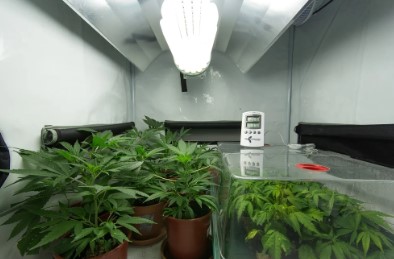
A. Preferred Media
Strawberry performs well in:
- Coco coir/perlite blends (60/40): Excellent aeration and nutrient control
- Living organic soil: Enhances terpene complexity but slower nutrient response
- Hydroponics (e.g., DWC or drip systems): Maximize cannabinoid yield but require precise control
B. Root Zone Optimization
- pH: 5.8–6.3 (hydro); 6.0–6.5 (soil)
- EC/PPM:
- Veg: EC 1.2–1.8
- Early flower: EC 1.8–2.0
- Late flower: EC 2.0–2.2
Regular flushes with enzyme-rich solutions prevent salt buildup and support terpene clarity.
V. Nutrient Strategy
A. Nutrient Schedule
| Phase | N–P–K Ratio (Ideal) | Micronutrients Needed |
|---|---|---|
| Vegetative | 3–1–2 | Mg, Ca, Fe, Mn, B |
| Transition | 2–2–2 | Increase phosphorus for flowering sites |
| Flowering | 1–3–2 | Add sulfur for terpene synthesis |
| Ripening | 0–3–3 | Maintain P/K, reduce N |
B. Enhancers for Terpenes and Cannabinoids
- Sulfur and magnesium critical for terpene synthesis enzymes (especially limonene synthase)
- Amino acid supplements (especially L-tryptophan and cysteine) can enhance flavor expression
- Molasses or carbohydrate sources in late flower stimulate beneficial microbes and terpene retention
VI. Plant Training and Canopy Control
A. Pruning and Topping
- Topping during veg (week 3–4) encourages horizontal branching
- Lollipopping (removing lower bud sites) improves airflow and resin development in upper canopy
B. Training Methods
- Low-Stress Training (LST): Bending to flatten canopy — improves light penetration and prevents vertical stretching
- Screen of Green (ScrOG): Ideal due to Strawberry’s sativa stretch; maximizes light efficiency
- Avoid high-stress techniques like supercropping during flowering, as this strain is moderately stress-sensitive
VII. Pest and Disease Control
A. Common Threats
- Powdery mildew: High RH and poor airflow promote it — keep RH < 50% during flowering
- Fungus gnats and thrips: Especially in coco or soil
- Spider mites: Prone in warm, dry conditions
B. Integrated Pest Management (IPM)
- Neem oil in veg (not flower)
- Beneficial insects: Predatory mites (Phytoseiulus), lacewings
- Soil drenches with BTI (Bacillus thuringiensis israelensis) to prevent gnat larvae
- Weekly foliar sprays (e.g., potassium bicarbonate or lactobacillus solutions) during veg phase
VIII. Terpene Preservation and Enhancement
Strawberry’s appeal lies in its high limonene, myrcene, and pinene levels, all of which are volatile and heat-sensitive.
Key Terpene Preservation Tactics
- Harvest Timing: Late in week 9 when trichomes are mostly cloudy with a few amber – early harvest loses limonene; late harvest loses pinene
- Flush for 10–14 days** to remove salt buildup, which can dull flavor
- Slow Drying: 10–14 days at 18–21°C, 50–60% RH, in darkness — rapid drying destroys limonene and pinene
- Curing: Glass jars, burped daily for 2–3 weeks; full flavor develops after ~30–40 days
IX. Yield, Potency, and Testing Data
Yield Potential
- Indoor: 400–500g/m² with ScrOG
- Outdoor: Up to 600g/plant in optimal conditions
Potency
- THC: 16–22%
- Terpenes: 1.5–2.5% total terpene content in well-grown plants
Lab-grown plants in ideal environments consistently show:
- Limonene: 0.4–0.8%
- Myrcene: 0.3–0.6%
- Pinene: 0.1–0.4%
- Caryophyllene: 0.2–0.5%
X. Cultivation Outcomes and Influence on Effects
Environmental Influence on Effects
- High light + optimal K/S levels = enhanced euphoria and mood uplift
- Suboptimal nutrients or stress = “flat” or muted flavor and more anxiety-prone high
- Terpene degradation = less focus-enhancing, more stoney or generic sativa experience
Summary: Key Takeaways for Cultivating Strawberry
| Factor | Optimal Practice |
|---|---|
| Lighting | High-PPFD full-spectrum; red-enhanced bloom lighting |
| Media | Coco/perlite or living soil with microbial diversity |
| Nutrients | Sulfur, Mg, K-focused bloom feeding; clean water |
| Training | LST + ScrOG; avoid high-stress in flower |
| Pest Management | Preventive IPM + beneficial predators |
| Terpene Preservation | Slow dry/cure, harvest at full trichome cloudiness |
| Environment | Cool, low-RH finish enhances limonene/pinene retention |
IV. Cannabinoid Profile
Strawberry’s potency typically ranges from 15% to 22% THC, with negligible CBD. Here’s a breakdown of the common cannabinoid levels:
| Cannabinoid | Typical % by Weight |
|---|---|
| THC | 16–22% |
| CBD | <1% |
| CBG | 0.3–1% |
| CBC | 0.2–0.5% |
| THCV | 0.2–0.6% |
The dominance of THC means the strain delivers pronounced psychoactive effects, while trace amounts of THCV and CBG may contribute to alertness and neuroprotection.
Terpene Profile and Aroma
Strawberry gets its name from its sweet berry-like aroma, primarily driven by its terpene content.
Dominant Terpenes:
- Myrcene – Sedating, muscle-relaxing, earthy-fruity aroma
- Limonene – Uplifting, anti-anxiety, citrusy notes
- Pinene – Alertness, memory-enhancement, pine scent
- Caryophyllene – Anti-inflammatory, stress relief, spicy undertone
- Terpinolene (trace) – Floral and complex; associated with energetic effects
| Terpene | Effect Contribution | Aroma/Flavor |
|---|---|---|
| Myrcene | Calming, mildly sedative | Earthy, musky, fruity |
| Limonene | Anti-anxiety, mood-lifting | Citrus, sweet |
| Pinene | Mental clarity, anti-inflammatory | Pine, herbal |
| Caryophyllene | Pain relief, stress-reducing | Peppery, woody |
The strawberry-like aroma comes from a synergy between limonene, myrcene, and terpinolene, mimicking fruity esters found in actual berries.
Recreational Uses and Psychoactive Effects
Strawberry is beloved for its uplifting cerebral high and minimal physical sedation, making it ideal for daytime use or creative sessions.
A. Onset and Duration
- Onset: 5–15 minutes (smoking/vaping), 30–90 minutes (edibles)
- Duration: 2–3 hours (inhaled), 4–6+ hours (edibles)
B. Common Recreational Effects
- Mood Elevation: Rapid sense of happiness and euphoria
- Creativity Boost: Users report enhanced artistic or divergent thinking
- Sociability: Engaging and talkative, good for social settings
- Energy: Mild stimulation without jitteriness
C. Ideal Settings for Use
- Daytime outdoor activities
- Creative work or brainstorming
- Social gatherings and light parties
- Mood enhancement on low days
Medical Uses and Mechanisms
While primarily a recreational strain, Strawberry provides notable therapeutic benefits due to its THC-rich, terpene-modulated profile.
- THC: 16–22%
- CBD: <1%
- Dominant Terpenes: Limonene, Myrcene, Pinene, Caryophyllene
Its primary medical appeal lies in its:
- Mood-enhancing and anxiolytic effects
- Cognitive clarity without sedation
- Mild analgesic and anti-inflammatory properties
- Potential neuroprotective benefits
Mood Disorders and Depression
Clinical Relevance
Strawberry is frequently used for depression, dysthymia, and anhedonia due to its euphoric, energizing effect. Unlike heavy indicas, it does not cause lethargy or emotional flattening.

Mechanisms of Action
- THC → CB1 receptor agonism in the ventral tegmental area (VTA) and nucleus accumbens, triggering dopamine release, which is key in mood elevation and reward sensitivity.
- Limonene → serotonergic modulation, increasing serotonin availability and mimicking the action of SSRIs in a mild, short-acting way.
- CBG (Cannabigerol) present in trace amounts may potentiate antidepressant-like effects through alpha-2 adrenoceptor interactions and 5-HT1A receptor activation.
Supporting Evidence
- A 2020 study in Frontiers in Psychiatry showed high-THC sativa strains were associated with rapid, short-term improvement in mood in cannabis-using patients with depressive symptoms.
- Limonene has been shown in animal models to reduce immobility time in the forced swim test — a benchmark for antidepressant effects.
Anxiety and Stress Disorders
Clinical Applications
Strawberry may be suitable for situational anxiety, performance anxiety, and stress-related agitation due to its mood-lifting and clear-headed effects, though it’s not ideal for panic-prone individuals.
Mechanisms of Action
- Limonene: Activates adenosine A2A receptors and reduces HPA axis overactivation, calming the stress response.
- Caryophyllene: Acts as a selective CB2 agonist, reducing systemic and neuroinflammation associated with chronic stress and anxiety.
- THC (at low doses) reduces amygdala reactivity, lessening fear responses.
Note: High doses of THC may cause paradoxical anxiety due to overstimulation of CB1 receptors and dysregulation of glutamatergic signaling.
Optimization
- Microdosing (~2.5–5 mg THC) is best for anxiety-prone individuals.
- Inhalation preferred for quick relief and dose titration.
Attention Deficit and Cognitive Disorders
Therapeutic Potential
Used by some patients with ADHD, executive dysfunction, or creative blocks, Strawberry may support sustained attention, cognitive flexibility, and mental energy.
Scientific Rationale
- THCV + Pinene: Combined enhance prefrontal cortical activity and working memory via modulation of the cholinergic and dopaminergic systems.
- Pinene inhibits acetylcholinesterase, preserving acetylcholine levels — essential for attention and memory.
- Low-dose THC improves dopaminergic tone in the mesocortical pathway, helping with cognitive inertia.
Evidence
- Clinical trials on cannabis and ADHD are limited, but anecdotal and observational data suggest benefits in self-regulation and task persistence, particularly with sativa-dominant profiles.
Pain and Inflammation
Pain Types Addressed
- Mild musculoskeletal pain
- Headaches and migraines
- Low-grade inflammatory conditions
Strawberry is not a primary analgesic like indica strains but can be adjunctive in multi-symptom disorders, especially when mood, energy, and pain intersect.
Biological Mechanisms
- THC activates CB1 receptors in the dorsal horn of the spinal cord, reducing pain signal transmission.
- Caryophyllene → CB2 receptor activation, reducing peripheral inflammation.
- Limonene and Myrcene have been shown to synergize with THC, amplifying its analgesic effects.
Specific Benefit
- Migraine relief via vasodilation, serotonin receptor modulation, and neuroinflammation reduction
- Chronic tension headaches when pain coexists with stress
Nausea, Appetite, and GI Issues
Clinical Relevance
Strawberry can benefit patients undergoing:
- Chemotherapy
- GI inflammatory conditions
- Appetite loss (cachexia, HIV/AIDS)
Mechanisms
- THC activates CB1 receptors in the dorsal vagal complex, suppressing nausea.
- Enhances ghrelin signaling, triggering hunger.
- Limonene supports gastric mucosal defense and may reduce symptoms of acid reflux and IBS.
Therapeutic Window
- Rapid relief from anticipatory nausea (when inhaled)
- Appetite stimulation without full “munchies” effect — better for balanced dietary interventions
Neurological Protection and Neuroinflammation
While not sedative, Strawberry exhibits neuroprotective promise due to its minor cannabinoids and terpenes.
Candidate Conditions
- Early-stage Alzheimer’s disease
- Parkinson’s disease (non-tremor symptoms)
- Multiple sclerosis (fatigue, cognition)
Mechanisms
- Caryophyllene and CBG reduce microglial activation — a source of neuroinflammation
- Pinene preserves acetylcholine and may slow cognitive decline
- THC reduces excitotoxicity via glutamate modulation
These effects suggest potential adjunctive use in neurodegenerative diseases, although human studies are lacking.
Fatigue, Motivation, and Daytime Function
Strawberry is notable for reducing fatigue and lethargy, especially mental exhaustion.
Mechanisms
- Dopaminergic stimulation in nucleus accumbens promotes motivation
- Limonene and THC increase reward salience — useful in apathy, burnout, and fibromyalgia-related fatigue
Can be helpful for:
- Cancer-related fatigue
- Fibromyalgia (mild cases)
- Depression-linked fatigue
Multi-Symptom Syndromes
Many chronic conditions involve overlapping symptoms (e.g., mood, pain, appetite, and sleep). Strawberry’s profile lends itself to daytime symptom management for:
- Fibromyalgia: Light analgesia, anti-fatigue, and mood elevation
- Endometriosis: Useful during ovulatory or pre-menstrual phases for energy and mild cramps
- PTSD: Eases rumination, improves energy and reduces social withdrawal
Its lack of sedation allows functionality during the day, unlike heavier indica strains.
Cautions and Contraindications
| Risk Factor | Concern | Mitigation Strategy |
|---|---|---|
| THC Sensitivity | Anxiety, tachycardia, derealization | Start low dose (1–3mg) |
| Bipolar Disorder (mania) | May increase manic tendencies | Avoid during manic episodes |
| Schizophrenia/psychosis | High-THC strains can worsen symptoms | Use with high-CBD strains or avoid |
| Pediatric Use | Not advised due to developing brain and THC impact | N/A |
| Drug Interactions | CYP450 inhibition by THC/terpenes | Caution with antipsychotics, SSRIs |
Ideal Medical Use Strategy
Dosing Recommendations
- Inhalation (vape/smoke):
- 1–2 puffs: Mood or anxiety control
- 3–5 puffs: Euphoria, energy, mild pain relief
- Sublingual Tincture (THC-dominant):
- 1.25–2.5 mg THC microdose for anxiety, focus
- 5–10 mg for fatigue or mild depression
- Edibles:
- 2.5 mg for mood balance
- 5–7.5 mg for sustained pain relief or GI support
Best Use Times
- Morning to midday: For mood, cognitive, or fatigue symptoms
- Pre-social interaction: For mild anxiety or emotional blunting
Clinical Profile at a Glance
| Condition | Evidence Level | Primary Mechanism | Best Form |
|---|---|---|---|
| Depression | Moderate | THC-limonene synergy, dopamine | Vape or tincture |
| Anxiety (situational) | Moderate | CB1 + adenosine A2A, limonene | Microdose vape |
| ADHD/Focus | Low to moderate | THCV, pinene, dopamine modulation | Low-dose vape |
| Pain (mild) | Moderate | CB1/CB2 activation, anti-inflammatory terpenes | Vape or edible |
| Nausea and appetite | High | CB1 receptor in GI tract, ghrelin | Inhaled or edible |
| Fatigue and low motivation | Moderate | Dopaminergic stimulation | Morning vape or edible |
| PTSD symptoms | Moderate | Mood reset, emotional detachment | Vape |
Scientific and Biochemical Mechanisms
A. Cannabinoid-Receptor Interaction
- THC acts as a partial agonist at CB1 receptors, especially abundant in the brain, leading to mood alteration, perception changes, and increased dopamine release.
- CB2 activation by minor cannabinoids like caryophyllene contributes to anti-inflammatory action.
B. Entourage Effect
Strawberry’s effects cannot be solely attributed to THC. Its entourage effect — the synergistic action between cannabinoids and terpenes — enhances therapeutic outcomes.
- Myrcene + THC: Enhances permeability of blood-brain barrier, increasing onset speed
- Limonene + THC: Balances mood with euphoric elevation
- Pinene + THC: Counters memory loss and sedation, improves attention span
C. Neurotransmitter Modulation
- Dopamine: Elevated due to THC interaction with mesolimbic pathways — responsible for reward and pleasure.
- Serotonin: Indirect modulation via CB1 activity and terpene interactions (especially limonene) may contribute to antidepressant-like effects.
IX. Side Effects and Risk Considerations
A. Common Side Effects
- Dry mouth and eyes
- Mild anxiety or paranoia at high doses
- Mild headache in rare cases
B. Contraindications
- THC-sensitive individuals may experience overstimulation
- Not ideal for those prone to cannabis-induced anxiety
- Should be avoided in bipolar mania unless closely monitored
C. Drug Interactions
THC may interact with:
- SSRIs and SNRIs (risk of serotonin syndrome is low but plausible)
- Antipsychotics (can reduce effectiveness)
- Sedatives (potentiation of CNS effects)
Notable Phenotypes and Derivatives
Strawberry is a parent to several other strains, each with slightly different medical/recreational applications:
- Strawberry Cough – Stronger cerebral focus and respiratory clarity
- Strawberry Banana – More indica-leaning, sedative, used for pain and sleep
- Strawberry Diesel – More energizing, used for motivation and fatigue
Each child strain emphasizes certain aspects of the parent, whether it’s the euphoria, sedation, or flavor.
Patient Reports and Case Examples
Case 1: Depression
- 34-year-old female with seasonal depression reports using Strawberry in low doses in the morning to boost mood without causing couchlock.
- Noted improvements in focus and sociability.
Case 2: ADHD
- 23-year-old male reports microdosing Strawberry via vaporizer during study sessions.
- Enhanced ability to engage in tasks without overthinking or zoning out.
Case 3: Nausea
- 60-year-old cancer patient undergoing chemotherapy uses Strawberry vape to manage nausea post-infusion.
- Onset of relief within 15 minutes; no sedation reported.
Ideal Consumption Methods
A. Vaping
- Preserves delicate terpenes like limonene and pinene
- Ideal for fast onset and flavor
B. Edibles
- Longer-lasting effect; suitable for long-term anxiety or depressive states
- Risk of overconsumption — start low
C. Tinctures or Oils
- Can be microdosed accurately
- Good for medical patients requiring discrete usage
D. Smoking (Flower)
- Traditional and effective; however, combustion may degrade some terpenes and increase respiratory irritation
Legal and Availability Status
Strawberry is available in both medical and recreational dispensaries across several legalized states and countries, particularly:
- California
- Oregon
- Colorado
- Canada (licensed producers often offer Strawberry-derived strains)
Due to its popularity and name appeal, lab verification is essential, as many dispensaries offer variations or hybrids under the “Strawberry” label.
Final Thoughts and Recommendations
Strawberry is a prime example of a balanced sativa-dominant strain that offers meaningful effects without overwhelming sedation or anxiety — a rare quality in high-THC genetics. For those seeking:
- Daytime mood elevation
- Creativity enhancement
- Mild pain relief or nausea reduction
- Support for depressive and anxiety-related conditions
it represents a versatile and therapeutically valuable option. However, careful dosing and terpene analysis are key, especially when used for medical purposes.
For long-term medical users, pairing Strawberry with a CBD-rich strain (e.g., Harlequin or ACDC) may help buffer THC’s overstimulation and increase therapeutic range.
For a complete directory of cultivars, visit our Cannabis Strain Reviews.
