Why Many Growers Still Prefer Classic Green Buds
I’ve run plenty of purple genetics over the years. They’re fun, and when everything lines up they look incredible in photos. But in day-to-day life, classic green buds are simply easier to live with.
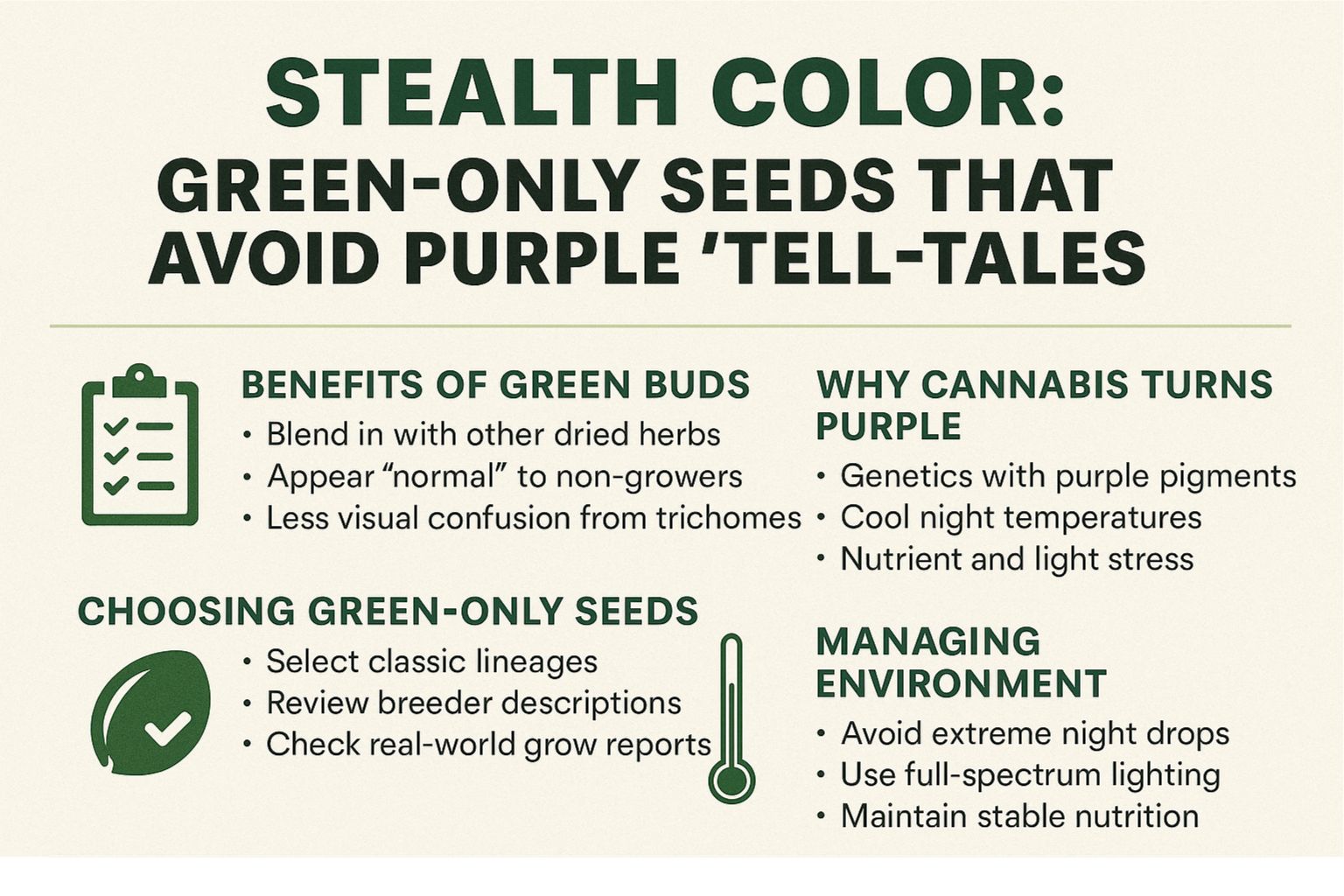
Here are a few reasons I still gravitate toward stealth cannabis strains that finish green:
- They blend in with other dried herbs and garden material.
- Trichomes and pistil color are easier to read at a glance.
- Green buds usually look “normal” to non-growers, which helps with discreet marijuana growing when you’re showing your space only to trusted people in legal regions.
- You avoid confusing visual cues, like dark purple buds that still have slightly immature trichomes.
Over time, I’ve learned that color is a tool. When I want my jars to look neutral and unremarkable, I rely on green only cannabis seeds and non purple weed seeds that consistently finish in the classic lime-to-forest spectrum.
What Actually Makes Weed Turn Purple?
Before you can avoid purple, it helps to understand where it comes from.
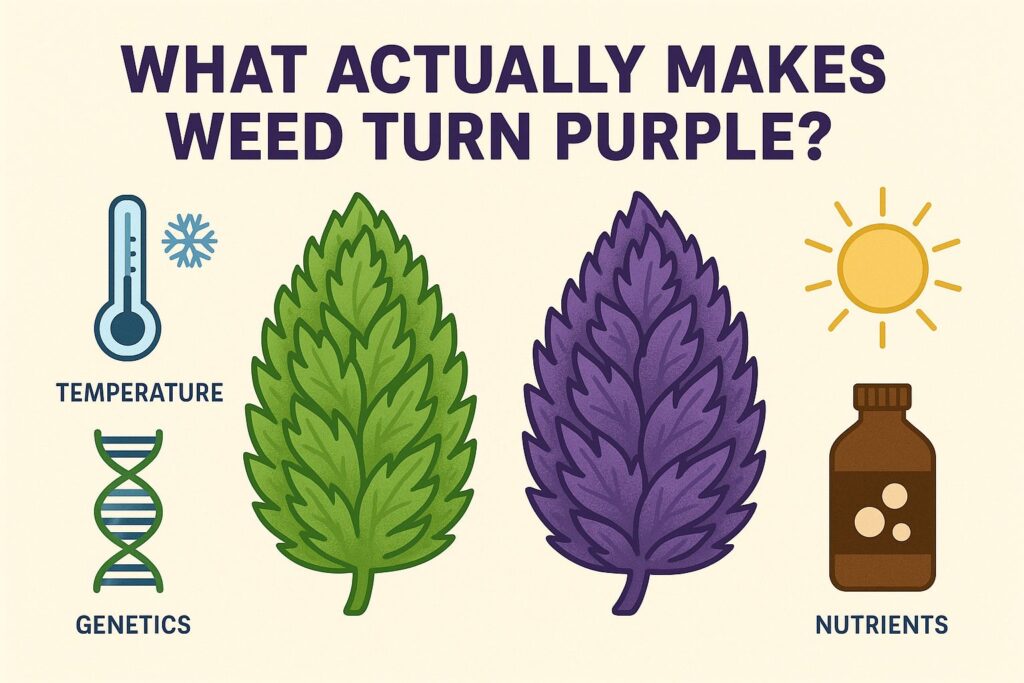
Inside cannabis flowers and leaves are different pigments. The green you’re used to comes from chlorophyll. Purple, red, and blue tones come from a family of pigments called anthocyanins, which many plants express in their flowers, fruits, and foliage.
Whether a plant turns purple depends on three big factors:
- Genetics
Some cultivars carry strong purple genes. Even at warm temperatures and under standard feeding, those plants will express anthocyanins, especially in the calyxes and sugar leaves. - Environment
- Cool night temperatures, especially late in bloom, can push borderline strains into purple hues by slowing chlorophyll production while anthocyanins remain more stable.
- Plant health and stress
Certain nutrient patterns, light intensity, or stress events can influence pigment balance. Some “bagseed purples” I’ve seen were actually stress responses rather than true purple genetics.
If you want plants to stay solidly green, you’re looking for the opposite combination: genetics that lean green, environments without extreme cold swings, and stable overall health. That’s where thoughtful cannabis seed color selection really starts to pay off.
Understanding Green Phenotype Genetics
When I’m shopping for green only cannabis seeds, I start with genetics. Over multiple runs, I’ve noticed some patterns in green phenotype genetics that hold up pretty well.
Look For Classic Lineages
Strains anchored in old-school skunk, Afghan, Northern Lights, or early hybrid lines tend to stay green or only pick up mild autumn colors near harvest. When breeders describe a cultivar as “deep forest green,” “traditional lime buds,” or “little to no purple expression,” that’s usually a good sign of strong green phenotype genetics.
In contrast, lines loaded with Purple, Blueberry, or certain modern dessert crosses are more likely to throw colorful expressions. If I’m trying to avoid purple, I’ll bookmark those as fun experiments rather than my main stealth cannabis strains.
Check Breeder Notes On Color
Good breeders know color is part of a strain’s identity. When I’m reading product pages at reputable banks like Royal King Seeds, I pay close attention to how they describe the finish. If I’m after non purple weed seeds, I specifically look for notes like:
- “Stays green from start to finish.”
- “May show light autumn tones but rarely deep purple.”
- “Selected for heavy resin and classic green buds.”
That’s the kind of language that points to deliberate cannabis seed color selection, not just a side-effect of random crosses.
Phenotype Variation Still Matters
Even with green-leaning genetics, individual plants (phenotypes) can vary. In one run, I popped ten seeds of a hybrid the breeder said was mostly green. Eight finished straight green; two flashed a faint lavender tone in the sugar leaves. That’s still excellent odds for discreet marijuana growing, but it shows why hunting through a pack or two is valuable if color really matters to you.
How I Choose Green Only Cannabis Seeds For Stealth Color
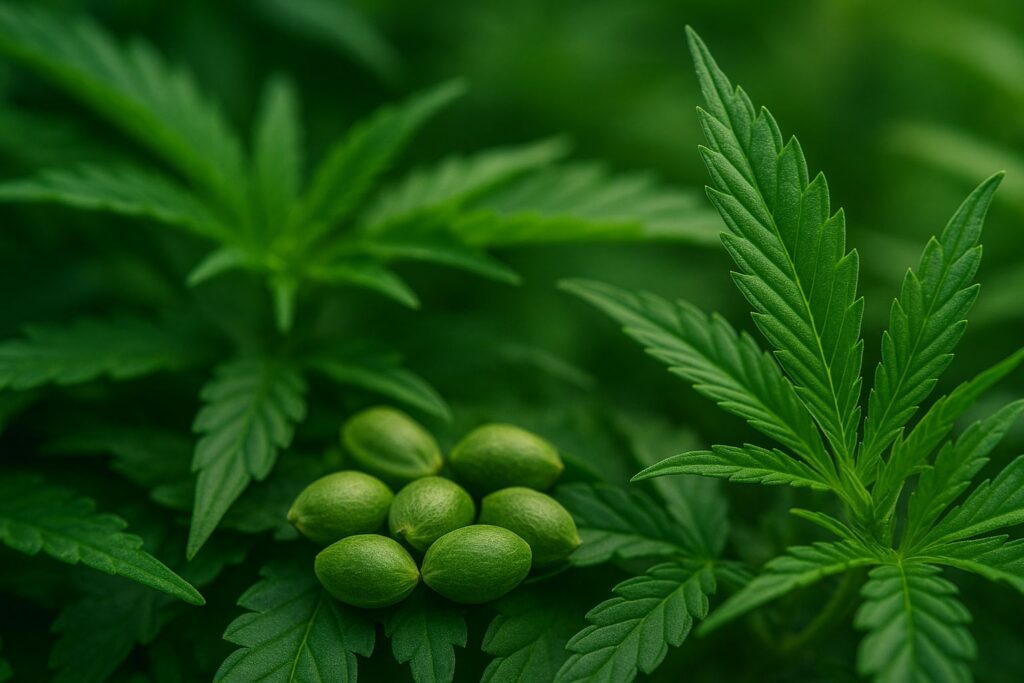
When I’m planning a low-key run, I follow a simple process to pick green only cannabis seeds that fit both my space and my stealth goals.
- Start with the end goal
Am I filling the jars for personal use only, or am I running a mix of projects? For pure stealth, I’ll prioritize non purple weed seeds and strains described as subtle in aroma and appearance. - Decide on feminized or regular
For most people, feminized cannabis seeds are the best option. They save space and time because you’re not pulling males. When I’m testing multiple green phenotype genetics at once, feminized cannabis seeds let me compare more phenos in the same square footage. - Pick seed type by schedule
Autoflower cannabis seeds are fantastic when you need a quick, simple run. They’re especially useful in micro-spaces where discreet marijuana growing is the priority and you don’t want to run long veg cycles. Photoperiod strains give you more control over plant size and training. I switch between the two depending on my calendar and room availability. - Cross-check color claims
I read independent grow reports where possible and look at photos from growers in legal regions. If a supposedly green strain shows purple in half the reports, I expect at least some plants to lean colorful, even if the breeder markets them as green.
By the time I’ve worked through this list, I have a short lineup of green only cannabis seeds that make sense for my environment and harvest schedule.
Managing Environment To Keep Plants Green
Genetics come first, but environment still makes a huge difference. I’ve seen borderline strains stay green in one run, then flash purple when night temperatures dropped in another.
Here’s how I manage my rooms during indoor cannabis cultivation to bias the plants toward green:
Temperature And Night Drops
In flower, I like to keep my day temperatures in the standard, comfortable range for cannabis and avoid dramatic night-time drops. When the lights go off, I aim for only a mild temperature difference rather than a big swing. In my experience, those big swings are when borderline plants suddenly wake up their purple potential.
If your region has chilly nights, especially toward the end of the season, some light heating or careful timing of lights-on and lights-off can help keep plants closer to their daytime range. That alone has kept some of my stealth cannabis strains completely green from stretch to chop.
Light Intensity And Spectrum
During indoor cannabis cultivation, I pay attention to PPFD but I don’t obsess over it solely for color. If plants are happy, leaves are praying, and buds are swelling without bleaching, I’m in the right range. Overdriving canopy light can stress plants and occasionally brings out odd colors that have nothing to do with true green phenotype genetics.
Full-spectrum LEDs that mimic natural sunlight have worked best for me. They keep the plants compact and resinous without forcing unwanted anthocyanin expression.
Nutrients, EC, And Plant Health
Color can shift when plants are overfed, underfed, or deprived of key elements. I keep my nutrient solution within the manufacturer’s guidelines, gradually ramping EC as plants mature instead of making big jumps. A balanced, consistent feed helps ensure color changes are genetic, not stress-induced.
When I see dark, almost black foliage that doesn’t match the strain description, I suspect either intense nitrogen levels or environmental stress rather than natural purple. Gentle adjustments usually bring the plant back toward a healthy green tone.
Indoor Cannabis Cultivation vs Outdoor: Which Is Better For Stealth Color?
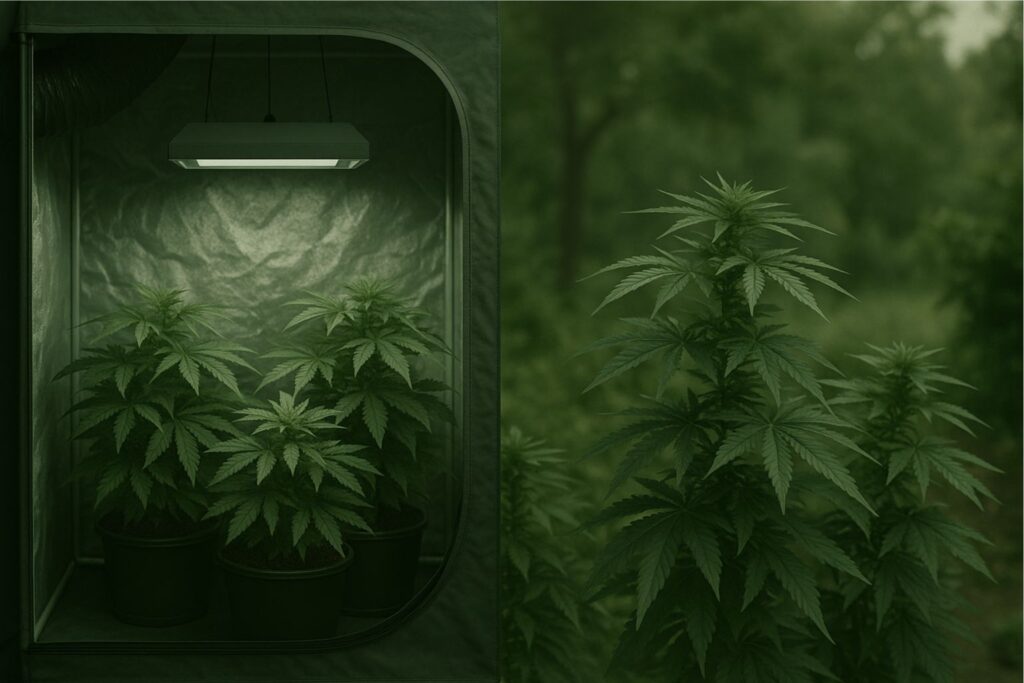
Both indoor cannabis cultivation and outdoor gardens can support green only cannabis seeds. The choice mostly depends on your climate and privacy situation in legal areas.
Indoor: Maximum Control
Indoors, you control nearly everything: temperature, humidity, light, and air movement. That makes it easier to keep plants in the ranges where green phenotype genetics shine.
When I’m running a purely stealth-focused grow, I lean heavily on indoor cannabis cultivation with:
- Compact tents or cabinets
- Carbon filters and sealed ducting
- Neutral, green-finishing strains
- Feminized cannabis seeds or autoflower cannabis seeds to reduce the number of plants I need
Because everything is contained, discreet marijuana growing is more about keeping noise and odor minimal than worrying about color. Still, green buds look more like any other dried herb if someone sees a trimmed branch briefly.
Outdoor: Working With Your Climate
Outdoors, you have less control. Cool late-season nights can push certain strains toward purple even if genetics are mostly green. That’s where strain choice really matters.
When I’m planning an outdoor run and I want to keep it low-key, I focus on:
- Cultivars bred specifically for temperate climates that stay green under moderate cold
- Shorter flowering times so plants finish before the coldest nights
- Non purple weed seeds with clear breeder notes about color stability
Paired with practical outdoor weed grow tips like choosing private locations, maintaining healthy soil, and staking plants so they don’t tower above fences, color becomes one part of a broader discretion strategy.
Seed Types And Stealth: Feminized, Autoflower, And Hybrids
Different seed types offer different advantages when you’re thinking about stealth cannabis strains and green finishes.
Feminized Cannabis Seeds
Feminized cannabis seeds dominate most home gardens for a reason. They make planning easier and allow you to hunt for green phenotype genetics without wasting space on males. I like feminized lines when I’m narrowing down a long-term keeper strain that will stay green run after run.
Autoflower Cannabis Seeds
Autoflower cannabis seeds are ideal for quick, compact grows. In small cabinets or balcony setups in legal regions, they’re a cornerstone of discreet marijuana growing. Because they transition to flower on their own, they fit tight schedules and don’t require complex photoperiod control.
When shopping for green only cannabis seeds in auto form, I’m extra picky with breeder descriptions and real-world reviews. Some auto lines lean heavily on colorful heritage, so I focus on those marketed specifically as classic, piney, or “old-school green.”
Balancing Indica, Sativa, And Hybrid Traits
Mixing indica, sativa, and hybrid traits doesn’t automatically dictate color, but it does influence plant shape and finish time. For stealth, I prefer:
- Medium-height hybrids with dense but not oversized colas
- Plants that finish reliably without needing extreme cold to show their best traits
- Lines described as having rich terpene profiles and resin production rather than just flashy colors
Those details, combined with careful cannabis seed color selection, lead to plants that are easier to tuck into almost any legal garden plan.
Post-Harvest: Keeping Your Green Buds Looking Their Best
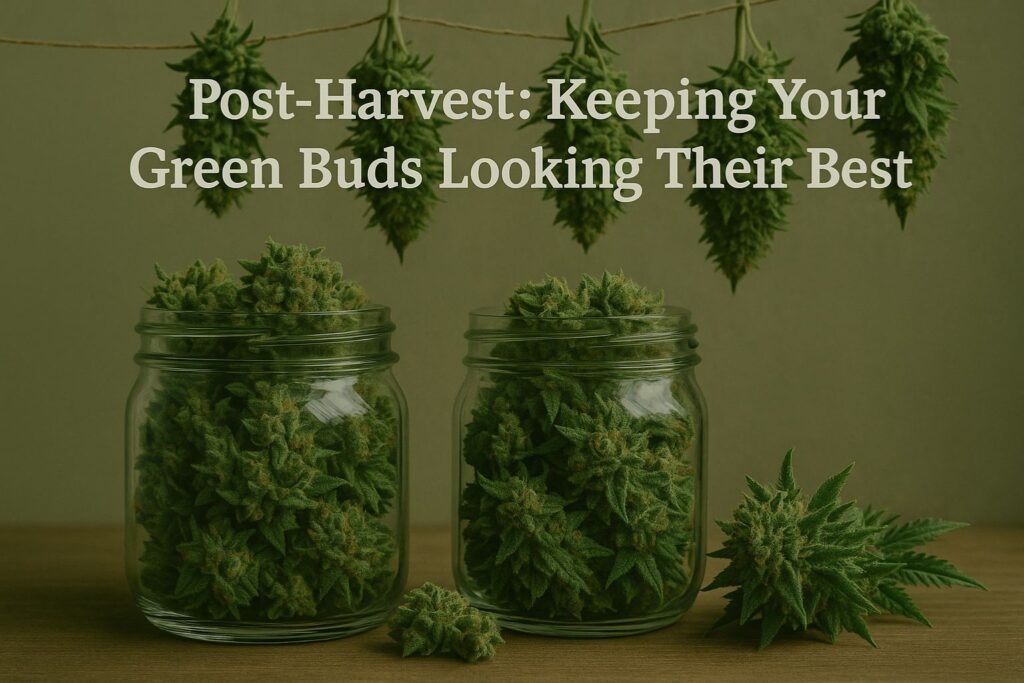
Once you’ve grown green only cannabis seeds and made it to harvest, the work isn’t finished. How you dry and cure plays a big role in final appearance and aroma.
Drying
I hang branches or place buds on screens in a dark space with gentle airflow. I avoid blasting them with warm, dry air, which can bleach color and make the outer layer brittle. A slow, even dry keeps the green vibrant without pushing buds toward that dull, hay-like look.
Trimming And Presentation
During trimming, I’m careful not to strip every last sugar leaf. A bit of frosted green leaf around the edges gives buds a natural look that pairs well with stealth cannabis strains. When you’re shooting for discreet marijuana growing and storage, that “harvested from a garden” appearance feels more neutral than ultra-manicured show buds.
Curing
Finally, a steady cure is essential for both flavor and appearance. My jars live in the dark, with periodic burping early on and less frequent handling as moisture levels stabilize. Thoughtful cannabis harvest and curing practices help preserve the natural green tone of the flowers and maintain their intended terpene profile.
Over time, good cannabis harvest and curing habits pay off with jars that smell rich and complex but look more like a well-dried culinary herb than a novelty display piece. That’s exactly what I want when I’ve invested in non purple weed seeds for stealth color.
Practical Outdoor Weed Grow Tips For Green-Finishing Plants
When running outdoor gardens in legal regions, these outdoor weed grow tips have helped me keep plants green and healthy:
- Start with strains bred for your latitude and season length.
- Avoid planting in frost pockets or low spots that trap cold air.
- Provide wind protection so plants don’t stress out and show odd color patches.
- Stick with consistent watering and feeding so purple isn’t triggered by nutrient swings.
Combined with careful cannabis seed color selection and attention to green phenotype genetics, these outdoor weed grow tips help ensure that your plants look like robust, normal garden greenery all the way to harvest.
FAQ: Green Only Cannabis Seeds And Stealth Color
Can any cannabis strain stay completely green?
No. Strains carry different genetic potentials. If a cultivar is strongly predisposed to purple, you can sometimes limit the color shift, but you won’t fully override those genes. That’s why starting with green only cannabis seeds or clearly described non purple weed seeds is so important when color really matters.
Are green buds weaker than purple buds?
Color and potency are separate traits. In my experience, some of the strongest harvests I’ve ever had came from very ordinary-looking green buds. When you focus on green phenotype genetics chosen for resin production, terpene depth, and structure, you get top-tier quality without flashy purple visuals. Proper cannabis harvest and curing practices will do more for your results than chasing a particular color.
How do I keep my grow discreet where it is legal?
For discreet marijuana growing in legal jurisdictions, start with subtle, green-finishing stealth cannabis strains. Pair them with effective odor control, well-sealed grow spaces, and respectful scheduling that doesn’t bother neighbors. Whether you lean on autoflower cannabis seeds for compact setups or feminized cannabis seeds for dialed-in phenohunts, the key is to keep everything stable, clean, and well managed.
Are green only strains better for beginners?
Often, yes. Beginners usually benefit from cultivars that are forgiving and predictable, and many of those are traditional, green-finishing lines. When you combine beginner-friendly genetics, thoughtful cannabis seed color selection, and simple outdoor weed grow tips or basic indoor cannabis cultivation practices, you remove a lot of variables from the learning curve.
Do I need special nutrients to keep plants green?
You don’t need anything exotic. Focus on balanced nutrition, avoiding major deficiencies or toxicities. Most modern base nutrient lines provide everything the plant needs when used as directed. In my garden, consistent feeding, steady environmental conditions, and choosing the right green only cannabis seeds have had far more impact on final color than any bottle claiming to boost or suppress pigments.
