Table of Contents
Space Dawg is a potent indica-dominant hybrid cannabis strain that has gained popularity among both medical and recreational users due to its strong effects, rich terpene profile, and therapeutic benefits. It is a cross between Super Snow Dawg and Space Queen, two well-known strains with powerful genetic characteristics.
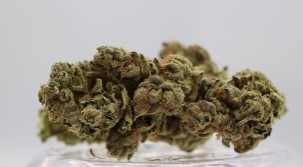
Genetics and Lineage
- Super Snow Dawg: A hybrid strain known for its citrusy aroma, uplifting effects, and medical benefits. It is a cross between Bubble Chem and Super Skunk.
- Space Queen: A hybrid strain with strong cerebral and relaxing effects, created from Romulan and Cinderella 99.
- Space Dawg inherits the best traits of both parents, combining strong euphoria with deep body relaxation.
Botanical and Chemical Profile
Physical Characteristics
- Plant Structure: Medium to short height with dense foliage, suitable for both indoor and outdoor cultivation.
- Bud Appearance: Compact, resin-coated buds with hues of purple and dark green, covered in orange pistils.
- Aroma: Pungent and skunky with sweet, fruity, and earthy undertones.
- Flavor: Sweet, citrusy, and slightly spicy with hints of pine and skunk.
Cannabinoid Profile
| Cannabinoid | Average Percentage |
|---|---|
| THC | 18% – 22% |
| CBD | 0.1% – 1% |
| CBG | 0.5% – 1% |
| CBN | <0.5% |
Terpene Profile
| Terpene | Aroma/Flavor Notes | Potential Benefits |
| Myrcene | Earthy, musky | Sedation, pain relief, anti-inflammatory |
| Limonene | Citrus, sweet | Mood elevation, stress relief, anti-anxiety |
| Caryophyllene | Spicy, peppery | Anti-inflammatory, pain relief, anti-anxiety |
| Linalool | Floral, lavender | Calming, anti-depressant, anti-inflammatory |
| Humulene | Woody, herbal | Appetite suppressant, anti-inflammatory |
Medical Benefits
Pain Management
Space Dawg’s strong indica dominance makes it highly effective for pain relief. The high THC content and presence of myrcene and caryophyllene contribute to its analgesic properties, making it a popular choice for patients suffering from:
- Chronic pain (arthritis, fibromyalgia, migraines)
- Neuropathic pain (sciatica, multiple sclerosis)
- Muscle spasms and cramps
Sleep Disorders and Insomnia
- The sedative properties of Space Dawg, primarily due to myrcene and linalool, help patients struggling with insomnia and irregular sleep cycles.
- It promotes deep relaxation, allowing users to achieve restful sleep.
Mental Health Benefits
- Anxiety and Stress: The limonene and linalool content in Space Dawg contributes to its calming and anti-anxiety effects, making it effective for generalized anxiety disorder (GAD), post-traumatic stress disorder (PTSD), and chronic stress.
- Depression: The initial euphoric and mood-enhancing effects can provide relief from mild to moderate depression.
Appetite Stimulation and Gastrointestinal Disorders
- Patients undergoing chemotherapy or dealing with appetite loss benefit from Space Dawg’s ability to induce hunger.
- Helps alleviate symptoms of nausea, Crohn’s disease, irritable bowel syndrome (IBS), and gastrointestinal inflammation.
Neuroprotective Benefits
- Preliminary studies suggest that THC and CBD work together to provide neuroprotective benefits, potentially aiding conditions like Parkinson’s disease, Alzheimer’s disease, and epilepsy.
Recreational Uses
Relaxation and Stress Relief
- Space Dawg is a powerful stress reliever, making it a favorite among recreational users looking to unwind after a long day.
- Its sedative effects are ideal for evening or nighttime use, as it can induce a deep sense of tranquility.
Euphoria and Mood Elevation
- Space Dawg initially delivers an uplifting cerebral effect, making it suitable for social settings before its sedative effects take over.
Creative Stimulation
- While primarily an indica-dominant strain, its Space Queen lineage adds a touch of creativity-enhancing properties, useful for artistic endeavors, music, and brainstorming.
Physical Relaxation and Couch Lock
- Higher doses result in strong body relaxation and potential couch-lock, making it ideal for those who enjoy low-energy, restful activities like watching movies or listening to music.
Scientific and Pharmacological Aspects
Endocannabinoid System Interaction
- THC binds primarily to CB1 receptors in the brain, resulting in euphoric and psychoactive effects.
- CBD and CBG interact with CB2 receptors, modulating inflammation and pain perception.
- Caryophyllene, a unique terpene, also binds to CB2 receptors, enhancing its therapeutic benefits.
Methods of Ingestion and Their Pharmacokinetics
The route of administration significantly alters the onset, peak effects, and duration due to differences in bioavailability (the proportion of THC absorbed into the bloodstream).
Inhalation (Smoking/Vaping)
Bioavailability: 25-50%
Onset: 1-5 minutes
Peak Effects: 30-60 minutes
Duration: 2-4 hours
Mechanism of Action
- THC enters the alveoli (air sacs in the lungs) and rapidly absorbs into the bloodstream.
- It bypasses the liver’s first-pass metabolism, leading to a fast and intense high.
- High THC bioavailability (30-50%) means potent, rapid effects.
Comparing Smoking vs. Vaping
| Factor | Smoking | Vaping |
|---|---|---|
| Temperature | 600-900°F | 315-450°F |
| Efficiency | Lower (burns plant material) | Higher (preserves cannabinoids) |
| Toxic Byproducts | Present (combustion) | Minimal (aerosolized cannabinoids) |
| Flavor & Terpenes | Altered due to heat | Preserved better |
Oral Consumption (Edibles & Capsules)
Bioavailability: 4-20%
Onset: 30-120 minutes
Peak Effects: 2-4 hours
Duration: 6-12 hours
Mechanism of Action
- THC passes through the digestive tract and liver before entering the bloodstream (first-pass metabolism).
- THC is converted into 11-Hydroxy-THC, which is 4-5 times more potent and has a longer-lasting psychoactive effect.
- The delayed onset often leads to accidental overconsumption.
Factors Influencing Edible Absorption
- Fats improve absorption (THC is lipid-soluble).
- Fasting vs. Fed State: Absorption is faster when taken with food, but effects are prolonged.
- Individual Metabolism: Enzyme activity (CYP2C9, CYP3A4) varies, affecting THC breakdown.
Sublingual Administration (Tinctures, Sprays, Strips)

Bioavailability: 15-35%
Onset: 15-45 minutes
Peak Effects: 1-2 hours
Duration: 4-6 hours
Mechanism of Action
- Absorption occurs directly through oral mucosa (under the tongue).
- Bypasses first-pass metabolism, resulting in a faster onset than edibles but slower than smoking.
- Effects are moderate and longer-lasting than inhalation but shorter than edibles.
Topical Application (Creams, Patches)
Bioavailability: <5% (localized, non-psychoactive)
Onset: 30-90 minutes
Peak Effects: 2-4 hours
Duration: 4-8 hours
Mechanism of Action
- THC and CBD penetrate the skin and interact with CB2 receptors in the peripheral nervous system.
- Transdermal patches allow cannabinoids to enter the bloodstream, leading to systemic effects.
Suppositories (Rectal/Vaginal Administration)
Bioavailability: 50-70%
Onset: 10-20 minutes
Peak Effects: 1-2 hours
Duration: 4-8 hours
Mechanism of Action
- Avoids first-pass metabolism, leading to high bioavailability and faster onset.
- Suitable for patients with nausea, vomiting, or difficulty swallowing.
Onset, Duration, and Peak Effects Based on Ingestion Method
The pharmacokinetics of Space Dawg vary significantly depending on the route of administration.
| Ingestion Method | Bioavailability | Onset Time | Peak Effects | Total Duration |
|---|---|---|---|---|
| Smoking | 25-50% | 1-5 min | 30-60 min | 2-4 hours |
| Vaping | 30-50% | 1-5 min | 30-60 min | 2-4 hours |
| Edibles | 4-20% | 30-120 min | 2-4 hours | 6-12 hours |
| Sublingual | 15-35% | 15-45 min | 1-2 hours | 4-6 hours |
| Topical | <5% (local only) | 30-90 min | 2-4 hours | 4-8 hours |
| Transdermal | 50-70% | 10-20 min | 1-2 hours | 4-8 hours |
| Suppository | 50-70% | 10-20 min | 1-2 hours | 4-8 hours |
Factors Affecting THC Absorption and Metabolism
Several biological and external factors influence the efficacy and intensity of Space Dawg’s effects.
Individual Metabolism
- Liver enzymes (CYP2C9, CYP3A4) regulate THC metabolism.
- Individuals with faster metabolism experience shorter, less intense effects.
- Slower metabolizers experience prolonged, stronger effects.
Tolerance and Sensitivity
- Frequent cannabis users develop tolerance due to CB1 receptor downregulation.
- Low-tolerance users experience stronger effects at lower doses.
Genetic Factors
- CYP2C9 gene variants affect THC metabolism:
- CYP2C9*1 (fast metabolizer) → Rapid breakdown, shorter high.
- CYP2C9*3 (slow metabolizer) → Prolonged effects, higher THC sensitivity.
Consumption with Food
- Edibles are absorbed faster and more efficiently when taken with fatty foods (THC is fat-soluble).
- High-fiber diets may slow THC absorption.
Hydration and pH Levels
- Dehydration can intensify dry mouth effects.
- Acidic diets (citrus, vinegar) may accelerate THC clearance.
Scientific Insights on Choosing the Right Ingestion Method
| User Type | Recommended Method | Rationale |
|---|---|---|
| Immediate relief | Smoking, Vaping | Fastest onset (1-5 min) |
| Long-lasting effects | Edibles, Capsules | Duration up to 12 hours |
| Discreet, moderate effects | Sublingual, Tinctures | No smoke, faster than edibles |
| Localized relief | Topicals | No psychoactive effects |
| Nausea/Vomiting patients | Suppositories | Avoids first-pass metabolism |
Potential Side Effects
| Side Effect | Likelihood | Notes |
| Dry mouth (cottonmouth) | High | Drink plenty of water |
| Dry eyes | Moderate | Use hydrating eye drops |
| Dizziness | Moderate | Usually at higher doses |
| Anxiety or paranoia | Low to moderate | Rare, but possible in sensitive users |
| Lethargy | High | Best for nighttime use |
| Increased appetite (munchies) | Moderate to high | Useful for those with appetite loss |
Cultivation Information
Scientific Methods of Cultivation for Space Dawg Cannabis Strain
Space Dawg, being an indica-dominant hybrid, thrives in controlled environments where factors such as light, humidity, nutrients, and pruning techniques are carefully optimized. Below is a scientific approach to cultivating this strain effectively.
1. Environmental Requirements for Space Dawg
A successful indoor or outdoor Space Dawg cultivation requires an optimized environment.
Temperature & Humidity Control
- Seedling Stage (Weeks 1-2)
- Temperature: 70-75°F (21-24°C)
- Humidity: 65-75%
- Light Cycle: 18-24 hours per day
- Soil pH: 5.8-6.2 for hydroponics, 6.0-6.5 for soil
- Vegetative Stage (Weeks 3-8)
- Temperature: 72-78°F (22-26°C)
- Humidity: 55-65%
- Light Cycle: 18 hours on / 6 hours off
- Soil Composition: High nitrogen, well-aerated organic soil
- Flowering Stage (Weeks 8-10)
- Temperature: 65-75°F (18-24°C)
- Humidity: 40-50%
- Light Cycle: 12 hours on / 12 hours off
- Soil Fertilization: High phosphorus & potassium, low nitrogen
- Late Flowering & Harvest
- Temperature: 65-70°F (18-21°C)
- Humidity: 35-45%
- Trichome Readiness: Milky-white and amber trichomes indicate peak potency.
2. Indoor vs. Outdoor Growing Techniques
Indoor Cultivation (Controlled Growth)
Space Dawg thrives indoors, where variables can be scientifically controlled.
Optimal Indoor Setup:
- Grow Medium: Hydroponics (Coco Coir, Deep Water Culture) or Organic Soil
- Lighting:
- Vegetative Stage: 400-600W MH (Metal Halide) or LED
- Flowering Stage: 600-1000W HPS (High-Pressure Sodium) or LED
- Ventilation:
- High-output carbon filters to control Space Dawg’s pungent aroma.
- Oscillating fans and exhaust systems to regulate temperature.
- CO₂ Enrichment:
- CO₂ levels at 900-1200 ppm improve bud density and yield.

Outdoor Cultivation (Natural Growth)
- Climate: Mediterranean-like climate with warm, dry summers.
- Soil: Loamy, well-drained, nutrient-rich soil.
- Companion Plants: Basil, chamomile, and marigolds deter pests naturally.
- Protection: Use greenhouses or shade cloths to prevent excessive heat stress.
3. Scientific Training Techniques for Higher Yields
Low-Stress Training (LST)
- Gently bending and tying down branches improves light penetration.
- Helps develop multiple colas, leading to higher yields.
High-Stress Training (HST)
- Topping: Cutting the main stem at early vegetative stage for bushier growth.
- Super Cropping: Bending branches without breaking them to enhance potency.
Screen of Green (ScrOG)
- A net or mesh screen is placed above the plants to train branches for even canopy growth.
- Maximizes light exposure and increases bud sites.
Defoliation & Lollipopping
- Defoliation: Removing unnecessary leaves improves airflow and reduces mold risk.
- Lollipopping: Trimming lower branches focuses energy on top colas, resulting in denser buds.
4. Advanced Nutrient Science for Space Dawg
A precise nutrient regimen ensures optimal growth and cannabinoid production.
Macronutrient Needs
| Growth Stage | Nitrogen (N) | Phosphorus (P) | Potassium (K) |
|---|---|---|---|
| Vegetative | High | Medium | Medium |
| Flowering | Low | High | High |
| Late Flower | Very Low | High | High |
Micronutrients (Essential for Resin Production)
| Micronutrient | Role in Cannabis Growth |
|---|---|
| Calcium (Ca) | Strengthens cell walls, prevents bud rot |
| Magnesium (Mg) | Increases chlorophyll production |
| Zinc (Zn) | Helps enzyme function and resin secretion |
| Sulfur (S) | Essential for terpene synthesis |
Organic Nutrient Sources:
- Nitrogen: Bat guano, fish meal, compost tea.
- Phosphorus: Bone meal, rock phosphate.
- Potassium: Kelp meal, wood ash.
5. Hydroponic Cultivation for Maximum Potency
Hydroponic systems provide rapid growth and higher cannabinoid production.
Types of Hydroponic Systems
- Deep Water Culture (DWC): Roots are submerged in oxygenated nutrient-rich water.
- Ebb and Flow: Water floods and drains periodically, preventing overwatering.
- Aeroponics: Roots are suspended in air and misted with nutrients (advanced technique).
- Nutrient Film Technique (NFT): A thin layer of nutrient solution constantly flows over roots.
Benefits of Hydroponics for Space Dawg
- Faster growth rates (up to 30% quicker than soil).
- Precise nutrient control, leading to higher THC production.
- Reduced pest risks, as soil-borne insects are minimized.
6. Harvesting and Curing Techniques for Maximum Potency
Proper harvesting and curing preserve terpenes and cannabinoids, enhancing Space Dawg’s flavor and potency.
Harvesting Indicators
- Trichomes: Use a magnifier (60x-100x zoom) to check resin glands.
- Clear trichomes: Too early.
- Milky trichomes: Peak THC.
- Amber trichomes: More sedative effects.
Drying Process
- Temperature: 60-70°F (15-21°C)
- Humidity: 50-60%
- Duration: 7-14 days
- Best Practice: Hang whole plants upside down for slow drying.
Curing Process
- Store buds in glass jars at 60-65% humidity.
- Open jars once a day for the first two weeks to release moisture (burping).
- Cure for a minimum of 2-4 weeks for smoother smoke and enhanced potency.
7. Pest and Disease Management Using Biological Control
Space Dawg, due to its dense buds, is susceptible to mold and pests.
Common Threats
| Threat | Solution |
|---|---|
| Spider mites | Neem oil, ladybugs |
| Powdery mildew | Increase airflow, sulfur spray |
| Aphids | Beneficial insects (lacewings, ladybugs) |
| Root rot | Proper drainage, hydrogen peroxide treatment |
Biological Pest Control:
- Predatory insects (ladybugs, nematodes) naturally eliminate pests.
- Companion planting (basil, garlic) deters harmful bugs.
Final Thoughts
Space Dawg is a potent, versatile strain that offers strong relaxation, pain relief, and mood-enhancing effects. It is particularly beneficial for medical users dealing with chronic pain, stress, and insomnia, while also providing a deeply euphoric and calming experience for recreational users. Due to its high THC content, novice users should start with small doses to steer clear of possible negative effects including lightheadedness or paranoia.
Whether used for therapeutic benefits or pure relaxation, Space Dawg remains a top choice among indica lovers.
For a complete directory of cultivars, visit our Cannabis Strain Reviews.
