Table of Contents
Sour Apple is a hybrid cannabis strain known for its balanced effects, offering both cerebral stimulation and physical relaxation. It is classified as a slightly indica-dominant hybrid, with a genetic lineage derived from Sour Diesel and Cinderella 99. Its complex terpene profile and potent cannabinoid content make it an ideal strain for both recreational and medicinal use.
Genetic Lineage and Background
Parent Strains
- Sour Diesel: A sativa-dominant strain known for its high THC content, pungent diesel-like aroma, and energizing effects. Sour Diesel contributes to Sour Apple’s cerebral stimulation, mood enhancement, and pungent aroma.
- Cinderella 99 (C99): A hybrid strain renowned for its sweet, fruity flavors and uplifting effects. This contributes to Sour Apple’s euphoria, focus-enhancing properties, and apple-like flavor profile.
The combination results in a well-balanced strain that offers a gradual onset of mental stimulation followed by deep physical relaxation.
Morphology and Physical Characteristics
Bud Structure
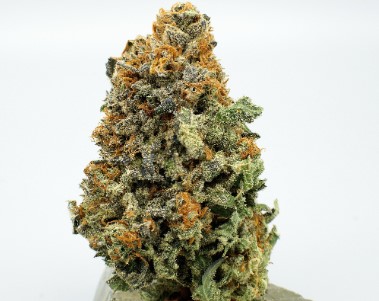
- Dense and compact structure, common in hybrid and indica-dominant strains.
- Large trichome concentration, giving the buds a frosty, resinous appearance.
- Tightly curled orange pistils intertwined within the green and purple hues of the flower.
Coloration
- Bright to dark green foliage, occasionally exhibiting purple undertones due to anthocyanin pigments, which are activated by lower temperatures during the late flowering stage.
Trichome Density and Resin Production
- High trichome density, indicative of a high THC concentration and robust terpene production. This contributes to the strain’s potency, aroma, and therapeutic properties.
Cannabinoid and Terpene Profile
Cannabinoid Composition
Sour Apple’s cannabinoid profile is primarily THC-dominant, with negligible amounts of CBD and moderate levels of trace amounts of cannabinoids such CBC and CBG.
| Cannabinoid | Concentration (%) | Effects |
|---|---|---|
| THC | 17% – 24% | Psychoactive, analgesic, mood-enhancing |
| CBD | 0.1% – 0.5% | Non-psychoactive, neuroprotective, anti-inflammatory |
| CBG | 0.5% – 1% | Antibacterial, neuroprotective, anti-inflammatory |
| CBC | ~0.2% | Potential antidepressant, anti-inflammatory properties |
Terpene Composition
Sour Apple’s terpene profile is a significant contributor to its unique effects, aroma, and therapeutic benefits.
| Terpene | Concentration (%) | Effects & Properties |
|---|---|---|
| Myrcene | 0.5% – 1.5% | Sedative, analgesic, anti-inflammatory |
| Limonene | 0.3% – 0.8% | Uplifting, anti-stress, anxiolytic |
| Caryophyllene | 0.2% – 0.7% | Analgesic, anti-inflammatory, interacts with CB2 receptors |
| Pinene | 0.1% – 0.4% | Cognitive enhancement, bronchodilator, anti-inflammatory |
| Linalool | 0.05% – 0.3% | Anxiolytic, sedative, antidepressant |
The combination of myrcene and caryophyllene contributes to the strain’s relaxing and pain-relieving properties, while limonene and pinene provide elevated mood and cognitive stimulation.
Pharmacological and Medical Applications
Sour Apple’s cannabinoid-terpene synergy provides a broad range of therapeutic benefits, making it useful in various clinical and medicinal applications.
Neuropsychological Effects
- Anxiolytic and Antidepressant Properties
- The presence of limonene and linalool in Sour Apple suggests potential for reducing symptoms of anxiety and depression.
- THC’s interaction with CB1 receptors in the brain modulates dopaminergic and serotonergic pathways, contributing to euphoria and mood stabilization.
- Cognitive Function and Neuroprotection
- Pinene and CBG in Sour Applemay counteract THC-induced short-term memory impairment by modulating acetylcholinesterase inhibition, leading to improved cognitive function.
- CBD and CBC exhibit neuroprotective properties, potentially useful in neurodegenerative disorders like Parkinson’s and Alzheimer’s disease.
Analgesic and Anti-Inflammatory Applications
- Chronic Pain Relief
- THC and caryophyllene activate CB1 and CB2 receptors, reducing nociceptive pain perception.
- Myrcene and CBG exhibit muscle relaxant and anti-inflammatory properties, beneficial for arthritis, fibromyalgia, and migraines.
- Neuropathic Pain and Spasticity
- CBG and myrcene contribute to muscle relaxation, making the strain useful for multiple sclerosis (MS) and nerve pain disorders.
Gastrointestinal and Metabolic Effects
- Appetite Stimulation
- THC’s agonist effect on CB1 receptors stimulates ghrelin release, enhancing appetite, making it useful for patients undergoing chemotherapy, HIV/AIDS treatment, and eating disorders.
- Gastrointestinal Relief
- Caryophyllene and pinene exhibit anti-inflammatory effects in the gut, beneficial for conditions such as Crohn’s disease and irritable bowel syndrome (IBS).
Sleep Disorders and Sedation
- Mild to Moderate Sedative Properties
- Myrcene and linalool promote GABAergic neurotransmission, which facilitates sedation and sleep induction.
- Effective for mild insomnia and sleep disturbances, particularly when consumed in higher doses.
Recreational Effects and Subjective Experience
Psychoactive Onset and Duration
- Onset: 10 – 20 minutes after inhalation or 45 – 60 minutes after oral consumption.
- Peak Effects: 1 – 2 hours post-consumption.
- Duration: 3 – 5 hours, depending on dosage and metabolism.

Phases of Effects
- Initial Onset (Cerebral Euphoria)
- Mild cognitive stimulation and mood elevation due to THC’s interaction with CB1 receptors in the prefrontal cortex.
- Limonene and pinene enhance focus and mental clarity.
- Intermediate Phase (Balanced Relaxation and Creativity)
- Linalool and caryophyllene contribute to stress reduction and anxiolysis.
- Creativity-enhancing effects may be useful for artistic endeavors and social interactions.
- Final Phase (Body Relaxation and Sedation)
- Myrcene and CBG induce muscle relaxation and pain relief.
- Higher doses may lead to couch-lock and drowsiness.
Methods of Ingestion and Bioavailability
The route of administration of Sour Apple plays a critical role in how THC, CBD, and other cannabinoids are absorbed, metabolized, and distributed in the body. Below are the most common methods of ingestion, along with their respective bioavailability, onset, and duration.
| Method | Bioavailability (%) | Onset | Peak Effects | Duration |
|---|---|---|---|---|
| Inhalation (Smoking/Vaporization) | 20–56% | 1–5 min | 15–30 min | 2–4 hours |
| Oral (Edibles, Capsules) | 4–20% | 30–90 min | 2–4 hours | 6–8 hours |
| Sublingual (Tinctures, Sprays) | 10–35% | 15–30 min | 30–60 min | 4–6 hours |
| Transdermal (Patches, Topicals) | 5–10% (Patches) | 15–60 min | 2–6 hours | 12–24 hours |
| Intranasal (Nasal Sprays) | 34–46% | 5–10 min | 15–45 min | 3–5 hours |
| Rectal (Suppositories) | 50–70% | 15–30 min | 1–2 hours | 4–8 hours |
2. Pharmacokinetics of Sour Apple Cannabis Strain
A. Inhalation (Smoking and Vaporization)
- Absorption Pathway:
- Cannabinoids in Sour Apple bypass first-pass metabolism, directly entering the bloodstream through pulmonary alveolar absorption.
- Peak plasma concentrations occur within 10 minutes.
- Advantages:
- Rapid onset, allowing for precise titration of dosage.
- High bioavailability (up to 56% with vaporization).
- Disadvantages:
- Combustion byproducts (tar, polycyclic aromatic hydrocarbons) may pose respiratory risks.
- Shorter duration compared to oral ingestion.
B. Oral Ingestion (Edibles, Capsules)
- Absorption Pathway:
- Cannabinoids undergo first-pass hepatic metabolism, where THC is converted to 11-hydroxy-THC, a more potent and longer-lasting metabolite.
- Peak plasma concentration occurs in 2–4 hours.
- Advantages:
- Extended duration (up to 8 hours).
- More potent psychoactive effects due to 11-OH-THC formation.
- Disadvantages:
- Low and variable bioavailability (4–20%) due to gastric degradation and enzymatic metabolism.
- Delayed onset, making dose titration more challenging.
C. Sublingual Administration (Tinctures, Oral Sprays)
- Absorption Pathway:
- Cannabinoids in Sour Apple diffuse through the mucous membranes in the sublingual region, bypassing first-pass metabolism.
- Peak plasma concentration occurs within 30–60 minutes.
- Advantages:
- Rapid absorption without combustion risks.
- More controlled dosing compared to edibles.
- Disadvantages:
- Lower bioavailability (10–35%) compared to inhalation.
- Requires holding the tincture under the tongue for effective absorption.
D. Transdermal Patches and Topicals
- Absorption Pathway:
- Cannabinoids pass through the epidermis and dermis, reaching the capillary system.
- Cannabinoids are released into the bloodstream gradually and continuously.
- Advantages:
- Long duration (12–24 hours).
- Non-psychoactive, ideal for localized pain relief.
- Disadvantages:
- Limited systemic effects unless formulated for transdermal delivery.
- Slow onset compared to other methods.
E. Intranasal Administration (Nasal Sprays)
- Absorption Pathway:
- Cannabinoids enter through nasal mucosa, bypassing first-pass metabolism.
- Rapid onset within 5–10 minutes.
- Advantages:
- High bioavailability (~40%), providing rapid relief for conditions like acute pain or anxiety.
- Disadvantages:
- Limited availability of commercial intranasal cannabinoid products.
- Potential nasal irritation with prolonged use.
F. Rectal Administration (Suppositories)
- Absorption Pathway:
- Cannabinoids enter the systemic circulation via the inferior hemorrhoidal vein, bypassing hepatic metabolism.
- Peak effects occur in 1–2 hours.
- Advantages:
- Higher bioavailability (50–70%) than oral ingestion.
- Suitable for patients with gastrointestinal issues or nausea.
- Disadvantages:
- Limited patient compliance due to route of administration.
3. Onset, Peak, and Duration of Effects
| Effect Phase | Smoking/Vaping | Edibles | Sublingual | Transdermal | Intranasal | Rectal |
|---|---|---|---|---|---|---|
| Onset | 1–5 min | 30–90 min | 15–30 min | 15–60 min | 5–10 min | 15–30 min |
| Peak Effects | 15–30 min | 2–4 hours | 30–60 min | 2–6 hours | 15–45 min | 1–2 hours |
| Duration | 2–4 hours | 6–8 hours | 4–6 hours | 12–24 hours | 3–5 hours | 4–8 hours |
4. Pharmacodynamics: Mechanism of Action
Interaction with the Endocannabinoid System (ECS)
- THC: Acts as a partial agonist at CB1 and CB2 receptors.
- CB1 receptor activation: Responsible for psychoactive effects (euphoria, altered perception).
- CB2 receptor activation: Modulates immune response and inflammation.
- CBD: Functions as a negative allosteric modulator of CB1, reducing THC’s psychoactive effects while enhancing analgesic and anxiolytic properties.
- Terpenes (Myrcene, Limonene, Caryophyllene, Pinene): Contribute to the “entourage effect”, modulating cannabinoid activity to enhance or reduce specific effects.
Cultivation and Growth Characteristics
Genetic Selection and Stabilization
Phenotypic Selection
- Sour Apple has genetic variations, so selecting stable phenotypes is crucial.
- Tissue culture propagation or clonal selection ensures genetic uniformity and desirable traits, such as high THC levels, dense trichome production, and strong terpene expression.
- Regular genetic screening (PCR analysis, SNP genotyping) can help identify stable Sour Apple cultivars.
Seed vs. Clone Propagation
- Clones: Ensure genetic stability, faster vegetative growth, and uniform cannabinoid/terpene production.
- Seeds: More variation but provide stronger taproot development, which enhances nutrient uptake and drought resistance.
2. Environmental Control: Light, Temperature, and Humidity
Light Spectrum Optimization
- Vegetative Stage:
- PPFD (Photosynthetic Photon Flux Density): 400–600 μmol/m²/s
- Light Spectrum: Blue-dominant (450–500 nm) for compact growth
- Photoperiod: 18–24 hours of light for rapid vegetative growth
- Flowering Stage:
- PPFD: 700–900 μmol/m²/s
- Light Spectrum: Red-dominant (620–660 nm) for enhanced flowering
- Photoperiod: 12 hours light / 12 hours dark to induce flowering
- UV-B Exposure (280–320 nm): Increases trichome and terpene production by activating stress-response pathways in the plant
Temperature Regulation
- Vegetative Stage: 21–27°C (70–80°F)
- Flowering Stage: 18–25°C (65–77°F) (Cooler temperatures enhance anthocyanin production, increasing purple coloration in buds).
Humidity and Vapor Pressure Deficit (VPD)
- Vegetative: 50–70% RH (Relative Humidity)
- Flowering: 40–50% RH (Prevents mold/mildew)
- Late Flowering (Ripening Phase): 30–40% RH (Enhances resin production)
- VPD Target: 0.8–1.2 kPa during vegetative, 1.2–1.6 kPa during flowering for optimal transpiration and nutrient uptake.
3. Soil and Nutrient Management
Growing Medium
Sour Apple thrives in well-aerated, nutrient-rich substrates. Options include:
- Living Soil: Enhances microbial diversity, supports organic nutrient breakdown.
- Coco Coir + Perlite Mix (70/30 ratio): Improves oxygenation and water retention.
- Hydroponics (Deep Water Culture, Rockwool): Maximizes growth speed and cannabinoid expression.
Nutrient Requirements
Macronutrients
| Nutrient | Vegetative Stage | Flowering Stage |
|---|---|---|
| Nitrogen (N) | 100–150 ppm | 50–80 ppm |
| Phosphorus (P) | 30–50 ppm | 100–150 ppm |
| Potassium (K) | 100–150 ppm | 150–200 ppm |
- Calcium (Ca) & Magnesium (Mg): 100–150 ppm (prevents nutrient deficiencies in hydroponic or coco-based mediums).
- Silica (Si): Strengthens cell walls, improving pest resistance and branch sturdiness.
Micronutrient Optimization
- Iron (Fe): Essential for chlorophyll synthesis and oxygen transport.
- Manganese (Mn): Aids enzyme activation for photosynthesis.
- Zinc (Zn): Enhances terpene synthesis.
pH and EC Management
- Soil pH: 6.0–6.5
- Hydroponic pH: 5.5–6.2
- Electrical Conductivity (EC):
- Vegetative Stage: 1.2–1.8 mS/cm
- Flowering Stage: 1.8–2.2 mS/cm
4. Training Techniques for Yield Optimization
Low-Stress Training (LST)
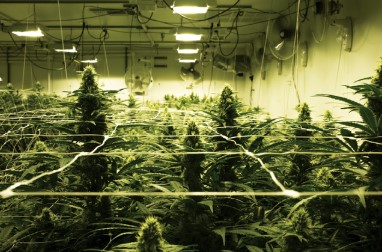
- Bending and tying branches enhances canopy penetration, improving light exposure and airflow.
- Encourages multiple apical colas, increasing total bud sites.
High-Stress Training (HST)
- Topping & FIMming: Creates more lateral growth, leading to increased yields.
- Supercropping: Enhances stem strength and terpene production by creating controlled stress.
Screen of Green (ScrOG)
- Spreads canopy evenly, maximizing light distribution and improving bud development.
5. CO₂ Enrichment for Increased Photosynthesis
- CO₂ Levels: 800–1200 ppm during peak light hours can increase biomass production and THC content.
- Best Methods: CO₂ tanks, burners, or fermentation-based CO₂ generators.
- Efficiency Note: Works best when combined with high PPFD lighting (>800 μmol/m²/s).
6. Integrated Pest and Pathogen Management (IPM)
Common Pests & Prevention
| Pest | Damage | Prevention Methods |
|---|---|---|
| Spider Mites | Leaf stippling, webbing | Neem oil, predatory mites (Phytoseiulus persimilis) |
| Thrips | Silvering on leaves | Diatomaceous earth, blue sticky traps |
| Fungus Gnats | Root damage | Bacillus thuringiensis (BTi), soil drying cycles |
Pathogen Control
- Powdery Mildew: Controlled by sulfur burners, proper airflow.
- Root Rot (Pythium spp.): Prevented by sterile hydroponic conditions, well-draining soil.
- Botrytis (Bud Rot): Controlled by maintaining low humidity and strong air circulation.
7. Harvesting, Drying, and Curing for Maximum Potency
Harvest Timing Based on Trichome Maturity
- Early Harvest (Clear Trichomes): More energetic effects, lower potency.
- Optimal Harvest (Cloudy Trichomes, ~70% Coverage): Maximum THC potency.
- Late Harvest (Amber Trichomes, ~20–30% Coverage): Increased CBN levels, producing a sedative effect.
Drying Process
- Temperature: 18–22°C (65–72°F)
- Humidity: 50–60% RH
- Airflow: Moderate, with gentle circulation fans (avoid direct airflow on buds).
- Duration: 7–14 days for optimal terpene preservation.
Curing Process
- Glass jars stored at 58–62% RH for 2–6 weeks.
- Daily burping (first 2 weeks) releases excess moisture, preventing mold formation.
- Extended curing (up to 6 months) enhances terpene complexity and smoothness of the smoke.
Conclusion
Sour Apple is a versatile hybrid strain with a complex cannabinoid and terpene profile, providing a balanced high suitable for both medicinal and recreational users. Its cognitive enhancement, mood-lifting effects, and analgesic properties make it a suitable choice for a range of psychiatric, neurological, and pain-related conditions. Proper dosage and strain selection are essential to optimize therapeutic benefits while minimizing adverse effects.
For a complete directory of cultivars, visit our Cannabis Strain Reviews.
