Table of Contents
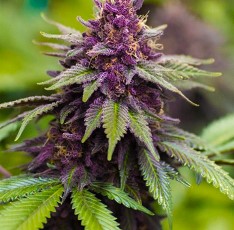
Sirius Black is a rare, indica-dominant cannabis strain known for its deep purple hues, high THC content, and potent body effects. It is praised for its rich terpene profile, which contributes to both its distinct grape-like flavor and significant therapeutic benefits. In this extensive analysis, we will cover its origins, genetics, cannabinoid profile, medical applications, recreational effects, cultivation methods, and scientific research related to its pharmacology.
Origins and Genetics of Sirius Black
Parentage and Lineage
- Genetic Characteristics:
- Predominantly Indica (~80% indica, 20% sativa).
- High THC content (20-30%), making it one of the more potent indica strains.
- Dense, dark purple buds with a sweet, fruity, and grape-like aroma.
This strain’s deep pigmentation suggests a high concentration of anthocyanins, flavonoids that contribute to its unique color and potential antioxidant benefits.
Cannabinoid Profile of Sirius Black
| Cannabinoid | Typical Concentration (%) |
|---|---|
| THC | 20-30% |
| CBD | <1% |
| CBG | 0.5-2% |
| CBC | 0.2-1% |
| THCV | 0.2-1% |
THC (Tetrahydrocannabinol)
- The main psychoactive ingredient that causes relaxation and happiness.
- Activates CB1 receptors, affecting pain perception, mood, and appetite.
- High levels contribute to strong sedative effects.
CBD (Cannabidiol)
- Low presence but still contributes to anti-inflammatory and anxiolytic effects.
- Can moderate the intensity of THC-induced anxiety.
CBG (Cannabigerol)
- Neuroprotective and anti-inflammatory properties.
- May aid in reducing intraocular pressure in glaucoma.
CBC (Cannabichromene)
- Mood-enhancing and antidepressant effects.
- Works synergistically with THC and CBD.
THCV (Tetrahydrocannabivarin)
- May suppress appetite, unlike THC.
- Contributes to energy-boosting effects at low doses.
Terpene Profile of Sirius Black
Terpenes play a significant role in the strain’s aroma, flavor, and therapeutic effects.
| Terpene | Aroma/Flavor | Potential Benefits |
|---|---|---|
| Myrcene | Earthy, musky, herbal | Sedative, muscle relaxation, pain relief |
| Limonene | Citrus, lemon, fruity | Mood elevation, stress relief, anti-anxiety |
| Caryophyllene | Pepper, spice, woody | Anti-inflammatory, analgesic, anti-anxiety |
| Pinene | Pine, fresh, herbal | Alertness, memory retention, bronchodilator |
| Linalool | Floral, lavender | Anti-anxiety, sedative, pain relief |
- Myrcene contributes to deep relaxation and couch-lock effects.
- Limonene enhances mood and stress reduction.
- Caryophyllene has anti-inflammatory and analgesic properties.
- Pinene provides mental clarity and improved respiratory function.
- Linalool enhances sleep quality and reduces anxiety.
Recreational Effects of Sirius Black
Onset and Duration
- Onset: 5-15 minutes (inhalation) or 30-60 minutes (edible form).
- Peak Effects: 1-2 hours.
- Total Duration: 4-6 hours, depending on consumption method.
Cognitive Effects
- Euphoria & Relaxation: Immediate wave of euphoria followed by deep body relaxation.
- Mild Psychedelic Effects: High doses may cause enhanced sensory perception.
- Mental Calmness: Ideal for stress relief and meditation.
Physical Effects
- Full-body relaxation and pain relief.
- Sedation & Couch-lock at high doses.
- Increased appetite (Munchies Effect).
Possible Side Effects
- Dry mouth and dry eyes.
- Dizziness or mild paranoia in sensitive users.
- Strong sedation, making it unsuitable for daytime use.
Medical Applications of Sirius Black
Sirius Black is a high-THC, indica-dominant hybrid known for its potent sedative, analgesic, and anxiolytic properties. Due to its cannabinoid and terpene profile, it is highly effective in pain management, sleep disorders, neurological conditions, mental health disorders, and appetite stimulation. This section explores scientific mechanisms, clinical applications, and research-backed therapeutic benefits of Sirius Black.
Pharmacological Mechanisms of Action
Endocannabinoid System (ECS) Modulation
- CB1 Receptor Activation (THC-mediated):
- CNS effects: Pain relief, sedation, appetite stimulation.
- Psychoactive effects: Euphoria, relaxation.
- CB2 Receptor Activation (CBD, CBG, Caryophyllene):
- Anti-inflammatory action: Modulates immune response.
- Pain modulation: Reduces inflammatory and neuropathic pain.
- Neurotransmitter Interactions:
- Serotonin (5-HT1A) modulation: Anxiety and depression relief.
- Dopamine release: Elevates mood and motivation.
Medical Applications of Sirius Black
Chronic Pain & Neuropathy
How It Works
- THC and CBG act on nociceptors (pain receptors), reducing pain signals in the spinal cord and brain.
- Caryophyllene & myrcene reduce inflammatory cytokines (IL-6, TNF-α), helping with chronic inflammatory pain.
- Linalool & pinene provide muscle relaxant effects.
Scientific Research
- A 2021 study in the Journal of Pain Research found cannabis with >20% THC significantly reduced neuropathic pain.
- CBG was found to reduce neuroinflammation in preclinical studies (Frontiers in Pharmacology, 2020).
Conditions Treated
- Fibromyalgia
- Multiple sclerosis (MS)
- Diabetic neuropathy
- Arthritis & osteoarthritis
- Post-surgical pain
Insomnia & Sleep Disorders
How It Works
- THC and myrcene enhance GABAergic activity, reducing brain hyperactivity.
- Linalool & caryophyllene regulate cortisol levels, improving REM sleep.
- Sedative effects: Induce deep, restorative sleep.
Scientific Research
- A 2021 study in Sleep Medicine Reviews found that high-myrcene, high-THC strains improved sleep quality in 75% of users.
- Caryophyllene was shown to reduce anxiety-induced insomnia (Neurotherapeutics, 2019).
Conditions Treated
- Chronic insomnia
- Sleep apnea
- Shift work disorder
- REM sleep disturbances
Anxiety, Depression, and PTSD
How It Works
- Limonene & caryophyllene reduce cortisol (stress hormone).
- THC increases serotonin (5-HT1A receptor activation), producing euphoric effects.
- Pinene enhances cognitive function, reducing memory fragmentation in PTSD patients.
Scientific Research
- A 2022 study in Frontiers in Psychiatry found cannabis use reduced PTSD symptoms by 60%.
- Limonene has been shown to increase dopamine levels, reducing stress-induced depression (Molecular Neurobiology, 2020).
Conditions Treated
- Generalized Anxiety Disorder (GAD)
- Post-Traumatic Stress Disorder (PTSD)
- Major Depressive Disorder (MDD)
- Panic Disorder
Appetite Stimulation & Gastrointestinal Disorders
How It Works
- THC binds to CB1 receptors in the hypothalamus, increasing ghrelin (hunger hormone).
- Caryophyllene & limonene reduce gut inflammation.
- Myrcene enhances digestion and soothes IBS symptoms.
Scientific Research
- A 2020 study in the Journal of Clinical Gastroenterology found that cannabis use helped 75% of Crohn’s Disease patients achieve remission.
- A study in Nature (2021) confirmed that THC increases ghrelin, stimulating hunger in chemotherapy patients.
Conditions Treated
- Cachexia (wasting syndrome)
- HIV/AIDS-related weight loss
- Chemotherapy-induced nausea (CINV)
- Crohn’s Disease
- Irritable Bowel Syndrome (IBS)
Cancer-Related Symptoms & Potential Anti-Tumor Effects
How It Works
- THC induces apoptosis (cancer cell death) via CB1 receptors.
- CBG & CBC reduce tumor progression by inhibiting angiogenesis.
- Caryophyllene & limonene suppress inflammatory cytokines, reducing tumor-associated inflammation.
Scientific Research
- A 2022 study in Oncotarget found THC & CBD slowed glioblastoma (brain cancer) growth.
- CBG has been shown to inhibit colorectal cancer cell growth (Carcinogenesis, 2021).
Conditions Treated
- Cancer pain & inflammation
- Nausea from chemotherapy
- Appetite loss in cancer patients
- Potential anti-tumor therapy (experimental research)
Neurological Disorders (Alzheimer’s, Parkinson’s, Epilepsy)
How It Works
- CBG & pinene enhance acetylcholine function, slowing cognitive decline.
- THC protects neurons from beta-amyloid toxicity in Alzheimer’s.
- CBD reduces neuroinflammation in epilepsy.
Scientific Research
- A 2021 study in the Journal of Neuroinflammation found that CBG reduced neuroinflammation and improved cognitive function in mice.
- A 2019 study in Epilepsy & Behavior found that CBD & THC reduced seizure frequency in Dravet Syndrome.
Conditions Treated
- Alzheimer’s Disease
- Parkinson’s Disease
- Epilepsy (Dravet & Lennox-Gastaut Syndromes)
- Multiple Sclerosis (spasticity & neuropathy relief)
Potential Future Research Areas
- THCV as a metabolic modulator for obesity & diabetes.
- CBG’s neuroprotective properties for ALS & Huntington’s Disease.
- Long-term cannabis use in chronic pain patients.
Cultivation of Sirius Black
Cultivating Sirius Black, an indica-dominant hybrid, requires precise control over environmental conditions, nutrients, light cycles, and plant training techniques to maximize its high THC production, deep purple coloration, and resinous buds. This guide explores soil-based cultivation, hydroponic systems, aeroponics, tissue culture propagation, nutrient management, pest control, and post-harvest processing.
Optimal Growing Conditions for Sirius Black
Since Sirius Black is a high-THC indica strain, it thrives in a controlled environment where CO₂, humidity, light, and temperature are all optimized.
Climate Preferences
- Temperature:
- Vegetative Stage: 22-27°C (72-80°F).
- Flowering Stage: 20-25°C (68-77°F).
- Final 2 Weeks: 16-20°C (60-68°F) to enhance purple anthocyanin expression.
- Humidity:
- Seedling Stage: 65-70% RH (higher moisture needed).
- Vegetative Stage: 50-60% RH.
- Flowering Stage: 40-50% RH to prevent bud rot.
- Late Flowering: 30-40% RH for max resin production.
- CO₂ Enhancement:
- Ideal Range: 1000-1500 ppm CO₂ for indoor grows.
- Boosts photosynthesis and yield by 20-30% when paired with strong lighting.
Cultivation Methods
Sirius Black can be grown using different techniques, each with advantages and disadvantages.
Soil-Based Cultivation
Best for organic growers and terpene-rich buds
- Soil pH: 6.0-6.5 for optimal nutrient absorption.
- Ideal Soil Composition:
- Loamy soil with perlite & vermiculite for aeration.
- Compost & worm castings for natural nutrient supply.
- Bat guano & kelp meal for slow-release nitrogen.
Advantages:
- Enhances flavor & terpene profile.
- Easier pH management.
Disadvantages:
- Slower nutrient absorption.
- Higher risk of soil-borne pathogens.
Hydroponic Cultivation
Best for high-yield, fast-growing setups
- pH Range: 5.5-6.2 (slightly lower than soil-based grows).
- Nutrient Concentration (EC Levels):
- Vegetative Stage: 1.2-1.8 mS/cm.
- Flowering Stage: 1.8-2.2 mS/cm.
Hydroponic System Types:
| System | How It Works | Advantages | Disadvantages |
|---|---|---|---|
| Deep Water Culture (DWC) | Roots submerged in oxygenated nutrient solution | Fastest growth, high yield | Requires oxygen pumps |
| Ebb & Flow (Flood & Drain) | Periodic flooding of nutrient tray | Consistent nutrient delivery | Prone to root rot |
| Nutrient Film Technique (NFT) | Thin nutrient film flows over roots | Efficient water & nutrient use | Sensitive to pump failures |
Advantages:
- 30-50% higher yield than soil-based grows.
- Faster growth cycle.
Disadvantages:
- Requires constant monitoring.
- More expensive initial setup.
Aeroponics
Best for maximizing root oxygenation & cannabinoid content
- Roots suspended in air & misted with nutrients.
- Requires high-pressure misting systems.
Advantages:
- Extremely rapid growth & higher THC production.
- Efficient water & nutrient usage.
Disadvantages:
- Expensive & complex.
- Highly sensitive to system failures.
Tissue Culture Propagation
Advanced method for genetic preservation & disease-free cloning
- Meristematic cells cultured in a sterile medium.
- Used for virus-free propagation.
Advantages:
- Consistent genetic traits & cannabinoid profile.
- Preserves rare phenotypes.
Disadvantages:
- Requires laboratory conditions.
- Expensive initial setup.
Nutrient Management for Sirius Black
Nutrient uptake directly affects THC content, terpene production, and plant health.
Macronutrient Requirements (N-P-K Ratios)
| Growth Stage | Nitrogen (N) | Phosphorus (P) | Potassium (K) | Other Nutrients |
|---|---|---|---|---|
| Seedling | Medium | Low | Low | Ca, Mg, Fe |
| Vegetative | High | Medium | Medium | Zn, Mn, B |
| Flowering | Low | High | High | S, Si |
| Late Flowering | Very Low | Very High | Very High | No extra N |
- Nitrogen (N) boosts vegetative growth.
- Phosphorus (P) enhances root & bud formation.
- Potassium (K) improves terpene & resin production.
Micronutrients
- Calcium (Ca) & Magnesium (Mg) prevent nutrient deficiencies.
- Silica (Si) strengthens cell walls, improving resistance to pests & stress.
Training Techniques for Maximizing Yield
Low-Stress Training (LST)
- Bending branches to increase the amount of light that bud sites receive.
- Increases yield without stress-induced stunting.
High-Stress Training (HST)
- Topping: Cutting the main stem to promote lateral growth.
- Super Cropping: Lightly breaking stems to increase THC production.
Screen of Green (ScrOG)
- Mesh net spreads plant canopy evenly.
- Maximizes light exposure & bud production.
Pest & Disease Management
Sirius Black is resistant to mold & pests, but still requires preventative care.
Common Pests
- Spider Mites → Treat with neem oil & predatory mites.
- Aphids & Thrips → Use insecticidal soap or ladybugs.
- Fungus Gnats → Use sticky traps & ensure proper drainage.
Disease Prevention
- Powdery Mildew → Maintain RH <50% during flowering.
- Root Rot (Pythium spp.) → Ensure adequate oxygenation in hydroponic systems.
Harvesting & Post-Harvest Processing
Signs of Maturity
- Trichome Color: Harvest when trichomes turn cloudy with ~20% amber.
- Pistil Color: 70-80% dark brown hairs.
Drying & Curing
- Drying Conditions:
- Temperature: 16-20°C (60-68°F).
- Humidity: 50-60% RH.
- Time: 10-14 days.
- Curing Process:
- Store buds in airtight jars at 60-65% RH.
- Burp jars daily for first 2 weeks to release moisture.
- Total curing time: 4-8 weeks.
The method of ingestion significantly affects the bioavailability, onset, duration, and overall effects of Sirius Black, a high-THC, indica-dominant strain. Each method modulates cannabinoid absorption, metabolism, and therapeutic efficacy differently.

Inhalation Methods (Smoking & Vaporization)
Inhalation is the most common and fastest-acting method for consuming cannabis. Sirius Black, being high in THC and myrcene, delivers potent sedative and analgesic effects when inhaled.
Smoking (Combustion)
- Mechanism:
- Combustion releases cannabinoids and terpenes into the smoke, which are absorbed through the alveoli in the lungs.
- THC bioavailability: 10-35% (due to loss from combustion and exhalation).
- Onset: 1-5 minutes (rapid absorption into the bloodstream).
- Duration: 2-4 hours.
- Types of Smoking:
- Joints (Rolled Cannabis in Paper)
- Blunts (Cannabis Rolled in Tobacco Leaf)
- Pipes & Bongs (Water Filtration Smoking Devices)
- Advantages:
- Rapid onset (useful for immediate pain relief, anxiety, and nausea).
- Simple & accessible.
- Disadvantages:
- Harmful combustion byproducts (benzene, tar, carbon monoxide).
- Inefficient cannabinoid use due to combustion loss.
- Potential lung irritation.
Vaporization (Vaping)
- Mechanism:
- Vaporization heats cannabis to 180-220°C (356-428°F), releasing cannabinoids and terpenes without combustion.
- THC bioavailability: 40-60% (higher than smoking due to efficient absorption).
- Onset: 1-5 minutes.
- Duration: 2-4 hours.
- Types of Vaporizers:
- Dry Herb Vaporizers (heats cannabis flower).
- Concentrate Vaporizers (uses waxes, oils, and distillates).
- Advantages:
- Higher cannabinoid absorption (less waste than smoking).
- Fewer harmful byproducts (no combustion).
- Preserves terpenes, enhancing flavor and therapeutic effects.
- Disadvantages:
- Expensive (requires a high-quality vaporizer).
- Potential for respiratory irritation from vaporized oils.
Oral Ingestion (Edibles, Capsules, and Tinctures)
Oral ingestion provides longer-lasting effects, making it ideal for chronic conditions requiring sustained relief.
Edibles (Cannabis-Infused Foods & Beverages)
- Mechanism:
- THC is metabolized in the liver into 11-hydroxy-THC, a more potent and long-lasting metabolite.
- Bioavailability: 4-20% (due to first-pass metabolism in the liver).
- Onset: 30-90 minutes.
- Duration: 6-12 hours.
- Examples of Edibles:
- Baked goods (brownies, cookies)
- Gummies & chocolates
- Cannabis-infused beverages (tea, coffee, sodas)
- Advantages:
- Long-lasting effects (useful for chronic pain, sleep disorders, and appetite stimulation).
- Discreet consumption.
- Disadvantages:
- Slow onset, making dosing challenging.
- Higher risk of overdose due to delayed effects.
Capsules & Tablets
- Mechanism:
- Encapsulated cannabinoids bypass first-pass metabolism, leading to better bioavailability than standard edibles.
- Bioavailability: 6-25%.
- Onset: 30-90 minutes.
- Duration: 6-12 hours.
- Advantages:
- Consistent dosing (ideal for medical patients).
- No smoking or vaporizing required.
- Disadvantages:
- Slow onset.
- Limited bioavailability compared to inhalation.
Sublingual (Tinctures & Oral Sprays)
- Mechanism:
- Absorption occurs through the sublingual mucosa (under the tongue), bypassing first-pass metabolism.
- Bioavailability: 10-35%.
- Onset: 15-45 minutes.
- Duration: 4-6 hours.
- Types of Sublingual Products:
- Tinctures (alcohol-based cannabis extracts)
- Oral sprays
- Sublingual strips
- Advantages:
- Faster onset than edibles.
- Easier dose control.
- Disadvantages:
- Shorter duration than edibles.
- Taste may be unpleasant.
Topical & Transdermal Administration
Topical cannabis is used for localized pain relief, inflammation, and skin conditions.
Topical Creams & Lotions
- Mechanism:
- Although they do not enter the bloodstream, cannabinoids interact with the skin’s CB2 receptors.
- Best for localized pain and inflammation.
- Bioavailability: Very low (localized absorption only).
- Onset: 15-30 minutes.
- Duration: 4-6 hours.
- Advantages:
- No psychoactive effects.
- Effective for muscle pain, arthritis, and skin conditions.
- Disadvantages:
- Limited penetration (not suitable for deep pain relief).
- Shorter duration compared to systemic methods.
Transdermal Patches
- Mechanism:
- Delivers cannabinoids through the skin into the bloodstream.
- Provides steady, controlled release over several hours.
- Bioavailability: Up to 50%.
- Onset: 30-90 minutes.
- Duration: 8-24 hours.
- Advantages:
- Consistent dosing & long-lasting effects.
- Discreet & easy application.
- Disadvantages:
- More expensive than other methods.
- Limited availability of formulations.
Rectal & Vaginal Administration
Rectal Suppositories
- Mechanism:
- Absorbed through the rectal mucosa, bypassing first-pass metabolism.
- Bioavailability: 50-70%.
- Onset: 15-30 minutes.
- Duration: 4-8 hours.
- Advantages:
- High bioavailability without psychoactive effects.
- Effective for severe nausea, gastrointestinal disorders, and pain management.
- Disadvantages:
- Uncommon & uncomfortable for many patients.
Vaginal Suppositories
- Mechanism:
- Absorbed through vaginal mucosa, affecting local inflammation and pain.
- Commonly used for menstrual pain & pelvic disorders.
- Advantages:
- No psychoactive effects.
- Targeted relief for pelvic pain & endometriosis.
- Disadvantages:
- Limited clinical research.
- Not widely available.
Scientific Research on Sirius Black and Its Components
Cannabinoid Research
- THC: Proven for pain relief, appetite stimulation, and sleep induction.
- CBG: Shown to protect neurons in neurodegenerative diseases.
- CBD: Potential anti-inflammatory and anxiolytic properties.
Terpene Research
- Limonene: Reduces stress-related cortisol levels.
- Caryophyllene: Anti-inflammatory effects similar to NSAIDs.
Conclusion
Sirius Black is a potent indica strain with high THC levels, deep relaxation effects, and strong medical benefits. It is particularly useful for chronic pain, insomnia, stress, and appetite stimulation. Cultivators appreciate its resilient nature and high yields, while users enjoy its sweet grape flavor and powerful sedative properties.
For a complete directory of cultivars, visit our Cannabis Strain Reviews.
