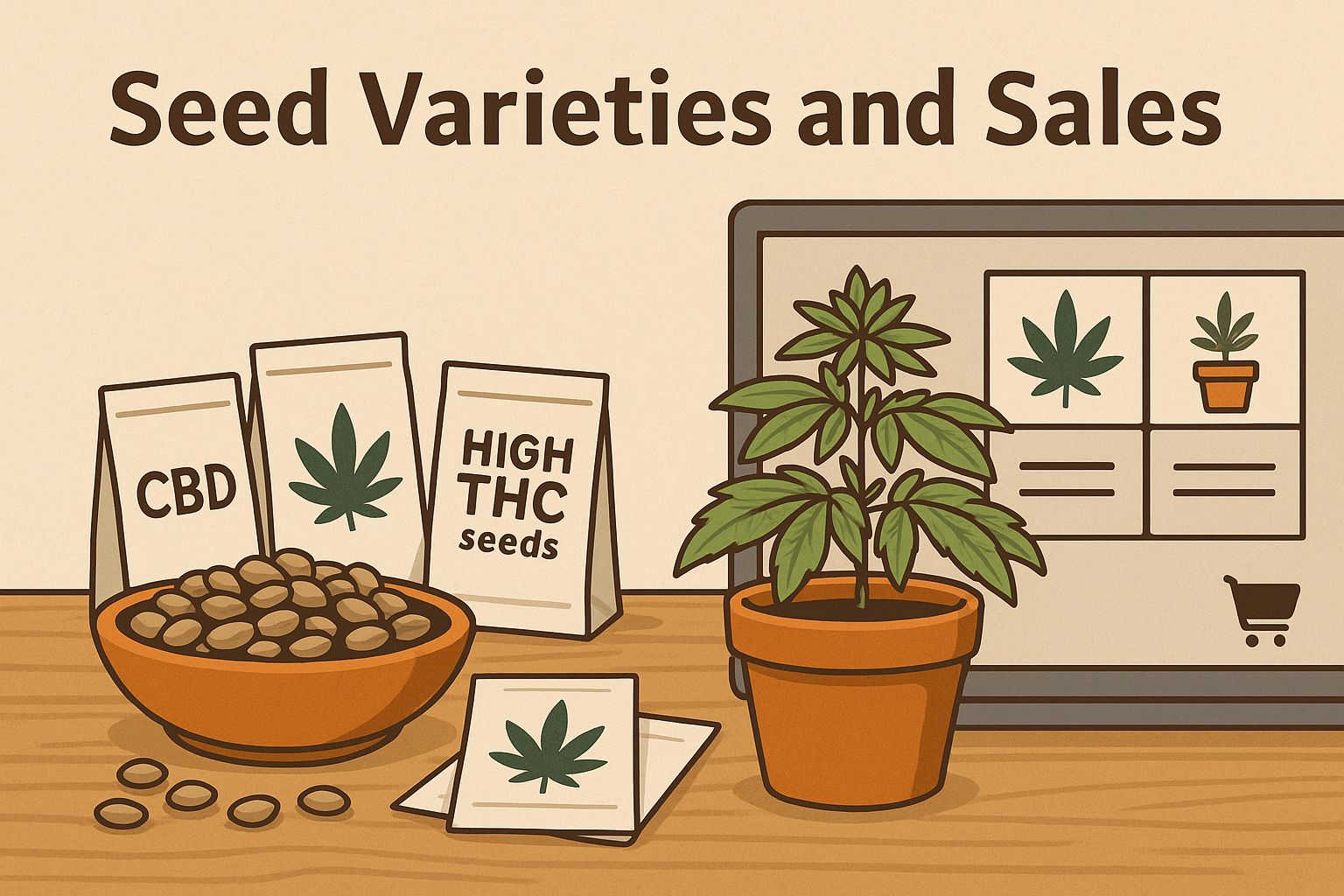
Why I Care So Much About Seed Choice
When I look back at my first few years of growing marijuana, most of my failures trace back to one thing: I did not understand cannabis seed varieties at all. I bought whatever was on sale, picked strains with cool names, and only sometimes checked whether they were autoflower cannabis seeds or photoperiods.
The result was predictable. I tried running long-flowering tropical sativas in a cold garage, crammed tall hybrids under a short tent, and planted finicky high THC weed seeds outdoors in a rainy climate where they were almost guaranteed to mold. I was frustrated with myself, not the plants.
Today, I treat seed choice as the foundation of the entire grow. Before I plug in a single light or mix a single nutrient, I ask a simple question: which cannabis seed varieties actually fit my space, climate, and schedule? Once I answered that honestly, both yield and quality started to climb, and my seed budget stopped disappearing into the compost bin.
In this article I will walk through how I now approach seed varieties and sales from a grower’s perspective: what I look for in feminized cannabis seeds, when I lean on autoflower cannabis seeds, how I decide between indica and sativa strains, and why buying from a reputable cannabis seed bank matters more than chasing discounts.
The Main Cannabis Seed Varieties Explained
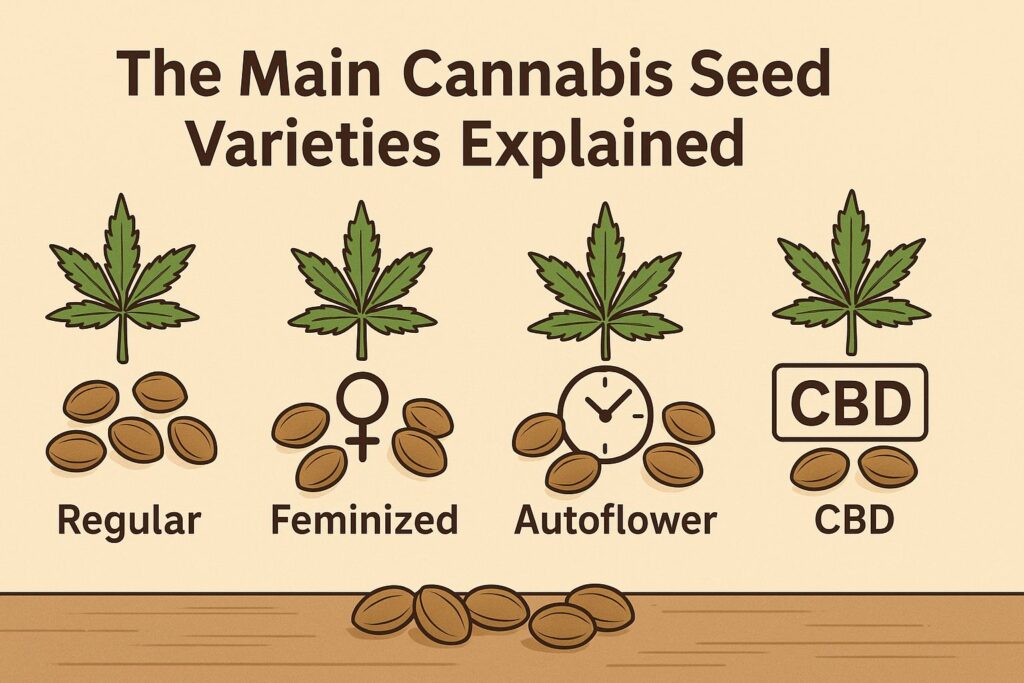
Before we talk about sales or shopping strategies, it helps to get clear on the major cannabis seed varieties you will see on a seed bank menu. Different breeders may use slightly different terms, but the big categories are quite consistent.
Regular cannabis seeds
My first experience with cannabis seed varieties was a bag of regular cannabis seeds from a friend of a friend. Regular seeds are produced from a male and female plant, so each seed has roughly a 50 percent chance of being male.
Regular cannabis seeds are useful if you want to hunt for unique phenotypes or make your own crosses, but they can be a headache in a small home grow. You must identify and remove the males before they drop pollen, which means learning to sex plants early and checking them daily in pre-flower.
I still run regular cannabis seeds once or twice a year when I am hunting something special, but most of my production runs rely on feminized cannabis seeds or autoflower cannabis seeds so I can use my limited space more efficiently.
Feminized cannabis seeds
Most home growers start with feminized cannabis seeds for a simple reason: nearly every seed should produce a female plant. Breeders create feminized cannabis seeds by using pollen from a female plant that has been reversed to produce pollen. When done correctly, this gives you consistent, all-female offspring.
For me, feminized cannabis seeds are the backbone of indoor cannabis seed selection. I can plan a tent knowing that every plant will carry buds into flower, and I do not waste weeks vegging males. When I buy feminized cannabis seeds, I look for:
- Clear flowering time in weeks
- Notes on mold resistance for my climate
- Whether the breeder describes them as more indica and sativa strains or balanced hybrids
- Grow difficulty (I prefer easy or medium for larger runs)
I also use feminized cannabis seeds for outdoor cannabis seed selection when I want consistently sized plants instead of a jungle of different phenotypes.
Autoflower cannabis seeds
Autoflower cannabis seeds flip the script on how we schedule a grow. Instead of relying on a 12/12 light cycle to initiate flowering, autoflower cannabis seeds start flowering automatically based on age, usually around three to five weeks from sprout.
At first I avoided autos because early generations had weaker potency, but modern autoflower cannabis seeds have come a long way. I now use them for:
- Fast outdoor runs in short summers
- Filling gaps between big indoor photoperiod cycles
- Beginner-friendly marijuana strains for friends who want a simple first grow
When I am doing indoor cannabis seed selection for autos, I am strict about pot size and light intensity. Autos hate being transplanted, and they need consistent PPFD from day one because they have no time to recover from stress.
CBD cannabis seeds
I started growing CBD cannabis seeds for a family member who wanted relief without feeling overly high. CBD cannabis seeds usually produce chemotypes with higher CBD ratios and often moderate THC.
These CBD cannabis seeds are not just for medical users; they also make excellent mixer material. I like to blend CBD-rich flower with high THC weed seeds in a joint when I want flavor and effect without going overboard.
In terms of structure and growth, CBD cannabis seeds behave like any other photoperiod variety. You still choose between indica and sativa strains, still decide whether you want feminized cannabis seeds or regular cannabis seeds, and still match them to your environment.
High THC weed seeds
Every seed bank has a shelf full of high THC weed seeds promising staggering potency. I enjoy these, but I have learned to approach high THC weed seeds with respect.
In my experience, high THC weed seeds demand:
- Stable environment with tight VPD control
- Adequate light levels (PPFD in the 700–900 range in flower)
- Good nutrient management and strong root health
When I am picking high THC weed seeds from a reputable cannabis seed bank, I read grower reviews closely. Some of the frostiest strains can be nutrient-sensitive or prone to mold, so I only run them once I am confident that my environmental control and training skills are solid.
Matching Seed Varieties To Space And Climate
No matter how exciting a strain looks on a website, it has to work in your actual space. This is where indoor cannabis seed selection and outdoor cannabis seed selection start to diverge.
Indoor cannabis seed selection
When I am doing indoor cannabis seed selection for my tents, I ask a few key questions:
- How tall can plants get before they hit the light or ceiling?
- How strong is my lighting, and how even is coverage?
- What kind of training am I comfortable with this run?
Compact indica and sativa strains that lean indica dominate my indoor cannabis seed selection because they respond well to topping, manifolding, and scrogging. Feminized cannabis seeds with 8–10 week flowering times are ideal; longer flowering sativas can be beautiful, but they demand patience and more vertical space.
I also use autoflower cannabis seeds when I want quick turns. For example, I may run autoflower cannabis seeds on a 20/4 schedule under the edges of my main light while a photoperiod crop finishes in the center.
Throughout indoor cannabis seed selection, I focus on breeder notes about stretch, internode spacing, and leaf size. In a tight tent, a plant’s shape can matter more than its THC percentage.
Outdoor cannabis seed selection
Outdoor cannabis seed selection has a different set of constraints. Here I care deeply about:
- My region’s first frost date
- Typical autumn rainfall
- Local mold pressure
For my coastal climate, outdoor cannabis seed selection leans heavily on fast-finishing feminized cannabis seeds and hardy indica and sativa strains with open bud structure. Long-flowering high THC weed seeds are more likely to mold before they ripen, so I keep them indoors.
I also rely on autoflower cannabis seeds outdoors. By starting them indoors and planting out after danger of frost, I can harvest autos before the wettest part of fall. This staggered outdoor cannabis seed selection means I am not putting all my buds at risk in a single late-season storm.
Reading Strain Descriptions Like A Grower, Not A Shopper
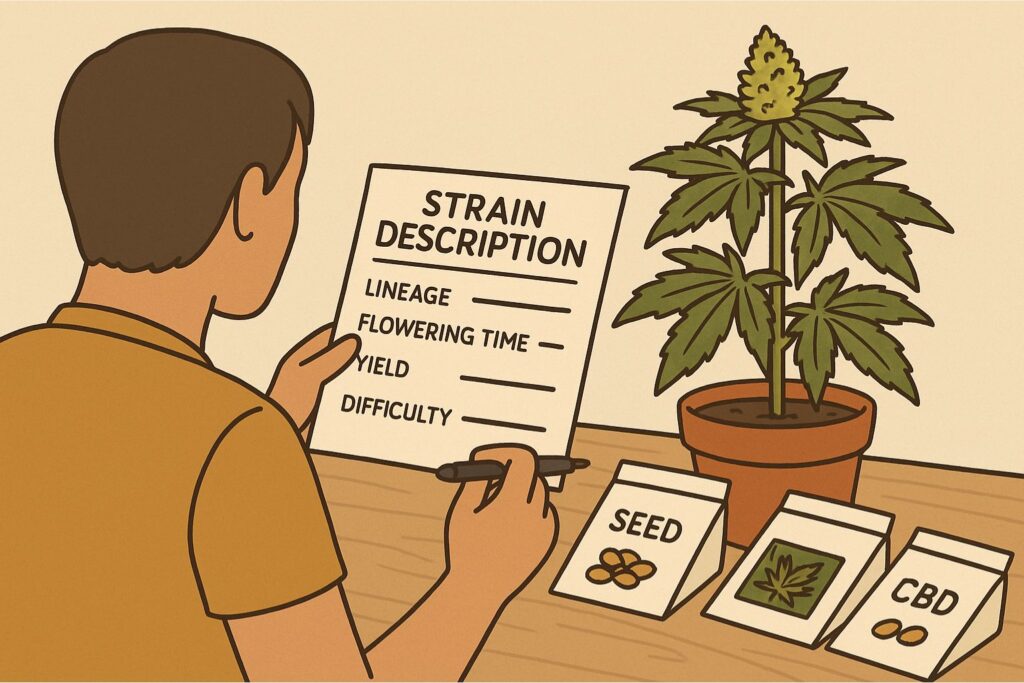
Seed bank listings can feel like a candy store, but experience taught me to read them like a grower. When reviewing cannabis seed varieties online, I skim past marketing language and focus on practical details.
Here is what I look for:
- Lineage: which indica and sativa strains were used and what that implies about structure and effect
- Flowering time: realistic windows rather than optimistic minimums
- Yield descriptions: moderate, high, or very high, paired with realistic expectations
- Difficulty: whether this is one of the breeder’s beginner-friendly marijuana strains
Beginner-friendly marijuana strains are typically more forgiving of nutrient errors and environmental swings. When I mentor new growers, I point them toward these beginner-friendly marijuana strains combined with feminized cannabis seeds so they can focus on basic skills like watering and training.
On the flip side, I save more demanding high THC weed seeds or unusual CBD cannabis seeds for runs where I can give them close attention.
Buying From A Reputable Cannabis Seed Bank
Once you know which cannabis seed varieties fit your grow, you still have to decide where to buy them. I cannot stress this enough: buying from a reputable cannabis seed bank is as important as choosing the right strain.
In the early days, I chased bargain packs from sketchy vendors. Germination rates were inconsistent, genetics were mislabeled, and shipping took months. After losing multiple cycles, I switched to a small list of trusted sellers.
A reputable cannabis seed bank earns that trust by:
- Providing clear strain descriptions and breeder information
- Offering germination guarantees or at least honest policies
- Shipping seeds discreetly and within a predictable timeframe
- Communicating about regional grow laws and where they can and cannot ship
Today, I maintain a short list of favorite vendors and rotate between them. Whenever I test a new shop, I start with a small order of feminized cannabis seeds and autoflower cannabis seeds I already know. If their versions match my expectations and the breeder’s descriptions, that seller might join my personal list of reputable cannabis seed bank options.
How I Plan A Seed Order Step By Step
Over time I developed a simple planning process so I do not get lost when browsing cannabis seed varieties.
- Define the goal
- Am I filling jars with everyday smoke, hunting a unique phenotype, or testing CBD cannabis seeds for a specific person?
- Choose environment
- Indoor cannabis seed selection or outdoor cannabis seed selection, or both.
- Decide on seed type
- For maximum production and simplicity, feminized cannabis seeds usually win.
- For speed or shoulder-season grows, autoflower cannabis seeds take the lead.
- For breeding projects, I go back to regular cannabis seeds.
- Narrow by flowering time and size
- Match indica and sativa strains to tent height or outdoor season length.
- Cross-check difficulty
- Favor beginner-friendly marijuana strains when I cannot babysit the grow.
- Place a realistic order
- I only buy as many cannabis seed varieties as I can actually run in the next year. This keeps my fridge from filling with old packs and helps me track which reputable cannabis seed bank each line came from.
Germination, Medium, And Lighting: Making Seeds Worth The Money
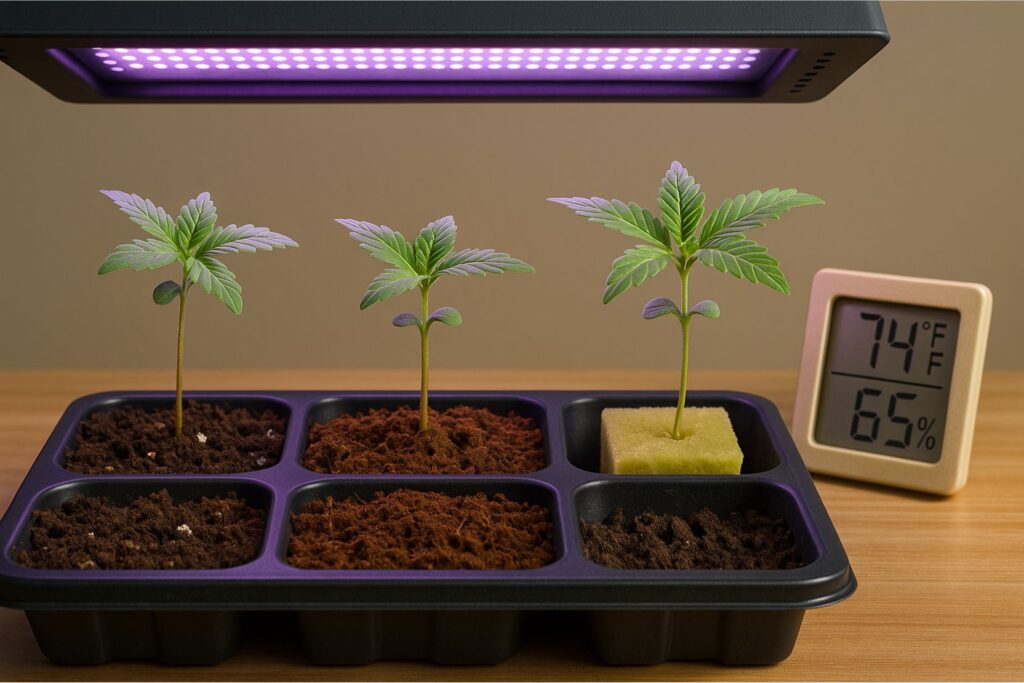
Seeds are only the first step. To get full value out of any cannabis seed varieties, you need solid fundamentals in germination and early growth.
I keep my germination routine simple:
- Soak seeds in room-temperature water for 12–24 hours
- Transfer to a moist paper towel in a vented container or directly into starter plugs
- Maintain temperatures around 24–26°C with gentle humidity
- Move sprouted seeds into a light, aerated medium like coco or seed-starting soil
When working with expensive feminized cannabis seeds or rare CBD cannabis seeds, I germinate a few extra in case of weak seedlings but still try to avoid overcrowding. Good airflow, modest light intensity (200–300 µmol/m²/s PPFD), and careful watering help young plants transition smoothly.
For autos, I place autoflower cannabis seeds directly into their final containers to avoid transplant shock. For regular cannabis seeds, I label each pot clearly so I can track which lines produce the best phenotypes later.
Lighting and nutrients should match the plant’s stage rather than the seed type, but I have noticed that high THC weed seeds and some fast-finishing indica and sativa strains respond especially well to strong, even LED coverage once they are established.
Balancing Soil, Coco, And Hydro For Different Seed Types
Soil vs hydro is a long-running debate, but I see them as tools for different goals. Most of my feminized cannabis seeds go into living soil or coco-based mixes, while some high THC weed seeds and CBD cannabis seeds end up in recirculating hydro when I want to push yield and dial in EC.
My general guidelines:
- Soil: forgiving, great for beginner-friendly marijuana strains and outdoor cannabis seed selection, pairs well with organic dry amendments.
- Coco: responsive, excellent for indoor cannabis seed selection when you want fast growth and precise control, especially for autoflower cannabis seeds.
- Hydro: powerful but demanding, better suited for experienced growers running selected clones from regular cannabis seeds or elite feminized cannabis seeds.
Whatever medium I choose, I keep environmental control tight. Mold does not care whether your roots are in soil or solution; it responds to leaf surface moisture, canopy density, and how well those cannabis seed varieties fit your space.
Frequently Asked Questions About Seed Varieties And Sales
How many cannabis seed varieties should a beginner start with?
When people ask me this, I usually say two or three at most. Choose a couple of beginner-friendly marijuana strains from a reputable cannabis seed bank, ideally feminized cannabis seeds with similar flowering times. This makes canopy management and feeding much easier than juggling a dozen different cannabis seed varieties with different needs.
Are autoflower cannabis seeds good for first-time growers?
Yes, with a caveat. Autoflower cannabis seeds simplify scheduling because they flower on their own, but they also give you less time to correct mistakes. If you can commit to proper lighting and watering from day one, autos can be excellent for indoor cannabis seed selection in a small space or quick outdoor runs. If you are very unsure of your basics, feminized cannabis seeds from beginner-friendly marijuana strains might be safer.
Do I need regular cannabis seeds if I never plan to breed?
Not necessarily. If your only goal is producing flower, feminized cannabis seeds and autoflower cannabis seeds will cover almost every scenario. Regular cannabis seeds shine when you want to hunt unique phenotypes, create your own crosses, or maintain genetic diversity. I still run regular cannabis seeds once or twice a year just to explore what is possible.
What is the safest way to buy seeds online?
Stick with a reputable cannabis seed bank that has been around for several seasons, has real grower reviews, and ships discreetly to your region. Read their policies on germination, shipping, and regional grow laws. Do not be afraid to start with a small order of CBD cannabis seeds or feminized cannabis seeds to test service before committing to a larger purchase.
How do I choose between high THC weed seeds and CBD cannabis seeds?
It depends on your goals. If you want strong psychoactive effects and dense, resinous buds, high THC weed seeds are the natural choice. If you or someone in your circle prefers gentler effects or wants to mix THC with CBD, add at least one pack of CBD cannabis seeds to your cart. Many growers eventually run both, blending them in different ratios after harvest.
Final Thoughts
Choosing cannabis seed varieties is not just a shopping decision; it is a cultivation strategy. The mix of feminized cannabis seeds, autoflower cannabis seeds, regular cannabis seeds, CBD cannabis seeds, and high THC weed seeds you keep in your fridge will shape your entire grow year.
By matching indica and sativa strains to your space, leaning on beginner-friendly marijuana strains when you are still learning, and ordering only from a reputable cannabis seed bank, you can turn seed varieties and sales from a confusing catalog into a clear, repeatable system.
Whenever I plan a new run now, I start by revisiting my notes and asking: which cannabis seed varieties fit my current goals, climate, and workload? Once I answer that honestly, everything that follows—from indoor cannabis seed selection to outdoor cannabis seed selection, from germination to harvest—becomes simpler, more predictable, and a lot more rewarding.
