Table of Contents
Sativa effects
Cannabis sativa is one of the two primary subspecies of the cannabis plant, alongside Cannabis indica. While popular descriptions often simplify the differences—sativa as uplifting, indica as sedating—scientific research reveals a more complex story involving phytochemical diversity, human biochemistry, and individual variability. Nevertheless, Cannabis sativa is widely recognized for producing a characteristic suite of psychoactive, cognitive, emotional, and physiological effects that distinguish it from indica varieties.
Understanding sativa’s effects requires an integrated look at cannabinoids, terpenes, flavonoids, plant morphology, and how these interact with the endocannabinoid system (ECS) and central nervous system (CNS).
Phytochemical Composition of Cannabis Sativa
Cannabinoids
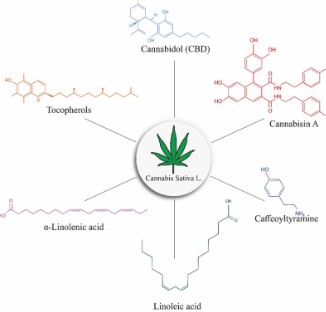
Cannabis sativa plants typically produce:
- High THC (Δ9-tetrahydrocannabinol): Primary psychoactive compound.
- Lower CBD (cannabidiol): Compared to indica strains.
- Minor cannabinoids: THCV (tetrahydrocannabivarin), CBC (cannabichromene), CBG (cannabigerol).
The THC content activates CB1 receptors predominantly located in the brain, leading to psychoactive effects. THCV—common in African sativas—modulates THC effects, sometimes reducing appetite and creating a sharper, shorter high compared to THC alone.
Terpenes
Sativa strains often exhibit a terpene profile rich in:
- Limonene: Uplifting, mood-enhancing.
- Pinene: Cognitive clarity, anti-inflammatory.
- Terpinolene: Mildly sedative but also creatively stimulating.
- Beta-caryophyllene: Anti-inflammatory, interacts with CB2 receptors.
The terpene composition modifies the effects of cannabinoids via the entourage effect, meaning the cumulative impact is greater than individual compounds.
Mechanisms of Sativa Effects on the Human Body and Brain
The Endocannabinoid System (ECS)
The ECS regulates mood, memory, appetite, pain, and homeostasis through:
- CB1 receptors: Highly expressed in the brain.
- CB2 receptors: Predominantly in peripheral tissues and immune cells.
THC acts as a partial agonist at CB1 receptors, altering neurotransmitter release, especially dopamine, glutamate, and GABA. This leads to the euphoric, energetic, and sometimes anxious responses seen with sativa strains.
CBD, when present, modulates the activity of THC by acting on serotonin (5-HT1A) and adenosine receptors, buffering potential negative outcomes like anxiety or tachycardia.
Neurotransmitter Systems Affected
Sativa strains particularly influence:
- Dopamine: Enhanced transmission leads to feelings of pleasure, motivation, and creativity.
- Serotonin: Mood elevation and anxiety modulation.
- Glutamate: Increased learning and memory processes.
- GABA: Reduced, leading to enhanced cortical excitability and thought acceleration.
Because of these interactions, sativa effects often include a sense of heightened awareness, improved focus, energy, and sociability.
Common Psychoactive Effects of Cannabis Sativa
1. Mood Elevation and Euphoria
Sativas are often chosen for their ability to boost mood and induce feelings of happiness. The dopaminergic stimulation caused by THC at CB1 receptors increases reward pathway activity in brain regions like the nucleus accumbens.
- Relevant conditions: Depression, seasonal affective disorder, low energy states.
2. Enhanced Creativity and Divergent Thinking
Sativa’s interaction with the prefrontal cortex, responsible for decision-making and creative thought, is often noted to expand associative thinking and abstract connections.
- Mechanisms: Glutamate modulation leads to less inhibitory control, fostering free-flowing ideas and new perspectives.
3. Increased Energy and Wakefulness
Due to reduced GABAergic inhibition and heightened glutamate transmission, many users experience energy boosts and alertness.
- Relevant terpenes: Limonene and pinene contribute to stimulation and cognitive sharpness.
4. Focus and Cognitive Clarity
Although high doses of THC can impair attention, moderate use of sativa strains with cognitive-supporting terpenes like pinene can temporarily enhance attention span, working memory, and executive function.
- Caveats: Overconsumption can cause distraction, hyperactivity, or anxiety in sensitive individuals.
5. Anxiogenic or Paradoxical Anxiety Effects
Some users report increased anxiety, racing thoughts, or paranoia, especially at high doses or in unfamiliar settings. This is likely due to THC’s hyperactivation of the amygdala, a brain region involved in fear processing.
- Modulating factors: Presence of CBD, THCV, individual genetics (e.g., FAAH polymorphisms).
Physiological Effects of Cannabis Sativa
- Appetite modulation: Unlike indica strains that stimulate appetite (the “munchies”), sativas containing THCV can suppress appetite at low doses.
- Heart rate increase: Sympathetic nervous system activation may lead to transient tachycardia.
- Analgesia: Though typically less sedating, sativas can still reduce perception of pain through CB1 and CB2 activation.
- Anti-inflammatory: Beta-caryophyllene binding at CB2 receptors modulates systemic inflammation.
- Gastrointestinal effects: Some sativas help reduce nausea, benefiting patients with chemotherapy-induced nausea.
Therapeutic Applications of Sativa-Dominant Strains
Although historically overshadowed by indica in medical contexts, recent clinical interest focuses on the unique properties of sativas for certain conditions:
| Condition | Mechanism of Action | Notes |
|---|---|---|
| Depression | Dopamine and serotonin modulation | Uplifting mood without heavy sedation. |
| Chronic fatigue | Dopaminergic stimulation | Increases motivation and energy. |
| ADHD | Glutamate modulation, mild dopamine enhancement | Potential to improve focus temporarily. |
| Migraines | Anti-inflammatory and vascular effects | Certain sativas reported as migraine preventatives. |
| Appetite suppression | THCV effects | Useful in metabolic disorders, obesity research. |
Notably, more clinical trials are needed, and sativas are not universally tolerated, particularly in anxiety-prone individuals.
Variability in Response: Genetic and Environmental Factors
Genetic Factors
Human genetics significantly influence cannabis responses. Polymorphisms in genes like:
- CNR1: Encoding CB1 receptor, affecting THC sensitivity.
- FAAH: Regulating endocannabinoid degradation, influencing baseline anxiety and THC reactivity.
- COMT: Influencing dopamine breakdown, linked to psychosis risk.
These variations explain why the same sativa strain might produce blissful euphoria in one person and panic attacks in another.
Environmental and Contextual Factors
- Set and setting: Psychological mindset and physical environment heavily impact the subjective effects of sativas.
- Dose dependence: Low vs. high doses can produce opposite effects (anxiolytic vs. anxiogenic).
- Previous experience: Cannabis-naïve users tend to have more unpredictable responses.
Limitations and Caveats in the Sativa vs. Indica Paradigm
Scientific reality: Sativa and indica classifications are increasingly viewed as botanical rather than chemical distinctions.
Modern strains are often hybrids, and chemovar profiling (quantifying cannabinoids and terpenes) provides more accurate predictions of effects than lineage.
In research settings, cannabis effects are now described by:
- Chemotype I: High-THC, low-CBD (common in sativas).
- Chemotype II: Balanced THC/CBD.
- Chemotype III: High-CBD, low-THC.
Thus, a sativa’s effects are better understood through chemical composition rather than genetic name alone.
Conclusion
Sativa effects are multifactorial, arising from a complex interplay between phytochemistry, human neurobiology, and environmental context. Scientifically, sativas are associated with euphoric, energetic, creative, and cognitive-enhancing effects due to high THC content, specific terpene profiles, and interaction with the ECS and CNS neurotransmitter systems.
However, individual variability is profound, influenced by genetic factors, baseline neurochemistry, tolerance, and external conditions. While sativas offer immense therapeutic and recreational potential, careful selection, dosing, and attention to set and setting are crucial for optimizing benefits and minimizing adverse outcomes.
As cannabis science advances, future classifications will likely move beyond simplistic labels like “sativa” toward personalized chemovar-based recommendations tailored to each user’s biological and psychological needs.
