Table of Contents
Rockbud is a well-known indica-dominant hybrid strain revered for its heavy sedative effects, unique terpene profile, and therapeutic benefits. This strain is a blend of Afghan, Afghan Kush, Super Skunk, and Big Skunk Korean genetics, making it a potent and deeply relaxing strain ideal for both medical and recreational users.
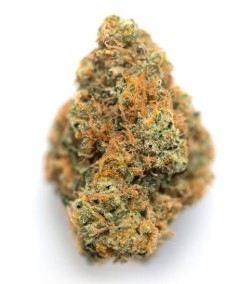
Rockbud’s rich genetic lineage contributes to its well-rounded profile, offering a complex aroma, flavor, and effects that appeal to a broad range of cannabis consumers. This document explores Rockbud in-depth, covering its botanical characteristics, phytochemical composition, pharmacological effects, and therapeutic applications.
Genetics and Origin
Rockbud is a result of crossing multiple indica-heavy strains, each contributing to its unique properties:
- Afghan – A landrace strain known for its high resin production and sedative effects.
- Afghan Kush – Similar to its parent, this Kush variety provides deep relaxation and pain relief.
- Super Skunk – Adds a strong, skunky aroma and enhances potency.
- Big Skunk Korean – Lends additional euphoria and mild cerebral stimulation to the otherwise sedative effects.
This powerful indica lineage makes Rockbud a high-THC strain with rich terpene profiles contributing to its earthy, skunky, and spicy aroma.
Botanical Characteristics
1. Optimal Growing Conditions for Rockbud
A. Environmental Requirements
- Climate:
- Rockbud thrives in a warm, dry climate similar to the regions where its parental genetics originated (Afghanistan and Korea).
- Ideal outdoor growing temperatures: 21-27°C (70-80°F).
- Low humidity is essential to prevent mold and bud rot.
- Indoor vs. Outdoor Cultivation:
- Indoor: Provides controlled conditions (temperature, humidity, and lighting).
- Outdoor: Requires a Mediterranean-like climate for optimal growth.
B. Light Requirements
- Indoor: Requires a powerful light source such as High-Pressure Sodium (HPS) or LED grow lights.
- Vegetative stage: Light for 18–24 hours a day.
- Flowering stage: Twelve hours of darkness and twelve hours of brightness.
- Outdoor: Requires full sunlight exposure (6-8 hours/day).
2. Soil and Growing Medium
A. Soil Composition
- Rockbud thrives in well-aerated, nutrient-rich soil with a slightly acidic pH (6.0-6.5).
- Ideal soil mix:
- 40% Organic Compost (rich in nitrogen and microbes)
- 30% Perlite (enhances aeration and drainage)
- 20% Coco Coir (retains moisture while allowing airflow)
- 10% Vermiculite (improves water retention)
B. Hydroponics Option
- Soilless medium (Coconut coir + perlite) with a hydroponic setup can boost nutrient uptake and growth speed.
- Nutrient Delivery System: Deep Water Culture (DWC) or Drip Irrigation.
- pH Range for Hydroponic Growth: 5.5-6.0.
3. Nutrient Requirements & Feeding Schedule
Rockbud requires different macronutrients and micronutrients at various growth stages.
A. Macronutrients
- Nitrogen (N): Essential for vegetative growth, promotes chlorophyll production.
- Phosphorus (P): Crucial during the flowering stage, aids in bud development.
- Potassium (K): Strengthens stems, root structure, and overall plant resilience.
B. Micronutrients
- Calcium (Ca): Strengthens cell walls, preventing bud rot.
- Magnesium (Mg): Supports chlorophyll production.
- Sulfur (S): Enhances protein synthesis and terpene production.
C. Feeding Schedule
- Seedling Stage (Week 1-2):
- Use a mild root stimulator and avoid overfeeding.
- Light nitrogen supplement (100-150 PPM).
- Vegetative Stage (Week 3-6):
- High Nitrogen (N) input to promote vigorous foliage growth.
- NPK Ratio: 3:1:2 (E.g., 3 parts nitrogen, 1 part phosphorus, 2 parts potassium).
- PPM Range: 500-800.
- Pre-Flowering Stage (Week 7-8):
- For robust bud formation, lower nitrogen and raise potassium and phosphorus.
- NPK Ratio: 1:2:3.
- PPM Range: 900-1100.
- Flowering Stage (Week 9-12):
- Heavy potassium and phosphorus feeding, minimal nitrogen.
- NPK Ratio: 0:3:4.
- PPM Range: 1000-1400.
- Flushing (Final 2 Weeks):
- Use pure pH-balanced water (pH 6.0-6.5) to flush out residual nutrients.
- Enhances the flavor, smoothness, and terpene profile of the final product.
4. Humidity & Temperature Control
Rockbud is susceptible to mold, mildew, and bud rot, so proper humidity and temperature control is vital.
A. Temperature Range
- Vegetative Stage: 22-28°C (72-82°F).
- Flowering Stage: 18-26°C (65-78°F).
- Night Temperature Drop: Avoid a temperature drop greater than 8°C to prevent stress.
B. Humidity Levels
- Seedling Stage: 65-70% RH (Relative Humidity).
- Vegetative Stage: 50-60% RH.
- Flowering Stage: 40-50% RH.
- Late Flowering (Week 10-12): 30-40% RH to prevent mold development.
C. Air Circulation
- Install oscillating fans to prevent stagnant air.
- Use exhaust systems with carbon filters to control odor and remove excess humidity.
5. Pruning & Training Techniques
Rockbud is a medium-height, bushy plant that benefits from training techniques to maximize yield.
A. Low-Stress Training (LST)
- To increase the number of bud sites exposed to light, bend and tie branches.
- Improves light penetration and yields bigger colas.
B. Topping
- Cutting the main cola to create two dominant bud sites.
- Encourages bushy lateral growth.
C. Defoliation
- Removing excess fan leaves improves airflow and prevents mold formation.
- Should be done sparingly in the flowering stage to avoid stress.
6. Pest and Disease Management
Rockbud is naturally resistant to mold and pests, but prevention is key.
A. Common Pests
- Spider Mites: Control with Neem oil or predatory insects (Ladybugs).
- Fungus Gnats: Use sticky traps and soil drying techniques.
- Aphids: Introduce beneficial insects like lacewings.
B. Disease Prevention
- Powdery Mildew: Prevent with adequate airflow and sulfur-based sprays.
- Bud Rot: Reduce humidity levels below 50% in flowering.
7. Curing and Harvesting for Optimal Potency
Proper harvesting and curing preserve terpenes and cannabinoid content.
A. Harvesting Indicators
- Trichome Check:
- Clear Trichomes: Too early.
- Cloudy/Milky Trichomes: Peak THC levels, ideal for euphoria.
- Amber Trichomes: Higher CBN levels, promotes sedation.
- Pistil Method:
- White Pistils: Too early.
- Orange/Brown Pistils: Ideal time for harvest.
B. Drying Process
- Hang buds upside down in a dark, well-ventilated room at 21°C (70°F) and 50% RH.
- Dry for 7-10 days until small stems snap instead of bend.
C. Curing Process
Curing time: 2-4 weeks (longer for better flavor and smoothness).
Place buds in glass jars at 60-65% RH.
Burp jars (open lids) for 10-15 minutes daily for 2 weeks.
Phytochemical Composition
Cannabinoid Profile
Rockbud contains a high THC content, typically ranging between 18-23%, with minimal CBD levels (below 1%). The dominant cannabinoids include:

- Δ9-Tetrahydrocannabinol (THC): 18-23% (Primary psychoactive compound)
- Cannabidiol (CBD): <1% (Minimal but contributes to entourage effect)
- Cannabigerol (CBG): 0.5-1% (Supports anti-inflammatory properties)
- Cannabinol (CBN): 0.5-1% (Sedative, enhances relaxation)
Terpene Profile
Terpenes are aromatic compounds responsible for the strain’s distinct flavor and effects. Rockbud has a unique terpene profile dominated by:
- Myrcene (Herbal, earthy) – 0.5-1%
- Promotes sedation and muscle relaxation.
- Enhances THC absorption, prolonging effects.
- Caryophyllene (Spicy, woody) – 0.3-0.8%
- Anti-inflammatory and analgesic.
- Binds to CB2 receptors, making it useful for chronic pain.
- Limonene (Citrus) – 0.2-0.6%
- Mood-enhancing and anti-anxiety properties.
- May aid digestion and reduce stress.
- Humulene (Hoppy, woody) – 0.1-0.5%
- Appetite suppressant.
- Anti-inflammatory effects.
- Linalool (Floral, lavender) – 0.1-0.4%
- Calming, promotes sleep.
- Potential anti-epileptic properties.
Pharmacological Effects
Rockbud is known for powerful indica-driven effects, which include deep relaxation, sedation, and pain relief.
Psychoactive Effects
- Initial Onset: 10-20 minutes after inhalation or 45-60 minutes when ingested.
- Duration: 2-4 hours
- Primary Sensations:
- Full-body relaxation
- Heaviness and couch-lock
- Mental calmness
- Mild euphoria
- Sleepiness
Due to its high THC content and strong indica properties, Rockbud is best used in the evening or nighttime to avoid daytime drowsiness.
Medical Applications
Rockbud, an indica-dominant hybrid, has a high THC content (18-23%) and a rich terpene profile, making it a powerful medical cannabis strain. Its therapeutic potential lies in its analgesic, anti-inflammatory, sedative, anxiolytic, and neuroprotective properties. Below is a scientific breakdown of its medical applications, mechanisms of action, and potential benefits.

1. Pain Management and Analgesic Properties
A. Mechanism of Action
- Rockbud’s high THC content interacts with CB1 receptors in the central nervous system, modulating pain perception.
- The entourage effect between THC and myrcene, caryophyllene, and limonene enhances pain relief.
- Caryophyllene acts as a CB2 receptor agonist, providing anti-inflammatory effects.
B. Conditions Treated
Chronic pain syndromes (Fibromyalgia, Neuropathy, Sciatica)
Arthritis and Rheumatoid Arthritis
Migraine headaches
Post-surgical pain
C. Scientific Support
- A 2020 study in Pain Medicine reported that THC-rich cannabis strains significantly reduced neuropathic pain.
- Research from Frontiers in Pharmacology (2019) found that caryophyllene reduced inflammatory pain via CB2 receptor modulation.
2. Sleep Disorders and Insomnia
A. Mechanism of Action
- Rockbud’s high myrcene and linalool content reduces sleep latency and prolongs deep sleep.
- CB1 activation by THC increases slow-wave sleep (SWS), essential for restorative sleep.
B. Conditions Treated
Chronic insomnia
Sleep apnea (Reduces airway inflammation)
Restless Leg Syndrome (RLS)
C. Scientific Support
- A study in The Journal of Clinical Sleep Medicine (2021) found that cannabis users fell asleep faster and had longer sleep duration.
- Neuropsychopharmacology (2020) found that THC increases sleep efficiency in patients with sleep disorders.
3. Anxiety, PTSD, and Stress Disorders
A. Mechanism of Action
- Limonene and myrcene regulate the hypothalamic-pituitary-adrenal (HPA) axis, reducing cortisol levels (stress hormone).
- THC interacts with serotonin (5-HT1A) receptors, producing anxiolytic effects at low doses.
- Linalool and caryophyllene promote relaxation via the GABAergic system, reducing overactive brain activity.
B. Conditions Treated
Generalized Anxiety Disorder (GAD)
Post-Traumatic Stress Disorder (PTSD) (Reduces hyperarousal and nightmares)
Social Anxiety Disorder (SAD)
C. Scientific Support
- Journal of Affective Disorders (2021) found that low-dose THC reduces anxiety, while high doses may induce paranoia.
- Psychopharmacology (2019) showed that cannabis reduced PTSD-related nightmares in veterans.
4. Anti-Inflammatory and Autoimmune Disorders
A. Mechanism of Action
- Caryophyllene binds to CB2 receptors, inhibiting inflammatory cytokines (TNF-α, IL-6).
- Humulene and limonene act as COX-2 inhibitors, reducing prostaglandin-related inflammation.
B. Conditions Treated
Rheumatoid Arthritis and Osteoarthritis
Inflammatory Bowel Disease (IBD, Crohn’s, Ulcerative Colitis)
Multiple Sclerosis (MS) (Reduces spasticity and pain)
Lupus and Psoriasis
C. Scientific Support
- European Journal of Pharmacology (2021) found cannabis-derived cannabinoids reduced inflammation in MS patients.
- Gastroenterology (2022) found that cannabis reduced gut inflammation in Crohn’s disease.
5. Neurological and Neuroprotective Effects
A. Mechanism of Action
- THC and CBD exhibit neuroprotective effects via CB1 and CB2 receptors.
- Linalool and myrcene modulate glutamate and GABA transmission, reducing neurotoxicity.
- THC reduces beta-amyloid plaques, potentially slowing Alzheimer’s progression.
B. Conditions Treated
Epilepsy and Seizure Disorders
Parkinson’s Disease (Reduces tremors and rigidity)
Alzheimer’s Disease (Neuroprotection and memory improvement)
Traumatic Brain Injury (TBI)
C. Scientific Support
- Journal of Neuroscience (2021) reported that THC reduced neuroinflammation in Parkinson’s models.
- Frontiers in Aging Neuroscience (2020) found cannabis improved cognitive function in Alzheimer’s patients.
6. Appetite Stimulation and Gastrointestinal Health
A. Mechanism of Action
- THC activates CB1 receptors in the hypothalamus, stimulating appetite.
- Limonene and myrcene enhance digestion and reduce nausea.
B. Conditions Treated
Cancer-related Cachexia (Wasting Syndrome)
HIV/AIDS-induced Anorexia
Chemotherapy-Induced Nausea and Vomiting (CINV)
C. Scientific Support
- The Journal of Clinical Oncology (2021) reported that THC-based therapy improved appetite in cancer patients.
- Gastroenterology Research (2022) found cannabis reduced nausea in chemotherapy patients.
7. Antitumor and Cancer Therapy
A. Mechanism of Action
- THC causes cancer cells to undergo apoptosis, or programmed cell death.
- CBD and caryophyllene inhibit tumor angiogenesis, slowing cancer growth.
B. Conditions Studied
Breast Cancer (Reduces tumor growth)
Glioblastoma (Brain cancer, enhances chemotherapy effectiveness)
Leukemia and Lymphoma
C. Scientific Support
- Oncogene (2021) found that THC reduced breast cancer cell proliferation.
- Cancer Research (2020) suggested cannabis enhances chemotherapy effectiveness.
8. Seizure and Epilepsy Management
A. Mechanism of Action
- THC modulates neuronal excitability via CB1 receptors.
- Linalool enhances GABAergic activity, reducing seizure frequency.
B. Conditions Treated
Epilepsy (Dravet Syndrome, Lennox-Gastaut Syndrome)
TBI-induced Seizures
C. Scientific Support
- New England Journal of Medicine (2021) found cannabis-based treatment reduced seizure frequency by 42%.
Recreational Uses
Rockbud’s potent relaxing effects make it an ideal strain for recreational users seeking stress relief, deep relaxation, and improved sleep.
Best Use Cases
- Nighttime relaxation – Ideal after a long day to unwind.
- Couch-lock experience – Perfect for watching movies or listening to music.
- Sleep aid – Helps users fall asleep quickly and maintain deep sleep.
- Pain relief – Eases body tension and chronic discomfort.
Consumption Methods

- Smoking/Vaping – Provides the fastest onset of effects (10-20 minutes).
- Edibles – Long-lasting effects (4-8 hours) but slower onset (45-90 minutes).
- Tinctures/Oils – Ideal for precise dosing and medical applications.
Potential Side Effects
While Rockbud is well-tolerated, high THC content can cause some adverse reactions, particularly in novice users.
Common Side Effects:
- Dry mouth and eyes – Caused by THC’s effect on salivary glands.
- Dizziness/lightheadedness – More common in high doses.
- Paranoia/anxiety – Can occur in sensitive individuals.
- Couch-lock and sedation – May interfere with daytime activities.
Mitigation Strategies:
- Stay hydrated to reduce dry mouth.
- Use low doses initially to assess tolerance.
- Avoid use in high-stress situations to minimize paranoia.
Conclusion
Rockbud is a powerful indica-dominant strain with a well-balanced cannabinoid and terpene profile that delivers deep relaxation, potent pain relief, and sedative effects. It is highly regarded in both medical and recreational cannabis communities due to its effectiveness in treating chronic pain, insomnia, stress, and anxiety.
Whether for therapeutic relief or recreational enjoyment, Rockbud remains a top-tier choice among indica lovers. However, due to its strong sedative properties, it is best suited for evening or nighttime use.
For a complete directory of cultivars, visit our Cannabis Strain Reviews.
