Table of Contents
Red Bruce is a striking and potent hybrid cannabis strain that combines the vigor of Bruce Banner with rare phenotypes that express reddish hues, sometimes linked to Red Cherry Berry or Red Poison genetics. Known for its high THC content, strong cerebral stimulation, and vivid coloration, Red Bruce is a visually and physiologically intense cultivar.
As a sativa-dominant hybrid, Red Bruce offers a stimulating and euphoric experience, making it popular among recreational users seeking creativity and mood enhancement. Simultaneously, its diverse cannabinoid-terpene profile lends it significant therapeutic value for conditions such as chronic pain, stress, depression, fatigue, and inflammation.
Genetic Lineage and Phenotype Expression
Parentage
Red Bruce is typically derived from:
- Bruce Banner (Strawberry Diesel × OG Kush)
- A red-phenotype strain, often Red Cherry Berry, Red Poison, or a purple/red skunk hybrid
Genotype & Phenotype Characteristics
- Sativa-dominant hybrid (≈ 60–70% sativa, 30–40% indica)
- THC content: 20–27%
- CBD content: <1% (may vary with phenotype)
- Flower structure: Dense, frosty buds with red, maroon, or deep purple hues
- Aromas and flavors: Diesel, sweet berries, citrus, earthy pine
- Flowering time: 8–10 weeks (indoor), late September to early October (outdoor)
- Yield: Medium to high (450–600g/m² indoors; 600–800g/plant outdoors)
The visual profile, including reddish anthocyanin pigments, often results from cooler flowering temperatures and specific genotype expression.
Cannabinoid Profile
Red Bruce is generally high in THC with only trace amounts of CBD, although some phenotypes exhibit moderate levels of minor cannabinoids like CBG, CBC, and THCV.
| Cannabinoid | Average Content | Medical Actions |
|---|---|---|
| THC | 20–27% | Euphoria, analgesia, anti-nausea, appetite stimulant |
| CBD | <1% | Anxiolytic, antipsychotic, anti-inflammatory |
| CBG | 0.5–1% | Neuroprotective, anti-anxiety, antibacterial |
| CBC | <0.5% | Mood elevation, inflammation reduction |
| THCV | Trace–0.3% | Appetite suppressant, anti-epileptic, focus enhancer |
The high THC content drives strong psychoactive effects and contributes to potent pain relief and mood enhancement, while minor cannabinoids provide additional anti-inflammatory and neuroprotective support.
Terpene Profile
The terpene makeup of Red Bruce is heavily influenced by its Diesel and Kush ancestry, with berry and citrus notes.
| Terpene | Effect Profile |
|---|---|
| Myrcene | Sedative, analgesic, muscle relaxant |
| Limonene | Antidepressant, anxiolytic, anti-inflammatory |
| Caryophyllene | CB2 agonist, pain relief, gut health, neuroprotection |
| Pinene | Alertness, bronchodilator, memory support |
| Humulene | Anti-inflammatory, appetite suppressant |
These terpenes interact synergistically with cannabinoids to enhance Red Bruce’s therapeutic and recreational effects, a phenomenon known as the entourage effect.
Medical Applications
I. Overview of Medical Potential
Red Bruce is a sativa-dominant hybrid derived from Bruce Banner and red-phenotype genetics (such as Red Cherry Berry or Red Poison), known for its high THC content (20–27%), moderate CBD/CBG levels, and a terpene profile dominated by limonene, caryophyllene, myrcene, pinene, and humulene.
This chemical profile makes Red Bruce a multi-mechanistic strain with the ability to target:
- Pain modulation
- Neuroinflammation
- Mood and anxiety regulation
- Appetite stimulation
- Fatigue
- Gastrointestinal discomfort
- Neuroprotection and spasticity relief
Its primary therapeutic effects stem from cannabinoid receptor modulation (CB1/CB2), TRP channel interaction, and monoamine regulation (serotonin, dopamine, GABA).
II. Cannabinoid Composition and Pharmacodynamics
| Cannabinoid | Approx. Range | Activity |
|---|---|---|
| THC | 20–27% | CB1/CB2 partial agonist; analgesic, antiemetic, psychoactive |
| CBD | <1% (varies) | Indirect ECS modulation, 5-HT1A agonist; anxiolytic, antipsychotic |
| CBG | ~0.5–1% | CB1/CB2 partial agonist, α2-adrenergic and TRPV1 activator; neuroprotective |
| CBC | <0.5% | TRP channel modulator; anti-inflammatory, antidepressant potential |
| THCV | Trace–0.3% | CB1 antagonist/agonist (dose-dependent); appetite modulation, anticonvulsant |
Mechanisms of Action
- CB1 receptor activation (THC) → Inhibits excitatory neurotransmitters (e.g., glutamate), reducing pain perception, anxiety, and nausea. Also enhances dopamine and endorphin release, improving mood and reward sensitivity.
- CB2 receptor modulation (caryophyllene, CBG, THC) → Modulates immune cell activity, reducing inflammatory cytokine production, relevant for arthritis, IBD, and chronic inflammation.
- 5-HT1A serotonin receptor activation (CBD, CBG) → Produces anxiolytic and antidepressant-like effects by modulating serotonin neurotransmission.
- TRPV1 (vanilloid) channel activation (CBD, CBG, CBC) → Modulates neuropathic pain and thermoregulation, relevant in fibromyalgia, migraines, and seizure control.
- Dopaminergic modulation (THC) → Stimulates motivation, euphoria, and counters depressive symptoms at controlled doses.
III. Condition-Specific Medical Uses
1. Chronic and Neuropathic Pain
Red Bruce’s high THC content, along with myrcene and caryophyllene, makes it highly effective for chronic pain management, particularly in neuropathic or inflammatory conditions.

Scientific Rationale:
- THC activates CB1 receptors in nociceptive (pain-sensing) neurons, reducing pain transmission at the spinal and supraspinal levels.
- Myrcene acts as a muscle relaxant and may synergize with THC to enhance analgesia via opioid receptor pathways.
- Caryophyllene, as a selective CB2 agonist, reduces peripheral inflammation and immune-driven pain.
Applicable Conditions:
- Sciatica, fibromyalgia
- Multiple sclerosis-related spasticity
- Post-surgical pain
- Migraines and cluster headaches
- Arthritis (RA and OA)
2. Depression and Mood Disorders
The dopaminergic and serotonergic effects of Red Bruce’s cannabinoids and terpenes promote antidepressant activity and mood stabilization.
Mechanisms Involved:
- THC increases dopamine release in the mesolimbic pathway (ventral tegmental area to nucleus accumbens), improving motivation and reward sensitivity.
- Limonene enhances serotonin and dopamine activity in the prefrontal cortex.
- CBD (if present) and CBG support 5-HT1A receptor activation, leading to reduced stress and enhanced emotional resilience.
- CBC may support hippocampal neurogenesis, associated with long-term mood stability.
Target Conditions:
- Major depressive disorder
- Dysthymia
- Depression related to chronic illness
- Burnout syndrome
Caution: High doses of THC may cause dysphoria or emotional volatility in sensitive users or those with bipolar tendencies.
3. Anxiety and Stress-Related Disorders
Although THC can exacerbate anxiety at high doses, Red Bruce’s terpene buffering (limonene, caryophyllene) and the presence of CBD/CBG provide anti-anxiety effects, especially at low to moderate doses.
Mechanisms:
- Low-dose THC reduces amygdala hyperactivity, suppressing fear responses.
- Limonene modulates the hypothalamic-pituitary-adrenal (HPA) axis, reducing cortisol levels.
- Caryophyllene reduces neuroinflammation in the central amygdala, a key center for fear processing.
- CBD and CBG exert anxiolytic effects via 5-HT1A receptor stimulation.
Applicable Conditions:
- Generalized Anxiety Disorder (GAD)
- Social anxiety (situational dosing)
- PTSD (supportive use for hyperarousal and nightmares)
- Adjustment disorders with stress and panic
Note: To avoid paradoxical anxiety from THC, Red Bruce should be microdosed or paired with CBD-rich strains in anxious individuals.
4. Fatigue, Brain Fog, and Low Motivation
Due to its energizing and clear-headed sativa-like effects, Red Bruce is well-suited for fatigue management and cognitive support.
Key Features:
- THCV (if present) and pinene support wakefulness and dopaminergic tone, aiding focus and alertness.
- Limonene may improve working memory and cognitive flexibility under stress.
- CBG supports mitochondrial function and neuroprotection, possibly aiding chronic fatigue syndromes.
Useful For:
- Chronic fatigue syndrome (CFS/ME)
- ADHD (adjunct, non-sedating support)
- Morning “brain fog”
- Cancer-related fatigue
- Post-viral fatigue syndromes (e.g., Long COVID)
5. Appetite Stimulation and Gastrointestinal Support
Red Bruce, with its high THC and subtle limonene/caryophyllene balance, stimulates hunger while modulating GI inflammation.
Mechanism:
- THC activates CB1 receptors in the lateral hypothalamus and olfactory bulb, increasing hunger and enhancing the appeal of food.
- THC and CBD (if present) reduce nausea and vomiting through brainstem chemoreceptor zone modulation.
- Caryophyllene and CBG soothe gut inflammation by acting on CB2 receptors in the GI tract.
Medical Uses:
- Chemotherapy-induced nausea and anorexia
- HIV/AIDS-related cachexia
- IBS and IBD with poor appetite
- Gastroparesis (with co-administered prokinetics)
6. Neuroinflammatory and Neurodegenerative Disorders
The minor cannabinoids and terpenes in Red Bruce provide neuroprotection and anti-inflammatory activity in the CNS.
Mechanisms:
- CBG and CBD reduce microglial activation and oxidative stress.
- Caryophyllene suppresses NF-κB and cytokine signaling in CNS immune cells.
- TRPV1 activation (CBD/CBG) modulates neuronal excitability, potentially preventing seizure activity and excitotoxicity.
Potential Applications:
- Multiple sclerosis (MS): spasticity, neuropathic pain
- Early Parkinson’s disease: rigidity, anxiety, sleep disturbances
- Alzheimer’s disease (supportive role in cognition and agitation)
- Huntington’s disease (neuroprotection, mood)
- Mild traumatic brain injury (inflammation reduction)
7. Spasticity and Motor Disorders
THC’s action on CB1 receptors in the spinal cord and basal ganglia improves motor coordination and reduces muscle rigidity.
Indications:
- MS-related spasticity
- Cerebral palsy (pain and rigidity)
- Spinal cord injury (muscle tone, bladder control)
Combined with CBD, the effect is enhanced and side effects reduced.
IV. Entourage Effect: Cannabinoid-Terpene Synergy
| Compound Combination | Effect |
|---|---|
| THC + Myrcene | Deep muscle relaxation, analgesia |
| THC + Limonene | Euphoria + anti-anxiety |
| THC + Pinene | Alertness, improved short-term memory |
| THC + Caryophyllene | Anti-inflammatory and gut-calming synergy |
| THC + CBD + CBG | Balanced mood lift, anxiety reduction, neuroprotection |
V. Dosing Considerations
Medical Use Guidelines
| Condition | Preferred THC Dose | Route | Notes |
|---|---|---|---|
| Pain | 5–15 mg | Inhaled/Tincture | Divide doses; pair with CBD if chronic use |
| Anxiety/Depression | 1–5 mg | Vapor/Tincture | Start low; avoid edibles initially |
| Appetite stimulation | 5–10 mg | Inhaled/Oral | Take 30 min before meals |
| Neuroprotection | 5–10 mg THC + CBD/CBG | Tincture/Capsule | Microdosing strategy over time |
| Spasticity | 5–15 mg | Oral/Inhaled | Combine with stretching or PT |
VI. Safety and Limitations
Risks
- High doses may cause tachycardia, anxiety, and short-term memory impairment
- THC can lower blood pressure and impair coordination
- Not suitable for pregnant, breastfeeding, or high-risk psychiatric populations
Drug Interactions
- CYP450 inhibition: CBD can interfere with metabolism of warfarin, SSRIs, etc.
- THC may potentiate sedatives (e.g., benzodiazepines)
- Avoid with anticholinergic medications due to dry mouth and GI effects
Tolerance and Dependence
- THC tolerance builds with daily use; consider tolerance breaks
- Psychological dependence is possible with high-dose, long-term use
Cultivation Science
I. Strain-Specific Growth Overview
Red Bruce is a sativa-dominant hybrid that exhibits both vigorous vertical growth and dense lateral branching, inherited from its Bruce Banner and potentially Red Cherry Berry or Red Poison lineage. Cultivators are drawn to it for:
- High THC expression (20–27%)
- Rich red/purple coloration (in cooler climates)
- Dense trichome coverage (ideal for concentrates)
- Complex terpene profile (limonene, myrcene, caryophyllene)
Phenotype variability should be anticipated, especially with red-leaning genetics — environmental cues can dramatically affect pigment and cannabinoid outcomes.
II. Environmental Conditions
1. Temperature and Humidity (VPD-Based Approach)
Vapor Pressure Deficit (VPD) is a critical metric for managing transpiration and plant metabolism. Red Bruce prefers tight VPD control to balance resin production and prevent stress-induced mold.
| Growth Stage | Day Temp (°C) | Night Temp (°C) | RH (%) | Target VPD (kPa) |
|---|---|---|---|---|
| Seedling | 23–26 | 21–23 | 65–70 | 0.6–0.8 |
| Vegetative | 24–28 | 20–22 | 55–65 | 0.8–1.2 |
| Early Flower | 22–26 | 18–21 | 50–55 | 1.1–1.3 |
| Late Flower | 20–24 | 16–19 | 40–45 | 1.3–1.6 |
| Ripening (last 7–10 days) | 18–22 | 14–17 | 35–40 | 1.5–1.7 |
2. Light Spectrum and Intensity
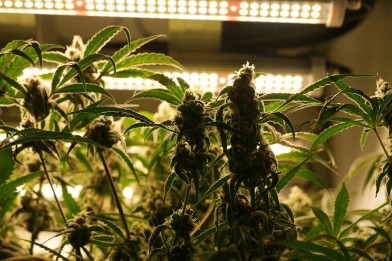
Red Bruce responds well to high PPFD and full-spectrum light, particularly:
- Veg (18/6): 400–600 µmol/m²/s; blue-rich spectrum (430–470 nm) for compact, lush growth
- Flower (12/12): 700–1000 µmol/m²/s; red-rich spectrum (630–680 nm), with supplemental UV-B (280–315 nm) in weeks 6–9 to boost trichome density and THC expression
- Far-red (720–740 nm) for improved photosynthetic efficiency and faster transition to flowering
Photoperiod Sensitivity: Red Bruce begins flowering reliably under 12 hours of darkness, but response time may vary slightly by phenotype.
III. Substrate and Root Zone Science
Preferred Mediums
| Medium | Advantages |
|---|---|
| Living Soil | Enhanced flavor, microbial terpene synergy |
| Coco Coir | Faster growth, better aeration |
| Hydroponics | Precise nutrient control, high yield |
pH Ranges:
- Soil: 6.0–6.5
- Coco: 5.8–6.2
- Hydro: 5.6–6.1
Red Bruce is sensitive to pH drift, particularly in late flowering where micronutrient bioavailability directly impacts resin production.
IV. Nutrient Management
Macronutrient Strategy
| Stage | N | P | K | Notes |
|---|---|---|---|---|
| Vegetative | High | Medium | High | Supports structural growth and leaf expansion |
| Early Flowering | Medium | High | High | Promotes bud initiation and energy production |
| Late Flowering | Low | Very High | Very High | Boosts resin synthesis and terpene production |
| Ripening | Very Low | Moderate | Moderate | Prevents harsh smoke; flushes excess salts |
Supplements:
- Silicon (Si): Improves stem rigidity, pest resistance
- Calcium and Magnesium (Ca/Mg): Crucial for trichome gland integrity, especially in coco
- Sulfur: Required for terpene biosynthesis, particularly myrcene and caryophyllene
Micronutrients
Red Bruce requires careful monitoring of:
- Zinc (Zn): For enzymatic function and auxin regulation
- Iron (Fe): Chlorophyll synthesis
- Manganese (Mn): Photosystem II efficiency
Deficiencies manifest quickly as leaf mottling or slowed growth, particularly under high-intensity lighting.
V. Plant Training and Canopy Management
Due to its sativa-like stretch, Red Bruce requires training to control vertical height and enhance lateral yield.
Techniques That Work Well
- Low-Stress Training (LST): Bends branches outward to expose bud sites
- Topping/FIM: Encourages symmetrical growth and multiple colas
- Screen of Green (ScrOG): Maximizes light penetration across the canopy
- Selective Defoliation: Improves airflow, light access, and trichome development in flowering
Timing:
- Top once at week 3–4 veg
- Begin LST early to avoid lignification
- Defoliate at day 21 and day 42 of flowering for optimal bud site exposure
VI. Flowering Phase and Resin Optimization
Timeline
- Weeks 1–2: Transition stretch (1.5–2x height increase)
- Weeks 3–5: Calyx formation and early trichome development
- Weeks 6–8: Peak resin and cannabinoid synthesis
- Week 9–10: Ripening — terpene peak and anthocyanin expression (with temp drop)
Environmental Tricks for Resin Boost
- Drop night temps to 15–17°C in late flower to:
- Induce anthocyanin (red/purple pigment) production
- Trigger stress signals that increase terpene and cannabinoid output
- UV-B supplementation in weeks 6–9 (15–30 minutes/day)
- Withhold heavy nitrogen after week 5 to avoid chlorophyll retention and terpene suppression
VII. Harvest, Drying, and Curing
Harvest Indicators
- Trichomes: 80–90% cloudy, 10–20% amber (for balanced effects)
- Pistils: 75–85% darkened and curled
- Aroma: Rich berry-fuel smell at its peak
Drying
- Temperature: 18–21°C
- Humidity: 50–60%
- Time: 10–14 days
- Use dark drying spaces to prevent terpene degradation
Curing
- Glass jars at 60–62% RH
- Burp once a day for two weeks, then once a week for four to six weeks.
- Total cure time: 30–45 days minimum
VIII. Pest and Disease Management
Red Bruce is moderately resistant to mold but susceptible to:
- Powdery mildew (high humidity + dense canopy)
- Spider mites (under-lit indoor corners)
- Fungus gnats (in overwatered soil)
IPM Strategy
- Neem oil or potassium bicarbonate as foliar (pre-flower only)
- Beneficial insects (e.g., Hypoaspis miles, predatory mites)
- Bacillus thuringiensis (BTi) in soil for larval control
- Lactobacillus and EM-1 sprays to boost phyllosphere health
IX. Cultivation Summary Table
| Parameter | Optimal Range |
|---|---|
| Light Intensity (flower) | 700–1000 µmol/m²/s |
| Flowering Time | 8–10 weeks |
| Yield (Indoor/Outdoor) | 450–600g/m² / 600–800g/plant |
| EC Levels (nutrient feed) | Veg: 1.2–1.6; Flower: 1.8–2.2 |
| Root Zone pH | 5.8–6.5 |
| Night Temp (ripening) | 15–17°C (for anthocyanins) |
| Harvest RH/Temp (drying) | 50–60% RH, 18–21°C |
X. Cultivation Challenges & Solutions
| Challenge | Solution |
|---|---|
| Height control during stretch | Pre-emptive topping and ScrOG netting |
| Terpene loss during drying | Slow dry in cool, dark space; no fans directly on buds |
| Inconsistent red pigmentation | Drop night temps in final 2 weeks; use phenotype with anthocyanin potential |
| Mold in dense colas | Defoliate interior leaves, use oscillating fans |
| Nutrient lockout | Regular runoff pH/EC checks; flush if EC spikes |
Safety Considerations
Common Side Effects
- Dry mouth (xerostomia)
- Dry/red eyes
- Mild dizziness or orthostatic hypotension
- Anxiety or racing thoughts at high doses
Contraindications
- History of psychosis or bipolar disorder
- Pregnancy and breastfeeding
- Cardiovascular conditions (due to THC’s effect on heart rate)
Drug Interactions
- CYP450 substrates: CBD may inhibit metabolism of medications like warfarin
- CNS depressants: THC can potentiate sedative drugs
- SSRIs and mood stabilizers: Monitor for serotonin syndrome risk (rare)
Tolerance and Dependence
- Regular usage of THC causes tolerance to develop.
- Mild withdrawal may include irritability, appetite loss, or sleep disturbance
- Best mitigated with periodic breaks (e.g., tolerance breaks every 3–4 weeks)
Comparative Strain Context
| Strain | Dominance | THC% | Key Effects | Best For |
|---|---|---|---|---|
| Red Bruce | Sativa-hybrid | 20–27 | Uplifting, creative, relaxing | Pain, fatigue, depression |
| Bruce Banner | Hybrid | 25–30 | Euphoric, strong, cerebral | Chronic pain, creative work |
| Red Congolese | Sativa | 18–22 | Energetic, clear-headed | Fatigue, low mood |
| Granddaddy Purple | Indica | 17–22 | Sedating, calming | Sleep, stress, pain |
Red Bruce offers a balanced middle ground between cerebral clarity and soothing body effects, more suitable for daytime relief than heavier indicas.
Conclusion
Red Bruce is a highly versatile, potent hybrid strain that integrates powerful euphoric effects with therapeutic action. Its high THC content, diverse terpene profile, and vivid coloration make it a standout both recreationally and medicinally.
Through modulation of the endocannabinoid system, serotonin and dopamine pathways, and inflammatory signaling, Red Bruce delivers tangible benefits for those managing pain, mood disorders, fatigue, neuroinflammation, and appetite loss.
Its cultivation, while moderately demanding, rewards growers with aesthetically striking, high-resin buds that perform well in both flower and extract form.
When used responsibly and in appropriate doses, Red Bruce exemplifies the next-generation hybrid cannabis strain—beautiful, functional, and pharmacologically complex.
For a complete directory of cultivars, visit our Cannabis Strain Reviews.
