Table of Contents
Purple Skunk is a well-known hybrid cannabis strain that combines the genetics of Skunk #1 and Purple strains, resulting in a potent and flavorful variety. It is recognized for its relaxing yet uplifting effects, making it a favorite among recreational and medical users alike. The strain is renowned for its distinct purple coloration, skunky aroma, and high THC content, which contributes to its powerful psychoactive effects.
Genetic Background and Lineage
Purple Skunk is a predominantly indica-dominant hybrid (around 75% Indica, 25% Sativa), though some phenotypes lean slightly more balanced. It is a cross of:
- Skunk #1 – A legendary strain known for its pungent aroma, high potency, and energetic cerebral effects.
- Purple Afghani or Purple Kush (depending on phenotype) – This contributes to its deep purple hues, relaxing properties, and earthy, berry-like flavors.
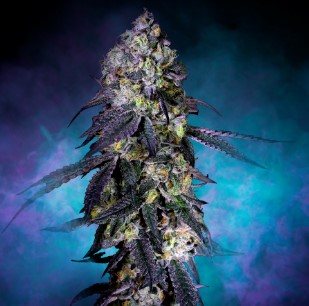
Comprehensive Scientific Information on Purple Skunk
Cannabinoid Profile
Purple Skunk has a rich cannabinoid profile, with THC levels averaging between 17-22% and trace amounts of CBD (0.1-0.5%).
| Cannabinoid | Typical Range |
|---|---|
| THC | 17-22% |
| CBD | 0.1-0.5% |
| CBG | 0.5-1% |
| CBC | 0.1-0.3% |
- THC (Δ9-Tetrahydrocannabinol): The main psychoactive compound responsible for the strain’s euphoria, relaxation, and mild sedation.
- CBD (Cannabidiol): Present in minimal amounts, contributing to subtle anti-inflammatory effects.
- CBG (Cannabigerol): Known for its potential neuroprotective and anti-inflammatory benefits.
- CBC (Cannabichromene): Works synergistically with THC to enhance the overall entourage effect.
Terpene Profile
Terpenes play a vital role in the aroma, taste, and effects of Purple Skunk.
| Terpene | Concentration (%) | Effects & Aroma |
|---|---|---|
| Myrcene | 0.5-1.2% | Sedative, earthy, musky, pain-relieving |
| Limonene | 0.3-0.8% | Uplifting, citrus, anti-stress, mood enhancer |
| Caryophyllene | 0.2-0.7% | Anti-inflammatory, spicy, peppery, interacts with CB2 receptors |
| Pinene | 0.1-0.5% | Enhances alertness, anti-inflammatory, pine-like scent |
| Linalool | 0.1-0.3% | Calming, lavender scent, promotes relaxation |
- Myrcene gives Purple Skunk its strong relaxing and slightly sedative effects.
- Limonene helps reduce stress and improve mood.
- Caryophyllene has anti-inflammatory properties and interacts with CB2 receptors in the body.
- Pinene helps counteract THC-induced memory loss and promotes mental clarity.
Growth Characteristics
Optimal Growing Conditions
Purple Skunk thrives in controlled environments that mimic its natural habitat.
| Factor | Optimal Range |
|---|---|
| Temperature (Day/Night) | 70-80°F (21-27°C) / 60-70°F (15-21°C) |
| Humidity (Vegetative/Flowering) | 50-70% / 40-50% |
| Light (Indoor) | 600-1000 µmol/m²/s PAR |
| pH (Soil/Hydroponics) | 6.0-6.8 / 5.5-6.5 |
| CO₂ Levels | 800-1200 ppm (boosts growth) |
Temperature and Humidity Control
- Cooler temperatures at night (around 60-65°F or 15-18°C) enhance the purple pigmentation due to anthocyanin production.
- Humidity control is crucial: Too high can lead to mold growth, while too low can stress plants.
Propagation & Germination
Seed Germination (Scientific Approach)
- Paper Towel Method (Standard Method)
- Soak Purple Skunk seeds in pH-balanced water (6.0-6.5) for 12-24 hours.
- Place them in damp paper towels inside a sealed container with holes for airflow.
- Maintain temperature 70-80°F (21-27°C) for optimal enzyme activation.
- Roots emerge within 1-5 days.
- Direct Soil Germination (Natural Method)
- Use light, aerated soil with a pH of 6.0-6.8.
- Plant seeds ¼-½ inch (0.5-1.2 cm) deep.
- Keep humidity 65-70% with temperatures 75-80°F (24-27°C).
- Tissue Culture (Advanced Method)
- Some breeders use micropropagation techniques to clone high-quality Purple Skunk phenotypes.
- Uses agar media with plant hormones like cytokinins and auxins.
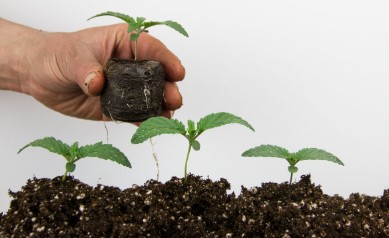
Vegetative Growth Phase (2-6 Weeks)
The vegetative stage is where leaf and root development occurs.
Scientific Methods for Maximizing Growth
- Lighting Requirements
- Indoor: Use 600W-1000W LED/HPS grow lights with a 18/6 light cycle (18 hours light, 6 hours dark).
- Outdoor: Prefers full sunlight, at least 6-8 hours daily.
- Soil vs. Hydroponics
- Soil Cultivation: Use organic, well-draining soil rich in mycorrhizal fungi and beneficial bacteria.
- Hydroponics: Provides rapid growth using nutrient solutions (EC: 1.5-2.0 mS/cm).
- Nutrient Feeding Schedule
- Nitrogen (N) Dominant: High levels of N promote leafy growth.
- Micronutrients: Calcium (Ca), Magnesium (Mg), Iron (Fe), and Boron (B) enhance cell wall development.
- Optimal pH: 6.0-6.8 in soil, 5.5-6.5 in hydroponics.
- CO₂ Enrichment
- CO₂ levels of 800-1200 ppm increase photosynthesis efficiency by up to 30%.
Flowering Stage (7-9 Weeks)
Purple Skunk enters flowering when exposed to a 12/12 light cycle (12 hours light, 12 hours dark).
Key Scientific Techniques in Flowering
- Flushing Before Flowering
- Before switching to flowering nutrients, growers flush the medium with pure pH-balanced water to remove excess salts.
- Flowering Nutrients
- Increase Phosphorus (P) and Potassium (K) while reducing Nitrogen (N).
- NPK Ratio: 4-10-10 or 5-15-14.
- Sulfur (S) and Magnesium (Mg) help enhance terpene production.
- Lighting Adjustments
- Indoor: Shift to warm-spectrum (2700K-3500K) HPS or LED to boost bud production.
- Outdoor: Natural temperature drops increase purple pigmentation.
- Trichome Monitoring for Harvest
- Use microscopes (30x-100x magnification) to observe trichome coloration:
- Clear Trichomes: Immature.
- Milky White Trichomes: Peak THC levels.
- Amber Trichomes: Higher CBN, more sedative effects.
- Use microscopes (30x-100x magnification) to observe trichome coloration:
Post-Harvest Processing
After harvesting, curing and drying significantly impact flavor, potency, and smoothness.
Drying Methods
- Temperature: 60-70°F (15-21°C).
- Humidity: 50-60%.
- Duration: 7-14 days in a dark, ventilated room.
Curing Process (Scientific Approach)
- Glass Jar Curing
- Store dried buds in airtight glass jars at 55-62% humidity.
- Open jars once daily for the first 2 weeks to release moisture.
- Ideal curing time: 4-8 weeks.
- Terpene Preservation
- Low temperatures (~60°F or 15°C) prevent terpene degradation.
- Boveda humidity packs (58-62%) stabilize moisture.
Pest and Mold Control
Purple Skunk is resistant to most pests and molds, but scientific Integrated Pest Management (IPM) strategies are used.
Common Threats
| Issue | Scientific Prevention Methods |
|---|---|
| Powdery Mildew | Maintain airflow, Neem oil, sulfur sprays. |
| Spider Mites | Predatory insects (ladybugs), pyrethrin sprays. |
| Fungus Gnats | Dry topsoil, Bacillus thuringiensis (Bt) treatments. |
| Bud Rot (Botrytis) | Keep humidity below 50%, proper ventilation. |
Advanced Cultivation Techniques
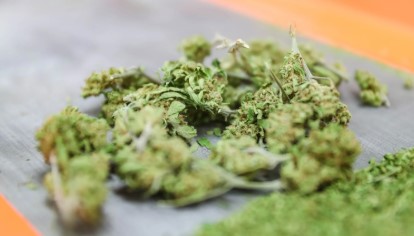
Topping & Training (High-Stress Training – HST)
- Topping: Cutting the main stem to promote multiple colas.
- LST (Low-Stress Training): Bending branches to optimize light exposure.
SCROG (Screen of Green)
- Uses a net to spread branches, maximizing yield in indoor grows.
Defoliation
- Eliminating extra fan leaves enhances airflow and light penetration.
UVB Light Exposure
- UVB light (280-315nm) during flowering increases THC production.
Final Thoughts on Scientific Cultivation
- Purple Skunk is a versatile and robust strain.
- Scientific approaches like nutrient optimization, terpene preservation, and CO₂ enrichment significantly enhance yield and potency.
- Proper post-harvest processing ensures maximum flavor and potency.
Medical Uses of Purple Skunk
Purple Skunk is valued for its wide range of medical applications. Its balanced effects make it useful for both mental and physical conditions.
Mental Health Benefits
Due to its unique cannabinoid and terpene profile, Purple Skunk is particularly effective for various mental health conditions:
| Condition | How Purple Skunk Helps |
|---|---|
| Depression | Limonene and THC provide mood elevation and anti-stress effects. |
| Anxiety & PTSD | Linalool and myrcene help reduce nervousness and stress. |
| ADHD/ADD | Pinene enhances focus and alertness. |
| Insomnia | Myrcene and THC induce relaxation and sleepiness at higher doses. |
Physical Health Benefits
Purple Skunk is also widely used for pain relief and chronic conditions.
| Condition | Effectiveness |
|---|---|
| Chronic Pain & Arthritis | High THC and caryophyllene reduce inflammation and pain. |
| Migraines | Relieves tension and pain due to THC + myrcene synergy. |
| Fibromyalgia | Eases widespread pain and promotes relaxation. |
| Appetite Loss | Increases appetite, useful for cancer patients. |
| Nausea (Chemo-induced) | Helps combat nausea and vomiting. |
Neurological and Other Benefits
Purple Skunk’s CBG and CBC content also contributes to neuroprotective properties.
- Epilepsy: Low CBD content, but some users report relief from seizures.
- Multiple Sclerosis (MS): THC helps with muscle spasms and neuropathic pain.
- Parkinson’s Disease: Assists with motor function and tremors.
Recreational Uses of Purple Skunk
Purple Skunk is highly sought after for its enjoyable psychoactive effects.
Psychoactive Effects
The strain provides a gradual yet potent high, making it suitable for various recreational activities.
| Effect | Onset & Duration |
|---|---|
| Euphoria & Mood Boost | Felt within 5-10 minutes, lasts 2-4 hours. |
| Relaxation & Stress Relief | Strong body high, relieves tension and stress. |
| Creative & Social Effects | Increases creativity, social engagement, and talkativeness. |
| Mild Couchlock | At higher doses, induces relaxation and sleepiness. |
Best Times to Use
- Daytime (Low Doses): Uplifting, creative, and social.
- Evening/Night (Higher Doses): Deep relaxation, body sedation, and sleep aid.
Pairing with Activities
| Activity | Suitability |
|---|---|
| Watching Movies | Enhanced visual and auditory experience. |
| Listening to Music | Deepened appreciation for sounds and rhythm. |
| Creative Work | Boosts artistic and imaginative thinking. |
| Social Gatherings | Encourages laughter and conversation. |
| Gaming | Improves focus and engagement. |
Methods of Ingestion
The way Purple Skunk is consumed determines how quickly its cannabinoids (THC, CBD, etc.) take effect and how long they last. Here’s a detailed breakdown:
| Method | Onset Time | Peak Effects | Duration | Bioavailability |
|---|---|---|---|---|
| Smoking (Combustion) | 2-5 minutes | 15-30 minutes | 2-4 hours | 25-35% |
| Vaporization (Dry Herb or Oil Vape) | 2-10 minutes | 30-45 minutes | 2-6 hours | 50-80% |
| Edibles (Gummies, Baked Goods, Capsules, etc.) | 30-90 minutes | 2-3 hours | 6-12 hours | 4-20% |
| Sublingual (Tinctures, Oils, Sprays) | 15-45 minutes | 30-90 minutes | 4-8 hours | 10-35% |
| Topical (Creams, Balms, Transdermal Patches) | 20-60 minutes | 1-2 hours | 4-12 hours | Varies (1-50%) |
| Dabbing (Concentrates, Rosin, BHO, etc.) | 1-3 minutes | 10-20 minutes | 1-4 hours | 60-90% |
Smoking (Combustion)
- Mechanism: The burning of cannabis (≈ 500-900°F) converts THCA into THC through decarboxylation, allowing it to be rapidly absorbed through the lungs.
- Bioavailability: Around 25-35%, meaning a significant portion of THC is lost due to combustion.
- Best For: Immediate relief (pain, anxiety, nausea) but shorter duration.
Vaporization (Dry Herb or Oil Vape)
- Mechanism: Heats cannabis to 330-430°F, producing aerosolized cannabinoids without combustion.
- Higher Bioavailability: Up to 80% THC absorption.
- Safer Alternative: Reduces toxic byproducts (e.g., benzene, tar) found in combustion.
- Best For: Users wanting fast onset with fewer respiratory risks.
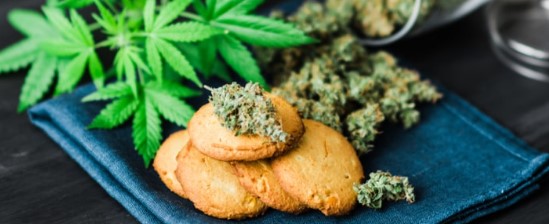
Edibles (Oral Consumption)
- Mechanism: THC is absorbed via the digestive system and metabolized by the liver into 11-hydroxy-THC, which is more potent and lasts longer.
- Bioavailability: 4-20% (lower than smoking due to first-pass metabolism).
- Best For: Long-lasting pain relief, insomnia, or chronic conditions.
Sublingual (Tinctures, Oils, Sprays)
- Mechanism: Cannabinoids absorb directly into the bloodstream via oral mucosa, bypassing digestion.
- Bioavailability: 10-35%.
- Best For: Faster relief than edibles but longer-lasting than smoking.
Topical (Creams, Balms, Transdermal Patches)
- Mechanism: Cannabinoids bind to CB2 receptors in the skin without entering the bloodstream (except transdermal patches).
- Bioavailability: Varies; patches provide systemic effects, while creams are localized.
- Best For: Localized pain, inflammation, and skin conditions.
Dabbing (Concentrates, Rosin, BHO, Live Resin)
- Mechanism: Superheated concentrates (60-90% THC) vaporize instantly and absorb rapidly through the lungs.
- Bioavailability: Up to 90%, making it the most potent method.
- Best For: Experienced users seeking intense effects.
Onset, Peak, and Duration of Effects
The route of administration plays a major role in how long Purple Skunk’s effects take to kick in, how long they last, and their intensity.
Smoking/Vaping/Dabbing (Inhalation)
- Onset: 1-10 minutes (quickest absorption via lung alveoli).
- Peak: Within 15-30 minutes.
- Duration: 2-6 hours.
- Science: THC bypasses first-pass metabolism and enters the bloodstream directly from the lungs, leading to a fast and strong high.
Edibles (Oral Consumption)
- Onset: 30-90 minutes (slowest absorption due to digestion).
- Peak: 2-3 hours.
- Duration: 6-12 hours (some users report up to 24 hours).
- Science: THC is converted into 11-hydroxy-THC, which crosses the blood-brain barrier more efficiently, making the high stronger and longer-lasting.
Sublingual (Tinctures/Oils)
- Onset: 15-45 minutes (bypasses digestion via oral mucosa).
- Peak: 30-90 minutes.
- Duration: 4-8 hours.
- Science: Direct absorption into capillaries under the tongue leads to quicker effects than edibles.
Topicals
- Onset: 20-60 minutes (localized relief).
- Peak: 1-2 hours.
- Duration: 4-12 hours.
- Science: Topical THC does not enter the bloodstream but interacts with CB2 receptors in the skin.
Transdermal Patches
- Onset: 30 minutes – 2 hours.
- Peak: 3-6 hours.
- Duration: 8-48 hours (depending on formulation).
- Science: Uses lipophilic penetration enhancers to pass through the skin into the bloodstream, delivering long-lasting effects.
Factors Affecting Absorption and Duration
Several biological and external factors influence how long Purple Skunk’s effects last.
Individual Metabolism
- Faster metabolism = Shorter duration.
- Slower metabolism = Longer effects.
Body Fat Percentage
- THC is lipophilic (fat-soluble), meaning higher body fat results in longer storage of cannabinoids.
Tolerance Levels
- Frequent users develop THC tolerance due to downregulation of CB1 receptors.
Food Intake (For Edibles)
- Empty stomach = Faster onset, stronger high.
- Full stomach = Slower absorption, longer-lasting effects.
Interaction with Other Substances
- Alcohol + Cannabis: Intensifies THC absorption.
- CBD + THC: CBD modulates THC’s psychoactive effects, reducing paranoia.
- Black Pepper (Beta-Caryophyllene): Reduces anxiety caused by THC.
Comparison of Methods (Summary Table)
| Method | Onset | Peak | Duration | Bioavailability | Best For |
|---|---|---|---|---|---|
| Smoking | 1-10 min | 15-30 min | 2-4 hours | 25-35% | Fast relief, short high |
| Vaporization | 2-10 min | 30-45 min | 2-6 hours | 50-80% | Healthier inhalation |
| Edibles | 30-90 min | 2-3 hours | 6-12 hours | 4-20% | Long-lasting effects |
| Sublingual | 15-45 min | 30-90 min | 4-8 hours | 10-35% | Medium onset/duration |
| Topicals | 20-60 min | 1-2 hours | 4-12 hours | Localized | Pain, inflammation |
| Dabbing | 1-3 min | 10-20 min | 1-4 hours | 60-90% | High potency |
Final Thoughts
- Inhalation (smoking/vaping) = Fastest onset, shorter duration.
- Edibles = Slower onset, longest duration.
- Sublingual & Topicals = Balanced onset and duration.
- Dabbing = Strongest, fastest effects.
Potential Side Effects
Like all cannabis strains, Purple Skunk has potential side effects.
| Side Effect | Cause & Prevention |
|---|---|
| Dry Mouth & Eyes | Common, stay hydrated. |
| Dizziness & Lightheadedness | Overconsumption, start with small doses. |
| Paranoia & Anxiety | High THC can cause anxiety in sensitive users. |
| Mild Couchlock | Occurs with higher doses, best used in the evening. |
Pro Tip: If you feel overwhelmed, consuming CBD-rich cannabis or black pepper can help counteract THC’s effects.
Conclusion
Purple Skunk is a versatile, potent, and flavorful cannabis strain that offers a well-rounded experience for both medical and recreational users. Its skunky yet fruity aroma, high THC content, and balanced effects make it a top choice for those seeking relaxation, euphoria, and relief from various ailments.
Key Takeaways
- Best For: Relaxation, stress relief, mild euphoria, pain relief, and creative stimulation.
- Medical Benefits: Effective for pain, anxiety, depression, appetite loss, and insomnia.
- Recreational Uses: Great for socializing, creativity, gaming, and music appreciation.
- Potential Downsides: Dry mouth, occasional dizziness, paranoia at high doses.
For a complete directory of cultivars, visit our Cannabis Strain Reviews.
