Table of Contents
Purple People Eater is an intriguing cannabis strain known for its striking purple hues, high potency, and balanced effects. This hybrid strain is renowned for its deeply relaxing properties while offering an uplifting cerebral buzz, making it a favorite among both recreational and medical users.
With a unique terpene profile, strong cannabinoid content, and a complex blend of indica and sativa effects, Purple People Eater stands out among modern cannabis strains. This guide delves deep into its genetics, chemical composition, recreational and medical applications, and scientific insights.
Genetics and Lineage
Purple People Eater is a hybrid strain with indica-dominant genetics, typically featuring a 70% indica / 30% sativa ratio. Its lineage consists of legendary parent strains that contribute to its potent effects and rich terpene profile:
- Granddaddy Purple (GDP): A well-known indica strain famous for its deep purple color, grape-like aroma, and powerful body relaxation effects.
- Purple Punch: A heavily sedating indica hybrid that enhances relaxation, euphoria, and physical comfort.
- Grape Ape: Another popular purple-hued indica known for its fruity, berry-like flavors and soothing properties.
The combination of these powerful strains results in a well-balanced hybrid that delivers relaxation and mental euphoria while maintaining a functional level of focus.
Appearance, Aroma, and Flavor Profile
Appearance
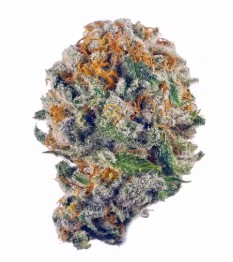
Purple People Eater is a visually stunning strain characterized by:
- Deep purple hues throughout its dense, resinous buds.
- Through the petals are pistils of bright orange.
- A thick layer of trichomes, giving it a frosty, crystal-like appearance.
The purple coloration is due to high anthocyanin levels, which are activated by cooler growing temperatures.
Aroma
The aroma of Purple People Eater is fruity, sweet, and slightly earthy, dominated by:
- Grape and berry notes reminiscent of Granddaddy Purple and Grape Ape.
- Subtle spice and herbal undertones inherited from its indica lineage.
- A hints of vanilla and citrus, adding complexity to its fragrance.
Flavor
The taste of Purple People Eater is smooth, fruity, and rich, featuring:
- Sweet grape and blueberry flavors with an almost candy-like taste.
- Vanilla and earthy notes, providing depth to the flavor.
- Slight herbal spice on the exhale, leaving a pleasant aftertaste.
Cannabinoid and Terpene Profile
Cannabinoids
The potency of Purple People Eater is high, with THC levels typically ranging from 22% to 28%. Some phenotypes may even exceed 30% in well-cultivated batches. It has low CBD content (<1%), making it more suited for THC-driven effects.
Primary Terpenes
The dominant terpenes in Purple People Eater contribute to its aroma, flavor, and effects:
- Myrcene (Herbal, Earthy) – 0.6-1.2%
- Primary terpene responsible for sedation and relaxation.
- Enhances muscle relaxation and sleep-inducing effects.
- Limonene (Citrus) – 0.5-1.0%
- Elevates mood and provides mild stress relief.
- May contribute to the euphoric head-high.
- Caryophyllene (Peppery, Spicy) – 0.3-0.8%
- Offers anti-inflammatory benefits and pain relief.
- Interacts with CB2 receptors, making it useful for medicinal applications.
- Linalool (Floral, Lavender) – 0.3-0.6%
- Provides calming, anti-anxiety effects.
- Enhances the strain’s relaxing and stress-reducing properties.
- Pinene (Pine, Woody) – 0.2-0.5%
- Helps improve focus and counteracts memory impairment from THC.
- Provides slight bronchodilator properties.
Effects and Usage
Recreational Effects
Purple People Eater is a balanced hybrid, offering both cerebral and physical effects:

- Euphoria and Mood Enhancement
- The initial onset provides a mood-lifting, euphoric sensation, making it an excellent choice for social settings and creative endeavors.
- Relaxation and Body High
- As the high progresses, users experience deep physical relaxation, which is beneficial for stress relief and muscle tension.
- Mild Sedation and Sleepiness
- At higher doses, the strain can induce couch-lock and drowsiness, making it ideal for evening or nighttime use.
- Creativity Boost
- The strain provides a short burst of mental clarity before the indica effects take over, making it useful for artistic and introspective activities.
- Sociability and Giggly Effects
- Some users report enhanced sociability and a giggly, uplifted mood, making it great for small gatherings.
Potential Side Effects
- Dry mouth and dry eyes (common with high-THC strains).
- Mild dizziness or lightheadedness at high doses.
- Sedation and couch-lock in sensitive users.
- Paranoia or anxiety in THC-sensitive individuals.
Medical Applications
A. Pain Management
- Mechanism:
- THC interacts with the endocannabinoid system (ECS), particularly CB1 and CB2 receptors, reducing pain perception and inflammation.
- Modulates dopaminergic and serotonergic pathways, which can help in neuropathic and chronic pain conditions.
- Conditions Treated:
- Arthritis & Joint Pain
- Neuropathic Pain (Diabetic Neuropathy, Multiple Sclerosis, Fibromyalgia)
- Post-Surgical Pain & Injury Recovery

B. Sleep Disorders & Insomnia
- Mechanism:
- High THC and CBN content induce sleep by reducing sleep latency and increasing deep sleep cycles.
- THC decreases REM sleep, which can help those with PTSD-related nightmares.
- Conditions Treated:
- Insomnia (Short-term and Chronic)
- PTSD-related sleep disturbances
- Restless Leg Syndrome (RLS)
C. Anxiety, Stress, and Mood Disorders
- Mechanism:
- THC and minor terpenes like linalool and myrcene activate GABAergic and serotonergic pathways, promoting relaxation.
- Reduces cortisol (stress hormone) levels, helping with anxiety and depression.
- Conditions Treated:
- Generalized Anxiety Disorder (GAD)
- Post-Traumatic Stress Disorder (PTSD)
- Panic Disorders
D. Muscle Spasms and Neurological Disorders
- Mechanism:
- THC and terpenes like myrcene and caryophyllene work as muscle relaxants.
- Reduces excessive neuronal excitability, making it beneficial for neurological disorders.
- Conditions Treated:
- Multiple Sclerosis (MS) Spasticity
- Cerebral Palsy-Related Muscle Spasms
- Parkinson’s Disease Tremors
E. Appetite Stimulation and Gastrointestinal Relief
- Mechanism:
- THC increases ghrelin production, the hunger hormone, improving appetite.
- Helps with nausea and vomiting via CB1 receptor activation in the brainstem.
- Conditions Treated:
- Chemotherapy-Induced Nausea (CINV)
- Cachexia (Wasting Syndrome)
- Crohn’s Disease and IBS
4. Terpene Profile and Its Therapeutic Benefits
The terpene composition of PPE plays a significant role in its medical applications through synergistic effects with cannabinoids (entourage effect).
| Terpene | Concentration | Therapeutic Benefits |
|---|---|---|
| Myrcene | High | Sedative, muscle relaxant, anti-inflammatory |
| Caryophyllene | Medium | Pain relief, anti-anxiety, neuroprotective |
| Linalool | Medium | Anxiolytic, antidepressant, sleep aid |
| Pinene | Low | Anti-inflammatory, bronchodilator |
| Humulene | Low | Appetite suppressant, anti-inflammatory |
5. Dosage and Consumption Methods for Medical Use
Both the onset and duration of effects are influenced by the mode of ingestion.
Recommended Dosages
- Microdose: 2.5–5 mg THC (mild anxiety, stress relief)
- Standard Dose: 10–20 mg THC (pain relief, moderate insomnia)
- High Dose: 25+ mg THC (severe pain, chemotherapy support)
Consumption Methods
- Inhalation (Smoking/Vaporizing)
- Onset: 5–15 minutes
- Duration: 2–4 hours
- Best For: Rapid relief of pain, nausea, and anxiety
- Edibles (THC Oils, Gummies, Capsules)
- Onset: 30–90 minutes
- Duration: 6–8 hours
- Best For: Chronic pain, insomnia, appetite stimulation
- Sublingual (Tinctures, Oils)
- Onset: 15–45 minutes
- Duration: 4–6 hours
- Best For: Flexible dosing, long-lasting effects
- Topicals (Creams, Balms)
- Onset: 15–30 minutes
- Duration: 3–6 hours
- Best For: Localized pain and inflammation relief
6. Potential Side Effects and Contraindications
While Purple People Eater has strong therapeutic benefits, it may cause side effects, particularly in high doses.
Common Side Effects:
- Dry Mouth & Dry Eyes – Due to decreased salivary and tear gland activity.
- Dizziness & Lightheadedness – THC-induced vasodilation can cause low blood pressure.
- Paranoia or Anxiety – High THC may worsen anxiety in THC-sensitive individuals.
Contraindications & Cautionary Use:
- Not recommended for individuals prone to THC-induced psychosis or severe anxiety disorders.
- Avoid in pregnant or breastfeeding women due to potential fetal/neonatal exposure to THC.
- Those with cardiovascular conditions should consult a physician due to THC’s effects on heart rate and blood pressure.
Cultivation Information
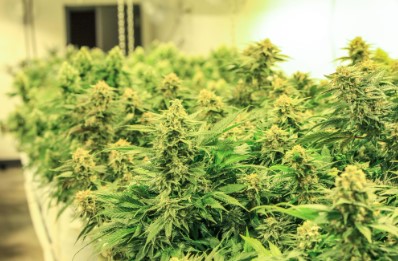
The Purple People Eater cannabis strain is an indica-dominant hybrid known for its vibrant purple hues, heavy resin production, and strong sedative effects. Cultivating this strain requires a scientific approach to optimize yield, potency, and terpene development. Below is a detailed guide covering the botanical, environmental, and biochemical factors influencing its growth.
1. Genetic & Phenotypic Characteristics
Understanding the genetic makeup of Purple People Eater is crucial for optimizing its growth.
- Indica-Dominant Traits: Short, bushy structure with broad leaves, making it well-suited for indoor cultivation.
- Flowering Time: Approximately 8–10 weeks, depending on environmental factors.
- THC Content: Typically 20–27%, requiring proper stress management during cultivation to avoid hermaphroditism.
- Terpene Profile: Rich in myrcene, limonene, and caryophyllene, which contribute to its sedative, citrusy, and earthy aroma.
2. Environmental Conditions for Optimal Growth
A. Light Requirements
Purple People Eater thrives under high-intensity light to maximize trichome production and cannabinoid synthesis.
- Indoor Grow:
- Preferred Light: Full-spectrum LED (3500K–4000K) or HPS (600W–1000W).
- Light Cycle:
- Vegetative: 18/6 (18 hours light, 6 hours dark).
- Flowering: 12/12 (12 hours of darkness, 12 hours of light).
- Light Intensity (PPFD):
- Vegetative: 400–700 µmol/m²/s
- Flowering: 800–1200 µmol/m²/s
- Outdoor Grow:
- Best suited for Mediterranean and temperate climates.
- Requires 8–12 hours of direct sunlight per day.
- Optimal planting time: Late spring to early summer for maximum flowering potential.
B. Temperature & Humidity Control
Proper climate control is essential to prevent stress-related issues like hermaphroditism and bud rot.
- Vegetative Stage:
- Temperature: 22–28°C (72–82°F)
- Relative Humidity (RH): 50–65%
- Flowering Stage:
- Temperature: 20–26°C (68–78°F) (Cooler temperatures enhance purple pigmentation due to anthocyanin activation).
- Relative Humidity (RH): 40–50% (To prevent mold and bud rot).
- Nighttime Temperature: 16–20°C (60–68°F) (Encourages deep purple coloration).
- Drying/Curing Conditions:
- Temperature: 18–22°C (64–72°F)
- Humidity: 55–60%
- Air Circulation: Essential to prevent mold.
3. Soil, Nutrients, and pH Requirements
A. Soil Composition & pH Balance
Purple People Eater thrives in a well-draining, organic-rich growing medium.
- Ideal Soil pH: 6.0–6.5 for Purple People Eater optimal nutrient uptake.
- Preferred Soil Mix:
- 40% Organic Compost (worm castings, bat guano)
- 30% Perlite (enhances aeration)
- 20% Coco Coir (retains moisture)
- 10% Biochar or Mycorrhizae (enhances microbial activity)
B. Nutrient Requirements
A balanced nutrient regimen is necessary for maximizing yield and potency.
- Vegetative Stage:
- Nitrogen (N): High (e.g., 4-2-3 NPK ratio).
- Phosphorus (P) & Potassium (K): Moderate.
- Micronutrients: Magnesium (Mg), Calcium (Ca), and Iron (Fe) for robust chlorophyll production.
- Flowering Stage:
- Nitrogen (N): Reduced (low levels prevent excess vegetative growth).
- Phosphorus (P) & Potassium (K): Increased (e.g., 1-5-4 NPK ratio).
- Silica (Si): Enhances trichome production and stress resistance.
- Organic Feeding Options:
- Compost Teas (rich in beneficial microbes).
- Seaweed Extract & Humic Acid (boosts terpene production).
- Molasses (1–2 tsp per gallon of water) (feeds beneficial microbes).
4. Training Techniques for Maximum Yield
A. Low-Stress Training (LST)
LST encourages horizontal Purple People Eater’s growth, increasing light penetration and bud sites.
- Use bamboo stakes or soft ties to gently bend branches.
- Start during early vegetative growth.
B. High-Stress Training (HST)
For experienced growers looking to enhance yield and cannabinoid concentration.
- Topping:
- Cut the main stem after the 4th–5th node to promote multiple colas.
- Super Cropping:
- Gently bend stems to enhance secondary bud sites.
C. Screen of Green (ScrOG) & Sea of Green (SOG)
- ScrOG Method: Use a net or trellis to train plants horizontally.
- SOG Method: Grow multiple small plants with short veg time (3–4 weeks).
5. Pest & Disease Management
A. Common Pests
- Spider Mites: Control with neem oil or predatory mites (Phytoseiulus persimilis).
- Aphids & Thrips: Use insecticidal soap or ladybugs.
- Fungus Gnats: Use sticky traps and make sure the soil drains properly.
B. Common Diseases
- Powdery Mildew: Maintain Purple People Eater’s humidity below 50%, apply sulfur-based fungicides.
- Bud Rot (Botrytis): Increase airflow and remove infected buds immediately.
6. Harvesting & Post-Harvest Processing
A. Harvesting Time & Methods
- Optimal Harvest Window: 8–10 weeks of flowering.
- Trichome Color Indicators:
- Clear Trichomes: Too early.
- Milky White Trichomes: Peak potency.
- Amber Trichomes: More sedative effects.
B. Drying & Curing Process
- Drying Phase:
- Duration: 7–14 days.
- Temperature: 18–22°C (64–72°F).
- Humidity: 55–60%.
- Curing Phase:
- Duration: Minimum 4 weeks (optimal at 8 weeks).
- Store Purple People Eater buds in glass jars, opening them daily for the first two weeks to release excess moisture.
7. Enhancing Purple Coloration Scientifically
The purple pigmentation in Purple People Eater is due to anthocyanins, which are flavonoid compounds affected by temperature and pH.
- Cooler Nighttime Temperatures: 10–15°C (50–59°F) during Purple People Eater’s late flowering intensifies purple hues.
- Adjust pH Levels: Slightly lower pH (<6.2) increases anthocyanin expression.
- Flushing with Ice Water: Some growers use cold water flushing in the final weeks.
Scientific Insights and Research
THC and Brain Chemistry
- High THC levels in Purple People Eater increase dopamine and serotonin activity, leading to its mood-enhancing effects.
- THC binds to CB1 receptors, reducing pain perception and promoting relaxation.
Neuroprotective Potential
- The presence of terpenes like pinene and linalool suggests potential neuroprotective properties, which may help with neurodegenerative disorders.
Endocannabinoid System Interaction
- Caryophyllene binds to CB2 receptors, contributing to anti-inflammatory and pain-relieving benefits.
- Myrcene enhances GABAergic activity, leading to sedation and muscle relaxation.
Final Thoughts
Purple People Eater is a potent, visually striking, and highly effective hybrid known for its relaxing body high and euphoric mental effects. With its high THC content, rich terpene profile, and medical benefits, it is an excellent strain for stress relief, pain management, and insomnia treatment.
This strain is best suited for evening use due to its sedating effects and should be consumed in moderation by novice users. Whether you are looking for a flavorful recreational experience or therapeutic relief, Purple People Eater is a top-tier cannabis choice.
For a complete directory of cultivars, visit our Cannabis Strain Reviews.
