Table of Contents
Purple Gorilla is a rare and potent indica-dominant hybrid strain known for its deeply relaxing effects and distinctive purple hues. With origins traced back to California, this strain is a favorite among both medical and recreational users due to its high THC content, sedative properties, and unique terpene profile. It is often recommended for those seeking relief from stress, pain, and insomnia while also providing a sense of euphoria and mental relaxation.
This comprehensive document explores the genetic lineage, chemical composition, therapeutic benefits, recreational effects, and scientific analysis of Purple Gorilla.
Genetic Lineage and Cultivation
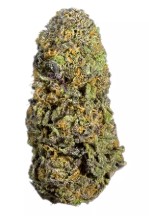
Purple Gorilla is an indica-dominant hybrid that has a lineage suspected to include Grape Ape and an unknown Afghani landrace strain. These genetics contribute to its high resin production, compact bud structure, and deep purple coloration.
Environmental Conditions for Growth
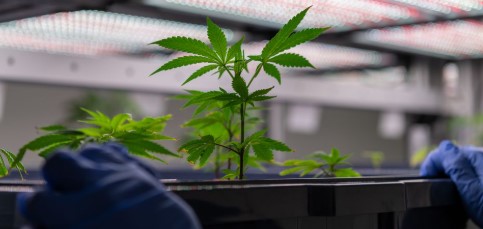
Purple Gorilla is an indica-dominant hybrid, meaning it thrives in controlled indoor environments but can also perform well in Mediterranean and temperate outdoor climates.
Optimal Environmental Factors:
- Temperature: 70-80°F (21-27°C) during vegetative stage; 65-75°F (18-24°C) during flowering for optimal terpene and anthocyanin production.
- Humidity Levels:
- Vegetative Stage: 50-60% relative humidity (RH)
- Flowering Stage: 40-50% RH to prevent mold and mildew
- Late Flowering (Last 2 weeks): 30-40% RH to improve trichome development
- CO₂ Enhancement: Increasing CO₂ levels to 1000-1500 ppm can boost photosynthesis and overall yield.
Lighting Requirements:
- Indoor: LED or HPS lights with PAR output of 600-1000 µmol/m²/s for optimal growth.
- Outdoor: Requires at least 8-10 hours of direct sunlight per day.
Soil & Growing Mediums
The choice of growing medium of Purple Gorilla significantly impacts nutrient uptake and plant health.
Best Soil Composition:
- Soil that is loamy and has adequate aeration and drainage.
- pH range: 6.0-6.5 for optimal nutrient absorption.
- Organic amendments:
- Compost & worm castings for microbial activity
- Perlite & coco coir for aeration and water retention
- Mycorrhizal fungi to improve root efficiency
Alternative Growing Mediums:
- Hydroponics (Deep Water Culture, Drip System, or Ebb and Flow)
- Faster growth due to direct nutrient uptake.
- pH range: 5.5-6.0.
- Requires constant monitoring of nutrient solution EC (Electrical Conductivity) and pH levels.
- Aeroponics (Advanced growers)
- Delivers nutrients via misting system.
- Promotes rapid root growth.
- Higher yield potential but requires precise environmental control.
Nutrient Requirements
Proper feeding schedules enhance cannabinoid and terpene expression.
Macronutrients (N-P-K Ratios)
- Vegetative Stage: 3-1-2 (High Nitrogen for leaf development)
- Flowering Stage: 1-3-2 (Higher Phosphorus for bud development)
- Late Flowering (Ripening Phase): 0-2-3 to enhance terpene and resin production.
Micronutrient Needs:
- Calcium (Ca): Supports strong cell walls.
- Magnesium (Mg): Crucial for chlorophyll production.
- Sulfur (S): Enhances terpene synthesis.
- Iron (Fe) & Zinc (Zn): Essential for enzymatic functions.
Organic Nutrient Sources:
- Nitrogen: Bat guano, fish emulsion.
- Phosphorus: Bone meal, seabird guano.
- Potassium: Kelp meal, wood ash.
Synthetic Nutrients (Hydroponic Systems)
- General Hydroponics Flora Series
- Advanced Nutrients Bloom, Grow, Micro
- Fox Farm Trio (Big Bloom, Grow Big, Tiger Bloom)
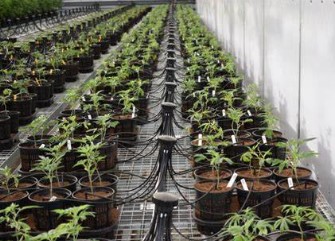
Watering and Irrigation Strategies
- Soil-based grows: Water when top 1-2 inches of soil are dry.
- Hydroponic systems: Maintain a nutrient reservoir temperature of 65-70°F (18-21°C).
- pH Balancing: 6.0-6.5 (soil); 5.5-6.0 (hydroponics).
Pruning, Training, and Yield Optimization
Training techniques help improve bud size, cannabinoid content, and overall plant health.
Topping & Fimming (Early Vegetative Stage)
- Increases canopy size by promoting multiple colas.
- Helps maximize yield under limited space.
Low-Stress Training (LST)
- Gently bending branches and tying them down to spread light exposure.
- Enhances bud sites without causing plant stress.
Screen of Green (ScrOG)
- A trellis net is used to spread the plant evenly.
- Maximizes bud production by ensuring uniform light penetration.
Defoliation (Selective Pruning)
- Removes unnecessary fan leaves to improve airflow and light penetration.
- Reduces mold risk, especially in high humidity conditions.
Flowering Stage and Harvesting
Purple Gorilla enters flowering at 8-9 weeks indoors, while outdoor plants finish by late September to early October.
Pre-Harvest Optimization:
- Flush the plants (Final 10-14 days) – Water with pH-balanced, no-nutrient solution to remove excess salts.
- Temperature Reduction (Final 2 weeks): Lower night temperatures to 60-65°F (15-18°C) to enhance purple coloration.
- Terpene Enhancement: Provide slight UV-B exposure to increase trichome production.
Harvesting Criteria:
- Trichome Check: 70% cloudy, 20% amber, 10% clear (Ideal for balanced effects).
- Pistil Check: 70-80% of pistils turn orange/brown.
Curing and Storage
Proper curing enhances terpene preservation and smoothness of smoke.
Curing Process:
- Drying: Hang trimmed buds in 50% RH, 65°F (18°C) environment for 7-14 days.
- Jar Curing: Store buds in glass jars with 62% humidity packs.
- Burping: Open jars for 5-10 minutes daily in the first 2 weeks.
Optimal Storage Conditions:
- Temperature: 60-70°F (15-21°C)
- Humidity: 55-62%
- Dark Storage: Prevents cannabinoid degradation.
Genetic Stability and Breeding Considerations
Purple Gorilla’s genetic stability can be improved through selective breeding.
Breeding Objectives:
- Increase THC & terpene content by crossing with high-potency strains.
- Improve yield stability through inbreeding and backcrossing.
- Enhance pest/mold resistance using phenotypic selection.
Genetic Manipulation Techniques:
- Tissue Culture Cloning – Ensures pathogen-free, identical genetic replication.
- Feminized Seed Production – Uses colloidal silver or STS solution to induce female-only seeds.
- CRISPR and Gene Editing Potential – Future research aims to enhance cannabinoid biosynthesis pathways.
Chemical Composition
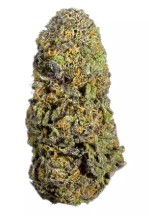
Cannabinoid Profile:
- THC: Ranges between 18-22%, with some phenotypes reaching up to 24%
- CBD: Usually low, typically 0.1-0.5%
- CBG: Present in minor amounts (~1%)
- Other Cannabinoids: Trace amounts of CBN, CBC, and THCV
Terpene Profile:
- Myrcene (Primary Terpene – 0.5-1.2%) – Sedative, analgesic, and promotes relaxation
- Caryophyllene (0.3-0.7%) – Anti-inflammatory, stress-reducing, and interacts with CB2 receptors
- Limonene (0.2-0.6%) – Uplifting, mood-enhancing, and aids in digestion
- Linalool (0.1-0.3%) – Anti-anxiety, calming, and improves sleep quality
- Humulene (0.1-0.2%) – Appetite suppressant and anti-inflammatory properties
Flavonoid Content:
- Anthocyanins: Responsible for deep purple pigmentation in Purple Gorilla and provide antioxidant properties
- Quercetin & Kaempferol: Offer anti-inflammatory and neuroprotective benefits
Medical Uses of Purple Gorilla
Purple Gorilla is highly regarded for its medicinal properties due to its high THC and myrcene content, making it effective for various conditions.
1. Pain Management
- Ideal for chronic pain, arthritis, migraines, and muscle spasms
- THC interacts with CB1 receptors to block pain signals and reduce inflammation
- Caryophyllene contributes to pain relief by activating CB2 receptors
2. Insomnia and Sleep Disorders
- Strong sedative effects due to myrcene and linalool
- Increases sleep duration and quality
- Best used 1-2 hours before bedtime
3. Stress and Anxiety Reduction
- Limonene and linalool work together to reduce stress and anxiety
- Promotes a calm state without overwhelming psychoactive effects
- Beneficial for individuals with generalized anxiety disorder (GAD) and PTSD
4. Depression and Mood Disorders
- Uplifting cerebral effects in low doses
- Boosts dopamine and serotonin levels, promoting a sense of well-being
- Recommended for mild to moderate depression
5. Appetite Stimulation (Cachexia and Eating Disorders)
- CB1 receptor activation increases hunger
- Useful for patients with chemotherapy-induced nausea and appetite loss
6. Neurological Disorders
- Preliminary studies suggest potential benefits of Purple Gorilla for multiple sclerosis (MS) and Parkinson’s disease
- THC and CBG may help protect neurons and reduce spasms
7. Anti-Inflammatory and Gastrointestinal Relief
- Beneficial for IBS, Crohn’s disease, and colitis due to its anti-inflammatory terpenes and cannabinoids
- Helps reduce nausea, cramping, and bloating
Recreational Uses
Purple Gorilla is a popular choice among recreational users due to its combination of euphoria and deep physical relaxation.
1. Euphoric and Relaxing High
- Initial cerebral uplift followed by deep relaxation
- Ideal for relaxing at social events or after a long day.
2. Enhanced Sensory Perception
- Music and visual experiences using Purple Gorilla become more immersive
- Ideal for artistic and creative activities
3. Couch-Lock and Body High
- Highly sedative at higher doses, leading to “couch-lock” effects
- Recommended for evening or nighttime use
4. Social and Mood-Enhancing Effects
- Helps users feel at ease in social settings
- Reduces social anxiety without paranoia
5. Mild Psychedelic Effects
- Some users report enhanced introspection and mild visual distortions
- Best experienced in a comfortable, relaxed environment
Methods of Ingestion
Purple Gorilla can be consumed through various methods, each with distinct absorption rates, onset times, peak effects, and durations.
A. Inhalation (Smoking & Vaporization)
1. Smoking (Combustion)
- Method: Dried flower is ignited and inhaled.
- Onset Time: 30 seconds to 5 minutes (Rapid absorption via alveoli in the lungs).
- Peak Effects: 10-30 minutes post-inhalation.
- Duration: 1.5 – 3 hours.
- Bioavailability: ~25-30% THC absorption.
- Pros: Fast onset, high bioavailability.
- Cons: Can produce lung irritation due to combustion byproducts.
2. Vaporization (Dry Herb & Concentrates)
- Method: Purple Gorilla is heated below combustion point (~350-450°F or 175-232°C) to release cannabinoids and terpenes as vapor.
- Onset Time: 1-5 minutes.
- Peak Effects: 15-30 minutes.
- Duration: 2-4 hours.
- Bioavailability: ~40-60% (higher than smoking due to reduced combustion losses).
- Pros: Less lung irritation, enhanced terpene preservation, and efficiency.
- Cons: Requires specialized equipment (vaporizers).
Comparison: Smoking vs. Vaping
| Feature | Smoking | Vaping |
|---|---|---|
| Onset Time | 30 sec – 5 min | 1-5 min |
| Peak Effects | 10-30 min | 15-30 min |
| Duration | 1.5-3 hours | 2-4 hours |
| Bioavailability | ~25-30% | ~40-60% |
| Health Effects | More lung irritation | Less lung damage |
B. Oral Consumption (Edibles, Tinctures, Capsules)
1. Edibles (THC-Infused Foods, Beverages)
- Method: THC of Purple Gorilla is metabolized by the liver into 11-hydroxy-THC, a more potent and longer-lasting compound.
- Onset Time: 30-90 minutes (Slow due to digestion and liver metabolism).
- Peak Effects: 2-4 hours post-ingestion.
- Duration: 4-8 hours (sometimes up to 12 hours depending on dose).
- Bioavailability: ~4-20% (lower than inhalation due to first-pass metabolism).
- Pros: Long-lasting effects, no lung irritation.
- Cons: Delayed onset, difficulty in dose control, risk of overconsumption.
2. Tinctures (Sublingual)
- Method: Alcohol or oil-based cannabis extracts of Purple Gorilla placed under the tongue.
- Onset Time: 15-45 minutes (absorbed through sublingual glands).
- Peak Effects: 45 minutes – 1.5 hours.
- Duration: 4-6 hours.
- Bioavailability: ~20-35%.
- Pros: Faster onset than edibles, easier dose control.
- Cons: Some people may find the taste unpleasant.
3. Capsules and Pills
- Method: Encapsulated THC that undergoes first-pass metabolism like edibles.
- Onset Time: 30-90 minutes.
- Peak Effects: 1-3 hours.
- Duration: 6-8 hours.
- Bioavailability: ~5-15%.
- Pros: Precise dosing, long-lasting effects.
- Cons: Slow onset, first-pass metabolism reduces THC potency.
Comparison: Edibles vs. Tinctures vs. Capsules
| Feature | Edibles | Tinctures | Capsules |
|---|---|---|---|
| Onset Time | 30-90 min | 15-45 min | 30-90 min |
| Peak Effects | 2-4 hours | 45 min – 1.5 hours | 1-3 hours |
| Duration | 4-8 hours | 4-6 hours | 6-8 hours |
| Bioavailability | 4-20% | 20-35% | 5-15% |
C. Topical Application
- Method: Creams, lotions, and balms infused with cannabinoids of Purple Gorilla applied to the skin.
- Onset Time: 5-30 minutes.
- Peak Effects: 30-60 minutes.
- Duration: 2-6 hours.
- Bioavailability: <5% (localized absorption, no psychoactive effects).
- Pros: Excellent for localized pain relief and inflammation.
- Cons: No cerebral effects (doesn’t cross the blood-brain barrier).
D. Rectal & Nasal Administration (Suppositories, Sprays)
1. Rectal Suppositories
- Onset Time: 10-20 minutes.
- Peak Effects: 30-45 minutes.
- Duration: 4-8 hours.
- Bioavailability: 50-70% (higher than oral ingestion).
- Pros: Bypasses first-pass metabolism, effective for patients who cannot ingest orally.
- Cons: Uncommon and uncomfortable for some users.
2. Nasal Sprays
- Onset Time: 5-15 minutes.
- Peak Effects: 15-30 minutes.
- Duration: 2-4 hours.
- Bioavailability: ~30-50%.
- Pros: Fast-acting and discreet.
- Cons: Limited availability and application.
2. Scientific Breakdown of Onset, Peak, and Duration
| Ingestion Method | Onset Time | Peak Effects | Duration | Bioavailability |
|---|---|---|---|---|
| Smoking | 30 sec – 5 min | 10-30 min | 1.5 – 3 hrs | ~25-30% |
| Vaping | 1-5 min | 15-30 min | 2-4 hrs | ~40-60% |
| Edibles | 30-90 min | 2-4 hrs | 4-8 hrs | ~4-20% |
| Tinctures | 15-45 min | 45 min – 1.5 hrs | 4-6 hrs | ~20-35% |
| Capsules | 30-90 min | 1-3 hrs | 6-8 hrs | ~5-15% |
| Topicals | 5-30 min | 30-60 min | 2-6 hrs | <5% (localized) |
| Suppositories | 10-20 min | 30-45 min | 4-8 hrs | ~50-70% |
| Nasal Sprays | 5-15 min | 15-30 min | 2-4 hrs | ~30-50% |
Potential Side Effects
- Dry Mouth and Dry Eyes – Common; countered with hydration
- Dizziness or Lightheadedness – More likely in new users or when consumed in high doses
- Paranoia or Anxiety – Rare but possible at very high doses; best avoided with controlled dosing
- Sedation and Lethargy – Beneficial for some but not ideal for daytime use
Scientific Research and Future Potential
1. THC and Neuroprotection
- Research suggests that THC has neuroprotective properties, making Purple Gorilla a candidate for conditions like Alzheimer’s disease and neurodegeneration
2. Terpene Synergy and the Entourage Effect
- The combination of myrcene, caryophyllene, and limonene enhances medicinal benefits
- Potential for future pharmaceutical applications
3. Cannabis and Pain Management
- Recent studies confirm the role of cannabinoids in chronic pain relief
- Purple Gorilla’s high THC content aligns with research supporting cannabis-based pain treatments
4. Anti-Inflammatory and Autoimmune Research
- Cannabinoids show promise in reducing inflammation in autoimmune diseases
- Potential for treating rheumatoid arthritis and fibromyalgia
Conclusion
Purple Gorilla is an exceptional indica-dominant hybrid with a rich chemical composition that provides powerful pain relief, relaxation, and mood enhancement. Its high THC content, along with a diverse terpene profile, makes it a versatile strain for both recreational and therapeutic users.
Whether you’re seeking therapeutic benefits or a deeply relaxing high, Purple Gorilla delivers a balanced, euphoric experience with a lasting impact. As research on cannabinoids and terpenes advances, strains like Purple Gorilla will continue to play an important role in medical cannabis treatments and recreational enjoyment.
Final Notes:
- Best Time to Use: Nighttime or evening
- Ideal Consumption Methods: Smoking, vaporizing, edibles, tinctures
- Recommended Dosage: Start low (5-10mg THC) and adjust as needed
For a complete directory of cultivars, visit our Cannabis Strain Reviews.
