Table of Contents
Purple Elephant is a hybrid cannabis strain known for its striking purple hues, potent effects, and rich terpene profile. This strain is widely used in both medical and recreational settings, offering a balanced blend of euphoria and relaxation. A descendant of Purple Urkle, Purple Elephant inherits its parent’s deep purple color and grape-like aroma while contributing a more stimulating cerebral effect.
Genetics and Lineage
Purple Elephant is an indica-dominant hybrid, though it often exhibits characteristics of both indica and sativa strains. It is believed to be a phenotype of Purple Urkle, a well-known indica strain, but some growers also suggest it may have influence from Grape Ape or Cherry Pie. The exact genetic lineage remains a subject of debate among cannabis breeders, but its dominant traits clearly link back to purple cannabis genetics.
Appearance, Aroma, and Flavor Profile
Appearance:
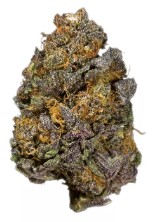
Purple Elephant buds are large and dense, with a deep purple coloration complemented by green undertones and fiery orange pistils. The thick layer of crystalline trichomes gives the strain a frosted look, indicating its high potency.
Aroma:
The strain emits a strong, sweet, and earthy aroma with hints of grape, berries, and a subtle spiciness. When broken apart, it releases a pungent skunky scent, indicative of its potency.
Flavor:
Upon inhalation, users experience a smooth and fruity taste, dominated by grape and berry flavors. The exhale often carries undertones of earthy pine and spice, leaving a pleasant aftertaste.
Cannabinoid Profile
Purple Elephant is a potent strain with a THC concentration that ranges from 18% to 24%, making it suitable for both recreational and medicinal users. While it has a moderate CBD content (around 0.5% to 1%), it is not considered a high-CBD strain. The cannabinoid breakdown typically includes:
- THC: 18-24%
- CBD: 0.5-1%
- CBG: 0.5-1%
- CBC, CBN, and THCV: Trace amounts
Terpene Profile
Terpenes are responsible for the aroma and potential therapeutic benefits of cannabis. Purple Elephant contains a diverse terpene profile, including:
- Myrcene (Herbal & Sedative Effects): The most dominant terpene in Purple Elephant, myrcene contributes to its relaxing and couch-lock effects.
- Limonene (Citrus & Mood Elevation): Enhances mood and reduces stress, adding a citrusy note to the strain’s aroma.
- Caryophyllene (Peppery & Anti-inflammatory): Known for its pain-relieving and anti-inflammatory properties.
- Pinene (Pine & Cognitive Enhancement): May counteract THC-induced memory loss and improve focus.
- Linalool (Floral & Calming): Provides a calming, anti-anxiety effect.
Effects and Benefits
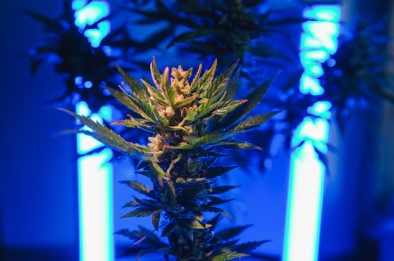
Purple Elephant is praised for its well-balanced effects, combining a cerebral high with full-body relaxation. Its effects typically manifest in the following stages:
1. Initial Onset:
- Users report an almost immediate cerebral uplift, bringing on a euphoric sensation and a rush of creativity.
- Feelings of happiness and motivation are common, making it suitable for artistic and social activities.
2. Peak Effects:
- As the high progresses, a warm body buzz begins to spread, leading to deep physical relaxation.
- While it can be uplifting, high doses may induce couch-lock effects due to its indica dominance.
3. Come Down:
- Sedation becomes more pronounced, making it a great choice for nighttime use.
- Users may experience mild drowsiness as the effects wear off, encouraging rest and sleep.
Medical Applications
The Purple Elephant cannabis strain is an Indica-dominant hybrid with a high THC concentration, complex terpene profile, and moderate CBD content, making it a candidate for multiple medical applications. Its sedative, anti-inflammatory, neuroprotective, and analgesic properties are attributed to its cannabinoid-terpene synergy, which interacts with the endocannabinoid system (ECS). Below is an advanced scientific breakdown of the medical benefits of Purple Elephant, including its biochemical mechanisms and potential therapeutic applications.

1. Pain Management and Anti-Inflammatory Effects
Mechanisms of Action for Pain Relief
- THC modulates CB1 receptor activity, reducing the perception of pain in the central nervous system (CNS).
- Caryophyllene binds to CB2 receptors, lowering inflammatory cytokine production and decreasing peripheral inflammation.
- Myrcene enhances opioid-like pain relief, increasing cell membrane permeability, which allows for greater cannabinoid absorption.
Medical Applications
- Neuropathic Pain: Helps manage sciatica, multiple sclerosis (MS), and fibromyalgia by reducing nerve inflammation.
- Chronic Pain: Beneficial for conditions such as arthritis, lower back pain, and migraines by reducing pain signaling pathways.
- Inflammatory Pain: Effective for rheumatoid arthritis and autoimmune disorders, as terpene-cannabinoid interactions suppress inflammatory mediators like TNF-α and IL-6.
Scientific Basis
- THC inhibits pain transmission in the spinal cord, preventing the excessive firing of pain signals.
- Caryophyllene’s CB2 receptor activation reduces neuroinflammation, aiding in chronic pain conditions like fibromyalgia.
2. Anxiety, Depression, and PTSD Treatment
ECS Regulation of Mood Disorders
- THC in Purple Elephant stimulates dopamine and serotonin receptors, reducing anhedonia (lack of pleasure) in depressive disorders.
- Limonene enhances serotonin function, promoting stress reduction and relaxation.
- Pinene counteracts THC-induced memory impairment, aiding cognitive function in anxiety-related disorders.
Medical Applications
- Generalized Anxiety Disorder (GAD): Purple Elephant reduces overactive amygdala responses, stabilizing mood.
- Post-Traumatic Stress Disorder (PTSD): Decreases hyperarousal, intrusive thoughts, and nightmares by modulating endocannabinoid levels.
- Major Depressive Disorder (MDD): Boosts dopamine signaling, improving mood and motivation.
Scientific Basis
- CB1 receptor activation by THC improves emotional regulation by altering activity in the amygdala and hippocampus.
- Caryophyllene’s interaction with CB2 receptors reduces neuroinflammation, which is linked to stress-induced anxiety and depression.
3. Insomnia and Sleep Regulation
Neurochemical Influence on Sleep
- THC shortens sleep onset latency, helping users fall asleep faster.
- Myrcene promotes muscle relaxation and sedation, enhancing deep sleep cycles.
- Linalool interacts with GABA receptors, improving sleep quality by reducing excess neural excitability.
Medical Applications
- Chronic Insomnia: Purple Elephant improves sleep duration and depth by reducing wakefulness.
- Restless Leg Syndrome (RLS): Reduces involuntary leg movements at night.
- Sleep Apnea: May regulate airway stability by modulating serotonin receptors, preventing respiratory disruptions.
Scientific Basis
- THC and myrcene influence GABAergic signaling, promoting slow-wave sleep (SWS) and reducing REM sleep duration, which is beneficial for PTSD-related nightmares.
- Studies indicate cannabis reduces nocturnal awakenings, making it ideal for individuals suffering from chronic sleep disorders.
4. Neuroprotection and Cognitive Health
Cannabinoid Role in Neuroprotection
- THC and caryophyllene act as neuroprotective agents, preventing oxidative stress and neurodegeneration.
- Pinene preserves acetylcholine levels, aiding memory retention and cognitive function.
- Limonene reduces hippocampal atrophy, which is linked to Alzheimer’s and age-related cognitive decline.
Medical Applications
- Alzheimer’s Disease: Purple Elephant may reduce β-amyloid plaque accumulation, slowing disease progression.
- Parkinson’s Disease: Protects dopaminergic neurons, reducing motor impairments and tremors.
- Multiple Sclerosis (MS): Prevents nerve demyelination and muscle spasms by modulating immune response.
Scientific Basis
- CB1 and CB2 receptor activation improves synaptic plasticity, aiding memory and learning.
- Caryophyllene’s anti-inflammatory properties lower neuroinflammation, improving outcomes in neurodegenerative diseases.
5. Gastrointestinal and Metabolic Health
Endocannabinoid Modulation of Digestive Function
- THC binds to CB1 receptors in the gut, reducing intestinal spasms and nausea.
- Caryophyllene modulates gut inflammation, benefiting patients with Crohn’s disease and ulcerative colitis.
- Limonene enhances gut microbiome health, supporting metabolic regulation.
Medical Applications
- Irritable Bowel Syndrome (IBS): Reduces cramping and hypersensitivity in the gastrointestinal tract.
- Chemotherapy-Induced Nausea and Vomiting (CINV): Helps cancer patients retain appetite and reduce nausea.
- Cachexia (Wasting Syndrome): Stimulates hunger and caloric intake, counteracting severe weight loss in chronic illnesses.
Scientific Basis
- CB1 receptor activation increases ghrelin levels, stimulating appetite and reducing nausea.
- Caryophyllene’s CB2 receptor modulation decreases intestinal permeability, preventing leaky gut syndrome.
6. Anti-Inflammatory and Autoimmune Benefits
Immune System Regulation
- THC inhibits immune overactivity, preventing cytokine storms in autoimmune diseases.
- Caryophyllene’s CB2 receptor activation reduces inflammatory markers, benefiting patients with rheumatoid arthritis and lupus.
- Myrcene suppresses prostaglandin production, alleviating chronic inflammatory pain.
Medical Applications
- Rheumatoid Arthritis (RA): Purple Elephant reduces joint swelling and pain sensitivity.
- Lupus (SLE): Purple Elephant modulates autoimmune responses, preventing flare-ups.
- Psoriasis & Eczema: Decreases inflammatory skin conditions, reducing irritation.
Scientific Basis
- CB2 receptor activation by caryophyllene leads to reduced immune activation, beneficial for autoimmune disease management.
- THC suppresses COX-2 enzyme activity, lowering inflammation without the gastrointestinal risks of NSAIDs.
Recreational Uses
1. Social and Creative Activities
- Purple Elephant is ideal for artistic expression, music, and writing.
- Enhances social interactions, making users more talkative and engaged.
2. Relaxation and Unwinding
- Purple Elephant is perfect for movie nights, video games, or simply unwinding after a long day.
- Users describe a blissful, dream-like state after using Purple Elephant.
3. Outdoor Adventures
- In moderate doses, Purple Elephant can enhance hiking, camping, and nature walks, thanks to its uplifting yet relaxing effects.
Growing Information
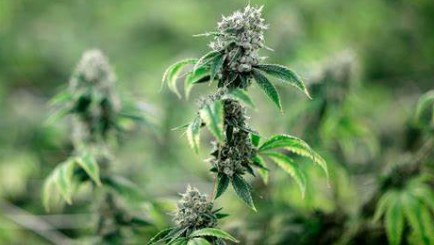
The Purple Elephant cannabis strain is an Indica-dominant hybrid known for its dense bud structure, deep purple hues, and resin production. Cultivating this strain successfully requires an understanding of climate control, nutrient balance, training techniques, and pest management. Below is a scientific breakdown of the optimal methods for growing Purple Elephant to maximize yield, potency, and quality.
1. Genetic Characteristics and Growth Profile
Morphological Traits
- Plant Structure: Medium-height with bushy lateral branching, characteristic of Indica-leaning hybrids.
- Foliage Density: Produces thick, broad fan leaves, requiring periodic pruning for airflow and light penetration.
- Bud Development: Compact and highly resinous flowers, displaying deep purple hues when exposed to cooler temperatures.
Growth Cycle
- Vegetative Stage: Grows vigorously, requiring at least 4-6 weeks of vegetative growth before flowering.
- Flowering Stage: Completes blooming within 8-9 weeks, forming dense colas covered in trichomes.
2. Environmental Conditions and Climate Optimization
Temperature Management
- Vegetative Stage: Optimal range between 70-85°F (21-29°C).
- Flowering Stage: Slight reduction to 65-78°F (18-25°C) to encourage vibrant coloration and terpene retention.
- Nighttime Cooling: Lowering temperatures in late flowering below 65°F (18°C) enhances anthocyanin expression, intensifying purple pigmentation.
Humidity Control
- Seedling Stage: Requires high humidity (60-70%) to stimulate strong root growth.
- Vegetative Stage: 50-60% relative humidity supports rapid leaf expansion.
- Flowering Stage: 40-50% humidity prevents bud rot while preserving resin production.
- Final Weeks: Lowering humidity to 30-40% enhances trichome density and terpene profile.
Airflow and Ventilation
- Oscillating fans prevent stagnant air pockets, reducing mold risks.
- Exhaust systems regulate temperature and CO₂ levels for optimal photosynthesis efficiency.
3. Light Spectrum and Photoperiod Requirements
Indoor Cultivation
- Vegetative Phase:
- Light Cycle: 18/6 (18 hours light, 6 hours dark) to maintain aggressive Purple Elephant growth.
- Ideal Spectrum: Blue-dominant light (400-500 nm) to encourage compact node spacing.
- PPFD (Photosynthetic Photon Flux Density): 300-600 µmol/m²/s.
- Flowering Phase:
- Light Cycle: 12/12 (12 hours light, 12 hours dark) to induce blooming.
- Spectrum: Red-dominant light (600-700 nm) to support dense bud formation.
- PPFD: 600-900 µmol/m²/s for optimal cannabinoid and terpene synthesis.
- Far-red light exposure at the end of the light cycle speeds up flowering transition.
Outdoor Cultivation
- Requires full sunlight exposure for at least 10-12 hours daily.
- Best suited for Mediterranean-like climates, but can be adapted to cooler regions with greenhouse supplementation.
- Protecting plants from excessive rainfall minimizes bud rot and fungal infections.
4. Soil Composition and Nutrient Management
Soil Requirements
- Prefers well-draining loamy soil with high organic content.
- Soil pH: Maintained between 6.0 – 6.5 for maximum nutrient absorption.
- Aeration Additives: Coco coir, perlite, and biochar improve oxygenation and root development.
Macronutrient Needs
- Nitrogen (N):
- High during vegetative growth to fuel chlorophyll production and foliage expansion.
- Excess nitrogen during flowering can inhibit resin development.
- Phosphorus (P):
- Essential during early flowering for root expansion and bud set.
- Supports ATP synthesis, enhancing energy transfer within the plant.
- Potassium (K):
- Regulates water retention and enzyme activity, critical for trichome production.
- Prevents weak stem structure and promotes terpene biosynthesis.
Micronutrient Considerations
- Magnesium (Mg): Facilitates chlorophyll formation, preventing yellowing leaves.
- Calcium (Ca): Strengthens cell walls, reducing stress-related leaf curling.
- Sulfur (S): Increases flavonoid and terpene production, enhancing aroma.
Feeding Schedule
- Vegetative Growth: High N-P-K ratio (4-3-3) to support rapid leaf and stem growth.
- Early Flowering: Shift to 2-6-4 for bud development.
- Peak Flowering: 1-4-6 for maximum trichome concentration and resin production.
- Final Two Weeks: Flushing with pH-balanced water removes excess nutrients for a smoother final product.
5. Watering and Irrigation Strategies
Watering Techniques
- Overwatering leads to root suffocation and nutrient lockout.
- Allowing the top inch of soil to dry before rewatering prevents fungal infections.
pH and Water Quality Management
- Optimal pH Range:
- Soil: 6.0 – 6.5
- Hydroponics: 5.5 – 6.0
- Electrical Conductivity (EC) and PPM Levels:
- Vegetative Stage: EC 1.2-1.5 mS/cm, PPM 600-800.
- Flowering Stage: EC 1.6-2.0 mS/cm, PPM 900-1200.
6. Growth Training and Canopy Management
Low-Stress Training (LST)
- Bending main stems redirects growth horizontally, promoting even light distribution.
- Encourages multiple cola formation, maximizing yield potential.
High-Stress Training (HST)
- Topping: Cutting the main growth tip forces bushy lateral growth.
- Supercropping: Controlled bending increases nutrient transport and resin production.
Defoliation Strategies
- Selective leaf removal enhances airflow and light penetration, reducing mold risks.
- Pruning lower branches focuses energy on top colas, leading to higher-quality buds.
7. Harvesting, Drying, and Curing for Optimal Potency
Trichome Maturity Indicators
- Clear trichomes: Premature (low cannabinoid potency).
- Cloudy trichomes: Peak THC and terpene concentration.
- Amber trichomes: Higher CBN content, creating stronger sedative effects.
Drying Process
- Temperature: 60-70°F (16-21°C).
- Humidity: 45-55% RH to prevent mold.
- Airflow: Indirect circulation ensures slow, even drying.
Curing for Enhanced Quality
- Buds stored in glass jars, burped daily for 2-4 weeks.
- Longer curing (6-8 weeks) improves flavor complexity and smoothness.
8. Pest and Disease Prevention
Common Threats
- Pests: Aphids, fungus gnats, and spider mites.
- Diseases: Powdery mildew and botrytis (bud rot).
Preventive Strategies
- Neem oil and predatory insects control pest infestations naturally.
- Maintaining optimal airflow and humidity reduces disease risks.
Potential Side Effects
- Dry Mouth & Dry Eyes (Most Common)
- Dizziness & Lightheadedness (Possible at High Doses)
- Paranoia & Anxiety (Rare, but can occur in sensitive users)
- Couch-lock & Drowsiness (Likely in High Doses)
Conclusion
Purple Elephant is a powerful hybrid strain with a reputation for its vibrant purple appearance, grape-like aroma, and balanced effects. Its combination of euphoria and relaxation makes it a favorite among both medical and recreational users. Whether you seek relief from chronic pain, stress, or insomnia, or simply want an enjoyable and creative high, Purple Elephant delivers a well-rounded cannabis experience.
Cultivators should note that while this strain requires moderate attention, it rewards growers with high yields and visually stunning buds. With its versatile effects and therapeutic benefits, Purple Elephant continues to be a popular choice among cannabis enthusiasts.
For a complete directory of cultivars, visit our Cannabis Strain Reviews.
