Table of Contents
Purple Chemdawg is an exceptional cannabis strain known for its striking coloration, pungent aroma, and powerful effects. This hybrid is a cross between Chemdawg and a Purple Kush phenotype, combining the potency of Chemdawg with the visually appealing and sedative characteristics of Purple Kush. It is a well-balanced hybrid that offers a unique combination of cerebral stimulation and full-body relaxation.
This document provides a detailed analysis of Purple Chemdawg, focusing on its genetic lineage, terpene profile, medical and recreational applications, and scientific insights.
Genetic Lineage and History
Purple Chemdawg is the offspring of two legendary strains:
- Chemdawg – A strain known for its sharp, diesel-like aroma, Chemdawg has been a staple in the cannabis industry and serves as the genetic foundation for many renowned strains such as Sour Diesel and OG Kush.
- Purple Kush – A pure Indica strain recognized for its deep purple hues, earthy flavors, and strong sedative effects.
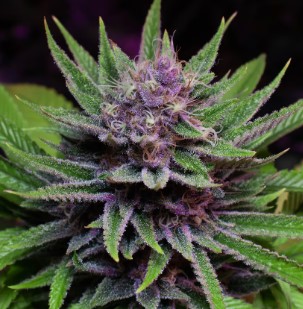
The fusion of these two parent strains gives Purple Chemdawg a unique profile that blends relaxation with euphoria, making it a well-balanced hybrid that appeals to both recreational and medicinal users.
Appearance and Aroma
Appearance
Purple Chemdawg showcases vibrant shades of deep purple, green, and hints of blue, with a thick coating of trichomes that contribute to its high THC content. The buds are typically dense and compact, reflecting the Indica heritage of Purple Kush.
Aroma and Flavor Profile
- Aroma: Skunky, diesel-like, with hints of pine and grape.
- Flavor: Earthy, sweet, and pungent with notes of berry, grape, and citrus undertones.
- Terpenes: Dominant terpenes include myrcene, limonene, caryophyllene, and pinene.
Cannabinoid and Terpene Profile
Cannabinoid Content
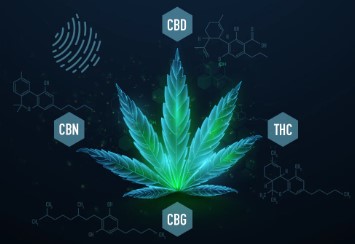
- THC: 18% – 26%
- CBD: <1%
- CBG: 0.5% – 1.5%
Terpene Profile
- Myrcene – Purple Chemdawg provides sedative effects, enhances relaxation, and has anti-inflammatory properties.
- Limonene – Offers citrusy notes, boosts mood, and exhibits anti-anxiety and antidepressant properties.
- Caryophyllene – Known for its spicy, peppery aroma and its interaction with CB2 receptors, contributing to pain relief and anti-inflammatory benefits.
- Pinene – Adds a refreshing pine scent and has bronchodilator and cognitive-enhancing properties.
Medical Uses
1. Pain Management
The high THC levels combined with the anti-inflammatory and analgesic properties of caryophyllene and myrcene make Purple Chemdawg highly effective for chronic pain, migraines, arthritis, and muscle spasms.
2. Anxiety and Depression Relief
- Limonene plays a significant role in reducing anxiety and enhancing mood.
- The balanced hybrid effects in Purple Chemdawg prevent excessive sedation, making it suitable for individuals managing generalized anxiety disorder (GAD), post-traumatic stress disorder (PTSD), and mild to moderate depression.
3. Sleep Disorders
Due to the presence of myrcene and high THC levels, Purple Chemdawg is useful for insomnia and sleep disturbances. People can go to sleep more quickly and stay asleep for longer thanks to it.
4. Appetite Stimulation
Like many Chemdawg-based strains, Purple Chemdawg is known for inducing the munchies, making it beneficial for patients suffering from cachexia, anorexia, and chemotherapy-induced nausea.
5. Neurological Benefits
Some evidence suggests that CBG and THC found in Purple Chemdawg may help in managing neurodegenerative disorders, including Parkinson’s disease and multiple sclerosis (MS).
Recreational Uses
- Relaxation and Stress Relief – The calming body high makes it perfect for unwinding after a long day.
- Creativity Boost – The cerebral stimulation provided by its Chemdawg lineage enhances creativity and focus.
- Social Enjoyment – Moderate doses can promote sociability and euphoria, making it a great strain for social gatherings.
- Enhanced Sensory Perception – Many users report heightened appreciation for music, art, and food.
Scientific Insights and Pharmacological Effects
Endocannabinoid System Interaction
- THC binds to CB1 receptors, leading to euphoria, pain relief, and appetite stimulation.
- CBD (even at low levels) helps modulate the psychoactive effects of THC, reducing paranoia in sensitive users.
- Caryophyllene interacts with CB2 receptors, contributing to anti-inflammatory and analgesic properties.
Neuroprotective Potential
- Studies suggest that THC and CBG in strains like Purple Chemdawg may provide neuroprotective effects, potentially benefiting patients with Alzheimer’s and Huntington’s disease.
Therapeutic Index and Tolerance
- Onset: 5 – 10 minutes (inhalation), 30 – 60 minutes (edibles)
- Duration: 2 – 4 hours (inhalation), 4 – 8 hours (edibles)
- Tolerance Considerations: Regular use may lead to increased tolerance, requiring higher doses over time. Rotating strains may help maintain efficacy.
Potential Side Effects
- Dry Mouth and Dry Eyes – Common with THC-rich strains.
- Dizziness or Lightheadedness – More likely in new users or when taken in high doses.
- Paranoia or Anxiety – High THC content may trigger anxiety in sensitive individuals; CBD-rich strains may help counteract this effect.
- Sedation or Couch-lock – More pronounced in higher doses due to the Indica dominance.
Cultivation Information

Climate and Environmental Control
Optimal Climate Conditions
- Temperature: 70–80°F (21–27°C) during the day, 60–70°F (15–21°C) at night.
- Humidity:
- Vegetative Stage: 50–60% RH (Relative Humidity).
- Flowering Stage: 40–50% RH to prevent mold and bud rot.
- Late Flowering Stage: 30–40% RH to maximize resin production.
Light Requirements
- Indoor:
- Vegetative Stage: 18/6 light cycle (18 hours light, 6 hours darkness).
- Flowering Stage: 12/12 light cycle (12 hours light, 12 hours darkness).
- Optimal Lighting: LED or HPS lights with 600W–1000W intensity.
- 600–900 µmol/m²/s is the photosynthetic photon flux density, or PPFD.
- Outdoor:
- Best grown in a Mediterranean climate with full sunlight.
- Ensure at least 8–10 hours of direct sunlight per day.
Soil, Nutrients, and Growing Medium
Soil Composition
- Best Soil Type: Loamy soil with good drainage.
- pH Levels: 6.0–6.8 (optimal for nutrient uptake).
- Organic Additives: Perlite, vermiculite, mycorrhizae fungi, and compost for better aeration and root development.
Hydroponic vs. Soil Cultivation
- Hydroponic systems (Deep Water Culture, Ebb & Flow, or Aeroponics) allow for faster growth and increased cannabinoid production.
- Soil-based cultivation provides more natural flavors due to rich microbial interactions.
Macronutrient Requirements (N-P-K Ratio)
- Vegetative Stage: High nitrogen (N) – 4:2:3 ratio.
- Flowering Stage: Higher phosphorus (P) and potassium (K) – 2:4:5 ratio.
Micronutrients Essential for Growth
- Calcium (Ca) – Enhances cell wall strength and bud density.
- Magnesium (Mg) – Required for chlorophyll production.
- Sulfur (S) – Supports terpene and cannabinoid synthesis.
Advanced Growing Techniques
Low-Stress Training (LST)
- Why? Increases light exposure to lower branches, leading to uniform bud growth.
- How? Gently bend and tie down branches using soft ties or trellis nets.
Topping and Fimming
- Topping: To promote several colas, cut the primary stem.
- Fimming: A lighter cut to promote bushier growth.
SCROG (Screen of Green)
- Uses a horizontal net to train branches for even canopy and increased yield.
- Recommended for indoor cultivation of Purple Chemdawg.
Defoliation and Pruning
- Remove lower fan leaves to enhance airflow and light penetration.
- Prune unproductive branches during the late vegetative stage.
Watering and Irrigation Techniques
Best Watering Practices
- Water pH: 5.8–6.5 for hydroponic systems, 6.0–6.8 for soil.
- Frequency: Once the top 1-2 inches of soil feel dry, water.
- Avoid Overwatering: Prevents root rot and nutrient lockout.
Irrigation Methods
- Drip Irrigation – Efficient for controlled water and nutrient delivery.
- Deep Watering Technique – Ensures root penetration for stronger plants.
Scientific Factors Affecting Cannabinoid and Terpene Production
CO₂ Supplementation
- Increasing CO₂ levels (to 1200–1500 ppm) enhances photosynthesis, leading to higher THC and terpene production.
UV-B Light Exposure
- Exposure to UV-B light (280-315nm wavelength) in the flowering stage stimulates trichome production, increasing potency.
Flushing Before Harvest
- Flush with pure water (pH 6.0) for 1–2 weeks before harvest to remove excess nutrients and improve flavor.
Harvesting and Curing for Maximum Potency
Best Time to Harvest
- Trichome Color Check:
- Milky white trichomes → Peak THC potency.
- Amber trichomes → More sedative effects due to CBN formation.
Drying and Curing Process
- Drying: 50–55% RH, 60–70°F for 7–10 days.
- Curing: Store buds in glass jars at 60% RH for 2–4 weeks to enhance flavor and potency.
Methods of Ingestion and Their Scientific Effects
A. Inhalation (Smoking & Vaporization)
Mechanism:
- THC and other cannabinoids bypass the digestive system and enter the bloodstream through the lungs.
- Absorbed within seconds to minutes due to alveolar gas exchange.
Bioavailability:
- Smoking: Approximately 30% absorption rate.
- Vaporization: Up to 50–70% absorption due to reduced combustion loss.
Onset: 2–10 minutes
Peak Effects: 30–60 minutes
Duration: 2–4 hours
Scientific Insight:
- Vaporization preserves terpenes and minor cannabinoids better than combustion.
- The combustion process in smoking produces benzene, tar, and polycyclic aromatic hydrocarbons (PAHs), which are potential respiratory irritants.
B. Oral Consumption (Edibles, Capsules, and Tinctures)
Mechanism:
- Cannabinoids pass through the digestive system and undergo first-pass metabolism in the liver.
- THC is converted into 11-hydroxy-THC, a more potent psychoactive metabolite that crosses the blood-brain barrier more efficiently.
Bioavailability:
- Edibles: 4–20% due to hepatic metabolism.
- Capsules and Tinctures: Higher if taken sublingually (bypasses liver metabolism).
Onset: 30–90 minutes
Peak Effects: 2–4 hours
Duration: 4–8 hours (sometimes up to 12 hours)
Scientific Insight:
- The delayed onset of edibles increases the risk of overconsumption.
- Fat-based edibles (e.g., butter or oil infusions) enhance THC absorption due to its lipophilic nature.
C. Sublingual (Tinctures, Sprays, and Dissolvable Strips)
Mechanism:
- Cannabinoids are absorbed directly into the bloodstream via the oral mucosa, bypassing first-pass metabolism.
- Effects are felt faster than edibles but slightly slower than inhalation.
Bioavailability:
- Tinctures/Sprays: 10–35%, depending on the formulation.
Onset: 15–45 minutes
Peak Effects: 1–2 hours
Duration: 3–6 hours
Scientific Insight:
- Holding the tincture under the tongue for 60–90 seconds maximizes absorption.
- Tinctures with added terpenes or liposomal formulations improve bioavailability.
D. Transdermal (Patches and Topicals)
Mechanism:
- Cannabinoids slowly penetrate the skin layers and enter systemic circulation (transdermal patches).
- Topical creams and balms interact with CB2 receptors in the skin but do not cause psychoactive effects.
Bioavailability:
- Transdermal patches: 30–50% (slow and steady absorption).
- Topicals: Minimal systemic absorption, localized effects only.
Onset:
- Transdermal: 30–120 minutes
- Topical: 15–30 minutes
Duration:
- Transdermal: 6–12 hours
- Topical: 2–4 hours
Scientific Insight:
- Transdermal patches bypass liver metabolism, allowing steady cannabinoid release into the bloodstream.
- Lipid-based formulations enhance absorption, especially when combined with penetration enhancers like ethanol or oleic acid.
Comparative Analysis of Onset, Peak, and Duration
| Ingestion Method | Onset Time | Peak Effects | Duration | Bioavailability |
|---|---|---|---|---|
| Smoking | 2–10 min | 30–60 min | 2–4 hours | ~30% |
| Vaporization | 2–10 min | 30–60 min | 2–4 hours | ~50–70% |
| Edibles | 30–90 min | 2–4 hours | 4–8 hours | 4–20% |
| Sublingual | 15–45 min | 1–2 hours | 3–6 hours | 10–35% |
| Transdermal | 30–120 min | 2–4 hours | 6–12 hours | 30–50% |
| Topical | 15–30 min | N/A (localized) | 2–4 hours | Minimal systemic absorption |
Factors Influencing Absorption and Effects
- Metabolism:
- Fast metabolizers experience shorter effects, while slow metabolizers feel effects longer.
- Liver enzymes (CYP2C9, CYP3A4) influence THC breakdown.
- Food Intake:
- Consuming edibles with high-fat meals enhances THC absorption.
- Empty stomach consumption may lead to faster onset but lower absorption.
- Individual Tolerance:
- Frequent users develop tolerance, requiring higher doses for the same effect.
- New users should start with low doses, especially with edibles.
- Terpene Interaction (Entourage Effect):
- Myrcene: Enhances THC absorption and promotes sedation.
- Limonene: Increases mood elevation and reduces anxiety.
- Caryophyllene: May reduce inflammation and provide longer-lasting effects.
Choosing the Best Method Based on Needs
| Purpose | Recommended Method |
|---|---|
| Fast relief (pain, anxiety, nausea) | Vaporization or smoking |
| Long-lasting effects (chronic pain, insomnia) | Edibles or transdermal patches |
| Precision dosing (microdosing, medical use) | Tinctures or sublingual strips |
| Localized relief (arthritis, muscle pain) | Topicals |
| Discreet consumption (no smell, portability) | Capsules, tinctures, or patches |
The method of ingestion for Purple Chemdawg plays a crucial role in its effects, duration, and therapeutic potential.
- Smoking and vaping offer fast onset but shorter duration.
- Edibles and transdermal patches provide long-lasting relief.
- Sublingual tinctures strike a balance between onset speed and duration.
- Topicals are ideal for localized treatment without psychoactive effects.
Conclusion
Purple Chemdawg is a well-balanced hybrid strain that provides potent cerebral euphoria and deep physical relaxation. With high THC levels, a diverse terpene profile, and a strong genetic lineage, it is an excellent choice for both recreational enjoyment and medical relief. Whether used for pain management, mood disorders, sleep aid, or simply relaxation, Purple Chemdawg remains a top-tier strain in the cannabis world.
Final Recommendations
- Best for: Evening or nighttime use.
- Ideal for: Experienced users or those seeking potent effects.
- Caution: Start with a low dose to assess tolerance, especially for novice users.
For a complete directory of cultivars, visit our Cannabis Strain Reviews.
