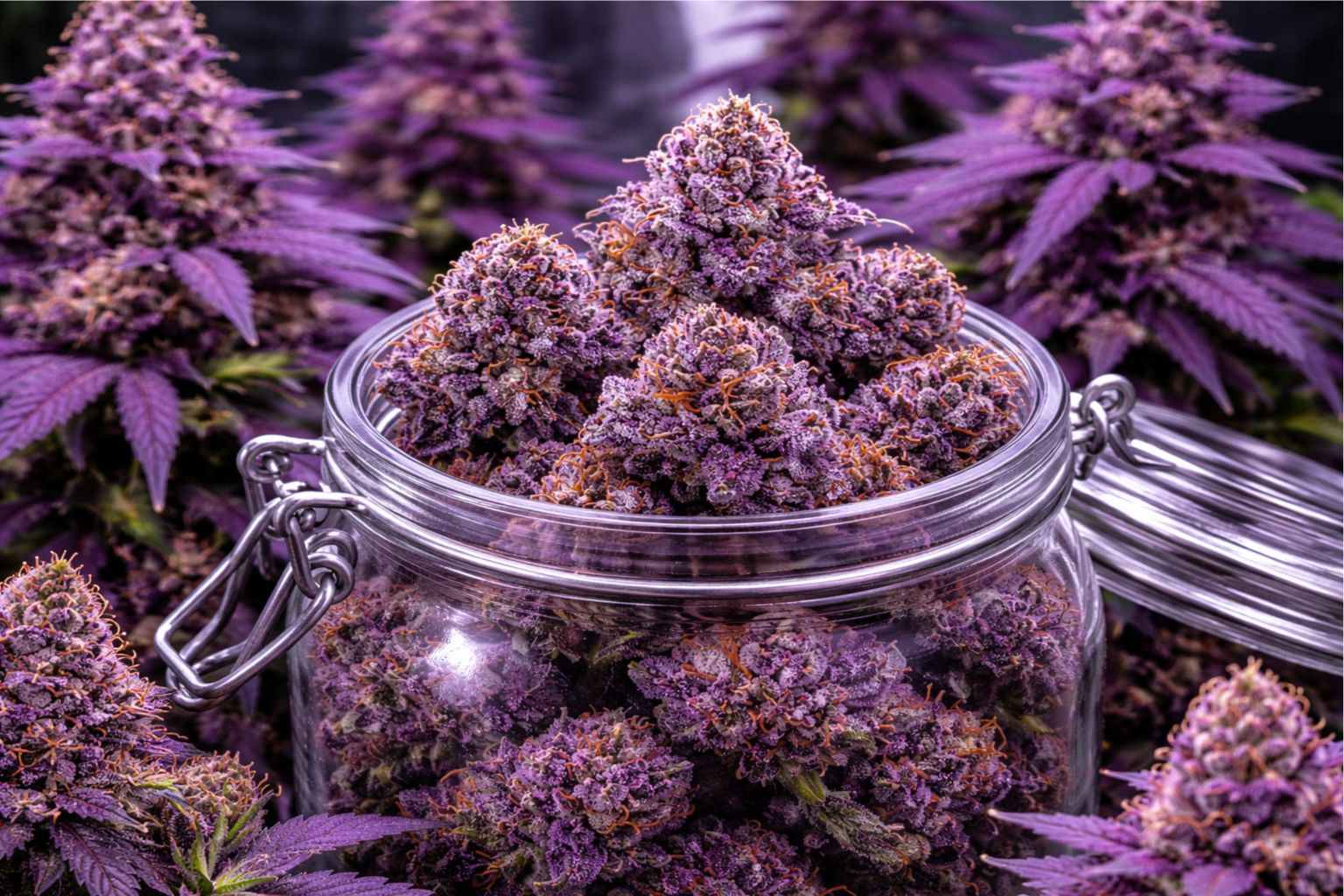
I used to treat purple buds as a nice surprise, not a goal. That changed after I ran two purple cannabis strains next to a green-leaning hybrid under the same LED, feed, and irrigation schedule. The purple plants finished with noticeably stronger aroma and bag appeal, and the trim went quicker because the buds stacked tighter with fewer wispy sugar leaves. But I also learned the opposite lesson on the very next run: when I tried to force color too early with a big temperature drop, the plants slowed, leaves paled, and yields thinned. That run taught me to treat color as a finishing detail, not a lever to pull in mid-flower.
This article is my real-world playbook for growing purple cannabis strains without gimmicks. I’ll explain what actually drives purple coloration, how I select genetics and phenotypes, and the environment, lighting, and nutrition targets I use in soil, coco, and simple hydro. I’ll also cover seed-shopping realities like feminized cannabis seeds, autoflower purple strains, and the unglamorous details of cannabis seed germination and seed bank shipping.
What “purple” really means in cannabis plants
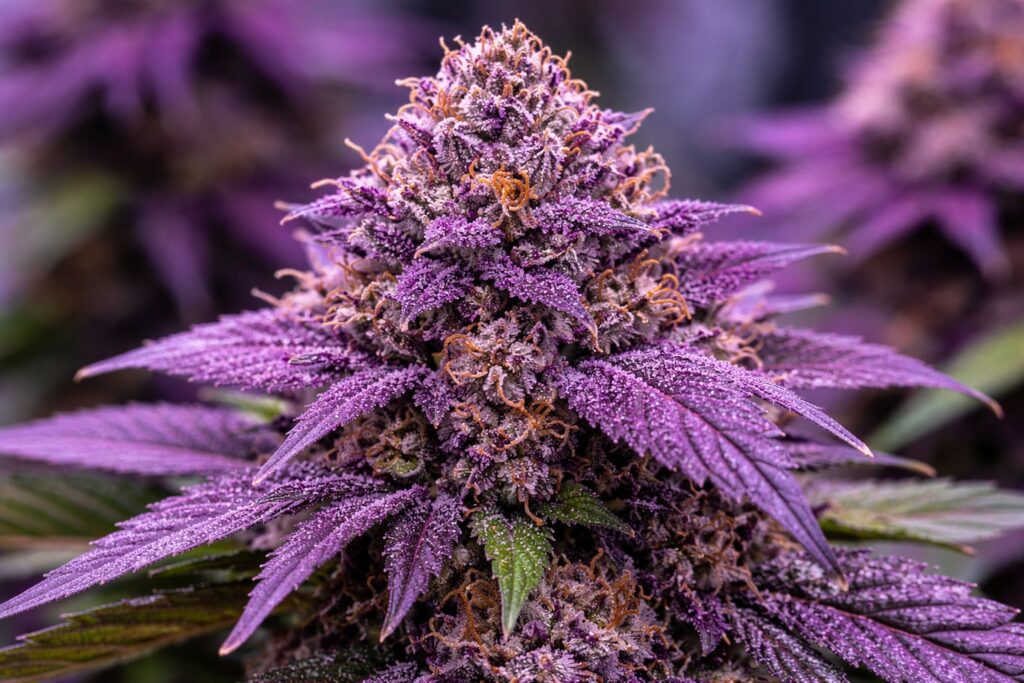
Purple coloration in cannabis is usually the visible expression of anthocyanins, a class of pigments plants use for protection. In my room, purple shows up most often in:
- Calyxes and sugar leaves late in flower
- Leaf petioles and fan leaves when nights are cooler
- Specific phenotypes that are genetically predisposed to color
There’s a key point I learned the hard way: purple is not a reliable signal of potency. I grow cannabis, marijuana, and weed for predictable results, not social media. Color can correlate with a particular terpene profile in certain lineages, but it’s not a shortcut to quality.
Genetics is the main driver
If your goal is consistent color, genetics matters more than any temperature trick. I’ve grown “purple” lines that stayed mostly green because the phenotype I popped simply didn’t carry the strongest color expression. I’ve also grown purple weed strains that went violet even in a warm summer room.
Two examples from my own garden:
- A granddaddy purple strain cut I ran years ago colored up reliably in weeks 7–9 with minimal effort.
- A purple punch strain I hunted from seed had three phenotypes: one deep lavender, one mostly green with purple tips, and one that only showed purple after a cool finish.
That experience is why I treat purple cannabis strains like any other breeding line: I expect variability, and I plan for selection.
Environment can enhance or mute purple expression
Once genetics is in place, environment becomes the steering wheel. The factors that most influence purple in my grows are:
- Night temperature drop in late flower
- Light intensity and spectrum
- Plant health (especially nitrogen balance)
- Root-zone stability (temperature, oxygen, and EC)
If you’ve ever searched “how to grow purple weed” and you were told to “just make it cold,” take that with caution. Cold can help anthocyanins show, but cold can also slow metabolism, reduce nutrient uptake, and invite mold if humidity isn’t controlled.
Nutrients and pH: color is easier on a healthy plant
Purple leaves from deficiency and purple buds from genetics are not the same thing. I’ve seen growers celebrate purple fan leaves that were actually phosphorus stress or magnesium issues. My rule is simple: if the plant looks unhappy, fix the fundamentals before you chase aesthetics.
For most purple cannabis strains, my baseline targets are:
- Soil: pH 6.3–6.8; moderate EC with a steady calcium/magnesium supply
- Coco: pH 5.8–6.1; EC appropriate to stage; runoff management to avoid salt buildup
- Hydro: pH 5.6–6.0; stable reservoir temperature; frequent monitoring
Choosing purple genetics and seeds I’d actually grow again
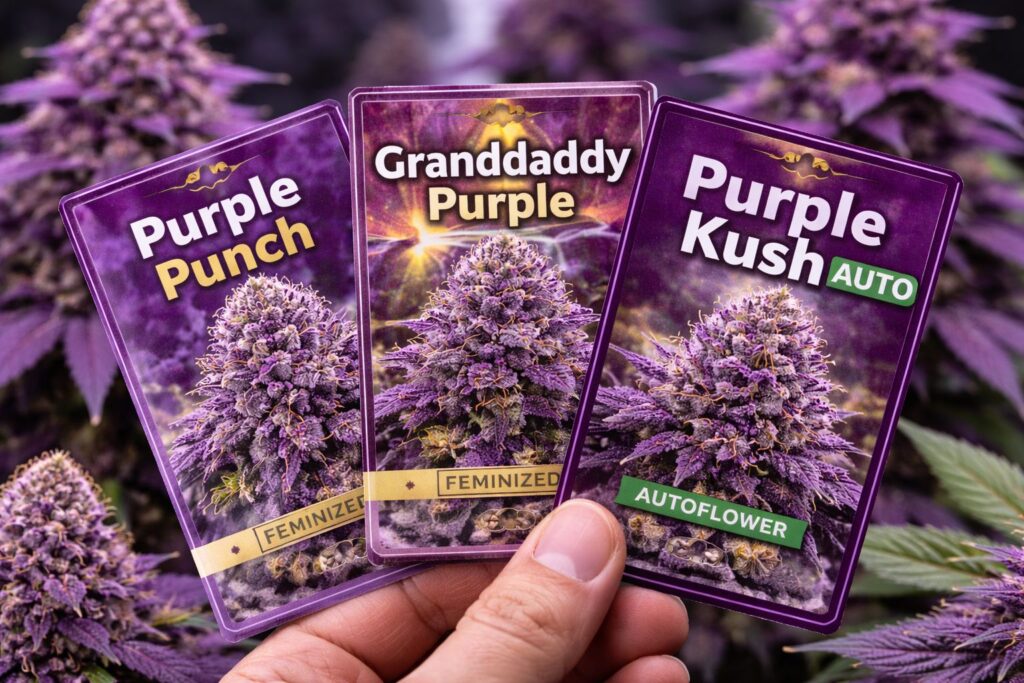
When friends ask me for the “best” purple weed strains, I don’t give them a single name. I ask what they’re growing in (soil, coco, hydro), how much control they have over temperature and humidity, and whether they want photoperiod or auto.
Here’s what matters when shopping for purple cannabis strains.
Feminized, regular, or autoflower: pick for your goals
Feminized cannabis seeds are the easiest route if you want a full canopy of flowering females without hunting males. In my experience, feminized cannabis seeds are ideal when:
- You have limited plant count and want predictable canopy planning
- You’re dialing in a strain-specific environment
- You want to run the same lineup twice to compare phenotypes
Regular seeds are valuable if you plan to breed or want the widest expression. For most home growers focused on harvest, I lean toward feminized cannabis seeds because they simplify the workflow.
Autoflower purple strains can be excellent, but they reward a different style. Autos don’t give you endless time to correct mistakes. With autoflower purple strains, I treat the first 21 days as sacred: stable environment, no overwatering, gentle training, and no heavy transplant shock.
Indica, sativa, and hybrid labels: how I interpret them
Most purple lines I’ve grown lean indica or hybrid. That often means tighter node spacing and heavier colas, which can be great, but also increases mold risk if airflow is weak. I don’t buy purely based on “indica” or “sativa.” I look for:
- Flowering time that fits my room schedule
- Mold resistance notes when possible
- Reports of color consistency across phenotypes
If you’re shopping for a granddaddy purple strain, recognize it’s a famous name with lots of versions. Treat it like a category and verify the breeder and the trait descriptions.
Seed bank realities: what I look for in ordering
I’ve ordered enough times to say it plainly: seed bank shipping is part of the growing experience. Great genetics on paper don’t help if the order arrives late, crushed, or poorly stored.
My seed bank shipping checklist is simple:
- Clear shipping policies and realistic delivery windows
- Stealth options if you need privacy
- Tracking where available
- Responsive customer support if there’s an issue
- Packaging that protects seeds from heat and crushing
I also pay attention to how a seed bank shipping policy handles replacements for damaged or non-viable seeds. No one can guarantee 100% germination, but reputable shops don’t dodge legitimate problems.
Cannabis seed germination: my method for purple lines
Because cannabis seed germination sets the tone for the whole run, I don’t improvise here. My highest success rate comes from a controlled, gentle process:
- I hydrate seeds in clean water for 12–18 hours at 20–22°C (not longer; I don’t want them to drown).
- I move them into a lightly moist paper towel inside a breathable container, kept dark.
- Once the taproot shows 0.5–1 cm, I plant into the final or near-final medium for autos, or small starter pots for photoperiods.
- I keep the seed zone warm (24–26°C) and humid (70–80% RH) with low light.
For cannabis seed germination, the biggest killer I see is overwatering after planting. The medium should be moist, not soaked. I’d rather mist twice a day than drench once.
My indoor method for purple cannabis strains without sacrificing yield
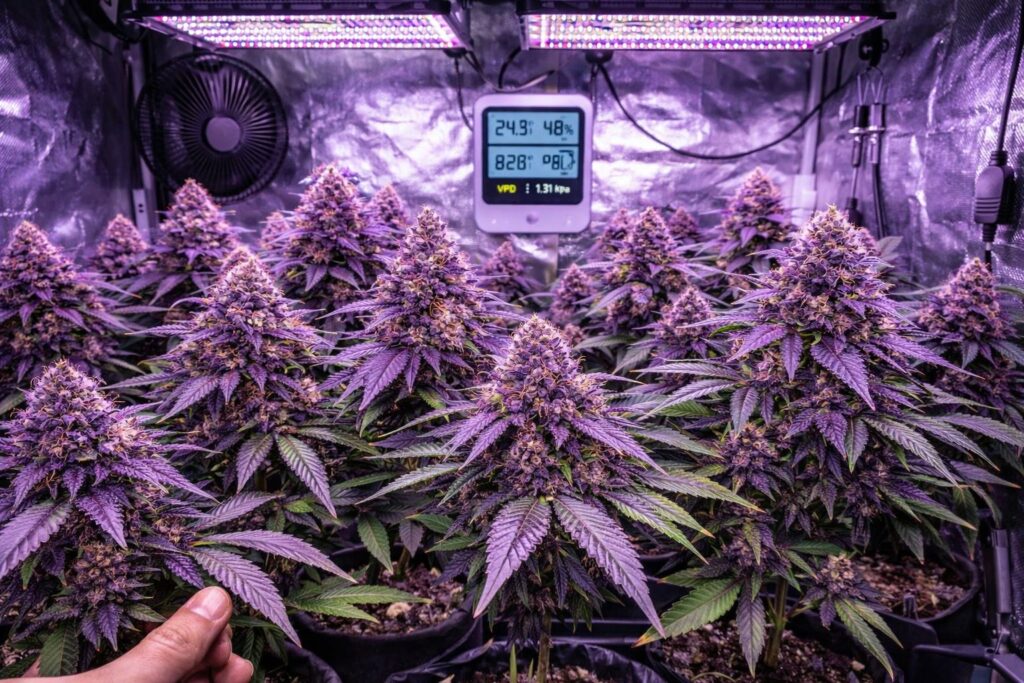
This is the part most people want when they google how to grow purple weed: exact numbers and a repeatable approach. These targets come from my own indoor runs using modern LED lighting, but the principles translate.
Stage 1: Seedling and early veg (days 1–21)
For purple cannabis strains, I aim for steady growth, not stress. Stress early tends to show up later as uneven flowering.
Environment targets I use:
- Temperature: 24–26°C lights on; 21–23°C lights off
- Relative humidity: 65–75%
- VPD: roughly 0.8–1.0 kPa (I adjust based on leaf posture)
- Light: 200–300 PPFD at canopy for seedlings, gradually increasing
Feeding approach:
- Soil: light watering cycles; minimal nutrients until the plant asks for it
- Coco/hydro: low EC to start, then a gentle ramp; consistent calcium/magnesium
Training:
- I avoid topping autos early. With autoflower purple strains I stick to gentle leaf tucking and minimal LST.
- For photoperiods, I’ll top once around the 5th node if the plant is vigorous, then LST to open the canopy.
Stage 2: Veg to pre-flower (weeks 3–6)
This is where I build the structure that decides final yield. I want an even canopy and airflow paths through the plant.
Environment targets:
- Temperature: 24–27°C lights on; 20–22°C lights off
- Relative humidity: 55–65%
- VPD: roughly 1.0–1.2 kPa
- Light: 400–600 PPFD depending on cultivar vigor and CO2 level (I do not rely on added CO2)
Key practices that help purple weed strains finish clean:
- Defoliate lightly, focusing on airflow and light penetration
- Keep the root zone stable (no big swings in dry-back or reservoir temperature)
- Avoid pushing nitrogen too hard; lush dark leaves can delay color later
Stage 3: Flowering (weeks 1–6)
My flower strategy is simple: keep the plant healthy, then let genetics do the purple work near the end.
Baseline targets:
- Photoperiod: 12/12 for most cultivars
- Temperature: 24–26°C lights on; 20–22°C lights off
- Relative humidity: 45–55% (lower by week 5 if buds are dense)
- VPD: roughly 1.2–1.4 kPa
- Light: 700–900 PPFD on average, adjusted to prevent bleaching
Nutrition notes from my grows:
- In coco/hydro, I watch EC daily and make small changes. Big swings are what cause lockouts.
- In soil, I focus on consistent watering and avoiding “hot” amendments late in flower.
This is also where pest control matters. Dense purple marijuana strains can trap humidity in the canopy. My IPM routine is preventative:
- Sticky traps to monitor fungus gnats and flyers
- Weekly leaf checks under a small loupe
- Good airflow and clean floors to reduce pest pressure
- Neem is not my go-to in flower; I avoid oily sprays on buds
Stage 4: The purple finish (last 14–21 days)
If a cultivar is going to color, this is when it usually happens for me. The goal is a mild night drop, not a shock.
What I do:
- I lower lights-off temperature gradually to 18–20°C if humidity control is strong.
- I keep lights-on temperature stable; I don’t want the plant constantly yo-yoing.
- I keep RH tight (40–50%) and increase airflow to prevent botrytis.
What I avoid:
- Forcing extreme cold (below 16°C) in a humid room
- Starving the plant to “make it purple”
- Chasing purple at the expense of resin maturity
This approach has worked on a granddaddy purple strain, a purple kush strain, and several purple punch strain phenotypes. It also works for many modern purple weed strains that carry anthocyanin expression.
Soil vs. coco vs. hydro: which brings out the best purple?
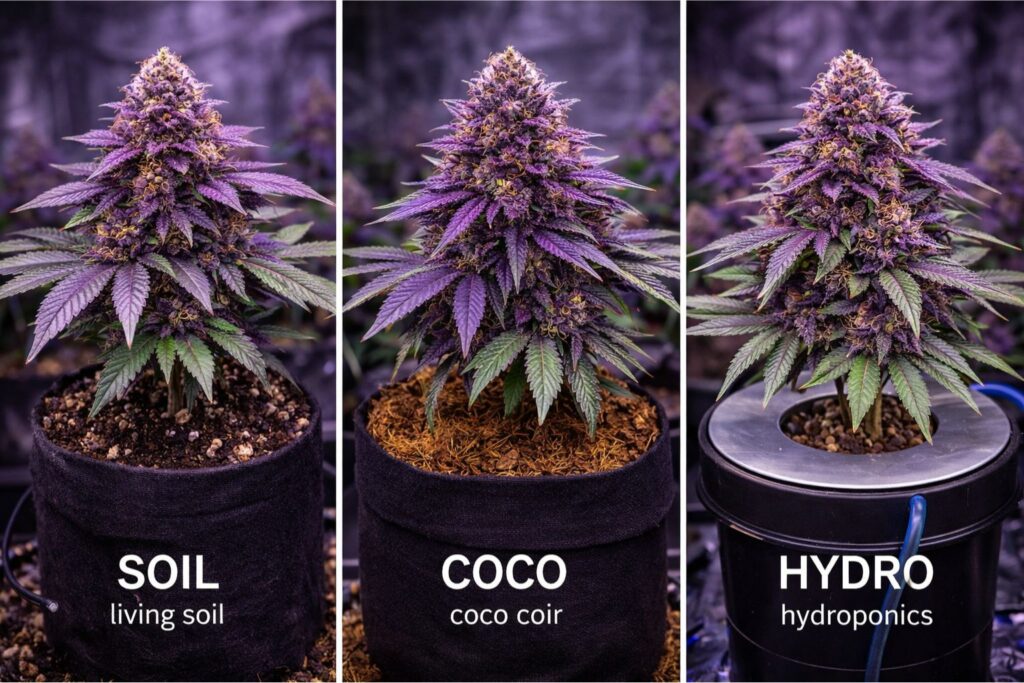
I’ve run purple cannabis strains in all three. Each has trade-offs.
Soil: forgiving and flavorful, but slower to steer
In living or amended soil, I get steady growth and strong aroma, especially with purple marijuana strains. Color expression can be excellent, but if the soil is too nitrogen-rich late in flower, the plant can stay green longer.
To improve results in soil:
- Keep top-dress timing conservative in mid-flower
- Water to proper saturation, then allow a healthy dry-back
- Avoid over-potting small plants; roots like to fill the container evenly
Coco: precise control for color and performance
Coco is where I’ve had the most repeatable results with purple weed strains. Because I can steer EC and water frequency, I can keep the plant in a stable, high-performance state and then apply a gentle finish for color.
My coco reminders:
- Keep calcium/magnesium consistent
- Watch runoff EC so salts don’t creep up
- Don’t let the medium swing from soaked to bone-dry in flower
Simple hydro: fast growth, but demands stability
Hydro can deliver explosive veg and big yields, but it punishes sloppy monitoring. If you try hydro with autoflower purple strains, keep it simple and stable. Sudden pH drift and warm reservoirs are the fastest way to lose momentum.
Hydro basics I don’t skip:
- Reservoir temperature around 18–20°C
- Strong aeration
- Daily pH checks, especially in peak flower
Post-harvest: keeping the purple and the terps
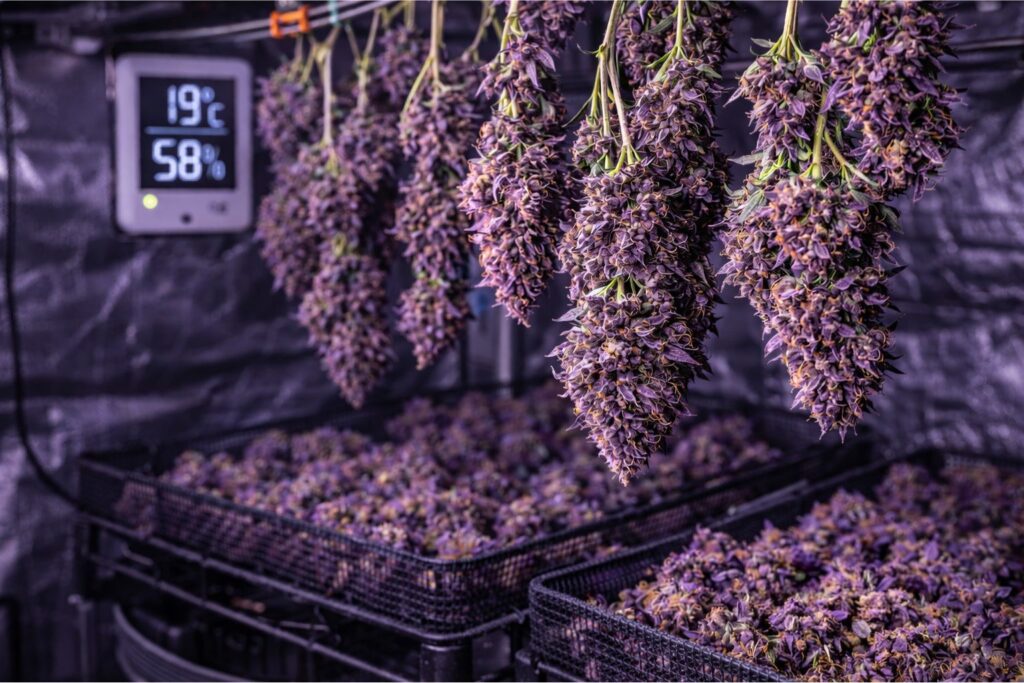
I’ve seen gorgeous purple cannabis strains lose their charm because of rushed drying. My best results come from treating drying like part of the grow, not an afterthought.
Harvest timing: I watch the whole plant, not just trichomes
I don’t chase a single trichome percentage because cultivars differ. I look for:
- Pistils mostly matured and receded
- Calyx swelling and density
- Aroma shift from “green” to strain-specific terpenes
- Trichomes mostly cloudy with some clear remaining, depending on preference
For a purple punch strain, I often see the best aroma when I don’t harvest too early. For a purple kush strain, I pay extra attention to bud density and airflow because the colas can be thick.
My drying targets
This is where many purple weed strains either shine or flatten out:
- Temperature: 16–19°C
- Relative humidity: 55–60%
- Airflow: indirect, gentle, never blasting buds
- Time: 10–14 days in most cases
If the room is too warm and dry, purple marijuana strains can brown and lose top notes. If it’s too humid without airflow, you risk mold. I’d rather slow-dry and keep aroma intact.
Cure: the last step for jar quality
I cure in airtight containers once small stems snap and buds feel dry on the outside but not brittle. For the first 7–10 days, I burp briefly to exchange air and equalize moisture. After that, I reduce burping and store cool and dark.
This is also where honest evaluation happens. Some purple cannabis strains look stunning but don’t carry the flavor I want. I write notes and decide whether a phenotype earns a re-run.
Troubleshooting: when purple doesn’t show up (or shows up for the wrong reason)
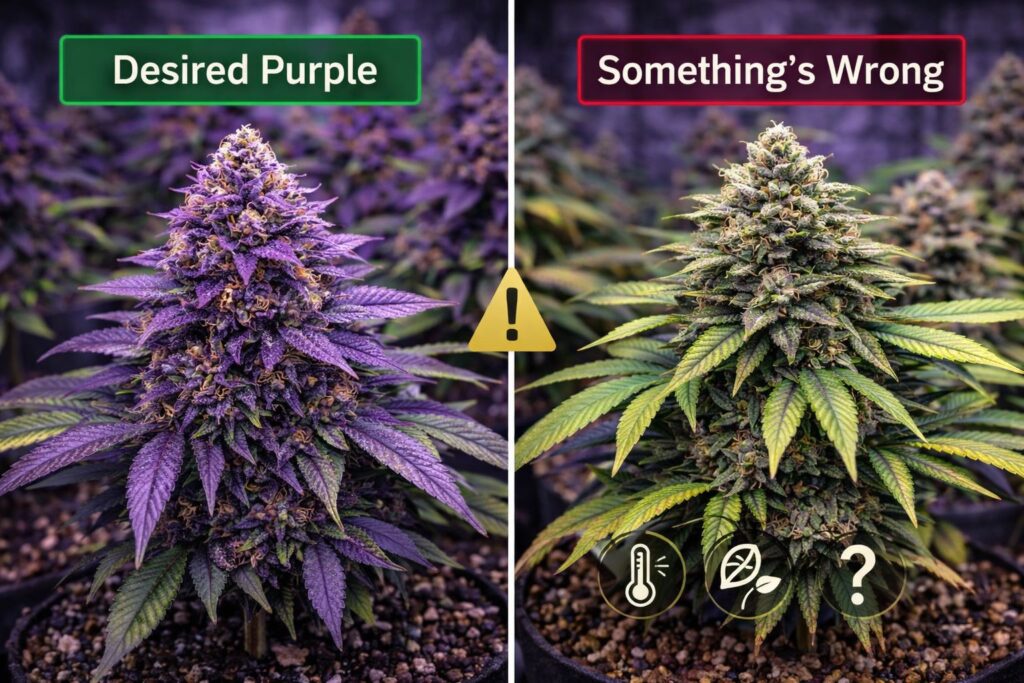
If you’re asking “how to grow purple weed” because your plant stayed green, here are the common causes I see:
- Genetics: the phenotype simply doesn’t express strong purple
- Nights too warm in late flower (common in summer)
- Excess nitrogen late in flower
- Light intensity too low (the plant never fully matures)
- Harvested too early
- pH drift or nutrient lockout causing stress coloration
If you see purple early in veg and the plant looks weak, consider these:
- Phosphorus stress from cold roots
- Magnesium deficiency (especially in coco)
- Overwatering and low oxygen in the root zone
The fix is boring but effective: stabilize environment, correct pH, and feed appropriately. Healthy plants color more cleanly.
Seed buying and legal reality check
I’m not a lawyer, and I’m not here to tell anyone what to do. Regional grow laws vary widely, and they change. If you’re ordering seeds, understand your local rules before you click purchase, and choose seed bank shipping options that match your needs for privacy and delivery timing.
I also recommend keeping a grow log with dates, feeds, and environment notes. It turns “I think it worked” into a repeatable process.
FAQ: common questions I hear about purple cannabis strains
Are purple weed strains stronger than green ones?
Not automatically. Purple weed strains can be potent, but color alone doesn’t predict cannabinoid content. I judge strength by genetics, maturity, and overall plant health, not hue.
Are purple marijuana strains harder to grow?
Some purple marijuana strains are easy, especially stable indica-leaning lines. Others are finicky and sensitive to EC or humidity. If you’re new, start with feminized cannabis seeds from a reputable breeder so you can focus on environment and technique.
How to grow purple weed outdoors without ruining the harvest?
How to grow purple weed outdoors comes down to timing and climate. Many regions get cooler nights in late summer or fall, which can help color, but outdoor humidity and rain can also cause rot. Prioritize airflow, keep plants spaced, and consider cultivar choice based on your season length.
What’s the easiest way to get purple buds?
Pick proven purple cannabis strains first, then apply a gentle late-flower night drop if your humidity control is good. Don’t force stress. I’ve had better results by keeping the plant thriving and letting genetics express color naturally.
Does the purple punch strain always turn purple?
In my runs, the purple punch strain varies by phenotype. Some plants go lavender, some stay greener with purple accents. If you want consistency, pop multiple seeds, keep notes, and re-run the best keeper.
Is the granddaddy purple strain the same everywhere?
No. The granddaddy purple strain name is used widely, and different breeders may have different versions. Verify the source, and treat it like a lineage rather than a single uniform plant.
What should I expect from a purple kush strain?
A purple kush strain often produces dense buds and can handle cooler finishes well, but density means you must manage humidity carefully. Strong airflow and disciplined defoliation help prevent mold.
Should I choose autoflower purple strains or photoperiods?
Autoflower purple strains are great for speed and simplicity, but they require a clean start and minimal stress. Photoperiod purple cannabis strains give you more time to recover from mistakes and to shape the canopy.
What is the most reliable cannabis seed germination method?
For cannabis seed germination, I recommend controlled warmth, gentle moisture, and planting as soon as the taproot appears. Over-soaking and overwatering after planting cause more failures than “bad seeds.”
How do I reduce problems with seed bank shipping delays?
Seed bank shipping delays happen. I reduce risk by ordering before I need seeds, choosing tracked options when possible, and storing seeds properly as soon as they arrive. If you rely on seed bank shipping for a tight schedule, plan a buffer.
What if my seeds arrive and I’m not ready to plant?
Store them cool, dry, and dark. Then start cannabis seed germination when your environment is dialed in. Rushing cannabis seed germination because the seeds arrived early is a common mistake.
Any final advice for choosing seeds?
Choose genetics that match your environment, prioritize stable feminized cannabis seeds if you want predictability, and be realistic about seed bank shipping timelines.
