Table of Contents
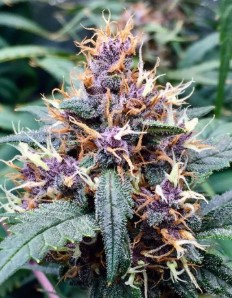
Purple Berry is an indica-dominant hybrid renowned for its visually striking purple hues, sweet berry aroma, and deeply relaxing effects. It is a cross between Granddaddy Purple (GDP) and Blueberry, two iconic strains known for their potent sedative effects and high anthocyanin content, which gives them their signature deep purple coloration.
Key Strain Characteristics
- Genetics: Granddaddy Purple × Blueberry
- Type: Indica-dominant hybrid (~80% indica / 20% sativa)
- THC Content: 18% – 24%
- CBD Content: 0.3% – 1%
- Flavor Profile: Sweet berries, grapes, earthy pine
- Aroma: Fruity, herbal, slightly spicy
- Effects: Relaxing, euphoric, sedating, mildly cerebral
- Medical Uses: Pain relief, stress, insomnia, appetite stimulation
- Flowering Time: 7-9 weeks
- Yield: Medium to high
- Preferred Environment: Indoor and outdoor growth, thrives in cool climates
Genetic Lineage & Breeding Information
Purple Berry is derived from two legendary strains, Granddaddy Purple (GDP) and Blueberry, which contribute to its relaxing and euphoric effects.
Parent Strains
- Granddaddy Purple (GDP)
- A famous indica strain developed in California.
- Known for its deep purple buds, grape-like aroma, and strong sedative effects.
- High in myrcene and beta-caryophyllene, making it excellent for pain relief and stress reduction.
- Blueberry
- An award-winning strain dating back to the 1970s.
- Known for its sweet, fruity flavor and long-lasting euphoric effects.
- High in terpinolene and limonene, contributing to mood elevation and relaxation.
By combining these two, Purple Berry inherits the best traits from each parent strain, leading to potent sedative effects, a sweet berry flavor, and therapeutic benefits.
Cannabinoid & Terpene Profile
Understanding the chemical makeup of Purple Berry is essential in determining its effects and medical applications.
Cannabinoid Composition
| Cannabinoid | Average Percentage |
|---|---|
| THC | 18% – 24% |
| CBD | 0.3% – 1% |
| CBG | 0.5% – 1.2% |
| CBC | 0.1% – 0.5% |
| THCV | 0.2% – 0.8% |
THC (Tetrahydrocannabinol):
- Responsible for psychoactive effects and pain relief.
- Provides strong euphoria and relaxation while aiding with insomnia.
CBD (Cannabidiol):
- Reduces inflammation, anxiety, and seizures.
- Acts as a buffer against THC-induced paranoia.
CBG (Cannabigerol):
- Shows neuroprotective and anti-inflammatory properties.
- Aids in glaucoma, pain relief, and muscle relaxation.
Terpene Profile & Effects
| Terpene | Percentage | Aroma/Flavor | Effects |
|---|---|---|---|
| Myrcene | 0.4% – 1.1% | Earthy, musky, herbal | Sedative, anti-inflammatory, muscle relaxant |
| Limonene | 0.2% – 0.8% | Citrus, lemon | Mood booster, anti-stress, anxiolytic |
| Beta-Caryophyllene | 0.3% – 1.0% | Spicy, peppery, woody | Pain relief, anti-inflammatory, interacts with CB2 receptors |
| Linalool | 0.1% – 0.7% | Floral, lavender | Anti-anxiety, sedative, analgesic |
| Humulene | 0.1% – 0.6% | Woody, earthy | Appetite suppressant, anti-inflammatory |
Synergistic Effects (Entourage Effect)
The combination of myrcene, beta-caryophyllene, and limonene enhances relaxation, stress relief, and pain management. This makes Purple Berry a highly effective strain for both recreational and medical use.
Medical Benefits of Purple Berry
Purple Berry’s high THC content and diverse terpene profile make it a versatile strain for treating chronic pain, insomnia, anxiety, and appetite loss.
Pain Management
- Relieves chronic pain caused by conditions such as arthritis, fibromyalgia, and migraines.
- Beta-caryophyllene and myrcene act as natural painkillers.
- Helps with muscle spasms and cramps due to its muscle-relaxing effects.
Anxiety & Depression
- Limonene and linalool contribute to mood elevation and stress relief.
- Ideal for generalized anxiety disorder (GAD) and depression.
- Promotes a calm, euphoric state without excessive sedation.
Insomnia Treatment
- High myrcene content makes it effective for insomnia sufferers.
- Induces a deep, restful sleep within an hour of consumption.
- Helps those with REM sleep disturbances or PTSD-related nightmares.
Appetite Stimulation
- Useful for patients undergoing chemotherapy or suffering from appetite loss.
- Stimulates the endocannabinoid system (ECS) to promote hunger.
Anti-Inflammatory Properties
- Reduces inflammation associated with arthritis, IBS, and Crohn’s disease.
- Humulene and beta-caryophyllene contribute to its anti-inflammatory benefits.
Recreational Uses of Purple Berry
Beyond its medicinal properties, Purple Berry is highly sought after by recreational users due to its unique effects.

Relaxation & Stress Relief
- Provides deep mental and physical relaxation.
- Perfect for winding down after a long day or watching movies.
Euphoria & Creativity
- Delivers a mild cerebral buzz before transitioning into full-body sedation.
- Enhances music, artistic expression, and introspection.
Social Enjoyment
- Creates a relaxed yet uplifted mood, making it great for small gatherings.
- Not overwhelming, allowing for light conversations and fun activities.
Couch-Lock & Sedation
- Higher doses lead to “couch-lock,” making it ideal for lazy evenings.
- Best used when you don’t have responsibilities or tasks to complete.
Methods of Ingestion
Each method of ingestion varies in terms of bioavailability, onset time, and duration of effects. Below is a scientific breakdown of the most common ways to consume Purple Berry.
Inhalation (Smoking & Vaporization)
One of the most traditional and effective methods of Purple Berry cannabis consumption is inhalation, where cannabinoids quickly enter the bloodstream through the alveoli in the lungs.
Smoking (Combustion)
- Bioavailability: ~30-40% THC absorption
- Onset: Seconds to 5 minutes
- Peak Effects: 30-60 minutes
- Duration: 2-4 hours
- Mechanism:
- When cannabis is smoked, THC undergoes pyrolysis (heat-induced decarboxylation), converting THCA → THC.
- The THC rapidly enters the bloodstream via lung capillaries, crosses the blood-brain barrier (BBB), and binds to CB1 receptors in the brain.
Vaporization (Vaping)
- Bioavailability: 50-60% THC absorption
- Onset: Seconds to 5 minutes
- Peak Effects: 30-60 minutes
- Duration: 2-4 hours
- Mechanism:
- Vaporizers of Purple Berry heat cannabis (320-400°F or 160-200°C), preserving terpenes and cannabinoids without combustion.
- Delivers cleaner, more potent THC absorption compared to smoking.
Comparison of Smoking vs. Vaping
| Factor | Smoking | Vaping |
|---|---|---|
| Heat Source | Combustion (~900°F) | Vaporization (~320-400°F) |
| THC Bioavailability | ~30-40% | ~50-60% |
| Terpene Retention | Low | High |
| Harmful Byproducts | Yes (tar, carbon monoxide) | No combustion byproducts |
Oral Ingestion (Edibles, Capsules, Tinctures)
Oral ingestion of Purple Berry involves first-pass metabolism through the liver, which alters THC into 11-hydroxy-THC (11-OH-THC), a more potent and longer-lasting metabolite.
Edibles & Capsules
- Bioavailability: 4-20% (highly variable due to digestion and metabolism)
- Onset: 30-90 minutes
- Peak Effects: 2-4 hours
- Duration: 6-12 hours
- Mechanism:
- THC is first metabolized by the liver into 11-OH-THC, which has a stronger affinity for CB1 receptors, leading to deeper, more intense psychoactive effects.
- The slow absorption causes delayed onset but prolonged duration.
Sublingual (Tinctures, Oils)
- Bioavailability: 20-35% (higher than edibles, lower than inhalation)
- Onset: 15-45 minutes
- Peak Effects: 1-2 hours
- Duration: 4-6 hours
- Mechanism:
- Cannabinoids are absorbed directly into the bloodstream via mucous membranes under the tongue, bypassing first-pass metabolism.
Comparison of Oral Ingestion Methods
| Factor | Edibles & Capsules | Tinctures (Sublingual) |
|---|---|---|
| Metabolism | First-pass liver metabolism | Direct bloodstream absorption |
| Onset Time | 30-90 minutes | 15-45 minutes |
| Peak Effects | 2-4 hours | 1-2 hours |
| Duration | 6-12 hours | 4-6 hours |
Topical & Transdermal Applications
Cannabinoids can also be applied topically for localized effects or transdermally for systemic absorption.
Topical Cannabis (Creams, Balms, Lotions)
- Bioavailability: Low (minimal systemic absorption, localized effects only)
- Onset: 15-30 minutes
- Duration: 2-4 hours
- Mechanism:
- THC and CBD interact with CB2 receptors in the skin, reducing localized pain and inflammation.
- Since cannabinoids do not typically penetrate deeply enough into the bloodstream, topical products do not produce psychoactive effects.
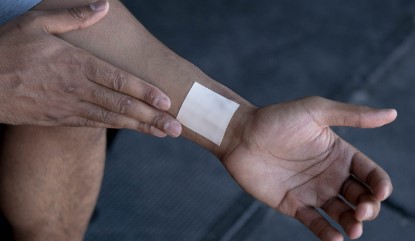
Transdermal Patches
- Bioavailability: High (up to 50-60% systemic absorption)
- Onset: 30-90 minutes
- Duration: 8-24 hours
- Mechanism:
- Transdermal patches contain permeation enhancers that allow THC or CBD to cross the skin barrier and enter the circulation for long-term release.
Comparison of Topical vs. Transdermal
| Factor | Topical Creams & Balms | Transdermal Patches |
|---|---|---|
| Absorption | Localized (CB2 receptors) | Systemic (Bloodstream) |
| Onset Time | 15-30 minutes | 30-90 minutes |
| Duration | 2-4 hours | 8-24 hours |
| Psychoactive Effects | No | Yes (if THC-based) |
Factors Affecting Onset and Duration
Several physiological and metabolic factors influence how quickly and how long cannabis effects last.
Metabolism & Individual Physiology
- Faster metabolism results in shorter onset and duration.
- Liver enzyme activity (CYP2C9, CYP3A4) affects THC metabolism rate.
Fat-Solubility of Cannabinoids
- Because THC is lipophilic, it attaches itself to body fat cells.
- Regular users may experience a slower clearance rate, leading to longer effects over time.
Dosage & Tolerance
- Higher doses of Purple Berry extend duration but also increase risk of overconsumption (edibles) or couch-lock (inhalation).
- Chronic users may build tolerance, requiring higher doses for similar effects.
Method of Consumption
- Inhalation offers fast but short-lived effects.
- Edibles provide slower but longer-lasting effects.
- Topicals are localized, with no psychoactivity.
Summary of Ingestion Methods, Onset, and Duration
| Consumption Method | Onset Time | Peak Effects | Duration | Psychoactive? |
|---|---|---|---|---|
| Smoking (Joint, Pipe, Bong) | Seconds – 5 min | 30-60 min | 2-4 hours | Yes |
| Vaporization (Dry Herb, Concentrates) | Seconds – 5 min | 30-60 min | 2-4 hours | Yes |
| Edibles (Brownies, Gummies, Capsules) | 30-90 min | 2-4 hours | 6-12 hours | Yes |
| Sublingual (Tinctures, Oils) | 15-45 min | 1-2 hours | 4-6 hours | Yes |
| Topicals (Creams, Balms, Lotions) | 15-30 min | N/A (Localized effects only) | 2-4 hours | No |
| Transdermal Patches | 30-90 min | Sustained Release | 8-24 hours | Yes |
Cultivation Information
Purple Berry is a relatively easy strain to grow, making it ideal for beginner and experienced growers alike.
Optimal Environmental Conditions
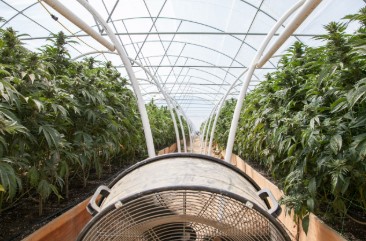
Purple Berry thrives in a controlled environment where temperature, humidity, and lighting conditions are optimized for growth. As an indica-dominant hybrid, it naturally prefers cool to moderate temperatures and is well-suited for both indoor and outdoor cultivation.
Temperature & Humidity Control
- Vegetative Stage:
- Temperature: 72-80°F (22-27°C)
- Relative Humidity (RH): 55-65%
- Higher humidity levels promote vigorous vegetative growth and healthy leaf development.
- Flowering Stage:
- Temperature: 65-75°F (18-24°C)
- Relative Humidity (RH): 40-50%
- Lower humidity reduces the risk of mold and enhances resin production.
- Late Flowering (Ripening Phase):
- Temperature: 60-70°F (16-21°C)
- RH: 30-40%
- A slight temperature drop stimulates the plant’s anthocyanin production, enhancing the deep purple coloration of the buds.
CO₂ Enrichment
- Introducing CO₂ supplementation (1200-1500 ppm) in an indoor setup enhances photosynthesis, leading to higher yields and increased THC potency.
- CO₂ is most effective in the vegetative and early flowering stages under high-intensity lighting (LED or HPS).
Soil vs. Hydroponic Cultivation
Both soil and hydroponic systems can be used to cultivate Purple Berry, but each method has its own advantages.
Soil-Based Cultivation
- Ideal for organic growers who prefer natural terpene development and a more robust flavor profile.
- Best soil mix includes organic compost, perlite, coco coir, worm castings, and bat guano to ensure proper aeration and nutrient availability.
- pH Range: 6.0-6.5
- Nutrient Strategy:
- Vegetative stage: High nitrogen (N), moderate phosphorus (P), and potassium (K).
- Flowering stage: Lower nitrogen, higher phosphorus and potassium to promote bud formation.
Hydroponic Cultivation
- Accelerates growth rates and improves nutrient absorption efficiency.
- Provides a controlled nutrient delivery system, reducing the risk of soil-borne diseases.
- Common Hydroponic Systems:
- Deep Water Culture (DWC) – Maximizes oxygen availability to roots.
- Ebb and Flow (Flood and Drain) – Ensures consistent nutrient delivery.
- Aeroponics – Uses misted nutrients to stimulate rapid growth.
- pH Range: 5.5-6.2
- Nutrient Solution EC (Electrical Conductivity):
- Vegetative: 1.2 – 1.8 mS/cm
- Flowering: 1.8 – 2.5 mS/cm
Lighting Requirements
Purple Berry responds well to full-spectrum light sources, influencing cannabinoid and terpene production.
Indoor Lighting
- Vegetative Stage: 18/6 light cycle (18 hours light, 6 hours dark)
- Flowering Stage: 12/12 light cycle (12 hours light, 12 hours dark)
- Recommended Light Types:
- LED Grow Lights (Best for energy efficiency and spectrum control)
- HPS (High-Pressure Sodium) Lights (Best for flowering due to red spectrum dominance)
- Metal Halide (MH) Lights (Used during the vegetative phase for strong foliage growth)
Outdoor Cultivation
- Thrives in a Mediterranean climate with moderate temperature fluctuations.
- Grows best in organic soil with high microbial activity.
- Needs at least six to eight hours of direct sunlight each day.
Training Techniques for Higher Yield
To maximize bud production and potency, advanced training methods can be applied.
Low-Stress Training (LST)
- Involves bending and tying down branches to evenly distribute light exposure.
- Increases yield by promoting multiple colas rather than a single dominant bud.
High-Stress Training (HST)
- Topping: Cutting the main stem of Purple Berry to encourage lateral growth and bushy plant structure.
- Super Cropping: Slightly damaging Purple Berry stems to trigger a stress response that enhances resin production.
Defoliation
- Strategic removal of fan leaves to improve air circulation and light penetration.
- Should be done sparingly to avoid excessive stress on the plant.
Nutrient Management & Deficiency Prevention
A precise nutrient regimen is crucial for maximizing growth and preventing deficiencies.
Macronutrients
- Nitrogen (N): Supports vegetative growth (leaves, stems).
- Phosphorus (P): Vital to the growth of roots and flowers.
- Potassium (K): Improves water uptake, bud density, and disease resistance.
Micronutrients
- Calcium (Ca): Strengthens cell walls and prevents bud rot.
- Magnesium (Mg): Supports chlorophyll production and prevents yellowing.
- Sulfur (S): Enhances terpene synthesis for stronger aroma and flavor.
Common Deficiencies
| Nutrient Deficiency | Symptoms |
|---|---|
| Nitrogen (N) | Yellowing lower leaves, slow growth |
| Phosphorus (P) | Dark green or purplish leaves, weak stems |
| Potassium (K) | Yellow leaf edges, weak root development |
| Calcium (Ca) | Brown spots on leaves, stunted growth |
| Magnesium (Mg) | Interveinal yellowing, leaf curling |
Harvesting & Curing for Maximum Potency
The timing of the harvest significantly impacts the cannabinoid and terpene profile of Purple Berry.
Harvesting Time
- Best harvested when trichomes turn from clear to milky white with a slight amber hue.
- Milky trichomes = Peak THC content
- Amber trichomes = More sedative effects (higher CBN levels)
Drying Process
- Hang buds upside down in a cool, dark room with 50-60% humidity.
- Maintain temperature at 60-70°F (16-21°C).
- Allow drying for 7-14 days until stems snap when bent.
Curing Process
- Store dried buds in glass jars at 65% humidity.
- Open jars daily for the first 7-10 days to release excess moisture.
- Curing for 3-6 weeks enhances smoothness, potency, and terpene retention.
Scientific Strategies for Enhancing Potency
To improve THC levels, terpene expression, and overall quality, these scientific techniques can be applied:
UV-B Light Exposure
- Studies suggest exposure to UV-B radiation during flowering increases THC production.
- Supplemental UV-B light for 2-4 hours daily in the last 3 weeks can enhance resin content.
Flushing Before Harvest
- Flushing with pH-balanced water (pH 6.0-6.5) for 7-10 days removes excess nutrients.
- Enhances flavor, smoothness, and overall smoking experience.
Cold Shock Technique
- Lowering nighttime temperatures to 55-60°F (13-16°C) in the final week increases anthocyanin production, deepening the purple coloration of buds.
Conclusion
Purple Berry is a powerful indica-dominant hybrid offering a blend of relaxation, pain relief, and euphoric effects. Its sweet berry aroma, deep purple buds, and therapeutic potential make it a favorite among medical and recreational users alike.
Final Takeaways
✔ Medical Uses: Chronic pain, anxiety, insomnia, appetite loss
✔ Recreational Uses: Relaxation, euphoria, mild creativity boost
✔ Best Time to Use: Evening or nighttime due to sedative effects
✔ Growing: Medium difficulty, thrives in cool, controlled environments
Whether you’re a medical user seeking pain relief or a recreational user looking for deep relaxation, Purple Berry is an exceptional strain that delivers potent effects and unforgettable flavors.
For a complete directory of cultivars, visit our Cannabis Strain Reviews.
