Table of Contents
Purple Arrow is a hybrid cannabis strain renowned for its potent therapeutic effects and well-balanced recreational high. This strain is a cross between Purple Afghani and Hindu Kush, creating a blend that embodies the best traits of both indica and sativa genetics. With its high THC content and moderate CBD levels, Purple Arrow is a strain often sought after for its medicinal benefits while also providing a pleasantly euphoric and relaxing high.
This detailed document explores the scientific background, chemical composition, medical applications, recreational effects, and cultivation details of the Purple Arrow cannabis strain.
Genetics and Origin
Purple Arrow is an indica-dominant hybrid (approximately 80% indica and 20% sativa) that originates from a lineage of potent and well-established cannabis varieties:
- Purple Afghani: A powerful indica strain known for its deep relaxation and pain-relieving properties, with a distinct earthy and berry aroma.
- Hindu Kush: A landrace indica strain from the Hindu Kush mountain range, offering a heavy sedative effect and a rich, earthy, and sweet aroma.
The combination of these two strains results in a hybrid that retains the best qualities of both parents, including a deep body relaxation, pain relief, and mild cerebral stimulation.
Chemical Composition
Cannabinoid Profile
The precise chemical composition of Purple Arrow can vary depending on cultivation methods and environmental factors, but in general, it contains the following primary cannabinoids:
- THC: 18% – 22%
- CBD: 0.5% – 1.5%
- CBG: ~1%
- THCV, CBC, and other minor cannabinoids: <1%
Terpene Profile
Terpenes are responsible for the strain’s aroma, flavor, and therapeutic effects. Purple Arrow has a rich terpene profile, with dominant terpenes including:
- Myrcene: Provides sedative and relaxing effects, often found in indica strains.
- Limonene: Offers citrusy notes and has mood-enhancing and anti-anxiety properties.
- Caryophyllene: Known for its peppery, spicy aroma and anti-inflammatory effects.
- Pinene: Contributes to alertness and memory retention.
- Linalool: Provides floral and lavender notes, known for anti-anxiety and stress-relieving effects.
Medical Applications
Purple Arrow is widely used in the medical cannabis community due to its diverse therapeutic benefits. Its high THC content, coupled with its moderate CBD levels, makes it effective for a range of conditions.
Pain Management
Purple Arrow is highly effective in treating both acute and chronic pain. The analgesic effects come from the interaction between THC and the endocannabinoid system (ECS), which helps modulate pain perception. Patients suffering from the following conditions have reported significant relief:
- Arthritis
- Fibromyalgia
- Neuropathic pain
- Migraines
- Muscle spasms and cramps
Mental Health Disorders
The balancing effects of Purple Arrow make it a suitable strain for mental health disorders, particularly stress-related conditions. Its moderate limonene content contributes to its mood-enhancing properties, while myrcene and linalool promote relaxation.
Conditions it may help with:
- Anxiety
- Depression
- PTSD (Post-Traumatic Stress Disorder)
- OCD (Obsessive-Compulsive Disorder)
Sleep Disorders
Due to its indica-dominant nature, Purple Arrow is widely used as a natural sleep aid. The presence of myrcene and linalool helps in promoting deep, restful sleep. It is particularly beneficial for:
- Insomnia
- Sleep apnea
- Restless Leg Syndrome (RLS)
Gastrointestinal Disorders
The anti-inflammatory properties of caryophyllene make Purple Arrow beneficial for individuals suffering from gastrointestinal (GI) issues. Its appetite-stimulating effects also make it a good choice for those experiencing nausea and lack of appetite due to chemotherapy or other medical treatments.
Conditions it may help with:
- Crohn’s disease
- Irritable Bowel Syndrome (IBS)
- Ulcerative colitis
- Nausea from chemotherapy or medications
Neurological Benefits
Purple Arrow’s CBD and CBG content, though moderate, may contribute to its neuroprotective properties, which could be beneficial for conditions like:
- Multiple sclerosis (MS)
- Epilepsy (as a complementary treatment)
- Parkinson’s disease
- Alzheimer’s disease
Recreational Uses
Effects
Purple Arrow delivers a balanced high that starts with a slight euphoric cerebral buzz before transitioning into a deep body relaxation. The effects can be broken down into:
- Initial Onset (5-10 minutes): A mild uplifting sensation, accompanied by increased mental clarity and mild euphoria.
- Peak Effects (30-45 minutes): A deep sense of relaxation and calm, often leading to a couch-lock effect for novice users.
- Final Phase (1.5-2.5 hours): Sedation takes over, making it ideal for evening or nighttime use.
Best Activities for Purple Arrow
- Relaxing at home: Watching movies or listening to music.
- Meditation & Yoga: Its calming effects promote mindfulness.
- Mild social settings: Encourages relaxed conversation without excessive sedation.
- Evening unwinding: Great for stress relief after a long day.
Purple Arrow cannabis can be consumed through various ingestion methods, each affecting the onset time, peak effects, and duration differently. The bioavailability, metabolism, and effect intensity vary based on the method of administration, which is crucial for both medical and recreational users to consider.
Methods of Ingestion and Their Scientific Implications
The way Purple Arrow is consumed affects how its cannabinoids (THC, CBD, etc.) and terpenes interact with the endocannabinoid system (ECS). Below are the primary methods of ingestion along with their scientific explanations.
A. Inhalation (Smoking/Vaporization)
Mechanism:
- When inhaled, cannabinoids are absorbed through the alveoli in the lungs, entering the bloodstream almost instantly.
- Bioavailability of inhaled THC ranges between 20-56 percent, depending on depth of inhalation, breath-holding, and lung capacity.
Onset & Duration:
| Factor | Smoking | Vaporization |
|---|---|---|
| Onset | 1-5 minutes | 30 seconds – 2 minutes |
| Peak Effects | 10-30 minutes | 10-20 minutes |
| Duration | 2-4 hours | 1.5-3 hours |
Pros & Cons:
Pros:
- Rapid onset of effects.
- Easier dose titration (users can feel effects almost immediately).
- Vaporization reduces combustion toxins, making it safer than smoking.
Cons:
- Smoking produces harmful combustion byproducts (e.g., carbon monoxide, tar).
- Shorter duration compared to edibles.
- Overconsumption is possible due to quick peak effects.
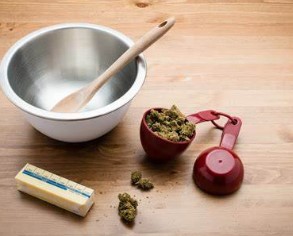
B. Oral Ingestion (Edibles, Capsules, and Tinctures)
Mechanism:
- THC undergoes first-pass metabolism in the liver, converting it into 11-hydroxy-THC, which is more potent and has a longer half-life than Δ9-THC.
- Bioavailability of THC in edibles is around 4-20 percent due to digestive breakdown and liver metabolism.
Onset & Duration:
| Factor | Edibles | Capsules | Tinctures (Sublingual) |
|---|---|---|---|
| Onset | 30-90 minutes | 30-60 minutes | 15-30 minutes |
| Peak Effects | 2-4 hours | 2-3 hours | 45-90 minutes |
| Duration | 6-12 hours | 6-10 hours | 4-6 hours |
Pros & Cons:
Pros:
- Long-lasting effects, making it ideal for chronic pain and sleep disorders.
- Tinctures offer faster absorption without smoking.
- Less lung irritation than inhalation methods.
Cons:
- The chance of overconsumption rises with delayed commencement.
- Difficult to dose accurately due to liver metabolism variability.
- Edibles can be unpredictable in effect intensity based on digestion and metabolism rates.
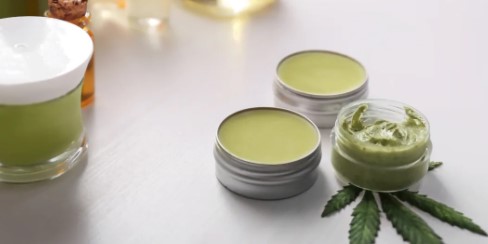
C. Topical Application (Creams, Patches, and Transdermal Gels)
Mechanism:
- Cannabinoids are absorbed through the skin and interact with localized CB2 receptors.
- Transdermal patches can allow systemic absorption into the bloodstream, unlike standard topicals.
- Bioavailability varies based on skin permeability and formulation.
Onset & Duration:
| Factor | Topical Creams | Transdermal Patches |
|---|---|---|
| Onset | 10-20 minutes | 15-30 minutes |
| Peak Effects | 1-2 hours | 2-4 hours |
| Duration | 2-6 hours | 8-12 hours |
Pros & Cons:
Pros:
- Ideal for localized pain relief (arthritis, muscle pain).
- Non-psychoactive, as it does not reach the bloodstream unless transdermal.
- Long-lasting effects with patches.
Cons:
- Standard topicals do not provide systemic effects.
- Limited cannabinoid absorption compared to other methods.
- Slow onset compared to inhalation.
D. Sublingual (Under-the-Tongue) Tinctures and Sprays
Mechanism:
- Absorbed directly into the capillaries under the tongue, bypassing first-pass metabolism.
- Bioavailability is higher than edibles (estimated 12-35 percent).
Onset & Duration:
| Factor | Tinctures | Sprays |
|---|---|---|
| Onset | 15-30 minutes | 10-20 minutes |
| Peak Effects | 45-90 minutes | 30-60 minutes |
| Duration | 4-6 hours | 3-5 hours |
Pros & Cons:
Pros:
- Faster onset than edibles but longer effects than inhalation.
- Easier to dose than edibles.
- No lung irritation like smoking.
Cons:
- Not as fast-acting as inhalation.
- Some people may find the taste unpleasant.
- Requires holding under the tongue for full absorption.
Factors Affecting Onset and Duration
Several biological and external factors influence the onset, peak, and duration of Purple Arrow’s effects.
| Factor | Influence on Effect |
|---|---|
| Metabolism | Faster metabolism = quicker onset, shorter duration |
| Body Fat Percentage | THC stores in fat; higher fat percentage can prolong effects |
| Tolerance | Regular users may need higher doses for effects |
| Empty vs. Full Stomach | Edibles take longer on a full stomach |
| Method of Use | Inhalation = Fast; Edibles = Slow but Longer |
Best Ingestion Methods for Medical and Recreational Use
Medical Users
| Condition | Best Ingestion Method |
|---|---|
| Chronic Pain | Edibles, Capsules, Patches |
| Insomnia | Tinctures, Edibles |
| Anxiety/PTSD | Vaporization, Sublingual |
| Arthritis | Topicals, Transdermal Patches |
| Migraines | Inhalation, Sublingual |
Recreational Users
| Desired Effect | Best Ingestion Method |
|---|---|
| Fast-acting euphoria | Inhalation (Smoking/Vape) |
| Long-lasting relaxation | Edibles |
| Mild buzz without smoke | Tinctures |
| Discreet, all-day effects | Transdermal Patches |
Cultivation Information
Understanding the Growth Requirements
Purple Arrow is an indica-dominant hybrid, meaning it prefers cooler temperatures compared to sativa strains. To maximize THC, CBD, and terpene production, a grower must maintain precise environmental conditions.
Optimal Growth Conditions
| Factor | Optimal Range |
|---|---|
| Temperature | 70-80°F (21-27°C) |
| Humidity (Vegetative) | 50-60% |
| Humidity (Flowering) | 40-50% |
| Light Cycle (Veg) | 18-6 (18 hours light, 6 hours dark) |
| Light Cycle (Flowering) | 12-12 |
| pH (Soil) | 6.0 – 6.8 |
| pH (Hydroponics) | 5.5 – 6.0 |
Cultivation Mediums
Soil vs. Hydroponics
Purple Arrow can be cultivated using soil, hydroponic, or aeroponic methods. The choice of medium affects its growth speed, nutrient uptake, and terpene production.
A. Soil Cultivation
- Best for flavor & terpene development due to the complex microbiome.
- Use organic soil rich in nitrogen, phosphorus, and potassium (N-P-K).
- Compost teas and mycorrhizal fungi can enhance root health.
- Ideal for outdoor and indoor growth with minimal technological investment.
B. Hydroponics
- Accelerates growth due to direct nutrient absorption.
- Requires precise EC (electrical conductivity) and pH balancing.
- Recommended nutrient mix: 2:1:2 N-P-K ratio during vegetative and 1:3:2 during flowering.
- Rockwool, coco coir, and deep water culture (DWC) are the best hydroponic methods.
C. Aeroponics
- Involves growing cannabis without soil by suspending roots in the air and misting them with nutrients.
- Produces higher cannabinoid content but requires strict environmental control.
- Expensive but can maximize yield per square meter.
Light Spectrum and Photoperiod Control
Indoor Lighting Options
The quality of light affects trichome density and cannabinoid biosynthesis.
| Light Type | Best For | Wattage Recommendation |
|---|---|---|
| LED | Full spectrum growth | 200W-600W per m² |
| HPS | Flowering stage | 400W-1000W |
| Metal Halide (MH) | Vegetative growth | 250W-600W |
- Vegetative phase requires blue-spectrum light (400-500nm) to promote leaf development.
- Flowering phase thrives under red-spectrum light (600-700nm) to enhance bud production.
- Far-red light (730nm) can be used to stimulate flowering faster.
Outdoor Cultivation Considerations
- Purple Arrow flourishes in Mediterranean climates with ample sunlight (8-12 hours per day).
- Use light deprivation techniques to induce early flowering if growing in non-optimal climates.
- Greenhouse cultivation allows year-round harvesting with controlled photoperiods.
Nutrient Management
Proper nutrition ensures optimal terpene and cannabinoid expression.
N-P-K Ratios by Growth Stage
| Growth Stage | N-P-K Ratio |
|---|---|
| Seedling | 1:2:2 |
| Vegetative | 2:1:2 |
| Flowering | 1:3:2 |
| Late Bloom | 0:3:3 |
Additional Nutrients:
- Calcium & Magnesium (Ca-Mg): Supports trichome production.
- Silica: Strengthens plant cell walls, improving disease resistance.
- Amino Acids & Humic Acids: Enhance nutrient uptake efficiency.
Climate Control & Air Circulation
- CO₂ supplementation (1200-1500 ppm) can increase yield by 20-30%.
- Oscillating fans & exhaust systems prevent bud rot and powdery mildew.
- Air temperature differentials (cooler nights ~65°F/18°C) enhance purple anthocyanin expression.
Pruning & Training Techniques
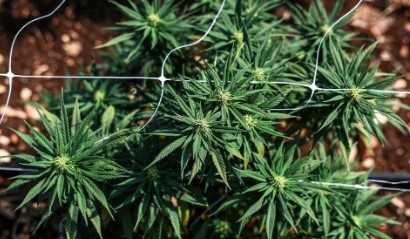
To maximize Purple Arrow’s yield, several training methods are used:
A. Low-Stress Training (LST)
- Tying down branches promotes horizontal growth for better light exposure.
- Enhances bud production and air circulation.
B. High-Stress Training (HST)
- Topping: Cutting the main cola to encourage multiple bud sites.
- Super Cropping: Bending branches without breaking them to increase stress resilience.
C. Screen of Green (ScrOG)
- A net is used to train plants for maximal light exposure.
- Ideal for small indoor grows to maximize canopy efficiency.
Flowering & Harvesting
Flowering Duration
- Indoors: 7-9 weeks
- Outdoors: Harvest in mid-to-late October in the Northern Hemisphere.
Trichome Maturity for Harvesting
- Clear Trichomes: Immature, low THC.
- Cloudy Trichomes: Peak THC content, best for balanced effects.
- Amber Trichomes: Increased CBN, suitable for sedative effects.
Post-Harvest Processing
- Drying: Hang buds upside down in 60°F (15°C), 55% humidity for 7-10 days.
- Curing: Store in airtight glass jars at 65°F (18°C), 62% humidity for 2-4 weeks.
- Burping: Open jars daily for the first week, then every few days to prevent mold.
Pest & Disease Management
Common Pests
- Spider mites → Use predatory mites or neem oil.
- Fungus gnats → Introduce sticky traps & dry soil surface.
- Aphids & whiteflies → Use ladybugs or insecticidal soap.
Common Diseases
| Disease | Symptoms | Prevention |
|---|---|---|
| Powdery Mildew | White powdery spots on leaves | Lower humidity, increase airflow |
| Root Rot | Brown, mushy roots | Proper drainage, avoid overwatering |
| Bud Rot | Gray, moldy buds | Reduce humidity, remove infected buds |
Enhancing Cannabinoid & Terpene Production
- Defoliation: Removing excess fan leaves increases light penetration.
- Cold Shocking: Exposing plants to colder temperatures (50-55°F) during late flowering enhances purple hues and anthocyanin production.
- UV-B Light Exposure: Stimulates trichome production, increasing THC potency.
Scientific Research and Studies
THC & Pain Relief
Numerous studies have shown that THC is effective in reducing pain perception by binding to CB1 and CB2 receptors in the ECS. Purple Arrow’s high THC content makes it a promising strain for pain management.
Terpenes & Medical Benefits
- Myrcene: Known for its sedative effects and ability to enhance THC absorption.
- Limonene: Potential anti-depressant and anti-anxiety effects.
- Caryophyllene: Unique because it binds to CB2 receptors, playing a role in inflammation reduction.
CBD & Neuroprotection
While Purple Arrow has moderate CBD levels, research suggests that even small amounts of CBD can contribute to neuroprotection and anti-inflammatory effects.
Conclusion
Purple Arrow is an exceptionally well-rounded cannabis strain, offering a blend of recreational euphoria and medical benefits. It excels in pain relief, stress reduction, sleep aid, and appetite stimulation, making it a favorite of both recreational and medical users.
With its potent cannabinoid and terpene profile, moderate growing difficulty, and versatile effects, Purple Arrow remains a top choice in the cannabis community.
Whether you’re seeking a reliable medicinal strain or a relaxing evening smoke, Purple Arrow delivers a truly therapeutic and enjoyable experience.
For a complete directory of cultivars, visit our Cannabis Strain Reviews.
