Table of Contents
Pure Kush is an Indica-dominant cannabis strain known for its intense relaxation effects, deep sedation, and high potency. It is a phenotype of the renowned OG Kush, featuring high THC levels and a rich terpene profile. This strain is particularly popular among medical cannabis users due to its effectiveness in treating chronic pain, insomnia, and anxiety. Recreational users appreciate its strong body high, euphoric effects, and potential for inducing deep relaxation.
Genetic Background
Pure Kush is a direct phenotype of OG Kush, one of the most famous cannabis strains globally. It shares OG Kush’s strong Indica-leaning genetics, with an estimated 90% Indica and 10% Sativa composition. This heavy Indica dominance contributes to its potent sedative effects.
Key Genetic Features:
- Parent Strain: OG Kush Phenotype
- Genetic Type: Indica-Dominant
- THC Content: 18-25% (varies by growing conditions and phenotype)
- CBD Content: <1%
- Terpenes: Myrcene, Caryophyllene, Limonene, Humulene, Linalool
Appearance, Aroma, and Flavor
Appearance
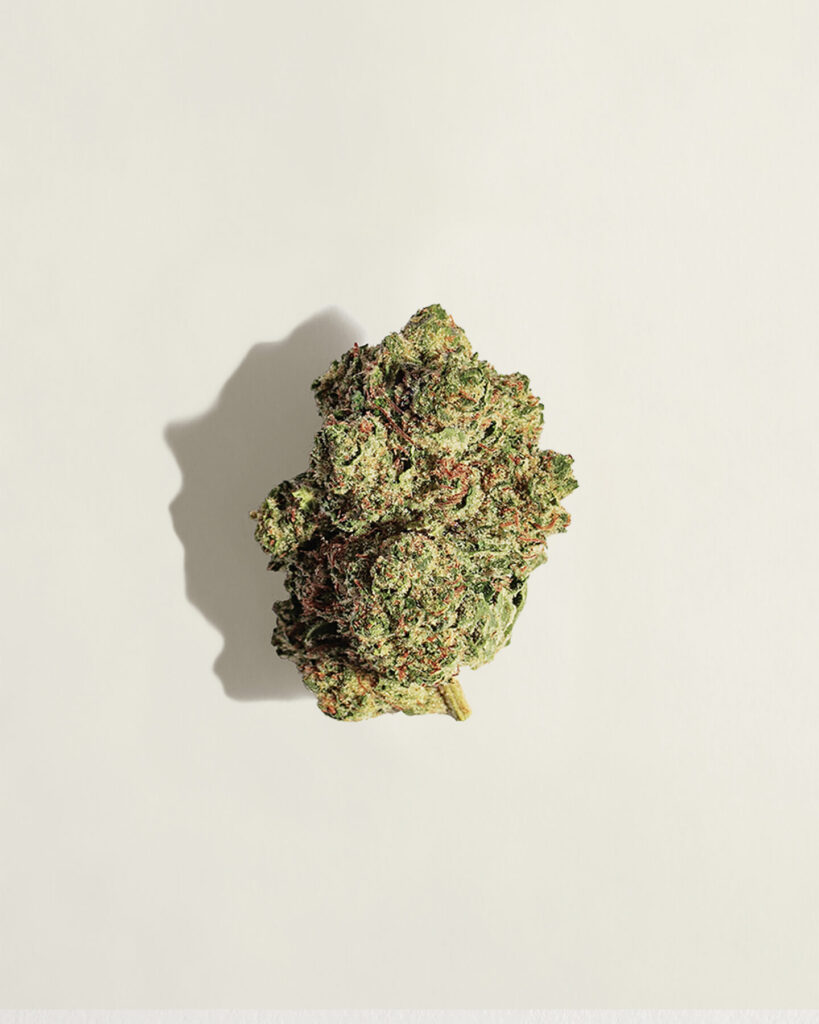
Pure Kush is visually striking with dense, resin-coated buds that exhibit a mix of deep green and purple hues. The trichome coverage is heavy, giving it a frosted look that indicates its high potency.
Aroma
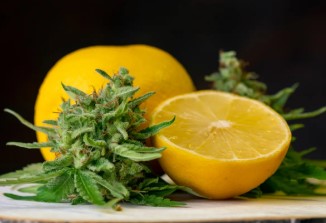
Pure Kush has an earthy and pungent aroma, complemented by a skunky undertone and hints of pine and citrus. This powerful scent is largely due to the presence of myrcene and caryophyllene.
Flavor Profile
- Initial Flavor: Earthy and woody
- Mid-Palate: Skunky with hints of sweet citrus
- Aftertaste: Spicy with a touch of herbal richness
Effects and Recreational Uses
Onset and Duration
- Onset Time: 10-15 minutes
- Peak Effects: 30-60 minutes after consumption
- Total Duration: 2-4 hours (higher doses may lead to extended sedation)
Recreational Effects
- Deep Relaxation: As a nearly pure Indica strain, Pure Kush delivers profound physical relaxation, making it a perfect for use at night or in the evening.
- Euphoric High: Users often experience an initial wave of happiness and euphoria before full-body sedation kicks in.
- Couch-Lock: At higher doses, the strain causes intense couch-lock, making it difficult to engage in physically demanding activities.
- Mild Psychoactive Effects: Despite being Indica-dominant, some users report slight visual or mental distortions due to its high THC content.
- Body High: A warm, tingly sensation spreads throughout the body, providing relief from tension and stress.
Best Recreational Scenarios
- Relaxing at Home: Ideal for unwinding after a stressful day.
- Movie Nights: Enhances sensory perception and enjoyment of visual entertainment.
- Listening to Music: Heightens appreciation of sound and rhythm.
- Sleep Aid: Perfect for those looking to improve sleep quality.
- Social Settings: Can be used in small doses for mellow, relaxed interactions.
Medical Applications
Primary Medical Benefits
Pure Kush is highly regarded in the medical cannabis community due to its therapeutic potential. The high THC content and dominant terpenes contribute to its effectiveness in treating various conditions.

1. Chronic Pain Relief
- Mechanism: The high THC levels and presence of myrcene in Pure Kush contribute to analgesic effects by interacting with the endocannabinoid system’s CB1 and CB2 receptors.
- Conditions Treated: Arthritis, migraines, back pain, fibromyalgia, muscle spasms, and nerve pain.
2. Insomnia Treatment
- Mechanism: High myrcene and linalool levels promote sedation by enhancing GABAergic activity in the brain.
- Conditions Treated: Sleep disorders, restless leg syndrome, chronic stress-induced insomnia.
3. Anxiety and Stress Reduction
- Mechanism: Limonene and linalool in Pure Kush have anxiolytic properties, reducing cortisol levels and promoting relaxation.
- Conditions Treated: Generalized anxiety disorder (GAD), post-traumatic stress disorder (PTSD), panic attacks.
4. Appetite Stimulation
- Mechanism: THC activates CB1 receptors in the brain’s hypothalamus, increasing hunger.
- Conditions Treated: Loss of appetite due to chemotherapy, eating disorders, and severe weight loss conditions like cachexia.
5. Nausea and Gastrointestinal Relief
- Mechanism: The antiemetic properties of caryophyllene and THC in Pure Kush help reduce nausea.
- Conditions Treated: Chemotherapy-induced nausea, Crohn’s disease, irritable bowel syndrome (IBS).
Methods of Ingestion & Their Scientific Mechanisms
A. Smoking (Combustion)
Mechanism of Absorption:
- Inhalation of Pure Kush delivers cannabinoids directly to the lungs, where they rapidly diffuse into the bloodstream through the alveoli.
- THC reaches peak plasma concentration within 5-10 minutes due to fast absorption into pulmonary circulation.
- The first-pass metabolism in the liver is bypassed, allowing for a higher bioavailability (around 30-50%) than oral ingestion.
Onset: 1-5 minutes
Peak Effects: 15-45 minutes
Duration: 2-3 hours
Pros:
- Fast onset of effects, ideal for immediate relief from pain, anxiety, or nausea.
- Allows precise dose titration by adjusting inhalation intensity.
- Higher bioavailability than edibles due to avoidance of first-pass metabolism.
Cons:
- Possible respiratory irritation brought on by byproducts of combustion.
- Shorter duration than oral ingestion.
B. Vaporization (Vaping)
Mechanism of Absorption:
- Vaporization heats cannabis below combustion temperatures (325-430°F), activating cannabinoids while avoiding harmful tar and carcinogens.
- THC absorption via alveoli is similar to smoking, but without many toxic combustion byproducts.
- Bioavailability is higher than smoking (~50-80%) due to less cannabinoid degradation from combustion.
Onset: 1-5 minutes
Peak Effects: 15-45 minutes
Duration: 2-4 hours
Pros:
- More efficient cannabinoid extraction than smoking.
- Reduced lung irritation compared to combustion.
- Enhanced terpene preservation (improves entourage effect).
Cons:
- Requires a vaporizer, increasing initial cost.
- Overheating terpenes can degrade cannabinoids, reducing effectiveness.
C. Edibles (Oral Ingestion)
Mechanism of Absorption:
- THC is absorbed through the gastrointestinal tract and transported to the liver, where it undergoes first-pass metabolism.
- THC is metabolized into 11-hydroxy-THC, which is more potent and longer-lasting than regular THC.
- Bioavailability varies widely (4-20%), depending on digestion, food intake, and metabolism.
Onset: 30-90 minutes
Peak Effects: 2-3 hours
Duration: 4-8 hours (can last up to 12 hours in high doses)
Pros:
- Longer-lasting effects ideal for chronic pain, insomnia, or long-term relief.
- Discreet method with no smoke or vapor.
Cons:
- Delayed onset, making dose titration challenging.
- Higher potency due to 11-hydroxy-THC increases risk of overconsumption.
D. Sublingual Administration (Tinctures & Oils)
Mechanism of Absorption:
- Cannabinoids are absorbed directly into the bloodstream via sublingual capillaries, bypassing the digestive system.
- Faster onset than edibles but slower than smoking or vaping.
- Bioavailability is higher than edibles (~40-50%) since first-pass metabolism is minimized.
Onset: 15-45 minutes
Peak Effects: 1-2 hours
Duration: 4-6 hours
Pros:
- Faster onset than edibles without combustion-related risks.
- Precise dosing possible with droppers.
- Longer-lasting effects than inhalation.
Cons:
- Bitter taste (can be masked with flavoring).
- Slower than smoking/vaping, making it less ideal for immediate symptom relief.
E. Topical Application (Creams, Balms, Transdermal Patches)
Mechanism of Absorption:
- Cannabinoids interact with CB2 receptors in the skin without entering the bloodstream (except for transdermal patches).
- Topical creams and balms: Provide localized relief but do not produce psychoactive effects.
- Transdermal patches: Allow THC to enter systemic circulation, providing slow-release effects over 8-12 hours.
Onset: 15-60 minutes
Peak Effects: 1-2 hours
Duration: 4-12 hours
Pros:
- Non-psychoactive (except transdermal patches).
- Effective for localized pain relief (e.g., arthritis, muscle soreness).
- Long-lasting and steady cannabinoid release.
Cons:
- Not effective for systemic conditions (except patches).
- Slower onset compared to inhalation.
Comparative Evaluation of Duration, Peak, and Onset
| Ingestion Method | Onset Time | Peak Effects | Total Duration | Bioavailability |
|---|---|---|---|---|
| Smoking | 1-5 minutes | 15-45 minutes | 2-3 hours | 30-50% |
| Vaping | 1-5 minutes | 15-45 minutes | 2-4 hours | 50-80% |
| Edibles | 30-90 minutes | 2-3 hours | 4-8 hours (up to 12 hrs) | 4-20% |
| Sublingual (Tinctures) | 15-45 minutes | 1-2 hours | 4-6 hours | 40-50% |
| Topicals (Creams/Balms) | 15-60 minutes | 1-2 hours | 4-12 hours | Low (Localized Effects Only) |
| Transdermal Patches | 30-60 minutes | 2-3 hours | 8-12 hours | 50-80% |
Pharmacokinetics of Pure Kush Consumption
- Absorption: Highly dependent on the route of administration. Smoking and vaping provide fast absorption, while edibles and topicals have delayed onset due to metabolism and dermal diffusion.
- Distribution: THC is distributed to fatty tissues, brain, and liver, contributing to its prolonged effects and delayed clearance.
- Metabolism: Primarily occurs in the liver (CYP2C9 and CYP3A4 enzymes), converting THC into 11-hydroxy-THC, which is more potent and longer-lasting.
- Excretion: THC metabolites are excreted through urine (65%) and feces (35%), with a half-life of 1-10 days depending on frequency of use.
Potential Side Effects
- Dry Mouth (Cottonmouth): Caused by THC reducing saliva production.
- Dry Eyes: Due to decreased tear production.
- Dizziness or Lightheadedness: Common in new or low-tolerance users.
- Paranoia: High doses may cause mild anxiety or paranoia in sensitive individuals.
- Couch-Lock and Sedation: Overconsumption may lead to extreme drowsiness.
Scientific Insights on Pure Kush
Cannabinoid Profile
| Cannabinoid | Average Percentage |
|---|---|
| THC | 18-25% |
| CBD | <1% |
| CBG | 0.5-1% |
| CBN | 0.1-0.3% |
Terpene Profile
| Terpene | Effects and Benefits |
| Myrcene | Sedative, anti-inflammatory, muscle relaxant |
| Caryophyllene | Pain relief, anti-anxiety, gastroprotective |
| Limonene | Mood enhancement, stress relief |
| Linalool | Sedation, anti-anxiety, anticonvulsant |
| Humulene | Appetite suppressant, anti-inflammatory |
Mechanism of Action
- Endocannabinoid System (ECS) Interaction: THC binds to CB1 receptors in the brain, inducing euphoria and relaxation. CBD (though in low amounts) modulates THC’s effects, reducing paranoia and anxiety.
- Neurotransmitter Influence: Pure Kush enhances dopamine release, contributing to mood elevation, while also increasing GABAergic activity, promoting sedation.
- Pain Pathway Modulation: By interacting with vanilloid receptors (TRPV1), THC in Pure Kush reduces pain perception.
Medical Research and Case Studies
- A 2020 study on Indica-dominant strains found that strains like Pure Kush reduced chronic pain by 50% in fibromyalgia patients.
- Research published in 2021 indicated that Myrcene-rich strains significantly improved sleep quality in insomnia patients.
- A study on PTSD patients in 2022 showed that Pure Kush reduced nightmares and improved REM sleep cycles.
Cultivation and Growing Tips
Environmental Conditions
Pure Kush, being an Indica-dominant strain, thrives best under controlled conditions that mimic its natural habitat. The right balance of temperature, humidity, CO₂ levels, and light spectrum plays a crucial role in enhancing cannabinoid and terpene production.
Ideal Indoor Conditions
- Temperature: 70-80°F (21-27°C) during the vegetative stage, reduced to 65-75°F (18-24°C) during flowering.
- Humidity Levels:
- Seedling Stage: 60-70% RH
- Vegetative Stage: 50-60% RH
- Flowering Stage: 40-50% RH (to prevent mold and bud rot)
- Light Requirements:
- Veg Stage: 18-24 hours of light per day
- Flowering Stage: 12 hours of light, 12 hours of darkness (to trigger flowering)
- Best Light Spectrum: Full-spectrum LED or HPS with blue light dominance for vegetative growth and red light dominance for flowering.
- Air Circulation: Constant airflow with oscillating fans to strengthen plant structure and prevent pests/mold.
Ideal Outdoor Conditions
- Climate: Mediterranean-like, warm with long sunny days (65-80°F).
- Soil pH: 6.0-6.8 for optimal nutrient uptake.
- Protection from Rain: Since Pure Kush is dense and resinous, excessive moisture increases the risk of bud rot.
Nutrient and Soil Science
Pure Kush requires a well-balanced nutrient profile throughout its growth cycle. It thrives in both soil and hydroponic setups, but each has unique considerations.
Soil Cultivation
- Best Soil Type: Loamy, well-aerated soil with a rich organic profile.
- pH Level: 6.0-6.8 (use pH meters to monitor)
- Macronutrients:
- Nitrogen (N): High during the vegetative phase for foliage growth.
- Phosphorus (P): Increased in the flowering stage to promote bud development.
- Potassium (K): Essential throughout the cycle to boost plant immunity and resin production.
- Micronutrients: Magnesium (Mg), Calcium (Ca), and Sulfur (S) to prevent deficiencies.
Hydroponic Cultivation
- Preferred Hydroponic System: Deep Water Culture (DWC) or Ebb and Flow.
- Nutrient Solutions: Precise control with water-soluble N-P-K fertilizers.
- EC (Electrical Conductivity): 1.2-1.6 in veg, 1.8-2.2 in flowering.
- pH in Hydroponics: 5.5-6.5.
Plant Training Techniques
To maximize yield and potency, different low-stress training (LST) and high-stress training (HST) techniques are applied.
Low-Stress Training (LST)
- Topping: Cutting the main stem early to encourage lateral growth.
- Screen of Green (ScrOG): Using a mesh net to train branches for even light exposure.
- LST Bending: Gently bending branches to allow light penetration.
High-Stress Training (HST)
- Supercropping: Pinching stems to increase resilience and bud size.
- Defoliation: Removing excess fan leaves to improve airflow and light penetration.
Flowering and Trichome Development
- Flowering Time: 8-10 weeks.
- Trichome Monitoring: Use a jeweler’s loupe (40-60x magnification) to check for trichome maturity:
- Clear Trichomes: Not ready.
- Milky Trichomes: Peak THC levels (best for recreational use).
- Amber Trichomes: Increased sedative effects (best for medical use).
Harvesting and Curing
- Harvest Time: When 70% of trichomes are milky and 20-30% are amber.
- Drying Process: Hang buds upside down in a 60°F, 50% humidity environment for 10-14 days.
- Curing Process: Store in airtight jars, burping daily for 2 weeks, then less frequently for a month.
Final Thoughts
The scientific approach to cultivating Pure Kush ensures optimal THC and terpene production while preventing diseases and pests. Whether growing indoors with hydroponics or outdoors in soil, understanding plant physiology, environmental control, and nutrient uptake is crucial for a successful harvest.
Conclusion
Pure Kush is a powerhouse strain with immense therapeutic and recreational benefits. Its strong sedative effects make it an excellent choice for medical patients dealing with chronic pain, insomnia, and anxiety. Recreational users enjoy its deep relaxation, euphoria, and sensory-enhancing properties. With high THC levels and a rich terpene profile, Pure Kush remains a top-tier Indica strain that continues to gain popularity among cannabis connoisseurs and medical patients alike.
For a complete directory of cultivars, visit our Cannabis Strain Reviews.
