Table of Contents
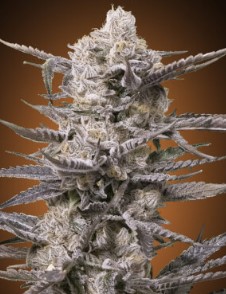
Pineapple Mayhem is a hybrid cannabis strain that balances both indica and sativa effects, offering users a potent yet manageable experience. As the name suggests, it boasts a tropical flavor profile dominated by pineapple and citrus notes, making it a popular choice among recreational and medical users alike. With moderate THC levels and a range of therapeutic benefits, Pineapple Mayhem is well-suited for various applications, from stress relief to mood enhancement.
Genetics and Lineage
Pineapple Mayhem is the result of carefully selected genetic crossbreeding, designed to capture the best qualities of its parent strains. It stems from a combination of high-yielding, fruity strains known for their balanced effects. While exact parental genetics may vary depending on the breeder, Pineapple Mayhem typically inherits its tropical terpene profile from a combination of hybrid and sativa-dominant strains, while incorporating the relaxing and body-calming effects of an indica lineage.
Pineapple Mayhem exhibits characteristics of both its indica and sativa ancestors, making it a well-rounded hybrid suitable for different users. The balance allows it to deliver both uplifting cerebral effects and a soothing physical relaxation, which makes it an attractive choice for both daytime and nighttime use, depending on dosage and individual tolerance.
Cannabinoid and Terpene Profile
THC and CBD Content
- THC Levels: Typically ranges between 14-17%, making it moderately potent and suitable for users who prefer a functional high rather than an overpowering psychoactive experience.
- CBD Content: Generally low, often below 1%, meaning the strain is primarily THC-driven in its effects.
- Other Cannabinoids: Trace amounts of CBG and CBN may be present, contributing to subtle anti-inflammatory and sedative properties.
Terpene Composition
Pineapple Mayhem’s distinct aroma and flavor are largely attributed to its terpene profile, which includes:
- Myrcene – Known for its sedative and relaxing properties, this terpene helps to enhance the strain’s calming effects, particularly in higher doses.
- Limonene – Contributes to the uplifting, citrusy aroma and provides mood-enhancing and anti-anxiety benefits.
- Pinene – Offers a refreshing, piney scent while potentially improving focus and cognitive clarity.
- Caryophyllene – A terpene with anti-inflammatory properties, aiding in pain relief and stress reduction.
This combination of terpenes in Pineapple Mayhem creates a well-rounded effect, balancing euphoria, relaxation, and therapeutic relief.
Effects and Recreational Use
Pineapple Mayhem provides a diverse range of effects, making it suitable for different types of recreational users. The experience is often described as initially uplifting and energetic before transitioning into a calming, body-melting sensation.
Primary Effects
- Euphoria – A noticeable uplift in mood, making Pineapple Mayhem an excellent strain for social settings or creative activities.
- Energy Boost – In lower doses, Pineapple Mayhem can enhance focus and motivation, making it a great companion for daytime use.
- Relaxation – As the high progresses, it eases tension in the body, reducing stress and anxiety.
- Heightened Sensory Perception – Many users report an enhanced appreciation for music, flavors, and visual experiences.
- Mild Sedation (in high doses) – When Pineapple Mayhem is taken in larger amounts, it can induce a couch-lock effect, making it more suitable for evening use.
Best Situations for Use
- Social Gatherings – Pineapple Mayhem balanced high makes it enjoyable for conversations and social events.
- Creative Endeavors – Artists, musicians, and writers may find inspiration and enhanced creativity.
- Outdoor Activities – The energetic onset of Pineapple Mayhem makes it suitable for light outdoor activities such as hiking or walking.
- Relaxation & Meditation – When used in the evening, it can aid in unwinding after a long day.
Medical Applications
Pineapple Mayhem is frequently used in medical cannabis programs due to its moderate THC levels and broad therapeutic effects.
Pain Management
Pineapple Mayhem’s analgesic properties make it beneficial for individuals suffering from chronic pain conditions such as:
- Arthritis
- Migraines and headaches
- Muscle spasms
- Neuropathic pain
Mental Health Support
Pineapple Mayhem mood-enhancing and stress-reducing qualities provide relief for individuals dealing with:
- Anxiety and generalized stress
- Depression
- PTSD-related symptoms
Inflammation and Immune Support
The presence of caryophyllene and other anti-inflammatory compounds makes Pineapple Mayhem a good choice for managing conditions related to excessive inflammation, such as:
- Autoimmune disorders
- IBS and Crohn’s disease
- Muscle and joint inflammation
Sleep Aid (in High Doses)
While not necessarily a heavy sedative, larger doses of Pineapple Mayhem can help individuals struggling with insomnia or irregular sleep patterns.
Appetite Stimulation
Individuals experiencing appetite loss due to medical conditions or treatments (such as chemotherapy) may benefit from Pineapple Mayhem’s hunger-inducing effects.
Methods of Ingestion
A. Inhalation (Smoking & Vaping)

Mechanism of Absorption
- Inhaled cannabinoids enter the alveoli (lung air sacs), allowing rapid diffusion into pulmonary capillaries.
- THC and terpenes bypass the digestive system and first-pass metabolism, leading to higher bioavailability (~30%) and fast onset.
- The inhalation method delivers THC directly into the bloodstream, ensuring immediate interaction with CB1 receptors in the brain.
Onset & Duration
- Onset: Within 1-5 minutes
- Peak Effects: 15-30 minutes
- Duration: 2-4 hours, depending on dosage and tolerance
Scientific Considerations
- Vaping heats Pineapple Mayhem at lower temperatures (180-220°C), preserving terpenes and flavonoids, enhancing the entourage effect.
- Smoking combusts cannabinoids at ~600-900°C, leading to the degradation of certain compounds but providing an intense and immediate effect.
- Research suggests vaping reduces exposure to tar and harmful combustion byproducts compared to smoking.
Advantages & Disadvantages
- Fast onset, allowing for immediate effects
- High bioavailability (~30%)
- Easy to control dosage
- Can cause lung irritation due to smoke or vapor
- Shorter duration of effects compared to oral methods
B. Oral Consumption (Edibles, Capsules, Tinctures)
Mechanism of Absorption
- THC from edibles undergoes first-pass metabolism in the liver, where it is converted into 11-hydroxy-THC, a metabolite 3-7 times more potent than delta-9-THC.
- This process leads to delayed onset but significantly longer-lasting effects due to slower absorption in the digestive tract.
- Cannabinoid bioavailability is lower (~4-20%) due to metabolic breakdown before systemic circulation.
Onset & Duration
- Onset: 30-90 minutes, based on each person’s metabolism
- Peak Effects: 2-4 hours
- Duration: 6-12 hours, the longest-lasting method of ingestion
Scientific Considerations
- Fat-soluble cannabinoids absorb more efficiently when consumed with dietary fats (MCT oil, coconut oil, butter).
- Variability in gastric emptying time and enzymatic activity influences onset time among individuals.
- Consuming edibles on an empty stomach leads to faster absorption but more intense psychoactive effects, while consuming with food delays onset but provides a more gradual and sustained experience.
Advantages & Disadvantages
- Long-lasting effects (up to 12 hours)
- Stronger psychoactive impact due to 11-hydroxy-THC conversion
- No respiratory risks
- Difficult dose titration due to delayed onset
- Lower bioavailability compared to inhalation
C. Sublingual Administration (Tinctures, Oils, Sprays, Lozenges)
Mechanism of Absorption
- Cannabinoids are absorbed directly through the mucous membranes under the tongue into systemic circulation, bypassing first-pass metabolism in the liver.
- Results in a faster onset than edibles but slightly longer duration than inhalation.
Onset & Duration
- Onset: 15-45 minutes
- Peak Effects: 1-2 hours
- Duration: 4-6 hours
Scientific Considerations
- Bioavailability is ~20-35%, higher than edibles but slightly lower than vaping.
- Faster absorption occurs with alcohol-based tinctures, while oil-based tinctures take longer due to lipid digestion requirements.
- Mixing cannabinoids with lipophilic carriers (MCT oil, ethanol) increases sublingual absorption.
Advantages & Disadvantages
- Faster onset than edibles
- Avoids lung irritation from smoking/vaping
- More predictable dosing compared to edibles
- Can have an unpleasant taste (especially ethanol-based tinctures)
- Not as immediate as inhalation
D. Topical Application (Creams, Lotions, Transdermal Patches)
Mechanism of Absorption
- Cannabinoids in topicals (creams, balms, lotions) interact with CB2 receptors in the skin, providing localized relief without entering the bloodstream.
- Transdermal patches, however, allow cannabinoids to penetrate the epidermis and reach systemic circulation, providing full-body effects.
Onset & Duration
- Onset (topicals): 15-60 minutes (localized effects)
- Duration (topicals): 4-6 hours
- Onset (transdermal patches): 1-2 hours (systemic effects)
- Duration (transdermal patches): 8-12 hours
Scientific Considerations
- Lipophilicity of cannabinoids (high fat solubility) makes skin absorption challenging; therefore, carrier agents (ethanol, oleic acid, lecithin) improve penetration.
- Transdermal patches utilize permeation enhancers (terpenes, dimethyl sulfoxide) to facilitate deeper penetration, ensuring cannabinoids reach systemic circulation.
Advantages & Disadvantages
- Topicals offer focused relief without producing psychedelic side effects.
- Transdermal patches provide steady, long-lasting systemic effects
- Limited effectiveness unless formulated with penetration enhancers
- Transdermal patches are more expensive and less widely available
2. Comparative Analysis of Onset & Duration
| Method | Onset Time | Peak Effects | Total Duration | Bioavailability |
|---|---|---|---|---|
| Smoking/Vaping | 1-5 min | 15-30 min | 2-4 hours | 30-50% |
| Edibles | 30-90 min | 2-4 hours | 6-12 hours | 4-20% |
| Sublingual | 15-45 min | 1-2 hours | 4-6 hours | 20-35% |
| Topicals | 15-60 min | Localized | 4-6 hours | Minimal (unless transdermal) |
| Transdermal Patches | 1-2 hours | Continuous Release | 8-12 hours | Steady release over time |
3. Conclusion
- For fast relief: Smoking/vaping provides near-instant effects but has a shorter duration.
- For long-lasting effects: Edibles or transdermal patches offer extended effects but require patience.
- For controlled dosing: Sublingual tinctures provide a balance between rapid onset and duration.
- For non-psychoactive relief: Topicals are best for localized pain management without systemic effects.
Growing Information
Pineapple Mayhem is considered a moderately difficult strain to cultivate, making it suitable for growers with some experience.
Germination and Seedling Stage
Optimal Germination Conditions
- Temperature: 22-25°C (71-77°F)
- Humidity: 70-80%
- Lighting: 18-24 hours of LED or CFL light (~200-300 PPFD)
- Medium: Rockwool, Jiffy pellets, or direct soil with good aeration (pH 6.0-6.5)
- Watering: Use dechlorinated water at pH ~6.2
Scientific Considerations
- Seeds undergo imbibition, where water is absorbed, activating enzymatic processes that break down stored nutrients in the endosperm.
- During germination, gibberellins (plant hormones) trigger radicle (root) growth, initiating the seedling phase.
- Rooting hormones like auxins (IAA – Indole-3-acetic acid) can be used to promote strong taproot development.
2. Vegetative Growth Stage
Environmental Parameters
- Light Cycle: 18/6 or 20/4 photoperiod (PAR range: 400–700 nm)
- Temperature: 22-27°C (72-80°F)
- Humidity: 50-70%
- CO₂ Supplementation: 1000-1500 ppm to boost photosynthesis
- Soil pH: 6.0-6.5 (soilless/hydroponic: 5.5-6.0)
Growth Strategies
- Low-Stress Training (LST): Bending stems to encourage lateral growth, increasing light exposure and improving chlorophyll production.
- High-Stress Training (HST): Supercropping (damaging inner cell walls to promote thicker stems) enhances hormonal response, leading to more secondary branches and increased flower sites.
- Defoliation: Strategic removal of fan leaves to increase air circulation and light penetration.
Scientific Considerations
- The presence of auxins in the apical meristem causes apical dominance, restricting lateral growth. Training techniques redistribute auxins, encouraging multiple colas.
- Optimal nitrogen (N) availability is crucial during this phase for chlorophyll synthesis and rapid vegetative expansion.
- CO₂ enrichment increases RuBisCO enzyme efficiency in photosynthesis, leading to higher biomass accumulation.
3. Flowering Stage
Environmental Parameters
- Light Cycle: 12/12 photoperiod (mimics seasonal change)
- Temperature: 20-26°C (68-78°F)
- Humidity: 40-50% (to prevent mold)
- CO₂ Levels: 1000 ppm (until mid-flowering)
- Soil pH: 6.2-6.8
Nutrient Requirements
- Reduced Nitrogen (N) – Excessive nitrogen delays flowering.
- Phosphorus (P) and Potassium (K) Increase – Essential for bud formation, terpene synthesis, and cannabinoid production.
- Micronutrients (Calcium, Magnesium, Sulfur): Support enzyme function and terpene biosynthesis.
Scientific Considerations
- Photoperiodic Flowering Response: Pineapple Mayhem, like most cannabis strains, is photoperiod-dependent, meaning it transitions into flowering when it detects longer nights.
- Phytochromes (red/far-red light receptors) in the leaves regulate the plant’s circadian rhythms, controlling the shift from vegetative to flowering growth.
- Trichome Development: Trichomes (glandular structures producing cannabinoids and terpenes) are stimulated by UV-B light, increasing THC and resin production.
- Potassium (K) Regulates Stomatal Activity: Ensures optimal water and nutrient transport, preventing deficiencies during peak bud production.
4. Advanced Cultivation Techniques
Hydroponics vs. Soil Cultivation
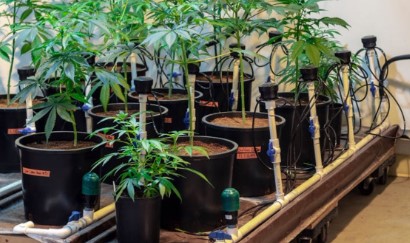
- Hydroponics (NFT, DWC, Aeroponics):
- Faster nutrient uptake due to direct root access to water-soluble minerals.
- Increased oxygenation of roots, leading to enhanced root biomass.
- Potential Risks: Requires careful pH and EC monitoring to prevent nutrient lockout.
- Living Soil Cultivation:
- Encourages microbial symbiosis with roots, boosting nutrient bioavailability.
- Mycorrhizal fungi help in phosphorus absorption, enhancing bud density and cannabinoid content.
- Potential Risks: Requires compost teas and amendments for sustained fertility.
CO₂ Supplementation for Yield Enhancement
- Increased CO₂ up to 1200-1500 ppm enhances photosynthesis (Calvin Cycle efficiency), leading to 25-30% higher yields in optimized grow rooms.
- Requires high-intensity LED/HPS lighting for full utilization, as light energy is a limiting factor in the CO₂ assimilation process.
Terpene and Cannabinoid Optimization
- UV-B and Blue Light Exposure (280-315 nm): Increases THC concentration by activating stress-induced cannabinoid synthesis.
- Far-Red Light Supplementation (730 nm): Stimulates flower expansion, leading to bulkier buds.
- Controlled Drought Stress: Induces higher trichome production, increasing resin yield.
5. Harvesting and Post-Harvest Science
Harvest Timing Based on Trichomes
- Clear Trichomes: Underripe, low potency.
- Cloudy/Milky Trichomes: Peak THC levels, energizing effects.
- Amber Trichomes: THC degrades to CBN (more sedative effect).
Drying and Curing Process
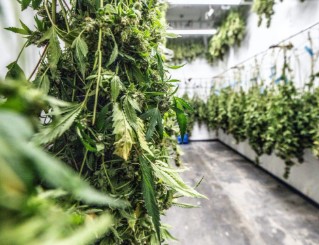
- Drying Environment:
- Temperature: 18-22°C (65-72°F)
- Humidity: 45-55%
- Airflow: Moderate to prevent mold
- Curing (Jar Storage) Process:
- Burping Jars: Releases ethylene and excess moisture to prevent microbial growth.
- Enhances terpene preservation and oxidation stability of THC.
Scientific Considerations
- Improper drying leads to chlorophyll retention, giving buds a harsh taste.
- Curing allows for enzymatic breakdown of sugars and residual starches, improving smoothness and aroma.
Potential Side Effects
While Pineapple Mayhem offers many benefits, users should be aware of possible side effects, especially if consuming large doses.
Common Side Effects
- Dry Mouth and Dry Eyes – Staying hydrated and using eye drops can help alleviate these effects.
- Mild Dizziness – Some users may experience lightheadedness, particularly if they are new to cannabis or consume excessive amounts.
- Paranoia and Anxiety – While uncommon, individuals sensitive to THC may experience increased anxiety or paranoia in high doses.
To minimize the likelihood of adverse effects, it is recommended to start with a low dose and gradually increase as needed.
Conclusion
Pineapple Mayhem is a well-balanced hybrid strain that offers a delightful mix of tropical flavors, moderate potency, and a versatile range of effects. Whether used for recreational enjoyment or medicinal relief, it provides an uplifting yet relaxing experience that caters to a wide audience. Its blend of euphoria, creativity, and soothing relaxation makes it an excellent choice for social events, artistic endeavors, and stress relief.
For medical users, it presents a natural alternative for pain relief, anxiety management, and appetite stimulation, without being overwhelmingly sedative. Growers can appreciate its above-average yields and beautiful bud structure, although attention to climate control is necessary for optimal results.
Overall, Pineapple Mayhem is a reliable and enjoyable strain, perfect for those seeking a fruity, balanced hybrid with a range of beneficial properties.
For a complete directory of cultivars, visit our Cannabis Strain Reviews.
