Table of Contents
PGR Weed
PGR Weed refers to cannabis that has been grown using Plant Growth Regulators (PGRs)—synthetic chemicals or naturally occurring substances that manipulate a plant’s growth patterns. While PGRs have legitimate uses in commercial agriculture and ornamental horticulture, their use in cannabis cultivation is controversial and widely discouraged in medical and high-quality recreational markets due to health risks, reduced cannabinoid content, and unnatural appearance.
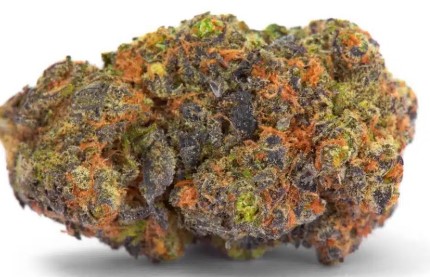
PGR weed has gained attention for being dense, rock-hard, and often visually appealing. However, these features mask underlying concerns about toxicity, inferior quality, and altered chemical composition.
What Are Plant Growth Regulators (PGRs)?
Definition and Function
Plant Growth Regulators are compounds—either synthetic or organic—that influence plant physiological processes such as:
- Cell division and elongation
- Flowering and fruiting
- Root development
- Leaf senescence (aging)
- Apical dominance
PGRs mimic or interfere with natural phytohormones, including:
- Auxins
- Gibberellins
- Cytokinins
- Ethylene
- Abscisic acid
In cannabis cultivation, PGRs are typically used to increase yield density and compactness, often at the expense of cannabinoid and terpene expression.
Common Synthetic PGRs in Cannabis Cultivation
The following PGRs are most frequently associated with PGR weed:
- Paclobutrazol
- Inhibits gibberellin biosynthesis, reducing internodal elongation.
- Leads to shorter, denser plants with smaller flowers.
- Considered toxic and carcinogenic in high doses.
- Daminozide (Alar)
- Banned in food crops by the U.S. EPA because it has the potential to cause cancer.
- Used to slow plant growth and enhance bud density.
- Chlormequat chloride
- Restricts stem elongation.
- Considered a toxic substance and has restricted use in consumable crops.
- Uniconazole
- Another gibberellin inhibitor.
- Enhances compact growth but can accumulate in plant tissues, raising safety concerns.
Why Are PGRs Used in Cannabis Cultivation?
Commercial Incentives
Some unregulated or profit-driven cultivators use PGRs to:
- Maximize bud weight and density (increasing per-pound yield).
- Accelerate flowering cycles (faster harvest turnover).
- Enhance visual appeal (dense, uniform buds sell better visually).
These benefits are appealing in black markets or low-regulation markets, where quantity often outweighs quality or safety.
Scientific Concerns with PGR Weed
Health Risks
Studies on synthetic PGRs suggest the following concerns:
- Paclobutrazol may form nitrosamines in the body—compounds linked to liver damage, reproductive toxicity, and cancer.
- Daminozide is categorized as a probable human carcinogen by the Environmental Protection Agency (EPA).
- Chlormequat chloride is associated with developmental and reproductive toxicity in animal studies.
Smoking or vaporizing PGR-treated weed introduces combustion byproducts and chemical residues directly into the lungs, bypassing metabolic filters like the liver.
Environmental and Ethical Implications
- Soil contamination and waterway pollution from PGR runoff can harm ecosystems.
- Unscrupulous use of PGRs raises ethical concerns about consumer deception and public health.
Identifying PGR Weed
Physical Traits
The following characteristics may help identify PGR-treated cannabis:
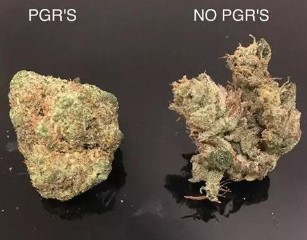
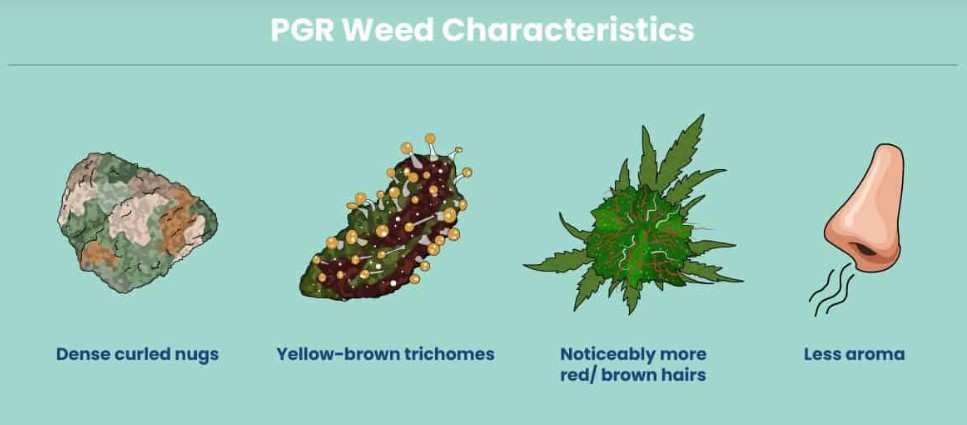
- Unnaturally dense buds that feel rock-hard
- Bland or absent aroma
- Dark brown or reddish pistils that appear dead
- Low trichome coverage (lack of stickiness)
- Muted flavor or harsh smoke
- Unusual dryness or brittleness
Lab Testing
In regions with legal cannabis frameworks, lab testing can detect the presence of PGRs. Look for Certificates of Analysis (COAs) and pesticide/pollutant panels.
Tests may screen for:
- Paclobutrazol
- Daminozide
- Chlormequat chloride
- Trinexapac-ethyl
- Growth hormone analogues
Impact on Cannabinoid and Terpene Profiles
Cannabinoid Suppression
PGRs disrupt biosynthetic pathways that produce:
- THC (Tetrahydrocannabinol) – responsible for psychoactive effects
- CBD (Cannabidiol) – important for medical use
- CBN, CBC, THCV, etc. – minor cannabinoids with therapeutic properties
Terpene Degradation
Terpenes like myrcene, limonene, and linalool are sensitive to plant stress. PGRs can interfere with terpene synthesis and volatilization, leading to:
- Loss of aroma and flavor
- Reduced entourage effect (synergistic interaction with cannabinoids)
How to Avoid PGR Weed
Buy from Trusted Sources
- Look for licensed dispensaries and regulated brands.
- Avoid unlabeled flower or street-sourced cannabis.
Look for Lab Results
- Ask for COAs that include pesticide and PGR screening.
- Check for cannabinoid and terpene levels—PGR weed often tests poorly in both.
Use Your Senses
- Smell: Does it have a pungent, complex aroma?
- Feel: Is it sticky and resinous or unnaturally hard and dry?
- Look: Are the trichomes visible? Do pistils look vibrant?
Organic and Natural Alternatives
Organic Cannabis Cultivation
Organic growers use natural inputs and techniques such as:
- Compost teas
- Mycorrhizal fungi
- Organic fertilizers
- LST (Low Stress Training) instead of chemical stunting
Natural Plant Growth Enhancers
Some plant-based PGR analogs and enhancers include:
- Seaweed extracts (natural cytokinins and auxins)
- Humic and fulvic acids
- Kelp and fish emulsions
- Willow bark extracts (natural rooting hormones)
These substances improve plant health without compromising cannabinoid or terpene development.
Scientific Research and Future Outlook
Lack of Cannabis-Specific Research
Many studies on PGR toxicity are derived from food crops and rodent models. Cannabis-specific research remains limited due to:
- Legal restrictions
- Testing limitations
- Lack of long-term data on combustion toxicity
Trends Toward Clean Cannabis
- Consumer awareness is rising; demand for clean, organic, lab-tested weed is growing.
- Legislative efforts may require more comprehensive testing standards.
- Breeders are developing dense, compact strains without chemical enhancers.
Conclusion
PGR weed is a serious concern in the modern cannabis landscape. While it may appear visually appealing and offer higher yields to growers, its use of synthetic chemicals poses major health risks, especially when combusted or vaporized. PGR-treated cannabis often has weakened therapeutic effects, lower cannabinoid and terpene content, and potential toxicity.
As consumer education improves and regulation tightens, the cannabis industry is moving toward cleaner, more transparent production methods. Informed consumers should remain vigilant, prioritize lab-tested flower, and support cultivators who follow organic and ethical practices.
