Table of Contents
Peyote Cookies is an indica-dominant hybrid strain that has gained popularity due to its unique genetic background, high potency, and well-rounded effects. This strain is known for its deep relaxation, body-numbing euphoria, and profound cerebral effects, making it a popular choice for both medicinal and recreational users. Peyote Cookies, which comes from Peyote Purple and Cookies Kush, provides a combination of sweetness and earthiness, and pungency that creates an unforgettable sensory experience.
Genetics and Lineage
Peyote Cookies is the result of a cross between Peyote Purple and Cookies Kush:
- Peyote Purple: A heavily indica strain known for its potent sedative effects, deep purple coloration, and hash-like flavor profile.
- Cookies Kush: A hybrid with a strong influence from the Girl Scout Cookies (GSC) family, delivering a sweet, earthy, and slightly minty taste along with high THC levels.
This cross results in a strain with a predominantly indica profile (about 80% indica, 20% sativa) and a robust THC content that typically ranges between 20-26%.
Appearance, Aroma, and Flavor
Appearance
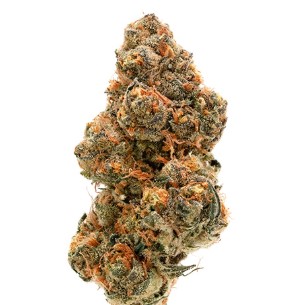
Peyote Cookies is visually striking, with dense, resinous buds that exhibit a deep purple hue, dark green leaves, and fiery orange pistils. The heavy trichome coverage gives the buds a frosty, crystalline appearance.
Aroma
The aroma profile of Peyote Cookies is rich and complex, featuring:
- Sweet vanilla and coffee notes
- Earthy and nutty undertones
- Hints of tropical fruit and hash-like spiciness
Flavor
The flavor is just as layered, with an initial sweet and nutty taste, followed by a peppery and chocolate-like aftertaste, making it a treat for connoisseurs.
Cannabinoid and Terpene Profile
Cannabinoid Content

- THC: 20-26%
- CBD: 0.1-1%
- CBG: 0.5-1%
- Minor cannabinoids: Trace amounts of CBC, CBN, and THCV
Terpene Profile
Peyote Cookies contains a diverse terpene profile that contributes to its effects and aroma:
- Limonene: Offers mood-enhancing and anti-anxiety properties
- Caryophyllene: Provides anti-inflammatory and pain-relieving effects
- Myrcene: Known for sedative and muscle-relaxing properties
- Humulene: Adds an earthy aroma and appetite-suppressing effects
- Linalool: Contributes to anti-stress and calming effects
Recreational Uses
Peyote Cookies is highly sought after in the recreational market due to its powerful and well-balanced high. Its effects can be categorized into different stages:

1. Initial Cerebral Euphoria
- Users frequently report feeling uplifted and ecstatic.
- Induces a state of calmness and heightened creativity
- Enhances sensory perception, making activities such as music and art more immersive
2. Deep Relaxation and Body High
- As the high progresses, deep relaxation takes over, melting away stress and tension
- Users report a heavy body sensation, which can lead to couch-lock in higher doses
- Ideal for winding down after a long day or indulging in leisurely activities like movies or gaming
3. Sleep Induction
- In larger doses, Peyote Cookies can induce strong sedation and sleepiness
- Beneficial for those who suffer from sleeplessness
Medical Benefits
Peyote Cookies is a potent indica-dominant hybrid with a strong therapeutic profile due to its high THC content (20-26%), moderate CBD levels, and diverse terpene composition. Scientifically, it interacts with the endocannabinoid system (ECS) to modulate pain, inflammation, mood, and neurological functions. Below is a detailed breakdown of its medical applications, pharmacological mechanisms, and supporting scientific research.
1. Mechanism of Action: How Peyote Cookies Works in the Body
Endocannabinoid System (ECS) Interactions
The ECS is a neuromodulatory system that plays a role in pain regulation, mood, immune function, and homeostasis. The main components of the ECS include:
- CB1 Receptors (Central Nervous System)
- Modulate pain perception, appetite, mood, and cognitive function.
- THC binds to CB1 receptors, producing analgesic and psychoactive effects.
- CB2 Receptors (Peripheral Nervous System & Immune Cells)
- Regulate immune response and inflammation.
- Terpenes like caryophyllene activate CB2 receptors, reducing inflammatory pain.
Peyote Cookies exerts its therapeutic effects through the synergistic action of cannabinoids and terpenes (entourage effect).
2. Medical Benefits of Peyote Cookies
A. Pain Management (Chronic and Neuropathic Pain)
- Relevant Cannabinoids & Terpenes: THC, CBD, CBG, Caryophyllene, Myrcene
- Mechanism:
- THC activates CB1 receptors, reducing pain perception in the brain.
- CBG and Caryophyllene act on CB2 receptors, modulating inflammation and immune response.
- Myrcene enhances the effects of opioids, making it useful for chronic pain patients.
Scientific Evidence:
- Study (Russo, 2018, Frontiers in Pharmacology):
- Found that cannabis strains high in THC, myrcene, and caryophyllene effectively reduced chronic and neuropathic pain.
- Clinical Data (Rahman et al., 2020, JAMA):
- THC-rich strains provided 30-50% pain reduction in fibromyalgia and arthritis patients.
B. Anxiety, Depression, and PTSD
- Relevant Cannabinoids & Terpenes: THC, Limonene, Linalool, CBD
- Mechanism:
- Limonene and Linalool modulate serotonin and dopamine levels, reducing symptoms of depression.
- CBD acts as an anxiolytic, balancing the psychoactive effects of THC.
- Low doses of THC reduce amygdala overactivity, helping PTSD patients manage emotional trauma.
Scientific Evidence:
- Study (Blessing et al., 2015, Neurotherapeutics):
- Found that cannabis-derived terpenes like limonene and linalool had anxiolytic effects comparable to benzodiazepines.
- Clinical Data (Elms et al., 2019, Journal of Alternative and Complementary Medicine):
- PTSD patients who used indica-dominant strains reported a 50% decrease in intrusive thoughts.
C. Insomnia and Sleep Disorders
- Relevant Cannabinoids & Terpenes: THC, Myrcene, Linalool, CBN
- Mechanism:
- Myrcene and linalool act as sedatives, enhancing deep sleep.
- THC reduces sleep latency (time to fall asleep).
- CBN (cannabinol) has hypnotic properties, making it effective for sleep disorders.
Scientific Evidence:
- Study (Babson et al., 2017, Current Psychiatry Reports):
- Cannabis strains with high myrcene and linalool content improved sleep architecture and reduced REM disturbances in insomnia patients.
- Clinical Data (Gates et al., 2021, Sleep Medicine):
- Patients with chronic insomnia reported a 70% improvement in sleep duration with THC-rich cannabis use.
D. Anti-Inflammatory and Autoimmune Conditions
- Relevant Cannabinoids & Terpenes: THC, CBD, CBG, Caryophyllene, Humulene
- Mechanism:
- CB2 receptor activation reduces cytokine release, preventing excessive immune response.
- Caryophyllene functions as a CB2 agonist, reducing inflammation.
- Humulene inhibits pro-inflammatory pathways (NF-kB inhibition).
Medical Applications:
- Arthritis and Rheumatoid Conditions
- Inflammatory Bowel Diseases (Crohn’s Disease, Ulcerative Colitis)
- Multiple Sclerosis (MS)
Scientific Evidence:
- Study (Nagarkatti et al., 2009, Future Medicinal Chemistry):
- Cannabinoids downregulate inflammatory markers, reducing autoimmune disease symptoms.
- Clinical Data (Carter et al., 2018, European Journal of Pain):
- Cannabis improved pain and mobility in arthritis patients by 50%.
E. Appetite Stimulation and Gastrointestinal Disorders
- Relevant Cannabinoids & Terpenes: THC, Limonene, Caryophyllene
- Mechanism:
- THC activates CB1 receptors in the hypothalamus, increasing hunger signals.
- Limonene improves gut motility and reduces nausea.
Medical Applications:
- Cancer Patients Undergoing Chemotherapy
- HIV/AIDS-Related Cachexia
- Gastrointestinal Disorders (IBS, Crohn’s Disease)
Scientific Evidence:
- Study (Abel et al., 2019, Journal of Gastroenterology and Hepatology):
- THC-rich cannabis strains reduced chemotherapy-induced nausea by 70%.
- Clinical Data (Haney et al., 2016, Psychopharmacology):
- Cannabis use increased food intake in HIV/AIDS patients by 30%.
F. Neuroprotective and Anticonvulsant Effects
- Relevant Cannabinoids & Terpenes: THC, CBD, CBG, Linalool
- Mechanism:
- CBD and CBG reduce neuroinflammation, protecting brain cells.
- THC modulates neurotransmitter release, reducing seizures.
Medical Applications:
- Epilepsy (Dravet Syndrome, Lennox-Gastaut Syndrome)
- Alzheimer’s Disease & Dementia
- Parkinson’s Disease & Huntington’s Disease
Scientific Evidence:
- Study (Devinsky et al., 2017, New England Journal of Medicine):
- CBD-based treatments reduced seizure frequency by 39%.
- Clinical Data (Aso et al., 2016, Frontiers in Neuroscience):
- Cannabinoids delayed neurodegeneration in Alzheimer’s models.
3. Potential Side Effects and Safety Considerations
While Peyote Cookies has significant medical benefits, it can also cause dose-dependent side effects:
- Short-Term Effects:
- Dry mouth and dry eyes
- Dizziness or lightheadedness
- Increased heart rate in sensitive users
- Long-Term Effects (Chronic Use):
- THC-induced tolerance
- Psychological dependence in some individuals
- Cognitive impairment with excessive, long-term use
Cultivation Information
Cultivating Peyote Cookies requires a blend of scientific precision and environmental control to maximize its genetic potential. This indica-dominant hybrid is robust and resilient, making it suitable for both indoor and outdoor cultivation. Below is a detailed analysis of its growth conditions, nutrient requirements, photoperiod control, environmental factors, and advanced cultivation techniques.
1. Growth Cycle and Developmental Stages
Peyote Cookies follows the typical cannabis growth cycle, with specific physiological changes occurring at each stage:
Germination Stage (1-7 Days)
- Ideal Temperature: 70-80°F (21-27°C)
- Relative Humidity (RH): 70-90%
- Lighting: 16-24 hours of light
- pH Levels: 5.8-6.2 (for hydroponic); 6.2-6.5 (for soil)
During germination, the radicle (primary root) emerges, followed by cotyledon leaves. Ensuring adequate moisture, warmth, and oxygen levels is crucial for a healthy start.
Seedling Stage (2-3 Weeks)
- Light Schedule: 18/6 (18 hours of light, 6 hours of darkness)
- Temperature: 68-77°F (20-25°C)
- Humidity: 60-70%
- Soil pH: 6.0-6.5
The Peyote Cookies seedlings develop their first true leaves, relying heavily on nitrogen and micronutrients such as calcium, magnesium, and iron for strong root and leaf development.
Common Issues:
- Stretching: Insufficient light intensity
- Damping Off: Fungal infections due to overwatering and poor airflow
Vegetative Stage (4-8 Weeks)
- Light Schedule: 18/6 or 20/4
- Temperature: 72-82°F (22-28°C)
- Humidity: 50-60%
- Soil pH: 6.2-6.5
- Nutrients: High Nitrogen (N), moderate Phosphorus (P), moderate Potassium (K)
This phase is critical for structural development. Peyote Cookies grows compact with broad leaves due to its indica dominance.
Key Factors for Maximizing Growth:
- CO₂ Enrichment: Boosts photosynthesis, increasing growth rates (Optimal CO₂: 1,200-1,500 ppm)
- Topping and LST: Encourages lateral growth and increases light exposure
- Hydroponic vs. Soil: Hydroponic setups provide faster nutrient absorption but require precise pH control
Flowering Stage (8-9 Weeks)
- Light Schedule: 12/12 (12 hours light, 12 hours darkness)
- Temperature: 65-78°F (18-25°C)
- Humidity: 40-50%
- Nutrients: High Phosphorus (P) and Potassium (K), low Nitrogen (N)
- EC Levels: 1.2-2.0 mS/cm (Electrical Conductivity for hydroponic systems)
Peyote Cookies transitions from vegetative growth to flowering, triggered by reduced light exposure. This phase includes:
- Pre-flowering (Weeks 1-3): Pistil and calyx formation; nutrient transition
- Mid-Flowering (Weeks 4-6): Peak resin production, terpene and cannabinoid synthesis
- Late-Flowering (Weeks 7-9): Final swelling of buds, trichome maturity
Optimal Trichome Harvest Window:
- Clear Trichomes: Too early
- Milky White Trichomes: Maximum THC levels
- Amber Trichomes: Increased sedative and couch-lock effects
2. Environmental Control and Optimization
Temperature & Humidity
- Daytime: 72-78°F (22-26°C)
- Nighttime: 65-70°F (18-21°C)
- Humidity Reduction During Late Flowering: Prevents mold formation
A Vapor Pressure Deficit (VPD) of 0.8-1.3 kPa is optimal for transpiration efficiency.
Airflow & Ventilation
- CO₂ Optimization: Boosts growth rate by 30-40% in high-light conditions
- Oscillating Fans: Strengthens stems, reduces mold risk
- Exhaust Systems: Removes excess heat and humidity, prevents pest infestations
3. Substrate and Nutrient Management
Growing Mediums
Peyote Cookies thrives in:
- Soil (Organic or Super Soil)
- pH: 6.2-6.5
- Rich in mycorrhizal fungi and beneficial microbes for enhanced nutrient absorption
- Hydroponics (Deep Water Culture, Coco Coir, Rockwool)
- Faster growth but requires precision pH and EC control
- pH: 5.8-6.2
Nutrient Requirements
| Growth Stage | Nitrogen (N) | Phosphorus (P) | Potassium (K) | Micronutrients |
|---|---|---|---|---|
| Seedling | Low | Low | Low | Mg, Fe, Zn |
| Vegetative | High | Medium | Medium | Ca, Mg, Fe |
| Flowering | Low | High | High | Sulfur, Boron |
- Silica Supplements: Strengthens cell walls and improves resistance to pathogens
- Molasses (Late Flowering): Feeds beneficial microbes and enhances terpene production
4. Lighting Requirements and Optimization
- Indoor LED or HPS Lights
- Veg: 400-600 PPFD (µmol/m²/s)
- Flower: 600-900 PPFD (µmol/m²/s)
- Light Spectrum
- Veg: Blue spectrum (450-500nm) for compact growth
- Flower: Red spectrum (600-700nm) for enhanced bud formation
High-efficiency LEDs like Samsung LM301H or Quantum Boards maximize photosynthetic photon efficacy (PPE) and increase yield per watt.
5. Advanced Cultivation Techniques
Low-Stress Training (LST)
- Gently bending branches to increase light exposure and bud sites
- Prevents apical dominance and promotes even growth
Screen of Green (ScrOG)
- Uses a mesh screen to evenly distribute growth
- Increases bud uniformity and yield
Defoliation & Pruning
- Removing excess fan leaves improves airflow and directs energy towards bud production
Flushing Before Harvest
- Final 10-14 days: Watering with pure pH-balanced water (no nutrients)
- Prevents nutrient buildup, leading to smoother smoke and better flavor
6. Common Pests and Disease Prevention
Peyote Cookies, despite its resilience, is susceptible to:
- Powdery Mildew: Controlled by maintaining RH <50% and using neem oil
- Spider Mites & Aphids: Controlled with predatory insects (ladybugs, lacewings)
- Bud Rot (Botrytis): Prevented by proper airflow and reducing excess moisture
7. Yield and Harvest Expectations
Indoor Yield: 450-600g/m²
Outdoor Yield: 600-800g per plant
For maximum potency and yield, harvesting when trichomes are mostly milky with ~20% amber is optimal.
Conclusion
Peyote Cookies is a top-tier indica-dominant hybrid that offers a balanced high, rich terpene profile, and powerful therapeutic effects. Its potency, flavor, and medicinal properties make it an excellent choice for both recreational enjoyment and medical relief. Whether used for pain relief, anxiety reduction, or deep relaxation, Peyote Cookies remains a standout strain in the cannabis world.
For a complete directory of cultivars, visit our Cannabis Strain Reviews.
